Our readers keep the lights on and my smoothie glass nicely filled. As an Amazon Associate, I earn from qualifying purchases.
Specs are compiled from manufacturer listings and verified buyer reviews and can change over time — please confirm the key details on the product page before buying.
Choosing a pair of chemical resistant work boots is less about fashion and more about making sure your feet survive a shift in solvents, oils, and acids. The wrong sole melts. The wrong upper lets a splash soak through. A good pair shrugs off everything from diesel fuel to barnyard chemicals, keeps you upright on a slick concrete floor, and still feels wearable at hour ten. This guide cuts through the rubber and leather to find the ones that actually hold the line.
I’m Mohammad Maruf — the founder and writer behind WellFizz. This guide is built by comparing the manufacturers’ published specifications and the patterns across verified customer reviews, so you get each pick’s real strengths and trade-offs instead of marketing spin.
If you work around caustic cleaning agents, drilling mud, or animal fats every day, you need boots that keep your feet safe from chemical burns and slips. The best chemical resistant work boots for you depend on the material that blocks your specific hazard, the toe protection rating you need, and the sole that keeps you stable on slick floors.
Our Picks at a Glance

How To Choose The Best Chemical Resistant Work Boots
The most important decision isn’t style — it’s what the boot is made of and what it’s rated for. A leather logger boot treated with oil is a different animal than a tall PVC pull-on. Match the material to the hazard, the sole to the floor, and the toe to the impact risk.
Match the Material to the Chemical
Leather like the SPR™ used on the Georgia boot resists barnyard and pasture chemicals and is about three times stronger than traditional leather. But for liquid splash protection — solvents, acids, oils — a non-porous material like PVC (Dunlop’s Polyflex 3), neoprene (Tingley), or Purofort® (Dunlop’s premium foam) is the better bet because it won’t soak through. Check the manufacturer’s chemical resistance claims: “oil resistant” and “chemical resistant” are not the same broad category.
Toe Protection — Steel, Composite, or Carbon Fiber
A steel toe meets ASTM F2413 standards for impact and compression and is the most common choice for heavy industry. A composite toe is lighter and doesn’t conduct cold or heat — the Wolf and Carhartt boots use one, and the Keen Gibson uses carbon fiber. Carbon fiber meets the same ASTM standards but is thinner around the toe box, which can be a plus or a minus depending on your foot shape.
Slip Resistance is Its Own Spec
An oily, wet factory floor demands more than a deep tread. Look for boots that cite a standard: SRC-rated (the highest European slip rating, used on the Dunlop Purofort+), SATRA tested (the Keen Gibson), or the Mark II standard. A chevron outsole like XTRATUF’s is designed specifically for slick, grimy decks and surfaces.
Quick Comparison
| Model | Best For | Material | Toe Type | Height | Amazon |
|---|---|---|---|---|---|
| Georgia Boot Farm and Ranch Pull On★ Best Overall | Farm & ranch chemicals | SPR™ Leather | None (soft toe) | Wellington (ankle) | Amazon |
| DUNLOP 15″ Flex 3Budget Champion | Food processing & agriculture | PVC | Steel | 15 inches | Amazon |
| Baffin Bully Steel Toe/Steel PlateTough Rubber | Petrochemical & construction | Rubber (Ultraflex) | Steel | 15 inches | Amazon |
| Wolf Work Boots (Composite Toe) | Value leather with oil resistance | Genuine Leather | Composite | 6 inch (ankle) | Amazon |
| Carhartt CMF6366 6 Inch | All-around trades | Leather | Composite | 6 inch | Amazon |
| Tingley Pylon MB924B Neoprene | Oil rig & chemical mixing | Neoprene Rubber | Steel | 12.5 inches | Amazon |
| KEEN Utility Gibson Mid Height | Lightweight chemical + static control | Full-grain leather | Carbon Fiber | Mid (ankle) | Amazon |
| XTRATUF 15″ Insulated Steel Toe Legacy | Freezing wet environments | Latex Neoprene | Steel | 15 inches | Amazon |
| Viking 14″ Felt Lined Firefighter | Fire & hazmat response | Chloroprene Rubber | Steel | 14 inches | Amazon |
| DUNLOP Purofort+ Expander Vibram Omega | Maximum protection (oil & gas) | PUROFORT® | Steel | Tall shaft | Amazon |
In‑Depth Reviews
1. Georgia Boot Farm and Ranch Pull On Work Boot
Our pick — over 4.5★ from 700+ verified ratings; the strongest balance of quality and price.
The pull-on Wellington that shrugs off barnyard chemicals without a break-in period.
The thing that wins people over most is the look and feel — right from the start. The SPR™ leather is about three times as strong as traditional leather and resists abrasions 2.5 times as well, according to Georgia Boot. That means it holds up to barbed wire, brush, and the occasional splash of pasture chemical without getting chewed up. The sole is a dual-density polyurethane suspension wedge that resists oil, chemicals, and abrasion, yet stays flexible enough to cushion a concrete floor all day. As a buyer who spends seven to ten hours daily on concrete put it: these boots only ever needed an insole replacement, not a break-in.
The honest trade-off is durability over the very long haul. While the construction and leather get high marks, a number of buyers report the soles eventually separate or wear down faster than they expected — the crowd is split on longevity. That’s worth factoring in if you plan to put a thousand hours of concrete work on a single pair. But for the price, the combination of all-day comfort, a waterproof seal (one buyer’s husband reports his feet “never get wet”), and pull-on convenience makes this the strongest all-arounder for anyone who works around moderate chemical exposure on a farm or ranch.
Size note: most owners find they run true to size, though a size 7.5 wearer reported they fit more like an 8.5. The leather does stretch with wear, so a snug initial fit is fine.
What owners praise most
- No break-in required — comfortable from the first wear, even on 10-hour concrete days
- SPR leather is noticeably tougher than standard work boot leather
- Oil- and chemical-resistant wedge sole provides good traction and cushion
The long-term caveat
- Sole separation is a recurring complaint among longer-term owners
- Not a steel toe — no impact protection for heavy industrial hazards
Best for: Farmers, ranchers, and anyone who stands on concrete all day and needs a chemical-resistant leather boot they can pull on and forget about.
Think twice if: You need a rated steel toe or plan to submerge the boot in liquid chemicals — the leather is treated, not fully waterproof.
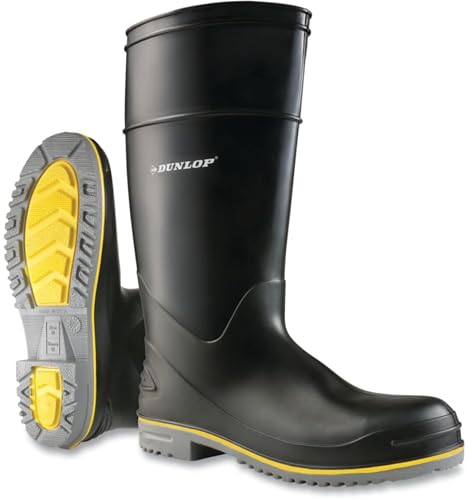
2. DUNLOP 15″ Flex 3 Work Boots
A tall PVC pull-on that keeps chemicals, mud, and splash away from your skin for under a hundred bucks.
Dunlop’s Polyflex 3 boot is made from a single piece of PVC (polyvinyl chloride, a tough plastic), which gives it smooth chemical resistance against fuel oils, animal fats, and many industrial acids. The 15-inch shaft provides coverage that a 6-inch leather boot simply cannot match — splashes and spills hit the boot, not your pants or skin. The steel toe meets impact standards, making it suitable for food processing plants and agriculture where dropped crates or tools are a real risk. The outsole also has energy-absorbing properties and a slip-resistant tread, which is a solid addition on wet or oily concrete.
The sizing quirk here is real. Multiple owners mention needing to go a half-inch smaller than their normal tennis shoe size to get a good fit. The boot also does not provide insulation, so buyers working in freezing conditions note you need warm socks or a liner. But the consensus is that this is a genuinely comfortable, durable boot for the money — the major grip is excellent even on slippery mossy rocks, according to one fisherman, and another barn owner appreciates how pliable the ankle area is for easy pull-on.
Why it earns its spot
- Fully chemical-resistant PVC construction — no leather to soak through
- Tall 15-inch shaft gives splash coverage no short boot can match
- Made in the USA with a steel toe for impact protection
Fit quirks to know
- Runs half a size large, so order down or plan on thick socks
- Not insulated — feet get cold in freezing weather without a liner
Reach for this if: You work in food processing, agriculture, or any wet environment where chemical splash is a daily reality and you want a cheap, tall barrier.
Look elsewhere if: You need insulation for sub-freezing temperatures or a snug, athletic fit straight from the box.
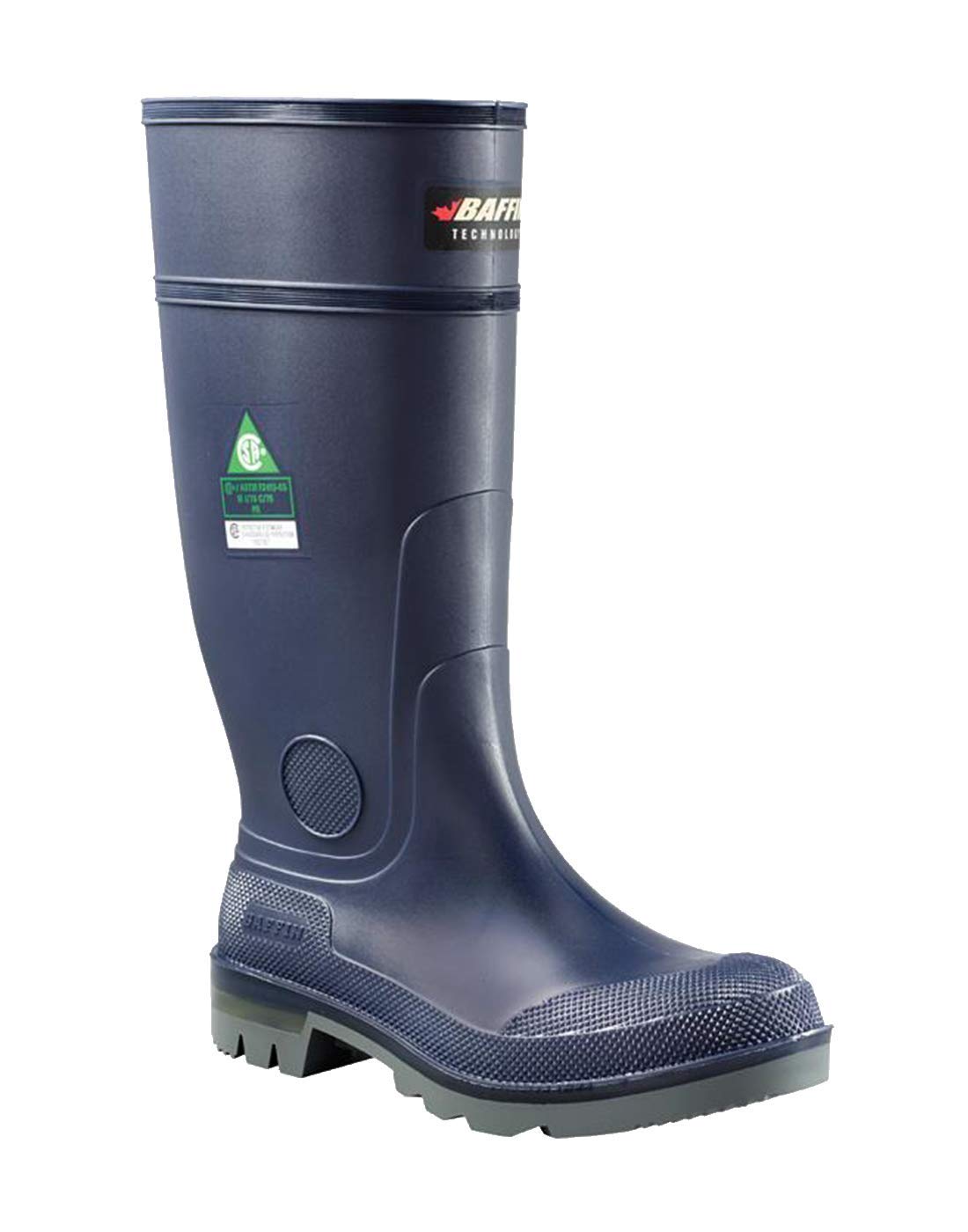
3. Baffin Bully Steel Toe/Steel Plate Boot
A Canadian-made rubber boot that pairs a steel toe with an acid- and oil-resistant compound for messy jobs.
Baffin’s Bully boot uses an Ultraflex compound formulated specifically to resist acids and oils. That makes it a natural fit for agriculture, petrochemical, and food processing environments where the floor is unpredictable. The rubber is flexible right from the start, so pull-on and pull-off are easy, and the self-cleaning outsole sheds caked-on mud rather than building up into a heavy slab. The steel toe and steel plate (midsole) protect against punctures, which is a serious advantage on a construction or industrial site.
The catch with this boot is consistency. While many owners call it supremely comfortable for a 10-hour concrete pour, others have had a pair fail after four months of light use — the outsole cracked and water leaked in. The fit also runs large: size 8 fits a size-9 foot, and the lack of half sizes means you might need an extra insole to take up space. But for the price, you get a solidly-built, Made-in-Canada boot with a self-cleaning tread that outperforms most budget rubber options on slick surfaces.
What stands out
- Ultraflex compound is specifically resistant to acids and oils
- Self-cleaning outsole prevents mud buildup
- Steel toe plus steel midsole for puncture protection
What to watch for
- Fit runs half to one size large; no half sizes offered
- Durability reports are split — some fail with outsoles cracking after a few months
Best for: Petrochemical, construction, and farm workers who need a tall rubber boot with puncture protection and good flex.
skip it if: You need a guaranteed long lifespan or a precise, true-to-size fit without modifications.
4. Wolf Work Boots for Men Genuine Leather (Composite Toe)
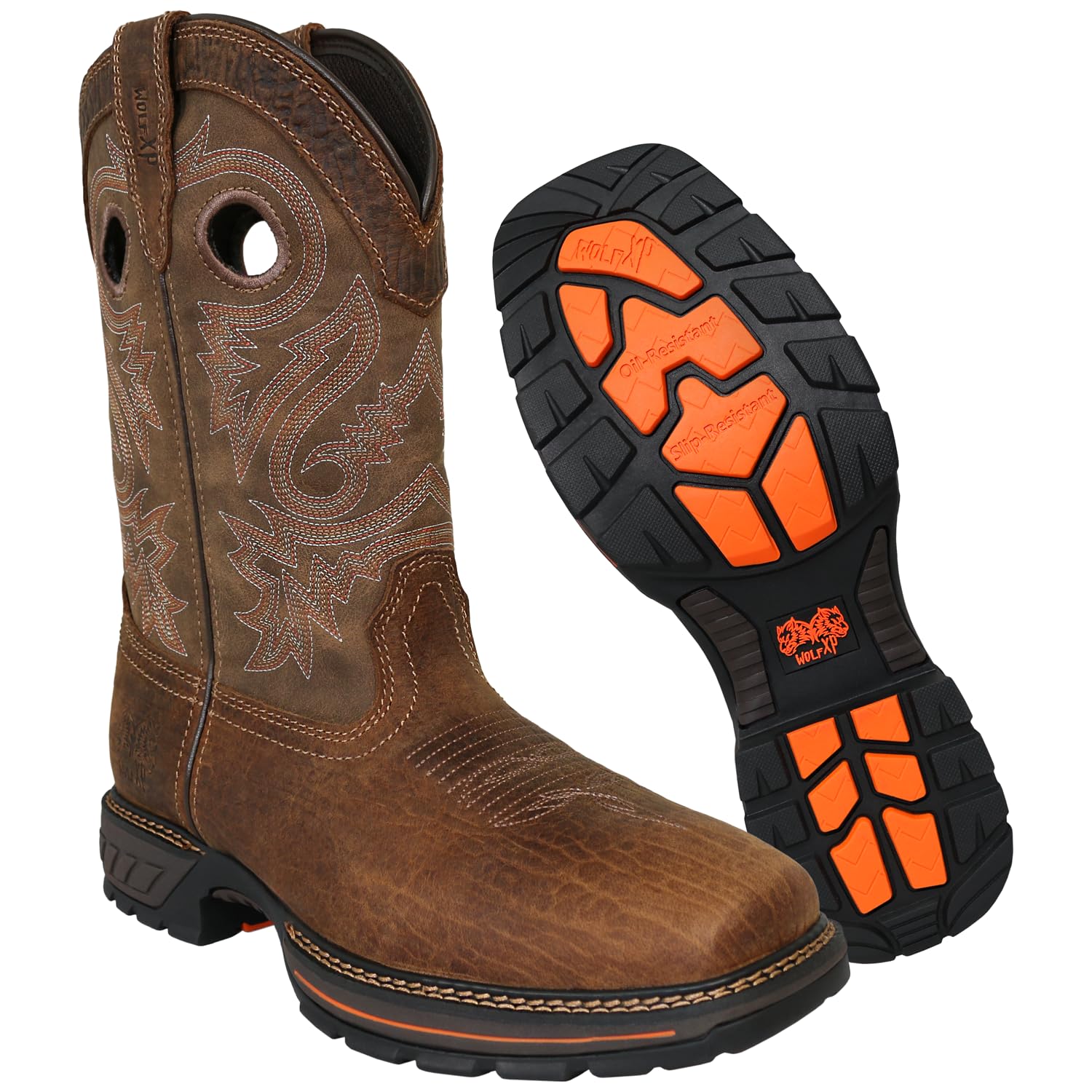
A genuine leather boot that punches well above its weight against boots costing twice as much.
Owners who have worn Ariat and Cody James boots say the Wolf boot compares favorably — and costs significantly less. The boot is built with an oil- and slip-resistant outsole and a composite toe, which means it is lighter than steel toe models and does not conduct cold or heat. One buyer who has had his boots since February and put them through heavy materials exposure reports that “most boots would shrink or melt the soles off” under similar conditions, but these held up. The composite toe is light enough that you almost forget it’s there, which makes a difference during long walking days.
The boot requires about a day of break-in, which is typical for a leather work boot in this price range. The language barrier in some reviews suggests the size chart might take a moment to interpret, but once you get the fit right, the consensus is clear: you get a boot that feels durable, looks good, and isolates your feet from oils and chemicals on the ground. One owner mentioned the steel toe version bothered him over time, but the composite toe on this specific model avoids that issue.
Budget-conscious pick: Delivers genuine leather, oil resistance, and a composite toe at a price that undercuts big brands. The trade-off is a slight break-in period and a smaller review sample — but the early verdict is overwhelmingly positive.
Grab these if: You want a lightweight leather boot with composite toe protection and proven oil resistance, and you don’t need a brand logo on the side.
Pass if: You need a tall waterproof shaft or a steel toe rated for heavy impact hazards.
5. Carhartt Men’s CMF6366 6 Inch Composite Toe Boot

The most-reviewed chemical-resistant boot on this list, trusted by tens of thousands for its comfort and build.
Carhartt’s CMF6366 is a 6-inch lace-up boot that explicitly states it is chemical resistant, oil resistant, and slip resistant. It is the highest-volume pick here, with thousands of owners confirming its reliability. The composite toe is lighter than steel, and customers note it is “durable around fuels and oils” — one buyer credits the toe with saving his foot after an outrigger crushed down on it, leaving him with a lost toenail but no broken bones. The comfort is the overwhelming highlight: 494 people mention it positively, and many call it the most comfortable work boot they have ever worn.
The fit is where the crowd splits. The boot runs about half a size large, so size 10 fits like 10.5 or 11. A few owners also note that the sole can separate after several months, though Carhartt’s warranty cover on that issue is good. For the price — at the upper edge of the mid-range tier — you get a boot with proven chemical resistance, a composite toe, and the backing of a brand with a huge replacement parts network. It is not waterproof, so standing water is a problem, but for dry chemical environments and general trades, it is a benchmark.
Why owners keep buying it
- Chemical, oil, and slip resistant — a triple threat for trades
- Composite toe is lighter than steel and saved at least one foot from a crush injury
- Minimal break-in; comfortable from the first shift for most people
Honest downsides
- Runs a half size large — size down if between sizes
- Sole separation is the most common durability complaint; not waterproof
Reach for this if: You work in a trade — construction, mechanic, warehouse — where fuels, oils, and chemicals are present and you want a comfortable, lightweight lace-up boot with a proven track record.
pass on it if: You need a waterproof boot or a tall shaft for liquid splash protection above the ankle.
6. Tingley Pylon MB924B Neoprene Steel Toe Boot
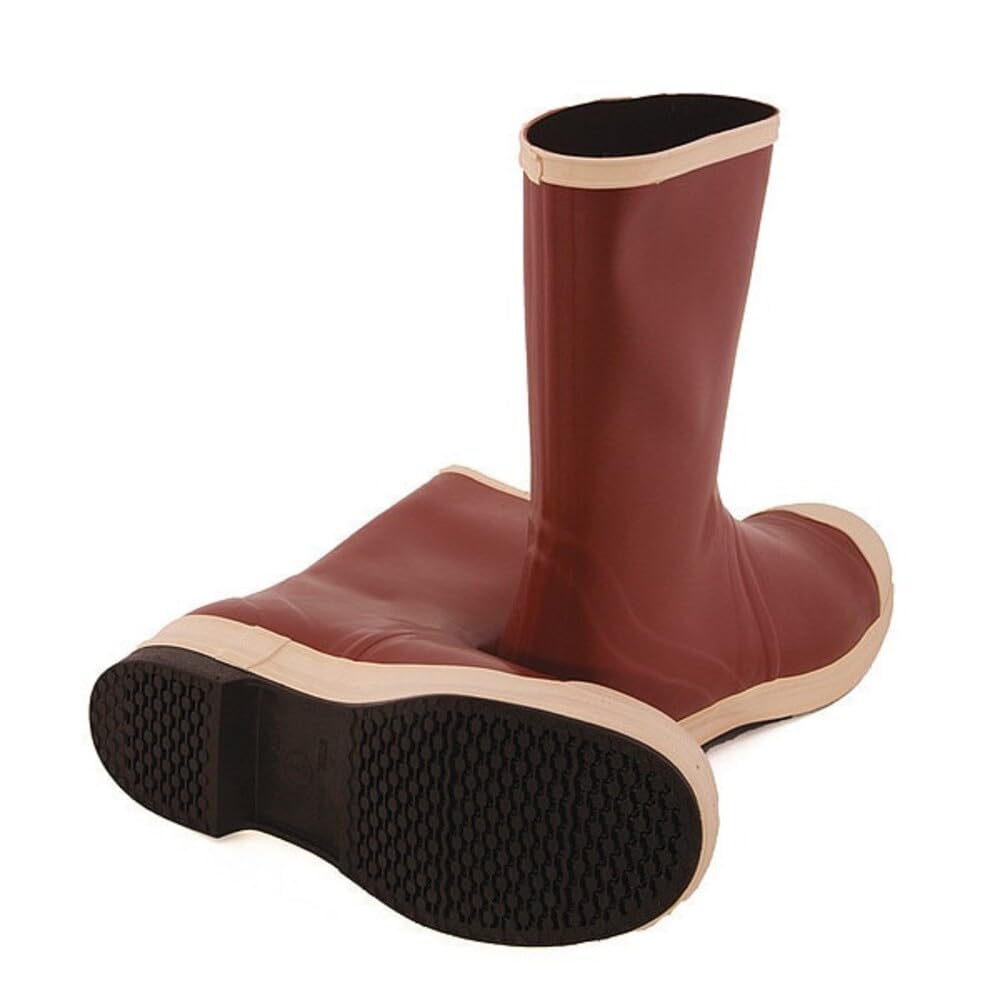
The neoprene boot that oil rig workers trust to stand up to oil-based mud and caustic chemicals shift after shift.
Tingley’s Pylon boot is built from neoprene rubber, which the manufacturer states “will outwear standard rubber boots in solvents, caustics, hydrocarbons, oils, fats and acids.” That claim is backed by real-world reports from drilling rig operators who work in oil-based mud (OBM) and mixing chemicals. One driller says he wore Ariat and Red Wing leather boots before switching — “after a while the diesel will soak into your leather work boots” — and has not gone back to leather since getting a pair of these. The 12.5-inch height, steel toe, and ASTM F2413 M/I/75/C/75 EH rating (including Electrical Hazard protection) make it a certified safety boot for industrial environments.
The comfort is surprisingly high for a rubber boot. The removable polyurethane contour cushion insole and the flexible neoprene shaft mean there is essentially no break-in — you can wear them all day from the first wear. The Safety-Loc outsole provides slip resistance on wet-clean surfaces, which is a common hazard on rig floors. One commercial diver’s family even buys these boots for his underwater work, which suggests the neoprene holds up to extreme conditions. The main thing to note is that it is a pull-on boot with no lacing, so the fit depends heavily on getting your size right the first time.
Trusted on the rig: The neoprene construction is specifically engineered to resist solvents, caustics, and hydrocarbons that would eat through standard rubber. The steel toe and EH rating add certified protection, while the cushion insole keeps it wearable for 10-hour shifts.
Best for: Oil rig, petrochemical, and industrial workers who need a boot that won’t soak up diesel or break down in caustic environments.
Think twice if: You need a lace-up fit for narrow ankles or a boot insulated for sub-zero temperatures.
7. KEEN Utility Men’s Gibson Mid Height Composite Toe Work Boots

The modern lace-up boot that meets ASTM chemical resistance standards and feels like a tennis shoe on the job.
KEEN’s Gibson is the most technologically sophisticated boot in this lineup. It meets ASTM D471-06 903# oil and isooctane chemical resistance standards, so it is certified for petroleum and solvent exposure. The carbon fiber safety toe meets ASTM F3445-21 and F2413-18 M I/75 C/75 ESD/SD standards, meaning it protects against impact and compression while also being static dissipative — a critical spec for environments where a spark could ignite fumes. The full-grain water-resistant leather upper is sourced from an LWG-certified tannery, and the PFAS-free durable water repellent keeps water out without forever chemicals. The outsole is slip resistant and meets ASTM F2913-19 SATRA and Mark II standards.
Owners consistently praise the Gibson for being “like wearing a tennis shoe” — light, flexible, and comfortable from day one without any break-in. The metatomical insole and KEEN.ReGEN midsole provide a bouncy, supportive feel that reduces foot fatigue. The main critique is that the carbon fiber toe box is narrow and can rub the top of the foot when kneeling, which led one owner to return the boot. It is also not a tall boot — the mid-height cut means it only protects up to the ankle, not the calf. If your chemical exposure is splash and you need a lightweight, certified safety boot, this is a standout pick.
Why it’s worth the premium
- Certified to ASTM chemical resistance standards for oil and isooctane
- Carbon fiber toe is thinner, lighter, and static dissipative
- Outsole passes SATRA and Mark II slip tests
The fit nuance
- Carbon toe is narrow — not ideal for wide feet or frequent kneeling
- Only mid-height; no splash protection for the lower leg
Best for: Mechanics, technicians, and warehouse workers who need lightweight chemical and electrical hazard protection with a sneaker-like feel all day.
Pass if: You need a tall rubber boot for liquid splash above the ankle or a wide toe box for long kneeling sessions.
8. XTRATUF 15” Men’s Insulated Steel Toe Legacy Boot
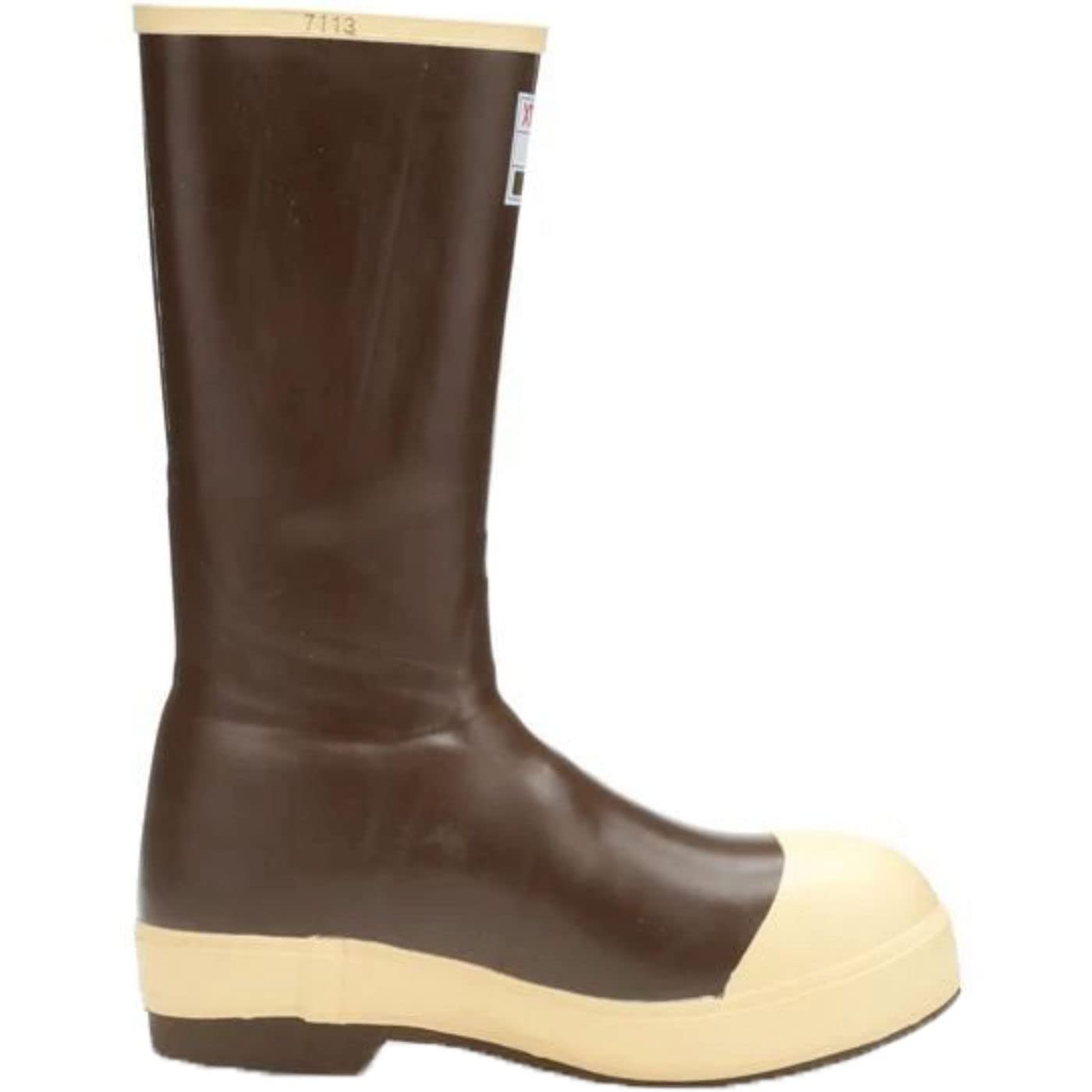
An Alaskan-tested boot built to handle freezing temps, diesel fuel, and fish waste without leaking a drop.
XTRATUF’s Legacy boot is an icon in the commercial fishing industry for good reason: triple-dipped latex neoprene, 100% waterproof, and rated down to -10°F (-23°C). The polymeric foam insulation keeps feet warm in extreme cold, and the steel toe protects against falling gear on pitching decks. The signature Chevron outsole is renowned for its slip resistance on slick, grimy surfaces. The boot also resists ozone, acid, and chemicals — owners in sanitation and food processing confirm it holds up to strong cleaning chemicals and diesel fuel.
The boot fits closely against the skin, so it is not a loose, sloppy fit — that’s by design for warmth and water seal. Some owners with larger calves or ankles find it tight to pull off compared to earlier models. The other durability note is that the sides can leak after 10-14 months of heavy use in a sanitation environment, as squatting repeatedly can split the sole. But for a boot that has to stand up to freezing sea spray, caustic chemicals, and heavy impact risks, the Legacy remains the go-to for commercial fishermen and anyone working in similarly harsh, wet conditions.
Built for the worst weather: Insulated to -10°F, triple-dipped for 100% waterproofing, and resistant to ozone, acid, and chemicals. The Chevron outsole remains the gold standard for traction on wet, oily surfaces.
Best for: Commercial fishermen, sanitation workers, and anyone in cold, wet, chemical-heavy environments who needs a tall insulated boot they can trust for years.
Think twice if: You have large calves or want a loose-fitting boot — the Legacy hugs the leg snugly.
9. Viking Men’s 14” Felt Lined Firefighter and EMS Boots

Certified structural firefighting boots that are also chemical resistant, slip resistant, and flame retardant.
Viking’s firefighter boot is a serious piece of PPE. It is built with a chloroprene rubber upper that is both flame retardant and highly chemical resistant, plus a heavy-duty slip-resistant chloroprene rubber lug sole. The steel toe and midsole protection plate meet structural firefighting standards, and the boot has a reinforced backstay for heel and tendon protection. The felt lining across the vamp and leg provides thermal insulation, while the reflective patches on the sides add visibility in low-light conditions — a real advantage for EMS working roadside or on a fire scene at night.
The strong rubber smell is the most common owner complaint. A few shoppers say the odor is so intense it fills up the truck or the station, and it takes days or weeks to fade. One fire investigator notes the boots are not the most comfortable for walking long distances in a fire scene — the felt lining is warm, but the sole is firm. However, as a dedicated, certified boot for chemical, electrical, and flame hazards at a price well below other firefighting brands, it delivers serious protection. For volunteer firefighters or industrial hazmat responders who need a secondary pair, it is a smart buy.
Why it’s a specialist
- Flame retardant and highly chemical resistant — certified for structural firefighting
- Felt lining and thick chloroprene rubber provide thermal insulation
- Steel toe plus midsole protection plate for puncture resistance
What owners flag
- Strong, lingering rubber smell from the start that requires airing out
- Footbed is firm and not ideal for long walking or standing shifts
Best for: Volunteer firefighters, EMS crews, and industrial hazmat workers who need a certified flame- and chemical-resistant boot without spending on high-end firefighting brands.
look elsewhere if: You are sensitive to strong rubber odors or need a boot for everyday walking on concrete — the felt lining is warm but the footbed is not cushioned.
10. DUNLOP Purofort+ Expander Full Safety with Vibram Sole Omega
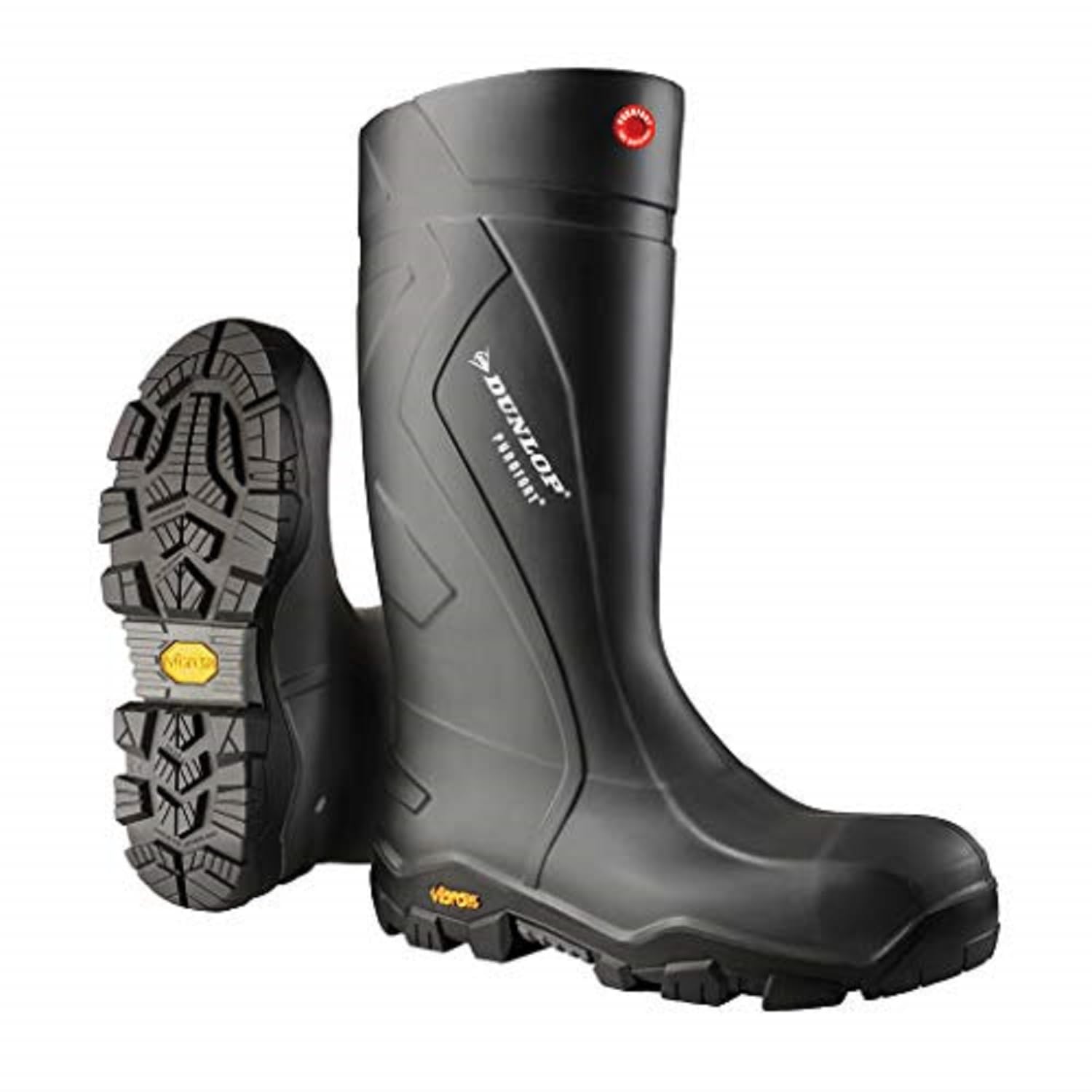
The highest-rated safety boot in this lineup, pairing a Vibram outsole with Purofort for extreme chemical and slip protection.
This is the most expensive boot on the list, and it earns the price with a spec sheet that is hard to match. The boot meets ASTM F2413-24 and CSA Z195-14 Omega standards, meaning it is certified for impact, compression, and puncture through the steel toe and midsole. The Vibram Omega outsole is a serious upgrade over standard rubber — owners in the oil and gas industry confirm it provides exceptional slip resistance on water and oil. The Purofort material delivers lightweight durability and cold insulation down to -4°F. The boot is also chemical resistant, fuel oil resistant, and 100% waterproof.
In the meat packing industry, where floors are perpetually wet with animal fats and cleaning chemicals, the boot is considered excellent — one owner says it is “light weight and nice quality” for that exact setting. Another land surveyor who wears them eight hours a day, five days a week, reports they are solid and completely waterproof. The only significant complaint is that the boot can be slippery on metal catwalks and stairs — one operator slid down three times. If your environment includes metal grating, you might want a different tread. But for wet, muddy, oily floors, this is the most protective boot you can buy.
What justifies the investment
- Vibram Omega sole is certified for exceptional slip resistance on water and oil
- Meets ASTM F2413-24 and CSA Z195-14 for impact, compression, and puncture
- Purofort material is light, durable, and cold-insulated to -4°F
The one weak spot
- Grip is not reliable on smooth metal catwalks or stairs
- Firm footbed requires an upgrade to aftermarket insoles for all-day comfort
Best for: Oil and gas workers, meat packers, and anyone who needs the highest-rated slip, puncture, and chemical protection available in a lightweight rubber boot.
steer clear if: Your work environment involves frequent walking on metal grating or stairs — or if you want a boot that is comfortable straight from the box without added insoles.
Understanding the Specs
Chemical Resistance Standards
There is no single universal “chemical resistant” seal. Each boot material — PVC, neoprene, Purofort, or treated leather — resists a different chemical family. The manufacturer may state the boot resists “fuel oils and animal fats” (PVC) or “solvents, caustics, and hydrocarbons” (neoprene). Always check the specific chemical your job uses against the manufacturer’s claims. For broad protection across many chemicals, neoprene and Purofort rubber are the most versatile.
Steel Toe vs Composite Toe vs Carbon Fiber
A steel toe is the heaviest and strongest, rated to ASTM F2413 for impact (I/75 means it withstands 75 foot-pounds of impact) and compression (C/75 means 2,500 pounds). A composite toe is lighter and does not conduct cold or electricity, making it a good choice for cold climates and electrical work. Carbon fiber is the lightest and thinnest, meeting the same standards, but it can feel tighter if you have a wider foot. Composite and carbon fiber toes will not set off metal detectors.
FAQ
Are chemical resistant work boots also waterproof?
How do I know if a boot is resistant to the chemicals I use at work?
Will XTRATUF or Baffin boots fit my wide feet?
Can I wear chemical resistant work boots in winter?
How long do chemical resistant work boots last?
What is the difference between PVC and Purofort for chemical resistance?
Do these boots meet ASTM or OSHA safety standards?
Can I use a chemical resistant boot for logging or hiking?
How should I clean and maintain chemical resistant work boots?
Why do some rubber boots smell so strong from the start?
Final Thoughts: The Verdict
For the majority of shoppers, the best chemical resistant work boots winner is the Georgia Boot Farm and Ranch Pull On because it combines SPR leather chemical resistance, no break-in comfort, and the highest owner satisfaction score of any boot here — all at a price that makes it an easy first pick. If you need full liquid splash protection and a steel toe, grab the DUNLOP 15″ Flex 3. And for the ultimate in slip and chemical certification with a Vibram sole, the DUNLOP Purofort+ Expander is the one to reach for.
How We Picked
We do not accept paid placement. Every pick is matched to a real buyer and a real use-case; we do not hands-on test units.
Sources & Methodology
Specifications: manufacturer listings and product documentation. Review insights: verified customer reviews, as of July 2026. Pricing: not shown on this page (it changes often); check the current price via the retailer link.
As an Amazon Associate, WellFizz earns from qualifying purchases. This does not affect which products we feature.
Related Guides

Mo Maruf
I created WellFizz to bridge the gap between vague wellness advice and actionable solutions. My mission is simple: to decode the research and give you practical tools you can actually use.
Beyond the data, I am a passionate traveler. I believe that stepping away from the screen to explore new environments is essential for mental clarity and physical vitality.