Our readers keep the lights on and my smoothie glass nicely filled. As an Amazon Associate, I earn from qualifying purchases.
Specs are compiled from manufacturer listings and verified buyer reviews and can change over time — please confirm the key details on the product page before buying.
Plastic is a tricky surface to glue. Most household adhesives just bead up and slide off, leaving you with a broken part and a sticky mess. The right construction adhesive for plastic bonds chemically, fills gaps, and often ends up stronger than the original material around it — so your repair actually lasts.
I’m Mohammad Maruf — the founder and writer behind WellFizz. This guide is built by comparing the manufacturers’ published specifications and the patterns across verified customer reviews, so you get each pick’s real strengths and trade-offs instead of marketing spin.
Whether you are fixing a cracked bumper, reattaching an emblem, or bonding hard-to-stick polypropylene, the best construction adhesive for plastic depends on the plastic type, the strength you need, and how fast you want it to set.
Our Picks at a Glance
How To Choose The Best Construction Adhesive For Plastic
Picking the right plastic adhesive is about matching the glue chemistry to your specific plastic type and the demands of the job. A flexible repair on a bumper needs a different formula than a rigid bond on a broken 3D print. Here are the key factors to weigh before you buy.
Know Your Plastic Type
The biggest mistake is assuming all plastic is the same. Polypropylene (PP) and polyethylene (PE), often found in Tupperware, buckets, and car bumpers, are low-energy surfaces that most glues cannot wet. You need either a specialized adhesive with an activator primer or a two-part system designed for these slick plastics. ABS, polycarbonate, and PVC are easier to bond and work with a wider range of epoxies and cyanoacrylates (super glues).
Tensile Strength and Gap Filling
Tensile strength, measured in PSI, tells you how much pulling force the bond can withstand before it breaks. A high PSI number like 3770 means the joint can handle serious load — ideal for structural repairs like a scooter bracket or a bumper tab. Gap filling is equally important if the broken pieces do not mate perfectly; a thick, two-part epoxy fills those voids instead of relying on perfect surface contact.
Set Time vs. Full Cure
Set time is how fast the glue becomes firm enough to hold the parts together without clamping — some cyanoacrylates do this in seconds. Full cure time is the total wait before the bond reaches its maximum strength, often 24 hours. Fast-setting adhesives save you from holding parts in place, but they can be unforgiving if you need to adjust the alignment. Slower epoxies give you working time to position everything perfectly.
Quick Comparison
| Model | Best For | Adhesive Type | Tensile Strength | Set Time | Amazon |
|---|---|---|---|---|---|
| J-B Weld Plastic Bonder★ Best Overall | High-strength rigid repairs | Two-part urethane epoxy | 3770 PSI | 15 minutes | Amazon |
| Loctite Power Grab Ultimate crispTop Performer | Invisible, waterproof construction | Construction adhesive | — | 24 hours | Amazon |
| Loctite Super Glue Plastics Bonding SystemPro Pick | Hard-to-bond polypropylene/PE | Cyanoacrylate with activator | — | Seconds | Amazon |
| Loctite Vinyl, Plastic, and Fabric Adhesive | Fabric-to-plastic and vinyl repairs | Contact adhesive paste | — | 24 hours | Amazon |
| 3M Plastic Emblem & Trim Adhesive | Automotive emblems and trim | Acrylic liquid | — | 15 minutes | Amazon |
| Loctite Plastics Bonding System 6-Pack | Quick fixes on PP, PE, PTFE | Cyanoacrylate with activator | — | Seconds | Amazon |
| 3M Nitrile High Performance Plastic Adhesive 1099 | Industrial-grade vinyl and plastic | Nitrile liquid | — | 40 minutes | Amazon |
| 3M Industrial Plastic Adhesive 4475 | Clear, weatherproof outdoor bonds | Acrylic liquid | — | 24 hours | Amazon |
| 3M Super Fast Plastic Repair | Rapid, gap-filling structural repairs | Two-part urethane | — | 20 seconds | Amazon |
In‑Depth Reviews
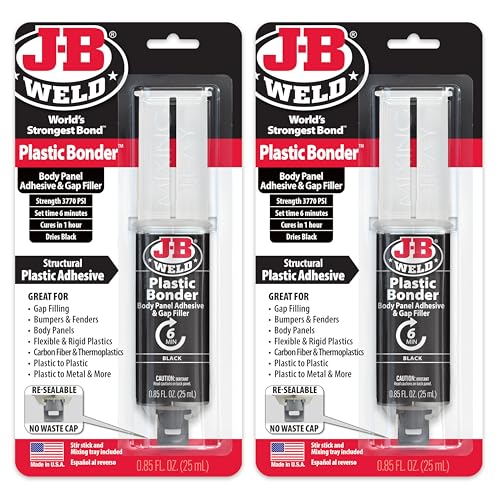
1. J-B Weld Plastic Bonder Black 25ml Syringe – 2 Pack
Our pick — over 4.5★ from 18,500+ verified ratings; the strongest balance of quality and price.
The epoxy sets fast and outlasts the plastic it touches.
The defining spec here is the tensile strength: 3770 PSI. That is not just a number — it means a bonded joint on a scooter steering component holds under real riding stress, and a cracked bumper bracket stays fixed through vibration and weather. The two-part urethane formula mixes in a 1:1 ratio right in the syringe, so there is no guesswork with measuring. It sets in 15 minutes and reaches full cure at 30 hours, turning black and sandable for a repair that disappears into the surface.
What wins people over is the sheer effectiveness — it is the most-praised aspect by a huge margin, with owners using it on everything from wiper covers to car body panels. The syringe design with a resealable cap means you can use a little and save the rest, which extends the value of the two-pack. Unlike the thinner cyanoacrylate picks here, this one also fills gaps, so uneven breaks are no problem. The trade-off is mostly a fit issue: it will not bond polypropylene or polyethylene, so check your plastic type before you buy.
Real-world strengths
- 3770 PSI tensile strength handles heavy structural loads
- Resealable syringe allows multiple uses without drying out
- Sands smooth and paints over for invisible repairs
The honest limit
- Not effective on polypropylene or polyethylene plastics
- Full 30-hour cure time before maximum strength
Your best bet when: you need a gap-filling, high-strength epoxy for thermoplastics, ABS, fiberglass, or coated metals.
Look elsewhere for: flexible or rubbery plastic repairs where a rigid cure could crack under movement.
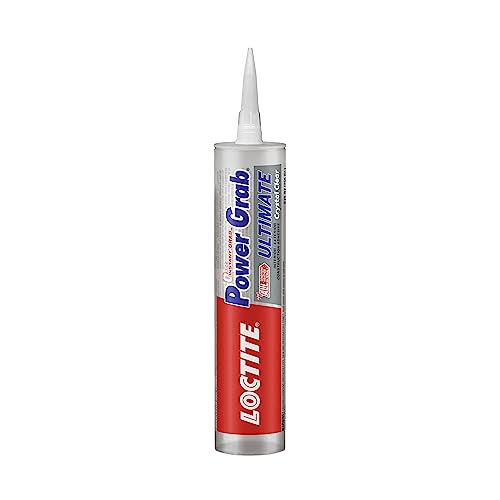
2. Loctite Power Grab Ultimate crisp Construction Adhesive, 9 fl oz Cartridge
The invisible hold stays clear even in wet, exposed spots.
This is the rare construction adhesive that goes on crisp and stays that way after full cure. It is designed for bonding materials like wood, tile, and plastic to each other, and it handles damp or wet surfaces without losing grip. The quick initial tack means you often skip bracing or nailing — one owner used it to install a stainless steel backsplash with no additional support. It passed a 5-pound weight test after the 24-hour cure time.
Weather resistance is the standout here: the bond withstands temperatures from 0°F to 140°F and holds up against water and weather. That makes it a strong choice for exterior plastic trim or outdoor fixtures. On the downside, it struggles in freezing conditions during application — some owners found it stayed tacky even after 24 hours when working below freezing. The 9 fl oz cartridge is generous, but the tip needs to be capped well or the tube hardens between uses.
Clear advantage: dries invisible and bonds non-porous surfaces like plastic to tile without visible residue.
Temperature caution: apply only in conditions above freezing for a reliable cure.
Reach for this if: you need a waterproof, clear construction bond for exterior plastic trim or mixed-material projects.
Skip it when: working below 0°F or bonding high-stress load-bearing plastic parts.
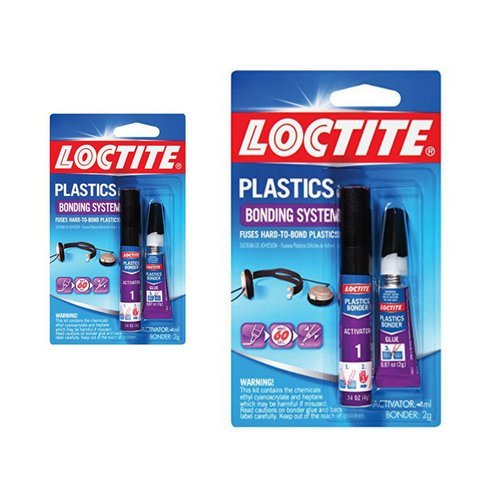
3. Loctite Super Glue Plastics Bonding System with Activator 2-Gram (2 Pack)
The only glue that finally tamed polypropylene.
This is a two-part cyanoacrylate system: you first apply an activator that primes hard-to-bond surfaces like polypropylene and polyethylene, then add one drop of the super glue. It sets in seconds and develops tremendous strength without any clamping. The result, as owners describe it, is a bond that “doesn’t come apart anymore” — a direct contrast to every other adhesive that failed on the same part. The repair dries clear and resists water, most chemicals, and freezing temperatures.
Where this system shines compared to the J-B Weld epoxy is speed and compatibility with slippery plastics. A cracked polypropylene cat carrier was fused nearly invisibly and ended up stronger than the original. The catch: the bottles are small (2 grams each), and some units arrive with partially dried activator if the seal is compromised. It is not a gap-filler, so broken edges need to mate cleanly for the bond to work.
Standout for: polypropylene and polyethylene repairs where no other glue sticks.
Not for: gap-filling or porous breaks where two-part epoxy is a better fit.
Buy it for: the specific, frustrating jobs where you have already tried everything else and nothing held.
Think twice if: your repair has gaps or you need a single product for many different plastic types.
4. Loctite Vinyl, Plastic, and Fabric Adhesive, Pack of 2 Clear

The paste bridges fabric and plastic with a flexible hold.
Most plastic adhesives are thin liquids that soak into fabric or run off vinyl. This one comes as a paste, which gives you control on vertical surfaces and on porous materials like upholstery or lawn mower seat padding. It bonds glass, paper, plastic, vinyl, and wood, making it a true multi-surface option. The 24-hour full cure time is standard for contact adhesives, and the pack of two tubes gives you a spare for future projects.
Effectiveness is the top praise, with owners using it to reglue shoe soles and repair vinyl bar stools that see daily use. It also works on ABS plastics, which covers many household items. The main drawback is the stringiness — the paste can pull threads if you lift the applicator too quickly. Durability is mixed in the reviews, with some finding it ideal for non-structural bonds and others wanting more permanence on high-stress items.
Best use: reattaching fabric to plastic seats, repairing vinyl upholstery, or bonding mixed materials.
Stringiness note: apply in short dabs and press firmly to avoid messy threads.
Reach for this if: your project involves fabric, vinyl, or foam bonded to a plastic base.
Skip it for: rigid plastic-to-plastic structural repairs where a two-part epoxy delivers more strength.
5. 3M Plastic Emblem & Trim Adhesive (03601), 1 fl oz Tube (Pack of 3)

Three tubes of weatherproof holding power for emblems that stay put.
This 3M adhesive is formulated specifically for plastic and metal emblems, trim, and interior panels on vehicles. It sets in about 15 minutes and fully cures in 24 hours, going on clear and staying clear. The weather resistance is the key feature — it withstands water, heat, vibration, and automotive fluids, so a badge stays attached through car washes and summer sun. One owner reported an emblem held strong for three months through numerous washes.
The pack of three tubes is a practical value, especially if you have multiple repairs or a single large job. The adhesive quality gets strong praise from owners, with many noting it is easy to apply and holds exactly as expected. The main complaint is the mess: the liquid is thin and can ooze out of the joint if you apply too much. Compared to the Loctite Power Grab, this one is purpose-built for automotive trim rather than general construction, making it the focused choice for car repairs.
Where it wins: exposed outdoor automotive repairs where rain, vibration, and temperature swings are constant.
Application tip: use a small amount and wipe excess immediately to keep the bond line clean.
Buy it for: reattaching car emblems, side trim, or interior panels with confidence in outdoor durability.
Not for: large gap-filling repairs or bonding non-automotive plastics at home.
6. Loctite Plastics Bonding System, Clear Kit, 6 Pack
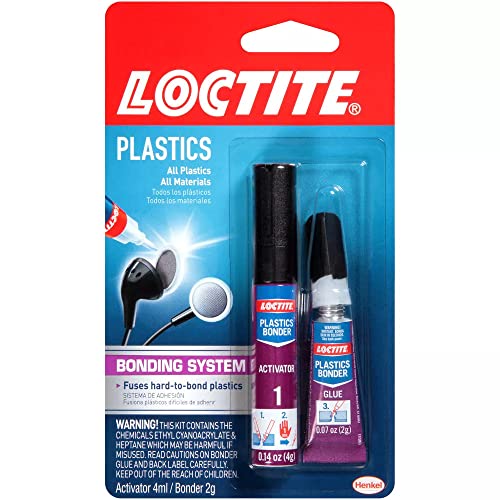
Six individual kits to fuse the hardest plastics in seconds.
This is the multi-pack version of the Loctite two-part bonding system, giving you six individual kits each with a glue tube and an activator stick. It targets the same stubborn plastics as product 3 — polyethylene (PE), polypropylene (PP), and even polytetrafluoroethylene (PTFE) — but in a larger quantity. The activator primes the surface, and the cyanoacrylate glue sets in seconds with no clamping required. The bond dries clear and resists water, most chemicals, and freezing temperatures.
The consensus is that it works well on most hard plastics including ABS, and one owner used it to hold car seat panels solidly for weeks. The catch is the same as the smaller pack: some plastics like PVC do not respond to this chemistry, and the single-use nature of each kit means the nozzle seals shut after opening. It is a great value for anyone who regularly repairs different plastic items, but less efficient for one small job.
Ideal for: anyone who needs a reliable plastic-bonding adhesive in the workshop for repeated use.
Know before you buy: not all plastics are the same — test on a hidden area first, and expect a medium-duty bond rather than structural-grade hold.
Keep it in the toolbox for: the inevitable broken ABS part or polypropylene item that nothing else sticks to.
Look elsewhere for: large surface area bonding or heavy-load repairs where epoxy outperforms cyanoacrylate.
7. 3M Nitrile High Performance Plastic Adhesive 1099, 5 fl oz Tube
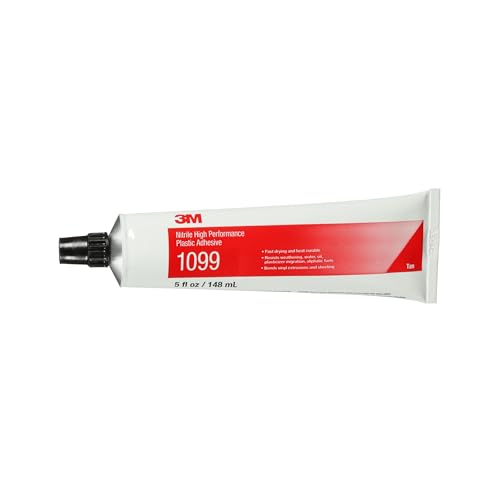
The workhorse adhesive bonds vinyl and plastic with a 40-minute open window.
This is a nitrile-based adhesive made for industrial use, meaning it is tacky, strong, and designed for application with spray equipment. It forms strong bonds on most vinyls and plastics, with a 40-minute working time that gives you plenty of room to position parts. Optional heat curing increases bond strength if you have the setup. The tan color is not invisible, but the focus here is on function rather than appearance.
One owner described it as “probably the best glue on the face of the earth” for its ability to bond almost any material. Another used it successfully to seal a gasket on a brewery heat exchanger. The durability note is honest: a lawn tractor seat cover eventually peeled after several months, which is a tough application. This is not a general consumer adhesive — it is labeled for industrial/occupational use only, so it is best for workshops and serious DIYers who need a specialized bond.
Strongest point: the long working time allows careful positioning on large or complex plastic assemblies.
Reality check: not every vinyl bond is permanent — heavy peeling loads can eventually defeat it.
Reach for this if: you have an industrial or workshop project that needs a high-performance plastic glue with adjustable positioning.
Skip it for: small household repairs where a consumer-grade adhesive is simpler and cheaper.
8. 3M Industrial Plastic Adhesive 4475, Clear, 5 Oz Tube

Clear, non-yellowing strength that weathers the seasons.
This 3M adhesive is formulated for high performance on ABS, polycarbonate, and PMMA (acrylic) plastics, forming flexible bonds that resist weathering, water, and cleaning products. The non-yellowing formula means outdoor repairs stay clear rather than turning yellow in the sun, which matters for visible parts like door panels or trim. It dries clear and quick, with a 24-hour full cure time for maximum strength.
The adhesive quality earns consistent praise from owners — “this glue is amazing and hold forever” is a typical reaction, with one owner using it to fix a Boxster door card with confidence that it would not come off. The hold strength gets mixed reviews overall, but the overwhelming pattern is that it works very well on the plastics it is designed for. At 5 ounces, the tube is generous, but the slow shipping some owners experienced is note if you need a fast turnaround.
Where it excels: outdoor plastic repairs where UV exposure and cleaning chemicals would yellow other adhesives.
Planning tip: order ahead of your repair if possible, as delivery times can vary.
Buy it for: clear, weather-resistant bonds on ABS, polycarbonate, or acrylic plastic parts.
Not for: polypropylene or polyethylene plastics that need an activator-based system.
9. 3M Super Fast Plastic Repair, 04247, 200 mL Cartridge
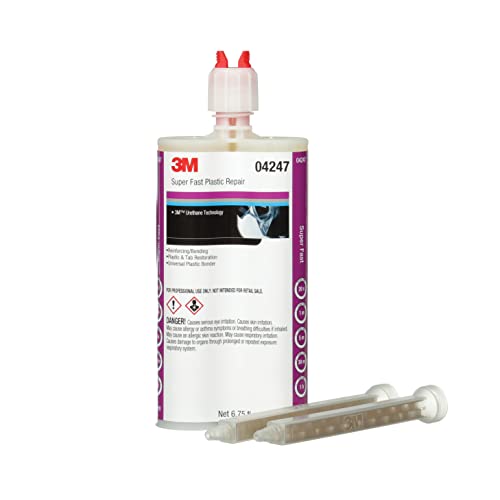
Twenty seconds to set — have everything ready before you squeeze.
This two-part urethane adhesive sets in approximately 20 seconds, making it the fastest curing pick in this lineup. It bonds virtually any substrate, fills gaps, and does not become brittle like cyanoacrylate glues. The 200 mL cartridge comes with two static mixing nozzles, and the translucent finish means it blends into most surfaces. An owner used it to repair Honda Accord bumper tabs that had been broken by parking poles, and the bond held strong.
The speed is both the biggest advantage and the trickiest part. In hot weather (87-95°F), it can set in as little as 10 seconds, leaving no time for adjustment. The drying time is the most-discussed aspect in reviews, with mixed opinions — some love the instant grab, while others find it too fast for summer work. The cartridge also wastes some product in the mixing nozzle, though manual mixing with a screwdriver is possible for small batches. For industrial users and experienced DIYers, this is a powerful tool; for a first-time repair, the J-B Weld epoxy is more forgiving.
Why you want it
- Sets in 20 seconds for near-instant part holding
- Gap-filling urethane stays flexible, not brittle
- Bonds almost any substrate including wood and plastic
The speed trap
- Extremely fast cure leaves zero room for repositioning
- Cartridge design wastes product in the mixing nozzle
Reach for this when: you need a fast, gap-filling repair and you have experience with rapid-set adhesives.
Not for: beginners or situations where you need to adjust the parts after applying the glue.
Understanding the Specs
Tensile Strength (PSI)
This number tells you how much pulling force the bond can take before it breaks. A higher PSI means a stronger, more load-bearing joint. For example, a 3770 PSI rating on the J-B Weld Plastic Bonder means it can handle heavy stress like a scooter bracket or a bumper repair. For lighter jobs like fixing a plastic toy or a trim piece, a lower PSI is perfectly fine.
Set Time vs. Full Cure Time
Set time is how long it takes for the glue to firm up enough to hold the parts in place without clamping. Full cure time is the total wait before the bond reaches its maximum advertised strength. A 15-minute set time means you can let go of the part quickly, but the 24-hour or 30-hour full cure means you should not stress the joint until the next day. Fast-setting cyanoacrylates set in seconds, but they are brittle and not gap-filling.
Activator / Primer Systems
Some adhesives include a separate activator that you apply to the plastic surface first. This is critical for low-energy plastics like polypropylene (PP) and polyethylene (PE), which are naturally slippery and resist bonding. The activator chemically primes the surface so the glue can actually grip. Without it, most adhesives will simply bead up and peel off. Look for this feature if you are repairing buckets, Tupperware, or many automotive plastics.
Gap Filling Ability
A gap-filling adhesive can bridge small voids between broken parts that do not fit together perfectly. Two-part epoxies and urethanes are naturally gap-filling because they are thick and do not run. Thin cyanoacrylate glues (super glues) require near-perfect surface contact to work. If your plastic piece has snapped into jagged edges that do not meet flush, a gap-filling formula like the J-B Weld Plastic Bonder or the 3M Super Fast Plastic Repair will produce a stronger result.
FAQ
Will these adhesives work on polypropylene (PP) and polyethylene (PE) plastic?
How long should I wait before the bond is fully strong?
Can I use these adhesives outdoors in wet or cold conditions?
What is the difference between a two-part epoxy and a cyanoacrylate (super glue) for plastic?
How do I prepare a plastic surface before applying adhesive?
Is the 3M Nitrile High Performance Plastic Adhesive 1099 for home use?
Which adhesive is best for automotive plastic repairs like bumpers and trim?
Can I paint or sand over these adhesives after they cure?
What is the shelf life of these adhesives after opening?
Which product works best for 3D-printed plastic parts?
Final Thoughts: The Verdict
For the majority of shoppers, the construction adhesive for plastic winner is the J-B Weld Plastic Bonder because it combines a massive 3770 PSI tensile strength with a 15-minute set time and gap-filling capability in a resealable syringe. If you need to bond polypropylene or polyethylene that nothing else sticks to, grab the Loctite Super Glue Plastics Bonding System with its activator primer. And for a clear, waterproof construction bond that stays invisible on surfaces like plastic trim and tile, the Loctite Power Grab Ultimate crisp is the one to reach for.
How We Picked
We do not accept paid placement. Every pick is matched to a real buyer and a real use-case; we do not hands-on test units.
Sources & Methodology
Specifications: manufacturer listings and product documentation. Review insights: verified customer reviews, as of July 2026. Pricing: not shown on this page (it changes often); check the current price via the retailer link.
As an Amazon Associate, WellFizz earns from qualifying purchases. This does not affect which products we feature.
Related Guides

Mo Maruf
I created WellFizz to bridge the gap between vague wellness advice and actionable solutions. My mission is simple: to decode the research and give you practical tools you can actually use.
Beyond the data, I am a passionate traveler. I believe that stepping away from the screen to explore new environments is essential for mental clarity and physical vitality.