Our readers keep the lights on and my smoothie glass nicely filled. As an Amazon Associate, I earn from qualifying purchases.
Specs are compiled from manufacturer listings and verified buyer reviews and can change over time — please confirm the key details on the product page before buying.
Creosote buildup inside a chimney is the leading cause of preventable house fires — and the standard solution (a sweeper visit or a weekend on the roof) is one most homeowners dread. A chimney cleaning log gives you a different route: burn one in a hot fire, and its mineral smoke works on the tar inside your flue (the pipe that vents smoke) for days, turning sticky creosote into a dry crust that flakes away or brushes off with ease.
I’m Mohammad Maruf — the founder and writer behind WellFizz. This guide is built by comparing the manufacturers’ published specifications and the patterns across verified customer reviews, so you get each pick’s real strengths and trade-offs instead of marketing spin.
If you heat with a wood stove every winter or just light the fireplace a few times a season, these are the best chimney cleaning log options that actually fit your burning habits and maintenance routine without guessing.
Our Picks at a Glance
How To Choose The Best Chimney Cleaning Log
Not every log works the same way on every fireplace or stove. The key differences come down to how concentrated the treatment (the mineral additives on the log) is, what form it takes (solid log vs pellet vs packet), and how often you actually burn. Here is what to watch for.
Form Factor and Application
Most buyers picture a single log you toss onto the fire. That is the standard approach — one log burns for about 90 minutes and releases mineral catalysts into the smoke. But there are also pellet-style treatments you add to a pellet stove’s hopper (the container that holds the fuel), and toss-in packets that work with any fire. Pick the form that matches your stove type and how much effort you want per treatment.
Treatment Strength and Frequency
A single log is often enough for a whole season in a fireplace used moderately. But a heavy-use wood stove running daily through the winter benefits from a more frequent treatment — some products recommend one log every 50 fires or a weekly pellet dose. Check the recommended frequency in the data so you can match it to your burn schedule without overspending on unnecessary treatments.
Safety Standards and Certifications
The best logs carry third-party acceptance from the Chimney Safety Institute of America (CSIA) (an independent group that tests chimney products) or have UL approval (a safety certification from Underwriters Laboratories). These marks mean the product has been tested for its intended purpose. A log without either can still be effective, but the certification is an extra layer of confidence that the manufacturer followed a recognized safety standard.
Quick Comparison
| Model | Best For | Form | Treatment Count | Weight | Amazon |
|---|---|---|---|---|---|
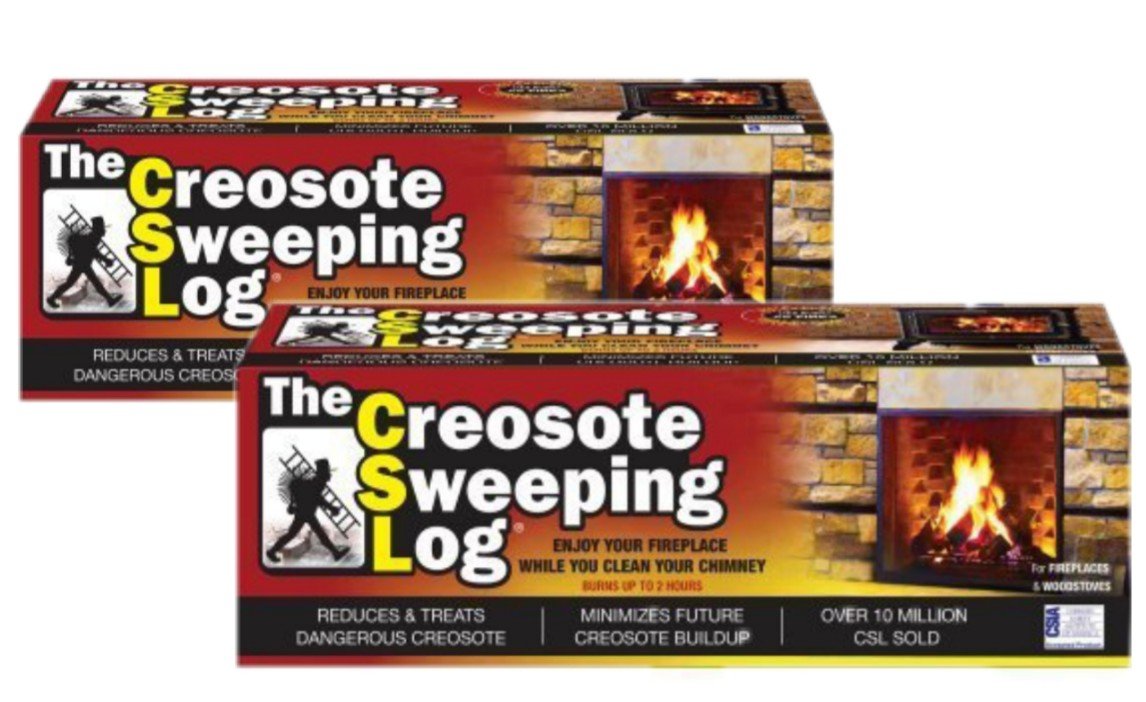
| Creosote Sweeping Log (Pack of 2)★ Best Overall | General fireplace & wood stove use | Log | 2 | 3.05 kg | Amazon |
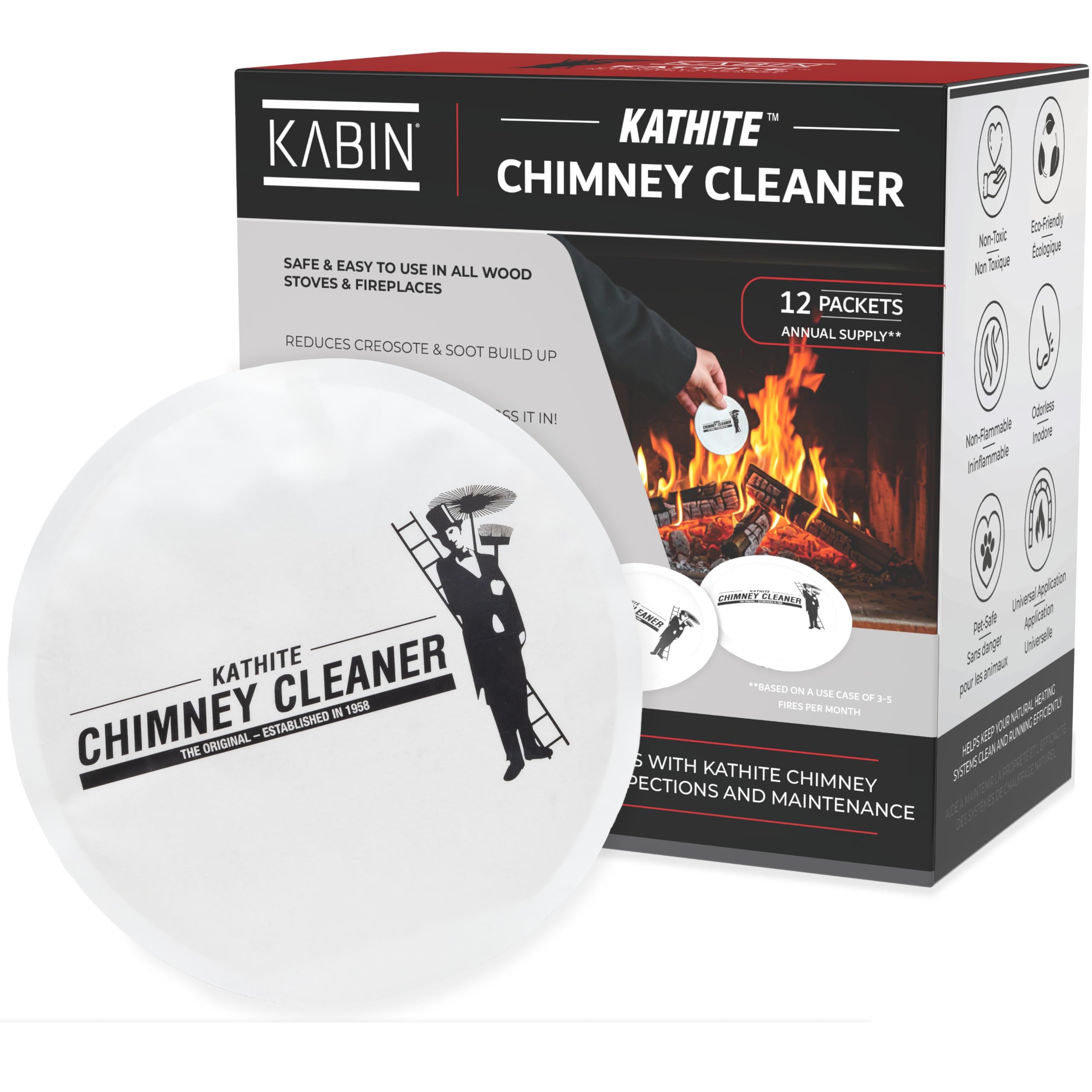
| KABIN KATHITE Triple Power PacketsSmart Value | Frequent maintenance, low-odor preference | Packet | 12 | — | Amazon |
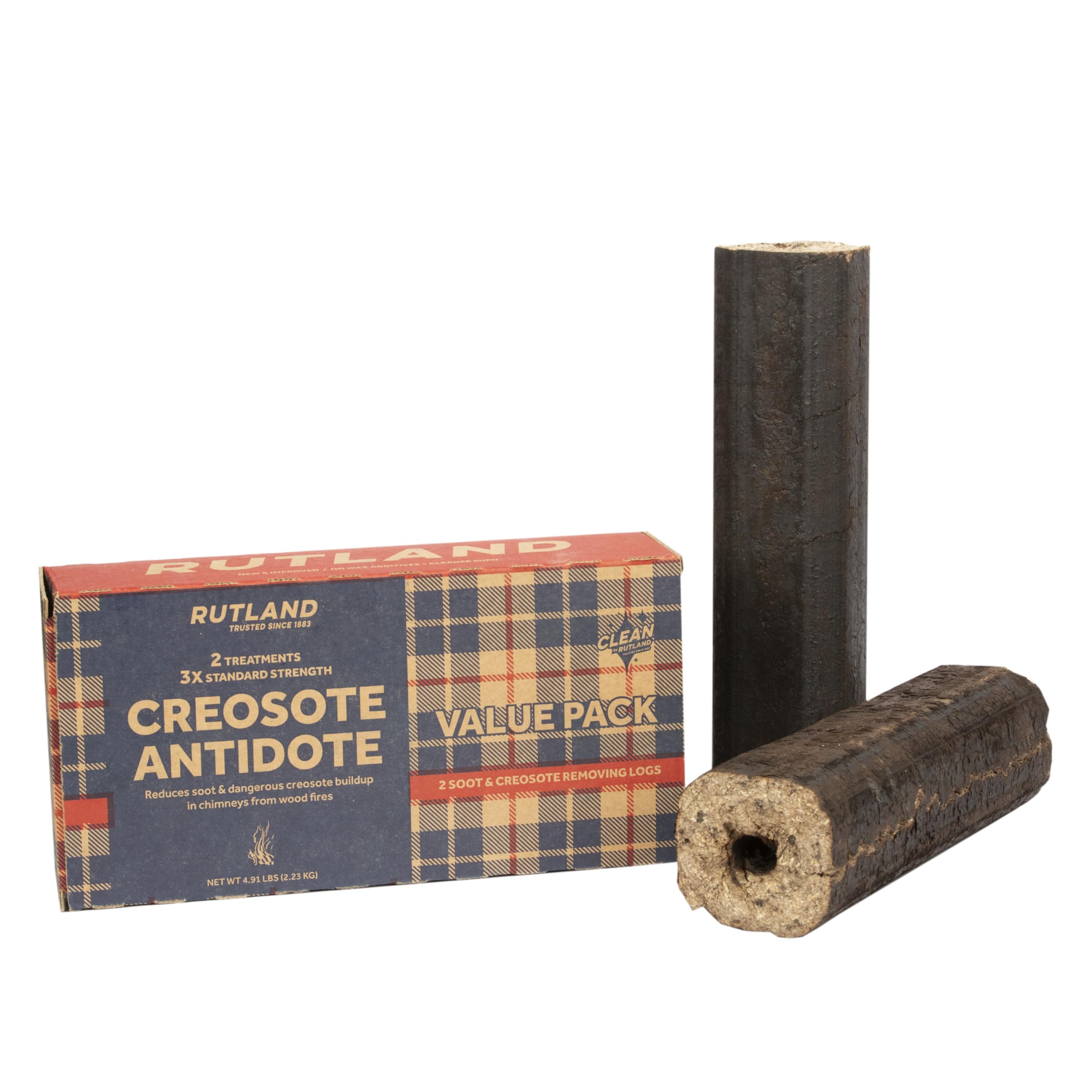
| Rutland Creosote Antidote 2-Pack | Thick creosote, heavy-use stoves | Log | 2 | 2.5 lb per log | Amazon |
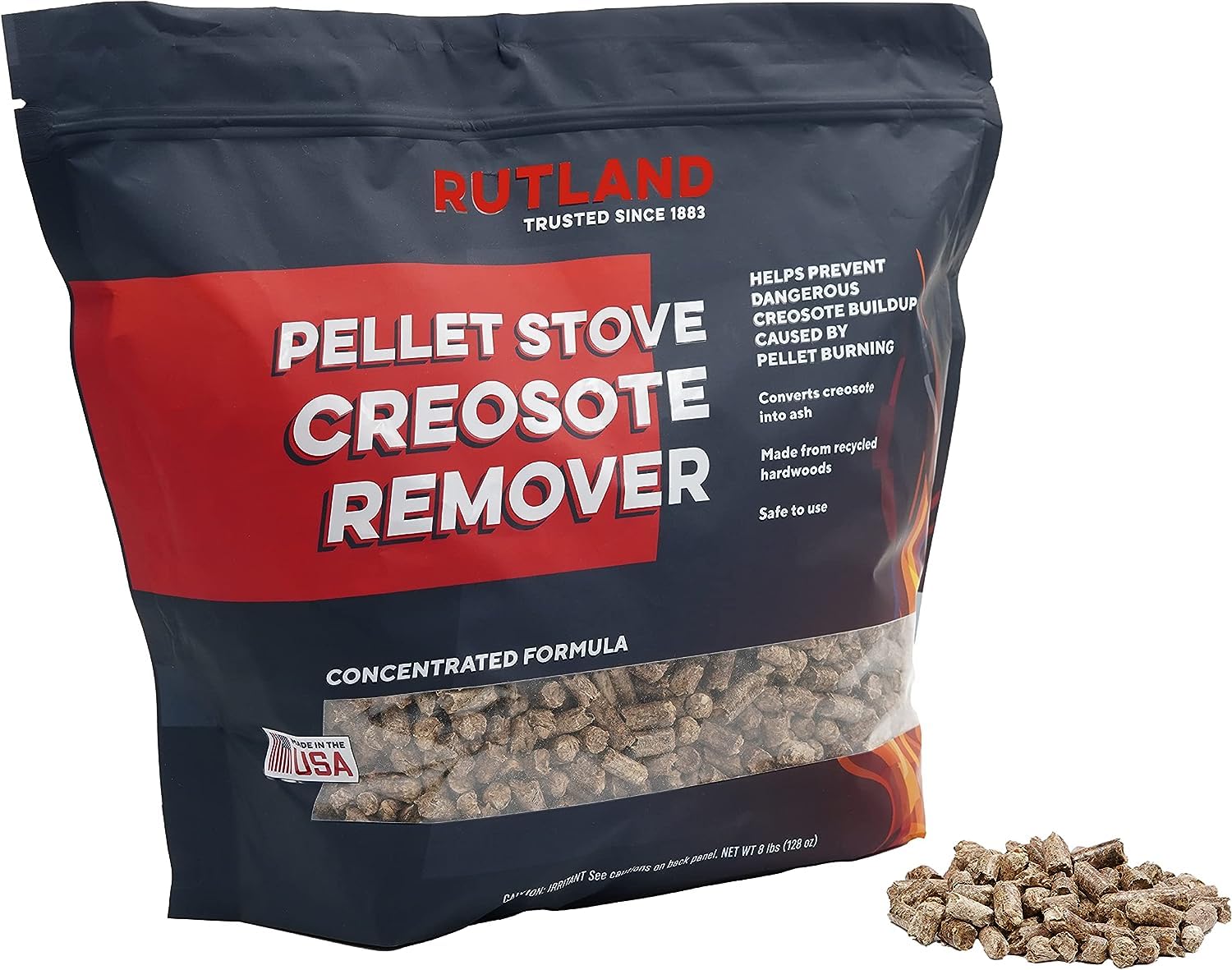
| Rutland Pellet Stove Creosote Remover | Pellet stove owners | Pellet | 16 | 8 lb | Amazon |
| CSL Creosote Sweeping Log (4-Pack) | Seasonal maintenance, CSIA-accepted | Log | 4 | — | Amazon |
| CSL Creosote Sweeping Log (5-Pack) | Commercial-grade, heavy-use households | Log | 5 | 39 lb | Amazon |
| Chimney Kwik-shot Soot Stopper | Coal stoves, oil furnaces, preventive care | Stick | 36 | 10 lb | Amazon |
In‑Depth Reviews
1. Creosote Sweeping Log For Fireplaces (Pack of 2)
Our pick — over 4.5★ from 200+ verified ratings; the strongest balance of quality and price.
The two-log set that has owners reporting spotless pipes after a full season of burning.
This is the product that wins the crowd for a simple reason: it actually delivers the “low-maintenance” experience most buyers hope for. The logs burn like a standard fireplace log, and the mineral-laced smoke works on the creosote over the following weeks. Owners who used two logs across a full year and then inspected their 20-foot wood stove pipe report finding it almost spotless — with no cleanup required. That is the kind of outcome that turns a one-time buyer into a repeat customer.
The pack comes with two natural-wood logs, each scented with a strong and smoky aroma. At 3.05 kg total (about 6.7 lb), they are hefty enough to feel substantial in hand. The manufacturer recommends using them as directed — one log per treatment, on a hot bed of coals — and owners confirm that sticking to the instructions is what makes the difference. A few packages arrive with cosmetic damage to the box or a busted log, but the product inside still performs as intended.
The thing everyone raves about is how the logs turn a messy seasonal chore into a quick check. Instead of scraping and brushing for an hour, you pull out a few flakes and call it done. The only real trade-off is that the smoke carries a noticeable odor while burning — described here as strong and smoky — so you will want to keep doors to the room closed during the 90-minute burn.
Log reduces creosote
- Two logs cover an entire heating season for most households
- Leaves the pipe “almost spotless” — buyers report zero cleaning needed
- Easy to use: light a hot fire, place the log, let it burn
Less effective on heavy buildup
- The smoky aroma is strong while the log burns
- Boxes sometimes arrive damaged, occasionally cracking the log
Reach for this if: you want a straightforward seasonal treatment that makes the annual chimney inspection less of a mess and more of a formality.
Look elsewhere if: you are sensitive to strong burning smells or need a product for a pellet stove rather than a wood-burning fireplace.
2. KABIN KATHITE Creosote Concentrate Buster – Triple Power Remover Packets
A 12-packet case that turns every-other-fire maintenance into a no-mess toss-in routine.
If you burn wood daily through the winter, a single log every few months may not be enough. KABIN KATHITE shifts the model from “treat once a season” to “treat every other fire” — and the case of 12 packets makes that schedule simple. Owners mention a dramatic change in their cleaning routine: glass doors that needed wiping every two weeks stayed clean for months, and the chimney itself appeared clear and shiny when inspected mid-season. The recommended dose is two capfuls every other fire, tossed directly onto the burning wood with no measuring or prep.
The formula is a proprietary blend of non-toxic minerals and additives that the maker describes as environmentally friendly, biodegradable, and pet-safe. It is compatible with wood stoves, pellet stoves, and fireplaces — and unlike a log, it produces no noticeable odor for most users (though a few note a mild smell). The aspect buyers praise most is effectiveness, with 65 owners singling it out, followed by ease of use at 20 mentions.
There is one small friction point: the instructions are printed very small on the packet, and several owners needed a magnifying glass to read them. The directions themselves are clear once visible, but the legibility is a genuine oversight. Keep that in mind when you first open the case.
Concentrate targets tough creosote
- 12 treatments in one case — covers a full burn season with frequency to spare
- Non-toxic and biodegradable, so no worry about pets or the environment
- Effectiveness is the top praise: 65 owners highlight how well it reduces buildup
Tiny print instructions
- Instructions are printed in a tiny font that is hard to read without magnification
- Odor gets mixed feedback — a few owners detect a mild smell during use
Best for: anyone who burns wood daily or near-daily and wants a simple, frequent treatment that keeps the chimney clear without a monthly log purchase.
Think twice if: you only light a fire a few times a year — a single log may be more cost-effective than a 12-packet supply.
3. Rutland Creosote Antidote, Chimney Cleaning Fire Logs, 2-Pack
A concentrated log that packs triple the cleaning power into a heavier, denser burn.
Rutland says this is a concentrated formula that delivers triple the cleaning power of conventional creosote-removing products, and the numbers back up the claim. Each of the two logs weighs 2.5 pounds — noticeably heavier than the standard 1.5-pound competitor logs — and the formula contains no wax additives, meaning the burn is cleaner and leaves less residue behind. The chemistry works by converting creosote buildup into a brushable ash, which is exactly what a chimney sweep wants to see before the annual inspection.
Owners who used one log each year for two seasons report that the stove kept burning clean the whole time, with no need for mid-season scraping. Another owner burned one a few days before the annual sweep and found that the process was noticeably easier, with a good amount of debris coming loose. The most-mentioned positive aspect is chimney cleaning effectiveness (26 owners call it out), followed by quality (9 mentions).
The honest catch is the smell — described by one owner as “rhinoceros dung.” The odor is potent while the log burns, though it does not linger. Also, a few units arrive with cosmetic crushing from shipping (the logs are heavy and the packaging is basic). The logs are also somewhat harder to light than a standard fire log; you need a hot, established bed of coals to get them going properly.
Fire log cleans as you burn
- Concentrated triple-power formula in a dense 2.5-lb log
- Two logs covered two full heating seasons for multiple owners
- Converts creosote to ash that brushes off easily before a sweep
May not suit small fireplaces
- The burning odor is strong and often described as unpleasant
- Logs need a very hot fire to ignite and stay lit properly
Grab this if: you have heavy creosote buildup from daily winter use and want a concentrated log that makes the annual sweep noticeably easier.
Pass on it if: you burn in an open fireplace only occasionally or are sensitive to strong burning smells in the room.
4. Rutland Products Pellet Stove Creosote Remover, 8 Pound Bag
The pellet-style alternative that doubles the time between burn-pot cleanings for pellet stove owners.
Pellet stoves present a different challenge than wood-burning fireplaces — the creosote tends to build up in the burn pot (the metal tray where pellets ignite) and the exhaust path, not in a wide flue. This 8-pound bag of treated pellets is designed specifically for that problem. Each 8-ounce treatment goes straight into the pellet hopper, and the concentrated formula (dried to 2–5% moisture content) releases catalysts that keep the air holes clear longer. Customers note that the time between burn-pot cleanings roughly doubles, and soot wipes off the glass easily without any chemical cleaner.
The bag holds 16 treatments, and the manufacturer recommends using it twice per week if you burn daily. The product is unscented, and owners consistently note no odor during use — a big advantage over the log-based alternatives. The aspect most praised is effectiveness (57 owners call it out), followed by ease of use (16 mentions). It is made in the USA, which matters to some buyers.
The trade-off is that the per-treatment cost is higher than a log option, and a few owners experienced clogging issues when they first started using it (likely from the old creosote breaking loose at once). Also, opinions are split on value — 15 owners flagged it as mixed on that front. If you only run a pellet stove occasionally, a bag may last several seasons and be worth the money; if you burn daily, the cost per season adds up.
Pellet stove specific formula
- Doubles the time between burn-pot cleanings — less downtime for maintenance
- No odor at all during use, which is a common complaint with logs
- 16 treatments per bag cover months of daily burning
Not for wood stoves
- Higher per-treatment cost compared to single log options
- A few owners experienced clogging when old creosote broke free initially
Reach for this if: you run a pellet stove as your primary heat source and want to cut the cleaning frequency in half without any lingering smell.
Look elsewhere if: you have a wood-burning fireplace or use your stove only a few times a month — a log makes more sense for sporadic use.
5. CSL Creosote Sweeping Log, 4-Pack

The CSIA-accepted log that burns for 90 minutes and keeps working for 15 days afterward.
This is the log that carries the formal backing you can point to: it is accepted by the Chimney Safety Institute of America (CSIA) and UL approved (a safety certification from Underwriters Laboratories). The mechanism is well-documented — the log burns for about 90 minutes, during which the smoke heats the chimney tar to the ideal treatment temperature. Minerals in the smoke deposit onto the creosote, and over the next 15 days, the creosote gradually becomes brittle and breaks away. The hickory scent is a nice plus; it smells more like a campfire than a chemical treatment.
The 4-pack gives you a full season of maintenance if you use one log every 50 fires or at least once a year. Owners with 20 years of experience burning one at the end of each season report a clear chimney flue with no sweeping needed. The product works on any chimney type, including stainless steel, and can be used in combination wood/oil burning furnaces. Creosote control is the aspect most praised (10 owners), followed by ease of use (5).
The main difficulty some owners face is ignition — the logs are harder to light than a standard fire log and need a hot, established fire to stay lit. A few also note that chunks of creosote can fall loose the next morning, which is actually a sign it is working, but it can be surprising if you are not expecting it.
Multi-pack for frequent use
- CSIA accepted and UL approved — the strongest third-party safety backing in this list
- Works for 15 days after the 90-minute burn, continuing to break down creosote
- Hickory scent is pleasant and natural, not chemical
Bulk may be excessive
- Hard to ignite — needs a very hot bed of coals to stay burning
- Creosote chunks may fall loose the next morning, which can be messy
Best for: anyone who wants a certified, UL-approved product and burns wood in a standard fireplace or wood stove a few times a week.
Think twice if: you prefer to toss-and-forget without the need for a hot, established fire to ignite the log.
6. CSL Creosote Sweeping Log Chimney Cleaner, 5-Pack

The bulk 5-log pack designed for commercial-grade use and heavy winter burn schedules.
This is the same CSL formula as the 4-pack, but scaled up for heavier use. The maker describes the product as commercial grade, meaning it is built for the rigors of daily winter burning in a wood stove or fireplace that is the primary heat source. At 39 pounds for the package, these are dense, substantial logs. Owners who burn daily through the winter stock up annually and report that the logs are essential for keeping the flue clear and the stove operating safely.
The standout owner experience here is auditory: as buyers describe it, while the log is burning you can hear soot and creosote dropping down the stove pipe — a satisfying confirmation that the treatment is actively dislodging buildup. One owner who uses a wood stove daily reports that after a few burns and a good cleaning, the chimney looks great. The recurring theme across reviews is that regular use prevents the dangerous residue that can cause a chimney fire.
Because this is a 5-log bulk pack, the upfront cost is higher than smaller packs. The logs are also heavy and the package dimensions are large (18 x 16 x 16 inches), so shipping weight and storage space are real considerations. If you burn only occasionally, the 2-log or 4-log packs give you more manageable supply without paying for logs that sit unused.
Heavy-season insurance pack: five logs cover a full winter of daily burning with the confidence that comes from hearing the creosote fall as the log burns. The bulk format keeps the per-log cost reasonable, but the 39-pound package demands dedicated storage space.
Reach for this if: your wood stove runs every day through the winter and you want a full season’s supply in one purchase.
Look elsewhere if: you burn infrequently or have limited storage space — a smaller pack is more practical.
7. Chimney 81196 Kwik-shot Soot Stopper, 36 Sticks

The toss-in stick that works on wood, coal, and oil — a true multi-fuel preventive treatment.
Most chimney cleaning logs are designed exclusively for wood-burning appliances. The Kwik-shot Soot Stopper is different: it is compatible with wood stoves, coal stoves, and oil-fired furnaces, boilers, and hot water heaters. Each stick is a sealed tube you toss directly onto a brisk fire — no opening, no measuring, no mess. As it burns, the ingredients release a catalyst (a substance that speeds up a chemical reaction) that interacts with soot and creosote, breaking them down so they flake off the chimney walls.
The treatment protocol is clearly defined: two sticks per week for the first month, then one stick per week for ongoing maintenance through the heating season. A case gives you 36 sticks, which works out to roughly a full season plus the initial treatment period. Owners who had a prior chimney fire now use these sticks preventively in their new wood stove insert and report getting a clean bill of health from their chimney inspector every year since. One owner with a 22-foot double-wall chimney found the sticks eliminated the need for a lift platform and chimney sweep entirely — though that is an exceptional outcome, not a guarantee.
The effectiveness is the most-praised aspect (10 owners), followed by quality (5). The case weighs 10 pounds and the sticks are compact (2 x 4 x 6 inches per stick), so storage is easy. The only honest caveat is that the product’s exact mechanism (catalytic action) means results are gradual — you are not going to see dramatic creosote chunks falling after a single stick. It is built for consistent preventive maintenance, not a one-time rescue.
Sticks target soot deposits
- Works across wood, coal, and oil-burning appliances — unique versatility
- 36 sticks cover the initial treatment protocol and a full season of maintenance
- Compact, sealed sticks are easy to store and toss in without any prep
Less effective on creosote
- Results are gradual; this is a preventive tool, not a fast fix for heavy buildup
- Higher upfront cost for 36 sticks, though the per-treatment cost is reasonable
Best for: homeowners with multiple fuel types (wood, coal, oil) who want a single product that works across all of them and fits into a weekly maintenance routine.
Think twice if: you only burn wood in a fireplace and want a dramatic one-and-done treatment — a log is a simpler choice for that use case.
Understanding the Specs
Treatment Frequency
The biggest factor in how well a chimney cleaning log works is how often you use it relative to how much you burn. A single log used once every 50 fires is the standard maintenance cadence for a wood-burning fireplace. If you burn daily through the winter, you may need a log every month or a pellet treatment twice a week. The manufacturers’ recommended frequency (whether it says “use once a year” or “use every other fire”) is your best starting point — match it to your actual burn schedule, not the label’s default.
Form Factor and Fuel Compatibility
Solid logs are designed for wood-burning fireplaces and wood stoves where you can build a hot bed of coals. Pellet treatments go into a pellet stove’s hopper and are unscented. Toss-in sticks and packets work across multiple fuel types, including coal and oil. Always check the “compatible with” line in the specs — using a wood-stove log in an oil furnace will not produce the same effect, and the catalyst chemistry may not work at the different combustion temperatures.
FAQ
How long does a chimney cleaning log take to work?
Can a chimney cleaning log replace a professional sweep?
Will a chimney cleaning log work in a pellet stove?
How often should I use a chimney cleaning log?
Is the smoke from a chimney cleaning log safe to breathe?
Can I use a chimney cleaning log in an open fireplace?
What is the difference between a cleaning log and a creosote remover powder?
Will a chimney cleaning log damage a stainless steel liner?
How do I dispose of a used chimney cleaning log?
What does “UL approved” mean for a chimney cleaning log?
Final Thoughts: The Verdict
If you want one dependable pick, the chimney cleaning log winner is the Creosote Sweeping Log (Pack of 2) because two logs cover a full heating season and reviewers point out a spotless pipe with zero additional cleaning. If you burn wood daily and want a frequent, low-odor treatment, grab the KABIN KATHITE 12-Packet case. And for pellet stove owners who are tired of cleaning the burn pot every week, the Rutland Pellet Stove Creosote Remover is the one to reach for.
How We Picked
We do not accept paid placement. Every pick is matched to a real buyer and a real use-case; we do not hands-on test units.
Sources & Methodology
Specifications: manufacturer listings and product documentation. Review insights: verified customer reviews, as of July 2026. Pricing: not shown on this page (it changes often); check the current price via the retailer link.
As an Amazon Associate, WellFizz earns from qualifying purchases. This does not affect which products we feature.
Related Guides

Mo Maruf
I created WellFizz to bridge the gap between vague wellness advice and actionable solutions. My mission is simple: to decode the research and give you practical tools you can actually use.
Beyond the data, I am a passionate traveler. I believe that stepping away from the screen to explore new environments is essential for mental clarity and physical vitality.