Our readers keep the lights on and my smoothie glass nicely filled. As an Amazon Associate, I earn from qualifying purchases.
Specs are compiled from manufacturer listings and verified buyer reviews and can change over time — please confirm the key details on the product page before buying.
Adding carbon dioxide to your grow tent is one of the fastest ways to push your plants past a growth plateau — but CO2 tanks, regulators, and burners are expensive, noisy, and a genuine hassle for a hobby grower. Passive CO2 bags solve that by quietly releasing gas through natural fungal activity, no electricity or refills required. The challenge is picking one that actually produces measurable CO2 instead of just sitting there.
I’m Mohammad Maruf — the founder and writer behind WellFizz. This guide is built by comparing the manufacturers’ published specifications and the patterns across verified customer reviews, so you get each pick’s real strengths and trade-offs instead of marketing spin.
The six products below represent the most popular passive options on the market today, covering everything from standard 4×4 tents to larger spaces, with honest notes on activation quirks and effectiveness. This is your practical, no-hype breakdown of the best co2 bags for grow tent setups right now.
Our Picks at a Glance
How To Choose The Best CO2 Bags For Grow Tent
Not all passive CO2 bags work the same way. A few key differences separate a bag that raises your PPM (parts per million, a measure of gas concentration in the air) from one that just hangs there. Here is what to watch for.
Activation Method and Timing
Some bags arrive self-activated — you just remove a seal and place them — while others require you to manually break up a spawn pod (a starter clump of mycelium and grain) inside the bag to kickstart the mycelium. Self-activated bags are simpler, but manual-activation bags often need two to four weeks before you see a CO2 rise, so plan your grow cycle around that lag.
Coverage Area and Bag Size
Most standard bags claim to cover a 4-foot by 4-foot space, which is roughly 128 cubic feet. XL versions can handle 6×6 or 288 cubic feet. The bag’s weight — 4 pounds versus 11 pounds — gives you a rough idea of how much substrate (the material the fungus grows on) is inside producing gas, so match bag weight to your tent’s volume.
Longevity vs. Peak Production
A bag’s total lifespan (typically 6 to 10 months) includes a ramp-up phase, a peak production window, and a slow decline. The peak window is what matters for your flowering cycle. A bag that lasts 10 months but only peaks for 3 is less useful than one that peaks for 6 months and then tapers.
Quick Comparison
| Model | Best For | Weight | Coverage | Peak CO2 | Amazon |
|---|---|---|---|---|---|
| Exhale CO2 365 Grow Bag★ Best Overall | Reliable standard 4×4 tents | 4.2 lbs | 4×4 ft (128 cu ft) | 6 months | Amazon |
| Control Garden CO2 Box BagBudget Friendly | Budget-friendly small tents | 0.86 lbs | Small spaces | 1-3 months | Amazon |
| Myco Labs Co2 Boost 2.0 | Dual purpose — CO2 + mushrooms | 5.5 lbs | 4×4 ft | — | Amazon |
| CO2BAG M 2-Pack | Larger spaces with double coverage | 0.26 lbs each | Up to 4m² (two bags) | 6 months sequential | Amazon |
| COCOPURE EZ Co2 Delay Bag | Simple, odor-free 4×4 setup | 4.4 lbs | 4×4 ft | 6-8 months | Amazon |
| Exhale CO2 XL Grow Bag | Large tents up to 6×6 ft | 11 lbs | 6×6 ft (288 cu ft) | 6 months | Amazon |
In‑Depth Reviews
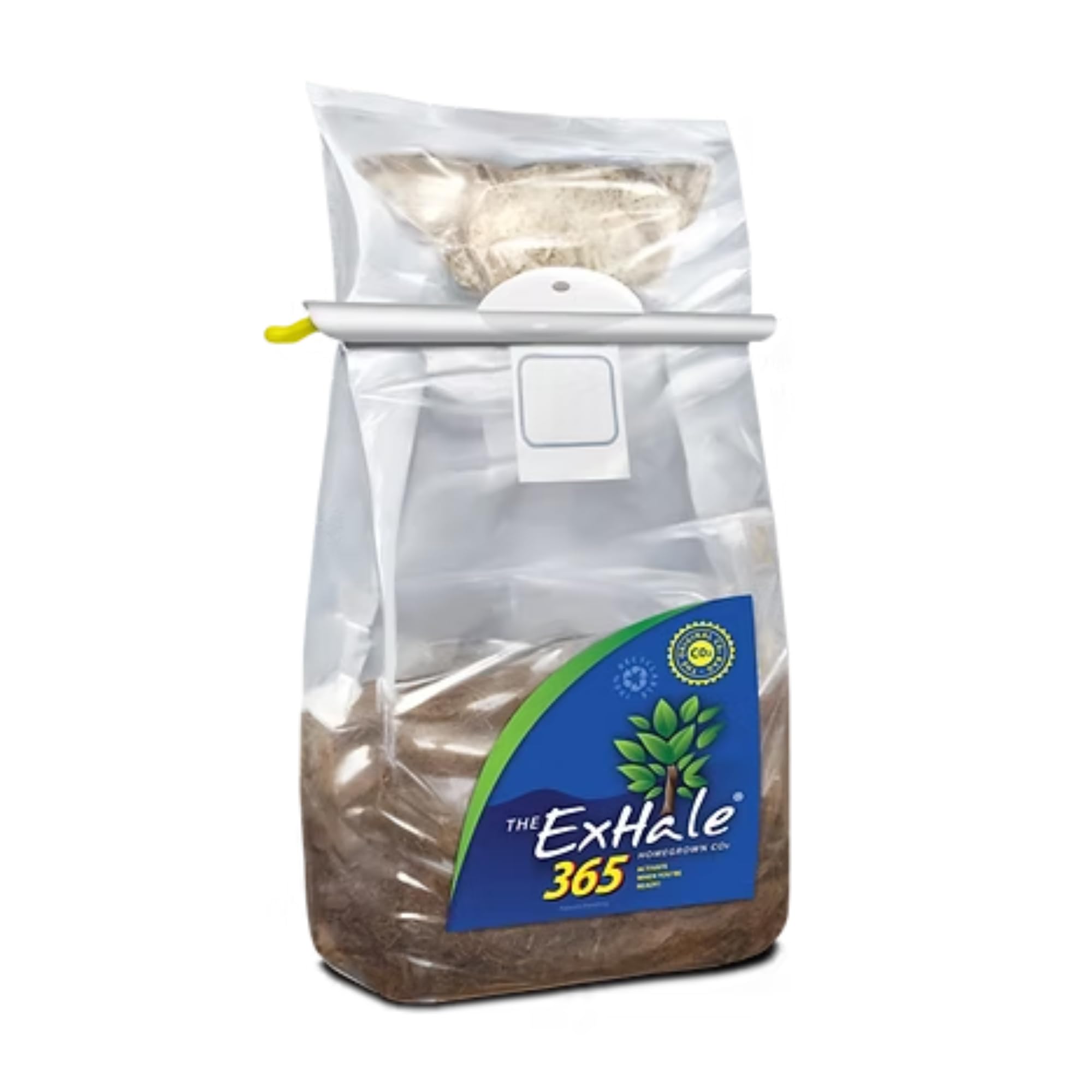
1. Exhale CO2 365 Grow Bag
Our pick — over 4★ from 450+ verified ratings; the strongest balance of quality and price.
The self-activated 4-pound bag that simply works for a standard tent without fuss.
This is the bag that growers reach for when they want to hang it and forget it. The Exhale 365 arrives self-activated — you just let the contents fall into the substrate below, re-attach the hanger above the filter patch (a breathable vent that lets CO2 out but keeps contaminants away), and place it slightly above plant height in your tent. Since CO2 is heavier than oxygen, it sinks down over your canopy naturally. The bag offers 9 months of total life, with 6 months of peak production that covers a 4×4 foot or 128-cubic-foot space.
The thing owners praise most is functionality — the bag raises CO2 levels reliably for a full grow cycle without any electricity or heat. Buyers report seeing results start around two weeks in, with a solid production curve through the flowering stage. The recurring trade-off is the clip that holds the bag closed: a few owners find it brittle, so treat the hanger attachment gently when you first set it up.
At 4.2 pounds, it sits squarely in the mid-weight range — heavier than the tiny CO2BAG 2-pack, lighter than the 11-pound XL version. For a typical home grower running a 3×3 or 4×4 tent, this is the most balanced option between coverage, lifespan, and ease of use.
What Wins People Over
- Self-activated — no mixing, no waiting period to start the process
- Peak CO2 for 6 months, which covers an entire flowering cycle
- Made in the USA with consistent packaging and dependable performance
The Honest Trade-Off
- Hanger clip durability gets mixed feedback — handle it carefully during setup
- At 4.2 lbs, it is best for a single 4×4 tent; larger spaces need the XL version
Grab it for: a reliable, no-electricity CO2 boost in any standard 4×4 grow tent, especially if you want the bag running within minutes of opening the box.
Think twice if: you run a tent larger than 4×4, where the XL bag or a two-pack makes more sense — this single bag won’t cut it for a 6×6 space.
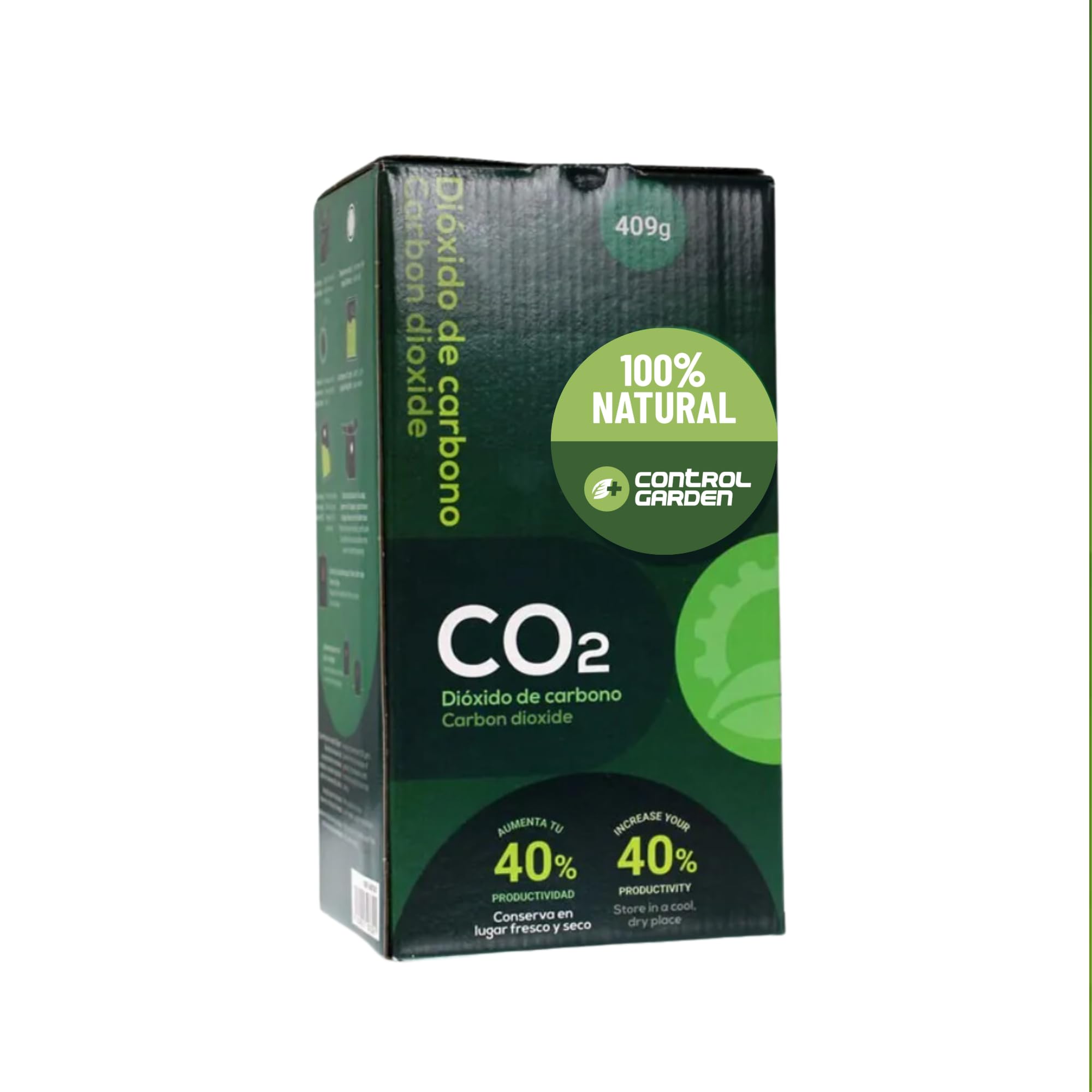
2. Control Garden CO2 Box Bag
A tiny plastic box that slips into a small tent and costs less than a pizza.
For a first-time grower dipping a toe into CO2 enrichment, this is the entry-level test. The Control Garden CO2 Box uses a plastic housing with an aeration insert (a small vent that lets air in to feed the fungus) to provide a controlled, continuous CO2 release without any electricity or fuel. It is noticeably small — just 0.86 pounds — making it a better fit for a propagation tent or a micro-grow than a full 4×4 flowering room.
Owners mention it is very easy to use: you simply place the box in your growing area and let it work. Each box lasts 1 to 3 months depending on your environment, which is shorter than the 6-month peak of the Exhale 365 above. One owner says “this thing is still producing 3 months later,” confirming that under the right conditions it can stretch to the longer end of that window. The main trade-off is its light weight — a 0.86-pound box simply does not have the substrate mass of a 4-pound bag, so CO2 output will be correspondingly lower.
If you want to see whether passive CO2 makes a visible difference in your setup before committing to a larger bag, this is your low-cost trial. It just will not keep pace with the bigger bags during heavy flowering.
One-Bag Test Run: The lightest option here, so the CO2 output matches its size. Great for proving the concept on a budget, but plan to upgrade to a heavier bag once you see the difference.
Best for: a budget-conscious first try in a small tent or as a supplemental boost in a larger room with other CO2 sources.
Skip if: you need serious CO2 enrichment for a full flowering cycle in a standard 4×4 tent — this box runs out too fast to carry a whole grow.
3. Myco Labs Co2 Boost Self-Activated Mushroom Grow Bag 2.0
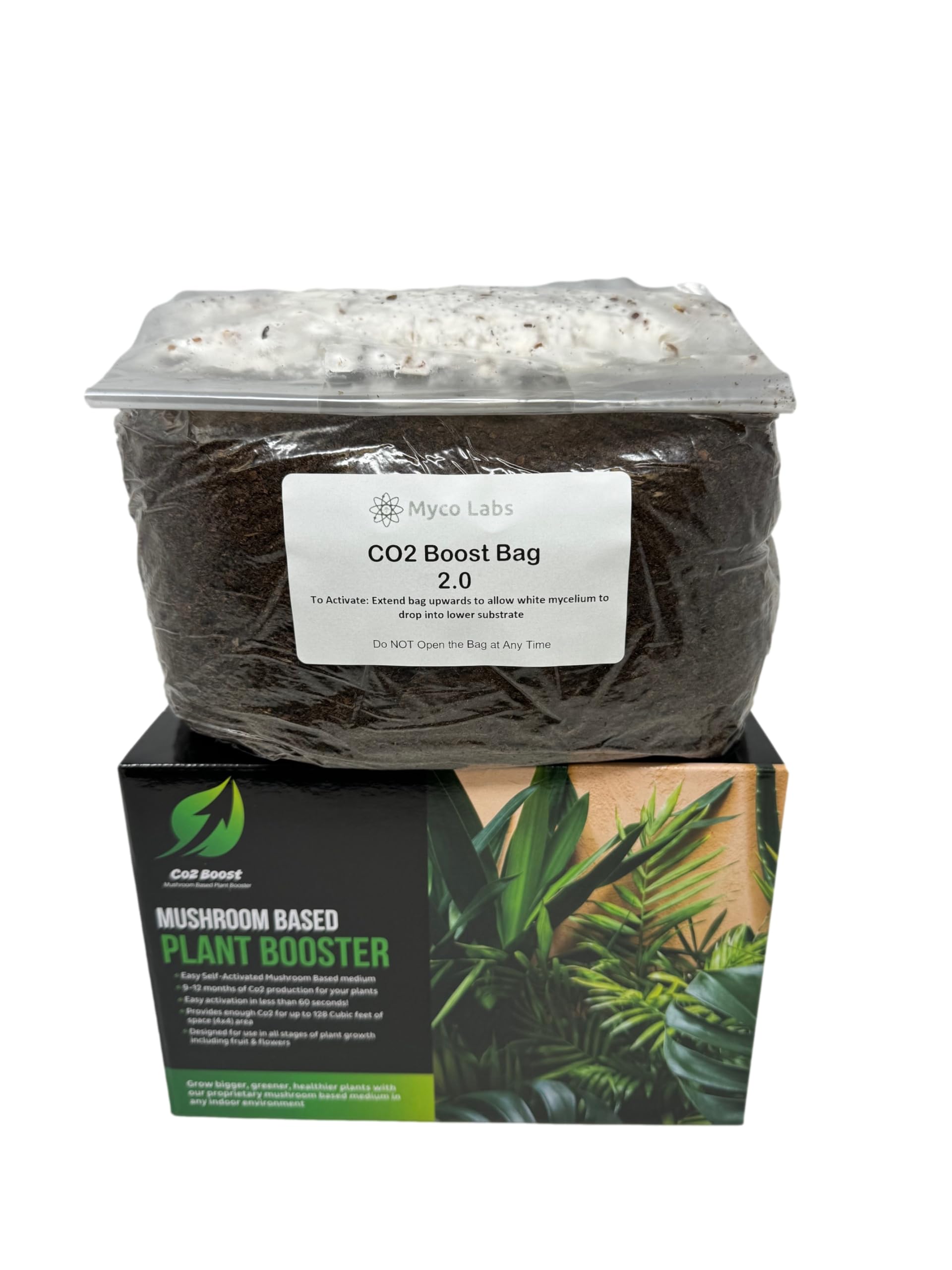
Produces CO2 for 10 months, and you can harvest oysters in month 11.
This bag stands apart by doing two things at once: generating CO2 through active mycelium growth and eventually producing edible oyster mushrooms. The new 2.0 version has a simpler activation method with no external clip — you break up the white grain inside and let it colonize for about a month before CO2 levels start to rise. It is heavier than the standard Exhale at 5.5 pounds and uses a 3.0-mil polypropylene cultivation bag (a plastic bag that is 0.003 inches thick and holds in moisture) that keeps moisture in.
The functionality is what owners praise most, but the CO2 results are genuinely mixed. Some growers report solid CO2 production after the colonization phase, while others note “after over 2 months my CO2 level has not increased at all.” The difference often depends on temperature (80-82°F can cause issues) and timing — mixing the entire bag immediately instead of letting the mycelium sit on top for 1-2 weeks can lead to mold. A few owners also report mold issues when conditions are off.
The “bonus mushrooms at month 11-12” is a neat conversation piece, but it is not a guarantee — several buyers end up with green mold instead of oyster mushrooms. Treat the dual-purpose promise as a fun extra, not a primary reason to buy. For straight CO2 output with fewer variables, the Exhale 365 above is more predictable.
The Cool Factor: A unique two-in-one product that is genuinely interesting, but the CO2 results are inconsistent enough that it is best for curious growers who enjoy experimentation rather than maximising yield.
Reach for this if: you are fascinated by the biology of it and want a bag that gives you something extra — even if that something is a conversation about why the mushrooms did not fruit.
Look elsewhere if: you cannot afford a bag that might not raise your PPM at all during a critical flowering window.
4. CO2BAG M 2-Pack
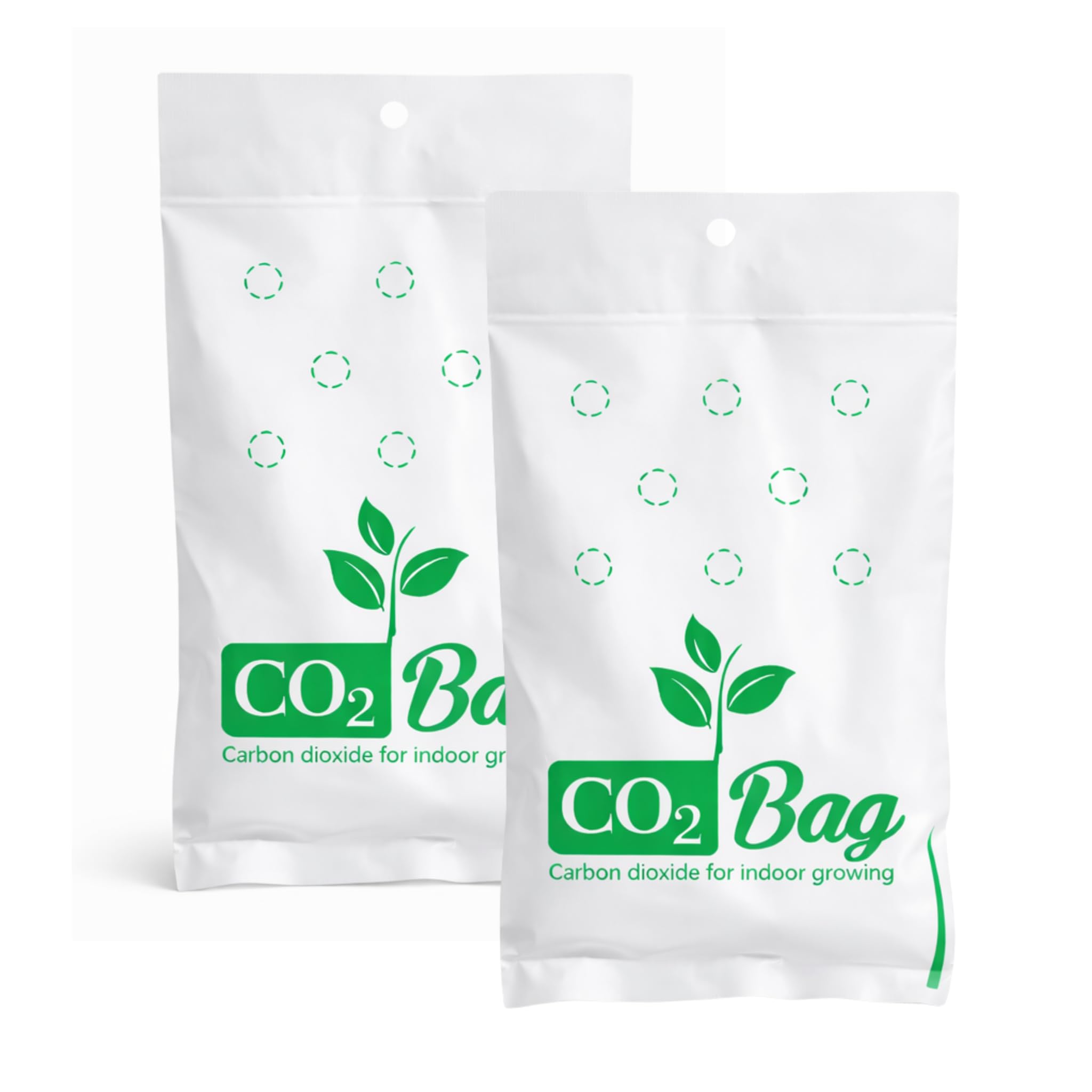
Two medium bags that together cover up to 4m² — use them together or back to back.
This Finnish-made 2-pack gives you two medium CO2 bags that together cover an area up to 4m² (about 42 square feet). You can hang both at once in a larger room for immediate double coverage, or use them sequentially to stretch 6 months of continuous growth boost — one bag while the other is on deck. Each bag is notably lightweight at just 120 grams, which is roughly a quarter-pound each.
The effectiveness picture here is split. Some customers note noticeable yield increases and healthy CO2 readings, with one saying it “worked great in my 2’x4’x72” tent.” Others are less convinced, describing the bags as expensive for the output and noting that even placing a sensor next to a bag with six holes poked in it showed no change in CO2 levels. The customers-say summary confirms this split: the product gets praise for ease of use and growth, but the “it works / it does nothing” debate is the dominant conversation.
For two bags, the per-bag cost is low, but the lightweight construction means the substrate volume is minimal compared to a 4-pound Exhale bag. If you want to cover a large area without spending for one big XL bag, this two-pack gives you flexibility. Just go in knowing that results vary enough that some owners feel they wasted their money.
Flexibility Play: The 2-pack concept is smart for sequential use, but the light weight and mixed reviews mean it is not the most reliable option for serious yield maximisation. Treat it as a moderate supplement, not a primary CO2 solution.
Best for: growers who want to test CO2 in multiple small tents simultaneously or who like the idea of staggering bags for continuous six-month coverage.
Not for: anyone who needs guaranteed CO2 lift during a critical flowering phase — the inconsistency is real enough to make it a gamble.
5. COCOPURE EZ Co2 Delay Activated Bag
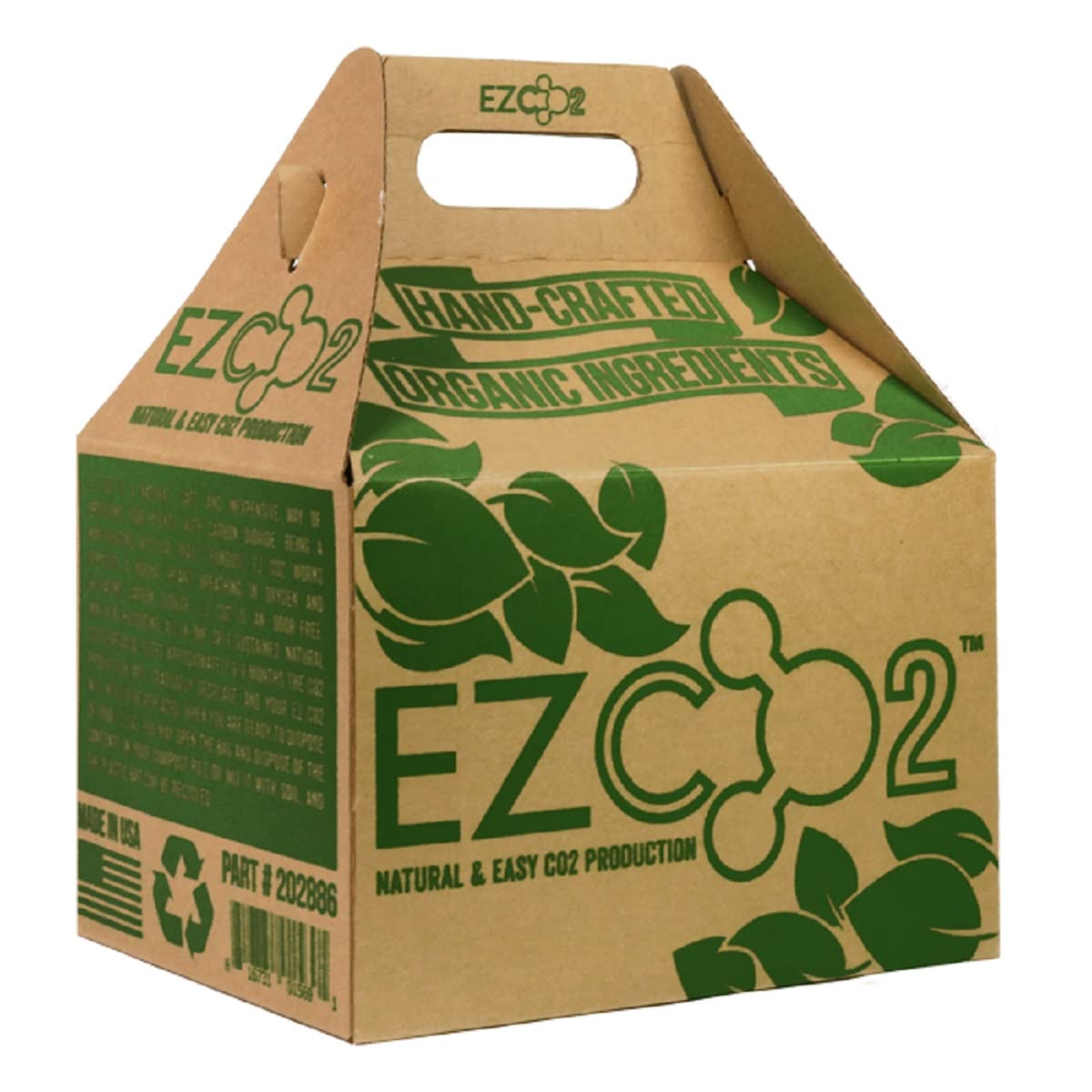
A 4.4-pound bag that hangs above your plants and produces CO2 without any odor.
This is one of the simpler bags on the list — no pre-mixing, no external clip. The COCOPURE EZ bag is ready to use from the start, lasts 6 to 8 months, and is designed to cover a 4×4-foot grow tent. It weighs 4.4 pounds, so it has roughly the same substrate mass as the Exhale 365, and it uses a delay-activated mycelium system rather than an instant self-activation. You break up the activator inside the bag to start the process.
Reviews are a mixed bag by the numbers. Several owners say it works perfectly for their indoor setup and small greenhouse, calling it a “great product and price.” But a notable number report that even after breaking up the activator, the bag “never seem to sweat or produce any CO2 that was visible.” One buyer even received a bag that appeared to be already activated and used. The slim review count — just over 20 ratings — makes it harder to gauge how common the duds are.
It is one of the pricier single bags here despite being similar in weight to the Exhale 365. The main advantage is the odor-free promise, which matters if your tent is in a living space. But the higher price combined with inconsistent activation reports makes it a riskier choice than the Exhale at a similar weight class.
Odor Advantage: True to its word on the smell front, but the activation inconsistency and higher cost push it down the list. Only choose this if the odor-free claim is a non-negotiable for your setup.
Reach for it if: you are especially sensitive to any musty smells in your tent and want a bag that keeps the air clean.
skip it if: you want the most reliable CO2 output for your dollar — the Exhale 365 at a lower price has many more positive reports to back it up.
6. Exhale CO2 XL Grow Bag

11 pounds of substrate compared to the standard 4.2-pound bag, built for 6×6 tents and serious yields.
When a 4×4 bag does not cut it, the Exhale XL steps in. This 11-pound bag weighs 11 pounds compared to the standard Exhale 365’s 4.2 pounds, and covers 288 cubic feet compared to 128 cubic feet, over the same 6-month peak window. It covers a 6×6 foot or 288-cubic-foot space, compared to the standard bag’s 4×4 foot or 128-cubic-foot space. Like the smaller version, it is maintenance-free, requires no heat or electricity, and is made in the USA. Just hang it slightly above plant height and let gravity do the rest.
Buyer results are genuinely impressive when the bag performs well. One owner measured their CO2 jumping from 330 PPM to 450 PPM in a 12×10 space over three days using the XL. Another saw readings hit 1600 PPM in a 6x4x6 tent. But the other side of the coin is significant: a number of units arrive with the bag already activated, the separation divider (a plastic sheet that keeps the mycelium starter separate from the main substrate until you are ready) removed, or the hanger missing — problems that are harder to ignore at this price point. The customers-say summary calls the quality and cost-effectiveness “mixed,” noting that some owners find it well worth the price while others call it overpriced.
If you are running a 5×5 or 6×6 tent, the standard 4-pound bag will not generate enough CO2 to matter. The XL is the right tool for that job, and when it works, it works hard. Just inspect the bag immediately upon arrival — if the divider is already broken or the mycelium is seeping out, contact support right away.
The Heavy Hitter
- 11 pounds of active substrate — substantially more CO2 than any standard bag
- Covers up to 288 cubic feet, perfect for larger tents and rooms
- Proven to raise PPM significantly when functioning correctly, with documented readings over 1000 PPM
Watch Out For
- Quality control inconsistency — some bags arrive pre-activated, missing the hanger, or with mycelium leaking
- At a premium price, getting a dud unit is frustrating and requires a return
Best for: serious growers running a tent larger than 4×4 who need a single-bag solution with enough substrate mass to make a real CO2 difference.
Hold off if: you cannot afford to deal with a potential return — the quality-control issues make this more of a gamble than the standard Exhale 365, which has a better track record at a lower price.
Understanding the Specs
Peak Production Window vs. Total Life
A bag’s total lifespan — often listed as 6 to 10 months — includes a ramp-up period when the mycelium is colonizing the substrate, a peak window when CO2 output is highest, and a gradual decline as the food source depletes. The peak window is what matters for your grow cycle, not the total life. A bag that peaks for 6 months is more valuable than one that lasts 10 months but only produces strongly for 3.
Bag Weight as a Proxy for Substrate Mass
Heavier bags (4 to 11 pounds) contain more mycelium substrate, which directly translates to more CO2 output over time. A 0.86-pound box cannot compete with a 5.5-pound bag in terms of gas volume. When comparing bags, weight is the single most honest spec — coverage area claims are often optimistic, but physics dictates that more substrate equals more CO2.
FAQ
How long does it take for a CO2 bag to start working?
Can I use two CO2 bags in one tent for more coverage?
Will a CO2 bag work in a tent with heavy exhaust ventilation?
How do I know if my CO2 bag is actually producing gas?
Can a CO2 bag replace a CO2 tank for serious growing?
Do CO2 bags smell or attract pests?
What size CO2 bag do I need for a 3×3 tent?
Can I cut open a CO2 bag to release the gas faster?
Final Thoughts: The Verdict
For the majority of shoppers, the best co2 bags for grow tent winner is the Exhale CO2 365 Grow Bag because it balances reliable self-activation, 6 months of peak production, and a 4.2-pound weight that fits a standard 4×4 tent without fuss. If you are running a larger 6×6 space, the Exhale CO2 XL Grow Bag packs enough substrate to make a real difference — just inspect it on arrival. And for a budget-friendly test run to see if passive CO2 works for your setup, the Control Garden CO2 Box Bag costs little enough to treat as an experiment.
How We Picked
We do not accept paid placement. Every pick is matched to a real buyer and a real use-case; we do not hands-on test units.
Sources & Methodology
Specifications: manufacturer listings and product documentation. Review insights: verified customer reviews, as of July 2026. Pricing: not shown on this page (it changes often); check the current price via the retailer link.
As an Amazon Associate, WellFizz earns from qualifying purchases. This does not affect which products we feature.
Related Guides

Mo Maruf
I created WellFizz to bridge the gap between vague wellness advice and actionable solutions. My mission is simple: to decode the research and give you practical tools you can actually use.
Beyond the data, I am a passionate traveler. I believe that stepping away from the screen to explore new environments is essential for mental clarity and physical vitality.