Our readers keep the lights on and my smoothie glass nicely filled. As an Amazon Associate, I earn from qualifying purchases.
Specs are compiled from manufacturer listings and verified buyer reviews and can change over time — please confirm the key details on the product page before buying.
The biggest problem with compression socks for elderly wearers isn’t the compression — it’s the battle to get them on. Tugging, wrestling, and bending are simply not options for everyone, which is why the real winners here are the pairs that balance firm medical-grade pressure with a design that doesn’t require a yoga session to put on. This guide cuts through the noise to find the socks that genuinely solve swelling and circulation issues without creating a new problem every morning.
I’m Mohammad Maruf — the founder and writer behind WellFizz. This guide is built by comparing the manufacturers’ published specifications and the patterns across verified customer reviews, so you get each pick’s real strengths and trade-offs instead of marketing spin.
Read on for the honest breakdown of the best compression socks for elderly wearers, judged on comfort, ease of use, and real-world results.
Our Picks at a Glance

How To Choose The Best Compression Socks For Elderly
Picking the right compression sock for an older adult means balancing medical need with daily comfort. A sock that’s perfect for a marathon runner can be a nightmare for someone with arthritis or limited mobility. Here are the three most important factors to weigh before you buy.
Compression Level: 15-20 mmHg vs 20-30 mmHg
This number measures how much pressure the sock applies (measured in millimeters of mercury, or mmHg, a standard unit). The 15-20 mmHg range is considered moderate support — great for mild swelling, tired legs, and long flights or road trips. The 20-30 mmHg range is firmer, often recommended for more significant edema (excess fluid trapped in body tissue), varicose veins, or post-surgery recovery. For an elderly user with noticeable swelling or circulation issues, 20-30 mmHg is typically the more effective choice, but it is also harder to put on. If strength or dexterity is a concern, 15-20 mmHg offers a comfortable middle ground that still provides real relief.
Ease of Putting On and Taking Off
This is the single most overlooked spec. A high-compression sock that requires a struggle to get on will simply end up in a drawer. Look for features like an extended zipper, which lets you zip the sock on rather than pull it, or a design that advertises “easy on/off” with a wider opening. Some socks include a zipper guard — a fabric panel under the zipper — that prevents the metal from rubbing against the skin, which is especially important for fragile or sensitive skin common in older adults.
Material and Breathability
The fabric affects everything from comfort to hygiene. Cotton blends are soft and breathable, making them ideal for all-day wear without overheating. Nylon and spandex blends (often called microfiber) provide excellent compression retention and a smoother fit, but they can trap heat. For someone who plans to wear the socks for 8-12 hours at a time, a cotton-heavy material or a nylon blend with moisture-wicking properties (fabric that pulls sweat away from the skin) is a smart choice to prevent irritation and keep the skin dry.
Quick Comparison
| Model | Best For | Pairs | Compression | Material | Amazon |
|---|---|---|---|---|---|
| Benirap Breathable★ Best Overall | All-Day Heat Relief | 2 | 20-30 mmHg | Breathable Nylon | Amazon |
| Knee High 15-20 mmHg (3-Pair)Most Comfortable | Everyday Comfort | 3 | 15-20 mmHg | Cotton Blend | Amazon |
| FITRELL 20-30 mmHg (3-Pair)Tried & Tested | Strong Support Value | 3 | 20-30 mmHg | Nylon/Spandex | Amazon |
| CHARMKING 15-20 mmHg (8-Pair) | Massive Multi-Pack | 8 | 15-20 mmHg | Copper-Infused Nylon | Amazon |
| Thick Soft Cotton 15-20 mmHg | Natural Fiber Feel | 2 | 15-20 mmHg | Cotton | Amazon |
| LEVSOX Cotton 20-30 mmHg | Allergy-Sensitive Skin | 1 | 20-30 mmHg | Cotton | Amazon |
| Lalapapa Wide Calf 20-30 mmHg (3-Pair) | Wide Calves | 3 | 20-30 mmHg | Cotton/Nylon | Amazon |
| BBFREY Easy On/Off 15-20 mmHg (3-Pair) | Easiest to Don | 3 | 15-20 mmHg | Microfiber Nylon | Amazon |
| Ailaka Zipper 20-30 mmHg | Limited Mobility | 1 | 20-30 mmHg | Nylon/Spandex | Amazon |
In‑Depth Reviews
1. Benirap Breathable Compression Socks
Our pick — over 4.5★ from 500+ verified ratings; the strongest balance of quality and price.
The compression sock that solves swelling without turning into a sweat lodge.
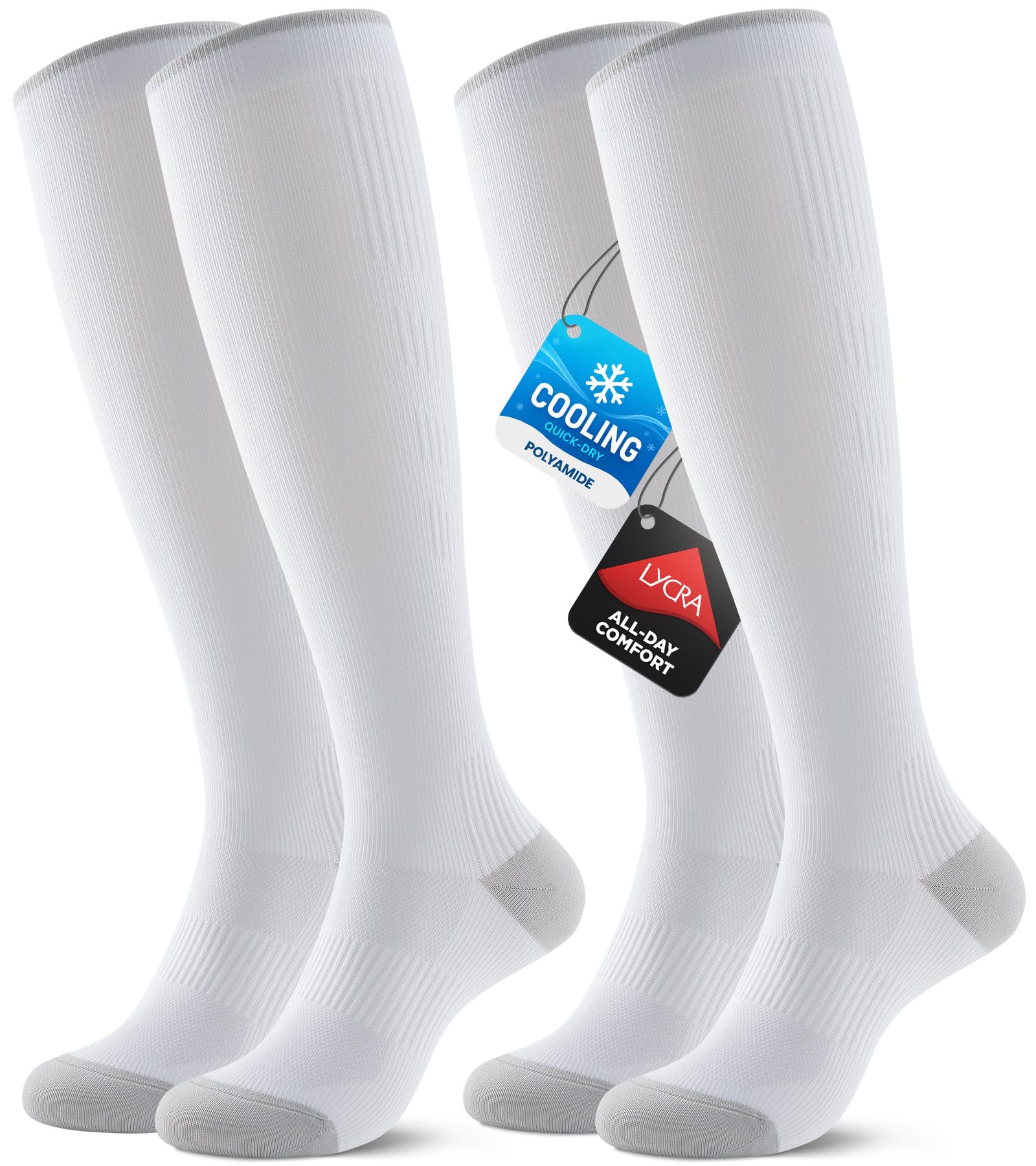
Heat is a common complaint with compression socks, which is why this pair stands out. The fabric is designed to be breathable, and owners mention that it stays surprisingly cooling even in summer — a detail that matters enormously for someone who plans to wear them all day. The material feels good against the skin and the length is well-liked, hitting the knee without bunching.
The 20-30 mmHg compression level is the firmest in this guide, at 20-30 mmHg compared to 15-20 mmHg, and it delivers real results for significant swelling and circulation problems. As buyers put it: “His feet used to swell up and had rashes on them due to standing most of the day but these fixed all his problems faster than any cream ever could.” For an elderly user with edema (fluid retention) or venous insufficiency (poor blood flow in the veins), that kind of relief is the goal. The trade-off is that this pack comes with 2 pairs, not 3 like some competitors, but each pair is built to last.
Breathable mesh fabric
- Top-tier 20-30 mmHg compression for serious swelling relief
- Breathable fabric stays cool enough for summer wear
- Easy to put on and take off compared to other firm socks
Limited color options
- Only 2 pairs per pack, fewer than the FITRELL 3-pack for similar strong support
- Higher compression may still be tough for very weak hands
active recovery: you need strong, breathable support for daily swelling or circulation issues and don’t mind a 2-pack at a premium build quality.
fashion seekers: you need the absolute easiest sock to put on — the 20-30 mmHg level still requires some effort compared to a zippered or lower-compression sock.
2. Compression Socks for Women and Men, Knee High 15-20 mmHg (3-Pair)
The sock that feels like a gentle hug for tired, swollen legs all day long.
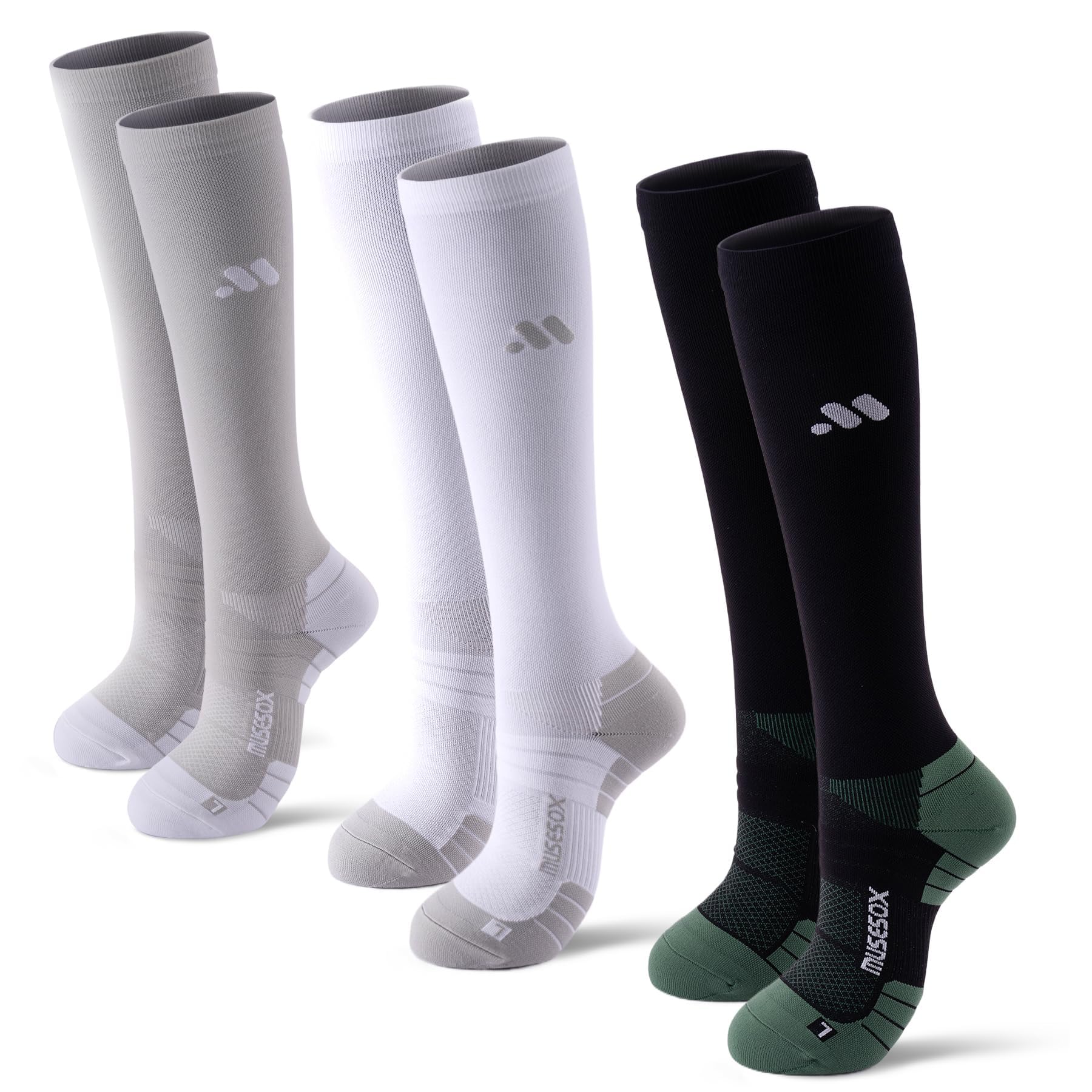
Comfort is the single most-praised feature here, and for good reason. This sock uses a 15-20 mmHg compression level, which is a moderate 15-20 mmHg — noticeably softer than the 20-30 mmHg options. For an elderly user, that means effective support for swelling and leg fatigue without feeling like your legs are in a vise. As one owner put it: “I got this for the swelling in my legs due to pregnancy and wear them when I’m going to be walking they seem to add some support for me and the compression is just right.” The three pairs per pack offer excellent value, and the left/right foot markings ensure a tailored fit every time.
What wins people over is the balance. The fabric is soft and “butter soft” according to some, and it stays in place without rolling down or digging in. The top band doesn’t leave deep marks, and the smooth toe construction means no irritation at the tips of the toes. For someone with arthritic hands, the helpful instructions for donning make a real difference. The main downside is the limited color variety — you get basic options, not a rainbow of patterns.
mild support: someone who needs reliable, comfortable daily support without the intense squeeze of a 20-30 mmHg sock. Perfect for long shifts, travel, or pregnancy-related swelling.
heavy duty: you have severe edema or a medical need for the highest compression level — step up to a 20-30 mmHg pair instead.
3. FITRELL 3 Pairs Compression Socks 20-30 mmHg
A crowd-favorite 20-30 mmHg sock that has proven its worth over years of daily use.
This is among the most-reviewed compression socks on the market, and for good reason. It offers a strong 20-30 mmHg compression in a convenient 3-pack, and the sheer volume of positive feedback — tens of thousands of owners — speaks to its reliability. Customers consistently praise the fit and comfort, noting that the socks stay in place all day and provide genuine relief for tired, swollen legs. As one user simply put it: “I’ve been using these compression socks, and they’ve worked very well for me.”
The key here is value. You get three pairs at a mid-range price point, making this the best bang for your buck in the 20-30 mmHg category. The trade-off is that some customers note the compression feels closer to 15-20 mmHg than the advertised 20-30 mmHg — so if you need the absolute firmest medical-grade squeeze, you might want to look elsewhere. But for most elderly users, the level of support here is more than sufficient, and the ease of putting them on is a major plus compared to stiffer medical stockings.
post-surgery: a reliable, affordable 3-pack of 20-30 mmHg socks that work for travel, daily wear, and mild-to-moderate swelling.
wide calves: you need the tightest possible compression for severe edema — some feel it runs slightly softer than the label.
4. CHARMKING Compression Socks 15-20 mmHg (8 Pairs)

An eight-pack that gives you enough socks for a full week of wear without repeating.
For anyone who needs to wear compression socks daily, this pack is a no-brainer. Eight pairs means you can wear a fresh pair every day and still have laundry day covered. The 15-20 mmHg compression is moderate and comfortable — not too tight, not too loose — and the copper-infused fabric is both soft and breathable. The fit is the most praised aspect, with over 5,000 positive mentions, meaning most buyers find their size true and consistent.
The versatility here is a huge advantage. The socks look like normal socks, so they don’t scream “medical device” under trousers or jeans. They stay in place without rolling down, and the wide calf option genuinely fits larger legs. The main catch is that some patterned versions can leave temporary indentations on the skin after long wear, and the fit can vary slightly depending on whether you buy solid colors or patterned ones. For daily, moderate support, though, this is an exceptional value.
daily wear: the sheer convenience of an 8-pack. Perfect for daily wear, travel, or someone who hates doing laundry frequently.
sensitive skin: patterned socks may leave marks on sensitive skin after several hours — stick to solid colors for the most comfortable all-day fit.
5. Thick Soft Cotton Compression Socks 15-20 mmHg (2 Pairs)
A genuinely thick, cushioned cotton sock that prioritizes softness over synthetic feel.
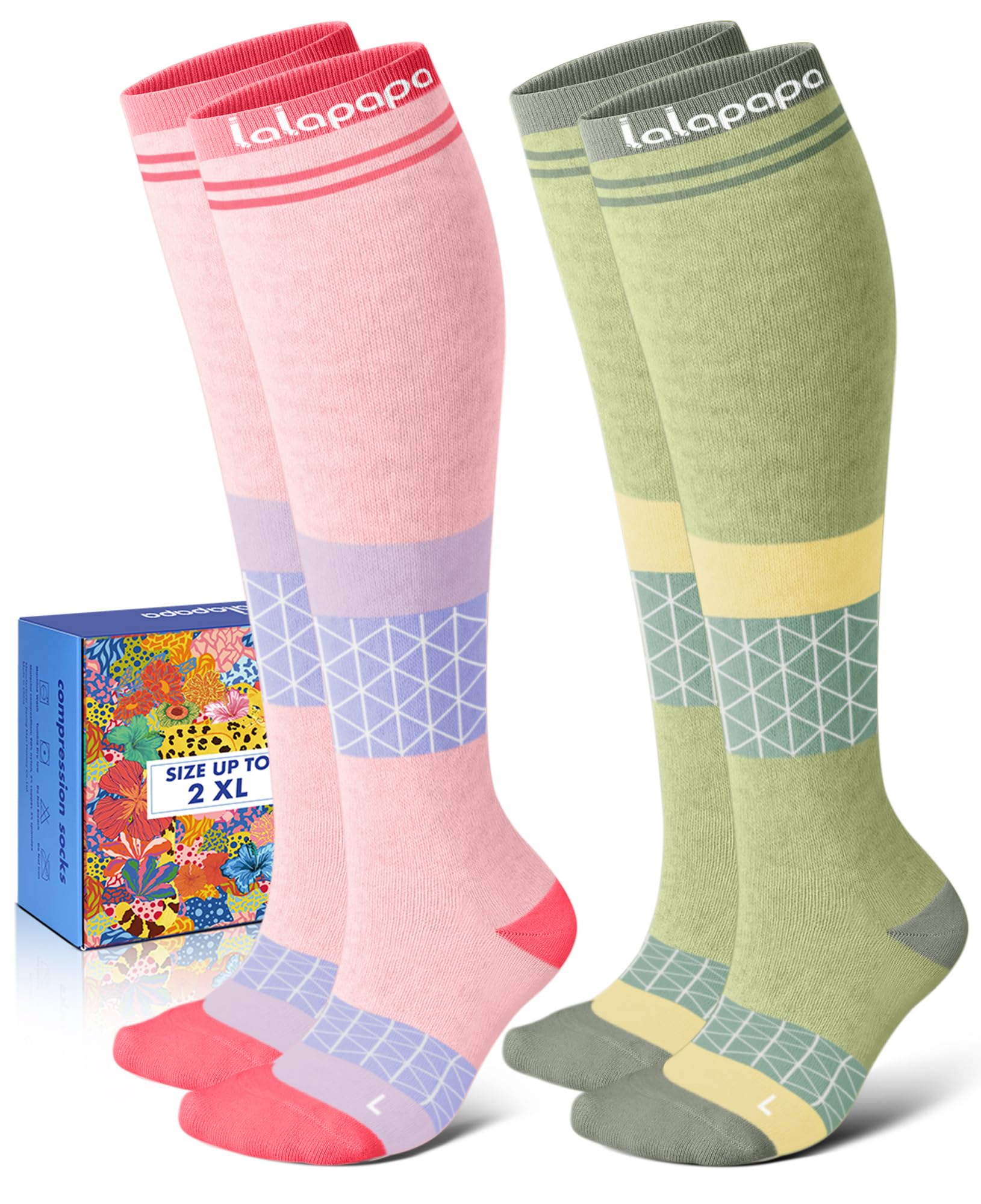
Most compression socks are made from nylon or spandex blends, which can feel slick and hot. This sock is different — it is made primarily from cotton, giving it a familiar, soft, sock-like feel that many elderly users prefer. The cushioned bottom adds a layer of comfort for walking, and the 15-20 mmHg compression is light enough to be comfortable for diabetic feet or sensitive skin. Reviewers point out that the socks become even softer with repeated washing, which is a nice touch.
The trade-off is that cotton does not hold compression as tightly or as consistently as nylon blends. Some users find the top band a bit tight after several hours, and the thick material can be too warm for hot climates or indoor heating. For someone with mild swelling who prioritizes pure comfort and natural fibers above all else, this is the winner. For significant edema that requires firm, lasting compression, a nylon blend would be more effective.
casual comfort: a soft, cotton-rich sock that feels like a normal thick sock while providing mild compression. Great for cold weather or sensitive skin.
medical use: you need firm 20-30 mmHg compression or live in a warm climate where thick cotton would be uncomfortable.
6. LEVSOX Cotton Compression Socks 20-30 mmHg

The rare cotton sock that delivers a true 20-30 mmHg squeeze without synthetic irritation.
If you need firm compression but your skin reacts poorly to nylon or spandex, this is the sock to try. The LEVSOX is mostly cotton, which means it breathes better than standard compression socks and reduces the risk of allergic reactions or heat rash. As one grateful buyer put it: “I am grateful for the cotton support socks. The medium/large are closer to medium size. They feel wonderful and I am not allergic to them so my rash cleared up.” That kind of real-world feedback is invaluable for elderly users with sensitive or fragile skin.
The smooth toe area is another major plus — no annoying seams rubbing against the toes. The sock stays in place and maintains its compression even after 12-hour wear, as noted in customer reviews. The main drawback is the price: you get a single pair for about the same cost as a 3-pack of nylon-based socks. Also, some shorter users find the sock too long from ankle to knee, causing bunching if not adjusted properly.
eco-friendly: anyone with skin allergies, rashes, or a strong preference for natural fibers who still needs firm 20-30 mmHg compression.
budget buy: this is a premium single-pair option — buy one to test before committing to more.
7. Lalapapa Wide Calf Compression Socks 20-30 mmHg (3-Pair)
Compression that actually fits wide calves without cutting off circulation at the top band.
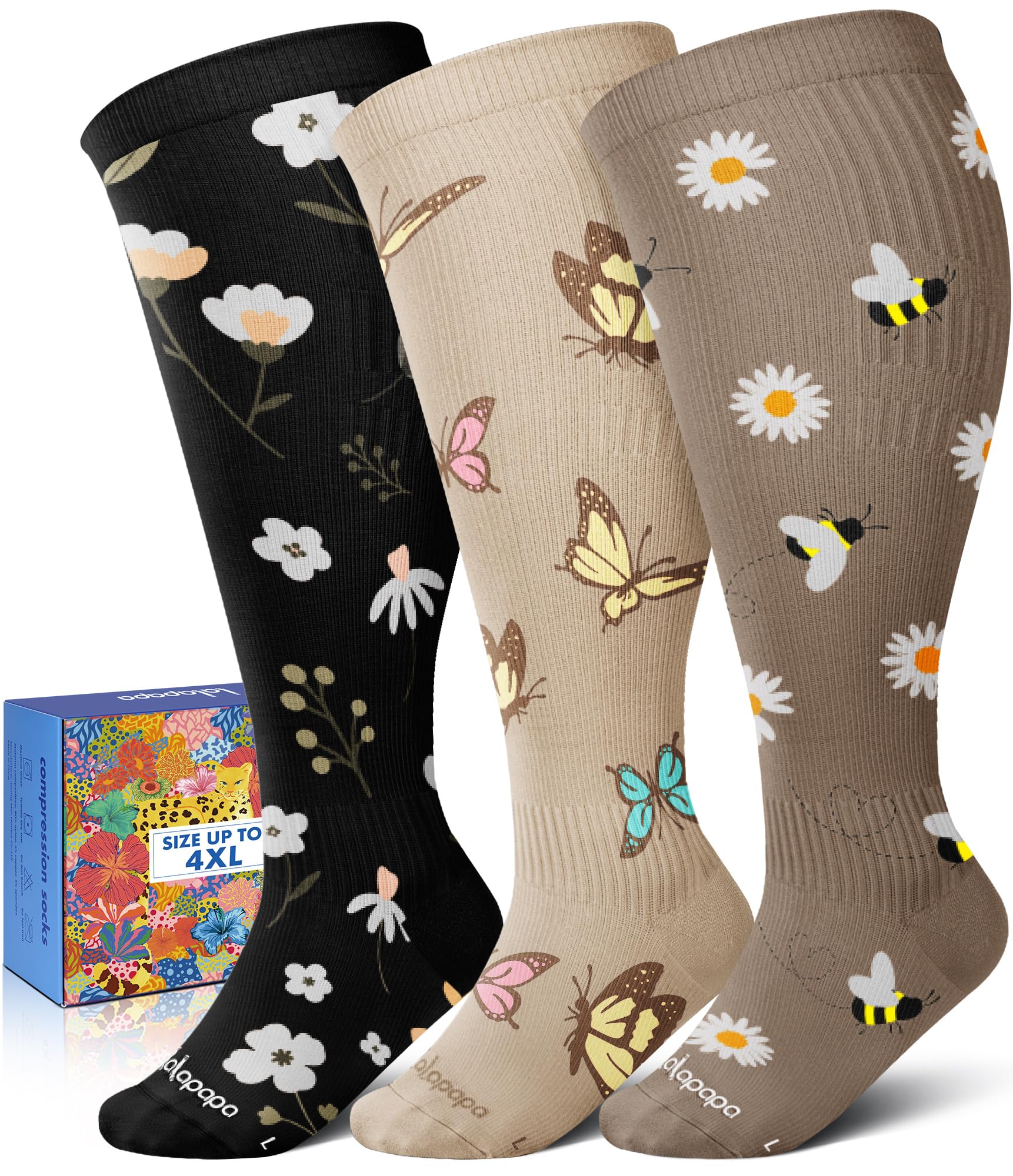
Finding compression socks for larger calves is notoriously difficult — most standard sizes pinch and roll down. This sock solves that problem. The fit is the most praised aspect, and buyers with calf measurements up to 18 inches (roughly 46 cm) report that these socks stay up without digging in. The 20-30 mmHg compression is strong and effective, providing noticeable relief for edema and leg pain after long walks or shifts. The stretchy band at the top is designed to be easy to pull on without sacrificing hold.
The cute patterns (butterflies, bees, floral) are a fun bonus, but there is a catch: the design is created by a knit pattern that can leave temporary imprints on the skin after several hours. For short-term wear, that’s fine. For a full 12-hour shift, some find it itchy. If you have very sensitive skin, the solid-color options within the same brand are a safer bet. For anyone who has struggled to find a wide-calf sock that actually works, this is a standout.
plus sizes: you have larger calves and have been frustrated by socks that are too tight or roll down. The 3-pack offers excellent value.
minimalists: they can leave marks on sensitive skin after long wear — solid colors are the safer choice for all-day use.
8. BBFREY Easy On/Off Compression Socks 15-20 mmHg (3-Pair)
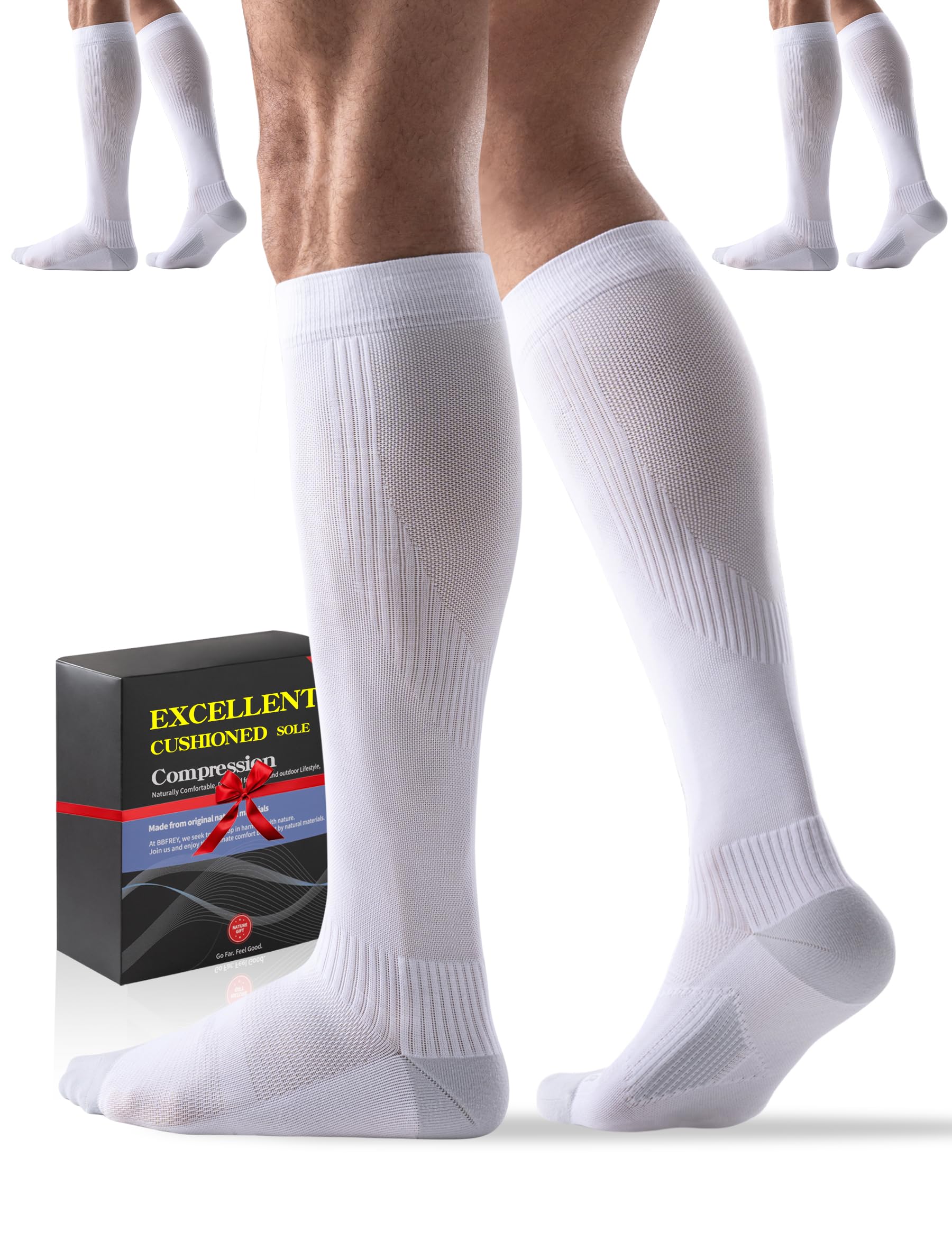
Engineered for the specific struggle of getting compression socks onto tired legs.
This pair is built with a wider opening and a specific manufacturing process — using Italian LONATI medical sock machines, according to the maker — that makes it noticeably easier to put on than standard compression socks. The 15-20 mmHg compression is moderate, providing good support for swelling and varicose veins without the battle required by firmer socks. The cushioned sole and smooth toe add a layer of walking comfort that is rare in the category.
Buyers consistently note that these are easier to don than other brands they have tried, and the upper elastic band does not leave deep marks on the lower leg. The main drawback is that the “easy on” design can feel less secure for some — a few users with very weak grip still found them challenging. For someone with arthritis or limited hand strength who needs a daily compression sock, this is among the most accessible options on the list. The 3-pack price is fair for the quality of construction.
arthritis: the easiest donning experience in the 15-20 mmHg range. The cushioned sole is a bonus for walking comfort.
severe edema: if you need 20-30 mmHg compression, this sock’s design is not available in that firmness level.
9. Ailaka Zipper Compression Socks 20-30 mmHg

The zipper turns the hardest part of compression sock day into a simple zip-up motion.
This is the single most important product on this list for elderly users with very limited mobility or hand strength. The built-in YKK zipper (a brand known for reliable zippers) means you do not have to pull, tug, or struggle — you simply put your foot in, pull up the sock, and zip it closed. An inner fabric panel protects the skin from the zipper teeth. The 20-30 mmHg compression is genuine and effective, providing medical-grade support for edema, varicose veins, and post-surgery recovery. Sizes go all the way up to 5X-Large.
The ease of use is the defining feature here. Buyers who had given up on traditional compression socks because they were “too difficult to put on and take off” found this design to be a revelation. As one customer put it: “I threw away my traditional pull on style hose that were too difficult to put on and take off.” The main caution is sizing — the fit can run small, so carefully measuring according to the size chart is essential. Some with smaller stature find the sock too long, but for the right fit, this is the most accessible high-compression option available.
limited mobility: if bending or gripping is a challenge, the zipper eliminates the struggle entirely. A genuine life-changer for daily wear.
active sports: some find the sizing runs small, and the sock can be too long for very short legs. Check the chart and size up if between sizes.
Understanding the Specs
Compression Level (mmHg)
The number on the package — measured in millimeters of mercury (mmHg) — tells you how much pressure the sock applies. Think of it like a firm handshake: 15-20 mmHg is a friendly, supportive squeeze, good for mild swelling, long flights, or tired legs. 20-30 mmHg is a much firmer grip, often recommended by doctors for significant edema (fluid retention), varicose veins, or post-surgery recovery. For an elderly person, a higher number means more effective circulation support, but it also means more effort to put the sock on. If dexterity is limited, start with 15-20 mmHg or look for a zippered design.
Knee High vs Calf Length vs Crew
The “knee high” style you see most often reaches just below the knee — this is the standard for medical compression because it covers the whole lower leg and the graduated compression (tightest at the ankle, looser at the top) works best over that full distance. Calf-length socks stop mid-calf, and crew socks stop at the ankle. For elderly users with swelling that extends above the ankle, knee-high is almost always the right choice. A sock that is too short will not provide the needed support for the entire lower leg.
FAQ
What does mmHg mean in compression socks?
Can compression socks help with swelling in the elderly?
How tight should compression socks feel?
Is it safe to wear compression socks to bed?
How do I choose the right size for compression socks?
Can I machine wash my compression socks?
How long do compression socks last?
What is the difference between 15-20 mmHg and 20-30 mmHg?
Are there compression socks that are easier to put on?
Final Thoughts: The Verdict
If you want one dependable pick, the compression socks for elderly winner is the Benirap Breathable Compression Socks because they deliver strong 20-30 mmHg compression in a breathable, comfortable design that solves swelling without overheating. If you want the absolute easiest pair to put on, grab the Ailaka Zipper Compression Socks — the zipper eliminates the struggle entirely. And for the best value in a daily-wear moderate support sock, the CHARMKING 8-Pair pack is the one to reach for.
How We Picked
We do not accept paid placement. Every pick is matched to a real buyer and a real use-case; we do not hands-on test units.
Sources & Methodology
Specifications: manufacturer listings and product documentation. Review insights: verified customer reviews, as of July 2026. Pricing: not shown on this page (it changes often); check the current price via the retailer link.
As an Amazon Associate, WellFizz earns from qualifying purchases. This does not affect which products we feature.
Related Guides

Mo Maruf
I created WellFizz to bridge the gap between vague wellness advice and actionable solutions. My mission is simple: to decode the research and give you practical tools you can actually use.
Beyond the data, I am a passionate traveler. I believe that stepping away from the screen to explore new environments is essential for mental clarity and physical vitality.