Our readers keep the lights on and my smoothie glass nicely filled. As an Amazon Associate, I earn from qualifying purchases.
Specs are compiled from manufacturer listings and verified buyer reviews and can change over time — please confirm the key details on the product page before buying.
Contact cement is the unsung hero of permanent bonds — the stuff that makes headliners stay up, shoe soles stop flapping, and laminate countertops feel solid for years. The problem is that not every can delivers the same grip, and picking the wrong one means a repair that peels apart under heat, moisture, or just a few weeks of wear. This guide cuts through the confusion to show you which adhesive actually works for your specific project.
I’m Mohammad Maruf — the founder and writer behind WellFizz. This guide is built by comparing the manufacturers’ published specifications and the patterns across verified customer reviews, so you get each pick’s real strengths and trade-offs instead of marketing spin.
Whether you are restoring a classic car interior, fixing a pool liner, or tackling a woodworking project, these are the best contact cement options you can buy right now — each chosen for its specific strengths in real-world use.
Our Picks at a Glance
How To Choose The Best Contact Cement
Picking the right contact cement depends on what you are gluing and how you plan to apply it. The wrong formula leads to weak bonds, messy application, or projects that fail under heat or moisture. Here are the three factors that matter most.
Material Compatibility
Contact cement is not universal. Some formulas are made specifically for vinyl and PVC — like the HH-66 Vinyl Cement — while others excel on wood, laminate, and fabric. Check the compatible materials list on the can. A cement designed for porous surfaces (wood, fabric) may not bond well to slick materials like plastic or metal. The DAP Weldwood Landau Top & Trim, for example, is built for automotive upholstery and vinyl, while the 3M Fastbond 30NF targets wood, laminate, and foamed plastics.
Application Method: Spray vs Brush vs Liquid
Spray cements (like the Gorilla Ultimate Spray Adhesive) cover large areas fast and are perfect for carpets, headliners, and upholstery. They offer adjustable nozzles for control but require ventilation due to fumes. Brush-on varieties (like the Angelus Shoe Cement or HH-66) give you precision for small repairs and tight spots — great for shoe soles, pool patches, and detail work. Liquid formulations in cans (like the DAP Weldwood Original) work well for dipping or spreading with a tool. Your choice depends on if you need speed or accuracy.
Open Time and Cure Time
“Open time” is how long the cement stays tacky after application, giving you the window to position your parts before the bond becomes permanent. The 3M Fastbond 30NF offers an unusually long bonding range of up to 4 hours, which is a lifesaver for large or complex assemblies. Most other contact cements have a much shorter open time — often 10 to 15 minutes — and require a full 24 hours to cure completely. If you are working on a big project, a longer open time reduces the panic of rushing alignment.
Quick Comparison
| Model | Best For | Type | Cure Time | Compatible Materials | Amazon |
|---|---|---|---|---|---|
| DAP Weldwood Landau Top & Trim★ Best Overall | Automotive Upholstery | Spray (gun) | 24 Hours | Vinyl, Fabric, Foam | Amazon |
| 3M Fastbond 30NFTop Performer | Countertops & Laminates | Spray / Brush / Roller | 4 Hours | Wood, Plastic, Laminate, Canvas | Amazon |
| HH-66 Vinyl CementVinyl Champion | Vinyl & PVC Repairs | Liquid (Brush) | 24 Hours | PVC Vinyl, Canvas, Neoprene | Amazon |
| Angelus Clear Shoe Cement | Shoe & Sneaker Repair | Liquid (Brush) | 24 Hours | Leather, Rubber, Vinyl, Fabric | Amazon |
| Wonshine Contact Cement | Small DIY & Laminate | Liquid (Brush) | 24 Hours | Wood, Leather, Laminate, Foam | Amazon |
| Gorilla Ultimate Spray Adhesive | Multi-Purpose Upholstery | Spray (Can) | — | Wood, Metal, Leather, Fabric | Amazon |
| HOOK UP Vinyl Cement | Pool & Inflatable Repair | Liquid (Brush) | 24 Hours | Vinyl, PVC | Amazon |
| DAP Weldwood Original (3 Pack) | General Purpose / Shoes | Liquid | 2.5 Hours | Wood | Amazon |
| LePage Heavy Duty | EVA Foam / Cosplay | Liquid | 24 Hours | Similar Materials | Amazon |
In‑Depth Reviews
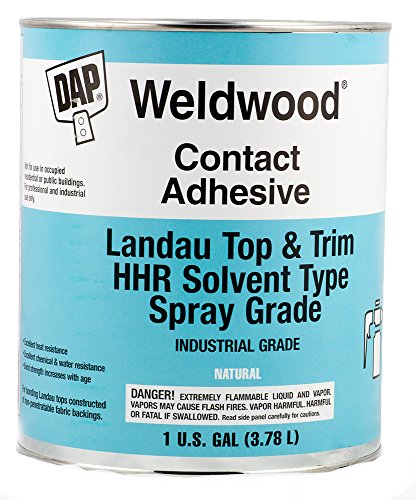
1. DAP Products Weldwood Landau Top & Trim HHR Solvent Type Spray Grade Contact Adhesive 1 Gal
Our pick — over 4.5★ from 850+ verified ratings; the strongest balance of quality and price.
The gallon jug that pro upholsterers reach for, delivering a bond that survives extreme heat and years of abuse.
This is contact cement engineered for the toughest automotive jobs — headliners, vinyl tops, and foam padding. The solvent-based formula creates a permanent bond that is both water resistant and high heat resistant, meaning it won’t soften and peel in a hot car. Owners spray it through a gun with a 2.0 tip, and it dries tacky in about 10 minutes, giving you a tight work window before the contact bond locks in permanently.
The gallon size is serious volume — the most cost-effective way to tackle a full interior or multiple projects. What wins people over is the adhesion: over 70 owners single out the grip, and hundreds more praise the overall quality. The vapor is strong, so a respirator and good ventilation are genuinely non-negotiable. The 24-hour full cure time is standard, but the bond is usable long before that.
What Owners Rave About
- Extreme heat and water resistance — ideal for automotive interiors
- Sprays consistently through a gun with a 2.0 tip
- Excellent value per gallon for large-scale projects
The Honest Trade-Offs
- Very strong odor; a respirator is strongly suggested
- Requires a spray gun — not a direct aerosol application
- Gallon size is overkill for small repairs
Reach for this if: you are restoring a car interior, redoing a headliner, or bonding vinyl and foam across a large surface area.
Think twice if: you only need a small patch repair — the volume and setup cost don’t make sense for a single shoe or a small laminate edge.
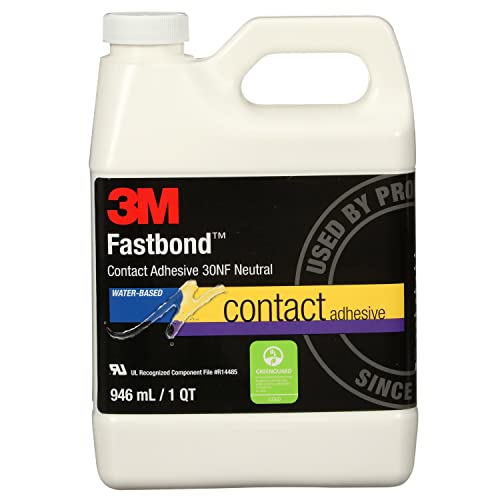
2. 3M Fastbond Contact Adhesive 30NF, Neutral, Low-Odor, Water-Based Adhesive, 1 Quart Can
A low-odor, water-based workhorse that gives you a four-hour window to get everything perfectly aligned.
If chemical fumes are a dealbreaker for your workspace, this is the contact cement to pick. The 3M Fastbond 30NF is water-based, non-flammable in its wet state, and produces very little odor — a massive relief for indoor projects. Owners use it for everything from wrapping drum sets to repairing RV roofs, applying it by spray, brush, or roller with no issues. The adhesion is immediate and terrifyingly strong: as buyers report, “once you touch them to each other, that’s it, they’re not coming apart.”
The standout spec is the bonding range of up to 4 hours, which is far longer than the typical 10-15 minute open time of solvent-based cements. This makes it ideal for large laminating jobs like countertops where you cannot rush positioning. On the downside, it is noticeably more expensive than traditional solvent cements, and it does not adhere well to slick plastics or plastic wood filler — you will need a porous surface like wood or laminate for the bond to hold. The 24-hour cure time is standard, but the bond becomes functional much sooner.
A breath of fresh air: The low odor and easy cleanup make it a joy to work with indoors — owners specifically call out the lack of fumes as a major win.
Best for: countertop lamination, RV repairs, drum wrapping — any project where low fumes and a long working window matter more than cost.
Not for: bonding plastic to plastic or quick spot repairs where the price premium is hard to justify.
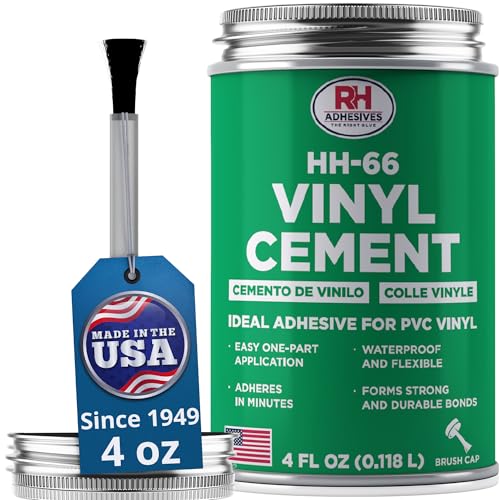
3. HH-66 Vinyl Cement 4 oz – Industrial Contact Cement for PVC & Vinyl Repair
The go-to cement for inflatable kayaks, pool liners, and marine vinyl that can even bond underwater.
This is not a general-purpose glue — it is a specialized vinyl cement for PVC and vinyl materials, and it excels in exactly that niche. The HH-66 formulation bonds in temperatures as low as 35°F and remains flexible and serviceable from -30°F to 150°F, so your repair won’t crack in the cold or soften in the sun. Owners have used it to reattach pads on inflatable Hobie kayaks, fix pool liners, and patch truck tarps, and the consensus is that it holds tenaciously. Over 585 buyers call out its effectiveness — the highest count in this category.
The built-in brush is handy but a bit messy; the glue dries quickly, so you need to work fast once it’s applied. A 24-hour cure is recommended, though some owners mention that a 48-hour cure gives an even stronger bond for high-stress repairs. Note that this cement is not compatible with polyethylene “blue tarp” material — check your surface before buying. It is also made in the USA since 1949, which speaks to its industrial pedigree.
Why It Wins for Vinyl
- Bonds underwater — a rare ability for pool and boat repairs
- Stays flexible in extreme temperature ranges (-30°F to 150°F)
- Proven on inflatable boats, kayaks, and pool liners
The Downsides
- Not for polyethylene tarps (most blue tarps)
- Brush applicator can shed fibers during use
- Glue can harden in the can between uses if not sealed well
Reach for this if: you need to repair anything vinyl — pool liners, inflatable boats, marine upholstery, or tarps — and want a bond that stays flexible in the elements.
Look elsewhere if: your tarp is standard blue polyethylene, or you need a general cement for wood and fabric.
4. DAP 00107 Weldwood Original Contact Cement, 3 oz – 3 Pack
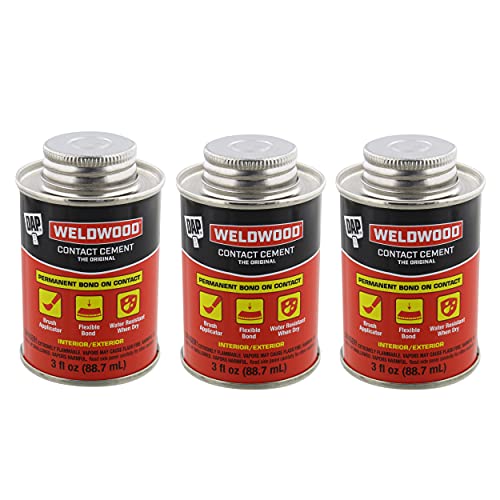
The old-school contact cement that shoe repair pros swear by, now in a convenient 3-pack of 3 oz bottles.
This is the contact cement that outperforms specialty shoe glues like Shoe Goo in the experience of many long-time users. The formula creates a bond that holds up on boot soles, suede repairs, and even heavy wooden doors. One of the defining features is the fast cure time — just 2.5 hours to full cure, which is dramatically shorter than the 24-hour standard for most contact cements. That matters when you want a shoe dry by morning.
The 3-pack gives you three separate bottles, which is actually smarter than a single larger can because contact cement thickens and degrades once opened. Owners note that the new metal cans have difficult lids — the old glass bottles were easier — so some keep an old bottle and refill it. Also, the toxicity is real; this is a solvent-based formula that requires excellent ventilation. The adhesion is excellent, but it is not for the faint of lung.
Fast and fierce: The 2.5-hour cure is the fastest in this lineup, and the bond is strong enough to hold a sole through a heel replacement — far outstripping the competition in shoe repair circles.
Perfect for: shoe and boot repair, especially soles and heels, where the fast cure and reliable bond save you from having to wait a full day.
Not for: large surface-area projects like countertops or headliners — the 3 oz bottle is too small, and the fumes demand serious ventilation.
5. HOOK UP Vinyl Cement – Waterproof Pool Liner Repair Glue, 8 oz
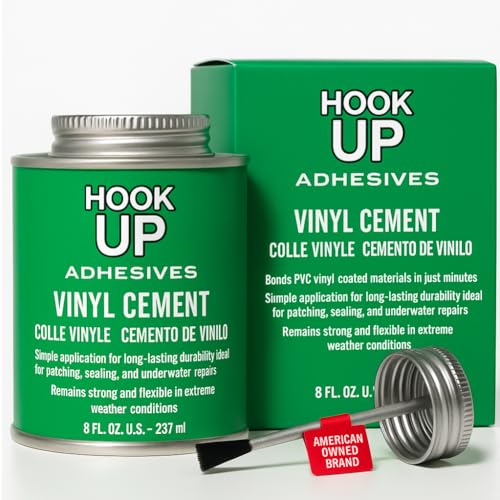
A dedicated vinyl cement with tenacious adhesion that held a boat cover together at 75 mph for 400 miles.
If your project involves pool liners, inflatable boats, or heavy-duty tarps, this HOOK UP cement is built for exactly those scenarios. It is a solvent-based contact cement designed specifically for vinyl and PVC surfaces, creating a strong, flexible seal that resists water pressure, chlorine, and outdoor exposure. The real-world testimonial is hard to argue with: an owner used it on a trailerable boat cover, drove 400 miles at 75 mph, and not one seam let go.
The built-in brush makes application straightforward, though it can be a bit messy, and you will want strong ventilation. The 24-hour full cure time is standard for this type. However, there is a recurring complaint about the lid gluing shut between uses — some owners found the can impossible to open after the first application, which wastes the remaining cement. Transferring the contents to a sealed glass jar after opening is a smart workaround. The 8 oz size is a practical middle ground for a season of pool or boat repairs.
What Stands Out
- Tenacious, waterproof bond for vinyl surfaces
- Proven on high-wind boat covers and heavy-duty air mattresses
- 8 oz is a good volume for seasonal repairs
Watch Out For
- The cap tends to glue itself shut after first use
- Strong fumes require a well-ventilated workspace
- Some owners question the value for the price
Best for: above-ground pool liner patches, boat cover seams, and heavy-duty inflatable repairs where the bond must survive wind and pressure.
Not for: general woodworking or shoe repair — it is specialized for vinyl and PVC only.
6. Gorilla Ultimate Spray Adhesive, Multi-Purpose Web Spray Contact Glue, 12.2 oz
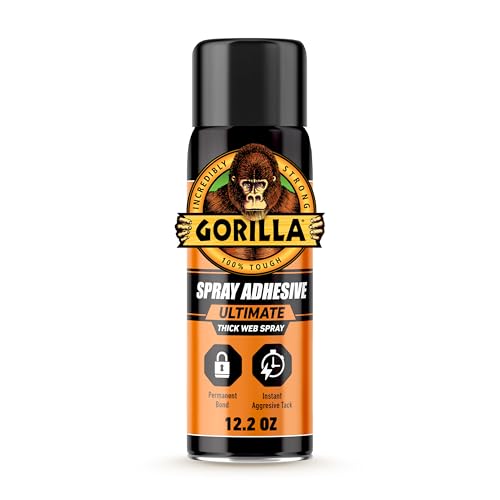
A low-VOC spray with an adjustable nozzle that lets you switch from a fine web to a wide pattern on the fly.
This is the spray adhesive to grab for upholstery projects, craft work, and bonding foam, felt, or fabric to wood or metal. The adjustable anti-clog nozzle offers three spray settings — Low, Medium, and High — so you can dial in exactly how wide the web pattern is. That precision means less overspray and more control, especially useful for small furniture projects or car headliners. The formula is low VOC and meets California CARB/OTC requirements, which is important if you are working in a garage or basement without industrial ventilation.
The instant aggressive tack means parts bond on contact and cannot be repositioned, so measure twice before you spray. Owners praise it for bonding throw rugs and insulation but note it can dissolve styrofoam, so test on foam surfaces first. It resists heat and moisture, but a few buyers found the adhesion less sticky than expected. The spray nozzle can also clog if you try to use a partially empty can later — using the full can in one session is the safest bet.
A spray-first approach: The adjustable nozzle and low-VOC formula make this the most refined aerosol option for DIYers who want control and less chemical smell.
Reach for this if: you are re-covering a chair, bonding fabric to foam, or installing insulation in a van — projects that need even coverage without the hassle of mixing or brushing.
Not for: precise small repairs like shoe soles or vinyl patches where a brush-on cement gives better control.
7. Contact Cement Adhesive 4.16 Oz, High Performance Neoprene Contact Adhesive with Brush (Wonshine)
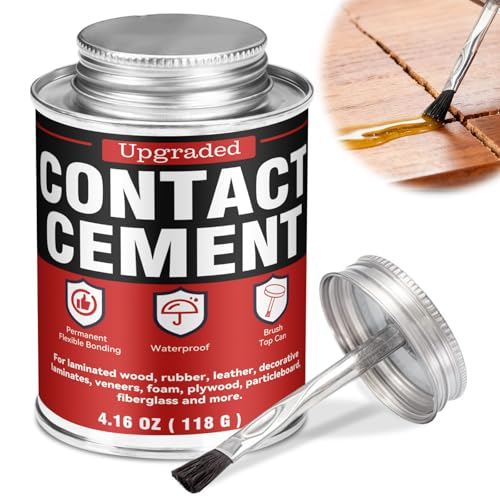
A small-bottle contact cement that finally solved a laminate countertop issue that other adhesives could not fix.
Size is the whole point here. The 4.16 oz bottle with a built-in brush is designed for small, precise jobs where you do not want to waste half a quart of adhesive. The neoprene formula creates a strong yet flexible bond that is waterproof and heat resistant, and it works on wood, leather, rubber, laminate, foam, and fiberglass. One owner had laminate coming up off a countertop and tried several adhesives that kept failing — this one held after many weeks.
The application is straightforward: paint it on both surfaces, wait 10-15 minutes until the glue is tacky and glossy, then press together. The 24-hour full cure is needed before the bond hits its full strength. The small size is smart because contact cement tends to thicken and harden over time — you are more likely to finish this bottle before it goes bad. But if you have a larger project, you will need multiple bottles, which is not as cost-effective as buying a quart in bulk.
Why It’s Handy
- Perfect size for small projects — no waste from hardened leftover cement
- Built-in brush allows clean, controlled application in tight spots
- Waterproof and heat resistant for kitchen and outdoor use
The Catch
- Expensive per ounce compared to larger containers
- Bottle size only covers a few small repairs
- Contents can stiffen as volatiles evaporate
Ideal for: fixing a loose laminate edge, reattaching foam to a tractor seat, or small leather and wood crafts where you only need a little bit.
skip it if: you are covering a whole countertop or an entire headliner — you will need a gallon and a spray setup.
8. Angelus Clear Shoe Cement – 4 oz Professional-Strength Glue Quick Drying Contact Adhesive
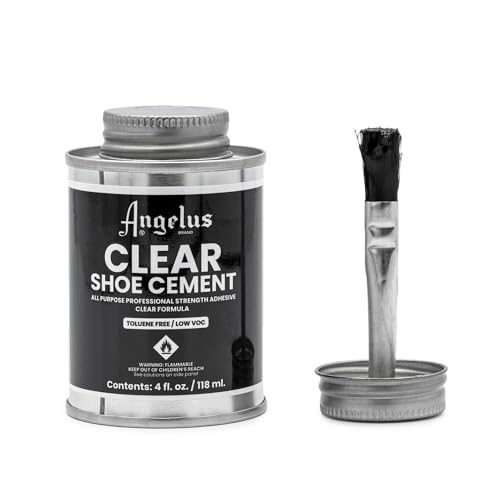
The professional-strength shoe cement that dries clear, bonds leather to rubber, and comes with a built-in brush.
If your primary mission is keeping shoes alive — reattaching soles, fixing boots, or repairing sneakers — this Angelus cement is the most targeted tool for the job. It is specifically formulated for flexible materials: leather, rubber, plastic, vinyl, and fabric. The clear finish means zero discoloration on light-colored soles or “icy” clear sneaker bottoms. Trusted by cobblers and leatherworkers, it is a 4 oz bottle with a brush cap that makes applying an even layer simple. One owner reattached Timberland boat shoe soles with clamps overnight, and the bond held for months.
The formula is flexible, waterproof, and dries clear, but it needs a full 24 hours to cure. A key tip from owners: clamp the pieces immediately after brushing on the cement — do not let it dry first, despite what some video instructions suggest. The main drawback is that the can hardens after opening, making it difficult to reuse later. Some owners recommend buying the smallest size needed for the project, or transferring the cement to a different sealed container after first use.
Your cobbler in a bottle: The flexibility and waterproof seal mean this is not just a temporary fix — the bond outlasts the shoe’s original glue in many cases.
Reach for this if: you need to repair shoe soles, sandals, leather goods, or any flexible item where a visible glue line would ruin the look.
Look elsewhere if: you are bonding wood, laminate, or non-flexible materials — a standard contact cement will give a stronger rigid bond.
9. Heavy Duty Contact Cement – 250 ml (LePage)
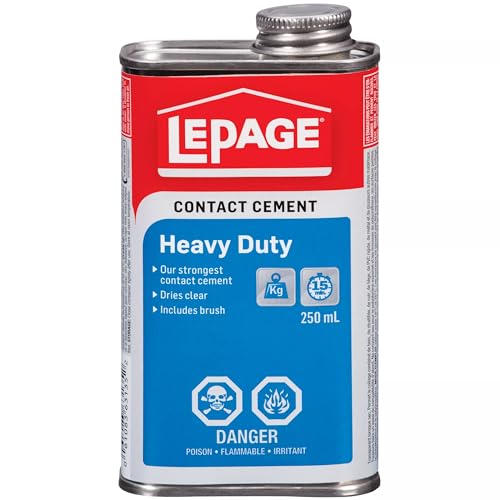
A thick liquid contact cement that dries super clear, perfect for EVA foam cosplay props and delicate craft bonds.
LePage’s Heavy Duty Contact Cement is a solvent-based liquid that comes in a 250 ml (about 8.5 oz) can, and it has found a dedicated following among cosplayers and prop makers. The reason is that it bonds EVA foam extremely well, especially when you apply a bit of heat with a heat gun — not a hair dryer — after application. It dries super clear, which matters for craft projects where the glue might be visible. Owners use it to attach wire trees to bases, laminate foam to MDF, and build armor pieces.
The cure time is the standard 24 hours at 78°F, and it is described as fast-drying and high strength. The consistency is thick and liquid, best applied with a roller or brush. On the downside, the strong odor demands a mask and gloves, and it is slow to bond on some materials — you need to wait for it to become tacky before pressing parts together. It is also expensive for the volume, though owners feel the large quantity is justified for the price. A tip from experienced users: apply two coats with a 10-minute wait after heat for the strongest bond.
What It Does Well
- Dries crisp — critical for cosplay and visible seams
- Strong bond on EVA foam when paired with heat gun
- Large volume for its price point
What to Consider
- Strong fumes require ventilation and a mask
- Does not stick well to all materials — needs a porous surface
- Bonding is slow; you need patience for the tack phase
Best for: building EVA foam armor, attaching craft materials to bases, or any project where a clear, invisible bond is the aesthetic priority.
Not for: quick shoe repairs or large laminating jobs — the slow tack time and strong odor make it less practical for those.
Understanding the Specs
Open Time vs Cure Time
Open time is the window you have to position parts after applying the cement — once the solvent evaporates and the glue becomes tacky, you must join the pieces. Most contact cements have an open time of 10 to 15 minutes, while the 3M Fastbond 30NF offers up to 4 hours. Cure time is how long you must wait before the bond reaches its full strength; 24 hours is the industry standard, though DAP Weldwood Original cures in just 2.5 hours. Do not stress the joint during cure time or the bond will weaken.
Solvent-Based vs Water-Based
Solvent-based contact cements (like DAP Weldwood and HH-66) offer strong, permanent bonds and work on a wide range of materials, but they produce strong fumes and are flammable. Water-based options (like the 3M Fastbond 30NF) are low-odor, non-flammable when wet, and easier to clean up with soap and water, but they may not bond as aggressively to slick surfaces like plastic or metal. For indoor projects without massive ventilation, water-based is safer; for automotive or shop work, solvent-based gives the strongest grip.
Spray vs Brush-On vs Liquid
Spray contact cement (like Gorilla Ultimate) covers large areas evenly and quickly — ideal for upholstery and headliners. Brush-on formulas (like Angelus and HH-66) give you precision for small repairs and tight spots, with less overspray. Liquid in cans (like DAP Weldwood Original) is best for dipping or spreading with a tool, and it usually offers the strongest individual bond for small parts. Match the application method to your project size: spray for square footage, brush for picky repairs.
Heat and Water Resistance
Not all contact cements handle heat and moisture the same way. The DAP Weldwood Landau Top & Trim is specifically rated for high heat and water resistance, making it ideal for automotive interiors that bake in the sun. HH-66 Vinyl Cement has a service range of -30°F to 150°F, meaning it stays flexible in sub-freezing temps and hot sun. If your project lives outdoors or in a hot car, check the temperature and moisture ratings on the can — a general-purpose cement may soften or peel.
FAQ
What is the difference between contact cement and regular glue?
Can contact cement be used on polyethylene or polypropylene plastics?
Why does my contact cement dry out in the can between uses?
Is contact cement flammable?
Can I use contact cement underwater?
How long should I wait before clamping parts together?
Is contact cement the same as rubber cement?
Can I use contact cement on countertop laminate?
Does contact cement work on fabric for headliners?
What does “low VOC” mean in contact cement?
Final Thoughts: The Verdict
If you want one dependable pick, the contact cement winner is the DAP Weldwood Landau Top & Trim because it combines the highest ratings with proven performance across automotive, upholstery, and general bonding — the gallon size is class-leading for value on big projects. If you need a low-odor, long-open-time option for laminating and indoor work, grab the 3M Fastbond 30NF. And for vinyl repairs on boats, pools, and inflatables, the HH-66 Vinyl Cement is the one to reach for.
How We Picked
We do not accept paid placement. Every pick is matched to a real buyer and a real use-case; we do not hands-on test units.
Sources & Methodology
Specifications: manufacturer listings and product documentation. Review insights: verified customer reviews, as of July 2026. Pricing: not shown on this page (it changes often); check the current price via the retailer link.
As an Amazon Associate, WellFizz earns from qualifying purchases. This does not affect which products we feature.
Related Guides

Mo Maruf
I created WellFizz to bridge the gap between vague wellness advice and actionable solutions. My mission is simple: to decode the research and give you practical tools you can actually use.
Beyond the data, I am a passionate traveler. I believe that stepping away from the screen to explore new environments is essential for mental clarity and physical vitality.