Our readers keep the lights on and my smoothie glass nicely filled. As an Amazon Associate, I earn from qualifying purchases.
Specs are compiled from manufacturer listings and verified buyer reviews and can change over time — please confirm the key details on the product page before buying.
If you are waking up to that first-step stabbing heel pain, you already know that plantar fasciitis is a daily grind. The right compression sock can take that edge off by supporting your arch and speeding recovery — but not every sock that says “plantar fasciitis” on the box actually delivers enough targeted pressure where it counts. This guide compares five proven contenders, from budget-friendly multi-packs to premium anatomical designs, so you can pick the pair that fits your foot shape, activity level, and pain point.
I’m Mohammad Maruf — the founder and writer behind WellFizz. This guide is built by comparing the manufacturers’ published specifications and the patterns across verified customer reviews, so you get each pick’s real strengths and trade-offs instead of marketing spin.
To find the best compression socks for plantar fasciitis, you need three things: graduated compression (tighter at the ankle, looser up the calf) to push blood upward, firm arch support to cradle the inflamed fascia in your foot, and breathable material so you can wear them all day without overheating.
Our Picks at a Glance
How To Choose The Best Compression Socks For Plantar Fasciitis
A plantar fasciitis sock is different from a general circulation sock. The key is finding firm, targeted compression at the arch and heel without making your toes go numb. Here are the three specs to get right.
Compression Level (mmHg)
The number followed by “mmHg” tells you how much squeeze the sock delivers. For plantar fasciitis relief, you generally want a mid-range 15-20 mmHg or a firmer 20-30 mmHg — anything milder may feel cozy but won’t lift and stabilise the arch the way your fascia needs.
Targeted vs. Graduated Compression
Graduated compression is tightest at the ankle and loosens as it moves up the calf, which helps blood flow back to your heart. Targeted compression zones are bands or panels that concentrate pressure specifically on the arch and heel — ideal for plantar fasciitis because they cradle the inflamed tissue without squeezing your whole calf equally.
Material and Breathability
If you are on your feet eight hours or more, a moisture-wicking fabric (nylon blends with copper or merino wool) keeps sweat away and prevents blisters or skin irritation. Thicker cushioning adds comfort under a shoe but can make the sock feel hot in summer — choose accordingly.
Quick Comparison
| Model | Best For | Compression Level | Material | Style | Amazon |
|---|---|---|---|---|---|
| Sooverki Copper Compression Socks★ Best Overall | Multi-pack value for all-day wear | 15-20 mmHg | Nylon, Polyester, Copper Fiber | Knee-high | Amazon |
| NEENCA Copper Compression SocksAlso Great | Medical-grade arch and ankle support | 20-30 mmHg | 24% Copper Ions + Nylon + Spandex | Low-cut ankle | Amazon |
| PAPLUS Compression Socks | Ankle compression with arch support | 15-20 mmHg (approx.) | Nylon / Spandex blend | Ankle / low cut | Amazon |
| OS1st FS4 Merino Wool Compression Socks | Natural wool comfort with targeted zones | Medical-grade (not specified mmHg) | Merino Wool blend | 1/4 Crew | Amazon |
| Feetures Plantar Fasciitis Relief Socks | Anatomical fit with targeted compression | Targeted (not specified mmHg) | iWick fibers | Quarter (2″ cuff) | Amazon |
In‑Depth Reviews
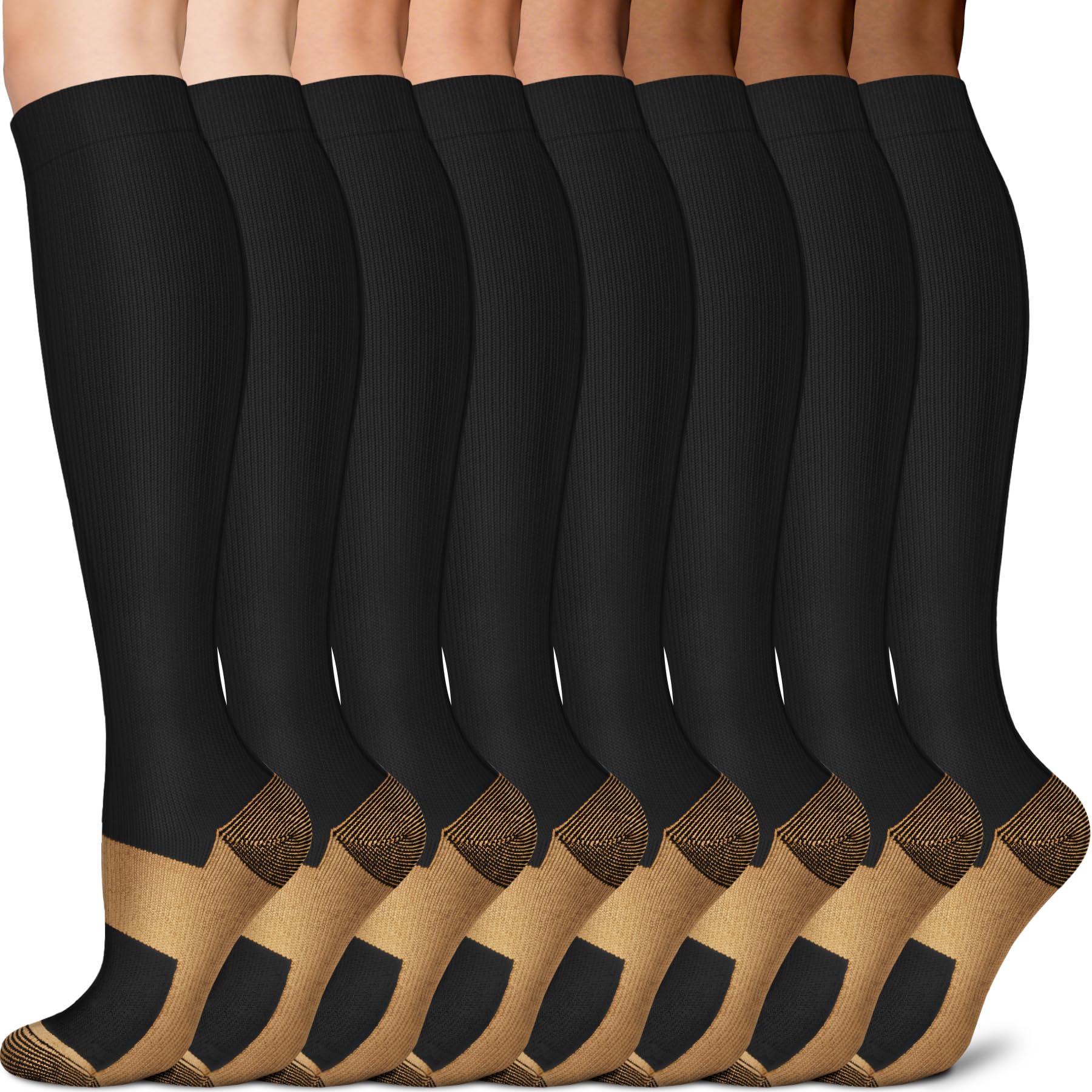
1. Sooverki Copper Compression Socks for Men & Women — 8 Pack, 15-20 mmHg
Our pick — 4.5★ from 33,500+ verified ratings.
Eight pairs built for the workweek without daily washing.
This is the volume play. You get eight knee-high socks in a mix of colours, all delivering 15-20 mmHg graduated compression. The blend is 85% Nylon, 10% Polyester, and 5% Copper Fiber, which owners mention is breathable enough to wear 12+ hours even in Florida heat — a claim that comes from real-world nurses and healthcare workers who reviewed the pair. The copper fibre is marketed to help with odour and blood circulation, but the practical upside is simpler: eight pairs means you can rotate through a full work week without doing laundry every night.
Comfort is the number-one thing owners praise most, with over 1,100 mentions. Quality comes second at 960 mentions. The fit gets positive marks too — even a 265-pound buyer with size 11.5 feet found the XL a solid fit. Compression is consistent and customers note it reduces swelling for people who are on their feet all day. The mild squeeze is great for general leg fatigue and circulation, though for pure plantar fasciitis arch support the 15-20 mmHg is gentler than the NEENCA’s 20-30 mmHg. A few owners mention durability concerns — some pairs develop holes after several washes — so treat them gently and hand-wash where possible.
One quirk: the multicolour pack can have inconsistent stretch across colours (the grey pair may feel baggy, the white perfect, the black too tight on the calf). If you want consistent fit, stick with the all-black option. Compared to premium brands like Gold Toe, owners say the Sooverki holds up well at a fraction of the cost.
Weekday workhorse: the eight-pack means zero laundry stress, and the 15-20 mmHg compression hits the balance for all-day wear without feeling restrictive. The multi-colour inconsistency is the main reason to order the solid black pack.
Reach for this if: you need a rotation of compression socks at a budget-friendly price and your primary goal is general leg fatigue relief plus some support for mild plantar fasciitis.
Look elsewhere if: you need the firmer 20-30 mmHg level for severe arch pain, or if you want a low-cut ankle style rather than knee-high coverage.
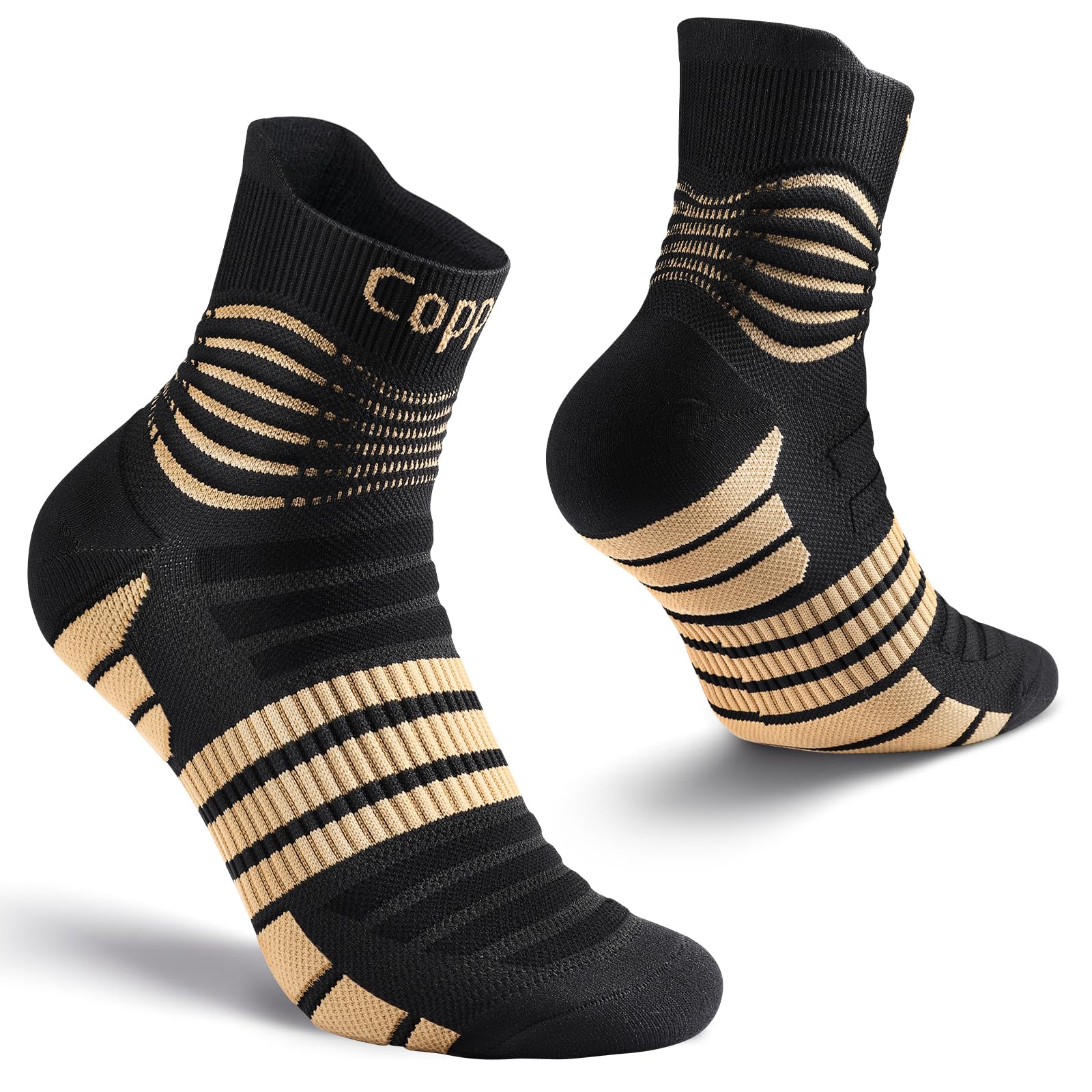
2. NEENCA Copper Compression Socks, Medical Ankle Support Socks — 20-30 mmHg
The firmest medically-rated squeeze on this list, built for true plantar fasciitis relief.
This is the only pick here that uses a 20-30 mmHg compression rating — a full 33% more squeeze than the 15-20 mmHg socks above. That higher pressure is exactly what you want when the arch and heel need serious support to reduce inflammation. The sock is a low-cut ankle style (not knee-high), so the entire compression effort is concentrated right where plantar fasciitis hurts. The material is 24% copper ions infused into the fiber, combined with 62% Nylon and 14% Spandex, which buyers report keeps the fabric breathable and odour-free even after long shifts.
The design uses a patented “Ankle Tuck Compression Technique” with six compression rings around the ankle and a reinforced arch. A dense six-layer loop on the sole provides shock absorption during movement — a feature that matters if you run or walk on hard floors all day. The crowning advantage: it is classed as a Class 1 Medical Device and widely used in US hospitals. That medical pedigree shows in the consensus — comfort is the most-discussed positive by a wide margin, followed by quality.
There is one honest curiosity worth knowing: a few wearers report a temporary size difference between the ankle and calf after removing the socks, which resolves in 1-2 hours. This is simply how a very firm compression sock works — it pushes fluid out of the compressed area. If you are new to high-pressure socks, that sensation can spook you, but it is harmless. The same crowd notes the socks are thicker than typical summer socks, so plan your shoe fit accordingly.
Why this one stands out
- 20-30 mmHg — the highest compression level in the roundup, providing medical-grade arch and ankle support.
- Six compression rings at the ankle for targeted fascia relief.
- Class 1 Medical Device status; used in hospital systems.
- Comfortable enough for sleeping and lounging, according to buyers who wear it 24/7.
A note on adjustment
- Temporary ankle-calf size difference after removal — normal but may be surprising for new users.
- Firmer fit may feel too constricting for those accustomed to milder 15-20 mmHg socks.
Best for: anyone with confirmed plantar fasciitis who wants the highest supported compression level in a low-cut sock, plus the confidence of a medical device classification.
Think twice if: you have very sensitive calves or prefer a lighter, less noticeable squeeze — the 20-30 mmHg is firm and takes an adjustment period.
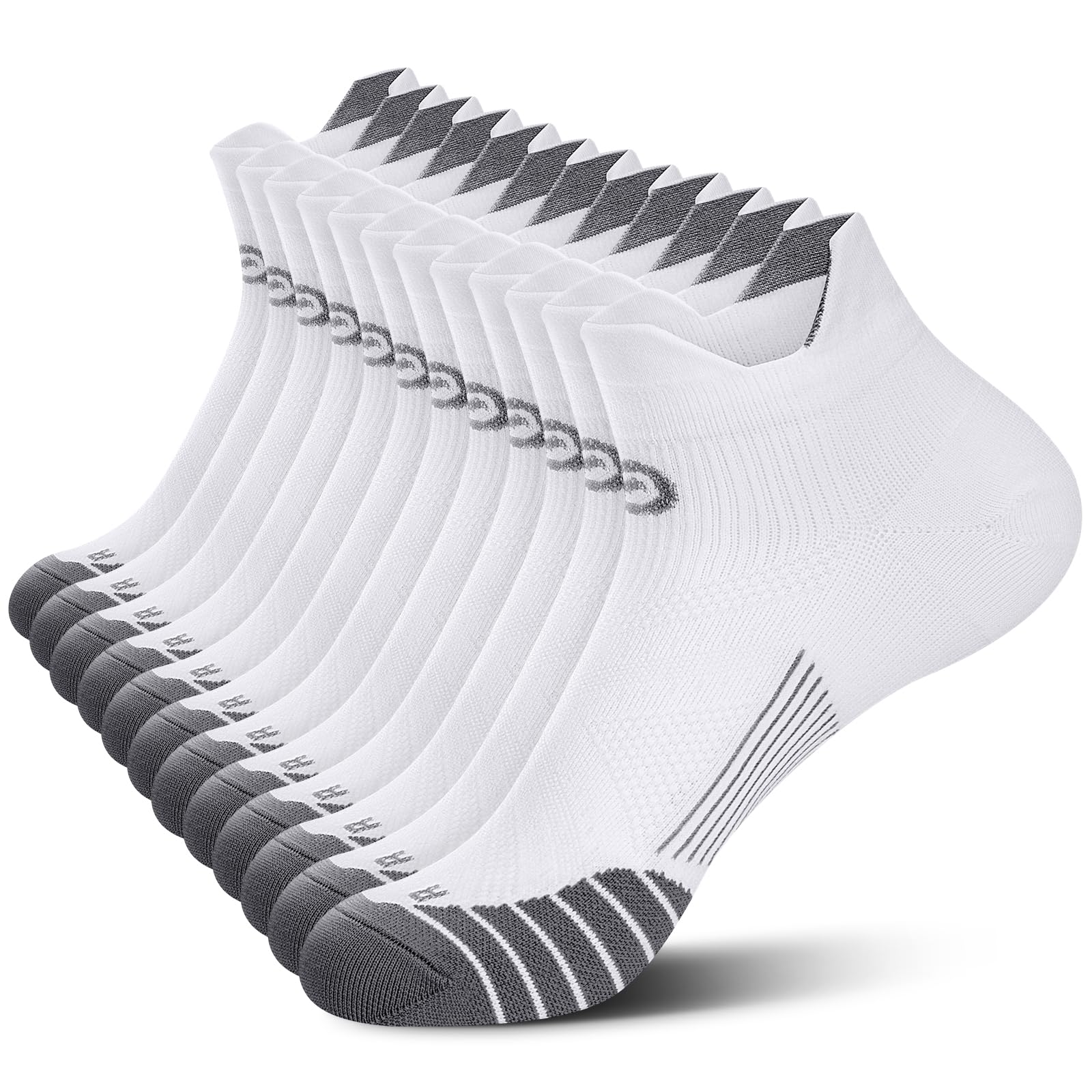
3. PAPLUS Compression Socks for Men & Women — 2/4/6 Pairs, Ankle Running Socks
Soft, low-cut support that stays invisible under sneakers and targets the arch directly.
The PAPLUS sock is built differently from the knee-high options. It is an ankle-length sock with deliberate arch support and a gentle squeeze that does not cut off circulation. The crowd favorite aspect here is comfort — reviewers point out the sock is soft to the touch and provides good compression without marks after 3+ hours of wear. One buyer with narrow flat feet found the S/M size and a size 7.5 men’s shoe fit well, and another used it for sensory pressure relief for an autistic child, which tells you the material is gentle against the skin.
For plantar fasciitis, the arch support is the key feature. It is firm enough to stabilise the fascia without being so tight that it hurts to put on. A runner who reviewed the pair noted it provides good ankle support and stability while the low cut stays in place during runs. The compression is listed as a nylon/spandex blend, but the brand does not publish a specific mmHg number — so consider this a moderate-level compression sock rather than a medical-grade one. It beats the NEENCA on softness but falls short on targeted pressure intensity.
The honest trade-off is durability. After several washes, the colours fade and the fabric can become a bit scratchy. Buyers who rotate between pairs say they hold up fine, but heavy users who wash daily may see the material degrade faster than the copper-fibre competitors.
What owners love
- Soft, comfortable fabric that does not leave marks after hours of wear.
- Low-cut design fits under sneakers without bunching.
- Good arch support for mild to moderate plantar fasciitis.
- Available in multi-packs for rotation.
The durability catch
- Colours fade and fabric may become coarser after several washes.
- No specific mmHg rating — compression level is approximate.
Grab these if: you need a low-cut, soft sock that provides solid arch support without the full calf compression, ideal for running or casual all-day wear.
Skip if: you need the higher medical-grade compression (20-30 mmHg) for severe plantar fasciitis, or you expect the sock to survive countless machine washes.
4. OS1st FS4 Merino Wool Plantar Fasciitis 1/4 Crew Compression Socks

Merino wool warmth meets compression zones that target the heel and arch specifically.
The OS1st FS4 is a quarter-crew sock purpose-built for plantar fasciitis, with medical-grade compression zones that concentrate support on the arch and heel rather than squeezing the entire leg. The merino wool blend gives it a natural temperature-regulating quality — shoppers say it kept their feet comfortable during all-day hiking in 104°F heat without soaking through. The anatomical design means the left and right socks are shaped differently for a custom-like fit, which reduces bunching and the risk of blisters.
What wins people over is the immediate relief: many report feeling the difference within the first hour of wear, especially compared to generic compression socks. The targeted compression band across the midfoot is noticeably firmer than the PAPLUS or Sooverki, yet does not feel restrictive. For runners recovering from plantar fasciitis, one reviewer noted it made recovery more comfortable without adding tightness. The moisture-wicking merino wool also means no lingering odour even after back-to-back wears.
The catch is durability and care. Merino wool requires cold-water washing and you must never put it in the dryer — the socks are “high maintenance” by sock standards. A few buyers report the material can separate at the ankle or develop holes after light use. Fit is also less forgiving than stretchy synthetic blends; if you are between sizes, the wool may feel either slightly roomy or overly tight. This is a specialist sock for people who already know they want natural fibre and are willing to pamper it.
Natural comfort, targeted support: if merino wool is a non-negotiable for your skin, this is the only plantar fasciitis compression sock on the list that uses it. The trade-off is a careful washing routine and a less stretchy material that demands the right size.
Best for: those who prioritise natural merino wool next to their skin and want targeted compression zones on the arch and heel rather than full-leg compression.
Think twice if: you want a durable, machine-wash-and-dry sock that can handle heavy athletic use — the wool needs gentle care and may not last through aggressive activity.
5. Feetures Plantar Fasciitis Relief Light Cushion Quarter Sock
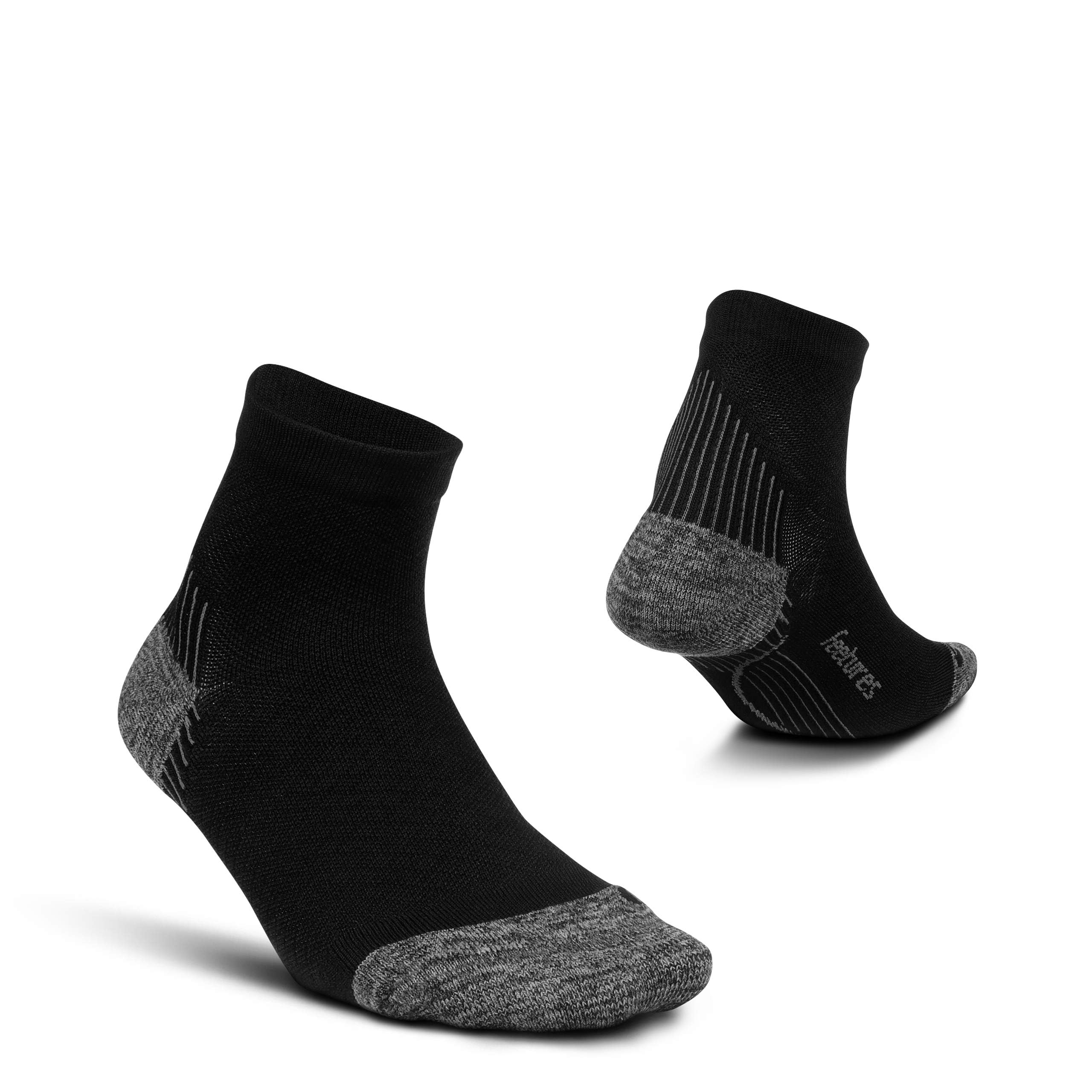
Targeted compression in three zones — arch, heel, and Achilles — designed to fit left and right individually.
The Feetures sock is a quarter-length design with a 2-inch cuff that sits just above the ankle bone. Its defining feature is targeted compression in three critical zones of the foot: it lifts, stretches, and stabilises the plantar fascia while also supporting the Achilles tendon. The anatomical design means the left and right socks are shaped separately, which reduces blister risk and gives a custom feel that a symmetrical sock cannot match. The iWick fibers are engineered to wick moisture away, keeping feet cool and dry during runs or long walks.
Buyers who hike and walk a lot say these socks are so supportive that their feet do not ache after a long day. One owner, after months of fighting plantar fasciitis, reported relief within the first day. The light cushion adds just enough impact protection without bulk — useful if you wear them inside running shoes or hiking boots. Compared to the NEENCA, the Feetures offers a softer, more targeted compression rather than the full firmness of 20-30 mmHg. It beats the Sooverki on anatomical precision but falls short on overall compression level for severe cases.
The honest downside: the sock is very tight around the ankle, which makes it difficult to pull on and off. A few buyers find the compression so restrictive that it feels uncomfortable after extended wear. There is also no cushion in the sole — the support is purely from compression, not padding — so if you need soft padding underfoot, this may not be the answer. But if the anatomical fit helps your specific foot shape, the investment pays off in daily comfort.
Precision fit perks
- Anatomically shaped left and right socks for a custom fit with less bunching.
- Targeted compression in three zones: arch, heel, and Achilles tendon.
- iWick fibers keep feet dry during high activity.
- Light cushion adds impact protection without bulk.
Before you buy
- Very tight ankle opening — can be difficult to put on and off; some find it restrictive over time.
- No cushion padding in the sole — the support is purely from compression.
- Premium price for a single pair; may feel expensive compared to multi-pack options.
Pick these if: you want a sock that follows the exact shape of your foot with targeted compression on the Achilles and arch, and you are willing to pay more for that anatomical precision.
Skip if: you dislike wrestling with tight socks to get them on, or you need a budget-friendly multi-pack for daily rotation.
Understanding the Specs
Compression Level (mmHg)
The “mmHg” number is how much pressure the sock applies. Think of it as a firmness scale. For plantar fasciitis, you generally want at least 15-20 mmHg (moderate) and up to 20-30 mmHg (firm/medical grade). A lower number may feel cosy but will not lift your arch enough to relieve the fascia.
Graduated vs. Targeted Compression
“Graduated” means the sock is tightest at the ankle and gradually loosens up the leg — good for circulation but not specifically designed for foot pain. “Targeted compression zones” are concentrated bands of pressure on the arch, heel, or Achilles. For plantar fasciitis, look for socks that call out arch or heel compression zones.
Anatomical Fit
A sock with a left-foot and right-foot shape (like the Feetures and OS1st) conforms better to your foot’s natural curve, reducing bunching and blisters. Symmetrical socks are cheaper to manufacture but may not cradle your arch as precisely. If you are prone to blisters on long walks, the anatomical design is worth the extra cost.
Material and Breathability
Nylon and spandex blends with copper-infused fibres are common — they stretch well, wick sweat, and resist odour. Merino wool (like the OS1st) is naturally breathable, odour-resistant, and temperature-regulating but requires delicate washing. If you live in a hot climate or have a sweaty foot, avoid heavy cotton blends that hold moisture.
FAQ
Will compression socks cure my plantar fasciitis?
What is the difference between 15-20 mmHg and 20-30 mmHg?
Can I wear compression socks for plantar fasciitis while sleeping?
How tight should a compression sock feel?
Do I need a knee-high or low-cut compression sock for plantar fasciitis?
How long do compression socks for plantar fasciitis last?
Can I wear these socks during exercise?
Are copper-infused compression socks better for plantar fasciitis?
What size compression sock should I buy?
Can I machine dry compression socks?
Final Thoughts: The Verdict
If you want one dependable pick, the compression socks for plantar fasciitis winner is the NEENCA Copper Compression Socks because its 20-30 mmHg medical-grade compression provides the targeted arch and ankle support that true plantar fasciitis relief requires. If you want an eight-pack rotation at a budget-friendly price, the Sooverki Copper Compression Socks deliver reliable 15-20 mmHg compression and breathable comfort for long work days. And for a natural merino wool option with targeted compression zones, the OS1st FS4 Merino Wool Socks are the one to reach for.
How We Picked
We do not accept paid placement. Every pick is matched to a real buyer and a real use-case; we do not hands-on test units.
Sources & Methodology
Specifications: manufacturer listings and product documentation. Review insights: verified customer reviews, as of July 2026. Pricing: not shown on this page (it changes often); check the current price via the retailer link.
As an Amazon Associate, WellFizz earns from qualifying purchases. This does not affect which products we feature.
Related Guides

Mo Maruf
I created WellFizz to bridge the gap between vague wellness advice and actionable solutions. My mission is simple: to decode the research and give you practical tools you can actually use.
Beyond the data, I am a passionate traveler. I believe that stepping away from the screen to explore new environments is essential for mental clarity and physical vitality.