Our readers keep the lights on and my smoothie glass nicely filled. As an Amazon Associate, I earn from qualifying purchases.
Specs are compiled from manufacturer listings and verified buyer reviews and can change over time — please confirm the key details on the product page before buying.
Your shirt shouldn’t be something you wrestle with on a hot approach. The wrong one chafes under a harness, traps heat on a sunny face, and soaks through before you even clip the first bolt. The right one moves with you, breathes, and blocks the sun so you can focus on the rock, not your wardrobe.
I’m Mohammad Maruf — the founder and writer behind WellFizz. This guide is built by comparing the manufacturers’ published specifications and the patterns across verified customer reviews, so you get each pick’s real strengths and trade-offs instead of marketing spin.
Your ideal shirt shields your skin from the sun, lets your sweat evaporate, and doesn’t bind when you reach overhead. The best climbing shirts do all three without you noticing.
Our Picks at a Glance


How To Choose The Best Climbing Shirts
A climbing shirt does a simple job: protect your skin from sun and rock, dry fast when you sweat, and never get in the way of a move. Here is what separates a great one from one that stays in the drawer.
Sun Protection That Isn’t a Slogan
The UPF (Ultraviolet Protection Factor) rating tells you how much UV radiation the fabric blocks. UPF 50+ means it stops at least 97.5% of UV rays. For a full day at a sunny crag, that isn’t a luxury — it is the difference between climbing the next day and hiding in the shade with a sunburn. Look for a shirt that states UPF 50 or UPF 50+ explicitly.
Fabric That Moves With You
A climbing shirt needs to stretch, breathe, and dry fast. Polyester and spandex blends tick all three boxes. Cotton absorbs sweat and stays wet, which chills you on a breezy belay ledge and adds weight. A slim or regular fit that allows full arm extension without the hem riding up is the goal — a loose shirt flaps in the wind and snags on gear.
Seam and Cut Strategy
Raglan sleeves (the seam runs diagonally from collar to underarm) give more freedom for overhead reaches. Dropped shoulder seams sit further down the arm, away from where a pack strap or harness sits, which cuts down on rubbing. Flatlock or twisted side seams also help minimize chafing on long approaches.
Quick Comparison
| Model | Best For | UPF Rating | Fabric Type | Sleeve | Amazon |
|---|---|---|---|---|---|
| 7 Pack Long Sleeve Shirts★ Best Overall | All-Day Sun & Value | UPF 50+ | Polyester | Long | Amazon |
| Columbia Thistletown HillsSmart Short Sleeve | Short Sleeve Versatility | — | Omni-Wick Polyester | Short | Amazon |
| Real Essentials 4 PackTrail to Crag | Budget Multi-Pack | UPF 50 | Polyester-Spandex | Long | Amazon |
| Outdoor Ventures Button-Down | Vented Sun Shirt | UPF 50+ | Performance Fabric | Long | Amazon |
| Kinglaman 6 Pack | High-Value 6-Pack | UPF 50+ | Polyester | Long | Amazon |
| Helly Hansen HH Tech 2.0 | Short Sleeve Sun Tee | UPF 50 | Polyester | Short | Amazon |
| Hanes Cool Dri Performance | Mid-Range Short Sleeve | UPF 40+ | Interlock Jersey Polyester | Short | Amazon |
| Rab Force Tee | Premium Performance Tee | — | Single Jersey | Short | Amazon |
| Arc’teryx Kragg SL Cotton | Premium Cotton Comfort | — | Cotton (Supima Jersey) | Short | Amazon |
In‑Depth Reviews
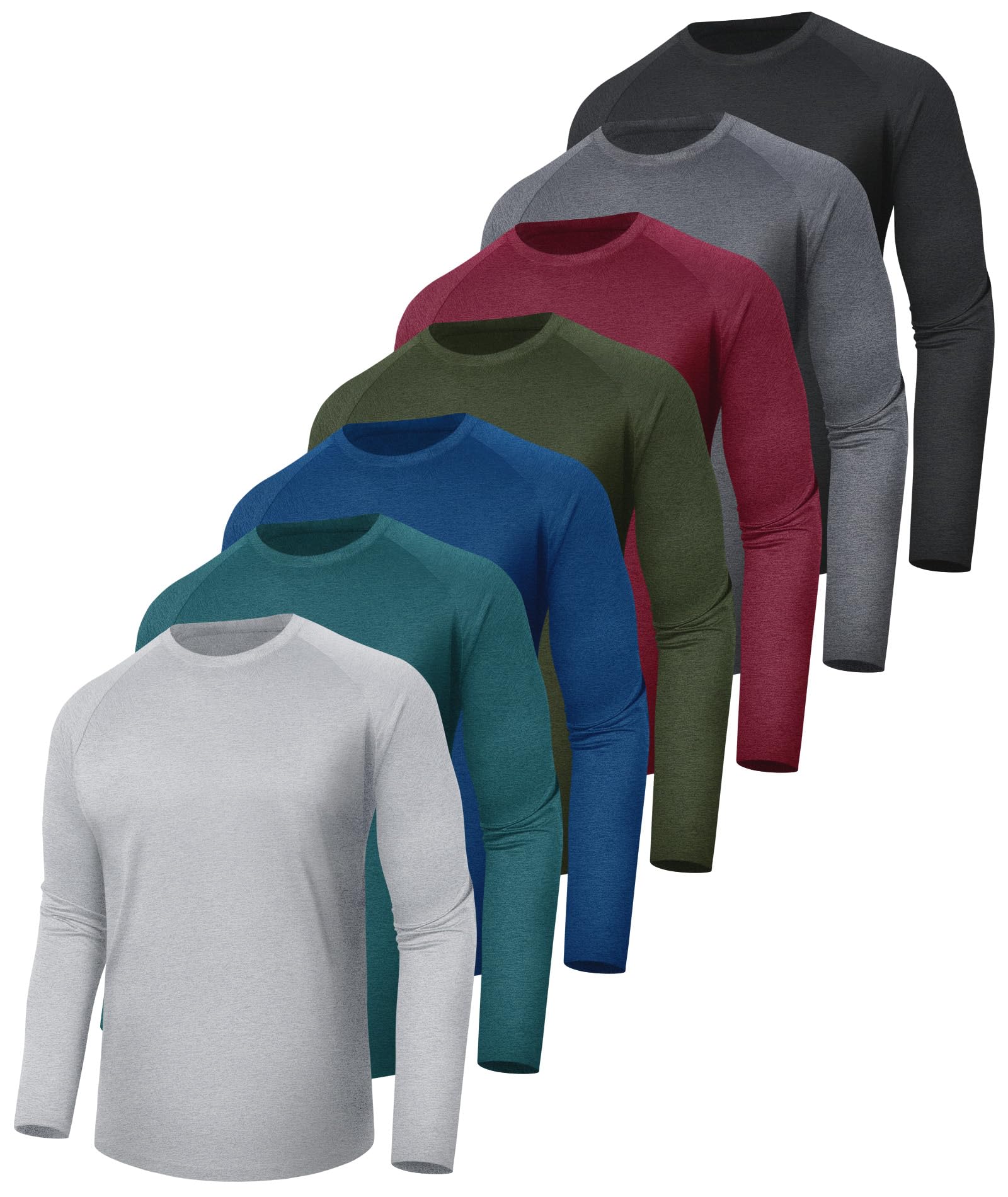
1. 7 Pack Long Sleeve Shirts for Men – Quick Dry Moisture Wicking Sun Protection UV UPF T-Shirts for Fishing Workout Gym
Our pick — over 4.5★ from 2,000+ verified ratings; the strongest balance of quality and price.
Seven long-sleeve sun shirts that cost less than a single premium tee — and the crowd loves them.
This is the closest thing to a no-brainer in the climbing-shirt world. You get seven long-sleeve shirts, each carrying UPF 50+ protection (97.5% UV block), for less than what a single premium brand charges. The fabric lands somewhere between soft and almost silky — which is exactly what you want when a shirt sits against your skin for eight hours at the crag. It is lightweight enough for 60-to-80-degree weather, and buyers report the colors don’t fade when wet.
The fit draws the most praise from owners, with quality the top-cited aspect. Over 160+ buyers highlight the fit alone, calling it great for a range of body types. The raglan sleeve design (seams run from collar to underarm) gives you unrestricted arm movement for overhead reaches and heel hooks. A few repeat buyers mention that consistency between batches can vary — an occasional shirt shows loose stitching — so inspect your first one closely before cutting tags. But at roughly per shirt with UPF 50+ protection, the arithmetic is hard to argue with.
Worth Buying For
- UPF 50+ on every shirt in the pack, blocking 97.5% of UV rays.
- Raglan sleeves give full freedom for overhead climbing moves.
- Cotton-soft feel that dries fast and resists fading when wet.
Know Before You Buy
- Batch consistency varies — a small number of owners have caught loose stitching.
- Not a technical climbing cut; more of a relaxed athletic fit.
Reach for it if: you want a mountain of sun protection for the price of a single mid-range shirt, and you don’t need a fitted climbing silhouette.
Look elsewhere if: a tailored, performance cut is non-negotiable for your climbing style.
2. Columbia Thistletown Hills Short Sleeve
A Columbia classic with the brand’s Omni-Wick fabric that owners mention hasn’t shrunk after many washes.
Columbia’s Omni-Wick fabric is the star here. It pulls sweat off your skin and spreads it across the fabric surface so it evaporates faster — exactly what you need on a sunny approach or a moderate multi-pitch where you’re working but not soaked. The short-sleeve cut keeps you cooler on hot days, and customers note the material is very breathable and soft.
The fit gets mixed notes, which is the one caveat to watch. Some owners say it fits great, while others find it runs a little big, especially in the neck area. That said, owners confirm the shirt washes well without shrinking, which is a real durability marker for a sub- shirt. It is thin enough to let the wind through on warmer days but long enough to tuck in under a harness or pack waistbelt.
Best for warm, dry days: the breathability here makes it a lightweight alternative to a long-sleeve sun shirt when temps stay below the mid-80s and you don’t need full-arm coverage.
The catch: fit runs a touch big — try a size down if you want a closer climbing fit.
3. Real Essentials 4 Pack: Mens Long Sleeve Dry Fit T Shirts Hiking Fishing Workout Gym Work Sun UPF 50 Wicking Running Tee
Four long-sleeve shirts with UPF 50 and spandex stretch — among the most-reviewed climbing-adjacent shirts on the market.
With nearly 58,000 ratings, this is the most-vetted shirt on the list. The polyester-spandex blend gives you real stretch, which matters when you are reaching for a high hold or brushing the rock. The UPF 50 rating blocks harmful UV rays without feeling like you’re wearing armor. Reviewers point out the shirt protects sensitive skin from sunburn even during extended sun exposure, and the fabric keeps you cool in the heat.
The most common owner feedback is that material quality control can be inconsistent — some shirts arrive with loose threads or varying color accuracy between packs. The sleeves run long on bigger sizes, which is either a bonus (more sun coverage) or a nuisance (sleeves bunched at the wrist). For the price of a four-pack, you can afford to have one as your dedicated climbing shirt and keep the rest for everyday wear, where minor finish issues are invisible.
The real-world test: owners say the spandex provides good stretch for a stout, shorter build — and that a single shirt is breathable enough for an active day in the sun.
Watch out for: loose threads on some units — inspect and snip before your first wash.
4. Outdoor Ventures Men’s UPF 50+ UV Sun Protection Shirt, Long Sleeve Hiking Fishing Shirt Cooling Quick Dry for Safari Travel

A button-down sun shirt that breathes through tiny vent holes — and doubles as a fishing or travel shirt.
This is the oddball in the lineup: a button-down, collar-bearing shirt with UPF 50+ protection and a stain-repellent, water-resistant finish. It uses air-hole technology — tiny perforations in the fabric — to let hot air escape, which makes it significantly cooler than a solid-panel synthetic. Shoppers say it is lightweight enough for hot weather, and the ventilation is noticeable even in direct sun. The roll-up sleeves let you switch between long and short coverage without changing shirts.
The chest pockets are the biggest trade-off. Owners note they are comically large, covering almost the entire front. On a climbing shirt, that means extra fabric that can snag or bunch under a harness. The arm movement is also restricted when you raise your arms overhead — a specific complaint from one buyer who needed it for work. If your climbing is mostly vertical on warm trad routes where you want sun protection but not a tight fit, this shirt works. If you are projecting technical overhangs, the pockets will get in the way.
Perfect for: approach hikes and multipitch routes where sun exposure is the main enemy and you want a shirt that transitions to camp.
Not for: steep sport climbing or bouldering where pockets catch on gear and raised-arm movement is critical.
5. Kinglaman 6 Pack Long Sleeve Shirts for Men Dry Fit UPF 50+ Athletic Gym SPF UV Sun Protection Workout Tee Shirts
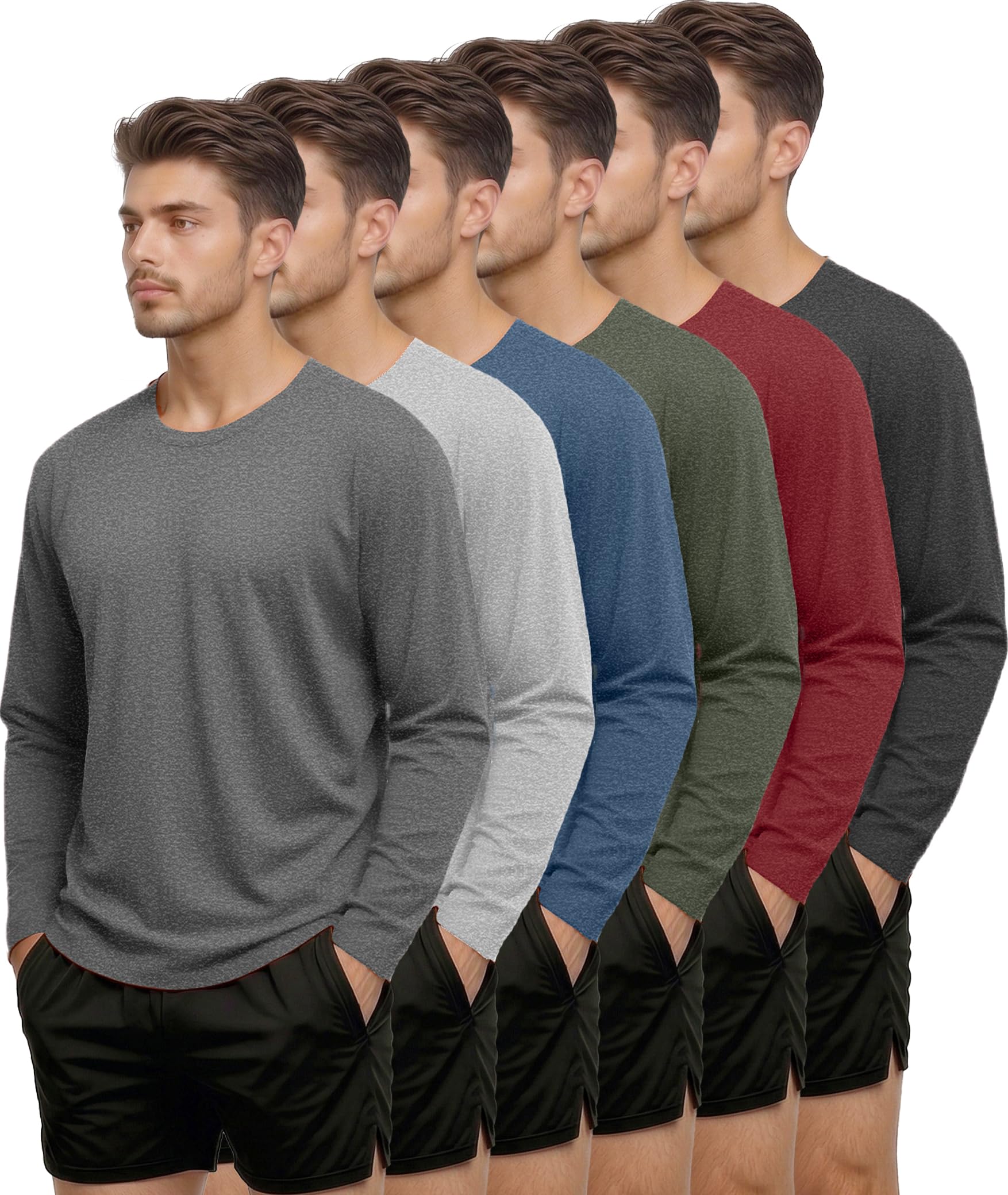
Six long-sleeve shirts with UPF 50+, vibrant colors, and a relaxed fit that buyers keep reordering.
Quality is the top-cited aspect among owners — 48 buyers call it out specifically. The fabric is described as soft, silky, and lightweight, with a UPF 50+ rating built into every shirt. The cut is relaxed but not baggy, and the sleeves stay put without riding up. Buyers report the shirts are comfortable right out of the package and hold their shape and color through repeated washes.
Sizing is the main caveat — about 21 buyers flag it as mixed, with some finding the shirts snug and others true to size. The default recommendation from owners is to size up if you prefer a looser climbing fit or if you are between sizes. At six shirts for the price, the value is strong even if one ends up slightly off. A few owners mention the material is thin enough to use as a sleep or undershirt if the fit doesn’t work for active wear.
What Owners Love
- Vibrant colors that stay bright after washing, per 17 buyers.
- Soft, non-cling fabric that wicks sweat and feels cool in a breeze.
- Quality stitching that holds up, with no shrinkage reported.
What to Watch
- Sizing can be inconsistent — order a size up for a relaxed climbing cut.
- No neck label to identify front from back on darker colors.
Grab this if: you want a long-sleeve sun shirt in every color of the rainbow without spending more than per shirt.
Skip if: a precise, consistent fit across every shirt in the pack matters more than the color variety.
6. Helly Hansen Men’s Hh Tech T-Shirt 2.0
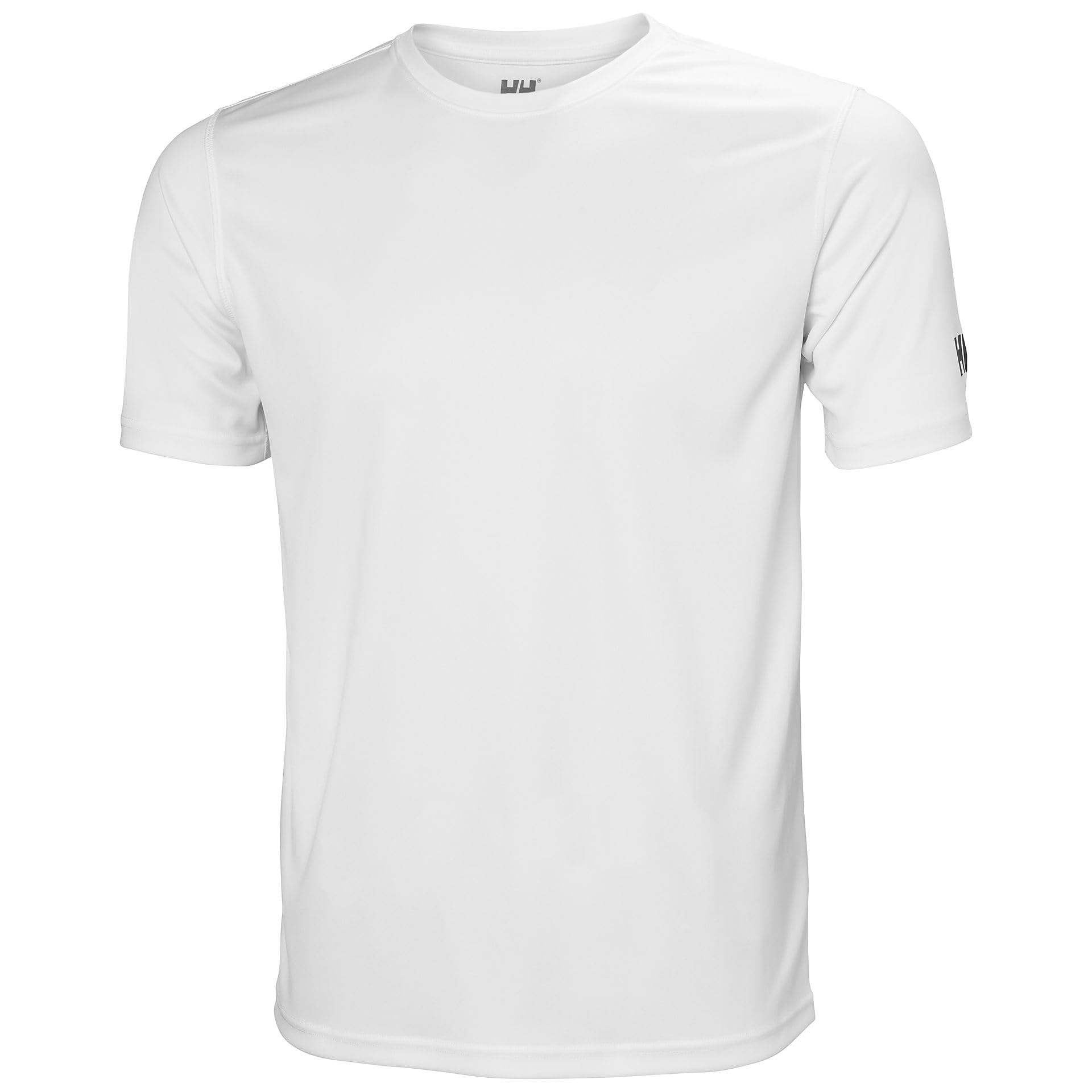
A short-sleeve sun shirt from a Norwegian brand that knows what harsh conditions feel like.
Helly Hansen built its reputation on gear that survives the North Sea, so a climbing shirt that hits UPF 50 and dries fast is familiar territory. The HH Tech T-Shirt 2.0 is rated UPF 50, uses quick-drying, moisture-wicking fabric, and is lightweight enough to pack into a chalk bag pocket. It is designed for hiking, running, and sailing — which means it is tested in wind and spray, not just a climate-controlled gym.
The review count is small at 39 ratings, so this pick relies more on brand heritage than crowd consensus. The buyers who have tried it call it a favorite shirt that washes beautifully without wrinkling. The fabric is described as comfortable, and customers note the shirt looks nice enough for casual wear. The main trade-off is availability — it is a single shirt, not a pack, and the shorter sleeve length means less sun coverage on your forearms during a long day outside.
Best for: climbers who want a known outdoor brand, a proven moisture-wicking fabric, and a shirt that transitions from crag to cafe without looking like a gym shirt.
The catch: limited owner feedback at this point, so consider this an educated bet on Helly Hansen’s fabric tech.
7. Hanes Men’s Cool Dri Performance T-Shirt, Moisture-Wicking Short Sleeve Tee, 40+ UPF Protection, 2 Or 5 Pack

A Hanes performance tee with 40+ UPF and odor control — familiar, affordable, and backed by thousands of ratings.
Hanes built the Cool Dri line on its comfort heritage, and this shirt shows that heritage is legit for climbing use. The interlock jersey knit fabric feels lightweight — owners describe it as “light as a feather” — and the Cool Dri technology wicks sweat fast. The UPF 40+ rating (which blocks roughly 97% of UV rays) means it won’t replace a sun hoody on a full-day exposure, but it is more than adequate for a few hours of afternoon climbing.
Quality and fit are the top-cited aspects, with 884 and 809 mentions respectively — the highest counts on the entire list. Owners confirm the shirts dry quickly, keep you cool in hot weather, and show no shrinkage after washing. The material does vary by color (a consistent complaint), and some buyers find the fabric has a glossy sheen. The odor-protection technology is a real bonus for climbers who wear their shirt all weekend. If you need a short-sleeve climbing shirt that you can buy in a two-pack and not cry about when you rip it on a sharp hold, this is the one.
The thing owners rave about: the shirts wash and dry without shrinking, looking new after dozens of cycles.
The honest trade-off: UPF 40+ is one step below the 50+ found on dedicated sun shirts, so very-long-day climbers may want more coverage.
8. Rab Men’s Force Tee – Lightweight T-Shirt for Hiking, Climbing, & Trail Running
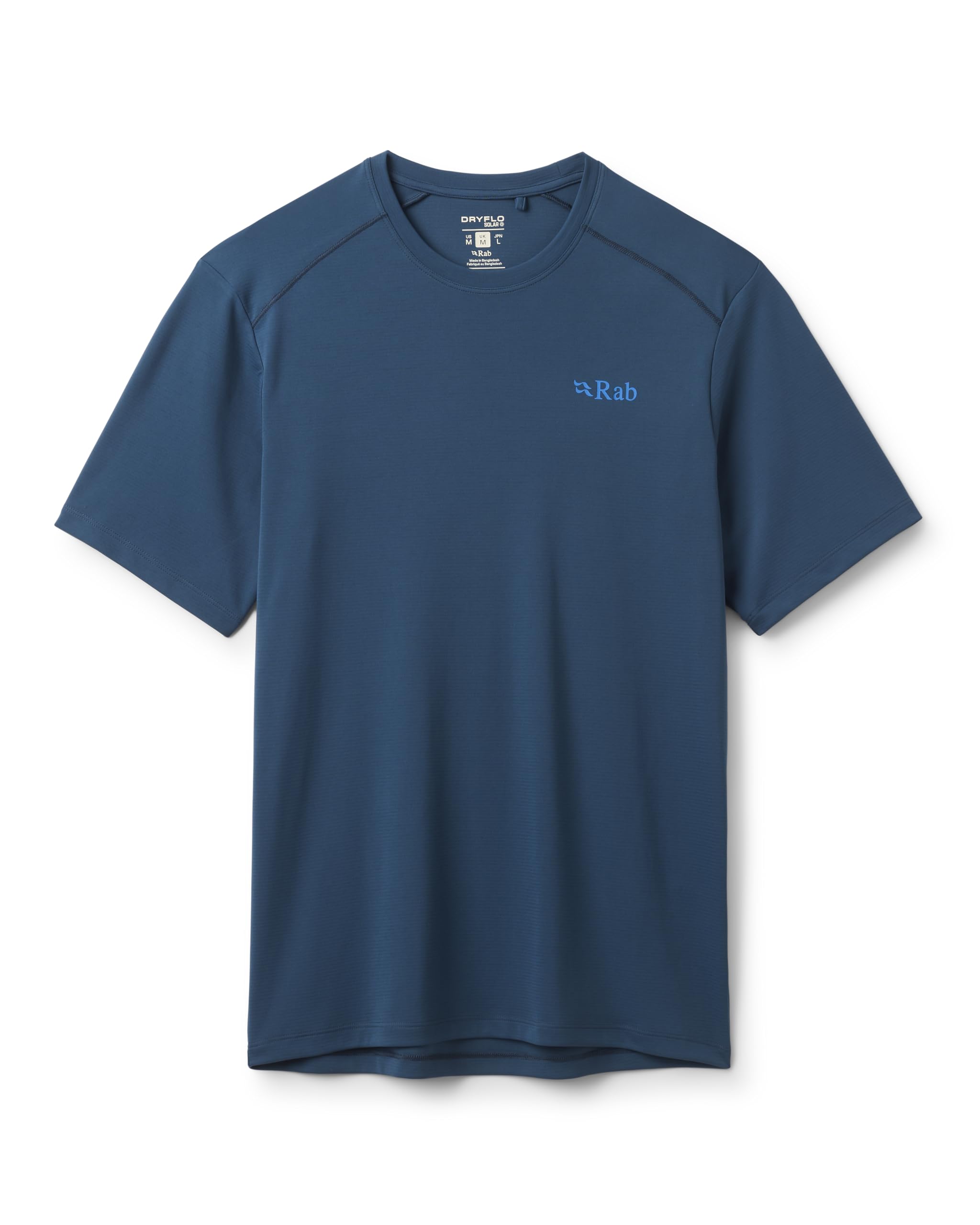
A sub-4-ounce climbing tee designed with dropped shoulders to eliminate strap chafe.
At just 3.74 ounces, the Rab Force Tee is the lightest shirt on the list, and it is built specifically for climbing, hiking, and trail running. The dropped shoulder seams are intentional — they sit lower on the arm, away from where your pack straps and harness sit, which is exactly where standard seams rub and chafe. The single jersey fabric is breathable and quick-drying, and the twisted side seams also help reduce friction points.
The slim fit is designed to be worn as a standalone summer piece or layered under a mid-weight fleece. Reviewers point out it is among the best shirts they have ever worn for active use, and the fabric moves well for dynamic climbing moves. The short sleeve cut means less arm coverage, so pair it with arm sleeves or sunscreen on a full-sun crag day. The small review count (43 ratings) means it is a newer product, but the 4.9 rating is untarnished.
The standout feature: the dropped shoulder seams — they genuinely eliminate the chafing point most climbing shirts miss.
Who this is for: climbers who care about the weight of every piece of gear, prioritize anti-chafe design, and want a shirt that performs on alpine routes and bouldering sessions alike.
9. Arc’teryx Kragg SL Cotton Shirt SS Men’s | Soft Cotton Climbing Tee
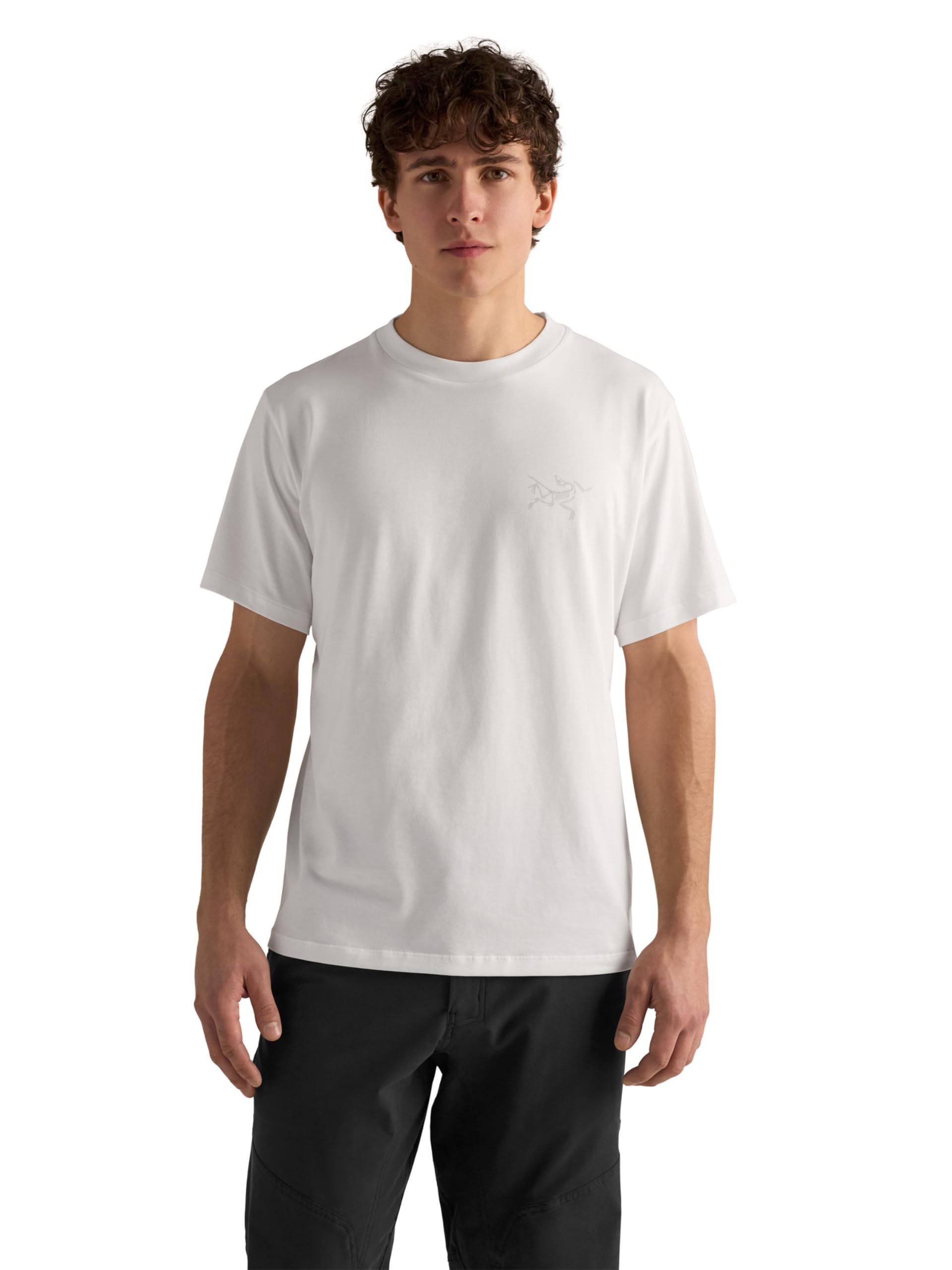
A Supima cotton tee from Arc’teryx — soft, light, and climbing-specific, but pure cotton.
Arc’teryx built the Kragg SL to be a soft cotton climbing tee, and that is exactly what it is. The fabric is Supima premium long-staple cotton, which is known for being stronger and softer than standard cotton. At 160 gsm (grams per square meter), it is on the light end for cotton — meaning it doesn’t drag you down when you start to sweat. The fit is standard, and shoppers say it is true to size with a light feel that works on hot days.
The honest limitation is that cotton is not a performance fabric. It absorbs moisture instead of wicking it, which means once you start sweating hard on a sunny route, the shirt gets damp and stays damp. That dampness can lead to chafing under a harness and chills on a breezy belay ledge. Some buyers flat-out call the price overrated for a t-shirt. If your climbing style is low-intensity (single-pitch moderates or bouldering in the shade) or you want a belay shirt for the bottom of the crag, this is a comfortable choice. If you sweat a lot or climb in direct sun, synthetic is still the better pick.
Best suited for: climbers who love the feel of quality cotton, don’t push hard enough to soak through a shirt, or want a crag-casual tee that looks good off the rock.
Not ideal for: high-sweat sessions, multi-pitch climbs in the sun, or any scenario where moisture-wicking matters — those are synthetic territory.
Understanding the Specs
UPF — Ultraviolet Protection Factor
UPF measures the amount of UV radiation that can penetrate the fabric. A UPF 50 rating means only 1/50th of the sun’s UV rays can get through — roughly 98% blockage. UPF 40+ blocks about 97%. For a full day at the crag, UPF 50+ is the benchmark to watch for. You want the number written in the product specs, not just a mention of “sun protection” in the name.
Fabric Weight and Feel
Fabric weight is measured in grams per square meter (gsm). Lower numbers mean lighter, more breathable fabric — 160 gsm is very light for cotton, while polyester blends can feel even airier at similar weights. A lighter fabric dries faster and packs smaller, but it is also less durable against rock abrasion. For climbing, look for a fabric that feels soft against skin but has a tight enough weave to survive a scrape against sandstone or granite.
Moisture Wicking vs Quick Dry
Moisture wicking is a fabric treatment that pulls sweat away from your skin toward the fabric surface, where it can evaporate. Quick dry means the fabric itself sheds water fast — critical when you get caught in a rain shower or soak through on a long approach. A shirt that does both (most polyester blends do) will keep you from experiencing that clammy, cold feeling on a belay ledge. Cotton does neither, which is why it is rare on technical climbing shirts.
Seam Construction and Movement
Raglan sleeves and dropped shoulder seams are the two design details that matter most for climbing. Raglan sleeves (the seam runs diagonally from collar to underarm) allow a wider range of motion for overhead reaches. Dropped shoulder seams (the seam sits lower on the arm) shift the rubbing point away from where your pack or harness straps sit. Twisted side seams follow the natural twist of your torso during movement, reducing fabric bunching. These are the small details that separate a shirt that works from one that irritates.
FAQ
Can I wear a regular cotton t-shirt for climbing?
What does UPF 50+ mean for a climbing shirt?
How do I prevent chafing from my climbing shirt under a harness?
Should I buy long-sleeve or short-sleeve shirts for climbing?
Is a button-down sun shirt good for climbing?
How many climbing shirts do I need?
Can I use a running shirt for climbing?
How do climbing shirts fit differently from regular t-shirts?
Final Thoughts: The Verdict
For most climbers, the best climbing shirts are the 7 Pack Long Sleeve Shirts because you get UPF 50+ protection on every shirt, a raglan cut that moves with you, and a per-shirt cost that lets you beat them up at the crag without a second thought. If you want a premium, anti-chafe design that weighs nothing, grab the Rab Force Tee. And for a budget-conscious four-pack with UPF 50 and stretch that handles sun exposure and everyday wear, the Real Essentials 4 Pack is the one to reach for. Whichever you pick, you now know exactly what each shirt does best — and doesn’t.
How We Picked
We do not accept paid placement. Every pick is matched to a real buyer and a real use-case; we do not hands-on test units.
Sources & Methodology
Specifications: manufacturer listings and product documentation. Review insights: verified customer reviews, as of July 2026. Pricing: not shown on this page (it changes often); check the current price via the retailer link.
As an Amazon Associate, WellFizz earns from qualifying purchases. This does not affect which products we feature.
Related Guides

Mo Maruf
I created WellFizz to bridge the gap between vague wellness advice and actionable solutions. My mission is simple: to decode the research and give you practical tools you can actually use.
Beyond the data, I am a passionate traveler. I believe that stepping away from the screen to explore new environments is essential for mental clarity and physical vitality.