Our readers keep the lights on and my smoothie glass nicely filled. As an Amazon Associate, I earn from qualifying purchases.
Specs are compiled from manufacturer listings and verified buyer reviews and can change over time — please confirm the key details on the product page before buying.
Your morning coffee should make you feel good long after the last sip — not leave you with a churning stomach, a jittery afternoon, or wondering what mold and pesticides might be hiding in the bag. You want a brew that tastes great and also supports your body, but every label screams “organic,” “low acid,” and “clean” until it is hard to tell which one actually delivers.
I’m Mohammad Maruf — the founder and writer behind WellFizz. This guide is built by comparing the manufacturers’ published specifications and the patterns across verified customer reviews, so you get each pick’s real strengths and trade-offs instead of marketing spin.
You want a morning coffee that feels good, not one that leaves you wondering what is in the cup. The difference depends on the roast, the origin, and whether the bean was lab-tested for mold, mycotoxins (toxins from fungi), and pesticides. The brands that take health seriously publish those results. This breakdown of the best coffee for health tells you exactly what each bag delivers — and what it asks in return.
Our Picks at a Glance

How To Choose The Best Coffee For Health
Not every bag labeled “healthy” goes through the same process. The biggest difference between an everyday coffee and a health-first brew is what happens before the bean hits your grinder. The right choice depends on three factors: the roast level, the origin altitude, and whether the brand tests for contaminants. Once you know them, comparing is simple.
Third-Party Lab Testing
This is the single most important filter. “Organic” is a great start, but it does not guarantee the beans are free of mold, mycotoxins, or heavy metals that can form during harvesting or storage. The best health brands send every batch to an independent lab and publish the results. Look for specific claims like “tested for 350+ chemicals” or “verified for mycotoxins and pesticides.” If a brand does not mention lab tests in its description, you are buying on faith.
Acidity Level and Your Stomach
Standard coffee has a pH around 5, which is acidic enough to cause heartburn or acid reflux in sensitive people. Low-acid coffee is roasted or sourced specifically to raise that pH, making it gentler on the digestive tract. If you notice stomach discomfort after your morning cup, low-acid is the feature that will fix it. Dark roasts are naturally less acidic than light roasts because the longer roasting process breaks down more of the acids.
Sourcing, Altitude, and Additives
High-altitude beans (grown above 4,000 feet) develop more slowly, which creates a denser bean with a more complex flavor and often a higher antioxidant content. Single-origin coffee from a specific farm or region gives you traceability you cannot get from a blend. Some health coffees also add functional ingredients like mushroom extracts (lion’s mane and chaga) that are marketed for focus and immune support, which is a separate benefit from the coffee itself.
Quick Comparison
| Model | Best For | Testing Level | Roast | Form | Amazon |
|---|---|---|---|---|---|
| Four Sigmatic Dark Roast★ Best Overall | Focus & immune support | Organic | Dark | Whole Bean | Amazon |
| VitaCup Perfect Low AcidCup-Lover’s Pick | Value with antioxidants | 3rd Party Lab | Dark | Whole Bean | Amazon |
| Lifeboost Dark Roast BeansPro-Grade Purity | Top-tier purity | Mycotoxin & Pesticide | Dark | Whole Bean | Amazon |
| Lucy Jo’s Sumatra | Gentle on the stomach | Organic | Dark | Ground | Amazon |
| Lifeboost K-Cups | Keurig convenience | Mycotoxin & Pesticide | Dark | K-Cups | Amazon |
| Purity Coffee FLOW | Maximum antioxidant levels | Mold, Mycotoxin & Heavy Metal | Medium | Whole Bean | Amazon |
| Kion Clean Coffee | Ethical sourcing & premium | Mold & Mycotoxin | Medium | Ground | Amazon |
| Fabula Low Acid | Delicate, non-acidic cup | 350+ Chemicals | Medium | Ground | Amazon |
| Fresh Roasted Mexican | Bulk value & low acid | Mycotoxin & Mold | Medium | Whole Bean | Amazon |
In‑Depth Reviews
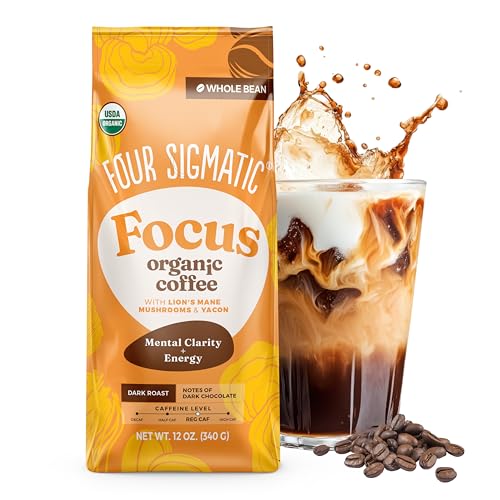
1. Four Sigmatic Dark Roast Organic Whole Bean Coffee
Our pick — over 4.5★ from 950+ verified ratings; the strongest balance of quality and price.
A smooth, dark roast that adds focus-supporting mushrooms without tasting like dirt.
This coffee answers the question “can a healthy cup actually taste like a treat?” Each serving delivers 250mg of lion’s mane mushroom (for focus and creativity) and 250mg of chaga (an antioxidant-dense immune supporter). The base is a single-origin low-acid bean grown at 5,500 feet in Honduras, which gives it a full-bodied flavor without the bitter edge that often sends people reaching for creamer. The 12-ounce bag holds 12 ounces of coffee, compared to 11 ounces for the VitaCup and Lucy Jo’s bags, but the real story is what is inside the bean.
What wins people over
- Crash-free energy — owners consistently say it keeps them awake and focused without jitters or stomach upset
- Smooth, non-bitter flavor that holds up even when drunk black
- Organic, single-origin beans with functional mushroom extracts built right in
The honest trade-off
- Mixed reviews on value — some find the price reasonable for the ingredients, others think it is expensive for 12 ounces
- Whole bean only — you need a grinder
Reach for this if: you want a rich cup that also delivers focus and immune support from mushroom extracts, and you prefer drinking your coffee black.
Look elsewhere if: you are on a tight budget or just want straight-up coffee without functional add-ins.
2. VitaCup Perfect Low Acid USDA Organic Coffee Beans
A low-acid dark roast that packs chlorogenic acid antioxidants into every cup.
VitaCup hits a balance between purity and price. The beans are single-origin from Guatemala, grown at high altitude, and third-party lab tested for a clean brew. What sets this apart from other low-acid options is the brand’s claim of healthy antioxidants — the coffee contains chlorogenic acid, a natural compound that is designed to support cell health. The dark roast produces a smooth, chocolaty flavor that owners describe as not bitter, and the low acid content is the feature that gets the second-highest praise.
One owner mentioned an immediate difference after switching, saying “no more tummy issues and can still enjoy morning coffee.” The trade-off is that some dark-roast fans find the flavor milder than expected — it is smooth and full-bodied, but not as sturdy as a traditional dark roast. The 11-ounce bag is smaller than the Four Sigmatic’s 12-ounce bag, though both sit in a similar tier. For the price, this is the best value among the whole-bean options that are lab-tested and low-acid.
The strengths
- Third-party lab tested for purity and low acid
- Contains naturally occurring chlorogenic acid for antioxidant benefits
- Smooth, clean taste with caramel and vanilla notes that are easy on the stomach
Good to know
- Milder flavor profile — may not satisfy those who want a punchy, bold dark roast
- Some heavy drinkers report needing more beans per cup to reach desired strength, which raises the cost per serving
Best for: drinkers who want a clean, low-acid brew with documented antioxidant content and prefer a smooth, non-bitter cup.
skip it if: you love a very bold, intense dark roast and do not want to adjust your expectations.
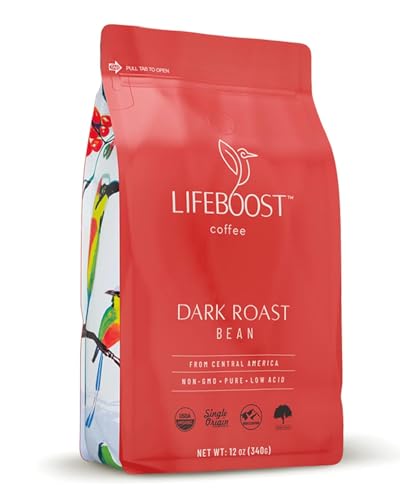
3. Lifeboost Dark Roast Low Acid Coffee Beans
The lab-report-as-marketing coffee that proves its cleanliness with every bean.
Lifeboost is the brand that made “third-party tested for mycotoxins, heavy metals, pesticides, and 400 other toxins” a standard in the health-coffee space. The beans are single-origin, shade-grown in the mountains of Central America, sun-dried, and spring-water washed. The result is a low-acid dark roast that owners consistently describe as smooth and easy on the stomach — the taste is the most-praised feature, followed closely by the coffee quality overall.
At 12 ounces, this bag matches Four Sigmatic in size, but it is a pure coffee without added mushrooms. The buyer base is split on whether the roast flavor lives up to the “dark roast” label — some find it mild rather than bold. The bigger sticking point is value for money, which is the most-discussed negative aspect: 54 mentions of it being costly. One long-term buyer put it plainly: “I liked it very much. It is cost prohibitive for me on a regular basis.” If your priority is knowing exactly what is — and is not — in your coffee, Lifeboost is the standard-setter.
Lab-level confidence: the beans are USDA Certified Organic and tested for 400+ toxins, so you are getting a level of quality control that few grocery-store brands match. The flavor is smooth and clean, but those expecting a punchy dark roast may find it underwhelming. The price is the main barrier to daily drinking.
Reach for this if: you have stomach sensitivity or want the highest documented purity in your daily cup.
Think twice if: the cost per bag is not sustainable for your household’s consumption rate — at this price, it works best as a treat or for lighter drinkers.
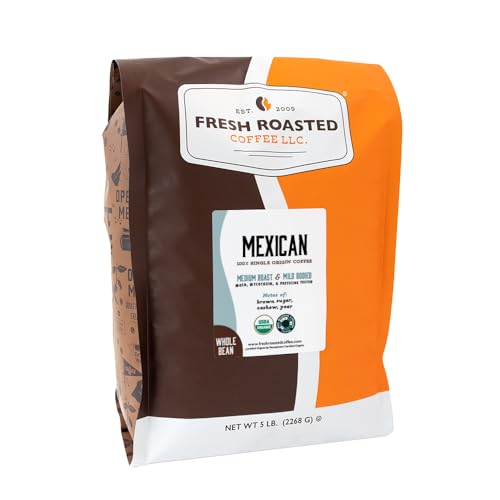
4. Fresh Roasted Coffee Organic Mexican Whole Bean
The bulk-buy that delivers a low-acid, organic cup for a fraction of the per-pound cost.
This is the outlier on the list: a 5-pound (80-ounce) bag from Fresh Roasted Coffee that is USDA Organic, third-party tested for mold and mycotoxins, and single-origin from Mexico. The medium roast is described as mild and flavorful with notes of pear and sugar and a clean nutty finish. The sheer volume changes the math — you are getting 80 ounces of coffee, compared to 12 ounces in a standard bag, which brings the per-cup cost way down compared to the premium single-bag options.
The flavor score is the most-praised aspect by a wide margin — 311 positive mentions — and the coffee quality is close behind at 298. The acidity and smoothness both earn strong marks. The value-for-money aspect is the third-most discussed and completely positive, which is rare in this category. The trade-off is that this is a medium roast, not a dark roast, and it is whole bean, so you need a grinder. If your household goes through coffee quickly, this is the most practical way to drink organic, tested coffee every day without running the budget dry.
Why it works
- 5-pound bag offers the lowest per-cup cost of any mycotoxin-tested coffee on this list
- Mild, low-acid flavor with a clean finish that works for drip, French press, and pour over
- Family-owned roaster that nitrogen-flushes every bag to keep it fresh
Consider before buying
- Medium roast only — no dark roast option in the Mexican single-origin
- The large bag requires storage space and a grinder
Best for: households that drink multiple cups a day and want verified, organic coffee without paying a premium per bag.
Not for: single-cup drinkers who prefer a darker, more intense roast or only buy 12-ounce bags.
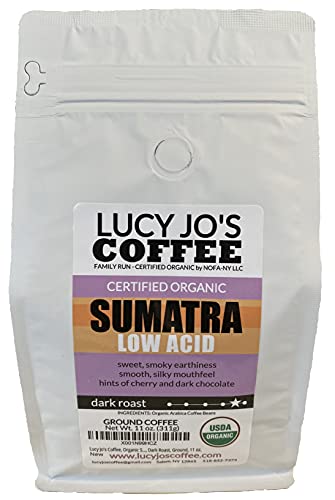
5. Lucy Jo’s Organic Sumatra Low Acid Dark Roast Ground
A small-batch Sumatra that gives you a full-bodied dark roast without the acid burn.
Lucy Jo’s is a family-run roastery that hand-roasts each batch, and it shows in the depth of the flavor. The Sumatra bean delivers a sweet, smoky earthiness with hints of cherry and dark chocolate — a profile that earned the flavor 126 positive mentions, the highest count in its review pool. The ground format means you can go straight from bag to brewer, which is a convenience advantage over the whole-bean options. The low-acid claim is backed by 57 positive mentions, making it the second most-discussed feature.
Buyers sum it up as “rich and full bodied but easy on the tummy.” The catch is that the 11-ounce bag is the smallest in this lineup, and the value-for-money rating is mixed — some owners find it expensive given the quantity. The aroma also gets mixed reviews, with a few noting it is less fragrant than expected. Compared to the Four Sigmatic above, Lucy Jo’s is a simpler buy: no mushroom extracts, no lab-test marketing, just a very good low-acid dark roast that works for sensitive stomachs.
Standout feature: the small-batch hand-roasting process creates a rich, earthy flavor that is hard to find in other low-acid coffees. The ground format is a time-saver. The main drawback is the smaller 11-ounce bag at a mid-range price — it goes fast if you drink a lot.
Reach for this if: you want a ready-to-brew, low-acid dark roast with real depth of flavor and a family-roastery feel.
pass on it if: you need the highest level of third-party toxin testing or you want a larger bag for the price.
6. Purity Coffee FLOW Original Medium Roast Whole Bean
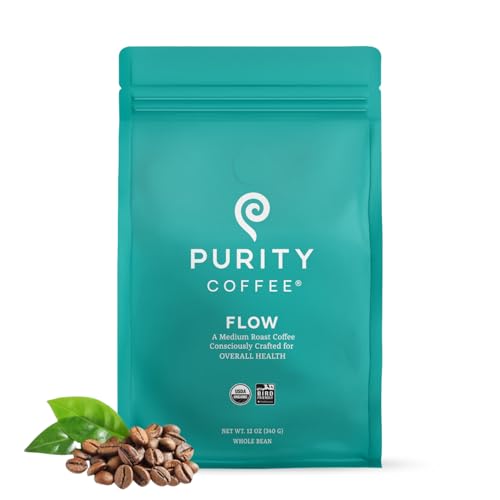
A specialty-grade brew designed around maximizing protective polyphenols, not just avoiding toxins.
Purity Coffee takes a different angle: rather than only removing bad stuff, it actively tune for good stuff. The FLOW blend is a medium roast that is specially formulated to be rich in chlorogenic acid, the antioxidant compound that studies link to cell health. The beans are specialty-grade, a standard that applies to only about 1% of global coffee production, and the packaging is nitrogen-flushed to keep oxygen levels between 1 and 2% for freshness. The taste is the most-praised feature by a massive margin — 237 mentions — and the coffee quality is second at 160.
The trade-off is the price. Value for money is the most-discussed negative aspect with 85 mentions, and more than one owner called it “expensive” outright. If you drink three cups a day, a 12-ounce bag does not last long. The brand is also a Certified B Corp and the beans are Rainforest Alliance and Smithsonian Bird Friendly certified. For the buyer who wants the absolute cleanest cup with verified antioxidant levels and does not mind the cost per bag, Purity is the top contender in the premium tier.
The premium argument
- Specialty-grade beans with documented high antioxidant (polyphenol) content
- Lab tested for mold, mycotoxins, pesticides, and heavy metals
- Smooth, non-acidic flavor with no bitterness — a crowd-pleasing medium roast
The honest catch
- Significantly more expensive than the other medium-roast options here
- Medium roast may not satisfy those who prefer a dark, bold profile
Best for: health-focused drinkers who want antioxidant maximization and third-party verification at any cost.
Consider alternatives if: the per-bag price is too steep for daily use or you prefer a dark roast.
7. Lifeboost Dark Roast Low Acid Coffee K-Cups
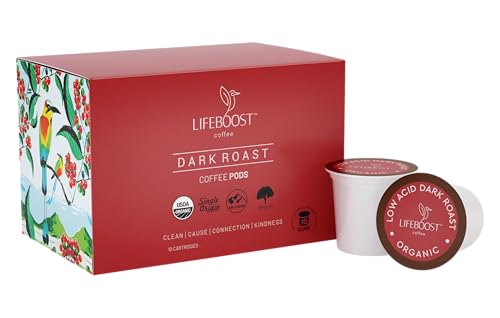
The same lab-tested Lifeboost purity, now in a pod for your Keurig.
Lifeboost brings its third-party tested, mold-free, low-acid coffee to the K-Cup format, which solves the biggest barrier to switching to a health-first coffee: convenience. The pods are compatible with Keurig and Keurig 2 machines, and each pod delivers a dark roast that owners describe as full-bodied and clean tasting. The low-acid content makes it a strong option for anyone who has stomach trouble with standard supermarket pods.
A buyer who has been ordering these for months sums it up: “I’ve ordered this in K-Kups for months now and I have not been disappointed.” The main drawback is that some find the flavor weak compared to a fresh-ground brew, and a few recent purchasers note a change in pod quality — harder to pierce and flimsier lids. The 10-count box is also one of the pricier per-cup options on the list relative to the bulk bag from Fresh Roasted Coffee, but you are paying for the convenience and the lab verification.
Purity in a pod: each K-Cup is USDA Certified Organic and tested for mycotoxins, heavy metals, and 400+ other toxins. The taste wins consistent praise for being smooth and not bitter. The catch is the price per cup, which is higher than grinding your own beans, and occasional quality inconsistency in the pods themselves.
Reach for this if: you own a Keurig, want the convenience of pods, and need a low-acid, mold-tested option.
Look elsewhere if: you drink a lot of coffee — the 10-count box goes fast and the per-cup cost adds up.
8. Fabula Low Acid USDA Organic Ground Coffee Medium Roast

A medium roast from high-altitude Peru that is lab-tested for over 350 chemicals.
Fabula sources its beans from the highlands of Peru, where they grow at altitudes up to 7,000 feet. The result is a ground coffee with notes of caramelized sugars, nuttiness, and rich chocolate — a flavor profile that earned 162 positive mentions, the highest count in its review pool. The low-acid formulation is specifically designed for people with sensitive systems, mold allergies, or acid reflux. The brand tests each batch at independent labs for 350+ chemicals, so the “clean” claim is well-documented.
Owners consistently say it is smooth, delicious, and easy on the stomach. One reviewer noted that it even reduced their husband’s acid reflux issues. The downsides are two-fold: the strength gets mixed reviews, with some finding it too mild, and the value-for-money aspect is the most-discussed negative at 80 mentions. It is a premium-priced 12-ounce bag in a crowded field. If you want a ground coffee that is gentle, well-tested, and flavorful without being heavy, this is a strong pick — just be aware that it is a mild cup, not a punchy one.
What stands out
- Full lab testing for over 350 chemicals — among the most thorough screenings on this list
- High-altitude Peruvian beans produce a complex, sweet flavor profile
- Ground format for immediate brewing, no grinder needed
What to know
- Mild strength — those who want a bold, sturdy cup may find it too light
- Premium price point for a 12-ounce bag; the cost per cup is higher than many alternatives
Best for: those with sensitive stomachs or mold allergies who want a ready-to-brew, comprehensively tested ground coffee with a sweet, mild flavor.
it’s not for you if: you prefer a strong, bold brew or need to keep the per-bag cost down.
9. Kion Clean Organic Ground Coffee Medium Roast
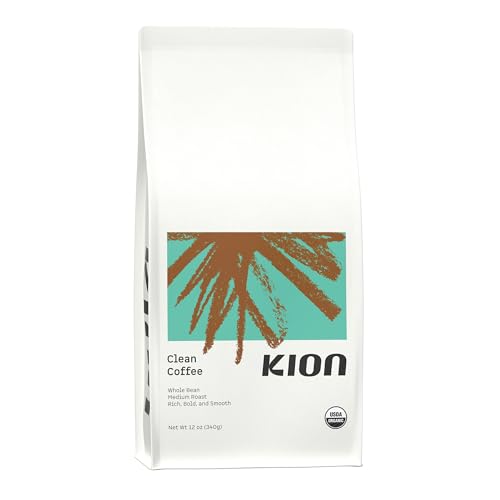
Specialty-grade, ethically sourced grounds that are tested for mold and mycotoxins.
Kion positions itself as a top-tier health coffee, and the specs back it up. The beans are classified as “specialty grade,” which means they fall in the top 3% of all coffee worldwide with near-zero defects. Kion tests every batch for mold, mycotoxins, and pesticides, and the beans are roasted on an environmentally-friendly smokeless roaster before being sealed in nitrogen-flushed bags. The result is a medium roast that owners describe as smooth, clean tasting, and organic.
The big talking point among buyers is the value — it is expensive, but many feel it is worth it for the purity. The flavor does get mixed feedback: some call it “superb” and “extremely delicious,” while others find it bitter or not exceptional for the price. Kion works best for the buyer who wants an ethical, toxin-free ground coffee and is willing to pay a premium to get it.
The healthy edge: specialty-grade certification, lab testing for mold and mycotoxins, and a smooth medium roast. The packaging is nitrogen-flushed to keep the grounds fresh. The mixed feedback on flavor and the high price per bag are the reasons it sits at the bottom of this list rather than higher.
Reach for this if: you prioritize the highest-grade beans with ethical sourcing and third-party toxin testing, and you are okay paying a premium for ground coffee.
Look elsewhere if: you are sensitive to bitterness in your cup or the per-bag cost matters more to you than the specialty-grade label.
Understanding the Specs
Mycotoxin & Pesticide Testing
Not all organic coffee is tested for mold or mycotoxins — toxins that can grow on beans during storage. A brand that pays for third-party lab testing (checking for 350+ chemicals in Fabula’s case, or 400+ in Lifeboost’s) is telling you exactly what is not in your cup. If a bag does not mention lab testing, you have to trust the organic label alone, which only covers how the beans were grown, not how they were handled after harvest.
Low Acid vs. Regular Acidity
Standard coffee’s acidity can trigger heartburn and reflux in sensitive drinkers. Low-acid coffee is processed or roasted to reduce that acidity, often by using a darker roast (which breaks down more acids) or sourcing beans from regions with naturally lower acid profiles. The difference is noticeable: drinkers who switch to low-acid often report an immediate improvement in stomach comfort, which is the most common positive feedback across these products.
FAQ
Does low-acid coffee still taste like real coffee?
What is the difference between USDA Organic and third-party tested coffee?
Can I drink these coffees if I have acid reflux or GERD?
Are mushroom-infused coffees like Four Sigmatic actually good for you?
Why is some health coffee so much more expensive than grocery-store brands?
What does “specialty grade” mean for coffee?
Is whole bean coffee healthier than ground coffee?
How should I store my health coffee to keep it fresh?
Can I use these low-acid beans for cold brew?
Final Thoughts: The Verdict
For the majority of shoppers, the coffee for health winner is the Four Sigmatic Dark Roast because it combines a smooth, low-acid single-origin base with the proven focus and immune support of lion’s mane and chaga — all without the jitters or bitter aftertaste that drive people away from healthy coffee. If you want a pure, lab-tested coffee with maximum antioxidant levels and no added mushrooms, grab the Purity Coffee FLOW. And for a budget-friendly bulk option that still delivers organic, mycotoxin-tested quality, the Fresh Roasted Coffee 5-pound bag is the one to reach for.
How We Picked
We do not accept paid placement. Every pick is matched to a real buyer and a real use-case; we do not hands-on test units.
Sources & Methodology
Specifications: manufacturer listings and product documentation. Review insights: verified customer reviews, as of July 2026. Pricing: not shown on this page (it changes often); check the current price via the retailer link.
As an Amazon Associate, WellFizz earns from qualifying purchases. This does not affect which products we feature.
Related Guides

Mo Maruf
I created WellFizz to bridge the gap between vague wellness advice and actionable solutions. My mission is simple: to decode the research and give you practical tools you can actually use.
Beyond the data, I am a passionate traveler. I believe that stepping away from the screen to explore new environments is essential for mental clarity and physical vitality.