Our readers keep the lights on and my smoothie glass nicely filled. As an Amazon Associate, I earn from qualifying purchases.
Specs are compiled from manufacturer listings and verified buyer reviews and can change over time — please confirm the key details on the product page before buying.
POTS (Postural Orthostatic Tachycardia Syndrome) makes gravity feel like the enemy — blood pools in your legs, your heart races when you stand, and everyday tasks like grocery shopping or walking the dog drain you. The right compression leggings act like a second circulatory system, applying graduated pressure from ankle to waist to push blood back toward your heart and keep you upright longer. This guide cuts through the marketing noise to five proven pairs, all delivering medical-grade graduated compression at 20-30 mmHg or higher.
I’m Mohammad Maruf — the founder and writer behind WellFizz. This guide is built by comparing the manufacturers’ published specifications and the patterns across verified customer reviews, so you get each pick’s real strengths and trade-offs instead of marketing spin.
After studying hundreds of owner experiences, these five pairs emerged as the real standouts for POTS management, each earning a clear place among the best compression leggings for pots. if you need farm-level durability, budget-friendly medical coverage, or a full-on medical appliance, one of these leggings will fit your life and your symptoms.
Our Picks at a Glance

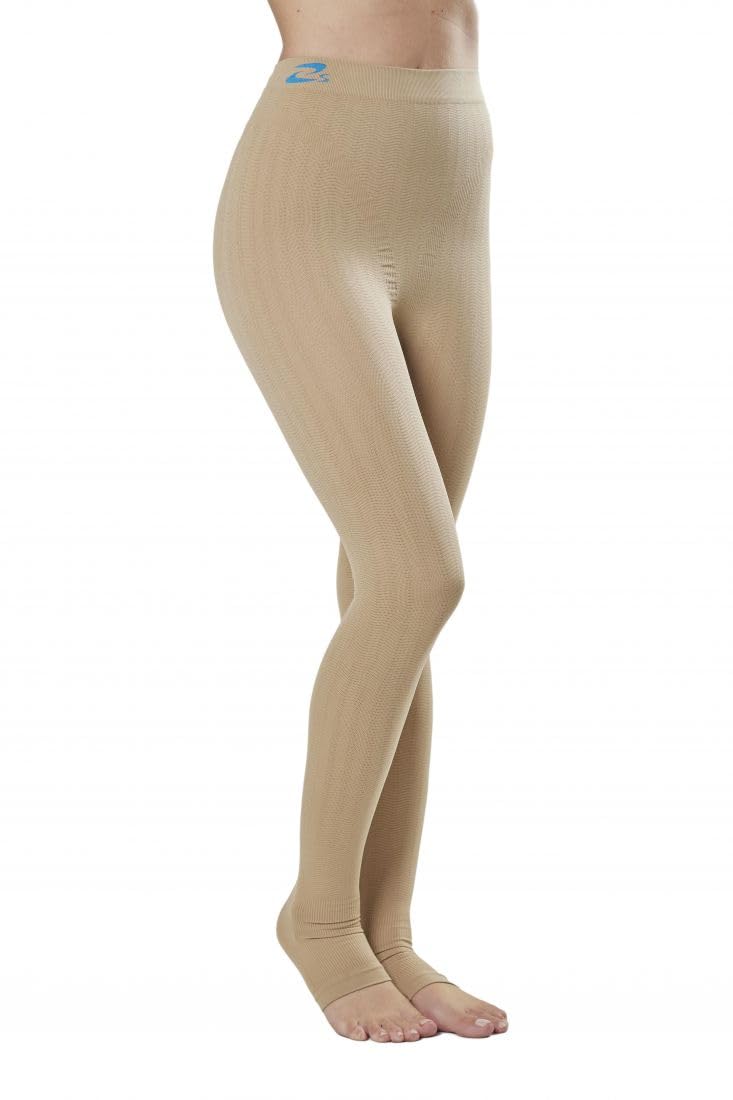
How To Choose The Best Compression Leggings For POTS
Compression for POTS isn’t about squeezing your legs — it’s about applying the right pressure gradient so blood doesn’t settle in your lower body when you stand. The wrong pair feels either useless or like a tourniquet. Here are the three things to get right.
Compression Level: The 20-30 mmHg the just-right Zone
Most POTS specialists recommend medical graduated compression at 20-30 mmHg. This means the fabric is tightest at the ankle (pushing blood up) and gradually loosens toward the waist, encouraging return flow to the heart. Lower compression (under 20 mmHg) may not prevent blood pooling; higher (over 30 mmHg) can be hard to put on and may over-squeeze. Every pair in this list delivers 20-30 mmHg, so you are getting the medical-grade standard without guessing.
Fit Is Everything — Measure Yourself First
The most common complaint across every product here is sizing. Compression leggings do not fit like regular leggings — you need to measure your ankle, calf, thigh, and waist circumference against the brand’s specific size chart. Many owners find the sizing charts run small or large, so reading the fit section in reviews is essential. A pair that is too long bunches at the knee and loses its gradient. A pair that is too loose won’t stop blood pooling. Always measure yourself in the morning when legs are least swollen.
Style: Footless vs Closed Toe vs Waist High
All five products here are waist-high (meaning they cover the tummy) and opaque (not sheer). Some are footless (great for wearing with any shoes and for avoiding toe pressure), while others have closed toes (better for full circulation support). Footless styles are the most popular among POTS patients because they work with sneakers, flats, and barefoot at home. Closed-toe versions offer more compression but can be uncomfortable for long wear if your feet swell.
Quick Comparison
| Model | Best For | Compression | Style | Material | Amazon |
|---|---|---|---|---|---|
| Beister Medical Pantyhose★ Best Overall | All-day standing & work | 20-30 mmHg | Closed Toe | 70% nylon, 25% spandex, 5% elastane | Amazon |
| CzSalus Flat Knit K2Also Great | Medical-grade POTS control | 25-30 mmHg | Footless | Flat knit | Amazon |
| Wegitcs Footless Tights | POTS symptom relief on a budget | 20-30 mmHg | Footless | Not listed | Amazon |
| Lakicool 2-Pair | Value multi-pack for daily rotation | 20-30 mmHg | Footless | 85% nylon, 15% spandex | Amazon |
| XUANSHOW Pantyhose | Budget-friendly medical support | 20-30 mmHg | Footless | Not listed | Amazon |
In‑Depth Reviews
1. Beister Medical Compression Pantyhose for Women Men, Opaque Closed Toe 20-30mmHg Graduated Support Tights
Our pick — over 4★ from 700+ verified ratings; the strongest balance of quality and price.
The unisex workhorse that earned a cult following among retail workers, nurses, and teachers who spend entire shifts on their feet.
The review pages sum it up: owners mention “excellent support tights for long retail shifts (8.5 hrs).” Beister uses a five-interval graduated compression system — tightest at the ankle, decreasing in stages up toward the waist — which is exactly what POTS requires. The closed-toe design adds full foot compression, a feature that helps prevent blood pooling all the way down to the toes. The blend of 70% nylon, 25% spandex, and 5% elastane gives it a breathable feel that owners say does not trap heat even under chinos in summer.
What wins people over is the waistband. Owners with POTS and vasovagal reactions praise the snug elastic band that stays at the tummy without rolling down — no constant hiking up during the day. The crotch junction is reinforced to prevent tearing, a common failure point in cheaper tights. One owner at 5’2″ and 165 lbs found the medium fit perfectly despite the size chart suggesting XL, which means you should take measurements carefully rather than trust your typical legging size.
The main trade-off is sizing variability. Several owners note the chart runs small for some body shapes and large for others, so expect to treat the first order as a fit test. The opaque fabric hides well under trousers and delivers “great support without binding.” For POTS patients who stand all day or travel frequently (it is also marketed for DVT prevention on flights), this closed-toe pair keeps full circulation from ankle to heart.
The Standout Spec: Five graduated compression intervals from ankle to waist — not just one compression zone, but a true decreasing gradient that mirrors medical-grade stockings.
The Honest Note: The fit guide is unreliable for some body types — measure your own ankle, calf, and thigh and compare to the chart, or be prepared to exchange for a different size.
Reach for these if: You work on your feet, travel by plane, or want full foot coverage for maximum POTS symptom control.
Consider another pair if: You are on the shorter side (under 5’3″) and want footless freedom — the closed-toe length may run long, and a footless style gives you more flexibility with shoes.
2. CzSalus Flat Knit K2 Lipedema Lymphedema, POTS Support high Compression Leggins (K2=25-30 mmHg)
The only pair that pushes past 20-30 mmHg into true medical-appliance territory for serious POTS symptom control.
Step one is accepting these will be tough to get on. The flat-knit construction delivers a firm 25-30 mmHg — a step above the standard 20-30 mmHg range — and that density is exactly what POTS patients with significant blood pooling need. Once on, owners describe the support as incredible. The fabric is thick and well-constructed enough to resist snags and runs, unlike fragile nylon pantyhose. This is the pair that feels like a compression garment, not a legging.
Fit requires paying attention. Several owners confirm the sizing chart is accurate if you follow it, though the same tall, thick construction means shorter users may have to pull the fabric over their feet to stop bunching at the knee. The waistband tends to ride down during the day, and one owner found the crotch piece thin enough to wear under another layer. Given the cost, a few buyers have received units with small snags — a rare but notable frustration.
For a POTS patient who has tried five cheaper brands and still feels faint by noon, this is the pair that delivers. It is also a candidate for restless leg symptoms and lipedema, since the firm gradient doesn’t ease up. Use donning gloves, pre-stretch the legs, and follow the measurement guide exactly. The trade-off is real: this is the hardest pair to put on, and the one most worth the struggle.
The Medical-Grade Advantage
- Firmest compression on this list at 25-30 mmHg — true graduated support for significant POTS symptoms
- Flat-knit construction resists snags and runs far better than woven nylon tights
- Thick, opaque fabric smooths dimples under outer clothing and feels substantial
- Owners call it the best non-custom compression stocking they have found
The Real-World Cost
- Very difficult to put on — owners advise using donning gloves and pre-stretching the fabric
- Waistband can ride down during the day, requiring adjustment
- Crotch piece described as thin; best worn under another layer to prevent wear
- Shorter users may need to pull fabric over feet to avoid bunching behind the knee
The pick for severe POTS: If daily blood pooling leaves you lightheaded and you need the strongest over-the-counter compression available, this is the pair to invest in.
Think twice if: You have limited hand strength or dexterity — these require significant effort to pull on, and a footless medical-grade pair might be much easier to manage.
3. Compression Pantyhose for Women & Men, Footless 20-30mmHg Medical Graduated Compression Leggings (Wegitcs)
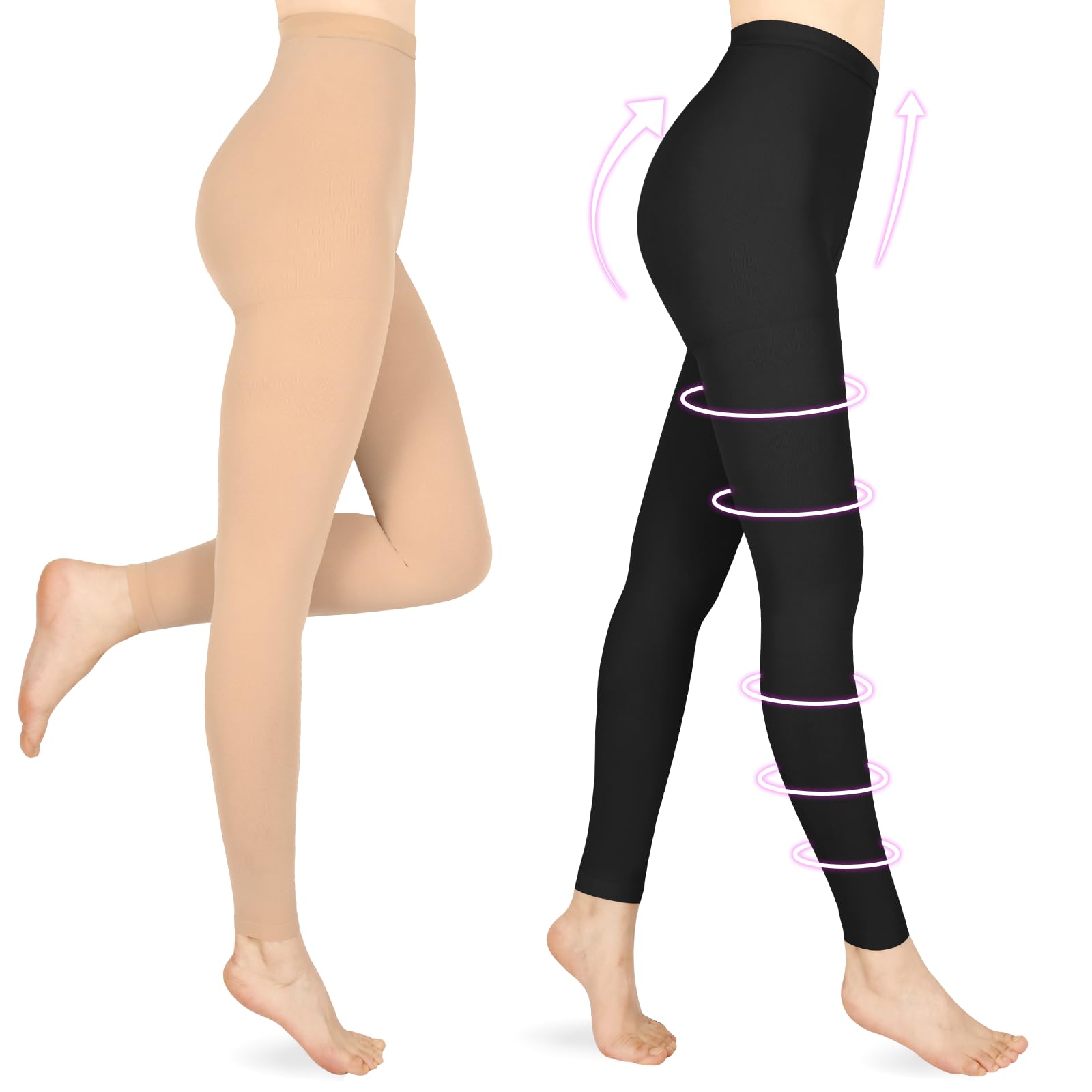
The pair POTS patients keep coming back to — owners call it “the best I’ve tried out of 5 different brands.”
This footless design from Wegitcs has accumulated a dedicated following among POTS patients for one simple reason: it works. The 20-30 mmHg graduated compression covers ankle to waist, and owners with POTS specifically report that it manages circulation effectively, relieves leg pain during full standing shifts, and fits comfortably under pants day after day. The fabric is thicker than typical medical-store tights, and the opaque material hides well under work clothes without looking medical.
The most-discussed feature here is the sizing — and it is polarizing. The number one piece of advice from owners is to size down, potentially by two to three sizes from the chart. One owner at 5’1″ and 125 lbs found the size small too large for effective compression, particularly lacking upper-thigh and stomach pressure. Conversely, another owner who followed the chart exactly reported a perfect fit. If the chart says large, many owners recommend ordering a medium or even small. The material is also durable: one owner washes it in cold water and puts it in the dryer without damage.
A few owners note the sizing inconsistencies between pairs in the same order and frustrated returns. But the consensus is that for the price, this is the pair to try first for POTS. It includes two pairs per package, so you get a rotation without doubling the budget. And unlike pricier medical brands, this one feels like a legging — not a clinical garment you dread putting on.
The POTS Verdict: Owners who tried five different brands say this one beats them all for symptom control and daily wear comfort.
The Fit Warning: Measure carefully, then size down — the chart runs large, and a loose pair loses its compression advantage entirely.
Best first-try pick: If you are new to compression for POTS and want a budget-friendly, footless, two-pair pack that actually works for your symptoms, start here.
Not for petite builds: If you are under 5’3″ and slender, the smallest size may still be too long and loose at the thigh for full compression.
4. 2 Pairs Medical Compression Pantyhose for Women, 20-30mmHg Graduated Support Tight Pants, Opaque Footless (Lakicool)

Fifty-one owners single out the compression as the highlight — the most positive aspect count of any pair on this list.
Compression is the star here, and owners are emphatic: the 20-30 mmHg gradient from ankle to waist provides firm, gradual pressure that relieves heavy legs during long sitting or standing. The footless design means you can wear any shoes without bunching toes, and the opaque fabric stays in place all day. The waistband earns consistent praise for staying put — no rolling or sliding down, a common problem with cheaper compression tights. One owner specifically calls it “perfect for POTS patients,” noting the 85% nylon, 15% spandex blend is breathable yet supportive.
Fit is the second-most-discussed topic, and it is mixed. The main complaint is that the leggings run long — owners at 5’3″ and 5’4″ report they extend past their toes. For taller individuals this may be a non-issue, but for shorter POTS patients the extra length bunches and loses compression gradient at the knee. The reinforced stitching is praised as durable and reliable, and the material holds up through multiple washes without pilling or runs.
This is the best-value two-pack on the list — you get two pairs for about the same cost as a single pair elsewhere. For POTS patients who need a rotation (washing compression daily is essential), this pack covers a week’s worth of wear. One owner recommends them for 5-6 hours of continuous wear, making them a solid choice for workdays, school, or travel.
The Clear Advantage
- Highest compression mention count of any pair in this guide — 51 owners praise the firm gradient
- Footless design fits any shoe and avoids toe discomfort
- Two pairs included for rotation — great value for daily POTS wear
- Waistband stays snug without rolling down or slipping
The Fit Reality
- Extremely long — shorter owners (under 5’4″) report they extend past the toes
- Mixed fit for larger thighs and smaller waists — can bunch at the knees
- Some owners find the fabric becomes sheer near the thigh over time
Best for rotation: If you wear compression daily and want two pairs that deliver consistent 20-30 mmHg support without paying double, this pack is the smartest buy.
Skip if you are shorter: At 5’3″ or below, the length may ruin the gradient — a footless pair with adjustable length or a petite-specific size is a safer bet.
5. 20-30mmHg Compression Pantyhose for Women, Medical Compression Stockings, High Waist Opaque Compression Tights (XUANSHOW)
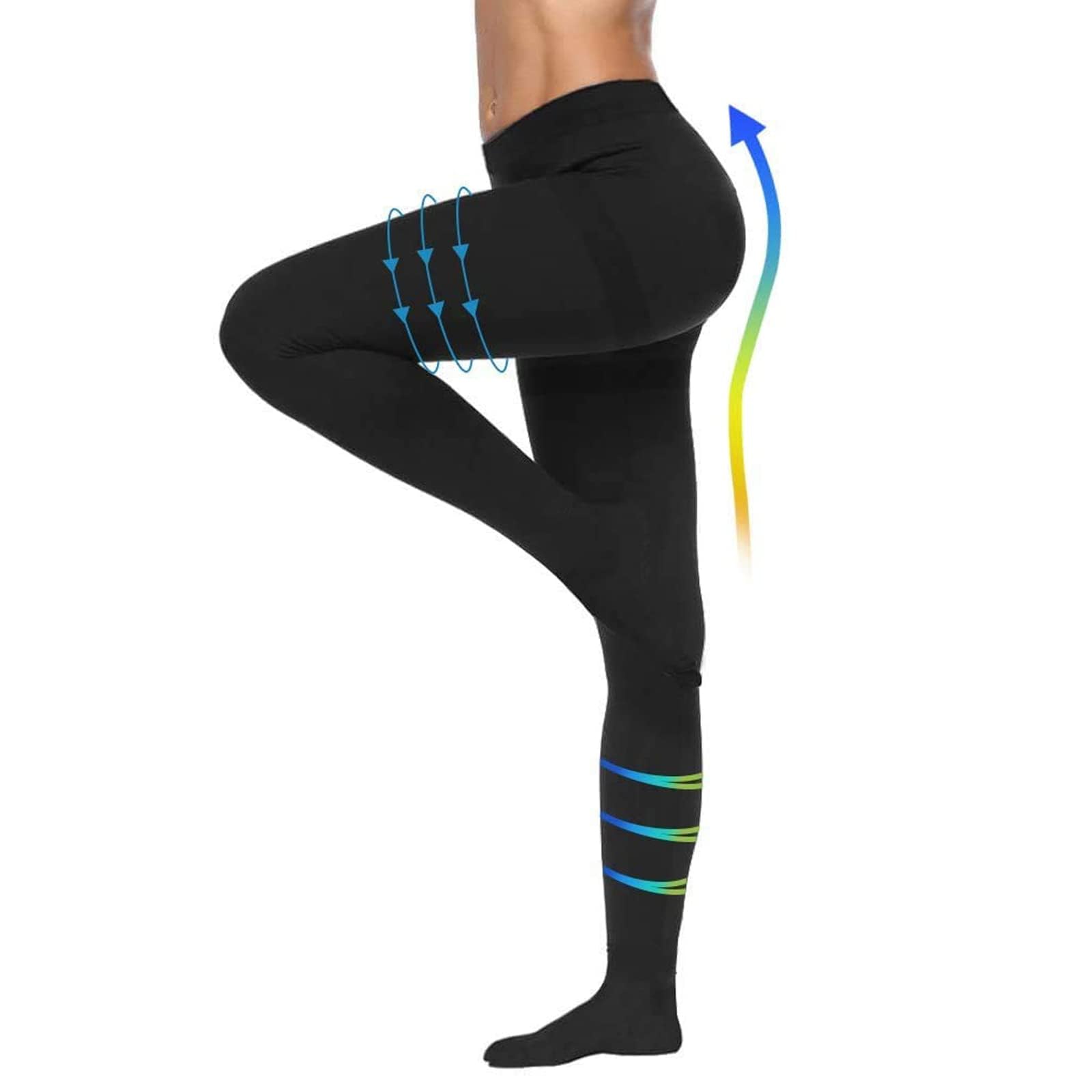
The most budget-conscious entry that still delivers medical-grade 20-30 mmHg — if you can crack the sizing.
The owner feedback here is the most candid on the list: “I recommend them to all people who work more than 8 hours on their feet, they are excellent.” For POTS patients, the footless design at this price point is a genuine find. The compression effectively reduces swelling and leg fatigue, and the high-waist construction stays in place without rolling down. One owner used them post-sclerotherapy for spider veins and found them comfortable enough to continue wearing daily.
Fit is where the experience splits. At 5’10” and 165 lbs with a muscular build, one owner found the size small reached their chest and lacked sufficient tightness, wishing for an XS size. At the other end, an owner at 5’4″ found them way too long — “at least a foot longer than they should be.” The takeaway is that these run large in length across the board. If you are average height or taller, the gradient stays intact. If you are shorter, the extra fabric bunches and you lose the ankle-to-waist pressure you need for POTS symptom control.
The material feels well-made and true to size for some, and the footless style makes them easy to pair with any shoe. The main caveat is the inconsistent length. For the price, they are worth trying if you are taller and want a no-frills medical option. But shorter POTS patients should skip straight to the Wegitcs pair above, which has a better fit track record for smaller frames.
The Value Pitch: Medical-grade 20-30 mmHg compression at the lowest price point on this list — a genuine budget entry for standing all day.
The Fit Confession: These run long. Very long. Taller owners may find them perfect; shorter owners will likely need to return them.
Budget-friendly trial: If you are 5’7″ or taller and want to try 20-30 mmHg compression for POTS without committing to a higher-priced pair, this is a reasonable start.
Not the first pick if: You are under 5’5″ or have a short inseam — the extra length will compromise the graduated compression and may bunch at the knee, reducing effectiveness.
Understanding the Specs
Graduated Compression (20-30 mmHg)
This is the medical standard for POTS. Graduated means the fabric is tightest at the ankle (pushing blood upward) and gradually loosens as it moves up the leg toward the waist. The 20-30 mmHg range is strong enough to reduce blood pooling and prevent fainting episodes, but not so tight that it cuts off circulation or becomes impossible to put on. Think of it as an external circulatory assist.
Waist High vs Knee High vs Footless
For POTS, waist-high compression is the most effective because it covers the thighs and lower abdomen — areas where blood can also pool when you stand. Knee-highs only compress the calves, which helps but leaves the upper legs unsupported. Footless styles (no covering over the toes) are the most popular among POTS patients because they let you wear normal shoes and avoid the discomfort of toe pressure during long days. Closed-toe versions offer full coverage but can feel restrictive if your feet swell.
FAQ
What compression level do I need for POTS?
How do I measure myself for compression leggings?
Are footless or closed-toe compression better for POTS?
How long do compression leggings last with daily wear?
Can I wear compression leggings under regular pants?
Do compression leggings help prevent fainting with POTS?
What is the difference between 20-30 mmHg and 25-30 mmHg?
Do these help with leg swelling and varicose veins too?
Final Thoughts: The Verdict
Across the board, the best compression leggings for pots winner is the CzSalus Flat Knit K2 because its 25-30 mmHg flat-knit construction delivers the firmest, most reliable graduated compression of any over-the-counter pair — the choice for serious symptom control. If you want a footless, budget-friendly pair that POTS owners consistently praise, grab the Wegitcs footless leggings. And for daily rotation at the best value, the Lakicool 2-pair pack gives you two reliable pairs for the cost of one premium set — the smartest buy when you need compression every single day.
How We Picked
We do not accept paid placement. Every pick is matched to a real buyer and a real use-case; we do not hands-on test units.
Sources & Methodology
Specifications: manufacturer listings and product documentation. Review insights: verified customer reviews, as of July 2026. Pricing: not shown on this page (it changes often); check the current price via the retailer link.
As an Amazon Associate, WellFizz earns from qualifying purchases. This does not affect which products we feature.
Related Guides

Mo Maruf
I created WellFizz to bridge the gap between vague wellness advice and actionable solutions. My mission is simple: to decode the research and give you practical tools you can actually use.
Beyond the data, I am a passionate traveler. I believe that stepping away from the screen to explore new environments is essential for mental clarity and physical vitality.