Our readers keep the lights on and my smoothie glass nicely filled. As an Amazon Associate, I earn from qualifying purchases.
Specs are compiled from manufacturer listings and verified buyer reviews and can change over time — please confirm the key details on the product page before buying.
Swallowing a spoonful of oil every day is different from just frying an egg. You want something pure enough to eat raw, heat-tolerant enough to sear your veggies, and ideally free of the plastic-leaching worry that can come with cheap tubs. The best coconut oil to eat checks all three boxes — and the difference between a great jar and a mediocre one depends on how it was pressed, where it was grown, and what the thousands of people who already bought it actually report tasting.
I’m Mohammad Maruf — the founder and writer behind WellFizz. This guide is built by comparing the manufacturers’ published specifications and the patterns across verified customer reviews, so you get each pick’s real strengths and trade-offs instead of marketing spin.
After digging through the numbers that actually matter — purity claims, volume, organic certifications, and the honest consensus from tens of thousands of owners — these nine contenders earned their spot as the best coconut oil to eat of the current crop, ranked and explained so you can pick yours with confidence.
Our Picks at a Glance

How To Choose The Best Coconut Oil To Eat
Not every jar labeled “coconut oil” is suited for eating straight or cooking at high heat. The wrong pick can taste rancid, carry unwanted chemicals, or solidify into a texture that ruins a recipe. Here are the four factors that separate a kitchen staple from a regretful buy.
Virgin vs. Refined: Flavor and Smoke Point
Virgin coconut oil (often labeled “extra virgin”) comes from fresh coconut meat and retains a noticeable coconut taste and aroma. It’s ideal for eating raw, baking, or low-to-medium sautéing. Refined coconut oil is processed to remove the flavor and smell, which also raises its smoke point — making it the better choice for deep frying at higher temperatures. If you want a neutral oil that doesn’t add coconut flavor to your stir-fry, go refined. If you want the tropical taste and the natural nutrients, stick with virgin.
Cold-Pressed: Why It Matters for Purity
Cold-pressed means the oil was extracted without high heat or chemical solvents, using a mechanical press. This technique preserves more of the natural medium-chain triglycerides (MCTs) and antioxidants, and it typically produces a cleaner, fresher flavor. Most high-quality edible coconut oils advertise this process prominently — if you do not see “cold-pressed” or “expeller-pressed” on the label, the oil may have been heat-treated, which degrades both taste and nutritional value.
Container Material: Glass vs. Plastic
Coconut oil is a fat, and fats can slowly leach compounds from plastic containers over time, especially if stored in a warm kitchen. Glass jars eliminate this risk entirely and often seal more tightly, keeping the oil fresher longer. Several top picks in this guide ship in glass or BPA-free plastic tubs. If you buy in bulk quantities (over 54 oz), the convenience of a plastic tub is hard to avoid, but for daily use, glass is the cleaner choice.
Organic Certification and Origin
USDA Organic certification means the coconuts were grown without synthetic pesticides or fertilizers, and the oil was processed without chemical additives. Non-GMO Project Verified adds another layer of assurance. Many of the top-rated options also list a single country of origin (Philippines, Vietnam, or Sri Lanka), which signals a direct supply chain and fresher harvest. If you eat coconut oil daily, organic is worth the small premium for confidence.
Quick Comparison
| Model | Best For | Volume | Certifications | Container | Amazon |
|---|---|---|---|---|---|
| BetterBody Foods Organic★ Best Overall | Best Overall / Daily cooking | 56 fl oz | Organic | Plastic tub | Amazon |
| Viva Naturals OrganicCrowd Favorite | Crowd favorite / Kitchen staple | 54 fl oz | USDA Organic, Non-GMO | Plastic tub | Amazon |
| Nutiva Organic VirginPremium Pick | Premium trust / Versatility | 54 fl oz | USDA Organic, Non-GMO | Plastic tub | Amazon |
| Amazon Grocery Organic Virgin | Value / Mass appeal | 54 fl oz | USDA Organic, Non-GMO | Plastic tub | Amazon |
| Terrasoul Superfoods Extra Virgin | Glass jar / Pure prep | 32 oz | USDA Organic, Kosher | Glass jar | Amazon |
| Earthborn Elements Coconut Oil | Odorless / Refined cooking | 55 fl oz | — | Plastic tub | Amazon |
| CocoGoodsCo Single-Origin Organic | Single-origin / Bulk value | 60 fl oz | Organic, Non-GMO, Kosher | Plastic tub | Amazon |
| LouAna Pure Coconut Oil | Budget-friendly / Neutral flavor | 30 fl oz | — | Plastic container | Amazon |
| Kirkland Signature Organic Virgin | Massive bulk / Family kitchen | 168 fl oz | USDA Organic | Plastic tub (2-pack) | Amazon |
In-Depth Reviews
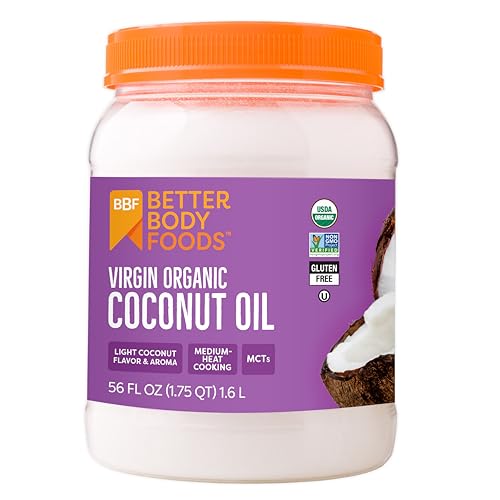
1. BetterBody Foods Organic Unrefined Coconut Oil
Our pick — over 4.5★ from 850+ verified ratings; the strongest balance of quality and price.
The crowd-proven daily driver with a mild taste that won’t bully your recipes.
The first thing seasoned buyers report is the restraint in flavor — the consensus calls the aroma and taste light, not overpowering, which makes this oil disappear into your sauté pan or coffee without announcing itself. It packs a useful 60% medium-chain triglycerides (MCTs), the type of fat your body can convert to energy quickly, making it a tidy plant-based boost for your morning routine. At 56 fluid ounces, it is also the second-largest single jar here behind the Kirkland pack, giving you plenty of cooking margin before a reorder.
What wins people over is the consistency of the quality across a wide range of uses: owners stir it into baking as a butter substitute, use it for soap making, and rely on it as a makeup remover. The trade-off is the plastic tub — a few owners find the lid seal can be temperamental. Glass would be preferable for long-term storage, but at this volume and price, the plastic container keeps the cost manageable.
What owners praise most
- Mild, non-assertive flavor works in sweet or savory dishes
- Quality earns over 100 mentions, the highest of any aspect here
- Large 56 oz container stretches far for baking and cooking
The honest caveat
- Plastic tub packaging; a few report the lid arriving cracked
- Not certified Non-GMO or Kosher like some competitors
Perfect match if: you cook with coconut oil most days and want a large, affordable jar with a subtle flavor that blends into recipes.
Check twice if: you insist on glass packaging to avoid plastic contact during long storage.
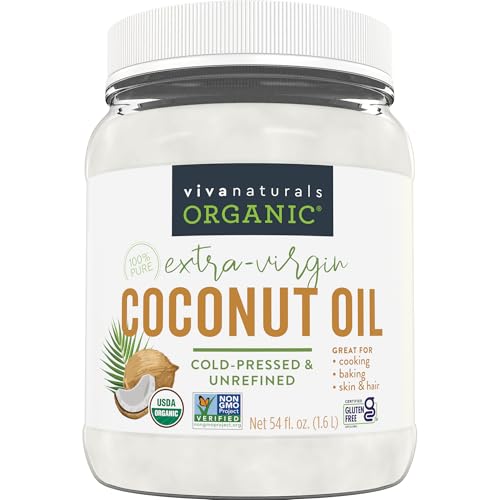
2. Viva Naturals Organic Coconut Oil
More owners have reviewed this jar than any other — and they keep coming back.
The sheer volume of feedback here — over 100,000 ratings — creates a rare consensus. Quality is the most-discussed aspect by a staggering margin (over 7,200 mentions), and the aroma and taste each rack up thousands of positive notes. This is a USDA Organic, cold-pressed, unrefined oil with a 350°F smoke point, which means you can use it for gentle frying, baking, and even a quick sear without burning off the flavor. The jar contains 54 fluid ounces, the same as several rivals, but the trust from that many owners is hard to argue with.
Buyers consistently describe it as a kitchen and beauty staple — using it for hair conditioning, makeup removal, and oil pulling alongside everyday cooking. The cap and seal design gets a few mentions of arriving partially torn during shipping, but the overwhelming verdict is five-star. If you want the single most-vetted option on this list, this is it.
Why it leads: the combination of USDA Organic certification, Non-GMO verification, and a near-unanimous praise across quality and aroma makes this the safest bet for anyone who wants a proven all-rounder.
Reach for it if: you prefer a brand that tens of thousands of other cooks have tested and loved.
Think twice if: you need a refined oil with no coconut scent for high-heat searing — this one is unrefined with a distinct aroma.
3. Nutiva Organic Extra Virgin Coconut Oil
A decade-long reputation for clean, cold-pressed oil that works in the skillet and the blender.
Nutiva is a name that surfaces again and again when owners compare brands. The oil is sourced from organic farmers, cold-pressed, and unrefined, which delivers what buyers describe as a “superior taste” and a fresh, clean scent. With quality mentioned over 4,100 times and taste above 2,700, the data is clear: people who buy Nutiva tend to stick with it. The 54-ounce tub fits neatly between a large household container and a manageable size that doesn’t go stale before you finish it.
Owners use it for everything — baking, granola, smoothies, coffee, hair masks, lip balm, and oil pulling. The most common note is that it is slightly pricier per ounce than the Amazon or Viva options, but the flavor purity earns the premium. Owners mention using it daily and finding the 54 oz pack lasts several months, which keeps the per-use cost reasonable.
Standout detail: five-time repeat buyers mention it is their preferred choice for cooking and coffee, and the household consensus is that the coconut flavor is present but not cloying.
Best for: anyone who cooks with coconut oil multiple times a day and values a well-established brand with a verified organic supply chain.
Consider otherwise if: your budget is tight — the per-ounce cost is higher than several equally-rated picks.
4. Amazon Grocery Organic Virgin Coconut Oil

USDA Organic and Non-GMO at a price that undercuts most rivals with the same credentials.
This jar earns its place by delivering exactly what a picky coconut oil buyer wants — organic certification, Non-GMO Project verification, and a full, rich coconut taste — without the brand markup. At 54 fluid ounces, it matches the Viva Naturals and Nutiva on volume but typically lands at a lower effective cost. The fresh, sweet aroma is a recurring highlight in buyer feedback, and the smooth texture works equally well for sautéing, baking, or stirring into coffee.
What owners emphasize most is the value: they describe it as “among the most affordable virgin oils” they have found. The container is a standard plastic resealable tub, which keeps the price down. A few note the price has moved upward recently, but the product itself consistently earns five-star praise when the cost is set aside.
Bottom line: if the cost of organic coconut oil bothers you, this is the pick that checks all the organic boxes and still leaves room in the weekly grocery budget.
Choose this if: your priority is a certified organic virgin oil that doesn’t carry a premium brand name.
skip it if: you need a refined, odorless oil for high-heat cooking — this one has a strong coconut aroma.
5. Terrasoul Superfoods Extra Virgin Organic Coconut Oil

The only pick in the lineup that ships in glass — a meaningful advantage for purity-minded buyers.
Terrasoul stands apart for a simple reason: it is packed in a glass jar rather than a plastic tub. That eliminates any concern about plastic compounds migrating into the oil during warm storage, and the jar arrives inside a protective case to prevent breakage. The oil itself is cold-pressed, unrefined, and certified USDA Organic and Earth Kosher, with a notable 63% medium-chain triglycerides and 50% lauric acid — numbers that signal a high concentration of the fatty acids tied to energy and immune support.
Buyers highlight the fresh, faint coconut smell that does not transfer into cooked food. Many use it for oil pulling, spreading on sourdough bread, and applying to skin with a silicone brush. The 32-ounce container is smaller than the 54-ounce tubs above, so if you go through a lot of oil fast, you will reorder sooner. But the glass jar is the reason many owners say they will never go back to plastic.
Why loyalists love it
- Glass packaging eliminates plastic leaching risk
- 63% MCTs and 50% lauric acid — higher than many competitors
- Fresh, mild aroma that doesn’t overpower food
The one trade-off
- 32 oz is half the volume of the top picks, so heavy users reorder more often
Ideal for: anyone who stores coconut oil for months and wants to avoid plastic packaging entirely.
Not ideal if: you glaze through a 54 oz tub every few weeks — the smaller jar means more frequent trips to the pantry.
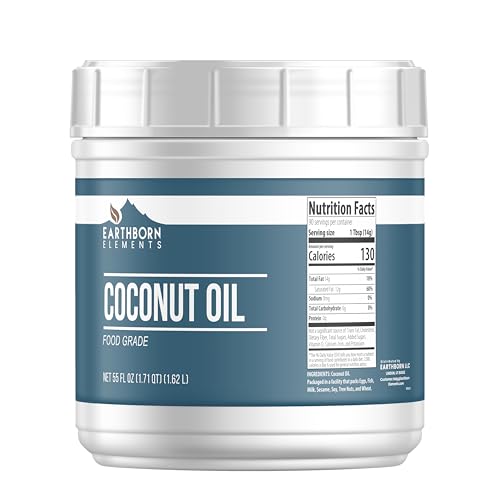
6. Earthborn Elements Coconut Oil
The refined choice for when you want the cooking performance without the tropical scent.
Sometimes you just need a cooking fat that works at higher heat and does not flavor your dish. This is the oil for that moment. Earthborn Elements is refined and deodorized — meaning it has been processed to remove the coconut smell and taste — and it comes in a large 55-ounce resealable plastic tub. The smoke point is naturally higher than unrefined oils because the solids that burn quickly have been stripped out, making it suitable for frying and sautéing without smoke.
Buyers use it for deep-frying, making popcorn, and even as a base for DIY salves and massage oil. The odorless quality is the most consistent praise (it is the top-mentioned positive aspect). The downsides are that it lacks organic certification and the refining process removes some of the antioxidants found in virgin oils. If those trade-offs are fine for your kitchen, this is a solid bulk option.
The important distinction: this is not a “virgin” oil — it is refined, so it trades some nutritional nuance for a neutral flavor and higher heat tolerance, perfect for the cook who hates coconut-flavored stir-fry.
Reach for it if: you need a neutral oil for high-heat cooking or have household members who dislike coconut flavor.
Look elsewhere if: you want the full nutritional profile of a cold-pressed, organic virgin oil.
7. CocoGoodsCo Single-Origin Organic Virgin Coconut Oil
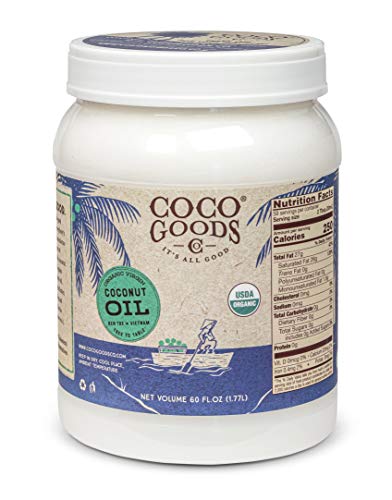
Holds a full 60 ounces — 2.0x the size of the LouAna jar and 6 more ounces than Viva Naturals.
Volume is the headline here. At 60 fluid ounces, CocoGoodsCo gives you more oil per container than any other single jar in this guide (except the Kirkland double-pack). It is a cold-pressed, organic virgin oil from Ben Tre, Vietnam, with a notably creamy texture that stays soft enough to scoop even in cooler kitchens. The jar holds 3.7 pounds of oil, which is 1.9 pounds heavier than the 30-ounce LouAna container — a meaningful difference if you cook with coconut oil every day.
Owners use it for everything from cooking to oral health (brushing teeth) to pet food supplementation. As customers note, it soothes a dog’s skin and tastes good enough that even picky pets will eat it. Quality and flavor are the top praised aspects, and the price per ounce is competitive for an organic single-origin product. The downsides are minimal: the oil may arrive liquid if shipped to a warm climate (it solidifies back to creamy texture in cooler temps) and it does not carry the same certification breadth as Viva Naturals or Nutiva.
Volume verdict: if your household goes through coconut oil quickly, the 60-ounce tub means fewer reorders, and the single-origin transparency adds supply-chain confidence.
Best if: you want the largest single-volume jar of organic virgin oil and prefer to know exactly which region your coconut came from.
Skip if: you need a smaller container for occasional use — 60 oz is a commitment.
8. LouAna Pure Coconut Oil

The entry-level jar with a mild flavor that won’t announce itself in your cooking.
LouAna is the smallest container in this lineup at 30 fluid ounces (1.92 pounds), which is exactly half the volume of the CocoGoodsCo jar — a 2.0x size gap you will notice on your shelf. It is an all-natural, refined oil with a very mild flavor that verges on neutral. Buyers specifically choose it because it does not have a coconut taste or smell, which is critical if you are adding it to food that should not taste tropical. As one dog owner put it, “this brand does not have a coconut smell so she will eat it just fine.”
The feedback around versatility is strong: owners use it for frying, baking, skin care, hair treatment, and even teeth whitening. The main recurring complaint is about the lid — several shipments arrive with the seal broken or the lid cracked. It is a minor quality-control issue given the price point, but one note before you buy in bulk. For the cost-conscious cook who just needs a reliable, no-fuss oil for basic cooking and body care, this is a fine starting point.
The honest read: this is a perfectly solid cooking oil at a very accessible price, with the caveat that packaging quality is less consistent than the premium picks.
Ideal for: a first-time coconut oil buyer or someone who uses it sparingly and does not want a large tub sitting around half-used.
Not for: anyone who wants organic certification or a guaranteed perfect seal on arrival.
9. Kirkland Signature Cold Pressed Unrefined Organic Virgin Coconut Oil

A whopping 168 fluid ounces across two tubs — the only serious option for heavy daily use.
If you bake every weekend, stir-fry most nights, and still want oil for hair masks and DIY toothpaste, this is the jar that keeps your pantry stocked for months. Kirkland Signature delivers two containers totaling 168 fluid ounces (5.25 pounds) of USDA Organic, cold-pressed, unrefined virgin coconut oil. The origins are the Philippines or Vietnam, and the oil is described as having a mild, pleasant aroma and a subtle sweetness. It is chemical-free and certified organic, matching the quality of smaller premium jars at a significantly lower per-ounce cost.
Owners praise the taste and the value, noting the expiration dates stretch years into the future (one reviewer noted a 2027 date). The most common complaint is not about the oil itself but about shipping — the two-pack sometimes splits into separate deliveries, which can be confusing. A few also note the price has crept up over time. But for a large family or anyone who cooks with coconut oil daily, the convenience of having 168 oz on hand outweighs those hiccups.
Why buyers stock up
- 168 oz total — the lowest per-ounce price in this guide
- USDA Organic with a mild, sweet coconut flavor
- Long expiration dates for stress-free bulk storage
The logistical catch
- Two tubs may arrive separately, causing tracking confusion
- Massive commitment for a single-person household
Best for: a heavy-usage kitchen that goes through at least one 54 oz jar every month or two.
Overkill if: you are a light or occasional user — the oil stays fresh for years, but 168 oz takes up real pantry space.
Understanding the Specs
Virgin vs. Refined
Virgin (or “extra virgin”) coconut oil comes from the first press of fresh coconut meat and retains a natural coconut taste and aroma. It is best for eating raw, medium-heat cooking, and baking. Refined coconut oil has been heat-treated or chemically processed to remove the taste and smell, which gives it a higher smoke point — ideal for deep frying or any dish where you do not want a coconut flavor. The trade-off is that refining strips some of the natural antioxidants and MCTs. Check the label: if it says “unrefined” or “virgin,” you are getting the full-flavor version. If it says “refined,” expect neutral performance at higher temperatures.
MCTs and Lauric Acid
Medium-chain triglycerides (MCTs) are a type of fat your body can absorb and burn for energy quickly, rather than storing as body fat. Coconut oil is naturally rich in MCTs, with most quality oils containing 55% to 65%. Lauric acid, a specific MCT that makes up around 50% of coconut oil, is valued for its antimicrobial properties and its role in supporting immune function. Higher percentages of both MCTs and lauric acid generally indicate a less-processed, higher-quality oil. If a label lists “60% MCTs” or “50% lauric acid,” that is a strong sign the oil was cold-pressed and not stripped during refinement.
FAQ
Can I use any coconut oil for cooking, or do I need a special kind?
How long does an opened jar of coconut oil stay fresh?
Is there a difference between coconut oil for eating and coconut oil for skin?
Why does my coconut oil turn solid in the winter?
Is glass packaging really better than plastic for coconut oil?
Can I use coconut oil if I am on a keto or paleo diet?
How much coconut oil should I eat per day?
What does “cold-pressed” mean, and does it matter?
Can I use coconut oil for oil pulling?
Why is my coconut oil from a single-origin country considered better?
Final Thoughts: The Verdict
For the majority of shoppers, the coconut oil to eat winner is the BetterBody Foods Organic Unrefined Coconut Oil because it combines a mild, flexible flavor with a generous 56-ounce size, 60% MCTs, and the highest average rating in the lineup — a proven daily driver. If you want the most-reviewed brand with over 100,000 ratings backing its consistency, grab the Viva Naturals Organic Coconut Oil. And for the purest packaging that avoids plastic entirely, the Terrasoul Superfoods Extra Virgin Organic Coconut Oil in a glass jar is the one to reach for.
How We Picked
We do not accept paid placement. Every pick is matched to a real buyer and a real use-case; we do not hands-on test units.
Sources & Methodology
Specifications: manufacturer listings and product documentation. Review insights: verified customer reviews, as of July 2026. Pricing: not shown on this page (it changes often); check the current price via the retailer link.
As an Amazon Associate, WellFizz earns from qualifying purchases. This does not affect which products we feature.
Related Guides

Mo Maruf
I created WellFizz to bridge the gap between vague wellness advice and actionable solutions. My mission is simple: to decode the research and give you practical tools you can actually use.
Beyond the data, I am a passionate traveler. I believe that stepping away from the screen to explore new environments is essential for mental clarity and physical vitality.