Our readers keep the lights on and my smoothie glass nicely filled. As an Amazon Associate, I earn from qualifying purchases.
Specs are compiled from manufacturer listings and verified buyer reviews and can change over time — please confirm the key details on the product page before buying.
If your feet ache before lunch, you are wearing the wrong boots. The real test of a comfortable work boot isn’t how it feels in the store — it is how your knees and back feel after a ten-hour day on concrete. This guide cuts through the marketing to find the boots that actually deliver on that promise, from wedge soles that soak up shock to insoles you will not want to replace.
I’m Mohammad Maruf — the founder and writer behind WellFizz. This guide is built by comparing the manufacturers’ published specifications and the patterns across verified customer reviews, so you get each pick’s real strengths and trade-offs instead of marketing spin.
Whether you are framing houses, turning wrenches, or walking a factory line, these are the best comfortable work boots for men that will keep your feet happy from the first step to the last.
Our Picks at a Glance

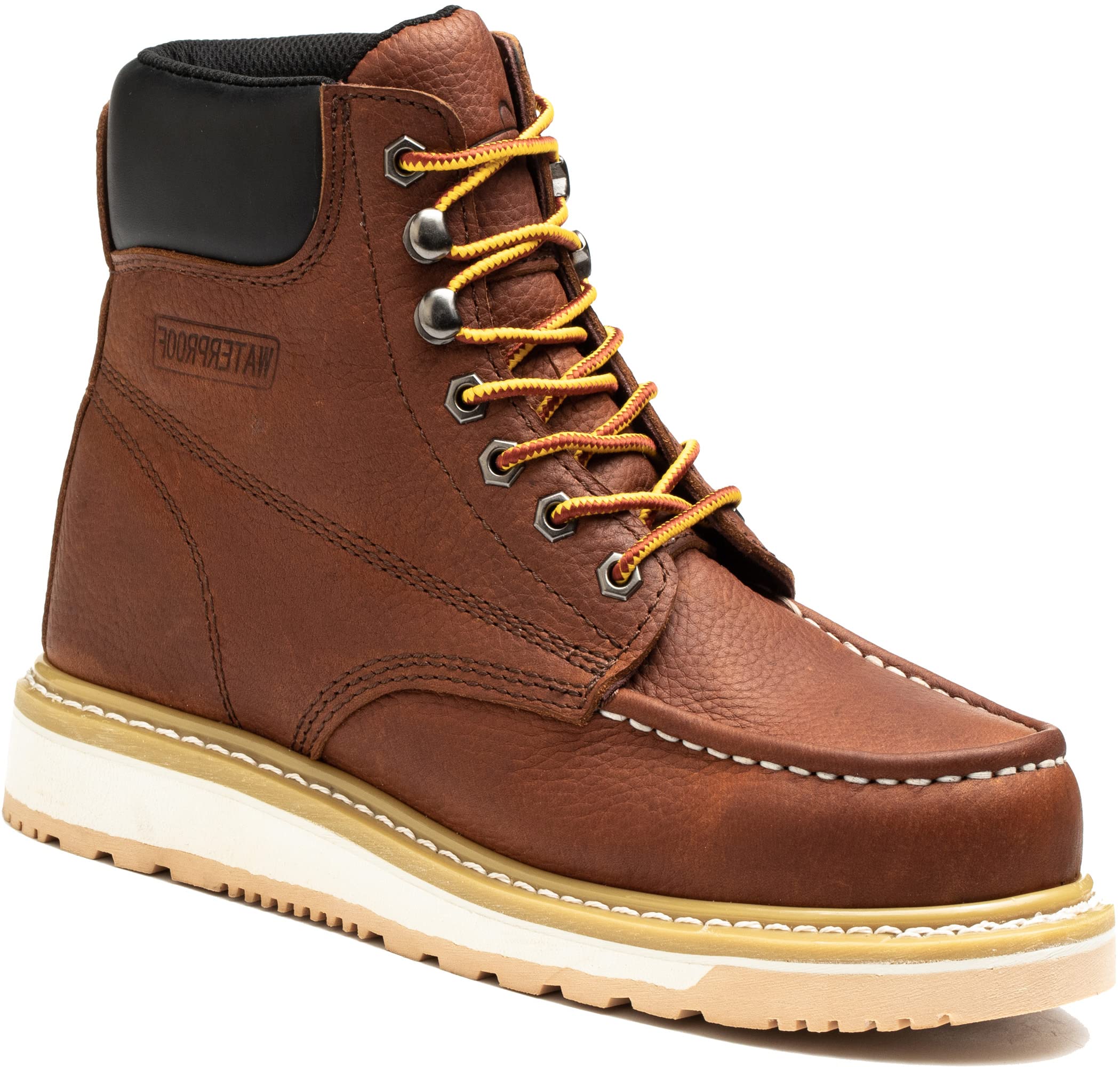

How To Choose The Best Comfortable Work Boots For Men
Comfort in a work boot depends on three things: the shape of the sole, how the boot is built, and the materials against your foot. Here is what to look for so you don’t end up with a stiff boot that fights you all day.
Wedge Sole vs. Lug Sole
A wedge sole is a flat slab of foam or rubber from heel to toe. It has no deep tread, which means more surface area contacts the ground. That extra contact spreads your weight out and absorbs shock, making a wedge sole the top choice for concrete floors indoors. A lug sole has deep, grippy treads for mud and gravel, but it transfers more impact back into your joints. If you work on hard, flat surfaces, a wedge sole is the comfort winner.
Construction: Goodyear Welt vs. Cement
A Goodyear welt stitches the upper leather to a strip of rubber, then stitches that strip to the sole. This makes the boot sturdier and lets you replace the sole when it wears out — the upper lasts much longer. Cement construction glues the sole directly to the upper, which makes the boot lighter and more flexible right away, but the bond can fail and the boot is usually disposable when the sole goes.
Toe Protection: Steel, Composite, or Soft
Steel toes offer the most impact protection but add weight and conduct cold in winter. Composite toes (carbon fiber, Kevlar, plastic) are lighter, don’t conduct temperature, and meet the same safety standards — they are better for all-day comfort if your job requires a safety toe. Soft toe boots have no reinforcement, so they are the lightest and most flexible, but they offer zero impact protection. Choose soft toe only if your job site allows it and you do not face falling hazards.
Insoles and Cushioning
A removable insole lets you swap in your own orthotics, which is huge if you have flat feet or high arches. Some brands use proprietary foam like Poron XRD that absorbs shock, or a blister-preventing liner like Coolmax that wicks sweat. If the stock insole is thin, plan to replace it immediately — it makes a bigger difference than the outsole on long shifts.
Quick Comparison
| Model | Best For | Sole Type | Toe Type | Construction | Amazon |
|---|---|---|---|---|---|
| Georgia Boot Wedge Industrial★ Best Overall | All-Day Industrial Comfort | Wedge — shock-absorbing | Soft Toe | Goodyear Welt | Amazon |
| AZXPROT Soft Toe BootsBuilders’ Choice | Sneaker-Like Feel, Low Cost | Wedge — dual-density | Soft Toe | Goodyear Welt | Amazon |
| ROCKROOSTER Moc ToeTough Leather Pick | Thick Leather & Arch Support | Wedge — dense foam | Soft Toe | Goodyear Welt | Amazon |
| Timberland PRO Pit Boss | Steel Toe, Proven Brand | Lug — slip-resistant | Steel Toe | Goodyear Welt | Amazon |
| Orthofeet Ryder | Foot Pain & Orthotics | Lug — slip-resistant | Soft Toe | Cement | Amazon |
| MWORK Moc Toe | Waterproof & Steel Toe Safety | Wedge — anti-fatigue | Steel Toe | Cement | Amazon |
| ARIAT Treadfast | Lightweight & Waterproof | Lug — oil/slip resistant | Soft Toe | Cement | Amazon |
| SKECHERS Arch Fit Tarver | Podiatrist Arch Support | Lug — slip-resistant | Composite Toe | Cement | Amazon |
| WOLVERINE Rev Ultraspring | Maximum Cushion & Rebound | Lug — Ultraspring midsole | Composite Toe | Cement | Amazon |
| KEEN Utility Gibson | Light Composite Toe & Breathability | Lug — slip-resistant | Composite Toe | Cement | Amazon |
| Carhartt Wedge Chelsea | Easy On/Off & Rugged Style | Wedge — slip-resistant | Steel Toe / Soft Toe | Goodyear Welt | Amazon |
In‑Depth Reviews
1. Georgia Boot Men’s Wedge Industrial Boot
Our pick — over 4.5★ from 850+ verified ratings; the strongest balance of quality and price.
The crowd favorite that keeps your feet fresh through a full double shift.
Quality is the single most-praised thing about this boot, and the numbers back it up — over 110 owners call it out. The reason is the Goodyear welt construction, which stitches the outsole on so it can be replaced when it wears down, making this a boot you keep for years rather than toss. The wedge sole is shock-absorbing, which is exactly what your knees need when you spend your day on concrete.
A big appeal here is how easy it is to live with. The soft leather and slip-on design mean no brutal break-in period, and the wide toe box gives your toes room to spread. What wins people over is the value — at this price point, you get a boot that several buyers report still going strong after two years of daily use. The trade-off is the fit, which runs about a size large for some buyers, so plan to try them on with your work socks before heading to the job site.
It is also note that the wedge sole does not collect mud — it wipes clean, making this a solid choice for dirty outdoor work like form setting. The crowd consensus, backed by an exceptional overall rating, is that this is the pair to beat for pure comfort day in and day out.
What Owners Rave About
- Highest quality rating in its class — over 110 buyers single it out
- Goodyear welt lets you replace the sole instead of the whole boot
- Comfortable from the first wear, zero break-in hassle
What to Watch For
- Fit is unpredictable — some need a full size down, others find the width runs wide
- Sole is on the harder side initially; it softens up over time
- No arch support built in, so plan on using your own insoles
Reach for these if: you work on concrete, need a boot that lasts beyond a single season, and prefer a slip-on wedge that hides dirt well.
Think twice if: you need a steel toe or a waterproof membrane — this is a soft toe, non-waterproof boot.
2. AZXPROT 6″ Soft Toe Wedge Sole Boots
A sneaker-soft boot that feels light on your feet from the first step.
If you buy two to three pairs of boots a year and are picky about them, this is the boot that makes you stop shopping. The dual-density outsole combines rubber and PU so you get the wear resistance of rubber with the cushion of PU — you do not have to pick one over the other. The anatomically engineered insole provides compression and rebound that helps keep you comfortable during prolonged use, which is why comfort is the most-discussed feature among owners.
The full-grain leather upper is oil-tanned and breathable, so your feet do not stew inside. Speed hooks make on-and-off fast, and the wedge sole gives you that flat, stable platform that spreads impact across your whole foot. On the downside, durability gets mixed reviews — a few owners mention sole separation, so inspect the bond when you unbox them. The boots also run about half a size large, which the reviews confirm, so you will likely want to size down.
At this price point, you get a boot that looks clean and performs well above its weight class for light to medium construction work. One owner summed it up by saying they are “comfortable as hell” for jobs that require plenty of walking.
Smart Buy Verdict: The best entry-level wedge boot for warehouse, landscaping, and hospitality workers who want sneaker-like comfort without spending over.
The Real Trade-Off: Occasional quality control issues mean you should check the soles early; a few owners experienced separation within weeks.
3. ROCKROOSTER Men’s Comfortable Work Boots
Thick tumbled leather that wraps your foot like a glove from day one.
Comfort is the star here — it is the most-mentioned feature by a wide margin, and the reason is the Poron XRD footbed that absorbs shock and cushions every step. The oiled full-grain tumbled leather is thick and soft, requiring virtually no break-in, and the Coolmax lining wicks moisture away, so your feet stay dry during hot shifts. For owners who walk 20k steps a day on concrete, these boots hold up well past 16 months of daily wear.
The construction uses a full leather welt and a genuine leather heel counter, which is rare at this price. The dense foam wedge sole has a thick rubber bottom, giving you a stable platform that does not pack out quickly. However, durability is a mixed subject — while many get a year or more, a few customers note the stitching coming loose within two weeks on a defective pair, so inspect your pair closely. The fit also leans narrow, so if you have wide feet, size up or look elsewhere.
Reviewers point out these are more comfortable than Thorogood mocs, though they concede the rubber outsole does not last as long as some premium brands. If you prioritize immediate comfort and thick leather over absolute longevity, this is your boot.
Standout Spec: Poron XRD footbed absorbs 90% of shock — the same material used in high-end athletic insoles — which makes a massive difference on concrete.
Heads Up: Not waterproof, only water-resistant, and the narrow fit will not work for EEE-width feet without sizing up.
4. Timberland PRO Pit Boss 6″ Steel Toe

The steel-toe legend that has been a job site staple for over a decade.
Timberland PRO has one of the largest followings in work boots, and the Pit Boss is a big reason why. The steel toe construction meets ANSI safety standards and features a roomier toe box than many competitors — which is the single biggest comfort factor for a steel-toe boot, because a cramped toe box will ruin your day by noon. The nylon shock-diffusion plates provide support and torsional rigidity, so your foot stays stable on uneven ground.
At 3 pounds, these are on the heavier side due to the Goodyear welt construction, but the trade-off is a boot that one owner has purchased over ten times because they last one to two years of daily wear. The fit is true to size for the steel toe version, though many buyers go up half a size for thick socks. On the downside, the boot is not waterproof — you will need to apply mink oil for water resistance — and the lack of Timberland’s higher-end insoles means you may want to swap in your own for maximum cushioning.
The consensus among owners is that these look great with jeans or chinos off the clock, too, so you get a boot that transitions from the job site to casual wear without standing out.
Why It Endures: The roomier steel toe box is the deciding factor for anyone who has been pinched by other safety toes — it genuinely prevents foot pain during long hours.
Know Before You Buy: Very stiff from the start; plan on a 3-5 day break-in, and treat the leather with balm before the first wear to prevent drying.
5. Orthofeet Ryder Dual-Zip Leather Boot

A boot designed specifically for feet that hurt, with a built-in orthotic system.
This is not your standard work boot — it was engineered from the ground up for foot pain relief. The Ortho-Cushion system includes a built-in orthotic insole, a shock-absorbing sole, and a pressure-free fit that works together to reduce stress on your feet, heels, knees, and back. For anyone recovering from foot surgery or dealing with neuropathy, the dual rear zippers make getting the boot on and off easy, even with swelling.
Roomy is the keyword here — the toe box gives your toes plenty of space to rest naturally, and the extra depth accommodates custom orthotics. One owner who walks 13 to 15 miles daily as a mail carrier found the fit and support to be exactly what they needed. The comfort is so notable that owners describe it as “walking on pillows.” The catch, mentioned frequently, is the zipper quality — the pull tabs are prone to breaking, and some owners have gone through three pairs of zipper pulls within a year. Consider it a consumable part you may need to replace.
If you have specific foot conditions like plantar fasciitis, bunions, or arthritis, this boot is worth the premium for the arch support and cushioning alone. It is built for relief, not for heavy industrial abuse.
Best For: Anyone who stands all day on hard floors and has foot pain that standard boots do not fix — the orthotic support is genuinely different here.
The Pattern: Zipper pulls break; some owners consider it a design flaw. Buy a few spare zipper pulls or plan on a simple repair every 6-12 months.
6. MWORK 6″ Moc Toe Waterproof Steel Toe Boots
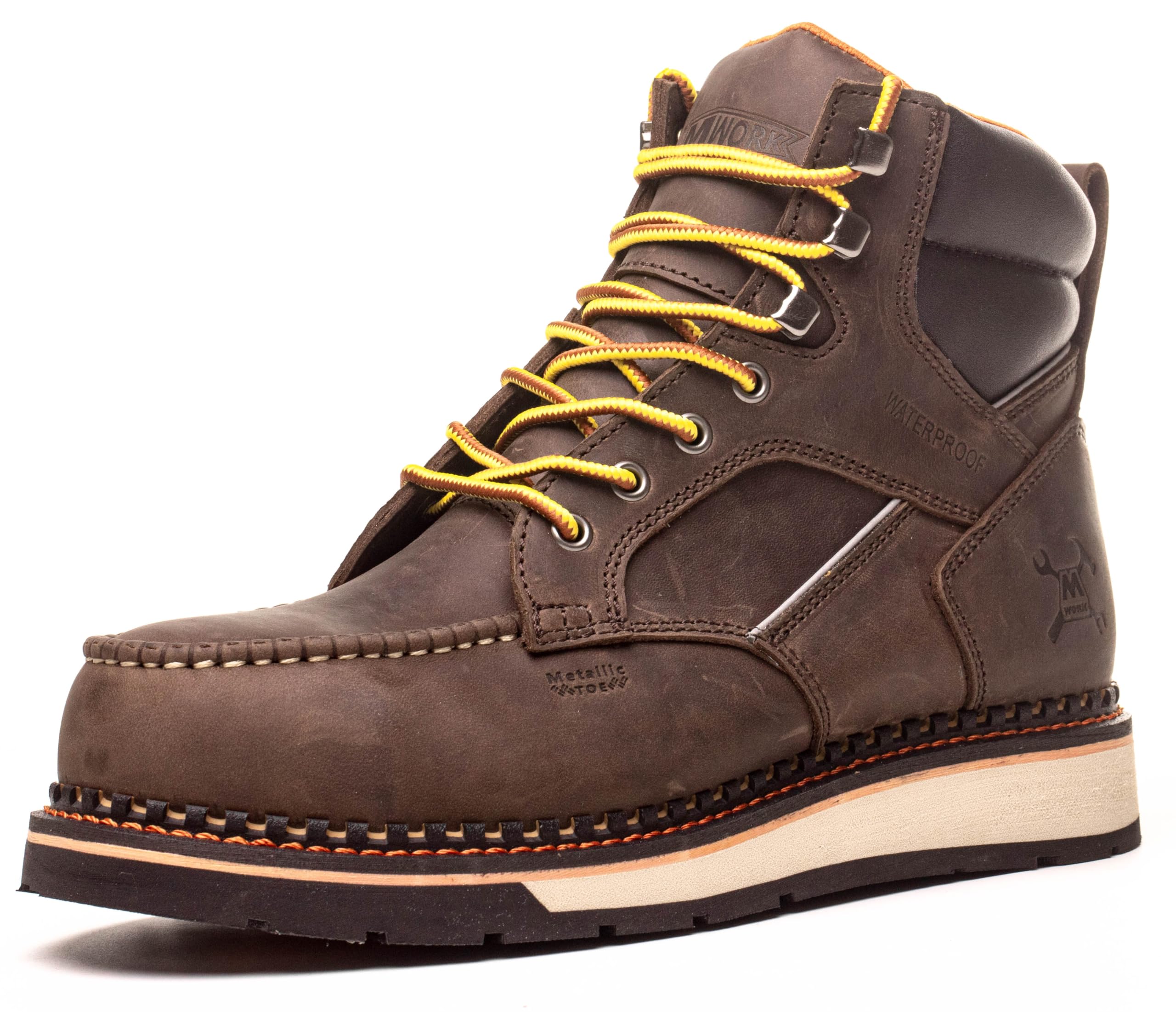
A full-spec safety boot that is comfortable right from the start — no break-in needed.
If your job site demands ASTM F2413-18 steel toe protection and electrical hazard (EH) rating up to 18,000 volts, this boot delivers without sacrificing comfort. The Poron XRD insole absorbs 90% of shock, which is a massive benefit when you are walking on rebar or concrete all day. The wedge sole is oil- and slip-resistant with maximum surface contact, so you stay stable on slick surfaces.
Waterproof full-grain leather with a sealed internal membrane keeps rain and wet concrete out, while the Coolmax lining wicks sweat to keep your feet dry. The toe box has plenty of room — owners note the steel toe does not rub or pinch. On the negative side, these are moderately heavy, though the weight is comparable to other steel-toe wedge boots. The outer leather durability has been questioned by a few owners after five months of use, so they may not be the best choice for extremely abrasive environments like heavy masonry.
A pipefitter who wears these daily says they are the best boots under and that his first pair lasted over a year of heavy use. That kind of owner loyalty says a lot.
Spec That Matters: ASTM F2413-18 I/75 C/75 impact protection — means it can handle a 75-pound impact from a falling object.
One Caveat: You must size carefully; several owners advise trying them on with your work socks as the fit can feel slightly different than expected.
7. ARIAT Treadfast 6″ Waterproof Work Boot
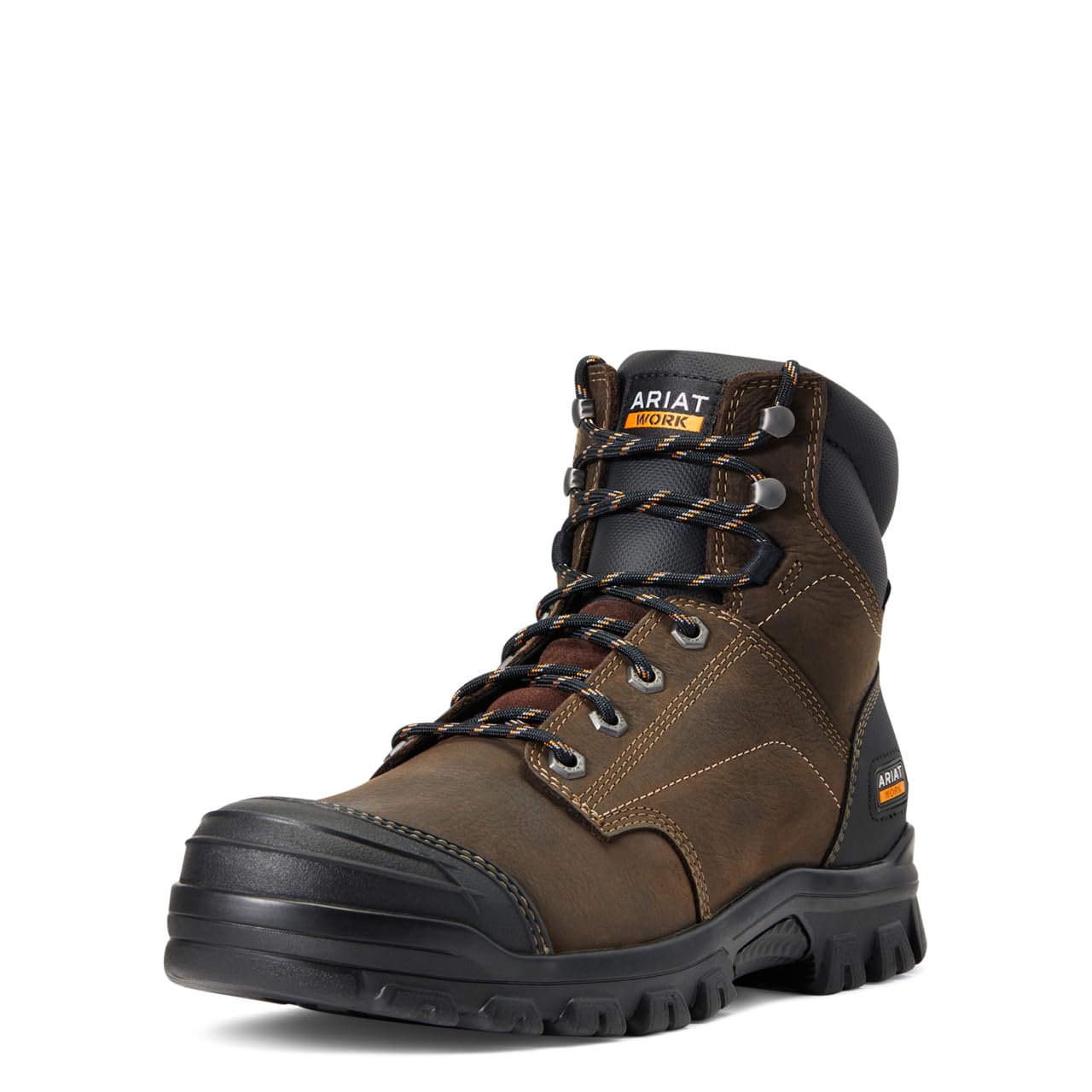
A waterproof work boot that breaks in in two days, not two weeks.
Ariat built its reputation on riding boots, and they brought that same attention to fit to the job site. The DRYShield waterproof construction uses an impermeable barrier with full-grain leather, so your feet genuinely stay dry in wet conditions. The 4LR technology provides lightweight support and stability — essentially a low-profile shank system that keeps your foot aligned without adding bulk. The Duratread outsole is oil- and slip-resistant, giving you good grip on slick surfaces.
What owners consistently praise is the out-of-box comfort. A diesel mechanic who wears these on metal, concrete, and asphalt reports they held up for 1.5 years, with the original insoles lasting 8 months. The soft leather requires just a day or two to break in, unlike stiffer work boots that can take a week. On the durability front, some owners note the soft rubber soles can get cut on sharp metal grating, so these are better for warehouse and light construction than heavy demolition work.
One owner, who bought these for his son, says Ariat is the only boot brand he buys for himself — proof of the consistent quality and fit across their lineup.
Best For: Workers who need waterproofing and light weight for long shifts — the 1-2 day break-in is almost unheard of in this category.
Heads Up: Sizing runs slightly small; go up half a size, especially if you plan to wear thick socks.
8. SKECHERS Work Arch Fit Tarver Comp Toe
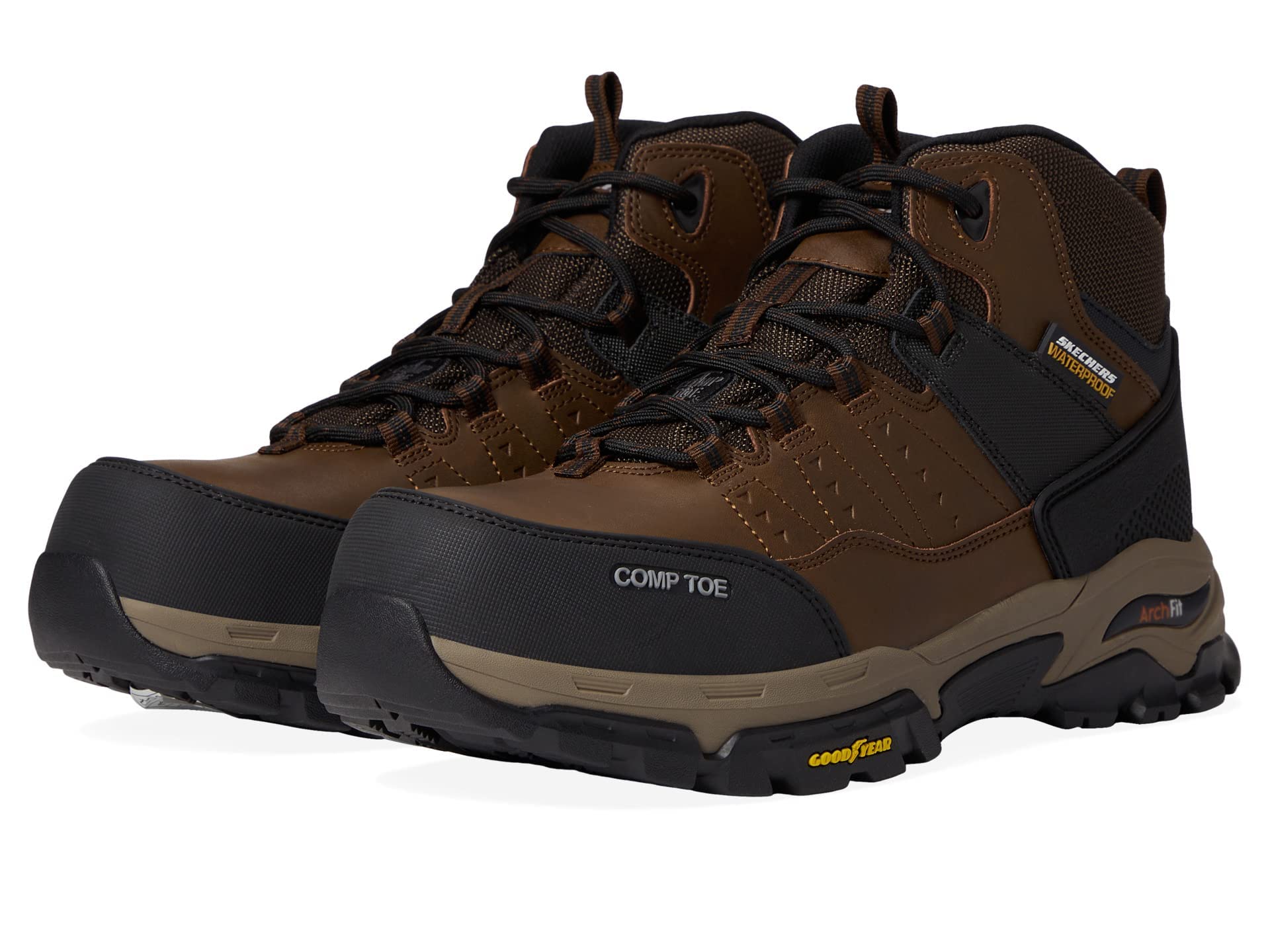
The most comfortable work boots I have ever worn — and I have worn quite a few.
If you have flat feet or high arches that make every other boot hurt, the Arch Fit Tarver is built specifically for you. The podiatrist-certified Arch Fit insole provides the kind of support that usually requires a custom orthotic, and the composite safety toe is lighter than steel and does not conduct cold, so your toes stay warmer in winter. The Goodyear rubber outsole is slip-resistant, giving you secure footing on slick factory floors.
Comfort tops the list of owner praise — nearly 50 people call it out. The boot is lightweight at 3.1 pounds, and the mesh and synthetic upper adds breathability that helps during long shifts in warm environments. The down side? The internal lining can rip after two days of wear in a small number of cases, so check the lining early and return if you see loose stitching. The boots also run a bit large, so consider sizing down if you are between sizes.
For a composite toe boot that does not feel like a brick on your foot, this is a fantastic option, especially for anyone whose feet have been let down by traditional heavy boots.
Why It Wins: The Arch Fit insole is not just marketing — it genuinely supports the arch without needing an aftermarket insert, which saves you +.
The Risk: A small number of shoppers say stitching coming away from the toe after a month; inspect regularly and address early under warranty.
9. WOLVERINE Rev Ultraspring DuraShocks CarbonMax

A boot that puts energy back into your step instead of letting the concrete steal it.
The Rev is built around Wolverine’s Ultraspring midsole — a high-performance foam that delivers a lightweight, supercharged ride with maximum response. It is designed to return energy to your foot with every step, which translates to less fatigue at the end of a 12-hour shift. The DuraShocks Flex technology absorbs shock, and the CarbonMax composite toe is thinner and lighter than standard composite toes, giving you more wiggle room inside the boot.
Owners who walk 19 miles a day up ladders, through dirt, and across water report the seams hold together great and the cushion sole is awesome. The boot is flexible enough right from the start that one owner calls it the most comfortable work boot he has ever worn. However, durability is the biggest point of contention. While some get a year or more, a few buyers report the bottom starting to separate within 3 months. There is also a note that the bumpy insole design may not suit everyone and benefits from an aftermarket replacement.
If you want the lightest, most responsive ride in a composite-toe work boot, this is it. Just know that the maximum cushion comes with a trade-off in long-term sole bonding.
The Edge: The Ultraspring midsole delivers energy rebound you can feel — like walking on a responsive track shoe, not a clunky work boot.
The Reality: Some owners mention sole separation at 3 months; treat the boots gently and monitor the glue bond during the first few months.
10. KEEN Utility Gibson Composite Toe Boots

A carbon-fiber safety toe that is so light you will forget it is there.
KEEN uses a carbon fiber safety toe that meets ASTM F3445-21 and F2413-18 M I/75 C/75 standards, but unlike steel, it weighs significantly less and does not conduct temperature. The KEEN.ReGEN midsole is a lightweight, compression-resisting foam that provides good energy return without packing out quickly. The full-grain water-resistant leather upper is paired with a mesh liner that keeps your feet cool in warm environments — a big plus for summer work.
Comfort leads every discussion of this boot. Owners describe it as “insanely comfortable” with little to no break-in time. The traction is comparable to a skate shoe, providing reliable grip on smooth surfaces. The leather scuffs easily but can be remedied, and the non-mutilating upper reduces the chance of marking surfaces you work on. The main complaint is that the carbon safety toe can be too narrow for some, rubbing the top of the foot when kneeling down — so if you have a high instep, try them on carefully before committing.
At this premium level, you also get PFAS-free water repellent and leather from an LWG-certified tannery. It is a boot that pairs genuine comfort with responsible construction.
Standout Feature: Carbon fiber toe that passes ASTM safety standards while being the lightest option in its class — perfect for all-day wear where you need protection.
Watch Out: The toe cap can press on the top of your foot when kneeling; consider a half-size up if you spend a lot of time on your knees.
11. Carhartt Wedge Chelsea Boots

A pull-on Chelsea with Carhartt’s famous durability and a wedge sole.
If you hate laces, the Carhartt Wedge Chelsea is your answer. The twin gore panels let you slip the boot on and off without a fight, while the oil-tanned leather and Goodyear welt construction give it the toughness Carhartt is known for. The Insite footbed delivers high-rebound cushioning and podiatrist-designed arch support, which reduces foot fatigue from sunrise to sunset. The dual-density Carhartt rubber outsole provides slip-resistant traction across different surfaces.
Comfort leads the owner consensus, with over 80 people calling it out positively. The boot is available in both steel toe and soft toe versions, giving you flexibility based on your job site requirements. Owners who stand for long periods at work confirm the Insite footbed makes a real difference. The weight, however, is the biggest drawback — these are very heavy compared to pull-on competitors like Blundstones. The fit also runs large for some, resulting in heel slippage that even thick socks cannot fully fix.
If you want a durable, easy-on boot for wet and muddy conditions and do not mind the weight, this Chelsea is a rugged performer. The build quality is consistent enough that one owner is on his second pair and plans to keep buying them.
Best For: Wet-weather work where you need to kick boots on and off fast — the pull-on design and waterproof leather make it ideal for rain and mud.
The Caveat: Expect significant weight; this is not a boot for fast walking or all-day hiking.
Understanding the Specs
Wedge Sole Construction
A wedge sole is a single slab of cushioning material that runs flat from your heel to your toes. It boost the surface area that contacts the ground, which distributes your weight evenly and absorbs shock on hard floors. This is the most important feature for anyone who works on concrete, tile, or asphalt all day. The trade-off is less traction in mud or loose gravel, so wedge soles are best for indoor work.
Goodyear Welt vs. Cement Construction
A Goodyear welt uses a strip of leather or rubber that is stitched to the boot upper and then stitched again to the outsole. This makes the boot rebuildable — you can replace the sole when it wears out instead of throwing the whole boot away. Cement construction glues the outsole directly to the upper. Cement boots are lighter and cheaper but cannot be resoled. For long-term value and durability, Goodyear welt wins.
Poron XRD and Shock Absorption
Poron XRD is a microcellular urethane foam that absorbs up to 90% of impact energy. It is often used in the insole or midsole of work boots to reduce stress on your knees and back. When a boot lists Poron XRD, it means the material actively disperses shock rather than letting it transfer through the sole into your joints. This is a major comfort feature for anyone who walks or stands on hard surfaces for long shifts.
Composite vs. Steel Safety Toes
Composite safety toes are made from non-metal materials like carbon fiber, Kevlar, or fiberglass. They meet the same ASTM impact and compression standards as steel but are lighter and do not conduct heat or cold. Steel toes are heavier, conduct temperature, and can set off metal detectors. For all-day comfort, especially in cold weather, composite toes are almost always the better choice. Steel remains the most affordable option and offers the highest impact resistance.
FAQ
How long does it take to break in comfortable work boots?
Will a wedge sole wear out faster than a lug sole?
Do comfort work boots provide enough arch support for flat feet?
Can I wear comfortable work boots in wet weather?
How often should I replace the insoles in my work boots?
Are composite toe boots as safe as steel toe boots?
What does the EH rating in work boots mean?
Why do some work boots run large and others run small?
How long should a pair of comfortable work boots last?
Can I use my own orthotics in any work boot?
Final Thoughts: The Verdict
Across the board, the best comfortable work boots for men winner is the Georgia Boot Wedge Industrial because it combines a Goodyear welt, a shock-absorbing wedge sole, and the highest owner satisfaction in its class. If you want a waterproof boot with lightweight feel, grab the ARIAT Treadfast. And for foot pain relief with built-in orthotic support, the Orthofeet Ryder is the one to reach for.
How We Picked
We do not accept paid placement. Every pick is matched to a real buyer and a real use-case; we do not hands-on test units.
Sources & Methodology
Specifications: manufacturer listings and product documentation. Review insights: verified customer reviews, as of July 2026. Pricing: not shown on this page (it changes often); check the current price via the retailer link.
As an Amazon Associate, WellFizz earns from qualifying purchases. This does not affect which products we feature.
Related Guides

Mo Maruf
I created WellFizz to bridge the gap between vague wellness advice and actionable solutions. My mission is simple: to decode the research and give you practical tools you can actually use.
Beyond the data, I am a passionate traveler. I believe that stepping away from the screen to explore new environments is essential for mental clarity and physical vitality.