Our readers keep the lights on and my smoothie glass nicely filled. As an Amazon Associate, I earn from qualifying purchases.
Specs are compiled from manufacturer listings and verified buyer reviews and can change over time — please confirm the key details on the product page before buying.
You want a forward-facing seat that turns into a booster later, and a small difference in the harness or headrest can save you years of hassle. The right seat stays tight in your car, adjusts as your child grows, and lets you buckle in without a fight. Here are three top-rated combo car seats, with real owner feedback and published specs, so you can pick the one that fits your vehicle, your child, and your daily routine.
I’m Mohammad Maruf — the founder and writer behind WellFizz. This guide is built by comparing the manufacturers’ published specifications and the patterns across verified customer reviews, so you get each pick’s real strengths and trade-offs instead of marketing spin.
Whether your child is just graduating from a rear-facing seat or you need a second seat for the carpool, understanding the weight limits and installation quirks of the top contenders makes all the difference. Here is our honest take on the best combo car seat options for 2025.
Our Picks at a Glance
How To Choose The Best Combo Car Seat
The moment your child outgrows the rear-facing seat, you face a wall of options that all look similar but differ in small ways that matter in the car. A combo car seat typically starts in forward-facing harness mode and later converts to a belt-positioning booster — meaning one seat should last you from around age 2 up through the booster years. Getting it right means matching the seat’s weight and height ranges to your child’s current size, and making sure the installation process works with your car’s seat shape, seatbelt length, and available LATCH anchors.
Harness Mode Weight Range
The single most important spec for a forward-facing seat is the lowest weight the harness can handle — not just the maximum. If the seat’s harness mode starts at 40 pounds, a smaller toddler will still need a different seat for a while. Some seats start as low as 22 pounds, while others, like the Cosco Finale DX, start at 40 pounds. That gap can determine whether the seat is a true “first forward-facing seat” or better for an older preschooler moving out of a convertible. The height range matters too: a taller child in a compact sedan might need the higher limits of a seat like the KidsEmbrace, which goes up to 49 inches in harness mode, versus the Cosco’s 49-inch ceiling.
Installation Method and Fit
A seat that is hard to install often ends up loose, and loose is not safe. Look for a LATCH system (lower anchors and a top tether that strap the seat to the car) or a seatbelt path that is clearly marked and easy to tighten. The Safety 1st Boost-and-Go uses basic hook-style LATCH clips that some owners find fiddly to unhook, while the KidsEmbrace earns consistent praise for a quick, stable LATCH fit. If you move the seat between cars often — carpools, grandparents — weight matters. The Cosco Finale DX is notably lightweight and easy to toss into another vehicle, making it a go-to for multi-family use.
Adjustability and Comfort for Growing Kids
Kids grow fast, and a seat that only adjusts in one spot will feel cramped sooner. The best combo seats offer a multi-position headrest that moves with the child, a harness that can be tightened without digging into the seat, and a recline feature that keeps a sleeping child’s head from flopping forward. The KidsEmbrace model includes all three adjustments plus high-density foam padding — a noticeable upgrade for long road trips. The Safety 1st seat has a seven-position headrest that adjusts with one hand, but the harness height and recline are less flexible. If your child is prone to dozing off on the drive, the Comfort aspect — cited by 20 owners in the Safety 1st reviews — is worth prioritizing.
Quick Comparison
| Model | Best For | Harness Weight Range | Booster Weight Range | Harness Height Range | Amazon |
|---|---|---|---|---|---|
| KidsEmbrace 2-in-1★ Best Overall | Best Overall / High comfort & adjustability | 26.5–65 lbs | 40–100 lbs | 29″–49″ | Amazon |
| Safety 1st Boost-and-Go | Compact / Carpool friendly | 30–65 lbs | 40–100 lbs | 34.4″–49″ | Amazon |
| Cosco Kids Finale DX | Budget / Lightweight & portable | 40–65 lbs | 40–100 lbs | 43.4″–49″ | Amazon |
In‑Depth Reviews
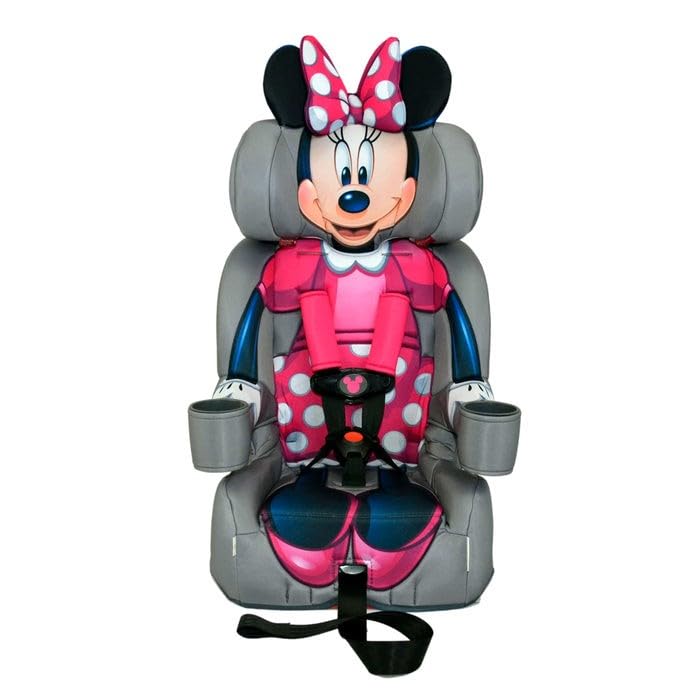
1. KidsEmbrace 2-in-1 Car Seat (Disney Minnie Mouse)
Our pick — over 4.5★ from 20,000+ verified ratings; the strongest balance of quality and price.
The crowd favorite that makes safety feel like a treat and installation a five-minute job.
The KidsEmbrace covers a far wider range right from the start, so you likely buy only one seat. Its harness mode (a 5-point strap system) accepts children as small as 26.5 pounds and goes up to 65 pounds, so a skinny toddler fits fine. The height range starts at 29 inches, covering 29″–49″ in harness mode versus the Cosco Finale DX’s 43.4″–49″. When your child outgrows the harness, the booster mode handles 40 to 100 pounds and covers heights from 38 to 57 inches — versus the Cosco’s 43.4″–52″ booster height range. In real life: this seat can be the only one you buy from toddler years through the booster phase.
Owners rave about how easy it is to assemble and install. The LATCH system (lower anchors and a top tether) gives a stable fit, and the high-density foam padding keeps even restless kids comfortable on longer drives. The multi-position headrest, harness, and recline adjustments are all easy to reach without fighting the seat, and the deep cup holders get used daily. As buyers report, this seat is “Super easy to put together, lightweight, easy to install and adorable.” Quality is the most-mentioned praise — over a thousand owners single it out — and the 4.8 star average across tens of thousands of ratings backs that up.
What Wins Owners Over
- Wider harness range (26.5–65 lbs) fits younger, smaller toddlers than most competitors.
- One-year limited warranty and reputation for durable construction.
- Double cup holders are deep enough for water bottles and snacks.
The Honest Trade-Off
- Some owners find the harness a bit tricky to tighten compared to loosening it.
- The character design (Minnie Mouse) may not appeal to every child — the brand offers other themes too.
Reach for this if: you want one seat that starts early, grows long, and makes installation painless — the clear leader on comfort and range.
Think twice if: you need the lightest possible seat for frequent car-to-car moves or you prefer a lower upfront cost.
2. Safety 1st Boost-and-Go 3-in-1 Harness Booster Car Seat, High Street

A slim, lightweight seat designed to squeeze three across the back seat without the usual wrestling match.
The Safety 1st is built narrow so you can install three across in a standard back seat — a real advantage for families with multiple kids or regular carpools. It starts in harness mode at 30 pounds and goes to 65 pounds, with a height range of 34.4 to 49 inches, then converts to a high-back or backless belt-positioning booster (a booster that positions the car’s seatbelt correctly) that handles 40 to 100 pounds and up to 57 inches tall. The headrest adjusts to seven positions with one hand, useful when your child has a sudden growth spurt between car trips.
Comfort is the standout here — 20 owners note it positively, and some report their child can sleep in the seat without neck discomfort, which is rare in a booster at this price tier. The cup holders are removable and dishwasher-safe, and the cover is machine-washable and dryer-safe. That said, installation draws mixed feedback: the basic hook-style LATCH clips can be hard to unhook, and as owners mention, “Installation is hard to figure out, depending on your car.” The seatbelt route is actually the simplest path to a tight fit, so newer parents may want to read the manual carefully. The strap accessibility is also a minor frustration for some.
Best for tight spaces: the slim profile and lightweight design make it a natural for carpools or second-car duty. Not for first-time installers: the LATCH system is less forgiving than competitors, so budget time to figure out the fit in your specific vehicle.
Grab it for: a compact, comfortable seat that fits three across and cleans up easily. Look elsewhere if: you want the easiest possible installation or a harness that starts at a lower weight.
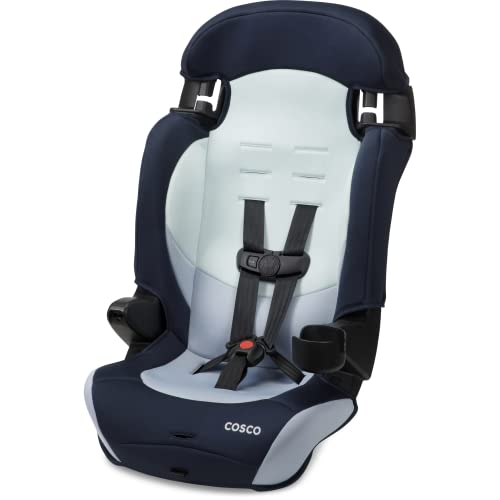
3. Cosco Kids Finale DX 2-in-1 Booster Car Seat, Rainbow
The featherweight that slides between vehicles without complaint — ideal for grandparents and carpool parents.
If you have ever hauled a 25-pound car seat from one car to another while holding a toddler, you will feel the difference the moment you pick up the Cosco Finale DX. It is notably lightweight and narrow, designed to fit three across the back seat of most vehicles. The trade-off: the harness mode starts at 40 pounds and 43.4 inches tall — so it is aimed at the older toddler or preschooler who has outgrown a convertible seat, not a younger 2-year-old. The booster mode covers 40 to 100 pounds and tops out at 52 inches, which is 5 inches shorter than the KidsEmbrace and Safety 1st.
Owners consistently praise the comfort and value — comfort is the number-one positive aspect, mentioned by 19 buyers, and the lightweight design earns 9 mentions. As customers note, this seat “replaced another car seat” and was noticeably cheaper than the harness-options competitor. The removable, machine-washable pad and dishwasher-safe cup holder are practical touches that make post-snack cleanup fast. However, the functionality gets mixed feedback: a minor but real issue is that occasional units arrive missing a cup holder, and some owners find the straps can be finicky to adjust.
The carpool hero: light enough for daily transfers and cheap enough to buy a second one without wincing. The limitation: the harness mode’s 40-pound minimum means many 3-year-olds won’t fit yet, so check your child’s current weight before buying.
Perfect for: families who need a lightweight, affordable seat for a taller/older child and move it between cars often. Pass on it if: your toddler is still under 40 pounds or you want the widest height range in booster mode.
Understanding the Specs
Harness Mode vs Booster Mode
A combo car seat works in two phases. Phase one uses a 5-point harness (straps over the shoulders, hips, and between the legs) for younger children, typically from around age 2 to about age 5. Phase two removes the harness so the child uses the vehicle’s own seatbelt, sitting on the booster shell to get proper belt positioning — this usually lasts until the child is big enough to sit without a booster, often around 4-foot-9. The weight and height ranges for each phase are printed on the seat; you switch modes when the child exceeds the harness limits but still fits the booster limits.
LATCH vs Seatbelt Installation
LATCH (Lower Anchors and Tethers for Children) uses metal connectors built into the car seat that clip into anchors in the vehicle’s seat crease. It is often faster and easier to get tight, but most vehicles have a weight limit (often 65 pounds total including the seat) for the lower anchors. Above that weight, you must switch to the seatbelt path. A good combo car seat will have clear labels for both methods. The top tether — a strap that hooks to a bolt behind the vehicle seat — is mandatory for forward-facing seats and significantly reduces head movement in a crash.
Height Range and Headroom
The harness height range tells you how tall your child can be while still using the 5-point harness. A seat that starts at 29 inches (like the KidsEmbrace) fits a younger, shorter child, while a seat starting at 43.4 inches (like the Cosco Finale DX) is only for children already past the toddler stage. The booster height range tells you when the child is too tall for the booster entirely — once the tops of the ears are above the vehicle seat or headrest, it is time for a different seat or no booster at all.
Adjustability and Recline
A seat with a multi-position headrest lets you raise the harness height as the child grows, which is critical for safe fit (the harness should be at or just above the shoulders in forward-facing mode). A recline feature is less about sleep and more about preventing the child’s head from slumping forward — important for neck safety, especially on long trips. The best seats combine these adjustments into one smooth mechanism so you don’t need a screwdriver or an extra hand to make changes.
FAQ
What is the minimum age for a forward-facing combophone seat?
Can I use a combo car seat for a newborn or rear-facing infant?
How do I know when to switch from harness mode to belt-positioning booster mode?
Will a combo car seat fit in a small car or coupe?
How do I clean a combo car seat?
What does the top tether do and is it required?
How long does a combo car seat typically last?
What is the difference between a 2-in-1 and a 3-in-1 combo car seat?
Can the cup holders be removed for car washes?
Which seat is easiest to move between multiple vehicles?
Final Thoughts: The Verdict
For most families, the combo car seat winner is the KidsEmbrace 2-in-1 because it covers the widest range of child sizes in both harness and booster mode, installs easily with LATCH, and carries the highest owner satisfaction backed by tens of thousands of reviews. If you need a narrow lightweight seat for a heavier preschooler that fits three across, the Safety 1st Boost-and-Go is the smart choice. And for the best value in a lightweight, carpool-ready seat that handles the older toddler years while staying affordable, the Cosco Kids Finale DX is the one to reach for.
How We Picked
We do not accept paid placement. Every pick is matched to a real buyer and a real use-case; we do not hands-on test units.
Sources & Methodology
Specifications: manufacturer listings and product documentation. Review insights: verified customer reviews, as of July 2026. Pricing: not shown on this page (it changes often); check the current price via the retailer link.
As an Amazon Associate, WellFizz earns from qualifying purchases. This does not affect which products we feature.
Related Guides

Mo Maruf
I created WellFizz to bridge the gap between vague wellness advice and actionable solutions. My mission is simple: to decode the research and give you practical tools you can actually use.
Beyond the data, I am a passionate traveler. I believe that stepping away from the screen to explore new environments is essential for mental clarity and physical vitality.