Our readers keep the lights on and my smoothie glass nicely filled. As an Amazon Associate, I earn from qualifying purchases.
Specs are compiled from manufacturer listings and verified buyer reviews and can change over time — please confirm the key details on the product page before buying.
You want headphones that seal out the world so you can hear every detail in your music, game, or mix. Open-back designs let sound leak out and let noise in. These sealed over-ear models build a quiet bubble around your ears, so the bass stays punchy and your neighbors do not hear you replaying the same track for the fourth time.
I’m Mohammad Maruf — the founder and writer behind WellFizz. This guide is built by comparing the manufacturers’ published specifications and the patterns across verified customer reviews, so you get each pick’s real strengths and trade-offs instead of marketing spin.
Below, we break down nine models that dominate the conversation around best closed back wired headphones, from studio standards to wood-cup surprises, so you can match your ears and your budget to the right pair.
Our Picks at a Glance


How To Choose The Best Closed Back Wired Headphones
Start with how you listen versus where you listen. Focus on three factors: driver size (the small speaker inside the earcup), impedance (power needed), and whether the cable detaches.
Driver Size and Sound Character
The driver (the small speaker inside each earcup) largely determines bass depth and detail resolution. Larger drivers, like 50mm or 60mm models, tend to move more air — you feel sub-bass rumble more than you hear it. Smaller 40mm drivers often focus on tighter, neutral mids (mid-range frequencies like vocals and guitars) for critical listening.
Impedance and Your Source Device
Impedance (measured in ohms) tells you how much power the headphones need to get loud. Lower impedance — around 32 to 48 ohms — works well straight out of a phone or laptop. Models at 150 ohms or higher usually deliver their best performance with a dedicated headphone amplifier (a device that boosts the signal for clearer, louder sound) or a quality USB dongle (a small adapter that improves audio output from a computer or phone).
Cable Type and Build Longevity
A detachable cable is a small luxury that saves you from throwing away an otherwise perfect pair of headphones when the wire frays. Fixed cables are common on older studio standards and are often thicker, but you cannot replace them without soldering (melting metal to join wires). Look for locking connectors (cables that click securely into place) if you plan to move around during use.
Quick Comparison
| Model | Best For | Driver Size | Impedance | Cable | Amazon |
|---|---|---|---|---|---|
| Audio-Technica ATH-M50X★ Best Overall | Versatile studio & everyday listening | 45mm | 38 Ohms | Detachable (3 cables incl.) | Amazon |
| AKG K371Best Value | Neutral reference on the go | 50mm | 32 Ohms | Detachable (mini-XLR) | Amazon |
| Sony MDR7506Pro Studio Standard | Industry-standard pro reference | 40mm | — | Fixed (9.8 ft cord) | Amazon |
| Shure SRH440A | Budget studio monitoring | 40mm | — | Detachable, locking | Amazon |
| AKG K361 | Lightweight portable mixing | 50mm | — | Detachable (2 cables incl.) | Amazon |
| FiiO FT1 | Audiophile home listening | 60mm | — | Detachable (3.5mm & 4.4mm) | Amazon |
| Shure SRH840A | Professional studio mixing | 40mm | 40 Ohms | Detachable, locking | Amazon |
| beyerdynamic DT 770 Pro X | Fatigue-free critical listening | 45mm | 48 Ohms | Detachable (mini-XLR) | Amazon |
| Sennheiser HD 620S | Spacious closed-back for desktop | 42mm | 150 Ohms | Detachable | Amazon |
In‑Depth Reviews
1. Audio-Technica ATH-M50X Professional Studio Monitor Headphones
Our pick — over 4.5★ from 33,500+ verified ratings; the strongest balance of quality and price.
Loud, balanced, and built like a tank — the crowd favorite for a reason.
You hear every detail clearly. Owners call the sound “extremely balanced” and note you can run the ATH-M50X at volume level 2 out of 10 and still pick out each instrument. The 45mm drivers (the speakers inside each earcup) use rare earth magnets (powerful magnets that improve clarity) and copper-clad aluminum wire voice coils (wires wrapped around a magnet that turn electrical signals into sound), which gives you deep, accurate bass without muddying the mids (mid-range frequencies like vocals and guitars). The circumaural (around-the-ear) design seals sound in and noise out, helpful in a noisy room.
You get three detachable cables — a coiled one and two straight ones of different lengths — plus a 6.3mm adapter (a larger plug for studio gear) for studio gear. The earcups swivel 90 degrees for one-ear monitoring, and the whole thing folds flat for a bag. Sound quality is the single most-discussed strength by a huge margin, and build quality draws nearly as much praise. The honest trade-off? Fit is a mixed bag: some find the earcups snug and secure, while a few wish the pads were larger for bigger ears.
What wins people over
- Exceptional clarity and detail across the full frequency range
- Very loud from any device — no amplifier needed
- Solid metal construction and durable swivel hinges
The real-world catch
- Earpads fit smaller ears best; some buyers swap them for larger aftermarket pads (third-party replacements)
- Sound signature leans a bit bright — not a purely flat reference monitor
Reach for this if: you want one pair for studio, gaming, and everyday listening that punches well above its weight.
Look elsewhere if: you have very large ears or prefer a completely neutral, uncolored sound signature for critical mixing.
2. AKG Pro Audio K371 Wired Over-Ear Closed-Back Headphones
Neutral sound that rivals pricier cans — if you can live with the quirks.
The K371 is engineered to match the AKG reference response curve, which means you hear the recording as it was meant to be heard. The 50mm titanium-coated transducers (the driver coating that reduces distortion) with oxygen-free copper voice coils (purer copper that transmits audio more cleanly) deliver a neutral presentation with a slight sub-bass bump that adds warmth. Enthusiasts praise its soundstage and imaging.
You get a mini-XLR detachable cable system (a small locking connector common in pro audio) — a 3-meter coiled, a 3-meter straight, and a 1.2-meter straight are all included — plus a 3.5mm to 6.3mm adapter and a carrying pouch. The 32-ohm impedance means your phone or laptop drives them without strain. The known downsides: build quality reports are mixed, with a few owners noting the elastic headband threads or adjustment mechanism can loosen over time, and the cables can be slightly microphonic (they transmit handling noise, like rustling against your clothes, to your ears).
The sound-to-value ratio: Owners consistently call this the best closed-back under premium pricing, with a spacious, analytical sound that makes gaming directional audio and studio details come alive.
The honest fit note: the earpads are large and comfortable, but the clamping force is light — the headphones may shift on your head if you move around actively.
Best for: critical listeners who want a reference-neutral signature from a headphone that folds up and goes anywhere.
Not ideal for: anyone who needs rugged, abuse-proof daily carry or a bass-heavy “fun” sound.
3. Sony MDR7506 Professional Large Diaphragm Headphone
The 40-year-old industry legend.
The Sony MDR7506 is everywhere — recording studios, radio booths, film sets — for good reason. Its 40mm neodymium drivers (a powerful type of magnet that improves driver efficiency) produce a famously clear, detailed sound with bright treble that reveals flaws in a mix without being harsh. The closed-ear design gives you outstanding passive noise reduction (blocking sound through the physical seal of the earcups), so you hear your audio and not the room.
At this price, the MDR7506 outperforms many competitors. The sound quality is the single most-praised feature, mentioned over 4,000 times by owners, with build quality and value for money also standing out. The included soft case and gold-plated 1/4-inch adapter (a larger plug for professional gear) make it travel-ready. The key trade-off is the fixed 9.8-foot cable — it is heavy-duty and durable, but you cannot detach or replace it, and some find it too long for portable use. A small number of owners also find the fit a bit tight on larger heads, though the soft earpads break in over time.
The durability story: owners say these last 10 to 20 years with simple earpad replacements, making them a true buy-it-for-life option in a world of disposable electronics.
The one-amp-up note: they sound decent from a phone, but benefit noticeably from a dedicated headphone amplifier (a device that boosts the audio signal) or quality audio interface (a box that connects microphones and instruments to a computer).
Reach for this if: you need a reliable, revealing reference pair for critical listening, voice-over work, or mixing — and you are fine with a permanently attached cable.
Think twice if: you want a detachable cable, a bass-boosted sound, or a pair you can easily shove into a backpack every day.
4. FiiO FT1 Closed-Back Over-Ear Headphones

Solid walnut, 60mm drivers, and a sound that makes you question your other headphones.
The FT1 is the surprise hit of the list. Its 60mm nano wood fiber composite diaphragms (the thin, vibrating part of the driver made from a wood-based material) are the largest here, and they deliver bass extension (the ability to reproduce very low frequencies) and texture. The sound is warm, deep, and smooth — the mids are “mesmerizing” and the treble avoids any sharpness. The North American black walnut solid wood ear cups are not just beautiful; the high-density wood also cuts down internal cavity resonance (unwanted vibrations inside the earcup).
Build quality is the second-most praised feature, and it shows in the details: a steel ball slide rail headband, suede fabric contact area, and two oxygen-free copper silver-plated cables (purer cables that reduce signal loss) — one 3.5mm single-ended, one 4.4mm balanced (a type of connector that reduces noise for clearer sound). Owners call this a daily driver for 2025 and beyond. The honest caveat: the stock cables can be a little microphonic (you hear them rub against your clothes), and this pair really shines with a quality DAC (digital-to-analog converter — a device that turns digital audio files into analog sound) or headphone amp — a dongle like the FiiO K11 is a natural pairing.
The value proposition: owners routinely say “the hype is real” — the FT1 delivers a full-bodied, musical sound that makes electronic, ambient, and acoustic tracks feel alive.
Best for: home listeners who value build artistry and want a warm, rich sound that digs deep into the bass without losing clarity.
Not for: on-the-go use (these are bulky and wired-only) or bass-heads who want an exaggerated sub-boom.
5. beyerdynamic DT 770 Pro X Wired Over-Ear Headphones

Fatigue-free all-day listening with detail retrieval that finds mistakes in your mix.
The DT 770 Pro X brings beyerdynamic’s latest STELLAR.45 driver technology (a custom-designed 45mm driver), delivering what many call “studio-quality sound” with crisp treble detail and a clean, tight bass that stands out for electronic and EDM. The closed-back design provides excellent passive noise isolation — owners say it blocks surrounding conversation as well as many active noise-canceling headphones (which use electronics to cancel sound).
Comfort is the second-most praised aspect after sound quality. The soft velour ear pads (a plush, velvet-like fabric) and ergonomic headband make hours-long sessions genuinely comfortable. The 48-ohm impedance works well with interfaces, laptops, and DACs alike. The detachable cable uses a locking mini-XLR connector (a small, professional audio plug that clicks into place), so it stays put during active use. The trade-offs: the treble can be a bit bright for listeners who prefer a warm, laid-back sound, and the fit can feel tight for some head shapes during the first weeks of use (the headband clamp loosens over time).
The longevity angle: every part — earpads, headband, cable — is replaceable, and the unit is hand-assembled in Germany, which owners point to as a reason these last for years.
The cable quirk: the stock cable transmits some movement noise (microphonics) and is quite long, best suited to a stationary desk setup.
Best for: producers, editors, and gamers who spend long hours in front of a screen and want a detailed, isolating headphone with parts you can replace forever.
Skip if: you are sensitive to treble peaks or want a headphone that folds flat for transport.
6. Sennheiser HD 620S Closed-Back Over-Ear Headphones
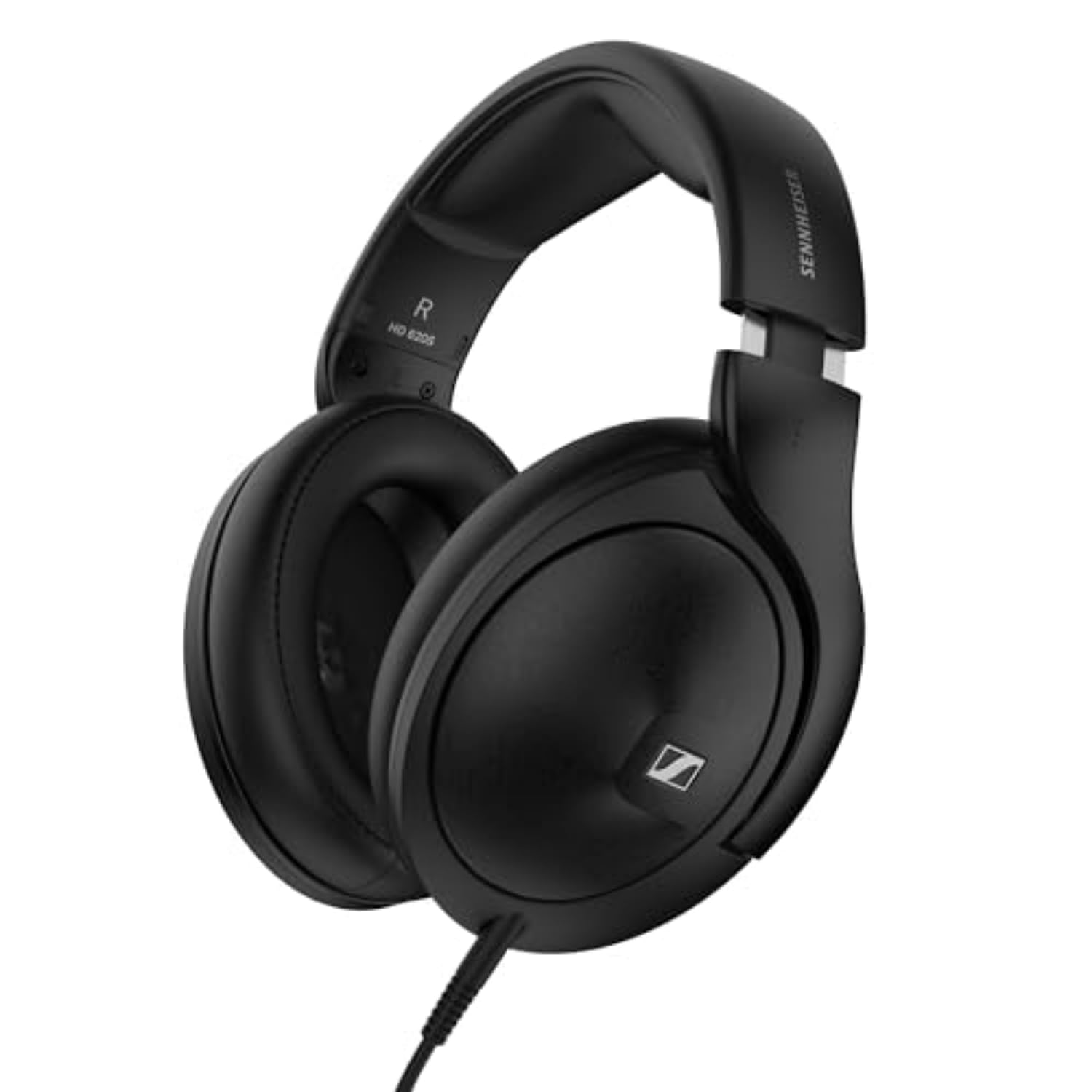
Sennheiser’s 6-series sound now comes with a closed back. It is as good as it sounds.
The HD 620S solves the classic closed-back problem: a narrow, “in-your-head” soundstage (the sense that sound comes from inside your skull rather than around you). An open baffle system (a design that lets the driver breathe for more natural sound) and angled 42mm transducers create a spacious, natural sound that rivals open-back designs — the treble is smooth and silky, the mids are rich, and the bass is present and controlled. Owners say this represents the same versatile Sennheiser 6-series DNA, but in a closed form factor.
The build is classic Sennheiser: steel-reinforced headband slider, sturdy earcups, and soft artificial leather pads that stay comfortable for hours. It includes a 1.8-meter detachable cable and a 3.5mm to 6.3mm adapter. Sound quality is by far the most-praised feature here, with owners also noting the excellent closed-back isolation and solid construction. The catch: the 150-ohm impedance means you really need a dedicated headphone amp (a device that boosts the audio signal) or a powerful USB dongle to get the best out of these — they will not reach their full potential from a standard phone or laptop jack.
The soundstage surprise: listeners call it a revelation for a closed-back — wide, layered, and detailed enough for critical music production, with some noting it rivals the HD600 series for clarity.
Reach for this if: you have a desktop headphone amp and want a closed-back that sounds as spacious as an open-back, with Sennheiser’s signature balanced tonality.
Look elsewhere if: you plan to drive these from a phone or laptop alone, or you are on a strict budget.
7. Shure SRH840A Professional Over-Ear Wired Studio Headphones

Controlled bass, detailed mids, and a lock-in cable that never wiggles loose.
The SRH840A is built for the studio, and it shows. Its tailored frequency response (how the headphones reproduce different pitches) delivers controlled bass, articulate mids, and extended highs that make mixing and editing decisions easier. The circumaural (around-the-ear) closed-back design contains your audio and keeps room noise out. The detachable locking cable system is a standout here — it clicks firmly into place, so accidental tugs do not cut your session short.
The padded headband and plush ear cushions keep pressure off during extended use, and the collapsible build means it stows in the included carrying pouch. Sound quality is the most-praised feature by a wide margin, with build quality not far behind. The natural tonality gets frequent praise — owners say it avoids ear fatigue even after hours of use. The realistic caveat: the fit is snug and works best for average-to-medium head sizes, and a few owners note the midrange can feel less prominent for rock mixing compared to EDM or hip-hop.
One honest comparison: owners who have tested both call this a clear step up from the M50x and DT 770 Pro for natural, fatigue-free listening, though it trails the DT 770 Pro in bass impact.
Best for: recording engineers, podcasters, and content creators who need a neutral, comfortable monitoring headphone with a secure cable.
Not for: bass-driven casual listening or heads that need a very loose, easy fit.
8. Shure SRH440A Over-Ear Wired Studio Headphones

Accurate, lightweight, and detachable — the SRH440A punches above its price point.
The SRH440A delivers accurate studio-grade audio with an extended frequency response (the range of pitches it can play) from 10Hz to 22kHz, so you hear deep bass rumble and airy highs. It is a notable upgrade over typical gaming headsets — owners who switch say the clarity immediately stands out. The 40mm neodymium drivers (powerful magnet-based drivers) provide a balanced, detailed sound signature that works well for monitoring (listening for flaws in a mix), mixing (adjusting audio levels), and critical listening.
At just 268 grams, this is one of the lightest closed-back studio headphones you will find. The collapsible design and adjustable headband make it easy to carry, and the detachable locking cable adds reliability. Sound quality and overall quality are the top two praised aspects. The honest downsides: the fit is on the snug side — some owners say the headband runs a bit short, so you need to position the earcups carefully for proper alignment, and the earpads themselves are less plush than premium models. Build quality also gets a mixed verdict; most are happy, but a few question long-term durability compared to Shure’s own SRH840A.
The musician’s take: drummers, guitarists, and vocalists report “not a lot of bleed and the sound qualities are excellent” — meaning the closed-back isolation and audio clarity work well for tracking instruments alongside a microphone.
Best for: budget-conscious musicians and podcasters who need a lightweight, accurate monitor that travels well.
Think twice if: you have a larger head or need maximum plush comfort for eight-hour sessions.
9. AKG Pro Audio K361 Wired Over-Ear Closed-Back Headphones

50mm drivers in a featherweight frame — the K361 delivers sound far beyond its weight class.
The AKG K361 uses 50mm drivers — versus the Shure SRH440A’s 40mm drivers — which gives it an advantage in low-frequency presence (deeper bass) and overall air movement. The sound is accurate and neutral with a mild bass lift, clear mids, and no harsh peaks in the highs. Its closed-back, oval over-ear design isolates well while keeping the weight down for long sessions.
You get two detachable cables (a 3-meter straight and a 1.2-meter straight), a 3.5mm to 6.5mm adapter, and a protective carrying pouch. The foldable, notched hinge and slow-retention foam ear pads (foam that returns to shape slowly for a better seal) add to the comfort. Owners praise the “excellent sound quality for the price” and note the vocal clarity is particularly strong. The known trade-offs: the build quality receives mixed feedback — some owners find the headband and adjustment mechanism less sturdy than premium competitors, and the locking plug cable uses an unusual size that makes finding a replacement non-OEM cable more difficult. An occasional unit has durability issues, though customer service is noted as responsive.
The value angle: this is a common recommendation for entry-level mixing because the low-impedance, flat sound signature (a neutral audio profile without big bass or treble boosts) makes recordings translate well without an amplifier.
The fit note: slow-retention foam pads are comfortable but can feel slightly warm over time; the overall clamping force is light, which works well for glasses wearers.
Best for: budget-conscious producers and gamers who want a lightweight, neutral-sounding closed-back with a detachable cable and foldable design.
Not for: rough daily carry or listeners who prioritize bass impact over midrange clarity.
Understanding the Specs
Driver Size
The driver (the small speaker inside the earcup) moves air to create sound. A larger driver, like 50mm or 60mm, can push more air — you hear and feel deeper bass with more texture. Smaller 40mm drivers tend to be faster and more controlled, giving you a neutral, analytical sound for critical mixing. Neither is “better”; the right size depends on whether you prioritize rumble or precision.
Impedance
Impedance (measured in ohms) tells you how much electrical resistance the headphones put up. Lower numbers (32 ohms to 48 ohms) need less power, so your phone, tablet, or laptop can drive them to decent volume. Higher numbers (150 ohms or more) often sound better and more controlled — but they need a headphone amp (a device that boosts audio power) or a powerful audio interface (a box that connects microphones and instruments to a computer) to really open up. Plugging 150-ohm headphones into a phone usually gives you quiet, thin sound.
Detachable vs Fixed Cable
Two main types live here. A detachable cable lets you replace a worn or broken cord without buying new headphones — a serious longevity advantage. Look for locking connectors (mini-XLR or threaded 3.5mm) if you move around while wearing them. Fixed cables are often thicker and never unplug accidentally, but if a fixed cable frays internally, you are either soldering (melting metal to join wires) a new one or replacing the whole headphone.
Frequency Response Range
This shows the range of pitches the headphones can produce, measured in Hertz (Hz) — the unit for cycles per second. The human ear hears roughly 20Hz to 20,000Hz. A range that extends further in either direction — like 5Hz to 40,000Hz — does not mean the headphones are “better.” It means they are technically capable beyond human hearing, which often correlates with well-engineered drivers, but the real test is how they sound in the audible band.
FAQ
Can I use closed back wired headphones with my phone?
What is the difference between closed-back and open-back headphones?
Do I need a headphone amp for closed back wired headphones?
How long do closed back wired headphones last?
Are more expensive closed-back headphones always better?
What does impedance mean in headphones?
Can I use studio monitor headphones for gaming?
Will larger drivers always sound better?
How do I clean and maintain closed back headphones?
Why do some closed-back headphones have a mini-XLR connector?
Final Thoughts: The Verdict
If you want one dependable pick, the best closed back wired headphones winner is the Audio-Technica ATH-M50X because it strikes a near-perfect balance of balanced sound, huge volume, three detachable cables, and a build that survives years of daily use — all at a price that makes it the most popular recommendation in the category
Related Guides

Mo Maruf
I created WellFizz to bridge the gap between vague wellness advice and actionable solutions. My mission is simple: to decode the research and give you practical tools you can actually use.
Beyond the data, I am a passionate traveler. I believe that stepping away from the screen to explore new environments is essential for mental clarity and physical vitality.