Our readers keep the lights on and my smoothie glass nicely filled. As an Amazon Associate, I earn from qualifying purchases.
Specs are compiled from manufacturer listings and verified buyer reviews and can change over time — please confirm the key details on the product page before buying.
Planting a patch for bees is among the most satisfying things you can do for your yard — and the garden. The right clover draws in honeybees and native pollinators by the dozens, turns bare dirt into living green, and makes the whole space feel more alive. But not every bag of seed delivers the same results. Some are coated with treatments that slow them down, some are mixed with weed seeds, and others simply don’t germinate well in your climate. This guide breaks down the top clover picks so you can buy with confidence and watch the bees arrive.
I’m Mohammad Maruf — the founder and writer behind WellFizz. This guide is built by comparing the manufacturers’ published specifications and the patterns across verified customer reviews, so you get each pick’s real strengths and trade-offs instead of marketing spin.
With hundreds of planting experiences reflected in the review data, these seven varieties rise to the top for anybody searching for the best clover for bees — each chosen for its germination speed, pollinator appeal, and ease of establishment in different settings.
Our Picks at a Glance
How To Choose The Best Clover For Bees
Getting the right clover for your bees starts with understanding a few basics about the plant itself. Clover is a legume, which means it pulls nitrogen from the air and puts it into the soil — so it feeds your lawn or pasture while feeding the pollinators. Here are the key factors to weigh before you buy.
White Dutch vs. Red vs. Crimson: Which Bees Prefer
White clover is a low-growing perennial that blooms all season, making it a consistent nectar source. Red clover grows taller and has deeper flowers that longer-tongued bees love. Crimson clover is an annual that comes up fast with dramatic red blooms that are a magnet for honeybees. A mix like a tri-clover blend gives you flowers across spring, summer, and fall — the longest buffet for your bees.
Seed Coatings and Inoculants
Nitrocoated and inoculated seeds have a thin layer of beneficial bacteria and a moisture-retaining coating. That treatment gives you a stronger, faster germination — especially in poor or sandy soil. Uncoated seed is fine for fertile ground but takes more care with watering at the start.
Climate and Zone Match
Most clovers grow best in full sun to partial shade and suit a wide range of USDA zones. White Dutch clover is among the most adaptable (zones 3-10), while strawberry clover is bred for warmer zones (6A-9A). Always check the zone range for the seed you choose — a mismatch means poor winter survival or summer burnout.
Quick Comparison
| Model | Best For | Clover Type | Bag Size | Germination | Amazon |
|---|---|---|---|---|---|
| Outsidepride Ladino★ Best Overall | Large areas & forage | White (Ladino) | 5 lbs | 14 days | Amazon |
| Eretz Tri-Clover BlendBee Magnet | Continuous blooms | Three-part blend | 1 lb | Quick & vigorous | Amazon |
| Eretz Red Clover | Quick sprouting color | Red | 1 lb | Sprouts quickly | Amazon |
| Groundio Dutch Clover | Lawn & ground cover | White (Dutch) | 2 lbs | As fast as 4 days | Amazon |
| Eretz White Clover | Pure weed-free seed | White | 1 lb | 3 days | Amazon |
| Scotts Strawberry Clover | Drought & pet safety | Strawberry | 2 lbs | Variable | Amazon |
| Mountain Valley Crimson | Showy blooms & bulk | Crimson | 5 lbs | Very fast | Amazon |
In‑Depth Reviews
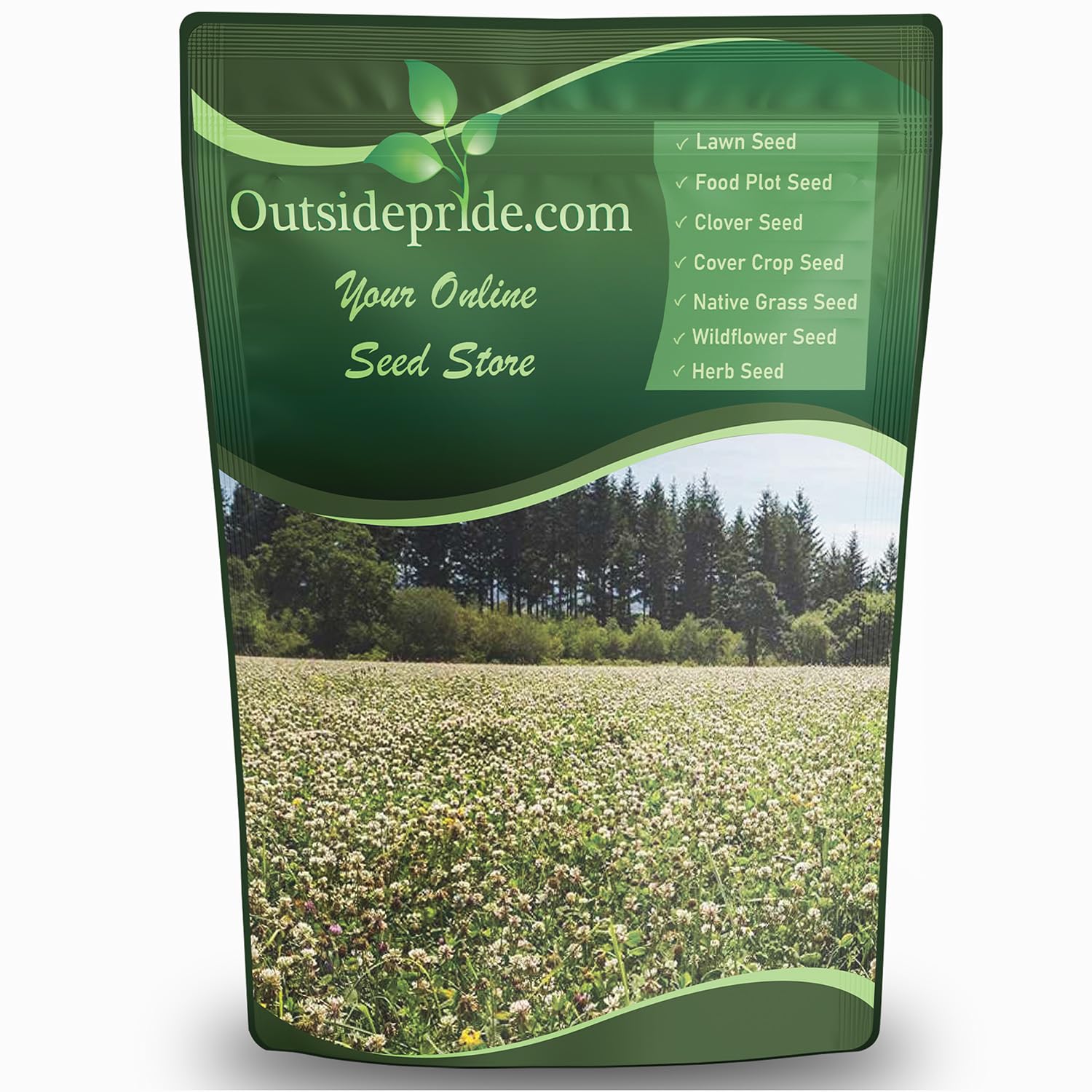
1. Outsidepride Perennial White Ladino Clover Seed
Our pick — 4.5★ from 550+ verified ratings; the strongest balance of quality and price.
The big bag of thick, bee-friendly forage that keeps coming back year after year.
This is the volume king for a reason — 5 pounds of nitrocoated, inoculated white Ladino clover that covers serious ground. Sow it at 8-10 lbs per acre or 1/2-3/4 lb per 1,000 sq ft, and you get a perennial that thrives across the widest possible climate range (USDA Zones 3-10). The germination is reliably quick — buyers report seeing sprouts filling bare spots roughly 14 days after planting, even when just broadcast over mowed grass without any soil prep. “Planted May 9 in mowed grass without prep,” wrote one owner, and the clover still filled in beautifully by early June. That is the kind of low-effort success that makes bee keepers and pasture managers come back for more.
The bees are the real winners here. The white blooms are a classic nectar source, and the plant’s drought tolerance means those flowers keep coming even when the rain lets up. The nitrocoating helps the seed hold moisture and improves germination in less-than-perfect soil, so you get a stronger stand with less babying. It is also a nitrogen-fixing powerhouse, enriching your soil while feeding your pollinators. The main trade-off is the sheer quantity — this bag is ideal if you have a large patch, a food plot, or a pasture; for a small suburban lawn it may be more than you need.
The crowd feedback is consistently positive: the most-discussed aspect among buyers is germination, with 65 owners singling it out, and the second-most is seed quality with 19 mentions. The general consensus is that it sprouts quickly, grows “like a weed,” and stays green and vigorous across multiple seasons — one owner noted it survived three winters without dying off. That is perennial clover doing exactly what it is supposed to do.
Why It Leads
- Massive 5 lb bag — enough for a quarter acre or more
- Perennial across zones 3-10, so it comes back every spring
- Nitrocoated and inoculated for stronger, faster germination in poor soil
- Highly palatable for livestock and wildlife — turkeys, deer, and rabbits visit too
The Scale Check
- More seed than a typical small lawn needs — you may have leftovers
- Can take a couple of weeks to germinate if conditions aren’t ideal
The field pick: If you have a large area, pasture, or food plot and want a proven perennial that brings bees by the hundreds, this is the bag to grab. It is the highest-rated and most-tested option on this list.
Scale note: For a small city garden or a few raised beds, a 1 lb bag would be more practical — this is a lot of seed to store.
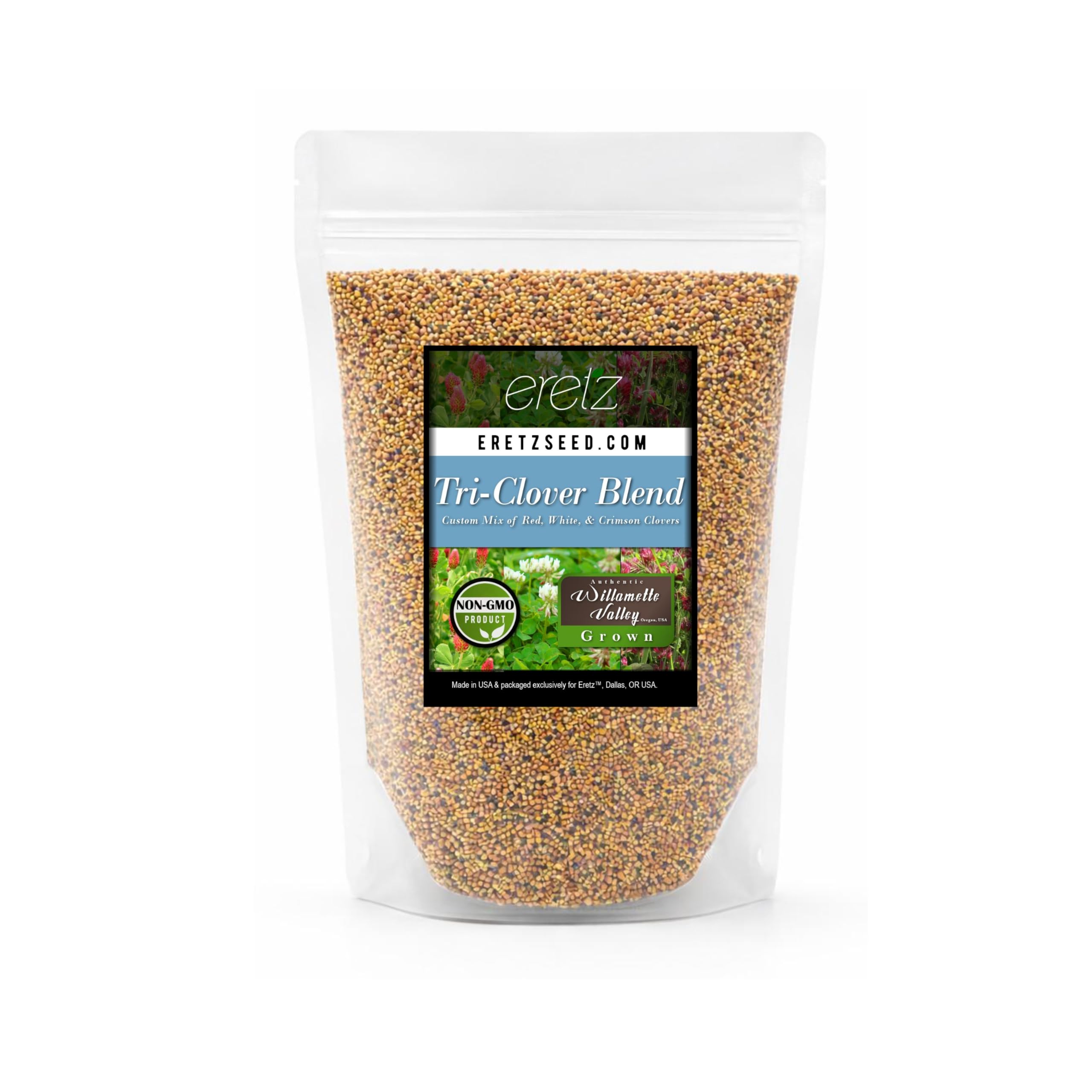
2. Eretz Tri-Clover Blend
A three-part blend that stretches the bee buffet from spring through frost.
Mix white, red, and crimson clover together and you get a bloom schedule that runs from spring into fall — and that is exactly what this Eretz blend delivers. It is a 1 lb bag of non-GMO, untreated seed grown in Oregon’s Willamette Valley, with no weed seeds, no fillers, and no coatings. The big selling point here is variety: the white clover stays low and spreads, the red clover grows taller with deeper flowers, and the crimson adds those showy red spikes that honeybees cannot resist. The blend improves and protects soil by fixing nitrogen, and the foliage adds organic matter when you till it under as green manure.
This clover grows very vigorously — one reviewer noted it “grew to over two feet tall, survived the winter in Oregon,” turning into thick bushes with pretty blossoms. Another planted it in poor Florida dirt where grass would not grow and said it “seemed to pop up overnight.” That kind of aggressive growth is great for covering bare ground and crowding out weeds, which owners confirm: it blocked about 90% of weed growth in one tested ditch. The catch? Some find it grows taller than expected for a ground cover, and the pink clover in the mix can be vulnerable to powdery mildew in humid gardens. The tri-blend is also the top-rated pick for the sheer number of bees it attracts — the summary notes “bees loving the plants” consistently.
The most-cited aspect in owner feedback is germination, with 36 mentions, and seed quality is the second most-discussed with 20. Owners mention quick, vigorous sprouting even in cool fall temps, and the blend survived a cold Northeast winter in one case, producing crimson flowers the following spring. For a continuous, varied nectar source in a single bag, this is hard to top.
The longest season: Because you get three different clover types, the bloom period is stretched over more months than any single variety can offer — that means more food for bees across spring, summer, and fall.
Height check: Some parts of this blend can hit two feet or more, so it suits meadows, orchards, and larger plots better than a manicured lawn.
The variety pick: Reach for this if you want the longest possible bloom season for your bees in a single plant-and-forget bag. It is unbeatable for biodiversity.
Skip it for: A low, uniform lawn look — the blend grows at different heights and includes taller red and crimson varieties.
3. Groundio Perennial White Dutch Clover Seed

Visible sprouts in as little as four days.
White Dutch clover has always been a favorite for lawn replacement and pollinator patches, and Groundio’s 2 lb bag delivers it with a nitrocoated, inoculated treatment that pushes germination speed to an impressive level. Buyers consistently report seeing sprouts within three to four days of planting — one owner in Austin, Texas, confirmed germination in just three days after adding topsoil and steady watering. The coverage is useful, too: the 2 lb bag covers up to 1,000 sq ft, which is the right size for a standard suburban front or back yard. It is a perennial that stays low (4-6 inches tall) and works across zones 3-10, so it comes back year after year with minimal effort.
This clover is a nitrogen-fixing machine, pulling nitrogen from the air and feeding it into the soil naturally. That means your lawn or garden gets a fertility boost without synthetic fertilizer. The dense foliage also suppresses weeds, retains soil moisture, and regulates ground temperature — practical benefits beyond the pollinator draw. The white blooms are an ideal nectar source for bees, butterflies, and other beneficial insects, and the clover itself is rich in protein, making it a natural forage for deer and livestock. The most impressive part is the resilience: customers note it survived mowing, hot Texas summers, cold frost, wet periods, and even disturbance from pets.
The trade-off is that uncoated seed needs consistent watering at the start. Some owners in very dry climates noted they had to water daily to get the fast germination they wanted. That said, once established, the plant’s drought tolerance and low maintenance make it a favorite. The top mentions across owner feedback are germination speed and seed quality, with the majority of buyers being repeat purchasers — one owner said “I’ve bought the two pound package TWICE and am very happy with these seeds.”
Speed & Value
- Sprouts in 3-4 days
- Covers 1,000 sq ft, ideal for a typical lawn or garden bed
- Survives tough conditions: heat, frost, dog traffic, and poor soil
- Nitrocoated for stronger germination right from the start
Needs Early Water
- Requires consistent daily watering during the first week for best results
- Some buyers felt the price per pound was high until they saw the germination rate
The fast-start pick: Grab this if you want to see green results within days and need a tough, low-growing perennial that thrives in most climates.
Think twice if: Your region is experiencing a drought with watering restrictions — the first week of daily watering is essential for this seed’s quick germination.
4. Eretz White Clover Seed
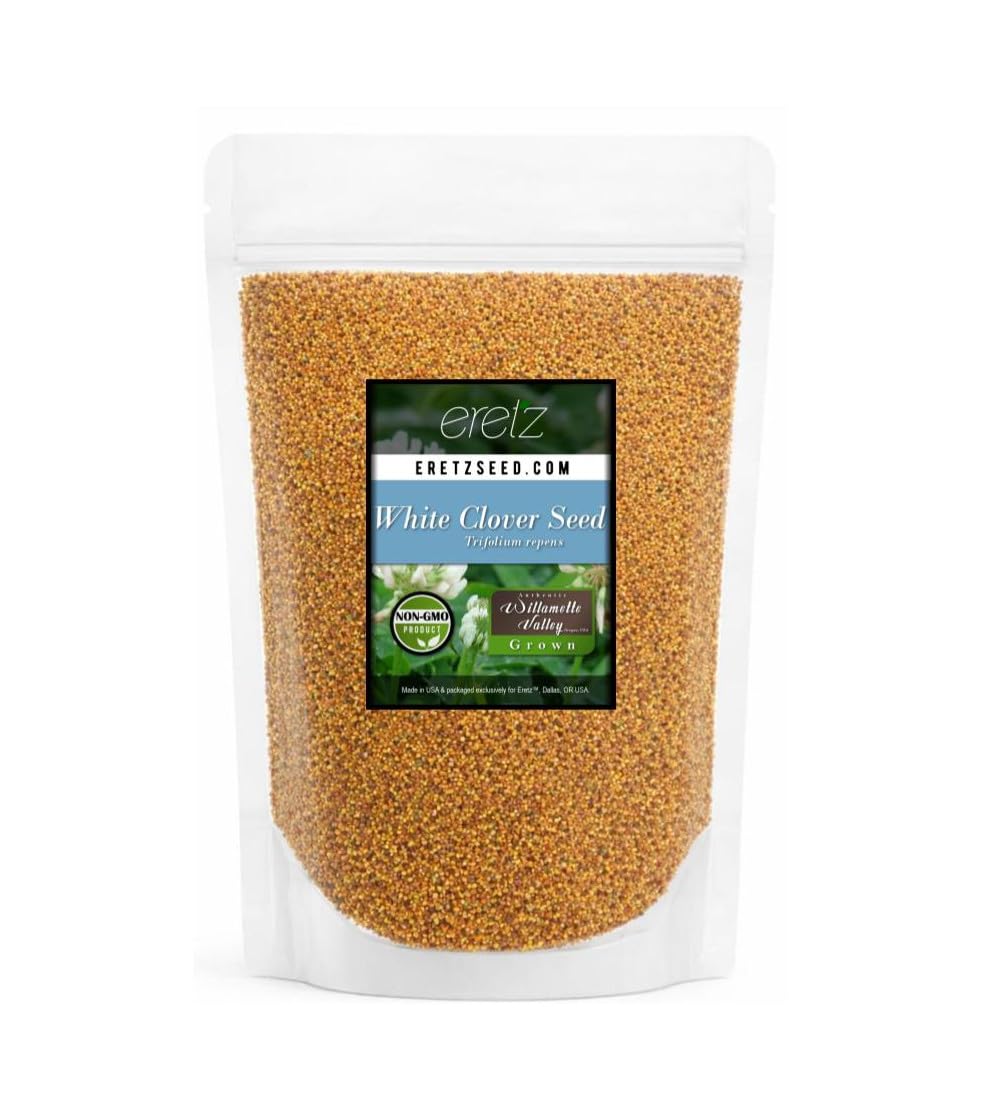
Uncoated, pure white clover that sprouted in three days for many buyers.
Eretz’s White Clover Seed is grown in Willamette Valley, Oregon, and sold as a clean, uncoated, 99% pure seed with no fillers, weed seeds, or treatments. That purity matters if you have ever planted a cheap bag of clover only to watch weeds take over alongside the clover. The majority of owners highlight this exact point — one buyer mentioned “I don’t see any weeds coming up with the baby clover” and considered the higher price per pound a worthwhile trade for the quality. The seed works as a garden cover, for food plots, berry patches, and vineyards, and it is famous among owners for how well it attracts bees and wildlife.
In terms of performance, this is a quick starter. Multiple reviewers point out seeing sprouts within three days of scattering the seed over topsoil. One owner described using it to overseed poor clay soil alongside fescue and said the clover actually outperformed the grass. The plant stays green longer than turf grass, survives moderate drought, and handles foot traffic well — qualities that make it a popular alternative for dog owners. “Buy now if you have dogs, chickens,” wrote one owner, noting the clover resisted urine damage and required mowing once a month versus twice a week for grass. That is a serious maintenance savings. The main caveat, referenced by a small number of owners, is that the clover may need reseeding after a tough winter in colder zones — it is not as perennial-hardy as the nitrocoated options in deep freezes. The seed quality and germination rates are still the strongest draws, with 56 buyers mentioning germination positively and 18 highlighting seed quality as a top feature.
The green and white blooms are a staple food source for honeybees throughout the growing season, and the nitrogen-fixing ability of the roots improves your soil health over time. For a smaller garden or a targeted bee patch, this one pound bag goes a long way without overwhelming you with quantity. As the owner of this seed, Eretz uses the same Oregon sourcing across its blends, so you get a reliable regional consistency.
The purity edge: The fact that 10 buyers specifically mention the weed-free quality of this seed tells you everything — when you buy clover to feed bees, you don’t want the bag to also seed your yard with invaders. This one stays clean.
The reseed note: In colder zones, some owners found it did not overwinter as reliably as coated seed; plan for a spring reseed in harsh winters.
The purity pick: Choose this when you want absolute confidence that every seed in the bag is pure white clover, with no fillers and no weed seeds to sabotage your patch. It is the cleanest buy on the list.
Skip for: Very large acreage — the 1 lb bag is better for smaller plots, garden patches, or targeted pollinator areas.
5. O.M. Scott & Sons Strawberry Clover Seed
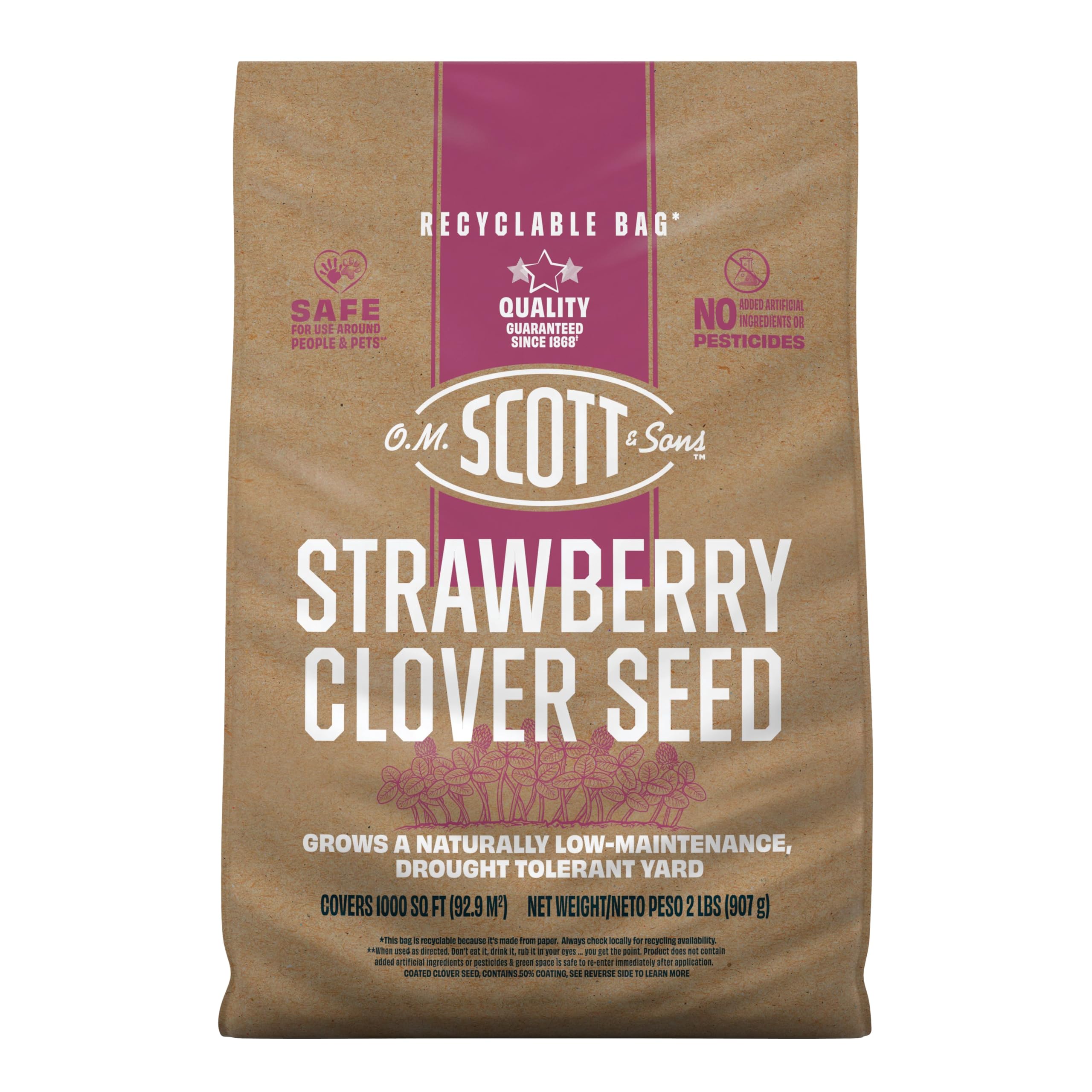
Strawberry clover with soft pink flowers, bred for warmer zones and pet-friendly yards.
Strawberry clover is a lesser-known cousin of the white Dutch varieties, and it brings a few unique advantages. It produces small pink flowers that are excellent for bees, stays lower and softer than many other clovers, and is notably more drought-tolerant — the manufacturer says it “stays greener longer during drought” than standard clover. This O.M. Scott & Sons bag is a 2 lb product designed for lawns in USDA Zones 6A-9A, so it is built specifically for warmer climates where traditional clover may struggle through the summer. The packaging is a recyclable paper bag, and the seed contains no added artificial ingredients or pesticides, making it safe to use around kids and pets when applied as directed.
The hands-on feedback is a mixed bag, which is worth noting. Many owners are delighted — one planted it in a burnt, dry area after a house fire and said it was “the only thing that grew,” creating a lush, green, durable ground cover that the family dog loved. Another described it as “easy, soft lawn filler” that is great for bare patches and bee lawns. However, a meaningful number of buyers, including one detailed account, reported 0% germination despite following the instructions exactly (tilling, daily watering). That inconsistency is the biggest risk here. The general sentiment is that the seed is highly viable when you get the watering and soil contact right (several owners mention using a thin layer of peat moss to hold moisture), but a dry spell or poor soil prep can kill the stand before it starts. For bee keepers, the pink flowers are a reliable draw — they attract honeybees and native pollinators throughout the bloom period. The nitrogen-fixing ability also helps improve poor soil over time, which is a bonus for any garden. The 2 lb bag covers 1,000 sq ft, and the recommended planting window is spring or fall when daily temps sit between 60°F and 75°F for two weeks. There is a clear quality variance that some buyers experienced, but those who succeed with it love the result.
The key distinction from the white clover options is the strawberry clover’s lower growing habit and pink flower color — it is less common and gives your bee patch a unique look. If you are in a warmer zone and want a low-maintenance alternative to grass that also feeds pollinators, this is your pick.
Warm Climate Edge
- Designed for USDA Zones 6A-9A, so it handles heat better than most white clovers
- Soft, low-growing texture that is comfortable for bare feet and pets
- Drought-tolerant — stays green longer when rain is scarce
- Safe for kids and pets, with no added pesticides or artificial ingredients
Germination Gamble
- Mixed germination reports — some owners got zero sprouts despite following instructions
- Requires very consistent watering and a thin peat moss layer for best results
- Not suited for colder climates below Zone 6A
The warm-zone pick: If you live in a hot climate (zones 7-9) and want a soft, pet-friendly, pink-flowered clover that bees adore and grass cannot match, this is the one to try. The drought tolerance is a genuine advantage.
The risk: Germination can be inconsistent — buy with the understanding that you may need to reseed a patchy area the next season.
6. Eretz Red Clover Seed
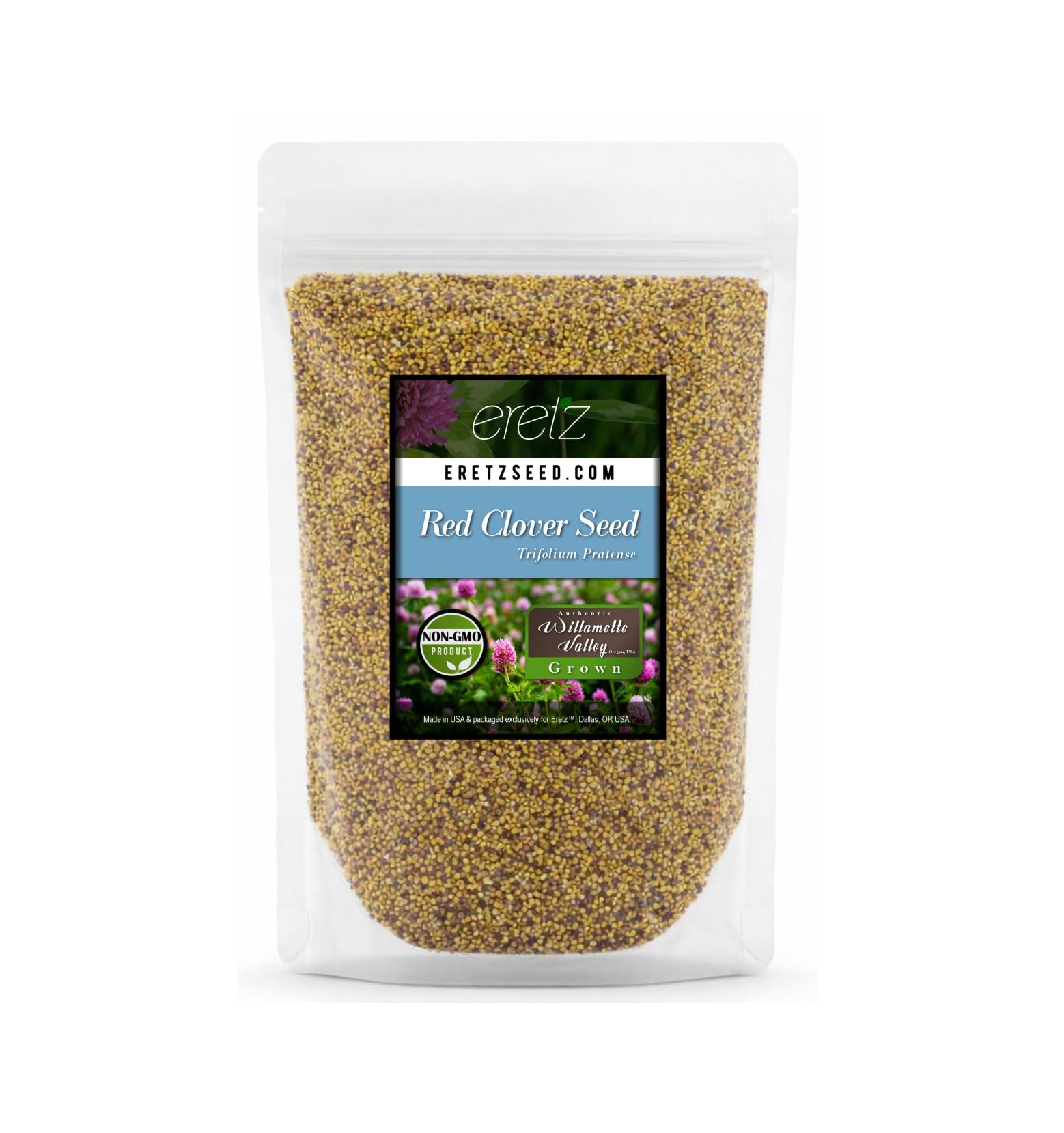
Budget-friendly red clover that sprouted quickly and brought in the bees.
Red clover is a classic choice for pollinators, and this Eretz 1 lb bag delivers it at the lowest entry price on this list. It is 99% pure seed, non-GMO, and grown in the Willamette Valley of Oregon with no coatings or fillers. The primary use is as a forage crop for livestock (cows, horses), a wildlife attractant for deer and rabbits, and — most importantly for this guide — a “great honey bee/pollinator attractant.” It works as an excellent cover crop, fixing nitrogen into the soil and controlling erosion while adding a rich red-pink-purple color to meadows and pastures. The seed is bare (no coating), so it relies on natural soil conditions and consistent moisture for germination. Buyers confirm it sprouts quickly when watered properly — one owner described it as “great seeds that sprouted very quickly” and said they planned to buy again. Another planted it to replace Bermuda grass and found the clover filled in the dead patches with green during fall, creating a much better look than the dormant grass.
The most commonly praised aspect of this seed is germination, with 38 owners mentioning it positively, and the second is seed quality with 17 mentions. However, there is a notable split on color: several buyers expressed disappointment that the flowers were not as vividly red as advertised. The summary notes the color feedback is “mixed,” not negative, so it is more about expectations than quality. A few owners also reported finding invasive weeds mixed into the bag, which is a risk with any uncoated, untreated seed. The fast germination and low cost make it an easy choice for budget-conscious bee keepers or anyone wanting to test red clover without a large investment. The 1 lb bag is small enough for a backyard patch but can be scaled up by buying multiple bags.
The bees will visit the pinkish-red flower heads enthusiastically, and the plant’s tall growth (up to 2-3 feet in good conditions) makes it a visual standout in any field or garden. For the price, this is a low-risk way to see red clover in action for your pollinators.
Budget Star
- Lowest price per bag on this list — great for testing or small patches
- Quick sprouting when watered properly, based on buyer reports
- Excellent for soil health — fixes nitrogen and works as cover crop
- Attracts honey bees, bumblebees, and wildlife (deer, rabbits)
The Catch
- Flower color is more pinkish-red than pure red for some buyers
- Uncoated seed needs consistent soil moisture — risk of poor germination in dry conditions
- A minor number of buyers reported weed seed contamination
The budget pick: Reach for this if you want to try red clover for your bees without spending much — the germination speed and seed quality are consistently praised by hundreds of owners.
skip it if: You need a guaranteed uniform red bloom color or require a coated seed for poor, dry soil.
7. Mountain Valley Seed Co Crimson Clover
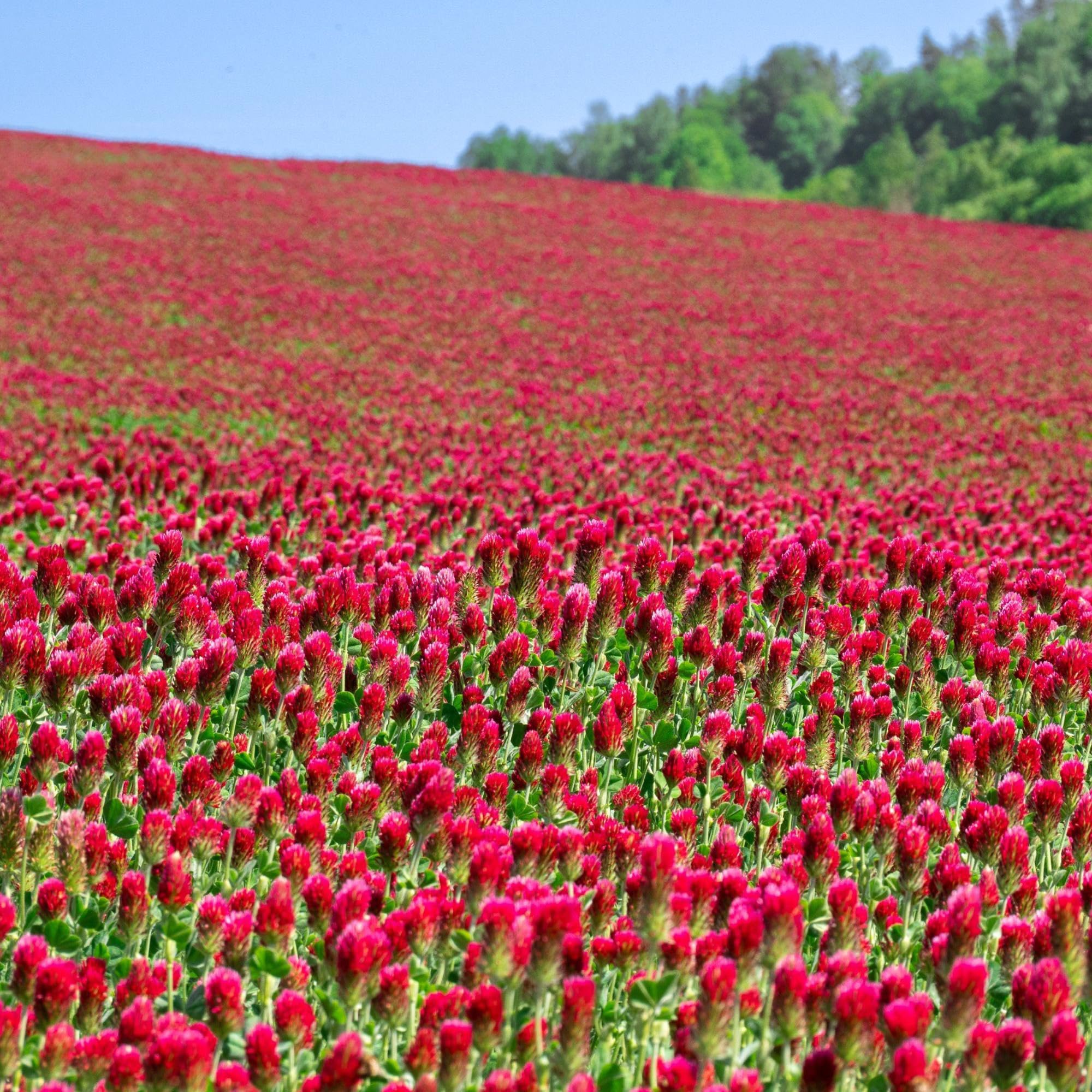
The gorgeous crimson bloomer that beekeepers buy by the 5 lb bag for honey production.
Crimson clover is a bee keeper’s secret weapon — its deep red, showy flower spikes are some of the most nectar-rich of any clover, and honeybees flock to them in droves. This Mountain Valley Seed Co bag is a 5 lb bulk sack of non-GMO, heirloom, open-pollinated Trifolium incarnatum seeds that mature in 70-90 days. The coverage specs are clear: sow at 1/2-3/4 lb per 1,000 sq ft or 20-30 lbs per acre, so this bag handles roughly 6,000 to 10,000 sq ft of planting area. The plant itself fixes up to 200 pounds of nitrogen per acre — an aggressive number that tells you how quickly it enriches tired soil. It is typically planted in late summer to early fall for overwintering, but can be sown nearly any time of year as a nitrogen-rich companion plant. The deep taproots improve soil tilth, structure, and water flow while suppressing weeds.
Owner experiences are overwhelmingly positive, with germination being the top-cited aspect (61 mentions) and seed quality the second (15 mentions). One buyer described it as “absolutely lush and beautiful,” noting it grew to about 18 inches tall with “super healthy” plants. Another mixed it 50/50 with inoculated white clover seed and said the results were “nothing less than surprising — clover all over.” The only recurring caveat among reviews is a color expectation conflict: a few owners felt the bloom color was not the deep crimson they expected, though the product summary notes it is a mixed reaction rather than a flaw. The bag size is substantial — 5 lbs with roughly 232,000 seeds — so it suits anyone planting a large area, food plot, or dedicated pollinator field. It also comes with a link to a free cover crop growing guide from Mountain Valley.
For bees, this is a premium choice. The tall, red flower heads are loaded with nectar that honeybees use for delicious honey production. The plant also serves as excellent winter grazing and hay when harvested in the pre-bloom stage, and whitetail deer are drawn to its high protein content. If you have the space and want a dramatic, productive, bee-attracting clover that doubles as a soil builder, this is the heavyweight to bet on.
Why Beekeepers Love It
- Massive 5 lb bag with ~232,000 seeds — covers up to 10,000 sq ft
- Fixes up to 200 pounds of nitrogen per acre — serious soil conditioning
- Grows to 12-18 inches tall with striking red flower spikes
- Excellent for honey production and attracts native bees and butterflies
Size & Expectations
- Annual clover — needs to be replanted each season (unlike perennial white clovers)
- Color can vary — some buyers found the blooms more pink than deep crimson
- 5 lb bag is a lot for a small garden; best for larger plots or fields
The bulk bloomer: If you have a large area to cover, want the richest red flowers that bees swarm over, and need a fast-growing annual that feeds the soil, this 5 lb bag is the most productive pick on the list. The 200 lbs/acre nitrogen fixation is a real advantage.
The annual trade-off: Unlike the white clover options that come back year after year, this one completes its life cycle in one season and needs replanting — plan accordingly.
Understanding the Specs
Annual vs. Perennial Clover
This is the single most important distinction for bee keepers. Perennial clover (like white Dutch or Ladino) comes back year after year from the same roots, giving you a long-term bee forage patch with one planting. Annual clover (like crimson) completes its life cycle in one season and must be reseeded each year. Annuals often grow faster and produce heavier blooms, but they require more work. If you want a low-maintenance bee lawn, go perennial. If you want a dramatic seasonal show for your bees and are okay with replanting, go crimson.
Nitrocoated and Inoculated Seeds
A nitrocoated seed has a thin, water-retaining coating that helps it hold moisture during the critical first days of germination. Inoculated means the seed is pre-treated with beneficial rhizobia bacteria that help the clover pull nitrogen from the air and fix it into the soil. Together, these treatments give you a much higher success rate in poor, sandy, or compacted soil. Uncoated seed is cheaper but demands more careful watering and richer soil to achieve the same result. For beginners or tough soil, coated seed is the safer bet.
Bloom Color and Bee Attraction
Bees are attracted to clover flowers primarily by scent and color, but different clover types appeal to different bee species. White clover has shorter flowers and is a favorite of honeybees, which have shorter tongues. Red clover has deeper tubes that bumblebees and long-tongued bees can access more easily. Crimson clover produces dense, upright red spikes that attract a wide range of pollinators, including butterflies. A blend of types ensures that more bee species visit your yard, and the prolonged bloom period (different types flower at different times) keeps them coming from spring to fall.
Drought Tolerance and Climate Zones
Not all clover handles dry periods the same way. White Dutch clover is known for good drought tolerance once established, but it needs consistent water during germination. Strawberry clover is bred specifically to handle heat and stay green longer in dry conditions, making it a better option for zones 7-9. Crimson clover is considered moderately drought-tolerant but performs best with consistent moisture. The USDA zone range printed on each bag is a reliable guide — stick within it for a healthy stand that survives your local winter and summer extremes.
FAQ
Which clover type is best for honeybees?
Will clover take over my lawn?
How long does it take for clover seeds to sprout?
Can I plant clover in the fall?
Does clover need full sun or shade?
Is clover safe for dogs and chickens?
Will clover attract bees to my yard if I am allergic?
How much clover seed do I need per square foot?
Does clover need to be mowed?
What is the difference between Ladino and Dutch white clover?
Final Thoughts: The Verdict
For the majority of shoppers, the clover for bees winner is the Outsidepride Perennial White Ladino Clover Seed because it delivers the best balance of scale, perennial reliability, and proven pollinator attraction across the widest climate range. If you want the longest possible bloom season with three clover varieties in one bag, grab the Eretz Tri-Clover Blend. And for the fastest visible results in a compact lawn-sized bag, the Groundio White Dutch Clover Seed is the one to reach for. Whichever you choose, your bees will thank you.
How We Picked
We do not accept paid placement. Every pick is matched to a real buyer and a real use-case; we do not hands-on test units.
Sources & Methodology
Specifications: manufacturer listings and product documentation. Review insights: verified customer reviews, as of July 2026. Pricing: not shown on this page (it changes often); check the current price via the retailer link.
As an Amazon Associate, WellFizz earns from qualifying purchases. This does not affect which products we feature.
Related Guides

Mo Maruf
I created WellFizz to bridge the gap between vague wellness advice and actionable solutions. My mission is simple: to decode the research and give you practical tools you can actually use.
Beyond the data, I am a passionate traveler. I believe that stepping away from the screen to explore new environments is essential for mental clarity and physical vitality.