Our readers keep the lights on and my smoothie glass nicely filled. As an Amazon Associate, I earn from qualifying purchases.
Specs are compiled from manufacturer listings and verified buyer reviews and can change over time — please confirm the key details on the product page before buying.
You want a machine that launches clay targets for practice or fun — but you do not want a second job just keeping it fed, reset, and pointed straight. The real headache with a clay pigeon thrower is not the throwing, it is how often you have to walk the field, reload a tiny hopper, or fix a jam. The best clay pigeon thrower skips that chore entirely, giving you either a big magazine or a fast reset so you stay behind the gun.
I’m Mohammad Maruf — the founder and writer behind WellFizz. This guide is built by comparing the manufacturers’ published specifications and the patterns across verified customer reviews, so you get each pick’s real strengths and trade-offs instead of marketing spin.
if you want backyard plinking or serious trap practice, these are the top options for anyone searching for the best clay pigeon thrower for a reliable, no-nonsense setup that keeps the targets flying.
Our Picks at a Glance

How To Choose The Best Clay Pigeon Thrower
Choosing a clay pigeon thrower depends on three things: how you use it, how much walking you want to do, and your budget for a battery setup. Manual throwers are cheap and simple but require a pull cord (and usually a helper), while electronic traps give you a fast 2.5-second recycle time and a big magazine so you shoot more and load less.
Power and Battery Requirements
The most common mistake is underestimating the power needed. Many electronic traps require a 12V deep cycle marine battery (a battery built to be drained and recharged repeatedly, unlike a car starter battery) to function reliably. A small lawn tractor battery can work for a few boxes of clays, but the best performance comes from a proper deep cycle source. Some models can even be modified to run on 18V tool batteries for a lighter, portable setup.
Hopper Capacity and Recycle Time
Hopper size — how many clays the machine holds at once — is your main reload timer. A 25-clay magazine keeps you shooting for a few minutes, while a 53-clay magazine feels like a marathon. Recycle time (2.5 seconds is the standard) determines how fast you can throw the next target after firing. Faster cycles mean more intense practice sessions.
Adjustability and Stability
Look for adjustable launch angle and spring tension — this controls arc and distance so you can shoot different stations or just vary the challenge. Stability is critical; a lightweight machine can lift or spin off its stakes on a full-power throw. Heavier builds (20+ lbs) or earth-staked legs keep the trap planted for consistent throws.
Quick Comparison
| Model | Best For | Capacity | Weight | Throw Range | Amazon |
|---|---|---|---|---|---|
| Champion Workhorse Electronic Trap★ Best Overall | Serious volume shooting | 53 clays | 30 lbs | Up to 75 yards | Amazon |
| Do-All Outdoors Fowl Play Electronic ThrowerTop Performer | Hunting simulation practice | 50 clays | — | 55+ yards | Amazon |
| Do-All Outdoors FF550 Firefly Automatic Trap | Portable auto trap | 25 clays | 27 lbs | Good distance | Amazon |
| VEVOR Automatic Skeet Thrower | Budget auto with extended pedal | 28 clays | 27.12 lbs | Over 45 yards | Amazon |
| Caldwell Claymore Solo Thrower | Solo foot-pedal shooting | Single load | 24 lbs | Angle up to 75° | Amazon |
| Allen Company Claymaster | Easy-to-use foot pedal trap | Single/double | 12.8 lbs | Adjustable | Amazon |
| Do All Outdoors Competitor Pull Release | Budget manual thrower | Single/stacked/doubles | 9.3 lbs | Adjustable | Amazon |
In‑Depth Reviews
1. Champion Workhorse Electronic Trap
Our pick — over 4.5★ from 950+ verified ratings; the strongest balance of quality and price.
The 30-pound machine that chews through cases of clays while you keep shooting.
This is the workhorse people mean when they talk about a high-volume electronic trap. It holds 53 clay targets in its magazine — nearly double the standard 25 — and resets in 2.5 seconds, so your practice session has very little downtime. The throw range reaches up to 75 yards, which is a full trap-field distance.
The steel build weighs 30 pounds, which buyers report is heavy enough to stay planted without stakes. It runs on a 12V deep cycle battery (a battery designed for repeated deep discharging), and owners confirm it “works flawlessly with a 20AH deep cycle battery.” Assembly is straightforward, and the whole unit fits in a Ford Fusion trunk for transport. One owner ran over 2,000 clays through theirs without any issues before adding a wobbler (an accessory that makes the throw pattern vary) for more variety. The alloy steel construction and included cover speak to the durability here — this is a buy-once piece of equipment.
What wins people over
- Massive 53-clay magazine means fewer trips to reload
- Throws up to 75 yards with consistent arc
- Solid 30-pound build stays stable without extra anchoring
- Fast 2.5-second recycle for rapid-fire practice
Things to watch
- Angle adjustment uses back leg pins — not quick to change mid-session
- Battery performance matters; low battery causes inconsistent throws
- One plastic part broke in shipping for one owner (company replaced it free)
Reach for this if: you want a no-compromise automatic trap that handles high-volume practice without jams. The 53-clay hopper and 75-yard range mean you stay behind the gun longer.
Consider something else if: you only shoot a box of clays occasionally and prefer a lighter, less expensive manual thrower.
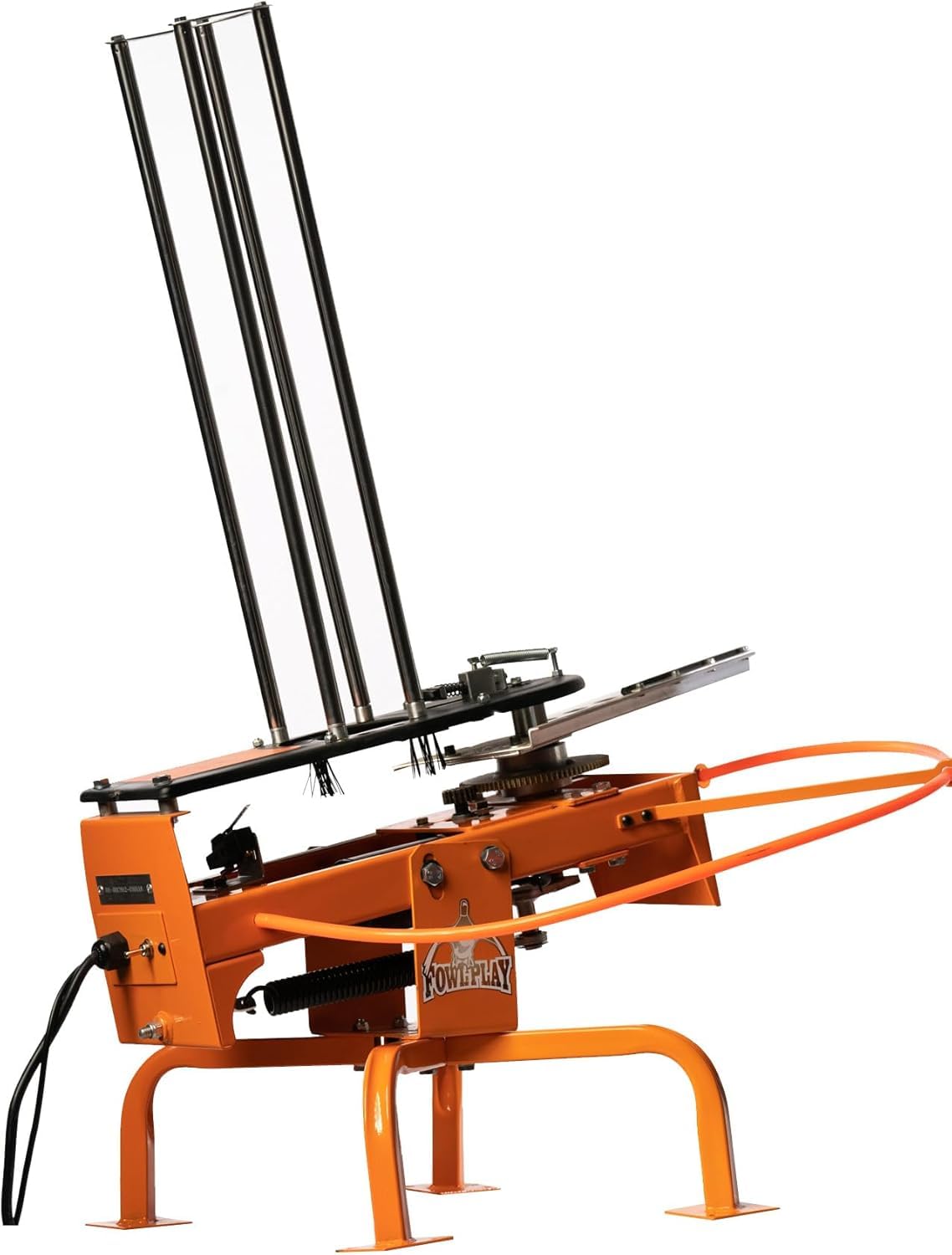
2. Do All Outdoors Fowl Play Electronic Clay Pigeon Thrower
An automatic trap that holds 50 clays and throws 55+ yards for hunting-style practice.
This machine is built for realism. It has a 50-clay magazine and launches targets over 55 yards with a 2.5-second recycle time — the same speed as the Champion above. The adjustment range (5 to 35 degrees) lets you randomize flight paths to simulate hunting scenarios, which is why serious trap shooters and backyard hunters gravitate toward it.
The 15-foot foot pedal cord gives you plenty of room to set up away from the thrower. Owners mention running “almost 19 cases of clays” through it without a failure, calling it “flawless and dependable.” Assembly instructions are sparse, but users figure it out in about 30 minutes. The feed chute ring is metal, not plastic, which adds to the rugged feel. One owner had a stuck pedal replaced immediately by customer service. The compact frame fits easily in a truck bed with removable stacker rods.
Hunting simulation advantage: The adjustable launch angle (5-35°) lets you create unpredictable target paths that mimic a bird flushing, making this a better training tool than machines that only toss straight.
One caveat: Angle adjustment is not tool-less — you reposition the arm manually between rounds, not mid-session.
Best for: shooters who want a rugged automatic trap with realistic flight patterns. The 50-clay capacity and 55+ yard range handle serious practice.
skip it if: you need a simpler manual thrower that does not require a 12V battery purchase.
3. Do-All Outdoors FF550 Firefly Automatic Skeet Thrower

A lightweight 27-pound automatic trap with a 25-clay feeder and a 10-foot pedal cord.
The Firefly is designed to be the automatic thrower you actually want to carry to the range. At 27 pounds, it is noticeably lighter than the 30-pound Champion, and it uses an aircraft aluminum throwing arm (a lightweight but strong metal alloy) for durability without extra weight. The 25-clay feeder handles standard bios (biodegradable targets), 108mm, and 110mm clay pigeons, so you are not locked into one brand of target.
The recycle time is 2.5 seconds, matching the faster electronic traps on this list. A nylon carry bag is included for transport and storage. Owners say it runs on a “cheap battery” and works through 600-800 clays after getting the loading technique right. The single-shot and continuous modes let you switch between slow practice and rapid-fire sessions. Some customers note the spring tensioner must stay loose to avoid breaking clays — but once set, it throws consistently good distance without jams.
Portable advantage: At 27 lbs with a carry bag, this is the automatic trap that travels best. It is 3 lbs lighter than the Champion and fits a wider range of vehicles.
Height adjustment needed: A few owners note the legs can fall out during transport without set screws; a simple fix with hardware-store screws.
Who it is for: shooters who want an automatic trap that is easy to move between locations, with a bag included for storage.
Who it is not for: anyone wanting a high-capacity hopper — the 25-clay feeder means more frequent reloading than the 50+ clay models above.
4. VEVOR Automatic Skeet and Trap Launcher
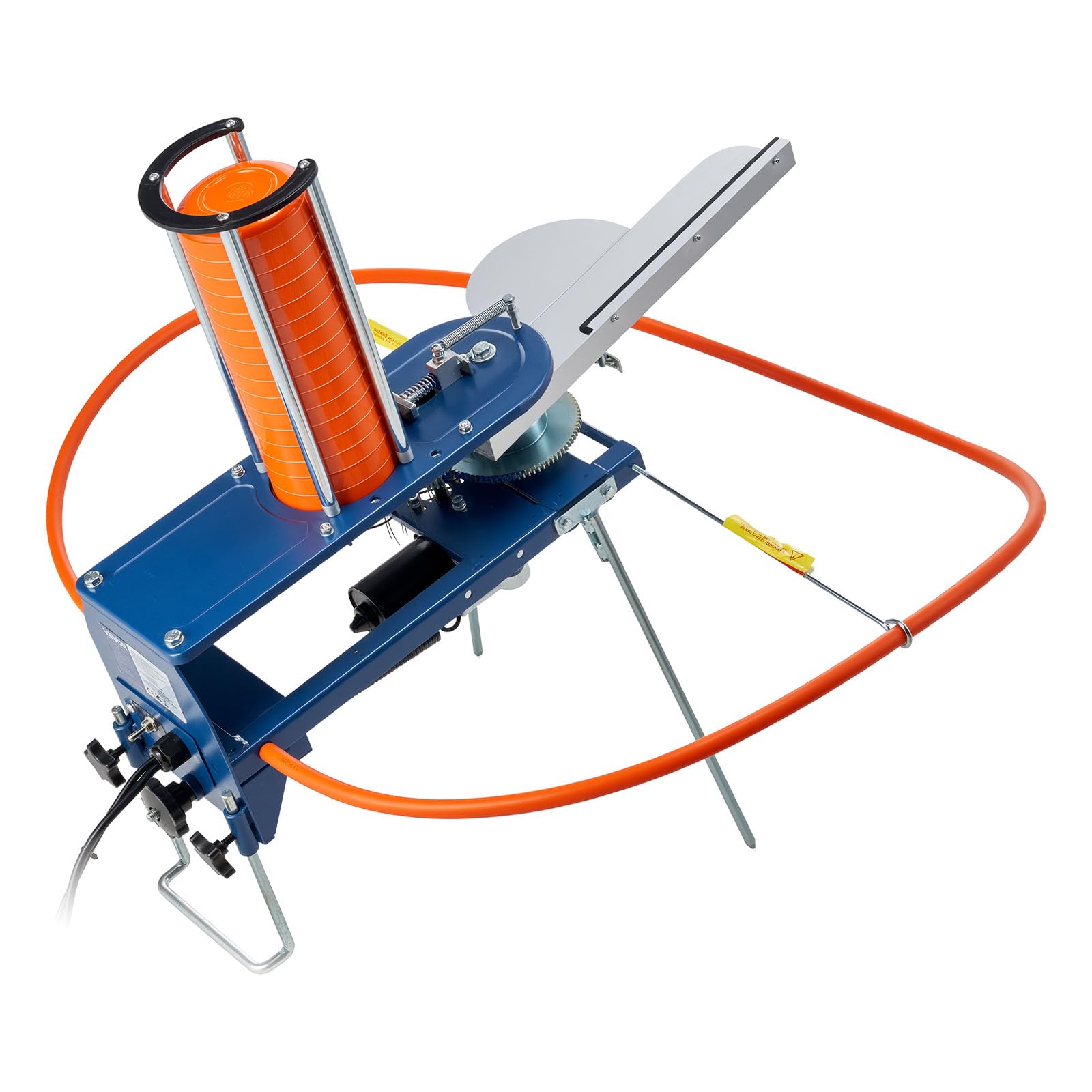
A budget-friendly auto thrower with a 28-clay hopper and a 9.84-foot foot pedal cord.
VEVOR steps into the automatic market with a solid aluminum and carbon steel build that holds 28 clay targets and launches them over 45 yards. The extended foot pedal cord (9.84 feet) is a thoughtful touch — it gives you more distance from the machine than the typical 10-foot cord on competing models. It requires a 12V deep cycle battery (not included) and offers automatic launches every 2 seconds, or you can release the pedal to stop instantly.
Reviewers point out it “works much better than expected,” running through several boxes of clays without issues. The two extended metal spike legs and an included ground stake keep it anchored in grass or soil. A clever owner modified theirs to run on an 18V tool battery with a buck converter (a device that steps down voltage) and wireless remote — a neat option if you want to skip the heavy deep cycle battery. The bolt-on legs are not foldable, so transport is slightly less convenient than the FF550, but the price difference makes up for it.
Smart budget pick: Offers 90% of the performance of the Champion and Fowl Play at a significantly lower price point. The 28-clay hopper and 45-yard range cover most backyard needs.
Build quirks: The support rod holes on the clay ring were not pre-threaded on one unit; owners recommend checking and drilling/tapping if needed. The legs bolt on rather than fold.
Reach for this if: you want an automatic trap without paying premium pricing. The 28-clay hopper and 45-yard range are enough for most backyard shooters.
Consider something else if: you need foldable legs for easy transport, or you want a bigger magazine (53- or 50-clay) for longer practice sessions.
5. Caldwell Claymore Solo Clay Thrower
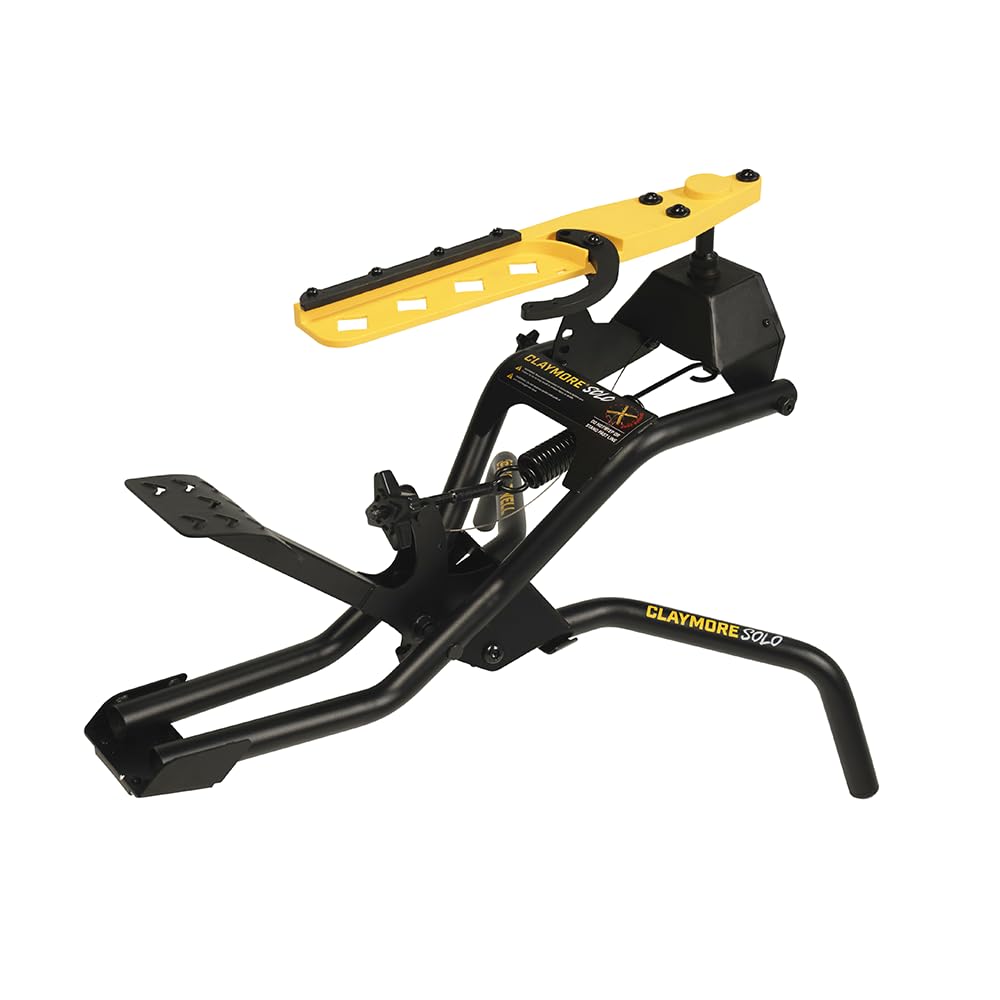
A foot-pedal thrower built specifically for solo shooting — no battery, no pull cord.
The Caldwell Claymore is the standout choice for the solo shooter who wants to practice without a buddy. It uses a foot pedal to tension the spring (wind it up) and fire in one motion, with an auto-resetting arm that returns to the loading position after each throw. No battery required. The build weighs 24 pounds and uses folding legs that collapse for transport. It handles mini, midi, and standard clay targets, giving you flexibility on ammo type.
The toolless angle adjustment lets you change launch direction quickly, and the spring tension controls distance. Owners call it the “best clay pigeon thrower I’ve ever seen or used” and praise the “safe, hands-free loading” that keeps fingers out of the throwing arm’s path. The legs have locking supports for stability, and the unit can launch straight or up to 75° for varied flight paths. The limited lifetime warranty from Caldwell adds confidence. The trade-off is manual loading — you place each clay by hand, which slows your rate of fire but also conserves ammo.
Perfect for solo practice: The foot pedal design means one person can operate and shoot without a partner. Manual reloading means you shoot fewer rounds per minute but waste fewer shells.
Not for volume sessions: Each throw requires a manual clay load, so a 100-clay session takes noticeably longer than with a magazine-fed auto trap.
Best for: the individual shooter who practices alone and values safety (no hand near the arm) over raw round count.
Think twice if: you shoot with a group or want rapid-fire volume where a magazine-fed electronic trap would serve you better.
6. Allen Company EZ Aim Claymaster Clay Pigeon Thrower

An affordable foot-pedal launcher that doubles as a pull-cord machine for group use.
This is the budget-friendly entry into mechanical throwers. The Allen Claymaster weighs 12.8 pounds and assembles in under five minutes. It offers both a foot pedal and a pull cord release, so you can use it solo or hand the cord to a friend. It launches singles or doubles (two clays at once) for a more challenging shot. The solid-steel frame is painted high-visibility orange, and the padded arm helps prevent clays from breaking during loading.
On the upside, buyers who mount it to a piece of plywood report it “hasn’t skipped a beat.” The foot release makes solo operation possible, though it requires precise clay placement for consistent trajectories. On the downside, getting the spring tension right takes some trial and error, and shoppers say hitting about 1 out of 5 when throwing singles. The durability feedback is the most mixed on this list — some find it a great value, while a few report the foot pedal weld breaking on the first use. This is a light-duty machine best for occasional backyard fun, not heavy practice.
Easy entry point: The dual-release (pedal and cord) makes it flexible for both solo and group sessions. The 12.8-pound weight is easy to carry.
Durability watch: The foot pedal weld is the most common failure point — treat it gently and avoid over-tensioning the spring.
Who it works for: casual shooters who want an inexpensive thrower for occasional weekends. The ability to throw doubles adds fun.
Who should pass: anyone planning regular practice or high round counts — the construction is not designed for heavy use.
7. Do All Outdoors Competitor Clay Pigeon Thrower with Pull Release

The classic pull-cord thrower that is light, cheap, and surprisingly effective for the price.
The Competitor is the no-frills manual thrower that has been on the market since 2006. It weighs only 9.3 pounds (compared to the Champion’s 30 pounds — a massive 3.2x weight difference), and it mounts to the ground with included spikes or to a spare tire. The steel construction has a powder coat finish, and it can launch singles, stacked doubles, or nested doubles. The pull-cord release is straightforward: load a clay, pull the cord, shoot.
Buyers consistently praise the value and the fact that it “works like a dream” once weighted down. The main practical concern is stability — at 9.3 pounds, the machine can spin or lift on stronger throws. As owners put it: “you need significant weight put on both bases” to keep it planted. Many use 40-pound weight plates from their home gym. The string may break on the first use, so upgrading it is a common first step. The holding clip can chip clays if not adjusted correctly, and some report welds cracking after 100+ birds. This is a budget tool that works — but it asks for small fixes to perform optimally.
What it does well
- Lightweight 9.3 lbs — easy to carry to any location
- Mounts to ground spikes or a spare tire for flexibility
- Throws singles, stacked doubles, and nested doubles
- Very low entry price for the category
The trade-offs
- Needs significant weight (e.g. 40-lb plates) to stay stable during throws
- String may break early; an upgraded cord is a smart first buy
- Welds and overall build feel light-duty — not for thousands of rounds
Best for: the budget-conscious shooter who wants a simple, portable manual thrower and is fine with a few DIY tweaks (heavier cord, added weight).
pass on it if: you want something that works perfectly from the start without modifications, or if you plan to shoot more than a few hundred rounds.
Understanding the Specs
Hopper Capacity and Recycle Time
This is the single most practical spec for an electronic trap. The hopper (magazine) holds unshot clays and feeds them one at a time. A 25-clay hopper means reloading after every few minutes of shooting; a 53-clay magazine (like the Champion Workhorse) extends that to a much longer session. Recycle time — usually 2.5 seconds — is how fast the arm resets to throw the next target. Faster recycle means more shots per minute, but also more clays consumed.
Throw Distance and Adjustability
Throw distance is measured in yards and tells you how far the clay flies before it starts dropping. A 75-yard range (like the Champion) covers full trap-field distances, while 45 yards is typical for backyard use. Adjustability — launch angle and spring tension — lets you change arc and speed. A 0 to 35-degree angle range (like the Fowl Play) can simulate different shooting stations or unpredictable bird flight for hunting practice.
Battery Requirements
Nearly every automatic trap runs on a 12V deep cycle battery. This is the same type used in marine or RV applications — a standard car battery is not ideal because it is not designed to be deeply discharged repeatedly. A small lawn tractor battery works for a few boxes of clays, but a true deep cycle battery is the reliable choice. Some shooters modify their traps to run on 18V tool batteries for portability, but that is a DIY project, not a factory option.
Weight and Portability
Weight correlates directly with stability. A 30-pound machine (Champion) stays planted on its own, while a 9.3-pound manual thrower (Do All Competitor) needs extra weight or stakes to stay grounded. For portable use, look for folding legs or carry handles. The Caldwell Claymore (24 lbs) and FF550 Firefly (27 lbs) offer a good balance of stability and transportability. Anything over 30 pounds becomes a two-person lift for most people.
FAQ
What size battery do I need for an electronic clay thrower?
Can I use a manual thrower by myself?
How many clays does a typical thrower hold?
How far do clay pigeon throwers launch targets?
Will a clay thrower work on grass or dirt?
What maintenance does a clay thrower need?
Can I throw different sizes of clay targets?
Is a heavier thrower always better?
How long does it take to assemble a clay thrower?
Can I shoot clay pigeons in my backyard?
Final Thoughts: The Verdict
For most people, the best clay pigeon thrower winner is the Champion Workhorse Electronic Trap because it combines a massive 53-clay magazine, a 75-yard throw range, and a 30-pound build that stays stable — all at a price that undercuts premium models. If you shoot solo and want a battery-free setup, grab the Caldwell Claymore Solo Thrower. And for the budget-minded shooter who still wants automatic launching, the VEVOR Automatic Skeet Thrower is the one to reach for.
How We Picked
We do not accept paid placement. Every pick is matched to a real buyer and a real use-case; we do not hands-on test units.
Sources & Methodology
Specifications: manufacturer listings and product documentation. Review insights: verified customer reviews, as of July 2026. Pricing: not shown on this page (it changes often); check the current price via the retailer link.
As an Amazon Associate, WellFizz earns from qualifying purchases. This does not affect which products we feature.
Related Guides

Mo Maruf
I created WellFizz to bridge the gap between vague wellness advice and actionable solutions. My mission is simple: to decode the research and give you practical tools you can actually use.
Beyond the data, I am a passionate traveler. I believe that stepping away from the screen to explore new environments is essential for mental clarity and physical vitality.