Our readers keep the lights on and my smoothie glass nicely filled. As an Amazon Associate, I earn from qualifying purchases.
Specs are compiled from manufacturer listings and verified buyer reviews and can change over time — please confirm the key details on the product page before buying.
You want fresh tomatoes, peppers, or potatoes, but you lack in-ground space, your soil is terrible, or you just want control over every plant without back-breaking weeding. A planter that traps water, overheats roots, or disintegrates after one season will sabotage your vegetable garden. These seven containers turn a patio, balcony, or bare yard into a productive vegetable garden.
I’m Mohammad Maruf — the founder and writer behind WellFizz. This guide is built by comparing the manufacturers’ published specifications and the patterns across verified customer reviews, so you get each pick’s real strengths and trade-offs instead of marketing spin.
Here is the short version: the best containers to grow vegetables balance smart drainage and durable materials — which is exactly what the crowd-favorite pick below delivers to over twenty thousand satisfied gardeners.
Our Picks at a Glance

How To Choose The Best Containers To Grow Vegetables
Picking a vegetable planter is not the same as picking a flower pot. Edible crops need more root depth, more consistent moisture, and enough soil mass to feed a hungry tomato or pepper across a full season. Three specs determine whether a container succeeds or fails for vegetables.
Capacity and Root Depth
A 1-gallon pot suits basil but starves a tomato. Root vegetables like potatoes and carrots need at least 10 to 15 gallons of soil to develop properly. Deeper containers retain moisture longer, reducing watering frequency during heatwaves.
Material: Fabric vs. Plastic vs. Metal
Fabric grow bags made of non-woven polypropylene allow airflow. Air pruning happens when roots hit the fabric edge and stop circling, branching out instead — this creates a denser root ball and healthier plants. Plastic boxes with a water reservoir reduce watering frequency but need aeration holes. Galvanized steel beds last for seasons but sit on open ground — they need good soil underneath for drainage.
Drainage and Airflow
Vegetables rot in waterlogged soil. A container with drainage holes at the bottom is mandatory. Fabric bags naturally shed excess water, while raised beds with open bases let roots stretch into the earth below. Avoid pots without drainage holes — they cause root rot and plant failure.
Quick Comparison
| Model | Best For | Capacity | Material | Key Feature | Amazon |
|---|---|---|---|---|---|
| Gardzen 10-Pack 10 Gallon★ Best Overall | Best Overall Value | 10 Gallons | 300G Nonwoven Fabric | X-Stitched Handles | Amazon |
| VIVOSUN 5-Pack 15 GallonBudget Champion | Heavy Crops on a Budget | 15 Gallons | 300G Nonwoven Fabric | Serger-Stitched Handles | Amazon |
| PAMAZY 4Pcs 15 Gallon | Potato & Root Vegetables | 15 Gallons | Polyproplyene Fabric | Harvest & View Window | Amazon |
| Gartist 2pcs 4x2x1 ft Bed | Quick Setup Metal Bed | 7.14 cu ft | Galvanized Steel | Tool-Free Assembly | Amazon |
| EarthBox Container System | Set & Forget Watering | 2.0 cu ft / 3 Gal Reservoir | Food-Safe Plastic | Self-Watering Reservoir | Amazon |
| EarthBox 80155 Garden Kit | Premium All-In-One Kit | 3 Gal Reservoir | UV-Stabilized Plastic | Includes Fertilizer & Casters | Amazon |
| SnugNiture 3Pcs 4x2x1.5ft Bed | Deep Metal Bed Set | 46×23.6×17 inches | Galvanized Metal | Safety Rubber Edging | Amazon |
In‑Depth Reviews
1. Gardzen 10-Pack 10 Gallon Grow Bags
Our pick — over 4.5★ from 21,500+ verified ratings; the strongest balance of quality and price.
The ten-pack that converts a bare deck into a full vegetable garden in one order.
This is the container that vegetable gardeners keep coming back to — and the numbers back it up. Each bag holds 10 gallons of soil and measures 16 inches across by 12 inches tall. That depth is enough for tomatoes, peppers, eggplants, and sprawling zucchini. The fabric is 300G thickened nonwoven material, which hits a balance: breathable enough for air pruning (where exposed root tips dry out and branch instead of circling) but dense enough to hold moisture through a hot afternoon. The BPA-free claim built into the material description means you are not leaching anything questionable into your dinner.
What wins people over is the reinforced handles. The cross-stitched X-shaped stitching carries a fully loaded bag without tearing — a huge deal when you need to chase the afternoon sun across a patio. The crowd consensus after thousands of uses is that these bags hold up year after year. Buyers report reusing them for a second and third season, and one review mentions a set that looked new after a full year of use. On the honest side, some owners note that these 10-gallon bags measure slightly smaller than other brands’ 10-gallon bags, so if you need every cubic inch for a massive potato crop, check the dimensions. The VIVOSUN below gives you 15 gallons per bag for a comparable per-unit cost if maximum volume is your priority.
budget-friendly multi-pack
- Thick 300G fabric stands up to multiple seasons and stays sturdy when filled
- X-stitched handles let you move a fully loaded bag without the seams giving way
- Breathable walls stop root circling and encourage a big, fibrous root ball
- Ten bags in the pack cover a lot of ground — or a whole balcony — for the investment
fabric wears quickly
- Runs slightly smaller than some other 10-gallon bags — measure your space if volume is critical
- Fabric can dry out faster than plastic in extreme heat, so you water a bit more often
best for: The gardener who wants maximum value from a single purchase — a multi-season workhorse for a wide variety of above-ground vegetables.
think twice if: You need every drop of the stated 10 gallons for deep-rooted storage crops like potatoes and want to boost volume per bag.
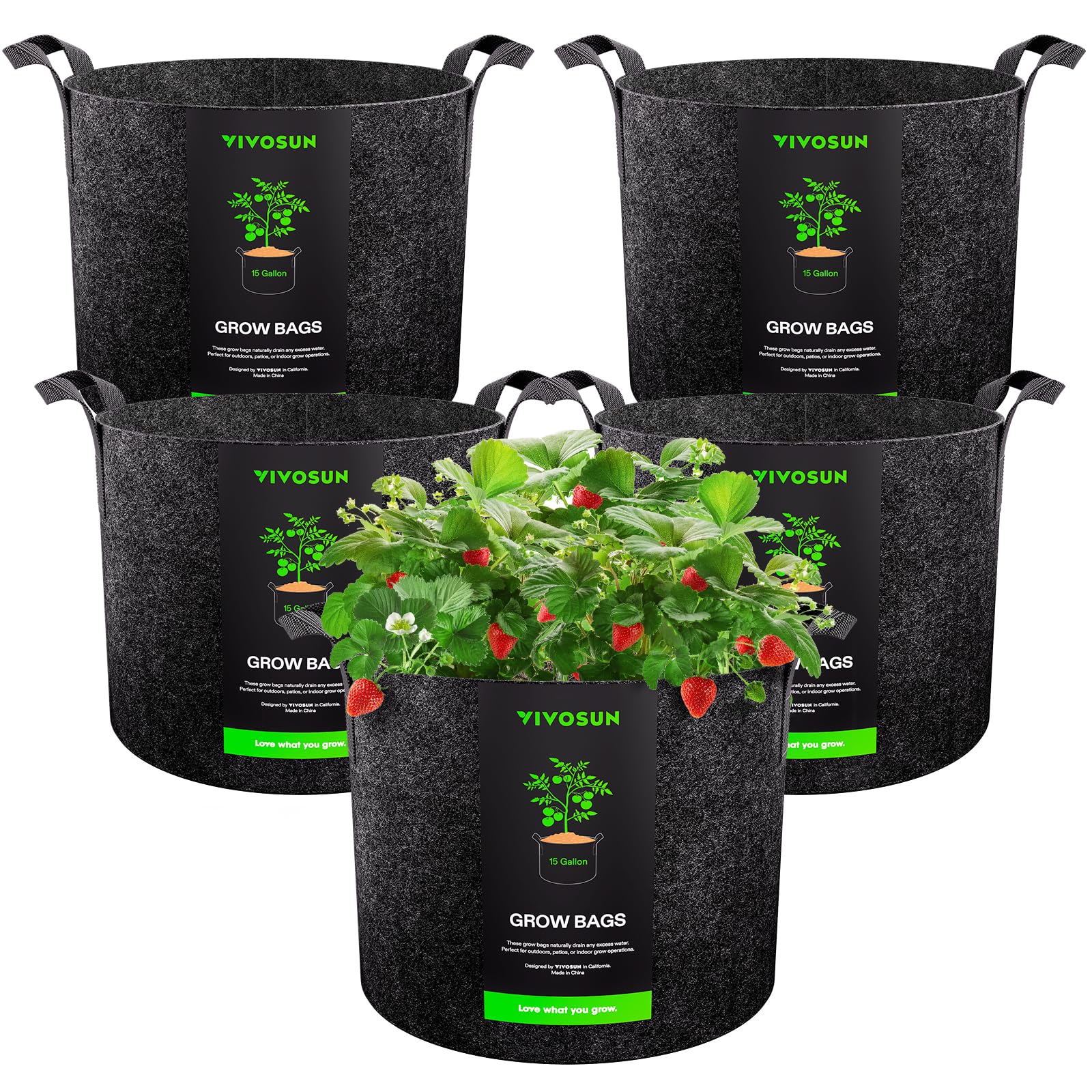
2. VIVOSUN 5-Pack 15 Gallon Plant Grow Bags
The 15-gallon workhorse that edges out the competition on volume per dollar.
If the Gardzen bag is the all-around value king, the VIVOSUN fights back with raw capacity. At 15 gallons per bag, these hold a full 50% more growing medium than the Gardzen pack. That extra volume is a legitimate advantage for sprawling tomato varieties or a dedicated patch of Yukon Gold potatoes, where every gallon of soil translates into more root room and higher yield. The material is the same 300G thickened nonwoven fabric, so you still get the breathability and air pruning action that fabric bags are known for. The handles use serger stitches — a specific overlock stitch that adds strength at the stress point — and owners mention that these handles hold up when the bag is full of damp soil.
The real story here is the sheer number of gardeners who vouched for this product. The majority highlight the durability and the fact that the bags last for multiple growing seasons. One review sums it up directly: “These 5 gallon bags are the perfect size, and the fabric feels strong and durable.” The main trade-off is a practical one: at 15 gallons, a fully loaded bag is heavy — plan where you want it to sit before filling it, because moving it across a yard later is a two-person job. Size feedback is also mixed; some owners feel the stated dimensions run smaller than expected, so measure if that matters.
reach for these if: You are growing hungry crops like tomatoes, squash, or potatoes and want the extra root depth without paying per-bag prices for a premium brand.
look elsewhere if: Portability matters after planting — a 15-gallon bag of wet soil is heavy, and you want to avoid moving it once it is established.
3. PAMAZY 4Pcs 15 Gallon Potato Grow Bags

The bag with a secret door that spares you the messy dig.
Standard grow bags force you to dump the entire container to harvest potatoes. This one solves that annoyance with a dual-window system that is genuinely useful. A clear viewing panel near the top lets you check soil moisture and see if the potatoes are sizing up through the visible window. The real draw is the lower harvest flap — a hinged opening that swings down and lets you reach in for mature potatoes without spilling soil everywhere. The maker says the hinge was specifically designed to “keep soil from falling out” during harvest. That is a thoughtful touch that saves cleanup time and avoids damaging the plant so the rest of the crop can keep growing.
The 15-gallon capacity is matched by reinforced handles and polypropylene nonwoven fabric that drains well and prevents root rot. The crowd is clear that quality and sturdiness are the top two aspects by far — owners call these well-stitched and durable. The honest caveat from the reviews is that the windows may let in a little light, which can affect potatoes (they prefer darkness to stay green-free), and the hinge on the harvest flap could loosen with repeated use over several seasons. If you grow potatoes, carrots, or any crop you normally dig for, the convenience of the harvest window makes this the pick.
made for: Potato growers and anyone tired of dumping out a full container to see what is happening below the surface.
skip it if: You plan to move bags after planting — the door hinge adds one more part to worry about under repeated heavy stress.
4. Gartist 2 pcs 4×2×1 ft Raised Garden Bed
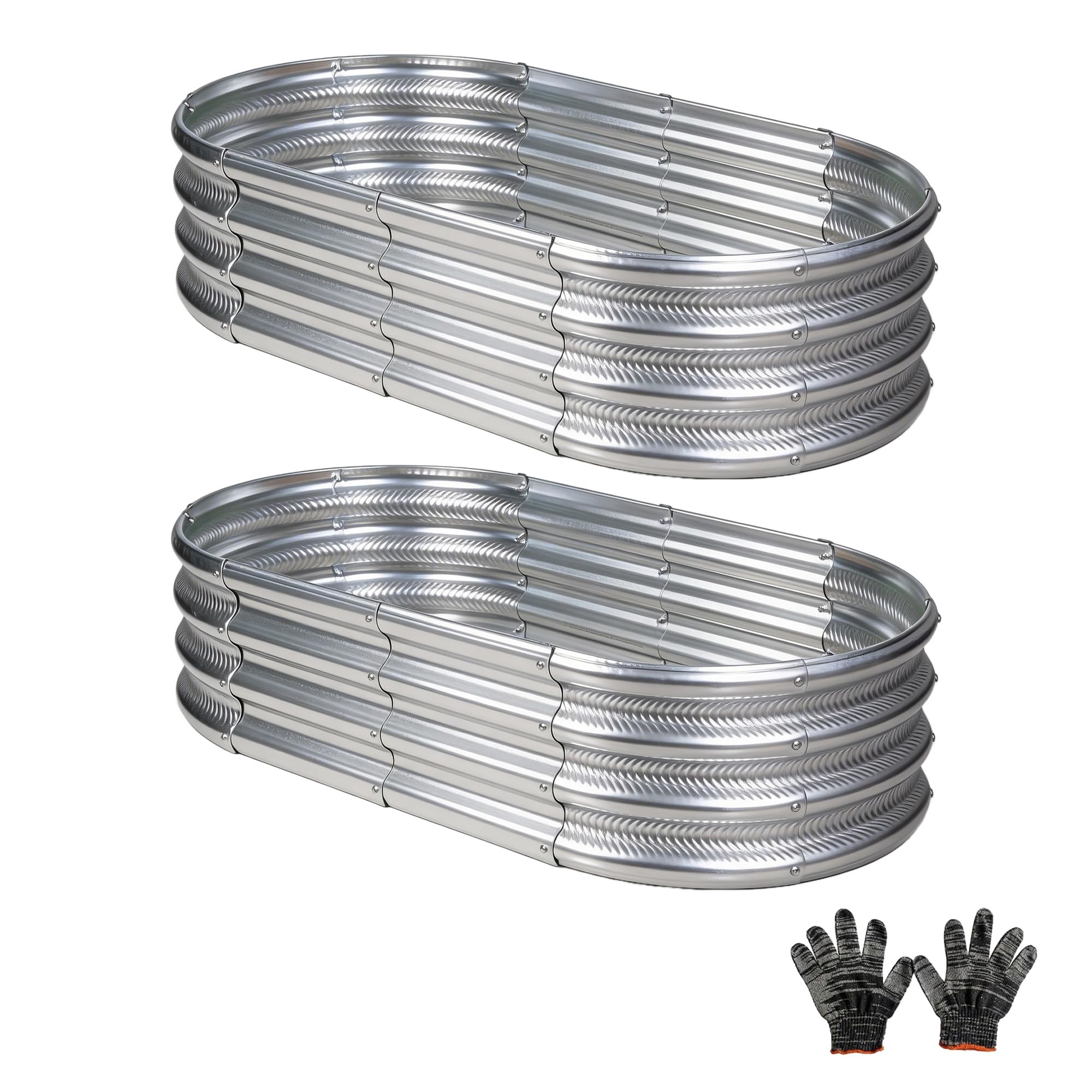
A tool-free metal bed that goes from box to planted in twenty minutes.
Fabric bags are flexible, but sometimes you want a rigid structure that stays put and looks clean. The Gartist raised bed is a galvanized steel oval measuring 4 feet by 2 feet by 1 foot deep. That 12-inch depth is enough for lettuce, peppers, bush beans, and shallow-rooted flowers, and the open-base design lets excess water drain straight into the ground. Assembly is the headline here: butterfly nuts and included gloves mean you tighten everything by hand — no drill, no screwdriver, no swearing. The maker recommends wearing the included gloves during assembly to avoid cuts from the metal edges. Once assembled, the matte silver finish resists rust and corrosion through the seasons.
The crowd consensus is that assembly is the best part — owners praise how fast it goes together. The mixed feedback centers on the hardware: a few boxes arrive with missing screws or bolts. Check your hardware before you start. Also, because this sits on the ground, it is not a true “container” in the sense of moving it — place it where you want it permanently before adding soil. For a quick, permanent raised bed solution that does not require tools, this two-pack is a solid mid-range option.
best for: Anyone who wants a raised bed look without the assembly headache — hand-tighten the butterfly nuts and fill.
think twice if: You need true portability or root depth over 12 inches; this bed sits on the ground permanently and is shallow for deep root crops.
5. EarthBox Container Gardening System – Green

The self-watering system that turned a skeptic into a tomato-growing convert.
Fabric bags force you to stay on top of watering. The EarthBox eliminates that chore with a built-in water reservoir that holds three gallons at the base. You fill the reservoir through a dedicated tube, and capillary action pulls moisture up to the roots as needed. The system includes a food-safe plastic container, an aeration screen that sits between soil and reservoir, a water-fill tube, and two reversible mulch covers (black on one side, white on the other) that keep soil temperature stable. At 29 inches long, 13.5 inches wide, and 11 inches tall, it takes up a defined space on a deck and produces results that owners swear by — one review notes a jump from 1-2 tomatoes per plant to roughly 50 after switching to the EarthBox.
The crowd is clear that functionality and plant quality are the strongest suits. The honest downside is that stagnant water at the bottom can get “a bit stinky” as organic fertilizer seeps in, as owners directly report. Also, casters are not included (you plug them into the integrated sockets), and the system requires you to buy your own growing media. The price point puts it in the premium tier, but if you travel or simply want to water every three to four days instead of every day, the convenience is genuine.
ideal for: The busy or forgetful gardener who wants heavy yields with a minimum of daily watering — this system does the work.
skip if: You prefer the root-health benefits of fabric aeration or you are not willing to buy separate growing media and deal with occasional reservoir odor.
6. EarthBox 80155 Garden Kit, Organic, Terracotta

The all-in-one EarthBox that arrives with the starter supplies you would otherwise have to buy separately.
This is the same self-watering platform as the green EarthBox above but bundled with everything you need to get started: a 1-pound box of organic fertilizer (8-3-5 ratio), 1 pound of organic dolomite (which balances pH and adds calcium), and four casters so you can actually roll the filled container instead of dragging it. The terracotta color looks more natural on a deck than the bright green version. The reservoir still holds three gallons of water and the mulch covers are black on one side (for heat absorption in cool weather) and white on the other (to reflect heat in summer). The UV-stabilized plastic is built to sit in full sun without becoming brittle.
Most owners agree that the ease of setup and plant growth results are outstanding. The growth difference versus standard 5-gallon buckets is dramatic and immediate — gardeners report 5-foot-plus heirloom tomatoes loaded with blossoms their first season using the system. The honest knock is the price: at over for a single unit, this is not a budget buy. If you are scaling up a whole garden, the cost adds up quickly. For a focused vegetable effort on a small deck, though, this kit removes guesswork and provides the highest per-plant yield potential in this list.
designed for: Gardeners who want the highest chance of success on the first try — the fertilizer, dolomite, and wheels come in the box.
consider the price if: You need to buy multiple units; the upfront cost is higher than fabric bags or metal beds, even if the results often justify it.
7. SnugNiture 3 Pcs 4x2x1.5ft Raised Garden Bed

The deep metal bed set that gives your roots 17 inches of vertical freedom.
Where the Gartist bed offers 12 inches of depth, the SnugNiture bumps that to 17 inches — a meaningful jump for root vegetables. Each bed measures 46 inches long by 23.6 inches wide and 17 inches tall, which is enough soil volume for carrots, potatoes, or a mix of peppers and tomatoes. The walls are galvanized metal coated in a brown finish that looks like treated wood without the rot risk. The safety rubber edging along the top rim is a practical upgrade: it protects your hands and arms from sharp metal edges when you lean in to tend your plants. Assembly requires patience (customers note 1-3 hours per three-pack) and involves a lot of plastic film removal from the panels before you start bolting them together.
Durability and assembly are the two most-discussed aspects. Owners who take the time report a sturdy, weather-resistant bed that looks great on a lawn. The gripes are about the plastic protective film (which takes time to peel off every panel) and that the included wingnuts may not fit the crossbars perfectly — a few owners replaced them with standard nuts. The three-bed set gives you a serious garden footprint for the price, but be prepared for an afternoon of assembly work.
perfect for: Root-vegetable lovers who want a deep, rigid raised bed that looks like a piece of garden furniture rather than a grow bag.
be ready for: An assembly session — the protective film removal and hardware setup take time and patience.
Understanding the Specs
Gallon Capacity vs. Cubic Feet
Container sizes are often given in gallons (how much potting mix they hold) or cubic feet (the volume of the container itself). One cubic foot is roughly 7.5 gallons. A 10-gallon bag is good for one tomato or one pepper plant. A 15-gallon bag gives you room for a sprawling indeterminate tomato or a small patch of potatoes. For containers that sit on the ground with an open base, the soil that your plant can access extends into the earth below, so the effective root zone is larger than the box alone.
Air Pruning in Fabric Bags
Fabric grow bags work differently than plastic pots. When a root tip reaches the breathable fabric wall, it hits dry air and stops growing — the plant then branches that root into a denser mass instead of circling the pot. This air pruning effect prevents the root-bound condition that stunts vegetables in plastic pots. Bags made from 300G nonwoven fabric are thick enough to hold soil structure but still allow this root-pruning action. Thinner fabric can dry out too fast and reduce the benefit.
FAQ
How many gallons do I need for a single tomato plant?
Can I leave fabric grow bags out in winter?
Will galvanized steel beds rust over time?
How often do you water vegetables in fabric bags vs. plastic boxes?
What vegetables do best in shallow containers (under 12 inches)?
Do I need drainage holes in a galvanized raised bed?
Can I reuse grow bag soil from last season?
What is the difference between a 15-gallon bag and a 15-gallon planter box?
Final Thoughts: The Verdict
Across the board, the best containers to grow vegetables winner is the Gardzen 10-Pack 10 Gallon Grow Bags because it strikes the best balance between volume, material quality, and price — backed by thousands of multi-season success stories. If you want maximum root space for heavy feeders like potatoes and tomatoes, the VIVOSUN 5-Pack 15 Gallon gives you a full 50% more capacity per bag. And for the gardener who dreads daily watering, the EarthBox Container Gardening System is the one to reach for — its self-watering reservoir more than doubles the time between refills and delivers a genuinely noticeable jump in plant health.
How We Picked
We do not accept paid placement. Every pick is matched to a real buyer and a real use-case; we do not hands-on test units.
Sources & Methodology
Specifications: manufacturer listings and product documentation. Review insights: verified customer reviews, as of July 2026. Pricing: not shown on this page (it changes often); check the current price via the retailer link.
As an Amazon Associate, WellFizz earns from qualifying purchases. This does not affect which products we feature.
Related Guides

Mo Maruf
I created WellFizz to bridge the gap between vague wellness advice and actionable solutions. My mission is simple: to decode the research and give you practical tools you can actually use.
Beyond the data, I am a passionate traveler. I believe that stepping away from the screen to explore new environments is essential for mental clarity and physical vitality.