Active Daily Care Eat Smart Health Hacks Recommended
About Contact The Library

8 Best Computer Monitors For Programming | Stop Squinting at Text

Our readers keep the lights on and my smoothie glass nicely filled. As an Amazon Associate, I earn from qualifying purchases.

Specs are compiled from manufacturer listings and verified buyer reviews and can change over time — please confirm the key details on the product page before buying.

Pulling an all-nighter on a bug hunt is bad enough without a monitor that turns every semicolon into a blurry smudge. Most displays soften text until your eyes burn by mid-afternoon, so the real trick when picking computer monitors for programming is finding one that keeps code razor-sharp edge to edge while giving you enough horizontal room for side‑by‑side windows without craning your neck.

I’m Mohammad Maruf — the founder and writer behind WellFizz. This guide is built by comparing the manufacturers’ published specifications and the patterns across verified customer reviews, so you get each pick’s real strengths and trade-offs instead of marketing spin.

Every model below gets judged on resolution, contrast, how smooth scrolling feels with its refresh rate (how many times per second the screen updates the image), and the ergonomic adjustments (height, tilt, swivel) that keep your spine from aching in twelve-hour sessions. That makes this the definitive guide to computer monitors for programming.

Our Picks at a Glance

Dell 27 Plus 4K Monitor - S2725QS
Best OverallDell 27 Plus 4K Monitor – S2725QS4.4★898 ratingsSharp 4K text with a 120‑Hz scroll that keeps your eyes fresh all shift. You get 3840×2160 resolution on a 27-inch IPS panel that delivers 99% sRGB color, which means code characters stay crisp and braces never blur into each other.Check Price on Amazon
Dell 34 Plus USB-C Curved Monitor - S3425DW
Premium UltrawideDell 34 Plus USB-C Curved Monitor – S3425DW4.5★457 ratingsA 34-inch ultrawide that replaces a dual‑monitor setup with one smooth curve.Check Price on Amazon
BenQ RD280U 28.2” 4K Programming Monitor
Specialist PickBenQ RD280U 28.2” 4K Programming Monitor4.5★77 ratingsA 3:2 screen built specifically for programmers, not adapted from a gaming panel.Check Price on Amazon

How To Choose The Best Computer Monitors For Programming

Picking a programming monitor depends on three things you actually feel all day: how much code fits on the screen, whether the text stays crisp at any size, and how little your eyes burn after lunch. Here is what matters.

Resolution and pixel density

A 27-inch 4K (3840×2160) monitor gives you roughly 163 pixels per inch — small enough that 10‑pt code font renders with sharp serifs and no stair‑step edges. At 27 inches a 1440p panel (109 PPI) is still readable but noticeably softer, which means you might squint at braces and indentation. For a 34-inch ultrawide, the balance is 3440×1440 (about 110 PPI) because the extra width is the real gain, not pixel density.

Screen real estate: ultrawide vs dual 4K

A 21:9 ultrawide (34-inch) is wider than a standard 16:9 27-inch monitor, according to Sceptre’s data. That is enough for an IDE on one side and a browser on the other without alt‑tabbing. If you prefer two independent screens, a pair of 27-inch 4K panels delivers more total pixels but takes up more desk space and forces more head turning.

Panel type and contrast

IPS panels offer wide viewing angles and accurate color (99% sRGB is common), but typical contrast sits at 1000:1 to 1500:1. VA panels push that to 3000:1, giving deeper blacks and better text contrast — helpful when you keep a dark IDE theme open all day. The trade‑off is that VA can show slight gamma shift when you view the screen off‑center.

Eye care and ergonomics

Blue‑light reduction (Dell calls it ComfortView Plus, BenQ calls theirs Brightness Intelligence Gen2) cuts emissions without washing out colors. A height‑adjustable stand is not a luxury: a screen that sits at eye level prevents neck drop that causes headaches. Look for tilt, swivel, and at least 4 inches of height range.

Refresh rate for scrolling

You do not need 240 Hz for coding, but a 120 Hz panel makes scrolling through a 3000‑line file feel smoother and reduces the motion blur that can subtly tire your eyes. Models with AMD FreeSync Premium keep the refresh rate in sync with your GPU so scrolling is tear‑free.

Quick Comparison

Model Best For Resolution Refresh Rate Contrast Ratio Amazon
Dell 27 Plus 4K S2725QS★ Best Overall Best Overall 4K Coding Monitor 3840×2160 120 Hz 1500:1 Amazon
Dell 34 Plus S3425DWPremium Ultrawide Premium 34″ Ultrawide Workhorse 3440×1440 120 Hz 3000:1 Amazon
BenQ RD280U 28.2″ 4KSpecialist Pick Specialist Programming Monitor 3840×2560 60 Hz 1200:1 Amazon
Sceptre 34″ C345B-QUT168 Budget Ultrawide Screen Space 3440×1440 180 Hz 1000:1 to 3000:1 Amazon
Samsung 34″ ViewFinity S50GC Ultrawide with Auto Brightness 3440×1440 100 Hz 3000:1 Amazon
LG 27US500-W 4K Entry‑Level 4K for Text Clarity 3840×2160 60 Hz 1000:1 Amazon
LG 34WR55QK-B Ultrawide Mid‑Range Ultrawide with USB‑C 3440×1440 100 Hz 3000:1 Amazon
BenQ RD320U 32″ 4K Largest 4K Programming Display 3840×2160 60 Hz 2000:1 Amazon

In‑Depth Reviews

★ Best Overall

1. Dell 27 Plus 4K Monitor – S2725QS

Our pick — over 4★ from 850+ verified ratings; the strongest balance of quality and price.

27-Inch 4K120 Hz

Sharp 4K text with a 120‑Hz scroll that keeps your eyes fresh all shift.

You get 3840×2160 resolution on a 27-inch IPS panel that delivers 99% sRGB color, which means code characters stay crisp and braces never blur into each other. The 120 Hz refresh rate and AMD FreeSync Premium make scrolling through a deep file tree feel fluid instead of jittery — something most 4K office monitors skip. Buyers report that the ultra-thin bezel in ash white looks clean on a desk, and the included height, pivot, swivel, and tilt adjustments let you dial in the perfect posture without buying a separate arm.

The 1500:1 contrast ratio is noticeably deeper than the LG 27US500-W’s 1000:1, so dark‑theme users see richer backgrounds and less backlight bleed. ComfortView Plus cuts blue light emissions to ≤35% while keeping colors accurate, not yellowish. The built‑in speakers are a step up from the previous Dell generation, with more volume and frequency range for quick YouTube debugging sessions.

Why coders keep coming back

  • 4K at 27 inches gives sharp text without scaling headaches
  • 120‑Hz FreeSync Premium makes scrolling feel instant
  • Full ergonomic stand (height, pivot, swivel, tilt) included
  • Anti‑glare screen reduces reflections in bright rooms

The trade‑offs to know

  • White ash finish may not match black desk setups
  • Built‑in speakers are fine for casual use but not studio quality

Your daily driver: If you want one monitor that does 4K clarity, smooth scrolling, and proper ergonomics from the start, this is the pick.

Hold up if: You need ultrawide space for three side‑by‑side windows — the 27-inch 16:9 format is tall, not wide.

Premium Ultrawide

2. Dell 34 Plus USB-C Curved Monitor – S3425DW

34-Inch Curved120 Hz

A 34-inch ultrawide that replaces a dual‑monitor setup with one smooth curve.

The 3440×1440 resolution on a VA panel gives you a 3000:1 contrast ratio, compared to the LG 27US500-W’s 1000:1 rating — dark themes look inky, not gray. At 120 Hz, scrolling through code feels as fluid as the Dell S2725QS, but the 21:9 aspect ratio (31% wider than 16:9) lets you snap a full IDE window next to a browser without resizing. The 34-inch size is larger diagonally than a 27-inch screen, so you see more lines at once.

One USB-C cable delivers up to 65W power delivery to your laptop and carries video, so your desk stays almost cable‑free. The 99% sRGB and 95% DCI-P3 coverage mean colors are accurate enough for front‑end UI reviews. Owners mention that the integrated speakers sound fuller than most monitor speakers, and ComfortView Plus (≤35% blue light) keeps eye strain low. The stand adjusts for height and tilt, though it lacks pivot and swivel found on the S2725QS.

Why it earns the premium slot

  • 3000:1 contrast ratio makes dark code themes look deep
  • 120‑Hz FreeSync Premium for tear‑free scrolling
  • USB‑C with 65W power delivery cleans up cabling
  • 95% DCI-P3 covers color work beyond just coding

The corners trimmed

  • Stand handles height and tilt only — no swivel or pivot
  • Brightness caps at 300 cd/m², lower than the S2725QS’s 350 cd/m²

Go wide: Pick this if you want one ultrawide to replace two monitors and keep your desk clean with USB‑C charging.

Not for you if: You need multi‑monitor independence — a single ultrawide shows two windows side by side but does not give you separate display arrangements.

Specialist Pick

3. BenQ RD280U 28.2” 4K Programming Monitor

28.2-Inch 4K3:2 Aspect Ratio

A 3:2 screen built specifically for programmers, not adapted from a gaming panel.

The unusual 3840×2560 resolution at 28.2 inches gives a 3:2 aspect ratio, which is taller than a standard 16:9 screen — you see more vertical lines of code without scrolling. The Nano Matte Panel uses an anti‑glare, anti‑reflective coating, so overhead lights do not wash out your terminal. BenQ includes dedicated Coding Modes that tweak the color temperature and contrast to make syntax highlighting pop, and customers note it is the first monitor that feels designed around an IDE instead of a spreadsheet.

Night Hours Protection and Brightness Intelligence Gen2 automatically lower the blue light and brightness as your room gets darker, which helps when you are fixing a bug past midnight. The 90W USB‑C port charges a laptop and carries video in one cable. The KVM switch lets you control two computers with one keyboard and mouse, handy if you code on a desktop and test on a laptop. The monitor weighs a manageable amount and offers height, tilt, and swivel adjustments, but the 1200:1 contrast ratio is lower than VA panels.

Built for coders

  • 3:2 screen fits more code lines than any 16:9 display
  • Nano Matte Panel kills reflections without blurring text
  • Dedicated Coding Modes improve syntax contrast
  • 90W USB‑C with KVM for two‑computer workflows

Specialized trade‑offs

  • 1200:1 contrast is fine but not as deep as VA 3000:1 panels
  • 60 Hz refresh rate — scrolling is smooth, not as fluid as 120 Hz

For the code‑first coder: Pick the RD280U if you spend all day in an IDE and want the most vertical lines per glance.

You might skip it if: You also game or edit video — the 60 Hz and 3:2 ratio are less versatile than a standard 16:9 or 21:9 panel.

Large Specialist

4. BenQ RD320U 32” 4K Programming Monitor

32-Inch 4K2000:1 Contrast

A 32-inch 4K panel that gives you room to keep three files open without squinting.

The 3840×2160 resolution spreads across 32 inches, which means you see more windows at native scaling without needing to zoom out. BenQ’s 2000:1 contrast ratio is a step above the 1200:1 on the RD280U, so black backgrounds in a dark IDE look noticeably deeper. The Nano Matte Panel keeps overhead lights from turning into glare spots, and the Coding Modes (Dark Theme and Light Theme) adjust the look to reduce eye strain depending on whether you code in bright or dim environments.

Night Hours Protection includes minimum brightness technology that lets you drop the backlight very low without flicker — helpful if you work in a dark room. The 90W USB‑C port charges a laptop and handles video on the same cable. Buyers mention the MoonHalo backlight (a ring light on the rear) reduces eye fatigue by providing bias lighting behind the screen. At 34.2 pounds with the stand, this is a heavy monitor, so your desk needs to handle the weight. The ergonomic stand includes height, tilt, and swivel adjustments.

Room to breathe

  • 32 inches of 4K space fits three editor panes comfortably
  • 2000:1 contrast gives dark themes serious depth
  • Nano Matte Panel eliminates reflection glare
  • 90W USB‑C keeps your laptop charged

The physical cost

  • 34.2 pounds is heavy — reinforce your desk or use a sturdy arm
  • 60 Hz refresh; not ideal if you also game

Maximum canvas: Choose the RD320U if you want the biggest 4K programming screen with anti‑glare and a deep contrast ratio.

Do not buy if: Your desk cannot hold a 34‑pound monitor, or you need a 120‑Hz refresh for mixed gaming use.

Value Ultrawide

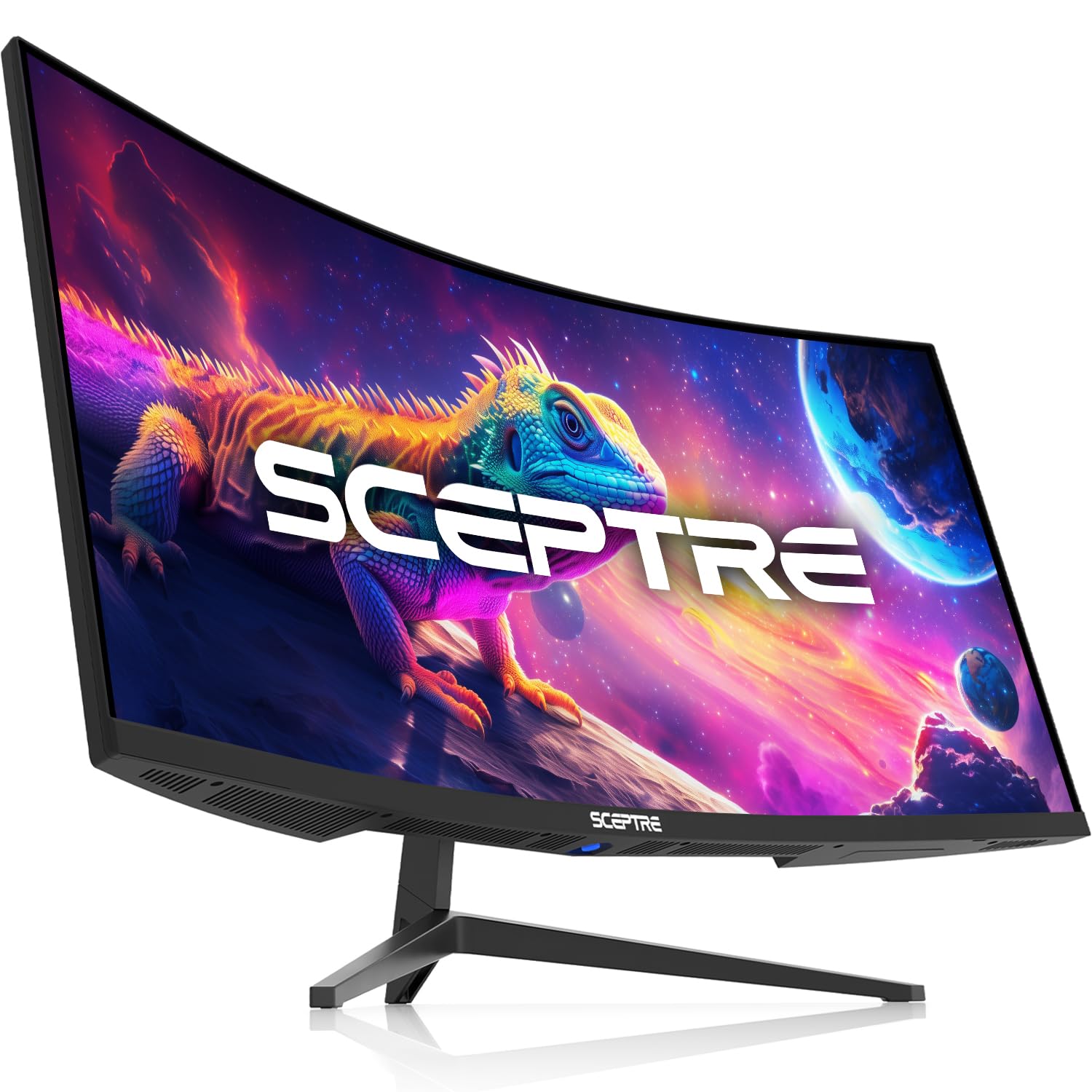
5. Sceptre 34-Inch Curved Ultrawide WQHD C345B-QUT168

34-Inch Curved180 Hz

An ultrawide with a 180-Hz refresh for under the price of most 27-inch 4K monitors.

The 3440×1440 resolution on a 34-inch 21:9 panel is wider than a standard 16:9 monitor, so you can put your IDE on the left and a browser on the right without overlapping. The 1ms MPRT response time and up to 180 Hz refresh rate make scrolling through code and switching between desktops feel instant — smoother than the 100 Hz panels from LG and Samsung. The R1500 curvature wraps the screen slightly toward your face, which helps keep the edges of the ultrawide in your peripheral vision without moving your head.

Brightness hits 400 cd/m², which is brighter than the Dell S3425DW’s 300 cd/m², so it holds up well in sunlit rooms. The monitor includes Picture‑by‑Picture and Picture‑in‑Picture modes, so you can view input from two computers on one screen at the same time. Buyers mention that the built‑in speakers are basic, and the stand is less adjustable than pricier models (tilt only). The 100% sRGB color gamut is good enough for coding but not calibrated for photo editing from the start.

Why it is a steal

  • 34-inch ultrawide at a budget price with 180 Hz refresh
  • 400 cd/m² brightness works in bright offices
  • PBP and PIP for two‑computer setups
  • 1ms response makes scrolling feel instant

The budget corners

  • Stand is tilt‑only — no height or swivel adjustment
  • Built‑in speakers are serviceable but thin

Best bang for your buck: Grab this if you want a big curved ultrawide with buttery scrolling and can live without a height‑adjustable stand.

Not recommended if: You need precise ergonomic adjustments — you will have to buy a VESA arm separately.

Smart Ultrawide

6. Samsung 34″ ViewFinity S50GC Series Ultrawide QHD

34-Inch Ultrawide3000:1 Contrast

An ultrawide with an ambient light sensor that adjusts brightness as your room changes.

The 3440×1440 resolution on a 34-inch 21:9 display with a 3000:1 static contrast ratio gives you deep blacks that make a dark IDE theme look rich, not washed out. HDR10 support displays over 1 billion colors — a spec that matters less for coding and more for reviewing graphics or video in the same session. The 100 Hz refresh rate is lower than the Sceptre’s 180 Hz but still smoother than a standard 60 Hz monitor; scrolling feels fluid, not choppy.

The standout feature is the built‑in ambient light sensor that automatically adjusts screen brightness based on your room’s lighting. That means if you code by a window, the monitor gets brighter in the afternoon sun and dims at night without you touching a button. Eye Saver Mode and Flicker Free reduce blue light and screen flicker, both of which help with all‑day comfort. Buyers appreciate the virtually bezel‑free design for multi‑monitor setups. The stand supports tilt only; height adjustment is not built in.

Smart features for long days

  • Auto brightness adapts to changing room light
  • 3000:1 contrast gives dark themes deep black backgrounds
  • HDR10 covers over 1 billion colors for mixed work
  • Ultra‑thin bezels look gapless next to another monitor

What is missing

  • 100 Hz refresh is fine but not as fast as the Sceptre’s 180 Hz
  • Stand is tilt‑only — no height or swivel

Set‑and‑forget comfort: Choose this if you work in a room with changing daylight and want the screen to adjust itself.

Skip if you need: A stand with height adjustment — you will have to mount it on an arm.

Mid‑Range Ultrawide

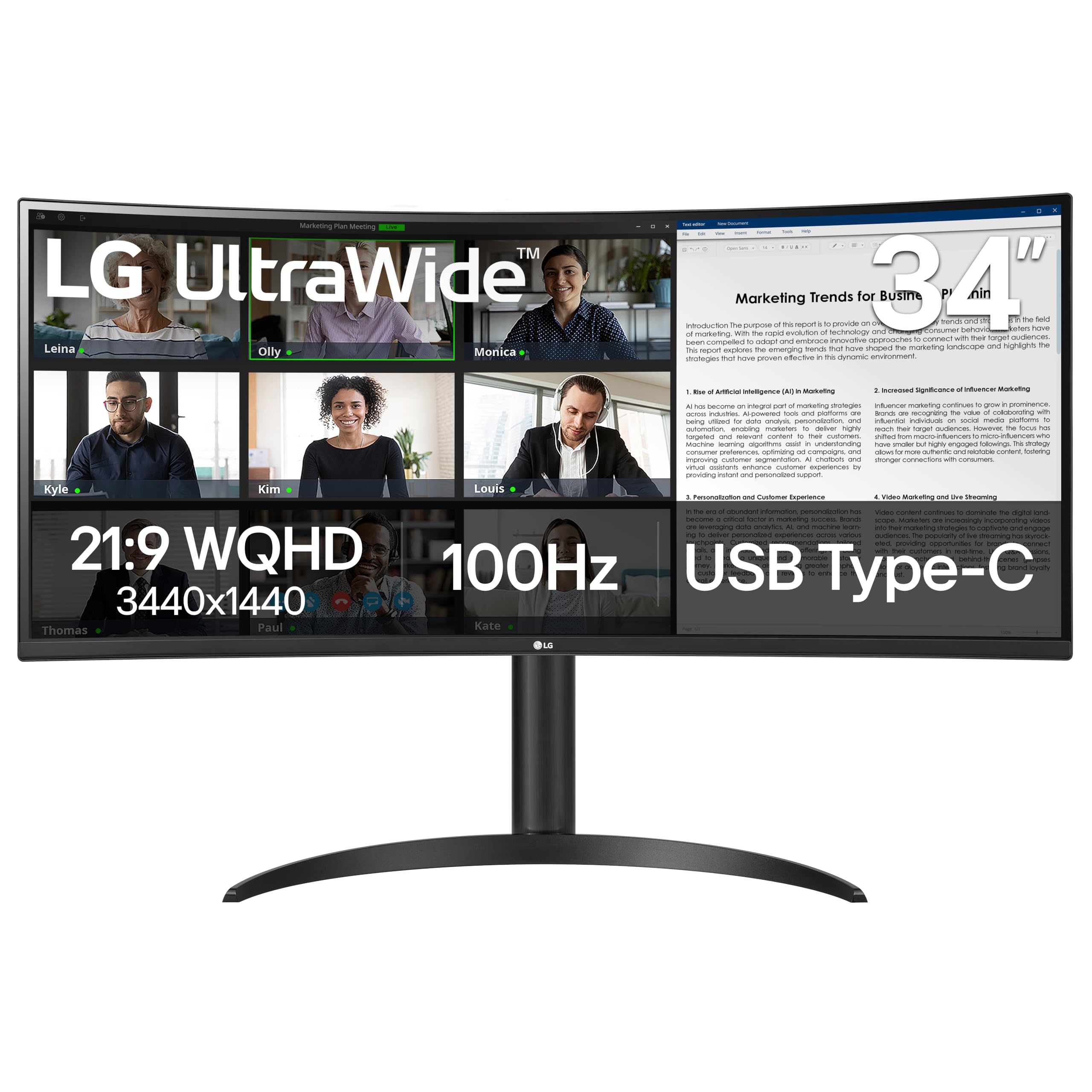
7. LG 34WR55QK-B 34-inch UltraWide WQHD Curved

34-Inch CurvedUSB‑C 65W

An ultrawide that adds USB‑C with 65W charging and a height‑adjustable stand.

The 3440×1440 VA panel delivers a 3000:1 contrast ratio and 99% sRGB, so dark themes are deep and text is crisp. The 100 Hz refresh rate with AMD FreeSync keeps scrolling smooth. The 21:9 aspect ratio gives you the same side‑by‑side window space as the Samsung S50GC, but LG adds two things those cheaper ultrawides lack: USB‑C with up to 65W power delivery (so your laptop stays charged through the monitor) and a height‑adjustable stand that also tilts.

OnScreen Control software lets you split the screen into custom layouts with a few mouse clicks, which is handy if you prefer a specific window arrangement for coding. Reader Mode reduces blue light for long reading sessions. The 3‑side virtually borderless design looks clean on a desk. Reviewers point out the curved VA panel (the data confirms it is curved with a VA display type) gives a slight wraparound feel that keeps the edges of the wide screen within comfortable view.

Why it bridges the gap

  • USB‑C with 65W power delivery simplifies your desk
  • Height‑adjustable stand is rare on ultrawides at this level
  • 3000:1 contrast ratio for deep dark themes
  • OnScreen Control for custom split‑screen layouts

The small compromises

  • 100 Hz refresh is adequate but not the fastest in this list
  • VA panel may show slight gamma shift off‑center

Balanced choice: Pick the LG 34WR55QK‑B if you want an ultrawide with USB‑C charging and an adjustable stand without jumping to Dell pricing.

Not if you need: A 120‑Hz+ refresh — this tops out at 100 Hz.

Entry 4K

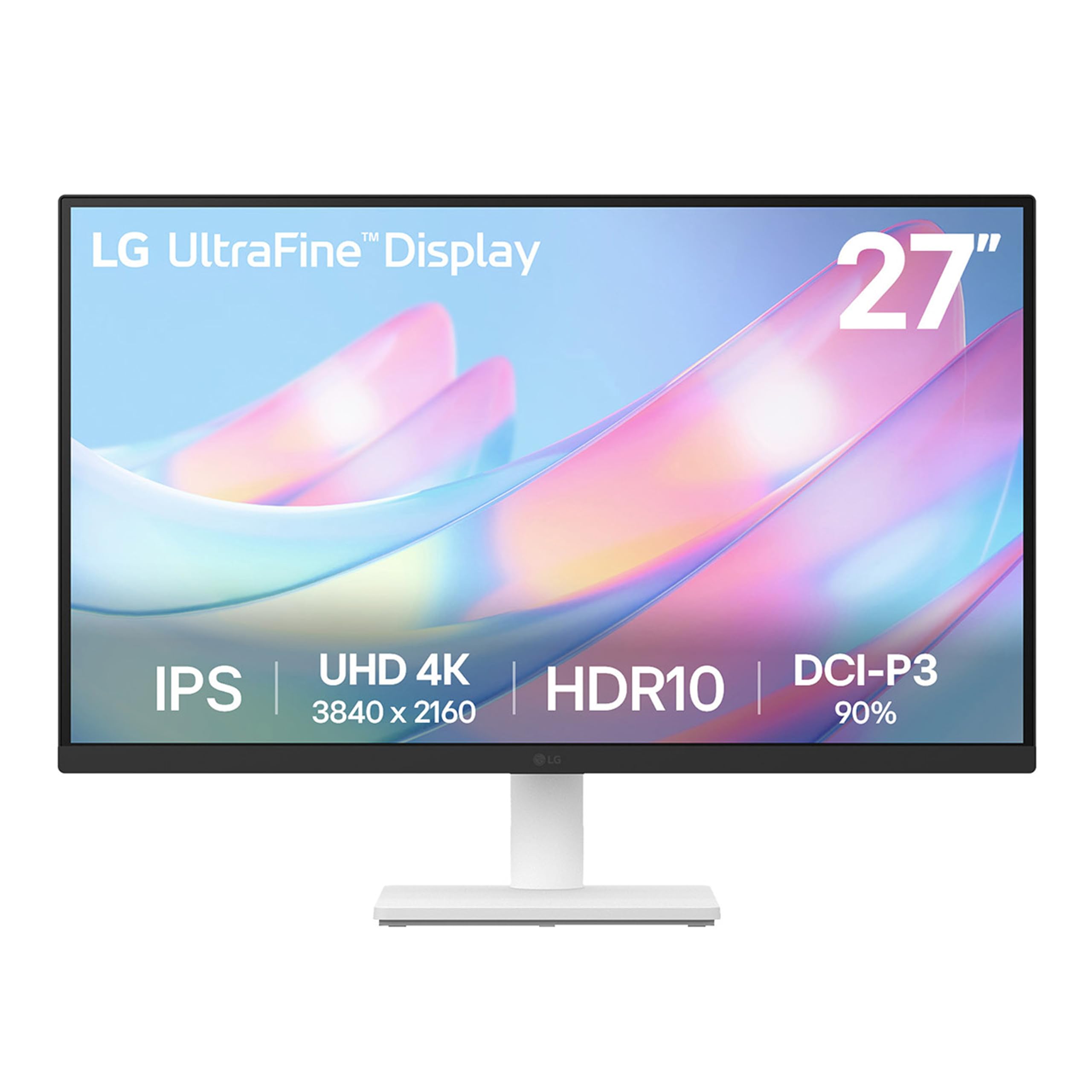
8. LG 27US500-W Ultrafine Monitor 27-Inch 4K

27-Inch 4KDCI-P3 90%

A solid 4K IPS panel with wide color gamut at the lowest entry point for sharp text.

The 3840×2160 resolution on a 27-inch IPS display gives you the pixel density that makes code characters look sharp, with 90% DCI-P3 color coverage for vivid but accurate colors. The 1000:1 contrast ratio is the lowest on this list — compared to the Dell S3425DW’s 3000:1, dark themes look grayish rather than deep black. HDR10 support adds a bit of pop when reviewing design mockups.

The borderless design and wide viewing angles mean the screen looks the same whether you sit centered or lean to the side. Reader Mode and Flicker Safe reduce blue light and flicker, which helps if you are reading documentation for hours. Onscreen Control lets you snap windows into grids without a third‑party app. The ergonomic stand adjusts tilt only — no height or swivel — so you may need a monitor arm to get the screen at eye level. Buyers find it a reliable daily driver for coding, especially if they already have an adjustable desk.

Why it is a solid start

  • 4K on 27 inches gives excellent text sharpness for code
  • 90% DCI-P3 covers good color for mixed web work
  • Reader Mode and Flicker Safe reduce eye fatigue
  • Borderless IPS design looks clean from any angle

The price trade‑offs

  • 1000:1 contrast makes dark themes look washed out
  • Tilt‑only stand — you will want an arm for proper height
  • 60 Hz refresh; not as smooth as 120‑Hz monitors for scrolling

Budget 4K text: Get this if you want 4K sharpness for code on a tight budget and already own a VESA arm or adjustable desk.

Skip if you need: Good contrast for dark themes — the 1000:1 ratio is not satisfying for dark‑mode users.

Understanding the Specs

Resolution

Resolution tells you how many pixels fit across and down the screen. For coding, 3840×2160 (4K) on a 27-inch monitor gives roughly 163 pixels per inch — that is sharp enough to read 10‑pt code without any blur at the edges of letters. Ultrawide 3440×1440 on a 34‑inch screen has fewer pixels per inch (about 110 PPI) but the extra horizontal width lets you put two full windows side by side without overlap.

Contrast ratio

Contrast ratio is the difference between the brightest white and the darkest black the screen can show. A 1000:1 ratio (common on IPS panels) means white is 1,000 times brighter than black; dark backgrounds look grayish. A 3000:1 ratio (common on VA panels) makes black look truly black, which matters if you use a dark IDE theme all day. Higher contrast also makes text pop against the background, reducing eye strain.

Refresh rate

Refresh rate is how many times per second the screen updates the image. Measured in Hertz (Hz), a 60 Hz monitor refreshes 60 times per second. A 120 Hz monitor doubles that, making scrolling through a 4,000‑line file feel smooth rather than jumpy. FreeSync Premium keeps the refresh rate in sync with your graphics card, eliminating screen tearing during fast scrolls or window animations.

Ergonomic adjustments

Ergonomic adjustments let you change the screen’s height, tilt, swivel, and pivot to match your eye level. A monitor that sits too low forces your neck forward, causing fatigue by lunchtime. Height adjustment (usually 4–6 inches of range) lets you align the top of the screen with your eye line. Tilt adjusts the angle for glare reduction. Swivel lets you turn the screen to share with a colleague.

FAQ

Should I get a 4K or an ultrawide monitor for programming?
It depends on if you want sharper text or more horizontal space. A 27-inch 4K (3840×2160) monitor gives about 163 pixels per inch, making every character of code razor‑sharp. A 34-inch ultrawide (3440×1440) has fewer pixels per inch but stretches across a 21:9 aspect ratio, so you can put your IDE on one side and a browser on the other without overlapping windows.
Is 60 Hz enough for coding, or do I need 120 Hz?
60 Hz is perfectly usable for coding — you will read and type just fine. However, 120 Hz makes scrolling through long files feel significantly smoother, and many programmers report less eye fatigue after a 120‑Hz session because the motion is less jarring. It is a comfort upgrade, not a necessity.
Does a higher contrast ratio matter for programming?
Yes, especially if you use a dark IDE theme. A 3000:1 contrast ratio (common on VA panels) makes black backgrounds look deep and inky, while a 1000:1 ratio (common on IPS panels) makes dark backgrounds look grayish. The higher contrast also makes colored syntax highlighting stand out more clearly.
What is the best screen size for writing code?
Most programmers prefer 27 inches for 4K (sharp text, single‑window focus) or 34 inches for ultrawide (side‑by‑side windows). A 27‑inch 4K display gives the highest pixel density for text clarity. A 32‑inch 4K display (like the BenQ RD320U) offers more total area but slightly lower pixel density, so you might need to increase scaling.
Can I use a gaming monitor for programming?
Yes, gaming monitors often have high refresh rates (120 Hz to 180 Hz) and low response times that make scrolling feel smooth. The catch is that many gaming monitors prioritize fast response over color accuracy and contrast, so dark themes may not look as deep as on a VA or professional monitor.
What is the ideal pixel density for reading code?
Around 160 pixels per inch is the balance for 10–12 pt code font — characters are sharp with no visible aliasing. That corresponds to a 27-inch 4K monitor (3840×2160). Lower densities (around 110 PPI, typical of a 34‑inch 3440×1440 monitor) are still readable but you may notice softer edges on small fonts.
Do I need a curved screen for programming?
Curved screens help on ultrawide monitors (34 inches and above) because they wrap the edges toward your face, reducing the need to turn your head. On a 27‑inch screen, curvature is not necessary — your peripheral vision covers the whole panel without moving your neck.
Does USB‑C power delivery matter for a programming monitor?
If you use a laptop, yes. USB‑C with power delivery (typically 60W to 90W) sends video signal and charges your laptop through one cable, keeping your desk tidy. Without it, you need a separate power brick and a video cable. Desktops generally do not need it.
How do the BenQ programming monitors differ from standard monitors?
BenQ RD280U and RD320U include Nano Matte panels (anti‑glare and anti‑reflective), dedicated Coding Modes that adjust color and contrast for syntax highlighting, and MoonHalo backlighting for bias lighting. They also have Night Hours Protection that dims the screen very low without flicker. These features are tuned for programmers specifically, not for general office or gaming use.
Should I use a monitor arm with my programming display?
If your monitor comes with a stand that does not offer height adjustment (like the tilt‑only stands on the Sceptre C345B or LG 27US500‑W), a VESA‑compatible monitor arm lets you set the exact height and angle for proper ergonomics. Even monitors with height‑adjustable stands can benefit from an arm that frees up desk space underneath.

Final Thoughts: The Verdict

If you want one dependable pick, the computer monitors for programming winner is the Dell 27 Plus 4K S2725QS because it combines sharp 4K text, a smooth 120 Hz scroll, and a full ergonomic stand at a mid‑range price that works

Related Guides

Mo Maruf
Founder & Lead Editor

Mo Maruf

I created WellFizz to bridge the gap between vague wellness advice and actionable solutions. My mission is simple: to decode the research and give you practical tools you can actually use.

Beyond the data, I am a passionate traveler. I believe that stepping away from the screen to explore new environments is essential for mental clarity and physical vitality.

Please use a real email you check. If it's fake or mistyped, your message won't reach us and we can't reply — wrong addresses are rejected automatically.