Our readers keep the lights on and my smoothie glass nicely filled. As an Amazon Associate, I earn from qualifying purchases.
Specs are compiled from manufacturer listings and verified buyer reviews and can change over time — please confirm the key details on the product page before buying.
Pulling on a heavy coat without thinking about layers is the fastest way to freeze or sweat. The real secret is a three-piece system: a base layer that pulls sweat away from your skin, a mid-layer that traps your body heat, and an outer shell that blocks wind and snow. This guide picks seven of the best cold weather clothes for men so you can build that system without guessing.
I’m Mohammad Maruf — the founder and writer behind WellFizz. This guide is built by comparing the manufacturers’ published specifications and the patterns across verified customer reviews, so you get each pick’s real strengths and trade-offs instead of marketing spin.
If you work outdoors all day, ski on weekends, or just need a reliable winter coat for the commute, these picks cover every scenario. Here is our honest take on the best cold weather clothes for men you can actually rely on this winter.
Our Picks at a Glance


How To Choose The Best Cold Weather Clothes For Men
Winter gear is different from a regular jacket. The warmth you feel comes from layers, not the outer coat alone. Get the layering wrong and you end up either sweaty or shivering — no in-between. Here are the three main things to check before you buy.
Start with the Base Layer: Merino Wool vs Synthetic
The layer against your skin does one job — move sweat away so you stay dry. Merino wool does this naturally without trapping odor. Synthetic fabrics like polyester dry faster but tend to hold smells after a day or two. If you plan multi-day trips, merino is the smarter choice.
Insulation: Down Fill vs Synthetic Fill
Down insulation (usually goose or duck feathers) traps more warmth per ounce than almost anything else. Look for a “fill power” rating — 600 fill, like the North Face Aconcagua 3 uses, is a solid balance of warmth and affordability. Synthetic insulation like 3M Thinsulate works when wet and costs less, making it ideal for wet snow or rain.
The Outer Shell: Water Resistance and Wind Blocking
A good shell stops wind and keeps precipitation off your insulating layer. Look for terms like DWR (durable water repellent) or Wind Fighter technology. You do not always need a fully waterproof jacket — wind resistance plus a DWR finish handles most winter conditions. But if you expect heavy rain or wet snow, a waterproof breathable membrane like Storm Defender is worth the upgrade.
Quick Comparison
| Model | Best For | Insulation Type | Weight Class | Water Resistance | Amazon |
|---|---|---|---|---|---|
| Carhartt Shoreline Jacket★ Best Overall | All-day wet weather work | Uninsulated (wear over layers) | Loose fit shell | Storm Defender waterproof | Amazon |
| DANISH ENDURANCE Merino Base Layer PantsBest Value Base Layer | Budget merino base layer | Merino wool blend | Midweight 180 gsm | No | Amazon |
| Columbia Powder Lite II Jacket | Lightweight everyday warmth | Recycled synthetic | Lightweight | Rain and stain repellent | Amazon |
| Smartwool Classic Thermal Merino Bottom | Premium merino base layer for hiking | 100% Merino Wool | Midweight | No | Amazon |
| North Face Aconcagua 3 Jacket | Versatile 600-down insulation | 600 fill waterfowl down | Medium weight | DWR water repellent | Amazon |
| North Face Aconcagua 3 Hooded | Hooded down insulation for trails | 600 fill waterfowl down | Medium weight | DWR water repellent | Amazon |
| Carhartt Yukon Extremes Coat | Arctic-grade work coat | 150g 3M Thinsulate | Heavyweight | Rain Defender DWR | Amazon |
In‑Depth Reviews
1. Carhartt Men’s Shoreline Jacket
Our pick — over 4.5★ from 850+ verified ratings; the strongest balance of quality and price.
The waterproof shell that keeps you dry through a full shift outside.
If your winter involves rain, sleet, or wet snow rather than just dry cold, this Carhartt jacket earns its spot as the all-around winner. The Storm Defender technology (a waterproof and breathable membrane) keeps rain out while letting sweat escape — so you stay dry from both sides. The loose fit is deliberate: it gives you room to layer a thick sweatshirt or a fleece underneath without feeling like a stuffed sausage.
Unlike the uninsulated shell approach, the Shoreline needs a mid-layer to provide actual warmth. Pair it with the Smartwool or DANISH ENDURANCE merino base layer below and you get a system that handles freezing rain better than any single heavy coat. Buyers report the waterproofing holds up well through repetitive use, which is the real test for a work-oriented jacket.
The trade-off is that this jacket is not insulated at all — it is a pure weather barrier. If you want built-in warmth from the jacket itself, look at the North Face Aconcagua 3 instead. But for wet-weather layering, few options beat this Carhartt.
What Stands Out
- Storm Defender is genuinely waterproof and breathable
- Loose fit allows thick layering underneath
- Rated 4.6 stars from 860 reviews
A Real Limitation
- No insulation — you must add a mid-layer for warmth
The best pick if: You work or commute in wet winter weather and need a waterproof shell that layers well.
skip it if: You want a single insulated jacket that keeps you warm without extra layers — the Carhartt Yukon Extremes below fits that better.
2. DANISH ENDURANCE Merino Wool Base Layer Pants
A merino-blend base layer that punches above its price point.
These thermal long johns from DANISH ENDURANCE use a midweight 180 gsm (grams per square meter — a measure of fabric density) merino wool blend that balances warmth and breathability for cold-weather activities. The brand builds its reputation on adventure gear: the same merino material was worn by an endurance athlete who trekked 1,130 km (roughly 700 miles) alone to the South Pole. That alone tells you this fabric works in extreme cold.
The fit is full-length and designed for men, with a fly pouch for comfort. At 180 gsm, it sits in the “midweight” balance — thick enough for freezing conditions but not so bulky that it fights under a pair of jeans or a shell pant. Owners mention the merino blend manages odor well across multiple days, which is a big deal for ski trips or backpacking.
The catch is that this is not 100% merino (a blend), so it may not feel quite as soft against the skin as the pure merino Smartwool option below. But for roughly half the price, it delivers comparable performance.
Why It Works
- Midweight 180 gsm merino blend for warmth without bulk
- Proven in extreme cold (South Pole expedition)
- Strong value at this price tier
One Thing to Know
- Blended merino is less soft than pure merino
Grab these if: You need an affordable merino base layer for skiing, camping, or everyday winter wear and want odor resistance.
Spend more if: You prefer the feel of pure 100% merino wool against the skin — then the Smartwool bottom is the upgrade.
3. Columbia Men’s Powder Lite II Jacket
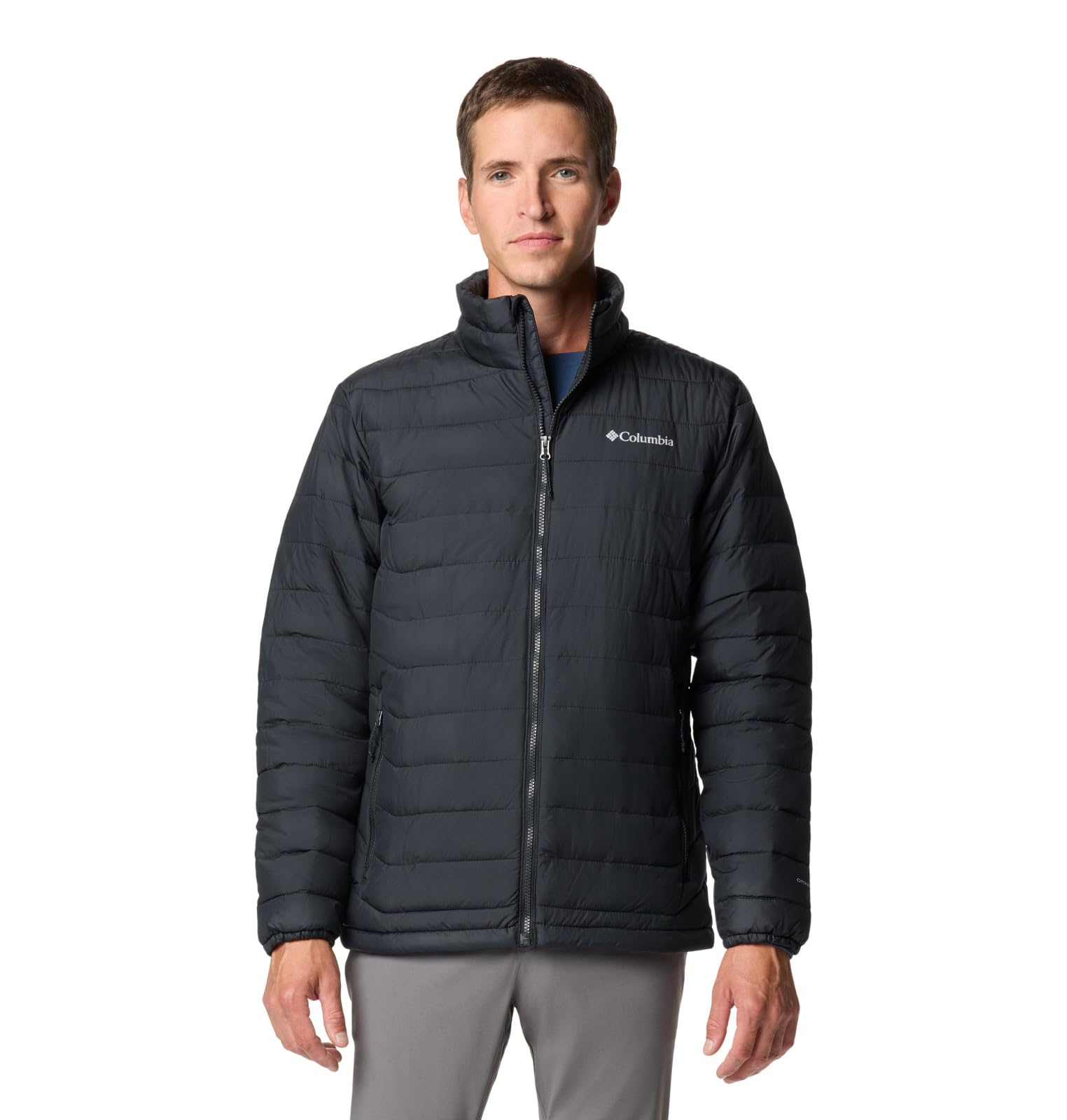
A lightweight jacket that packs surprising warmth for its size.
Columbia’s Powder Lite II is the jacket you grab when the forecast says “cold but no heavy precipitation.” It uses a thermal-reflective lining (a metallic dot pattern that bounces your body heat back at you) plus recycled synthetic insulation to keep you warm without the weight of a puffy down coat. The outer fabric has a rain-and-stain repellent finish, so light snow or drizzle beads off instead of soaking in.
This jacket ships in an active fit — it is trim through the body, so it does not flap in the wind. Extended and tall sizing are available for men who need them. With a 4.7-star average from 658 reviews, buyers consistently praise the warmth-to-weight ratio. Many note it works as a standalone piece for commutes in the 20s and 30s (Fahrenheit) and as a mid-layer under a shell for colder days.
Unlike the North Face Aconcagua 3 which uses 600 fill down, the Powder Lite uses synthetic insulation. Synthetics lose less warmth when wet but are slightly heavier and less compressible than down. If you expect significant rain or snow, you will want a waterproof shell over this.
The Highlights
- Thermal-reflective lining adds warmth without bulk
- Lightweight and easy to pack or carry
- Top-rated 4.7 stars from 658 reviews
The Boundary
- Synthetic insulation is heavier than down per degree of warmth
Choose this when: You want a lightweight, low-maintenance winter jacket for daily use that does not require careful waterproofing.
Look elsewhere for: Extreme cold or heavy wet snow — that calls for the insulated Carhartt Yukon Extremes coat.
4. Smartwool Men’s Classic Thermal Merino Base Layer Bottom
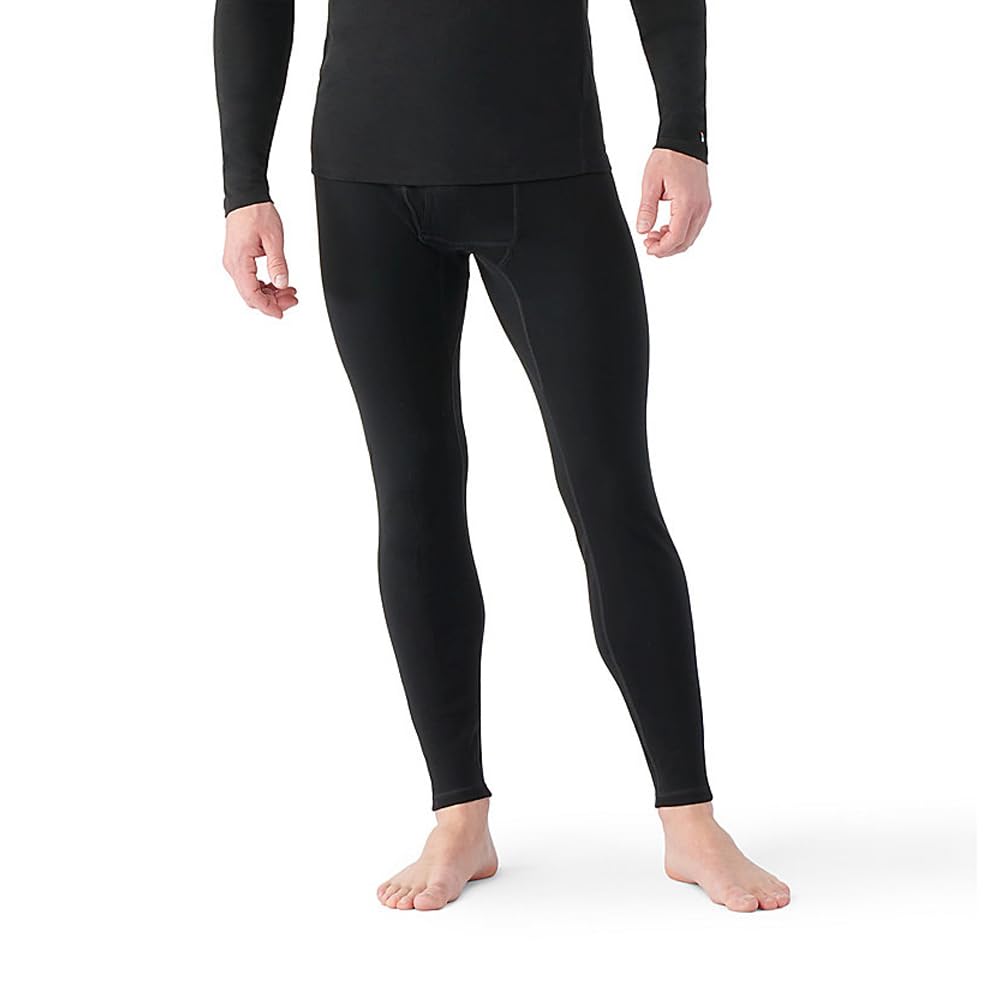
Pure merino wool that breathes, wicks, and stays fresh for days.
If you have never worn 100% Merino Wool as a base layer, this Smartwool bottom is the benchmark. Made in the USA from pure merino, it uses an interlock knitting (a double-layer stitch pattern) that boosts breathability and moisture-wicking while keeping the fabric from feeling flimsy. The fit is slim and designed to reduce sag and excess fabric, which matters when you are layering a shell pant over it for hiking or skiing.
The inseam measures 21.5 inches — a 3/4 length that stops above the ankle, so your boots or ski socks do not bunch up inside. Flatlock seams (stitches that lie flat against the skin) minimize chafing during long days of movement. Buyers consistently call this the most comfortable base layer they own, with several noting they wore it for week-long ski trips without washing and no odor.
The honest trade-off: at a premium price relative to the DANISH ENDURANCE option, you pay for the pure merino experience. Pure merino also requires gentle care — machine wash cold with wool detergent, no bleach, no dryer. It is an investment in comfort, not a set-and-forget item.
Why It’s the Gold Standard
- 100% Merino Wool — class-leading softness and natural odor resistance
- 3/4 length with 21.5-inch inseam avoids boot bulk
- Flatlock seams prevent chafing on long hikes
Worth Knowing
- Requires wool detergent and no heat drying
- Higher price than blended merino alternatives
Buy this if: You want the top-tier merino base layer for multi-day backcountry trips where odor control and comfort matter.
Save money if: Your use is occasional — the DANISH ENDURANCE blended merino will serve you well at a lower cost.
5. The North Face Men’s Aconcagua 3 Jacket

A 600 fill down jacket that pulls double duty as a mid-layer or standalone.
The Aconcagua 3 from The North Face strikes a rare balance: warm enough to wear alone on a cold day but slim enough to fit under a waterproof shell when the weather turns mean. It uses 600 fill waterfowl down insulation (a measure of loft — higher numbers trap more air and warmth per ounce) and wraps it in a wind-resistant, water-repellent DWR (non-PFC Durable Water Repellent) finish. This is an eco-conscious design — the DWR treatment avoids perfluorinated chemicals.
At 1.5 pounds, it is light enough to pack for travel yet delivers steady warmth into the teens. The active cut works well for layering without feeling restrictive. Buyers give it a 4.5-star average from 625 reviews, with many commenting that it replaced both a heavy winter coat and separate mid-layer in their closet.
Down’s weakness is wetness — once soaked, down clumps and loses insulation value. The DWR helps with light snow, but in a downpour you will want to layer the Carhartt Shoreline Shell over this. The hooded version below addresses this for those who want integrated head coverage.
What Makes It Great
- 600 fill down provides high warmth-to-weight ratio
- Non-PFC DWR finish sheds light snow
- Light enough (1.5 lbs) for travel
What to Watch For
- Down loses insulation power when wet
- No hood on this version
Reach for this if: You want one jacket that works for both casual winter wear and as a mid-layer under a shell for colder activities.
Get the hooded version if: You spend time in wind or precipitation and want head coverage without a separate hat.
6. The North Face Men’s Aconcagua 3 Hooded Jacket
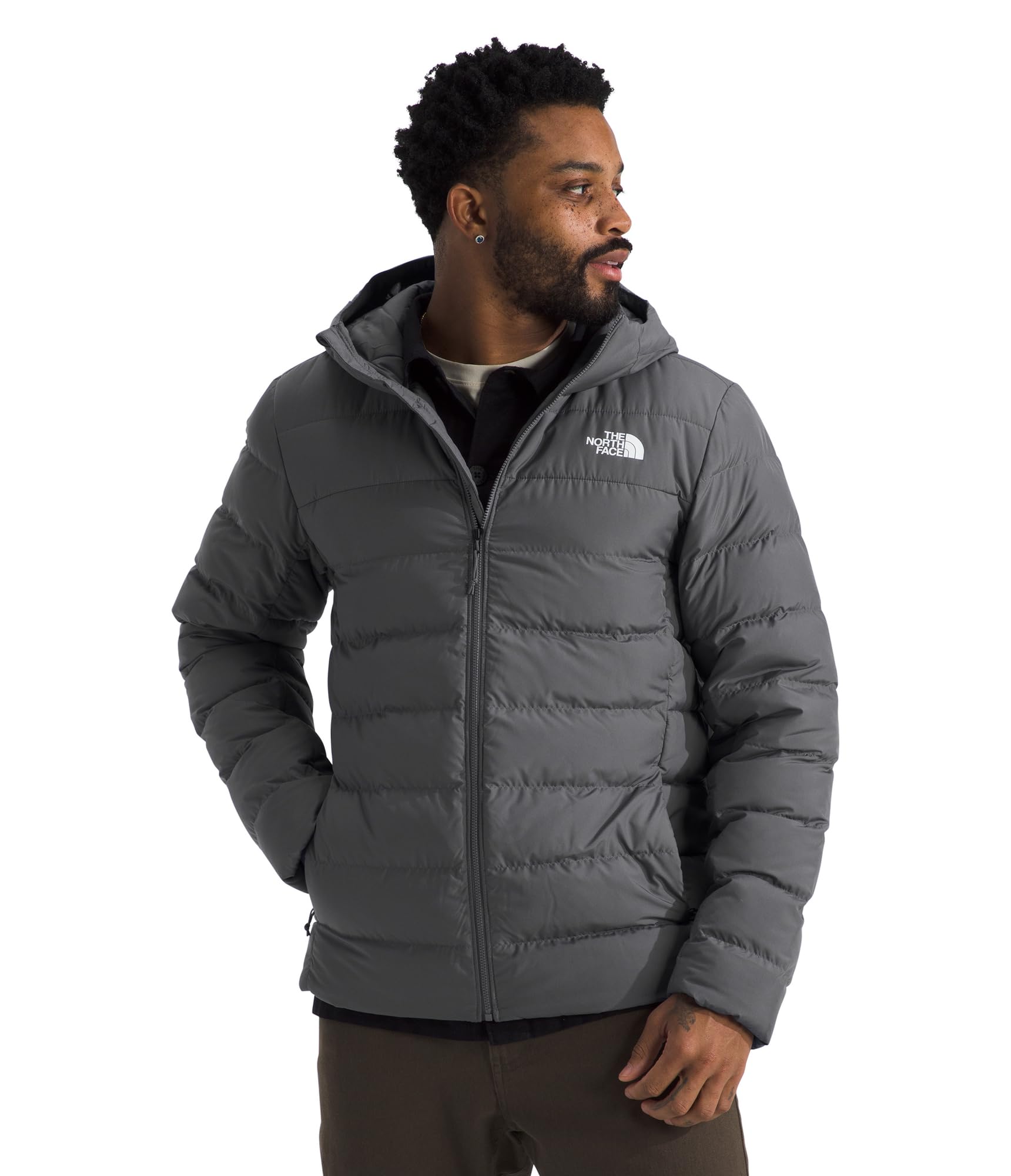
Same reliable 600 fill down, now with a hood that stays put in the wind.
This is the hooded sibling of the Aconcagua 3 jacket above — identical 600 fill waterfowl down insulation and wind-resistant, water-repellent DWR finish, but with an attached three-piece hood that adjusts via a cinch cord. The hood makes a real difference when you are facing wind chill or light snowfall without carrying an umbrella or hat. Cinch it tight and it seals warmth around your head without blocking peripheral vision.
Like the non-hooded version, this jacket works as a standalone for cold weather or a mid-layer under a shell for more extreme conditions. The eco-conscious DWR finish avoids perfluorinated chemicals. At 4.5 stars from 749 reviews, buyers frequently mention the hood fit is well-shaped — it does not flop forward or feel oversized.
The hood adds slight weight and bulk compared to the non-hooded version, but for anyone who regularly faces wind or light precipitation, the trade-off is worth it. You are essentially getting two jackets in one: an insulated hoodie and a packable down jacket. If you already own a good waterproof shell with a hood, the non-hooded version saves you the extra cost.
The Edge
- Three-piece hood with cinch cord blocks wind well
- Same versatile 600 fill down warmth as the jacket version
- Eco-conscious non-PFC DWR finish
The Reality
- Down remains vulnerable to heavy wetting
- Hood adds a minor amount of weight and cost
Choose this if: You need one jacket that covers both the commute and the trail, with a hood that actually fits and adjusts.
Save the money if: You already have a hooded shell — the non-hooded Aconcagua 3 plus a beanie achieves the same result.
7. Carhartt Men’s Yukon Extremes Loose Fit Insulated Coat

The coat that treats -20°F like a mild inconvenience.
The Carhartt Yukon Extremes is not subtle. It uses a 6.5-ounce, 500-denier Cordura nylon shell (a dense, abrasion-resistant fabric used in military gear) packed with 150g 3M Thinsulate insulation — one of the highest warmth-per-weight synthetic fills available. The Wind Fighter technology blocks gusts entirely, and the Rain Defender DWR coating sheds water on contact. This coat was built for people who have to be outside no matter the forecast.
The details are thoughtful: triple-stitched main seams survive hard daily use; rib-knit storm cuffs seal warmth around your wrists; a droptail hem covers your lower back when you bend or reach; and the 3M Scotchlite Carbon Black reflective tape on the back and front pockets keeps you visible at night. Pockets are abundant — left-chest zipper map pocket, two lower snap pockets, a right-chest snap-button pocket, plus inner zip and hook-and-loop pockets for secure storage.
The obvious trade-off is bulk. At 150g Thinsulate with a Cordura shell, this coat is heavy and not something you pack in a daypack. It also runs warm — you will overheat quickly indoors or during physical exertion. Buyers give it a 4.5-star average from 946 reviews, with most praising its durability for construction, farming, and extreme cold exposure. Customers note it handles sub-zero winds that would cut through lesser coats.
The Heavyweight Advantage
- 150g 3M Thinsulate insulation for brutal cold
- 500-denier Cordura shell is nearly indestructible
- Wind Fighter technology blocks wind completely
- Reflective Scotchlite taping for night visibility
The Heavyweight Cost
- Heavy and bulky — not for travel or casual wear
- Too warm for indoor use or mild winter days
Mandatory for: Anyone who works outdoors in sub-zero conditions, from construction to ice fishing to farming.
Too much if: Your winters average above freezing — the Columbia Powder Lite or the North Face Aconcagua will serve you better.
Understanding the Specs
GSM (Grams per Square Meter)
This number tells you how dense a fabric is, especially for base layers. A lower GSM like 140 is lightweight (good for high-output activities in mild cold). A midweight 180 gsm, which the DANISH ENDURANCE base layer uses, balances warmth and breathability for most winter conditions. Higher GSM means warmer but heavier fabric. In practice: 180 gsm works for skiing, shoveling, or sitting outside in the 20s — 140 gsm is better for running or hiking in the 30s.
Denier (Shell Fabric Density)
Denier measures the thickness of the individual fibers in a fabric. Higher denier means tougher, more abrasion-resistant material. The Carhartt Yukon Extremes uses a 500-denier Cordura shell — the same fabric found in military-grade backpacks. That is overkill for a suburban commute but a lifesaver if your job involves kneeling, crawling, or carrying heavy materials. By comparison, a typical lightweight jacket uses around 70 to 200 denier. Know your environment before choosing the shell toughness.
FAQ
What is the best layering system for extreme cold?
Is merino wool better than synthetic for a base layer?
What does 600 fill down mean in plain English?
Can I wear the Carhartt Shoreline Jacket in heavy rain?
How do I wash my Carhartt Yukon Extremes coat without damaging the insulation?
What is the difference between the North Face Aconcagua 3 with and without a hood?
Will the Columbia Powder Lite II fit under a shell jacket?
How durable is the Cordura shell on the Carhartt Yukon Extremes?
Which product is best for someone who lives in a mild winter climate?
Can I wear the Smartwool Classic Thermal Bottom for running in cold weather?
Final Thoughts: The Verdict
For most people, the best cold weather clothes for men winner is the Carhartt Shoreline Jacket because it gives you a fully waterproof, breathable shell that layers perfectly with any insulation you choose. If you want built-in warmth without extra layers, grab the Columbia Powder Lite II Jacket. And for brutal sub-zero work conditions, the standout is the Carhartt Yukon Extremes Insulated Coat.
How We Picked
We do not accept paid placement. Every pick is matched to a real buyer and a real use-case; we do not hands-on test units.
Sources & Methodology
Specifications: manufacturer listings and product documentation. Review insights: verified customer reviews, as of July 2026. Pricing: not shown on this page (it changes often); check the current price via the retailer link.
As an Amazon Associate, WellFizz earns from qualifying purchases. This does not affect which products we feature.
Related Guides

Mo Maruf
I created WellFizz to bridge the gap between vague wellness advice and actionable solutions. My mission is simple: to decode the research and give you practical tools you can actually use.
Beyond the data, I am a passionate traveler. I believe that stepping away from the screen to explore new environments is essential for mental clarity and physical vitality.