Our readers keep the lights on and my smoothie glass nicely filled. As an Amazon Associate, I earn from qualifying purchases.
Specs are compiled from manufacturer listings and verified buyer reviews and can change over time — please confirm the key details on the product page before buying.
Finding a real Chinese green tea that tastes like more than faint dust water is harder than it should be. Most grocery-store boxes sit on shelves for months, and by the time you brew them the floral notes are gone. You want that clean, sweet, slightly grassy cup with a real jasmine aroma — not a vague “green tea” flavor. The right loose leaf or bagged tea makes the difference between a ritual you look forward to and a chore you rush through. This guide walks you through four solid options so you pick a tea that actually delivers on taste, freshness, and value.
I’m Mohammad Maruf — the founder and writer behind WellFizz. This guide is built by comparing the manufacturers’ published specifications and the patterns across verified customer reviews, so you get each pick’s real strengths and trade-offs instead of marketing spin.
Each tea here was chosen for how closely it matches a classic Chinese green tea experience, from traditional 350-hour jasmine scenting processes to organic sourcing. If you are ready to find a genuinely aromatic, refreshing cup that does not taste stale, keep reading for the best chinese green tea.
Our Picks at a Glance

How To Choose The Best Chinese Green Tea
Chinese green tea spans a wide spectrum — from bagged supermarket blends to hand-rolled pearls that took weeks to make. Before you pick one, understanding the main factors that affect flavor, aroma, and freshness will save you from a disappointing brew.
Form Factor: Loose Leaf vs Pearls vs Bags
The shape of the tea determines how much surface area touches the water. Loose leaf teas, like the ones from Tiesta Tea and Rishi, give you whole or broken leaves that release flavor quickly. They are easy to measure and ideal for a teapot or infuser. Jasmine pearls — like TIAN HU SHAN’s Dragon Pearls — are rolled leaves that unfurl slowly. That slow release means you get multiple good steeps from the same handful. Tea bags, such as the Ten Ren option, are the easiest: just drop one in a cup. The trade-off is that bagged tea often uses smaller, dustier leaf pieces that can turn bitter if you steep them too long.
Scenting Method: Real Jasmine vs Artificial Flavor
Traditional Chinese jasmine green tea is scented naturally. Fresh jasmine blossoms are layered with the tea leaves overnight so the leaves absorb the floral aroma. The best producers repeat this process multiple times. TIAN HU SHAN, for instance, uses a four-cycle scenting process that takes 350 hours total. That is a massive difference from teas that just spray on artificial jasmine oil. If the label says “jasmine flavor” or “natural flavor” without mentioning jasmine flowers, the aroma will be one-note and fade fast after the bag opens. Your nose is the easiest test: authentic jasmine tea smells sweet and layered, not like perfume.
Water Temperature and Steep Time
Chinese green tea is delicate. Boiling water (212°F) will scorch the leaves and release bitter compounds called tannins. Every tea maker recommends water between 175°F and 185°F for green tea. That is around the temperature when water is steaming heavily but not bubbling. Steep times range from one minute (for pearls) to five to seven minutes (for looser-leaf blends). If you over-steep, you get a harsh, astringent cup no matter how good the leaf quality is. The easiest fix: use a thermometer or an electric kettle with a temperature setting so you hit the right range every time.
Quick Comparison
| Model | Best For | Weight | Form | Servings | Amazon |
|---|---|---|---|---|---|
| Rishi Tea Jasmine Green Tea★ Best Overall | Organic & premium loose leaf | 4.0 oz | Loose Leaf | 16+ cups | Amazon |
| TIAN HU SHAN Jasmine Dragon Pearls | Traditional scenting quality | 4.02 oz | Pearls | 20–25 cups | Amazon |
| Tiesta Tea Classic Jasmine | Best value per serving | 4.5 oz | Loose Leaf | Up to 50 cups | Amazon |
| Ten Ren Jasmine Tea Bags | Convenience & portability | 6.4 oz (50 bags) | Tea Bags | 50 cups | Amazon |
In‑Depth Reviews
1. Rishi Tea Jasmine Green Tea – Organic Loose Leaf Tea, Caffeinated Scented Chinese Green Tea with Floral Aroma & Taste – 4 Ounces, 16+ Servings
Our pick — over 4.5★ from 950+ verified ratings; the strongest balance of quality and price.
Organic credentials and a clean floral taste that does not need a chemistry lesson.
Rishi Tea is one of the few options here carrying USDA Organic, Kosher, and Non-GMO certifications, so you know exactly what is — and is not — in your cup. The green tea leaves come from Hubei and are traditionally scented with jasmine blossoms rather than artificial flavoring. Brewing is straightforward: mix 1.5 tablespoons (about 2–3 grams) of loose leaf into 12 ounces of water at 180°F, steep for three minutes, and you get a cup that is gently sweet with a noticeable floral top note. It hits the classic Chinese green tea profile without any bitterness as long as you respect that three-minute limit.
Customers note that the aroma is noticeably fresher than the typical grocery-store jasmine green tea, and many call it their daily driver because the flavor is consistent from bag to bag. At four ounces, the tin is compact but the loose-leaf format gives you control over strength — you can use more leaves for a bolder cup or less for a lighter steep. The biggest difference versus the TIAN HU SHAN pearls above is texture: Rishi is a loose-leaf cut, so it infuses faster but also fades sooner. You will likely get one solid steep and a weaker second one, unlike the pearls that hold flavor through four or five infusions.
The downside is that the tin holds only about 16–20 servings by the manufacturer’s recommendation, making it a premium choice in terms of cost per cup. But for drinkers who prioritize organic sourcing and want a no-fuss brewing process, this is the most reliable all-around pick in the list.
Best for daily drinkers who want certified organic Chinese green tea with a predictable, clean finish.
Trade-off to know: The loose-leaf format is slightly bulkier to store than a bagged option, and you will need an infuser or teapot to brew it — but the flavor payoff is worth the extra step.
Pick this if: You want organic certification plus a straightforward loose-leaf experience that delivers a genuine floral Chinese green tea every morning.
skip it if: You need a higher volume of tea per dollar or you prefer the multi-infusion endurance of pearl-style teas.
2. TIAN HU SHAN Jasmine Tea Jasmine Dragon Pearls Green Tea Loose Leaf 4oz (114g) Tin
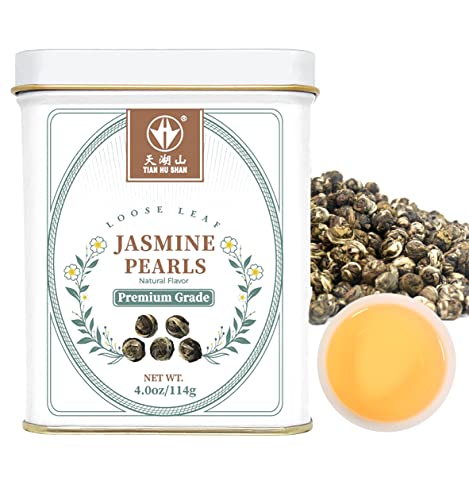
Hand-rolled pearls that spent 350 hours soaking up real jasmine fragrance.
If you want the most traditional Chinese green tea experience in this lineup, the TIAN HU SHAN Dragon Pearls are a step above the rest. Each pearl is a small rolled bundle of high-mountain green tea leaves that have been layered with fresh jasmine blossoms four separate times — a process that spans 350 hours. The result is a tea that smells deeply floral without a single artificial flavor or additive. Brew five grams (about a heaping teaspoon) in 8.5 ounces of water at 194°F, let it steep for just one minute, and you get a honey-hued cup that keeps delivering across four to five infusions.
Buyers report that the pearls unfurl beautifully as they steep, giving you a visual show along with the aroma. Unlike loose-leaf versions, the pearl form protects the leaves from oxidation, so the tea stays fresher for longer in the resealable tin. However, because the pearls are dense, you need to be careful with your water temperature — if you go above 194°F, the delicate leaves can turn bitter fast. Owners mention that sticking to the recommended steep time is critical; even an extra thirty seconds changes the taste from sweet to astringent.
Compared to the Rishi organic loose leaf below, the TIAN HU SHAN pearls give you more re-steeps per serving and a stronger jasmine presence due to the multiple scenting cycles. The trade-off is precision: you need a thermometer or variable-temperature kettle to hit that 194°F balance.
Worth the ritual if: You enjoy the process of watching pearls unfurl and want a traditional, multi-infusion tea with no artificial ingredients. It is ideal for anyone who values scenting craftsmanship over convenience.
One thing to know: At 4.02 ounces, this tin is 59% smaller by weight than the Ten Ren bagged tea, so expect fewer total servings — but each cup is richer and lasts through multiple steeps.
Reach for this if: You are willing to measure water temperature precisely for a reward of layered floral flavor across multiple cups.
Look elsewhere if: You want grab-and-bag convenience or you need a bigger quantity for daily drinking.
3. Tiesta Tea – Chinese Jasmine, Loose Leaf, Classic Jasmine, Medium Caffeinated Green Tea, Brews Up to 50 Cups, 4.5 Ounce Refillable Tin
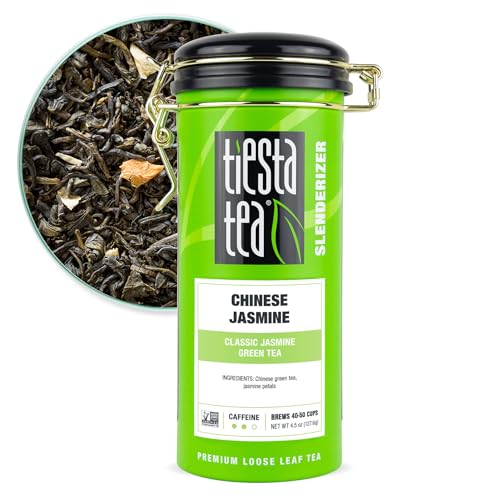
A 4.5-ounce tin that stretches to 50 cups without losing the sweet floral taste.
If your main goal is getting the most cups per dollar from a loose-leaf Chinese green tea, the Tiesta Tea Classic Jasmine is the clear winner on volume. At 4.5 ounces, it holds 12% more tea by weight than the Rishi offering, and the brand states you can get up to 50 cups from a single tin — about twice what the Rishi yields for a similar-sized container. The flavor profile is sweet and floral, built from Chinese green tea leaves blended with real jasmine petals rather than essential oils. Brewing is forgiving: 1.5 teaspoons per 8 ounces of water at 175°F, steeped for five to seven minutes.
The refillable tin is a practical touch. It seals shut tight so the leaves stay fresh longer, and it looks clean sitting on a kitchen counter. Reviewers mention that this tea works equally well hot or iced, making it a versatile option if you switch between seasons or prefer cold-brewing in warmer months. One reviewer noted that the jasmine flavor is present but not overpowering — it is a gentle floral note rather than an intense perfume, so it works well as an everyday tea that does not fatigue your palate.
Compared to the Ten Ren bagged tea below, the Tiesta loose leaf gives you better leaf quality (whole or broken pieces rather than dust), which translates to a smoother cup. The trade-off is brewing convenience — you need to measure and strain the leaves. But for the per-cup cost, this is the most economical entry into loose-leaf Chinese green tea on this list.
Best budget-friendly loose leaf: Affordable per-cup cost, a generous serving count, and a sweet floral taste that holds up to hot and cold brewing alike. Ideal for anyone switching from tea bags to loose leaf without wanting a price shock.
One caveat: The five- to seven-minute steep time is longer than the one-minute pearl steep, so you need patience — but the result is a gentle cup that rarely turns bitter.
Choose this if: You want the best value in loose-leaf Chinese green tea and do not mind a longer steep for a smooth, sweet-floral cup.
Pass if: You prioritize organic certification (this one does not carry organic labels) or you need a faster brewing experience.
4. Ten Ren Jasmine Tea bag, 50 bags (Taiwan)
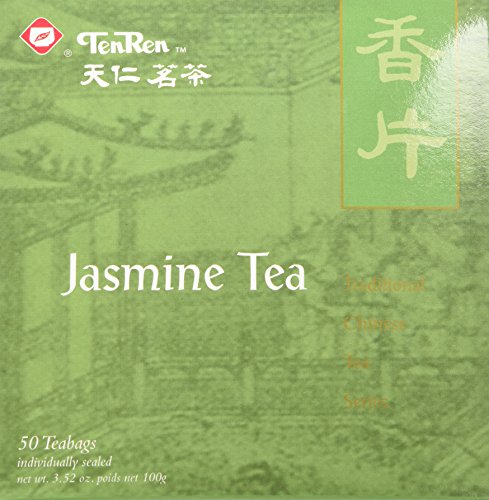
Fifty bags of Taiwanese green tea scented with jasmine — no measuring required.
Sometimes you just want to drop a bag in a mug and go. The tea is composed of green or pouchong (a lightly oxidized Chinese green) leaves that have been scented with fresh jasmine petals. When brewed at 175°F / 80°C, it produces a honey-yellow liquor with a tropical floral aroma and a slightly fruity taste. It is not as intensely aromatic as the pearl-style tea from TIAN HU SHAN, but for a bagged tea, the fragrance is genuinely pleasant and free of the papery taste that cheap tea bags often carry.
At 6.4 ounces, the box is the heaviest product in this lineup — 59% heavier than the TIAN HU SHAN tin. That weight translates directly into more servings, so if you drink tea every day and want something you do not have to think about, the Ten Ren bags are the no-fuss choice. Reviewers point out that the bags are large enough to give the leaves room to expand, which results in better flavor extraction than the tiny, tight bags used by many budget brands. One buyer mentioned that keeping the water below boiling is still important — the bags can develop a slight bitterness if you pour water straight off a full boil.
The obvious downside is that bagged tea inevitably uses smaller leaf particles than loose leaf or pearls. You sacrifice some depth and the ability to resteep the same leaves multiple times. But for offices, travel, or mornings when you simply do not have time for a teapot, these bags deliver a reliable, aromatic cup of Chinese green tea with minimal effort. If convenience is your top priority, this is the pick.
Best for grab-and-go drinkers: The ultimate low-maintenance option — 50 pre-portioned bags that pack easily in a desk drawer or suitcase, with a floral-fruity taste that beats most grocery-store jasmine teas.
Honest limitation: Bagged leaf quality means you get one decent steep per bag, and the flavor is milder than the loose-leaf or pearl alternatives. Not the choice for connoisseurs seeking multiple infusions.
Reach for this if: You value speed and simplicity above all else — a 50-bag box means you are set for weeks without measuring or cleanup.
pass on it if: You want the richer, multi-steep experience of whole-leaf or pearl-style teas, or you only buy organic-certified products.
Understanding the Specs
Scenting Cycles
This is the number of times fresh jasmine blossoms are layered with the tea leaves to transfer aroma. A single scenting cycle might take 24 hours. TIAN HU SHAN uses four cycles over 350 hours, which produces a deeper, more natural jasmine note. Fewer cycles or artificial flavor sprays result in a simpler aroma that fades faster once the container is opened. The more cycles, the more floral richness you get in each cup.
Steep Temperature and Time
Chinese green tea is delicate — boiling water at 212°F will scald the leaves and release bitter compounds. Most producers recommend water between 175°F and 194°F. Pearl teas usually steep in one minute because the rolled leaves need less time to unfurl. Loose-leaf blends often need three to seven minutes. If you ignore these ranges, you risk a harsh, astringent cup. The easiest way to stay consistent is an electric kettle with a temperature setting.
FAQ
What is the difference between jasmine green tea and regular green tea?
Can I reuse jasmine green tea leaves for a second steep?
Does jasmine green tea contain caffeine?
How should I store Chinese green tea to keep it fresh?
Why does my jasmine green tea taste bitter?
What is the difference between jasmine pearls and regular loose-leaf jasmine tea?
Is organic jasmine green tea better than non-organic?
Final Thoughts: The Verdict
For most people looking for a genuine, aromatic cup every morning, the best chinese green tea winner is the Rishi Tea Jasmine Green Tea because it combines organic certification with a forgiving loose-leaf format and a reliably sweet floral taste. If you want the most traditional craft experience — hand-rolled pearls that deliver multiple infusions from a single pinch — grab the TIAN HU SHAN Jasmine Dragon Pearls. And if convenience is your top priority, the Ten Ren Jasmine Tea Bags will keep you in floral flavor for 50 cups without a single extra step.
How We Picked
We do not accept paid placement. Every pick is matched to a real buyer and a real use-case; we do not hands-on test units.
Sources & Methodology
Specifications: manufacturer listings and product documentation. Review insights: verified customer reviews, as of July 2026. Pricing: not shown on this page (it changes often); check the current price via the retailer link.
As an Amazon Associate, WellFizz earns from qualifying purchases. This does not affect which products we feature.
Related Guides

Mo Maruf
I created WellFizz to bridge the gap between vague wellness advice and actionable solutions. My mission is simple: to decode the research and give you practical tools you can actually use.
Beyond the data, I am a passionate traveler. I believe that stepping away from the screen to explore new environments is essential for mental clarity and physical vitality.