Our readers keep the lights on and my smoothie glass nicely filled. As an Amazon Associate, I earn from qualifying purchases.
Specs are compiled from manufacturer listings and verified buyer reviews and can change over time — please confirm the key details on the product page before buying.
The glass in front of your lens should be invisible. A bad clear filter kills contrast, creates ghosting, and softens footage. Here are the top-rated options based on published specs and verified customer reviews—ranked by light transmission, coating quality, and fitment so you can keep your video clean without wasting money.
I’m Mohammad Maruf — the founder and writer behind WellFizz. This guide is built by comparing the manufacturers’ published specifications and the patterns across verified customer reviews, so you get each pick’s real strengths and trade-offs instead of marketing spin.
To keep your shots sharp, a strong clear filter for video needs high light transmission with coatings that repel water, oil, and dust while cutting unwanted reflections.
Our Picks at a Glance

How To Choose The Best Clear Filter For Video
A clear filter sits between your lens and the scene. Pick the wrong one and you’ll notice reduced sharpness, added flare, or dark corners. Focus on these three specs to avoid that.
Light Transmission
A percentage that tells you how much light reaches your camera sensor (your camera’s sensor is the chip that records the image). Higher numbers mean less light lost and better contrast—budget filters sit around 95%, while premium ones push past 99% for a brighter image.
Coatings
Microscopic layers on the glass reduce reflections (which cause ghosting and flare) and add a physical barrier against smudges, water, and dust. More layers generally perform better, but coating quality matters as much as the count.
Filter Thread Size and Ring Depth
Your lens has a thread diameter printed as the “ø” symbol—that number, say 77mm or 55mm, tells you the exact filter size to screw on. An ultra-slim ring (around 3.3mm for standard types) prevents dark corners (called vignetting) on wide-angle lenses where a thicker ring would block the light at the edges of the frame.
Quick Comparison
| Model | Best For | Light Transmission | Filter Thread Size | Weight | Amazon |
|---|---|---|---|---|---|
| K&F Concept 77mm Nano-X MC UV★ Best Overall | Best overall protection for 77mm lenses | 99.6% | 77mm | 81g | Amazon |
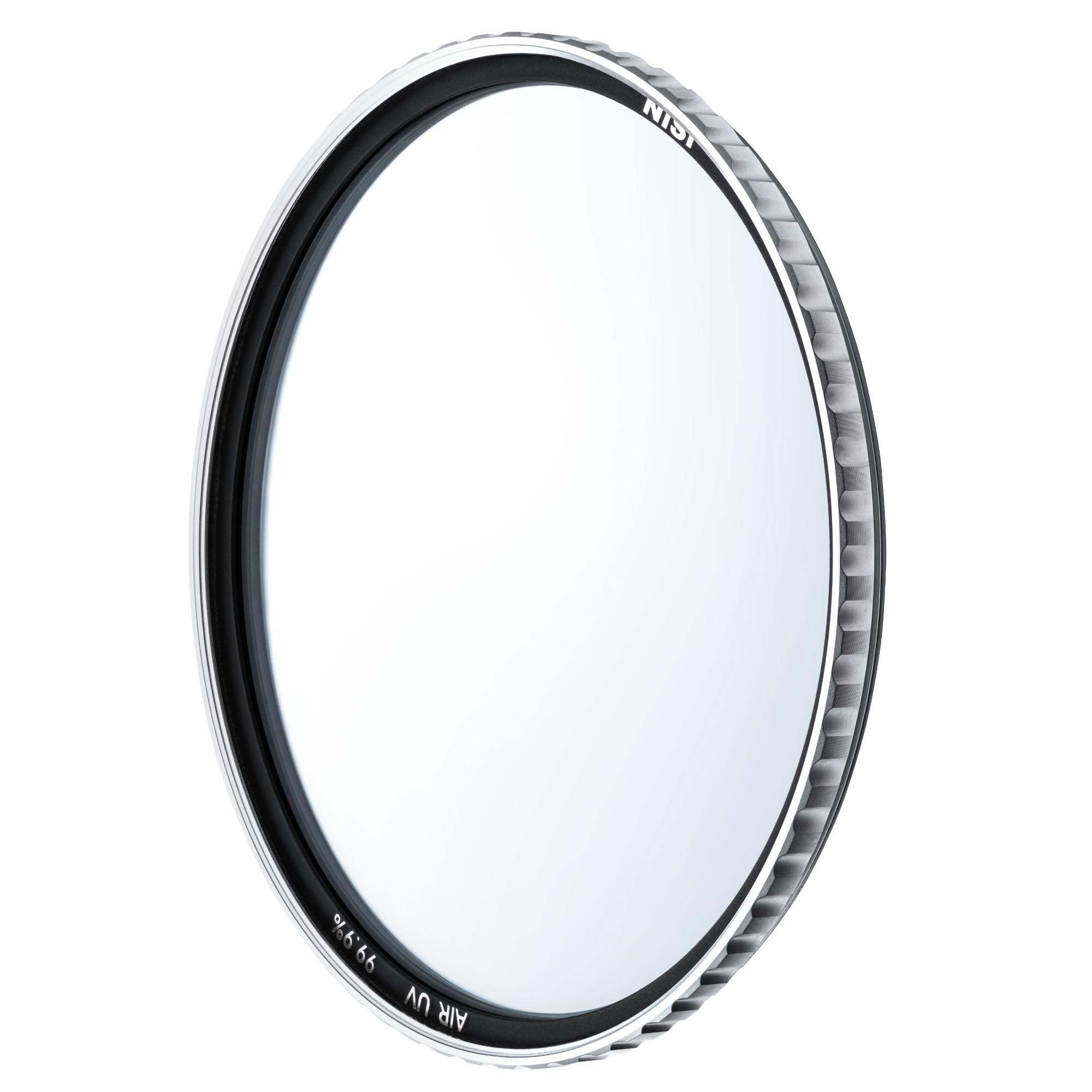
| NiSi 49mm Air UVAlso Great | Max sharpness with 48-layer coatings | 99.9% peak | 49mm | — | Amazon |
| Hoya NXT Plus 52mm UV | Reliable Schott B270 glass at a mid price | 98% | 52mm | — | Amazon |
| K&F Concept 55mm MCUV Nano-X | Ultra-low 0.1% reflectivity for 55mm lenses | 99.8% | 55mm | 60g | Amazon |
| B+W T-PRO 77mm Clear | Premium brass ring and nano coating | — | 77mm | 68g | Amazon |
| Canon Drop-in Clear Filter A | EF-EOS R adapter users | — | Drop-in mount | 17g | Amazon |
In‑Depth Reviews
1. K&F CONCEPT 77mm MC UV Protection Filter (Nano-X Series)
Our pick — over 4.5★ from 750+ verified ratings; the strongest balance of quality and price.
The K&F Concept 77mm Nano-X is a rugged 28-layer tempered glass filter purpose-built for protecting telephoto and wide lenses.
If you shoot with a 77mm thread lens, this filter provides tough physical protection without hurting image quality. It uses Japanese AGC optical glass with 28 multi-layer nano-coatings on both sides, hitting a 99.6% transmission rate—slightly behind the NiSi 49mm’s 99.9% but still excellent for the larger size. The tempered glass construction adds shock resistance: if you drop the lens, the tempered glass (a heat-treated glass that’s stronger and shatters into safe pieces) absorbs the impact instead of passing it to the front element. The frame is only 3.3mm thick, so even on wide-angle lenses you won’t see corner darkening. K&F Concept is the world’s No.1 lens filter brand by online sales volume (Euromonitor, 2024).
It weighs 81 grams, about 35% heavier than the 55mm K&F version. That extra heft comes from the larger glass and tempered substrate, and it is noticeable in a bag. On the plus side, the coatings are also hydrophobic (water-repelling) and scratch-resistant, so a quick microfiber wipe clears fingerprints. The thread is a standard 77mm, but confirm yours—it is marked beside a “Φ” symbol on your lens barrel.
Why it stands out
- Shockproof tempered glass provides physical impact protection for your lens
- 99.6% transmission with 28-layer coatings for clarity
- Ultra-slim 3.3mm frame avoids vignetting on wide lenses
What to consider
- At 81g, it is heavier than most clear filters in its class
- Only fits lenses with a 77mm filter thread — no step-up ring included
Reach for this if: You own a 77mm lens and want a single-filter protection package with shock absorption, high transmission, and anti-vignetting geometry.
skip it if: Weight is a critical concern on a gimbal setup — the 81g filter is heavier than many alternatives.
2. NiSi 49mm Air UV Protection Filter
The NiSi Air UV filter delivers near-invisible glass with a 99.9% peak transmission rate.
This filter lets more light through to your sensor than any other in this group—the 99.9% peak transmission means you lose almost nothing to reflection or absorption. It achieves this through a 48-layer ULRC nano-coating (ultra-low reflection coating), the highest layer count here. That coating also resists scratches, water, and oil, so you can wipe off smudges without damaging the surface.
The brass frame is a practical upgrade: brass resists binding and handles temperature changes better than aluminum, so the filter threads smoothly onto your lens and won’t get stuck. At a 49mm thread size, it fits many smaller primes and adapters. One thing to plan for: the front thread still accepts other filters or a lens cap, but the slim brass ring means a narrower grip. Buyers report taking extra care when threading it on. It blocks UV light below 395nm to cut blue haze without a color cast, and supports 100 MP still resolution.
What stands out
- Highest peak transmission in the group at 99.9%
- 48-layer ULRC nano-coating for reflections and durability
- Brass frame resists binding and is easier to thread
The compromises
- Only available in a 49mm thread size
- Slim brass ring can feel tight to grip during removal
- Premier pricing compared to similarly speced K&F options
The right call for: Videographers who want the absolute highest light transmission and fine-thread brass durability for a 49mm lens or adapter.
Look elsewhere if: You need a larger thread size like 72mm or 82mm — the Air UV is only supplied in 49mm at this time.
3. Hoya NXT Plus 52mm UV Filter
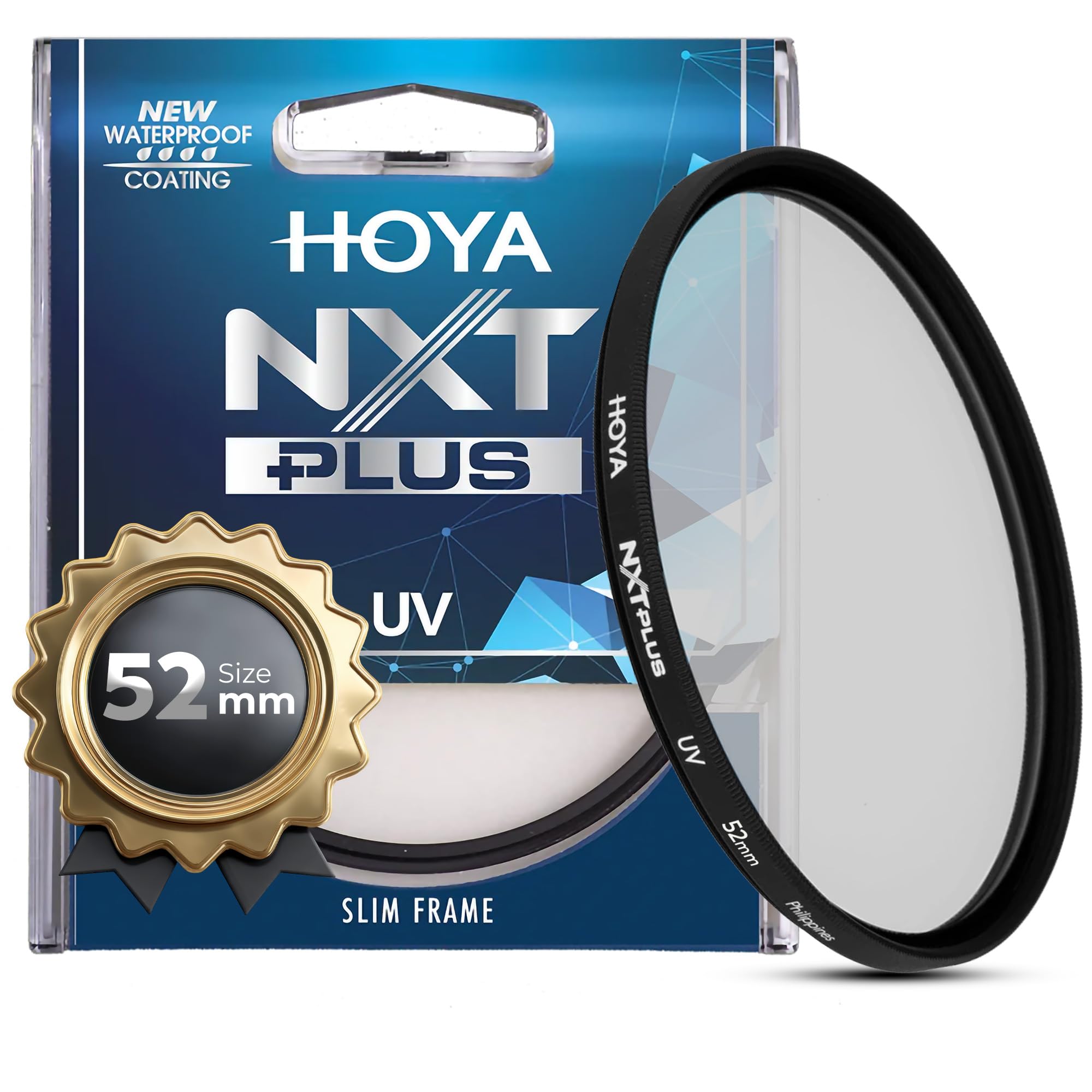
The Hoya NXT Plus 52mm combines a heritage optical glass maker with Schott B270 glass and a 10-layer multi-coating.
Hoya has been making optical glass since 1941, and the NXT Plus series uses Schott B270 glass (a high-homogeneity glass substrate known for accurate color reproduction). The 10-layer HMC anti-reflective coating (Hoya Multi-Coating) delivers 98% light transmission while reducing ghosting and flare—a visible difference when your subject moves through a backlit frame. The aluminum frame is thin enough to avoid vignetting on wide-angle lenses and pairs easily with lens hoods.
The coating includes a waterproof top-coat that repels smudges and dust, so cleaning takes a single gentle wipe. Owners mention the glass feels solid without being heavy, and the filter threads on smoothly with no binding. The 52mm size fits a broad set of kit lenses and primes, though Hoya offers sizes from 37mm up to 82mm if you need a different diameter. The trade-off: at 98% transmission it falls about 1.6% to 1.9% behind the NiSi and K&F competition, a difference you’ll mainly see in side-by-side low-light tests.
Strengths
- Schott B270 optical glass delivers natural color accuracy
- Waterproof coating makes cleaning smudges and dust simple
- Low-profile aluminum frame fits under lens hoods and prevents vignetting
Trade-offs
- 98% transmission is good but trails the main competition by a small margin
- Only 10 layers of coating compared to 28 or 48 on other picks
Best suited for: Videographers who want a reliable, easy-to-clean UV filter with proven glass heritage on a 52mm lens.
Consider something else if: You chase every last fraction of a percent in light transmission and want 99% or higher.
4. K&F CONCEPT 55mm Ultra-Low Reflectivity MCUV Lens Protection Filter (Nano-X Series)
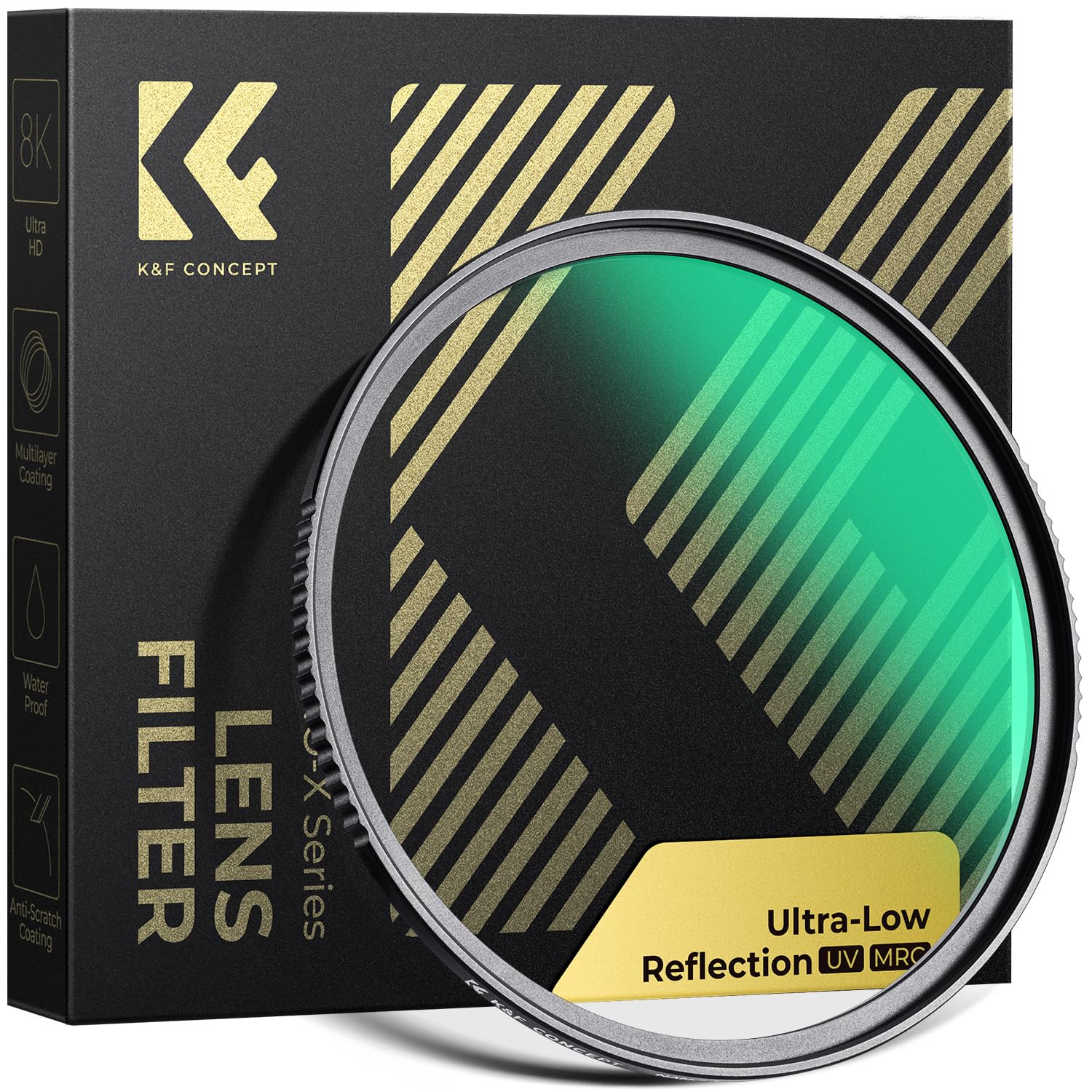
The K&F Concept 55mm MCUV hits 99.8% transmission while holding reflectivity down to just 0.1%.
This filter gives you the best anti-reflection performance in this guide for the price. The 28-layer multi-coating on both sides of the optical glass keeps reflectivity (the percentage of light that bounces off the glass instead of passing through) at 0.1%, meaning virtually no light bounces back to cause flare. The transmission rate of 99.8% puts it in the same territory as the NiSi Air UV for practical purposes, but at a more accessible price point. The frame is a lightweight aluminum-magnesium alloy, keeping the total weight at just 60 grams—noticeably lighter than the 77mm K&F model.
The flat glass surface is rated for 4K and 8K video, preventing micro-blurring at high resolutions. The alloy frame also resists wear over years of use. Reviewers frequently mention how much cleaner their footage looks after switching from a cheaper uncoated filter. Confirm you need the 55mm thread—the diameter is marked on the lens by the “ø” symbol. The slim ring design has less texture for grip, so some customers note it takes extra effort to unscrew if tightened by hand.
Why it stands out
- 99.8% transmission and 0.1% reflectivity for nearly invisible glass
- Lightweight 60g aluminum-magnesium frame for gimbal or travel use
- Certified for 4K/8K video with no added image softness
Things to watch
- Slim frame can be harder to grip when unscrewing
- Available in 55mm only — verify your lens thread before ordering
Reach for this if: You have a 55mm lens and want the best price-to-performance ratio with near-maximum transmission and minimal reflection.
pass on it if: You prefer a knurled brass ring for easier grip — the alloy frame here is smooth and slim.
5. B+W Clear Protection Filter T-PRO 77mm

The B+W T-PRO 77mm pairs a brass mount with a reflection-free titanium finish and MRC Nano coating.
B+W is a long-standing name in premium glass, and the T-PRO series delivers the build quality you expect. The filter uses MRC Nano coating (Multi-Resistant Coating), which repels dirt and water while also reducing reflections. Unlike standard black rings that can create a hard edge reflection, the titanium-color finish is designed to be reflection-free across its surface. The mount is brass rather than aluminum, so it threads onto your 77mm lens smoothly and won’t bind—even after temperature changes from outdoor shoots.
At 68 grams, it is 13 grams lighter than the K&F 77mm version while using a more rigid brass enclosure. The filter profile is thin enough to work down to 17mm full-frame format (a sensor size roughly 36mm x 24mm) without vignetting, making it a strong choice for wide-angle cinema primes. One thing to note: B+W does not publish a transmission percentage for this filter, so you cannot directly compare it to the 99.6% or 99.9% claims of other picks. Reviewers describe it as essentially invisible in their footage, which is the outcome you want, but the lack of a published number makes it harder to stack against competitors on paper.
what separates it
- Brass mount resists binding and provides smooth threading
- MRC Nano coating for water and dirt repellency
- Works down to 17mm full-frame without vignetting
Limitations
- No published transmission percentage — you cannot verify light loss on paper
- Premium pricing with no clear spec advantage over competitors
Best for: Shooters who value a brass ring for long-term reliability and a lower reflection finish on a 77mm lens.
Look elsewhere if: You want a verifiable transmission number to compare against — B+W does not list one.
6. Canon Drop-in Clear Filter A for EF-EOS R Adapter

The Canon Drop-in Clear Filter A is a bare-glass insert designed specifically for the EF-EOS R drop-in filter mount adapter.
This filter is different: it does not screw onto your lens. It slides into a dedicated slot inside Canon’s EF-EOS R drop-in filter mount adapter, fitting between the adapter barrel and the lens mount. The clear variant is meant for when you want the filter holder in place but do not want any optical effect—just a clean, protective pane of optical glass covering the mount opening. It weighs only 17.01 grams and measures 2.9 inches square, so it adds almost nothing to your adapter setup.
There are no coatings on this glass—the specs list “No Coating.” That means it lacks the anti-reflective and hydrophobic layers found on every other filter here. For video it is honest glass: no flare reduction, no smudge resistance, just a bare plane that blocks dust from reaching the rear element of your lens. If you shoot outdoors in bright light or near wet conditions, you will see more flare and have a harder time cleaning fingerprints than with a coated option.
What works
- Integrated drop-in design stays flush inside the Canon adapter
- Extremely lightweight at just 17 grams
- Simple dust barrier with no glass elements to clean
What does not
- No coating whatsoever — no anti-reflection, no smudge resistance
- Only compatible with Canon EF-EOS R drop-in mount adapter
- No published transmission rate; bare glass will flare more than coated competitors
Intended for: Canon shooters who already own the drop-in filter mount adapter and want a bare glass placeholder for dust protection.
Not for you if: You need lens-threaded protection, anti-reflection coatings, or any video-specific optical enhancement—this is a bare glass drop-in only.
Understanding the Specs
Light Transmission
A percentage that tells you how much visible light passes through the filter to reach your camera sensor. A higher number—like 99.8% or 99.9%—means less light is reflected or absorbed, so your video stays bright and contrasty. A filter at 98% is good but will lose slightly more light than one at 99.6% in low-light scenes.
Multi-Layer Coatings (HMC / MCUV / ULRC)
Thin layers of material applied to both sides of the glass. Each layer reduces reflections and adds physical resistance to water, oil, dust, and scratches. More layers usually mean better performance, but the quality of the coating material matters more than the raw count. The NiSi uses 48 layers, while the K&F filters use 28 layers—both produce excellent results.
FAQ
Will a clear filter degrade video sharpness?
What filter thread size do I need for my camera lens?
Is a UV filter the same as a clear filter for video?
Will a clear filter cause vignetting on a wide-angle lens?
Can I stack a clear filter with a variable ND for video?
How do I clean a clear filter without scratching it?
What does 0.1% reflectivity mean in real video terms?
Does the Canon Drop-in Clear Filter A fit any mirrorless adapter?
Final Thoughts: The Verdict
For most buyers, the clear filter for video winner is the NiSi 49mm Air UV Protection Filter because it delivers the highest light transmission at 99.9% peak with a premium brass frame and 48-layer coating that resists reflections and physical wear. If you want the best all-round protection for a 77mm lens, grab the K&F Concept 77mm MC UV Protection Filter with its shockproof tempered glass and 28-layer coating. And for budget-conscious video shooters with a 55mm lens, the K&F Concept 55mm MCUV at 99.8% transmission and 0.1% reflectivity is a remarkable value that punches far above its tier.
How We Picked
We do not accept paid placement. Every pick is matched to a real buyer and a real use-case; we do not hands-on test units.
Sources & Methodology
Specifications: manufacturer listings and product documentation. Review insights: verified customer reviews, as of July 2026. Pricing: not shown on this page (it changes often); check the current price via the retailer link.
As an Amazon Associate, WellFizz earns from qualifying purchases. This does not affect which products we feature.
Related Guides

Mo Maruf
I created WellFizz to bridge the gap between vague wellness advice and actionable solutions. My mission is simple: to decode the research and give you practical tools you can actually use.
Beyond the data, I am a passionate traveler. I believe that stepping away from the screen to explore new environments is essential for mental clarity and physical vitality.