Our readers keep the lights on and my smoothie glass nicely filled. As an Amazon Associate, I earn from qualifying purchases.
Specs are compiled from manufacturer listings and verified buyer reviews and can change over time — please confirm the key details on the product page before buying.
Finding a gaming TV that delivers smooth motion and HDMI 2.1 features while staying affordable used to feel like a myth. Budget-friendly TVs now offer native 120Hz or 144Hz panels, VRR, and low input lag at prices that rival dedicated gaming monitors. This guide cuts through marketing hype to find TVs that deliver fluid, responsive gaming.
I’m Mohammad Maruf — the founder and writer behind WellFizz. This guide is built by comparing the manufacturers’ published specifications and the patterns across verified customer reviews, so you get each pick’s real strengths and trade-offs instead of marketing spin.
You want a screen that keeps up with your console without wrecking your budget. Here are the best cheap gaming TV options that actually deliver on speed, picture quality, and value for your setup. cheap gaming tv
Our Picks at a Glance

How To Choose The Best Cheap Gaming TV
Buying a TV for gaming is different than buying one for just movies. You need to focus on speed, connectivity, and picture processing that keeps up with fast-paced action. Here are the key specs to prioritize.
Refresh Rate: The Foundation of Smooth Motion
The refresh rate, measured in Hertz (Hz), tells you how many times the screen updates per second. A standard TV runs at 60Hz, meaning 60 frames per second. For gaming, you want at least a native 120Hz panel. This makes motion from a racing game or a fast shooter look significantly smoother and more responsive. The data shows models offering 144Hz native, which also benefits PC gaming.
HDMI 2.1: The Port That open up Full Potential
HDMI 2.1 is the current standard for gaming. It has the bandwidth to carry a 4K signal at 120Hz or 144Hz, along with Variable Refresh Rate (VRR) and Auto Low Latency Mode (ALLM). VRR matches the TV’s refresh rate to the game’s frame rate, eliminating screen tearing. ALLM switches the TV to a low-lag mode automatically when you fire up a game. Check that the TV has at least one or two HDMI 2.1 inputs.
Display Technology: QLED and Mini-LED vs. Standard LED
Standard LED TVs are fine for basic use. But for a gaming TV, look for QLED (Quantum Dot) or Mini-LED tech. QLED delivers much brighter and more vibrant colors. Mini-LED uses thousands of tiny LEDs for backlighting, which allows for local dimming zones. This gives you deeper blacks and better contrast, especially important for HDR gaming.
Quick Comparison
| Model | Best For | Refresh Rate | HDMI 2.1 Ports | Display Tech | Amazon |
|---|---|---|---|---|---|
| TCL 55T7★ Best Overall | Best Overall Value | 120Hz-144Hz | 1 (eARC) | QLED | Amazon |
| iFFALCON 55U85Gaming Spec Champion | Gaming-Specs Bargain | 144Hz | 4 | Mini-LED | Amazon |
| Hisense 55U6SF Pro | Bright Room Gaming | 144Hz | — | Mini-LED | Amazon |
| TCL 55QM6K | Premium Features for Less | 144Hz | 1 (eARC) | Mini-LED | Amazon |
| Amazon Ember 55 | Ecosystem Integration | 144Hz | — | Mini-LED QLED | Amazon |
| Sony Bravia 3 II 43″ | PS5 Companion | 120Hz | 1 | LED | Amazon |
| Samsung S90F 48″ | Premium Picture Quality | 144Hz | — | OLED | Amazon |
In‑Depth Reviews
1. TCL 55 Inch Class T7 Series (55T7)
The best balance of gaming speed and picture quality at a very reasonable price.
You get smooth, tear-free gaming on this TCL thanks to a 120Hz panel (which can reach 144Hz when you drop to 1080p resolution) and a 240Hz Variable Gaming Refresh Rate (VRR, which syncs the screen to your game’s frame rate to stop tearing). The QLED panel (Quantum Dot LED, which boosts color brightness and range) delivers rich, vibrant colors that buyers report look “stunning” for PC gaming, with one owner noting “excellent PC gaming (Crimson Desert) with no lag/blur.” It also includes Dolby Vision and HDR10+ (two high-dynamic-range formats that improve contrast and color in bright and dark scenes), so your games get both speed and good contrast.
Unlike the pricier TCL QM6K, the T7 uses a standard QLED backlight rather than Mini-LED, so deep blacks in dark scenes are less pronounced. The 4 HDMI inputs include one with eARC, but only one port runs the full high-bandwidth gaming spec. Buyers mention the Google TV interface is responsive, though initial setup requires an internet connection before using any HDMI inputs.
Why it works for gaming
- Native 120Hz refresh rate with a 240Hz VRR mode keeps fast-paced shooters smooth.
- QLED technology provides excellent color volume and brightness for HDR gaming.
- Owners mention lag-free performance with both PC and PS5 gaming.
The trade-offs
- Standard LED backlight, not Mini-LED, so black levels are not as deep.
- Only one HDMI port is fully tune for high-bandwidth gaming.
- Does not wake properly as a PC monitor from power save mode.
Best for: Gamers who want a proven, affordable 120Hz QLED TV with strong HDR and reliable performance for consoles or PC.
Not ideal if: You need deep inky blacks for a dark room setup or require more than one fully-spec’d HDMI 2.1 port.
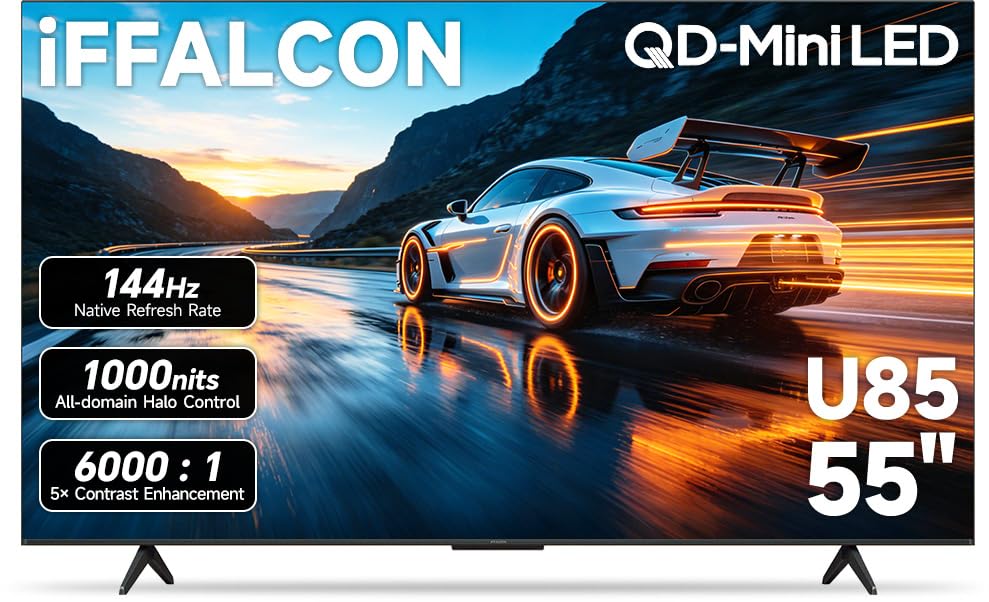
2. iFFALCON 55″ 4K MiniLED Smart TV (55U85)
A Mini-LED gaming TV with four full HDMI 2.1 ports at a stunningly low price.
This is the spec-sheet surprise of the list. The iFFALCON 55U85 delivers a native 144Hz Mini-LED panel, a 6,000:1 contrast ratio, and up to 1000 nits of peak brightness. It is also the only budget TV here with four HDMI 2.1 ports: two run 4K at 144Hz for your consoles or gaming PC, and two handle 4K at 60Hz. That means you can keep a PS5, Xbox Series X, PC, and a soundbar all connected at full bandwidth. One reviewer called it “a quality gaming TV” that exceeded expectations versus their previous Samsung.
Customers note it “runs 120 fps with games that allow it and the graphics are phenomenal.” The FreeSync Premium Pro certification keeps motion tear-free. As a TCL subsidiary, iFFALCON shares much of the same Mini-LED technology as the TCL QM6K series but sells for less. One buyer directly noted it is “exactly the same as TCLs QM6k series” and a way to “save or more.” The built-in 50W audio with a dedicated woofer provides solid sound for a TV.
Standout gaming features
- Native 144Hz panel with FreeSync Premium Pro for tear-free gaming.
- Four HDMI 2.1 inputs — more than any other TV in this price range.
- Mini-LED backlighting with 6,000:1 contrast ratio for vibrant HDR.
Things to consider
- Brand is less known than TCL or Hisense, which may concern some buyers.
- Some reviews note the TV only supports 60Hz without enabling the 144Hz mode.
- Google TV interface includes some sponsored apps and ad content.
Reach for this if: You need multiple HDMI 2.1 ports for a full console and PC gaming setup and want Mini-LED contrast without paying a premium.
Look elsewhere if: An unfamiliar brand name makes you uneasy, or you prefer a more established warranty and support network.
3. Hisense 55″ U6 Pro Series Mini-LED (55U6SF Pro)
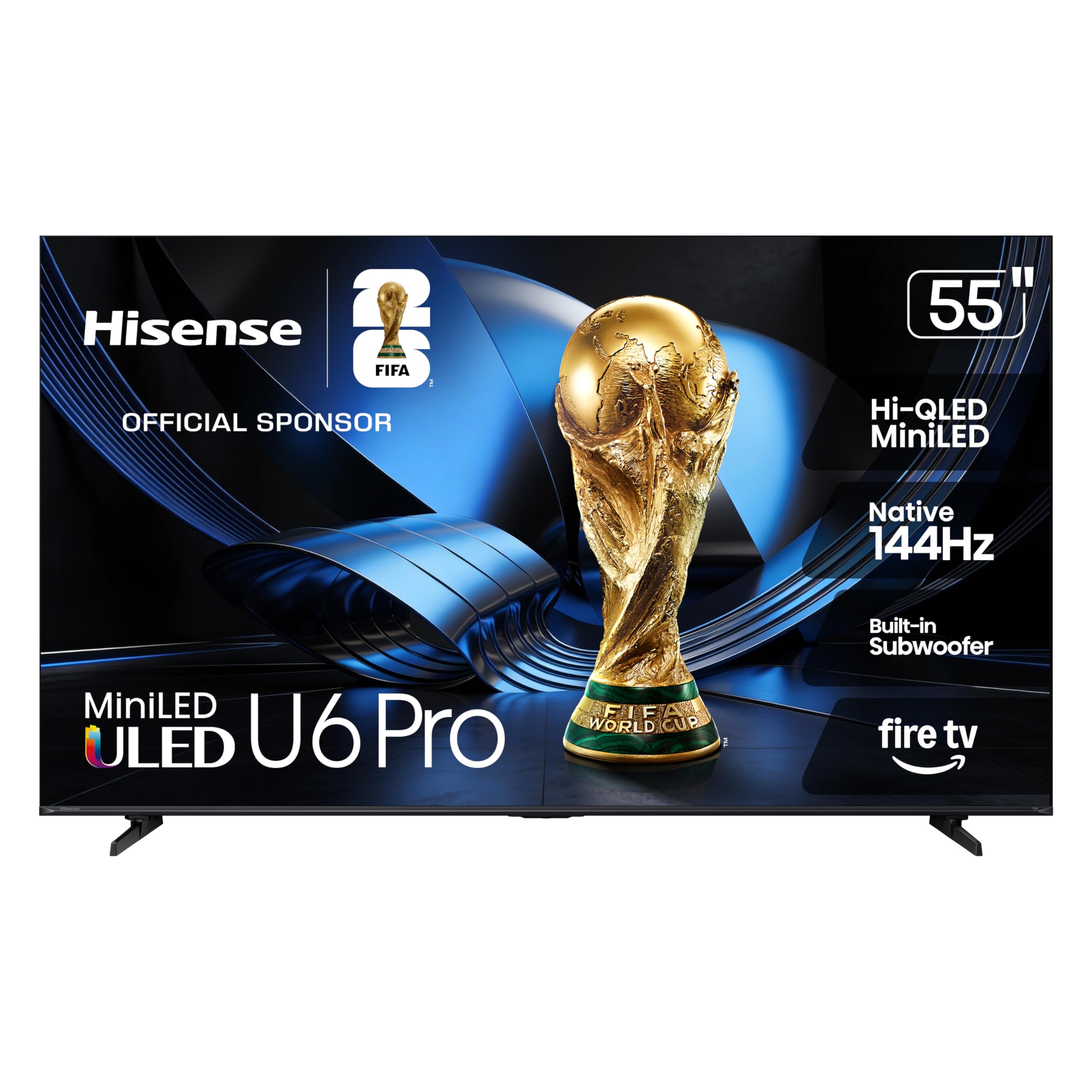
A native 144Hz Mini-LED panel with an anti-glare screen that handles sunny rooms well.
The Hisense U6 Pro is built for gamers who play in a bright living room. It has an anti-reflection, glare-free display, so you can see your game clearly even with windows or overhead lights. The native 144Hz refresh rate keeps motion smooth, and the Hi-QLED Mini-LED backlighting delivers strong contrast. Hi-View AI Engine automatically tunes the picture for different content — switching from a dark horror game to a bright FIFA match — without you needing to fiddle with menus.
Reviewers point out the picture is “bright, clear, and the colors look great right from the start,” and note that gaming is “smooth as well, with no noticeable lag or motion issues.” The built-in subwoofer provides deeper bass than most TVs at this level. Unlike the iFFALCON which focuses on pure gaming specs, the U6 Pro uses the Fire TV platform, which some buyers prefer for its ecosystem integration with Alexa+. The anti-glare feature was specifically praised as living “up as advertised.”
What stands out
- Native 144Hz panel with Hi-QLED Mini-LED for bright, contrast-rich gaming.
- Anti-glare screen reduces reflections in well-lit rooms.
- Built-in subwoofer provides better bass than standard TV speakers.
What to note
- Shoppers say that a soundbar still improves audio significantly.
- Fire TV interface may have slower loading than Google TV for some apps.
- Only a few reviews available due to its 2026 model release.
Choose this for: Gaming in a well-lit room where reflections are a problem, and you want strong built-in sound from a subwoofer.
skip it if: You prefer the Google TV interface or need the full HDMI 2.1 port count of the iFFALCON.
4. TCL 55 Inch Class QM6K Series (55QM6K)

Mini-LED contrast and a 144Hz panel with premium audio from Onkyo.
The TCL QM6K sits a step above the T7, bringing in Mini-LED backlighting with a Halo Control System for local dimming. This means deeper blacks and less blooming around bright objects during dark game scenes. The native 144Hz refresh rate and Motion Rate 480 keep everything sharp. The Onkyo audio system provides impressive built-in sound — one buyer called the audio “very impressive.” The remote even lights up for use in the dark.
Buyers describe it as “an absolutely incredible tv” for the price, especially for Xbox Series X gaming. One reviewer directly compared it to the Hisense they returned, noting the TCL has a “very quick response time” and no menu delay. Unlike the iFFALCON which offers four HDMI 2.1 ports, the QM6K focuses on picture processing and audio quality instead. The Google TV interface runs smoothly. The anti-reflective screen is also praised as “amazing,” helping with daytime gaming.
Why it stands out
- Mini-LED with local dimming eliminates blooming for better dark scene detail.
- 144Hz native refresh rate combined with Motion Rate 480 for sports.
- Onkyo audio system delivers strong built-in sound quality.
Where it falls short
- Does not have the full four HDMI 2.1 ports of the cheaper iFFALCON.
- Built-in sound may still need a soundbar in a very large room.
- Some buyers report motion smoothing effects must be turned off manually.
A solid pick for: Gamers who prioritize deeper blacks and better contrast from Mini-LED tech over having the most HDMI 2.1 ports.
Consider alternatives if: You need to connect multiple next-gen consoles and a PC simultaneously at high bandwidth.
5. Amazon Ember 55″ Mini-LED Series with Fire TV
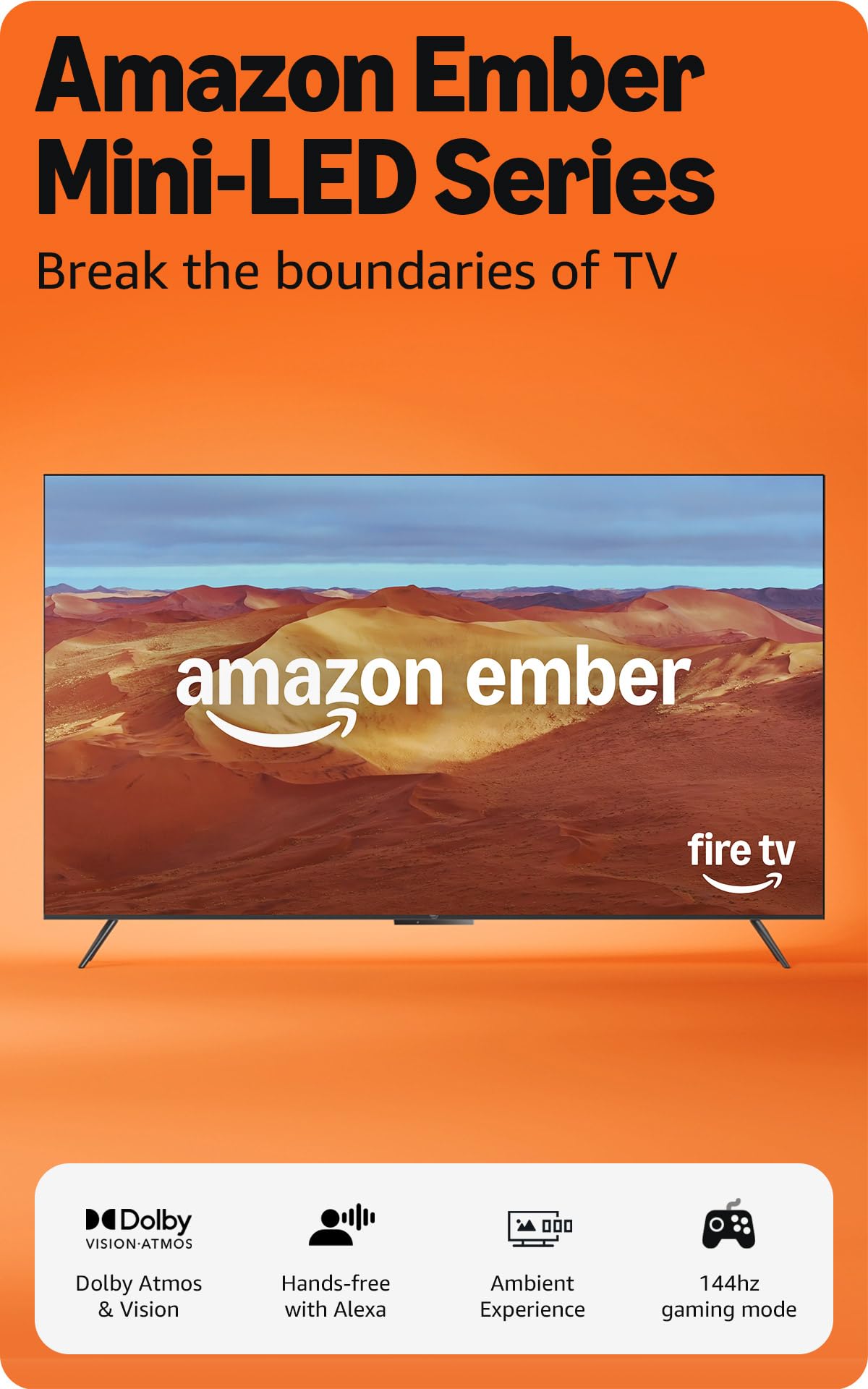
Amazon’s own gaming-focused TV with 512 dimming zones and up to 1400 nits of brightness.
The Ember 55 is Amazon’s direct answer to the question of a gaming TV. It uses a Mini-LED QLED panel with 512 dimming zones, which is a lot for this price. This level of local dimming gives you very good contrast and makes HDR highlights pop. The peak brightness of up to 1400 nits means it handles bright room gaming better than most standard LED TVs. It is AMD FreeSync Premium Pro-certified, ensuring your PC games stay tear-free.
Owners mention the picture is “close to OLED” in quality but at a fraction of the cost, and that “4K sports look amazing.” The Fire TV interface is deeply integrated with Alexa, and the TV has a unique “Ambient Experience” mode that shows artwork when not in use. However, some reviews mention the TV can be “slow to turn on” and occasionally freeze, requiring a physical unplug to reset. This is a known issue noted across several reviews. The 2026 model release includes WiFi 6E.
Why it stands out
- 512 dimming zones and 1400 nits of peak brightness deliver outstanding HDR.
- FreeSync Premium Pro certification ensures smooth PC gaming.
- smooth Alexa integration and ambient display mode add daily value.
Things to be aware of
- Multiple reports of the TV freezing or becoming unresponsive.
- Software updates initially caused slow menus before being fixed with a FireStick.
- Only 8GB of internal storage for apps.
Go for it if: You are deeply invested in the Amazon ecosystem and want a bright, high-contrast Mini-LED screen with very strong gaming features.
Be cautious if: Stability is your top priority, as the occasional freeze and slow startup are noted in buyer reviews.
6. Sony BRAVIA 3 II 43 Inch (K-43XR30M2)
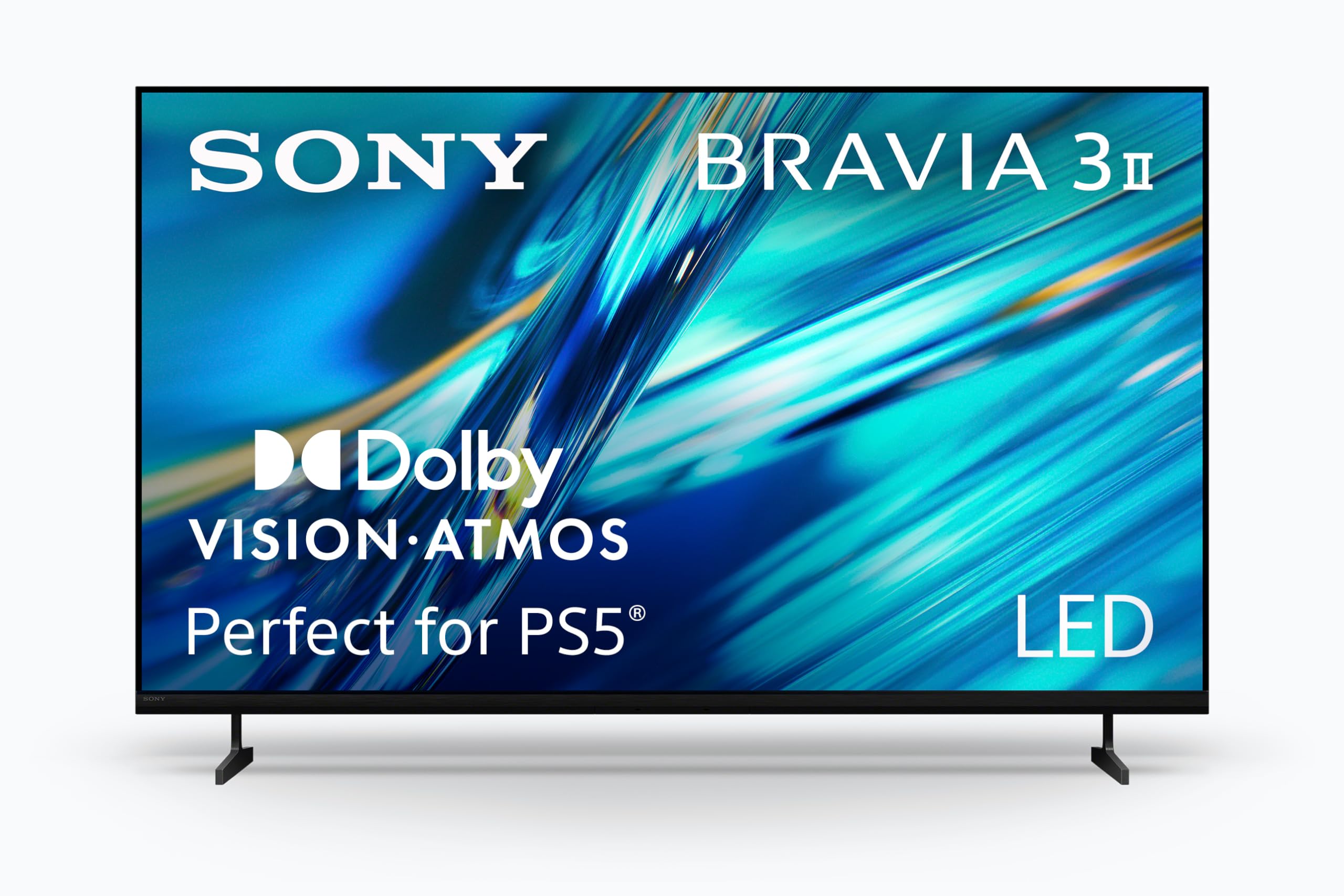
Sony’s XR processor and exclusive PS5 features make this a must for PlayStation owners.
The Sony BRAVIA 3 II is specifically built with the PS5 in mind. It has exclusive features like Auto HDR Tone Mapping and Auto Genre Picture Mode that automatically tune the picture when you connect a PlayStation 5. The XR Processor uses AI to enhance color, contrast, and clarity in real-time. While the panel is a standard LED with 120Hz refresh rate (not Mini-LED), the processor does impressive work making content look sharp. It includes HDMI 2.1 with 4K/120, VRR, and ALLM for responsive gameplay.
Buyers describe the picture as “beautiful” and note it works “great with my stereo and the sound is really good.” Sony’s reputation for reliability is a strong point here — one reviewer noted their old Sony Bravia lasted seven years. However, the 43-inch size is smaller than the other picks, which makes it less rich for a living room but ideal for a dedicated gaming desk. One buyer had a serious software issue requiring a return, citing casting problems that Sony support could not fix.
Best features for gamers
- Exclusive PS5 auto-optimization features for HDR and genre-specific picture modes.
- XR Processor with AI delivers excellent upscaling and motion handling.
- HDMI 2.1 with 4K/120, VRR, and ALLM for smooth console gaming.
Drawbacks to know
- Standard LED backlight lacks the contrast of Mini-LED or OLED panels.
- 43-inch size is smaller than the 55-inch standard for living room gaming.
- Some users report software issues with casting and streaming.
Perfect for: PS5 owners who want a dedicated compact gaming TV with smooth auto-optimization and Sony’s reliable XR processing.
Not ideal for: Large living room setups or anyone who prioritizes deep black levels over brand-specific gaming features.
7. Samsung 48-Inch Class S90F (48S90F)

An OLED panel with a 144Hz VRR mode for the deepest blacks and best contrast in the list.
The Samsung S90F is the only OLED on this list, and it shows. OLED panels produce perfect blacks because each pixel lights itself individually and can turn off completely. This makes HDR games look incredibly vivid and three-dimensional. The NQ4 AI Gen3 processor, powered by 128 neural networks, upscales lower resolution content to 4K with impressive detail. The Motion Xcelerator 144Hz delivers smooth gameplay, and the AI processor smooths fast-moving objects in sports games.
Buyers rave about the picture, calling it “easily the best TV I’ve ever owned” and noting it delivers “perfect blacks and amazing contrast.” The build quality is typical Samsung — very good — but some buyers warn about the edge-to-edge glass being fragile without a protective bezel. One reviewer received a unit with a cracked panel. At 48 inches, it is a smaller desktop gaming companion rather than a main living room screen. The Tizen interface is a personal preference; some find it similar to LG’s WebOS.
Why picture purists love it
- OLED panel delivers infinite contrast and perfect blacks for HDR gaming.
- NQ4 AI Gen3 processor with 128 neural networks for excellent upscaling.
- 144Hz VRR mode provides elite-level gaming smoothness.
Key considerations
- OLED panels can suffer from burn-in with static HUDs over many years.
- Glass edge is fragile with no bezel protection; careful handling is essential.
- 48-inch size is better for a dedicated desk setup than a main living room.
Buy this for: class-leading picture quality with perfect blacks and vibrant colors, ideal for a bedroom or dedicated gaming space.
Avoid if: You need a large living room screen, or you are worried about OLED burn-in from long sessions with static UI elements.
Understanding the Specs
Refresh Rate (Hz)
This is the number of times the TV redraws the image each second. A standard TV is 60Hz. For a gaming TV, you want a native 120Hz or 144Hz panel. This makes fast motion in games and sports look smooth and clear rather than blurry. The “Motion Rate” number you sometimes see (like Motion Rate 480) is a marketing term that uses processing tricks — always look for the native panel Hz first.
HDMI 2.1
This is the port standard needed to get the full benefit of a high-refresh TV. HDMI 2.1 has enough bandwidth to carry a 4K image at 120Hz or 144Hz. It also supports Variable Refresh Rate (VRR), which matches the TV’s refresh rate to the game’s frame rate to eliminate screen tearing, and Auto Low Latency Mode (ALLM), which automatically switches the TV to a low-input-lag mode when you start a game. For PS5 or Xbox Series X, HDMI 2.1 is essential.
QLED vs. Mini-LED vs. OLED
These are different screen technologies. QLED (Quantum Dot LED) uses a standard LED backlight with a quantum dot layer for better color and brightness. Mini-LED uses thousands of tiny LEDs as the backlight. This allows for local dimming zones, which improve contrast by dimming parts of the screen that should be black. OLED (Organic LED) is the premium option where each pixel creates its own light. This gives perfect blacks and the best contrast, but it can be more expensive and risks burn-in over long periods.
VRR and FreeSync
Variable Refresh Rate (VRR) lets the TV dynamically change its refresh rate to match the frame rate output of your console or PC. This prevents screen tearing, where the image looks split horizontally during fast motion. AMD FreeSync Premium Pro is a specific implementation of VRR that also adds HDR support and low latency. NVIDIA G-Sync is a similar standard for PC graphics cards. A TV with FreeSync Premium Pro certification is a good indicator of a quality gaming display.
FAQ
Is a 60Hz TV enough for PS5 or Xbox Series X gaming?
What is the difference between 120Hz and 144Hz for a gaming TV?
Do I need HDMI 2.1 for 4K gaming at 120Hz?
Will a cheap gaming TV have good input lag?
What is the best screen size for a gaming TV?
Is Mini-LED better than QLED for gaming?
Will an OLED gaming TV suffer from burn-in?
Can I use a cheap gaming TV as a PC monitor?
What does FreeSync Premium Pro mean for a gaming TV?
Are TCL and Hisense gaming TVs reliable?
Final Thoughts: The Verdict
For most gamers looking for a cheap gaming TV, the winner is the TCL 55T7 because it offers a proven 120Hz QLED panel, strong HDR support, and a responsive interface at a very accessible price. If you want the absolute best gaming specs for the money — with four full HDMI 2.1 ports and Mini-LED contrast — grab the iFFALCON 55U85. And for a dedicated PS5 setup with Sony’s processing magic, the Sony BRAVIA 3 II is a smart choice for a smaller space.
How We Picked
We do not accept paid placement. Every pick is matched to a real buyer and a real use-case; we do not hands-on test units.
Sources & Methodology
Specifications: manufacturer listings and product documentation. Review insights: verified customer reviews, as of July 2026. Pricing: not shown on this page (it changes often); check the current price via the retailer link.
As an Amazon Associate, WellFizz earns from qualifying purchases. This does not affect which products we feature.
Related Guides

Mo Maruf
I created WellFizz to bridge the gap between vague wellness advice and actionable solutions. My mission is simple: to decode the research and give you practical tools you can actually use.
Beyond the data, I am a passionate traveler. I believe that stepping away from the screen to explore new environments is essential for mental clarity and physical vitality.