Our readers keep the lights on and my smoothie glass nicely filled. As an Amazon Associate, I earn from qualifying purchases.
Specs are compiled from manufacturer listings and verified buyer reviews and can change over time — please confirm the key details on the product page before buying.
A cheap Mini LED TV sounds like a contradiction — you want the precise backlighting and deep blacks without paying OLED or high-end QLED prices. The reality is that the Mini LED market has shifted fast in 2025 and 2026, with several brands — Hisense, TCL, iFFALCON, even Toshiba — packing real dimming zones and high brightness into 65-inch screens under the premium price line. This guide sorts out which ones actually deliver the contrast you are after and which ones cut the wrong corners.
I’m Mohammad Maruf — the founder and writer behind WellFizz. This guide is built by comparing the manufacturers’ published specifications and the patterns across verified customer reviews, so you get each pick’s real strengths and trade-offs instead of marketing spin.
Focus on three specs: native refresh rate, local dimming zones, and smart platform. We evaluated each model by comparing published specs against verified buyer feedback.
Our Picks at a Glance

How To Choose The Best Cheap Mini LED TV
Three specs separate real Mini LED deals from marketing labels.
Local Dimming Zones: The Real Contrast Engine
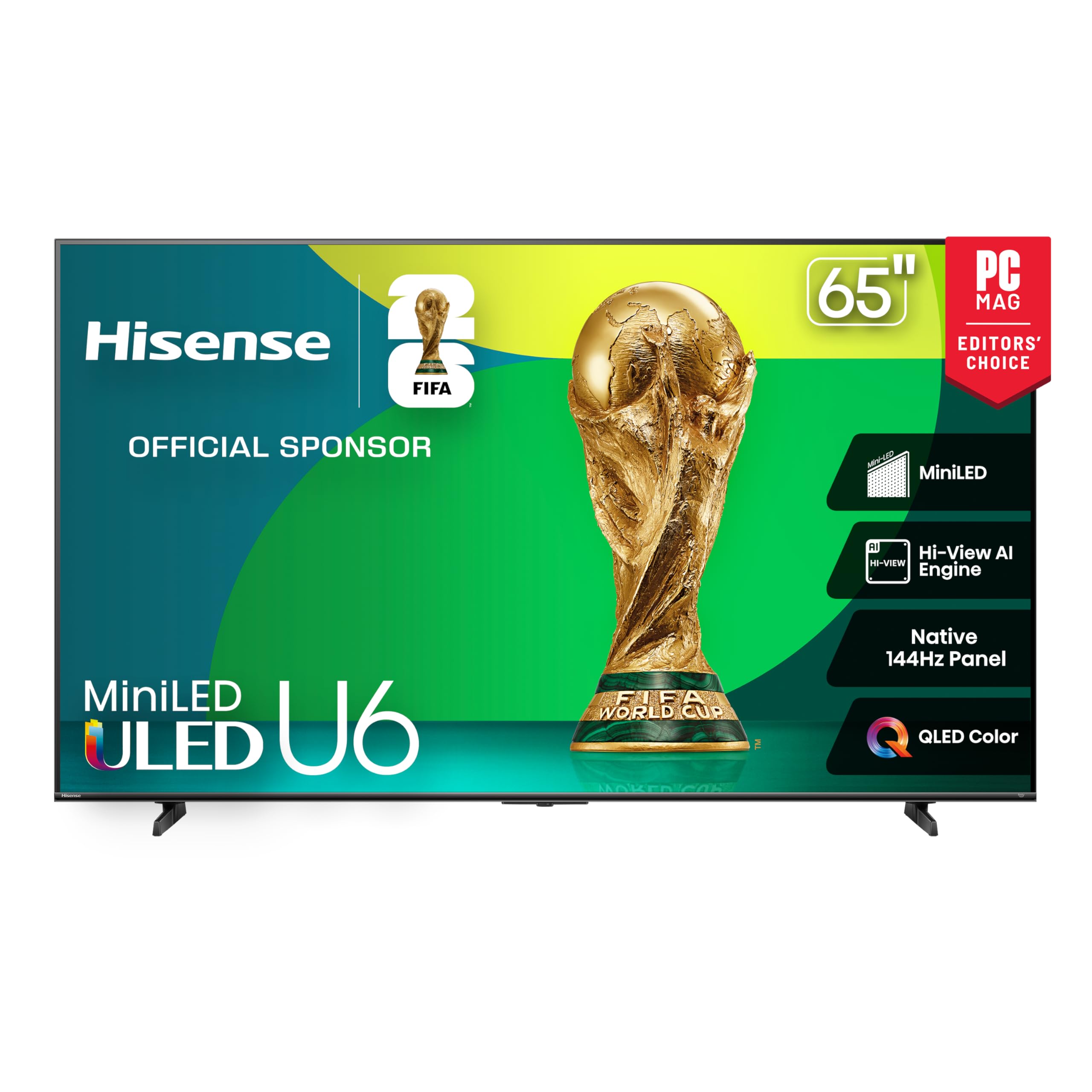
A Mini LED TV works by packing hundreds of tiny LEDs behind the screen and dimming them in groups, called zones. More zones means finer control over brightness — dark parts of the image stay truly black while bright parts remain blazing. On a budget model, look for at least 200–300 zones at 65 inches; anything below that number will show halos around bright objects on a dark background. The Hisense U6 Series claims up to 600 zones at its peak brightness of 1000 nits, which is unusually high for this price tier.
Native Refresh Rate: 144Hz vs 60Hz
If you own a PS5 or Xbox Series X, the native refresh rate matters more than any other spec. A native 144Hz panel — found on the iFFALCON 65U85, the TCL QM6K, and the Hisense U6 Series — lets your console output full 4K at 120 frames per second with HDMI 2.1 bandwidth. A 60Hz panel, like the one in the Samsung M70H, caps motion at 60 fps, so fast camera pans and racing games look less fluid. Some makers use labels like “Motion Rate 480” to suggest high performance, but that is a software trick; only the native hertz number tells you what the panel can actually do.
Smart Platform: Google TV vs Fire TV vs Roku
The operating system determines how fast the menus feel, how often you see ads, and whether you get stuck with forced account creation. Google TV (on the iFFALCON and TCL QM6K) is snappy and has minimal ads. Fire TV (on the Hisense and TCL QM64L) puts your apps front and center but requires an Amazon account for full features; some buyers report occasional slowdowns. Roku OS (on the Roku Plus Series) is the simplest, most intuitive interface, but one reviewer noted it forces you to create a Roku account during setup. Pick the platform that matches your ecosystem and privacy preference.
Quick Comparison
| Model | Best For | Native Refresh Rate | Peak Brightness | Smart Platform | Amazon |
|---|---|---|---|---|---|
| Samsung M70H★ Best Overall | Lowest Entry Price | 60Hz | High (not specified) | Tizen | Amazon |
| iFFALCON 65U85Also Great | Gaming & Value | 144Hz | 1000 nits | Google TV | Amazon |
| TCL QM6KTop Performer | All-Round Premium | 144Hz | High (not specified) | Google TV | Amazon |
| Hisense U6 Series | Bright Room Viewing | 144Hz | 1000 nits | Fire TV | Amazon |
| TCL QM64L | Fire TV Integration | 144Hz | High Brightness Pro | Fire TV | Amazon |
| Hisense U6 Pro | Glare-Free Viewing | 144Hz | High (not specified) | Fire TV | Amazon |
| Samsung Neo QLED QN70F | AI Upscaling | 144Hz | High (not specified) | Tizen | Amazon |
| Toshiba Z670R | Cinematic Sound | 144Hz | High (not specified) | Fire TV | Amazon |
| Amazon Ember 55″ | Highest Peak Brightness | 144Hz | 1400 nits | Fire TV | Amazon |
| Roku Plus Series | Simple Interface | 60Hz | High (not specified) | Roku OS | Amazon |
In‑Depth Reviews
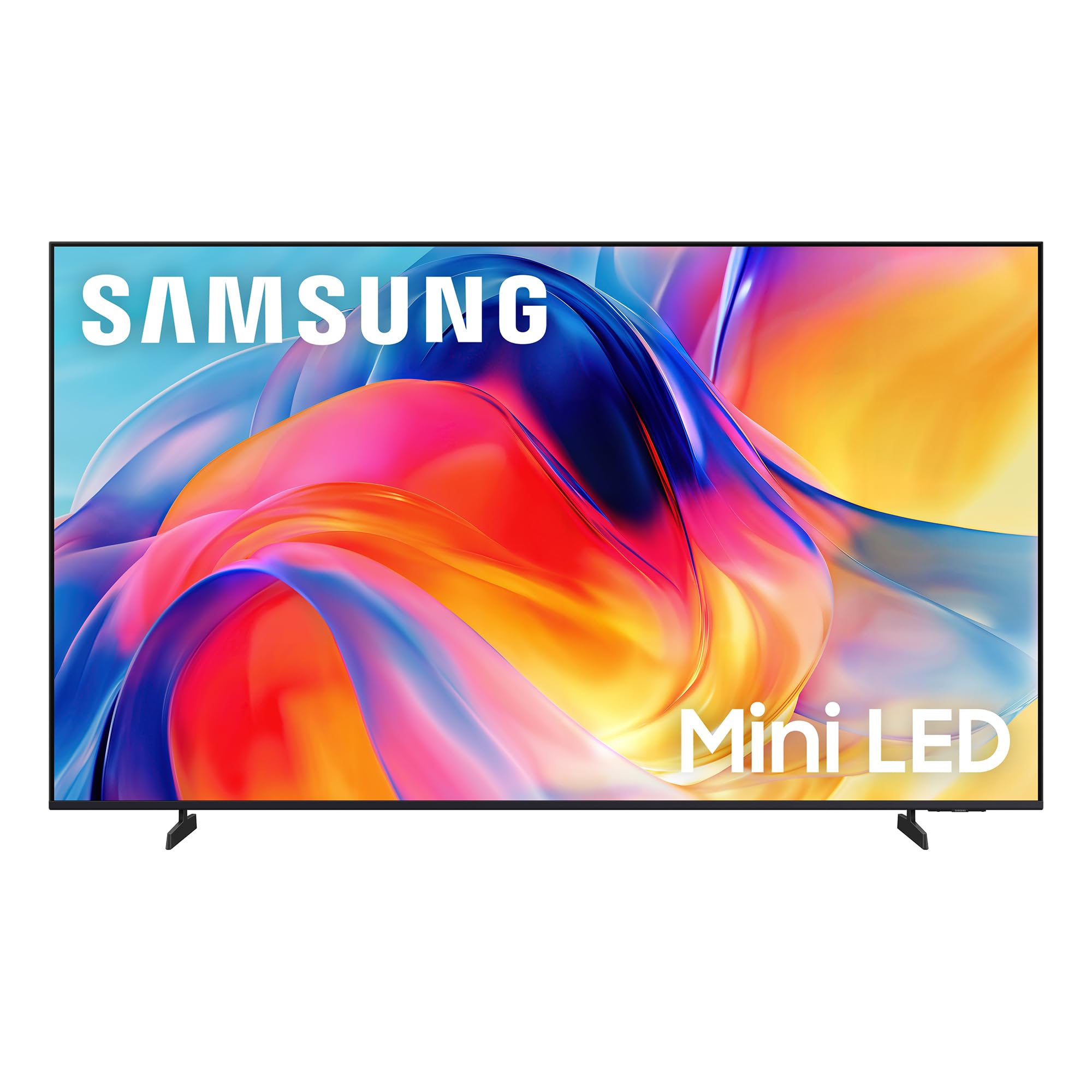
1. Samsung 65-Inch Class Mini LED M70H
The cheapest way into Samsung Mini LED — but the 60Hz panel and quirky remote hold it back.
The Samsung M70H is the lowest-priced entry into the Samsung Mini LED ecosystem. It uses the Mini LED Processor 4K to deliver brighter highlights and deeper blacks than standard Samsung LED TVs. The Pure Spectrum Color technology produces one billion true-to-life colors, and the Supreme Mini LED Dimming delivers deep contrast for a good picture. The Motion Xcelerator + DLG 120Hz uses software to simulate motion smoothness, but the native panel is 60Hz — a hard cap for gaming.
Buyers (221 ratings, 4.3 out of 5) say the picture quality is “great especially for the price” and the TV is lightweight at about 23 lbs, making wall mounting easy. One reviewer bought it specifically “because 4k at 120mhz” but noted the Mini LED is “not that super bright compared to other LED TVs.” The remote frustrates some users — one called it “the worst ever,” unable to switch HDMI ports or remember the last input. The Samsung TV Plus service gives you 2,700+ free channels, a nice bonus for cord-cutters. Compared to the iFFALCON 65U85, the Samsung M70H costs less but lacks native 144Hz, has fewer dimming zones, and offers a less satisfying remote experience.
Budget Advantages
- Lightest in the lineup (~23 lbs) — easiest to wall-mount solo
- Samsung TV Plus offers 2,700+ free channels with 400+ premium options
- Good picture quality and color vibrance for the entry price
Frustrations
- 60Hz native refresh rate — no true high-refresh gaming
- Remote lacks HDMI port switching and last-input memory
- Mini LED brightness is lower than competitors
Works for light TV users: If you mainly watch news, cable TV, and Netflix without gaming or sports obsession, the M70H gives you Samsung quality at the lowest possible cost.
Do not buy if: You game on PS5/Xbox Series X or want bright HDR impact — the iFFALCON or Hisense options are worth the extra spend.
2. iFFALCON 65″ 4K MiniLED Smart TV (65U85)
The TCL subsidiary that undercuts its sibling by over without skimping on gaming specs.
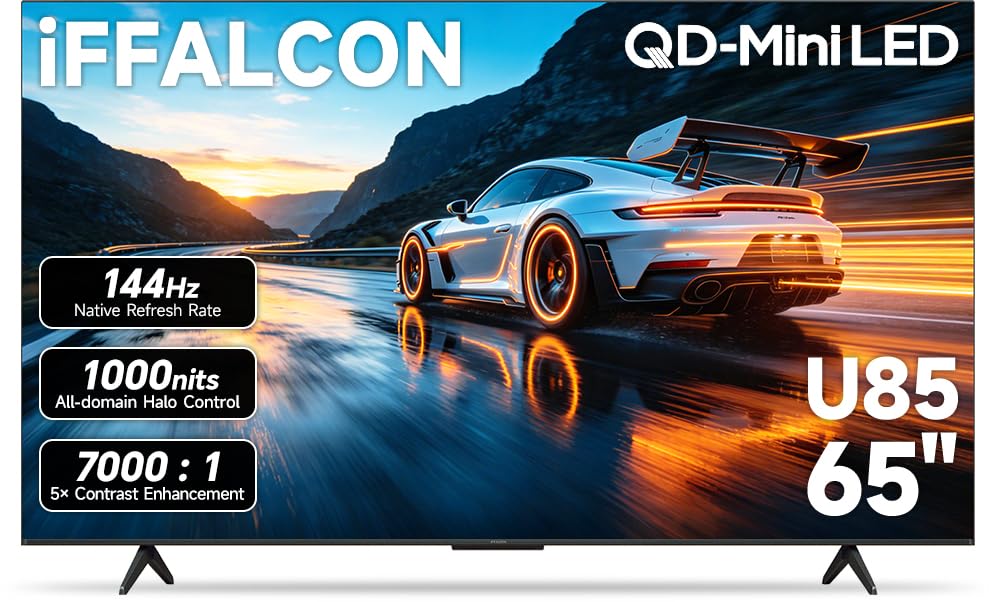
This is the TV that punches hardest in the value category. The iFFALCON 65U85 packs a native 144Hz panel with VRR up to 288Hz, which is a 2.4x gap over the 60Hz panels on budget rivals like the Samsung M70H. Gamers get four HDMI 2.1 ports — two running 4K at 144Hz for a PS5 and a PC simultaneously — plus Auto Low Latency Mode (ALLM), which switches the TV into game mode instantly. Dolby Vision Gaming and IMAX Enhanced certification mean your streaming movies match the director’s intended color and contrast.
Owners mention that iFFALCON is a TCL subsidiary, making this set identical to the TCL QM6k but saving you over. The Google TV interface is smooth with minimal ads, which one buyer mentioned was better than LG or Samsung menus. The built-in 50W 2.1-channel audio system (with a 20W woofer) handles Dolby Atmos passthrough, so you get room-filling sound before adding a soundbar. The one compromise is build thickness — it is slightly chunkier than premium designs, but that fades when you see the 1000-nit brightness and 7000:1 contrast ratio for this price point.
Gamer’s Paradise
- Native 144Hz panel with VRR up to 288Hz eliminates screen tearing
- Four HDMI 2.1 ports handle next-gen consoles, PC, and soundbar simultaneously
- Built-in 50W audio with subwoofer delivers strong bass without external speakers
- Google TV interface runs smoothly with minimal ad clutter
Minor Trade-Offs
- Chassis is slightly thicker than ultra-slim competitors
- Limited brand recognition compared to Samsung or TCL
Best for gamers: If you own a PS5 or Xbox Series X and want full 144Hz performance with Dolby Vision Gaming, this is the cheapest way to get it without losing HDMI 2.1 ports.
Consider the trade-off: The thicker profile may matter if you plan a flush wall mount where every millimeter counts.
3. TCL 65 Inch Class QM6K Series
The affordable premium TV that combines QD-Mini LED color with a 144Hz panel and Onkyo audio.
TCL’s QM6K sits at the balance where Mini LED meets Quantum Dot color. The QD-Mini LED combination delivers over a billion colors with ultra-precise brightness, which means you get the deep blacks of Mini LED plus the vibrant reds and greens of QLED. The TCL Halo Control System uses advanced local dimming to eliminate blooming (that distracting halo around bright objects on dark backgrounds). The native 144Hz refresh rate, paired with Motion Rate 480, keeps sports and gaming motion blur-free.
Buyers consistently rate this TV highly — 1784 ratings give it a 4.4 out of 5. One owner reported the anti-reflective screen is “amazing” and the display is “very crisp.” Another switched from a Hisense TV and found the TCL’s menu response time instant — no 5-10 second delay. The built-in Onkyo audio system impresses enough that some owners skip a soundbar entirely, though a large open-concept room might benefit from extra speakers. The remote lights up in the dark, a small but appreciated touch for late-night viewing. Compared to the iFFALCON above, the QM6K leads on color volume and brand recognition, while the iFFALCON matches the core gaming specs at a lower price.
Standout Specs
QD-Mini LED color: Quantum dots and Mini LEDs together produce rich color and deep contrast that beat standard QLED TVs at this price.
Onkyo audio system: The built-in speakers deliver clear dialog and decent bass, reducing the immediate need for a soundbar.
Reach for this if: You want the best color accuracy in the budget Mini LED category and prefer a well-known brand with strong customer support.
Look elsewhere if: You need four full-bandwidth HDMI 2.1 ports — the QM6K has two 144Hz ports and two 60Hz ports.
4. Hisense 65″ Class U6 Series Mini-LED (65U65QF)
Up to 600 local dimming zones and 1000 nits peak brightness make this the contrast king for the price.
Hisense loaded the U6 Series with specs that usually cost more. The peak brightness of 1000 nits — measured as the brightest point the screen can produce — means HDR highlights in movies and games really pop without washing out the rest of the frame. The native 144Hz panel with Game Mode Pro supports AMD FreeSync Premium, which keeps the image from tearing during fast-paced gaming. The built-in subwoofer adds bass you can feel during action scenes, though one customer observed the side viewing angle is “slightly diluted” — not a deal breaker, but worth knowing if you have wide seating.
Buyers with 840 ratings gave the U6 Series a 4.2 out of 5. One user highlighted the Mini LED tech “outperforms older higher-end models” and praised the Dolby Vision support. Another said the built-in subwoofer is “a bit much for an Apt” but appreciated being able to turn it off in settings. The Fire TV interface requires an Amazon account for full features, but it is snappy and usable. Compared to the Roku Plus Series, the Hisense has a faster native refresh rate (144Hz vs 60Hz) and higher peak brightness, making it the better choice for HDR movie fans and console gamers alike.
Why It Shines
- Up to 600 local dimming zones for deep blacks with minimal haloing
- Native 144Hz panel makes gaming and sports look fluid
- Built-in subwoofer saves you buying a separate soundbar
- Excellent Dolby Vision IQ performance for the price
Watch Out For
- Only 2 of 4 HDMI ports support HDMI 2.1 at 144Hz
- Side viewing angle loses some color saturation
- Headphone jack does not function — customers note this issue
Ideal for HDR enthusiasts: If you prioritize deep contrast and bright highlights for streaming movies, the U6 Series delivers at a price that undercuts most premium sets.
skip it if: You need four full-spec HDMI 2.1 ports for multiple next-gen consoles — you will find only two here.
5. TCL 65 Inch Class QM64L Series
An Amazon-exclusive TCL that pairs QD-Mini LED with the newest Fire TV experience.
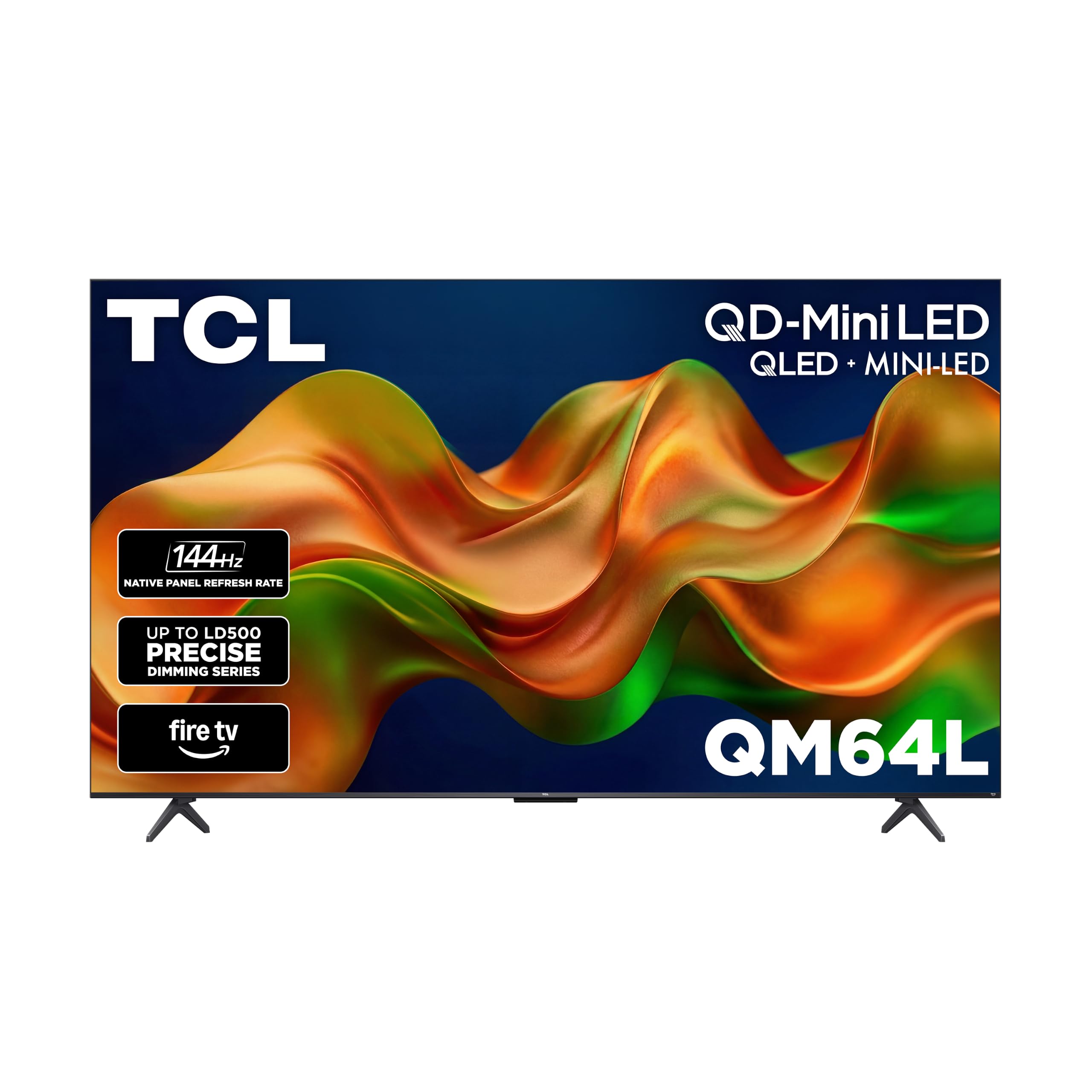
The TCL QM64L is essentially the QM6K re-skinned for the Fire TV platform, making it a natural fit if you live inside the Amazon ecosystem. It features the TCL Halo Control System with Local Dimming Pro and High Brightness Pro, plus a High Contrast HVA Panel that delivers deep blacks even in well-lit rooms. The Enhanced QLED technology uses “more vibrant Quantum crystals” for improved colors and claims 100,000 hours of high-quality viewing — about 11 years of daily use before brightness degrades.
Buyers (123 ratings, 4.4 out of 5) praise the “sharp, vibrant picture” and “excellent brightness control via remote.” One shopper added the built-in Alexa can conflict with existing Echo devices, but you can disable voice activation. Another mentioned the TV is “lightweight” and has a helpful remote backlight. The Fire TV integration means you get Alexa+ for voice search, smart home control, and instant access to Prime Video, Netflix, and Disney+. Compared to the standard QM6K, the QM64L swaps Google TV for Fire TV — pick based on which interface you prefer, because the panel performance is nearly identical.
Key Advantage
Fire TV deep integration: Alexa+ can control your smart home devices, show live camera feeds, and find content across apps using natural language — all hands-free.
Best for Amazon loyalists: If you already use Alexa devices and Prime Video daily, the Fire TV interface will feel like home.
Think twice if: You want to avoid Amazon account dependency — the TV requires one for full Fire TV functionality.
6. Hisense 65″ U6 Pro Series Mini-LED (65U6SF Pro)
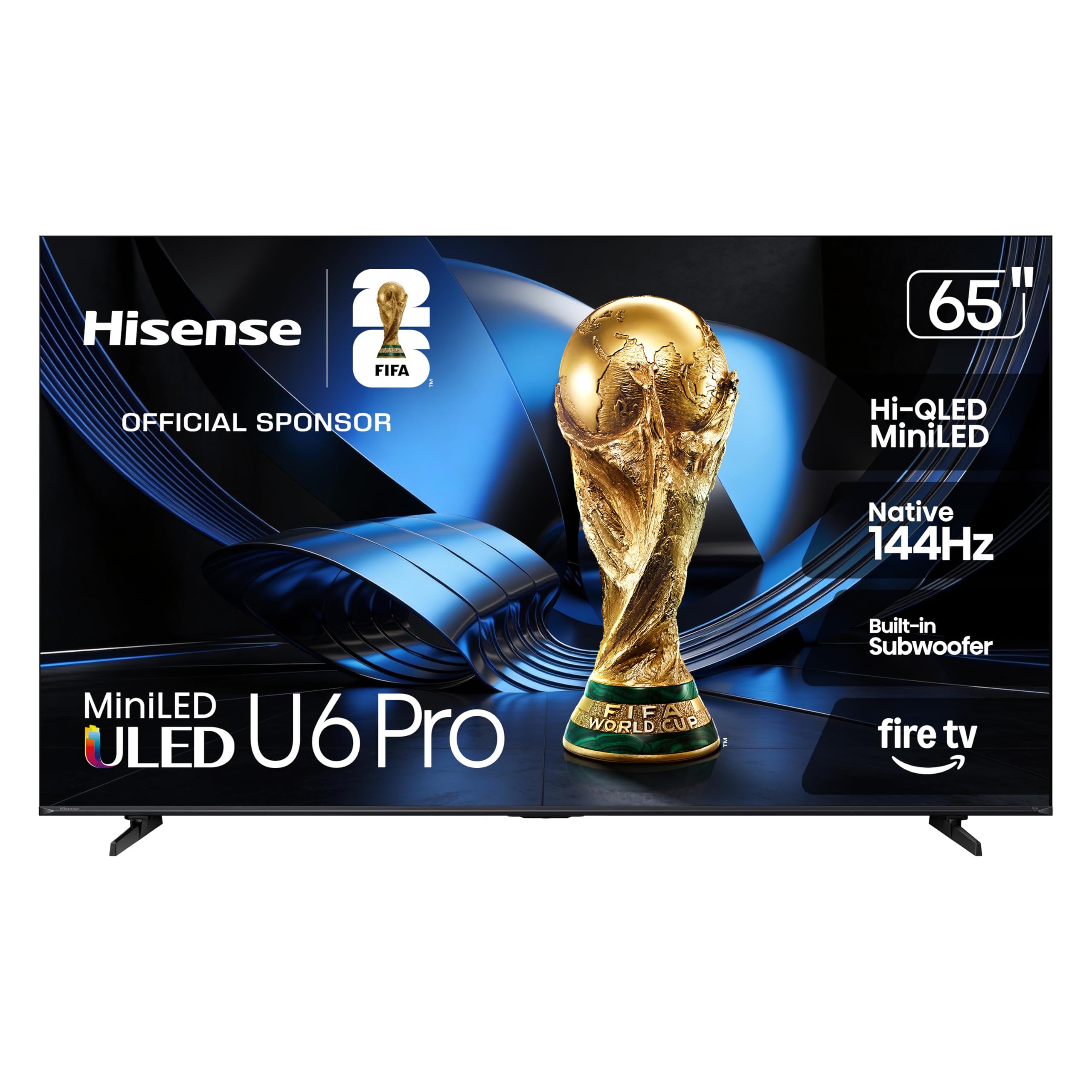
The first budget Mini LED that takes glare seriously, with PANTONE-validated color accuracy from the start.
The 2026 Hisense U6 Pro solves one of the biggest pain points for living room TVs: reflections. The anti-reflection and glare-free display keeps the picture clear even when you have windows or overhead lights behind your seating. Hi-QLED Mini LED technology — combined with hundreds of precise light zones — delivers contrast that makes sunny landscapes and candlelit dramas look equally lifelike. The native 144Hz refresh rate handles fast motion without blur, and the built-in subwoofer adds bass you can feel during action sequences.
Buyers with 112 ratings gave the U6 Pro a stellar 4.6 out of 5. One reviewer noted the “picture quality is outstanding” and called it “a much more expensive TV than it actually is.” Another bought the 100-inch version for a dorm and said everyone gets a good view without fighting over seats. The Hi-View AI Engine automatically adjusts picture for movies, sports, or gaming — so you do not need to fiddle with settings between content types. Compared to the standard Hisense U6 Series, the Pro model adds PANTONE validation for color accuracy and the anti-reflection coating, making it the better choice for bright rooms.
Strengths
- Anti-reflection screen stays clear in bright rooms with lots of windows
- PANTONE-validated colors mean natural skin tones and accurate team uniforms
- Native 144Hz panel with VRR keeps gaming smooth and tear-free
- Built-in subwoofer delivers deep bass without external speakers
Limitations
- Only 2 HDMI ports support full 144Hz bandwidth
- Fire TV account required for some smart features
Perfect for bright living rooms: If your seating area gets direct sunlight or you cannot control window blinds, the anti-glare coating makes a real difference.
Not ideal if: You need four high-bandwidth HDMI 2.1 ports — stick to the iFFALCON 65U85 for that.
7. Samsung 65-Inch Neo QLED QN70F

Samsung’s 2025 Neo QLED brings 20 neural networks of AI upscaling to sharpen every source to near-4K.
The QN70F uses Samsung’s NQ4 AI Gen2 processor, which analyzes content using 20 neural networks and upscales it to 4K resolution — meaning that old 1080p cable feed or YouTube video looks noticeably sharper and smoother. The Neo QLED Mini LED lighting delivers sharp, accurate contrast with minimal blooming, thanks to precision-controlled Mini LEDs behind the screen. The Motion Xcelerator 144Hz supports VRR gaming at 4K 144Hz, so fast-paced shooters and racing games stay fluid without screen tearing.
Buyers (517 ratings, 4.4 out of 5) love the “deep blacks, bright highlights, vibrant colors” and say the upscaling works well. One buyer mentioned the remote is small but grew on them. The Samsung Tizen platform includes Samsung TV Plus, giving you access to 2,700+ free channels including 400+ premium ones. Compared to the TCL QM6K, the Samsung leads on AI upscaling quality — the TCL relies more on hardware panel performance — while the TCL offers QD-Mini LED color that some find more vibrant. Samsung’s build quality and brand reliability also command a higher price point.
Unique Edge
AI upscaling to 4K: The NQ4 AI Gen2 processor analyzes each scene and improves brightness, so even SDR content (standard dynamic range) looks closer to HDR quality.
Great for mixed content: If you watch a lot of old cable TV, YouTube, or DVD content alongside 4K streaming, the upscaling makes everything look better.
Consider if: You prefer Samsung’s Tizen smart platform over Google TV or Fire TV — it is fast and well-supported.
8. Toshiba 55″ Z670R Mini-LED

Toshiba’s REGZA Engine ZRi, fine-tuned in Japan, drives cinema-level picture processing at a 55-inch size.
The Toshiba Z670R is a 55-inch set that packs Mini LED with Full Array Local Dimming, which means precision-controlled LEDs dim in groups behind the screen for deep blacks and bright highlights. The REGZA Engine ZRi Gen3 — developed by Toshiba engineers in Japan — uses AI to tune clarity, contrast, and audio scene by scene. The REGZA Power Audio Pro system includes a Bass Woofer that delivers deep, resonant bass, which is rare in a TV this size without external speakers.
Buyer reviews are limited (65 ratings) but positive, giving it a 4.5 out of 5. The native 144Hz panel with AMD FreeSync Premium and VRR 144Hz makes it a strong gaming option for a smaller room or bedroom. Fire TV integration means you get Alexa for voice control and access to all major streaming apps. Compared to the 65-inch competitors, this 55-inch model fits tighter spaces better but gives up 10 inches of screen real estate — a trade-off that matters for movie immersion. The AI Light Sensor Pro adjusts brightness and color balance to your room’s lighting, reducing eye strain during late-night viewing.
What Stands Out
- REGZA Engine ZRi Gen3 delivers advanced AI picture processing tuned by Japanese engineers
- Built-in Bass Woofer provides deep, room-shaking bass for a 55-inch TV
- Native 144Hz panel with AMD FreeSync Premium keeps gaming smooth
- AI Light Sensor Pro adjusts automatically to room lighting for comfortable viewing
The Catch
- 55-inch size is smaller than most budget Mini LED options — no 65-inch version available at this price
- Limited review count makes long-term reliability harder to gauge
Best for bedrooms and smaller rooms: If a 65-inch screen would overwhelm your space but you still want Mini LED contrast and 144Hz gaming, the Z670R fits perfectly.
pass on it if: You want the biggest screen possible for your money — the 65-inch iFFALCON or Hisense options offer more size for a similar cost.
9. Amazon Ember 55″ Mini-LED Series
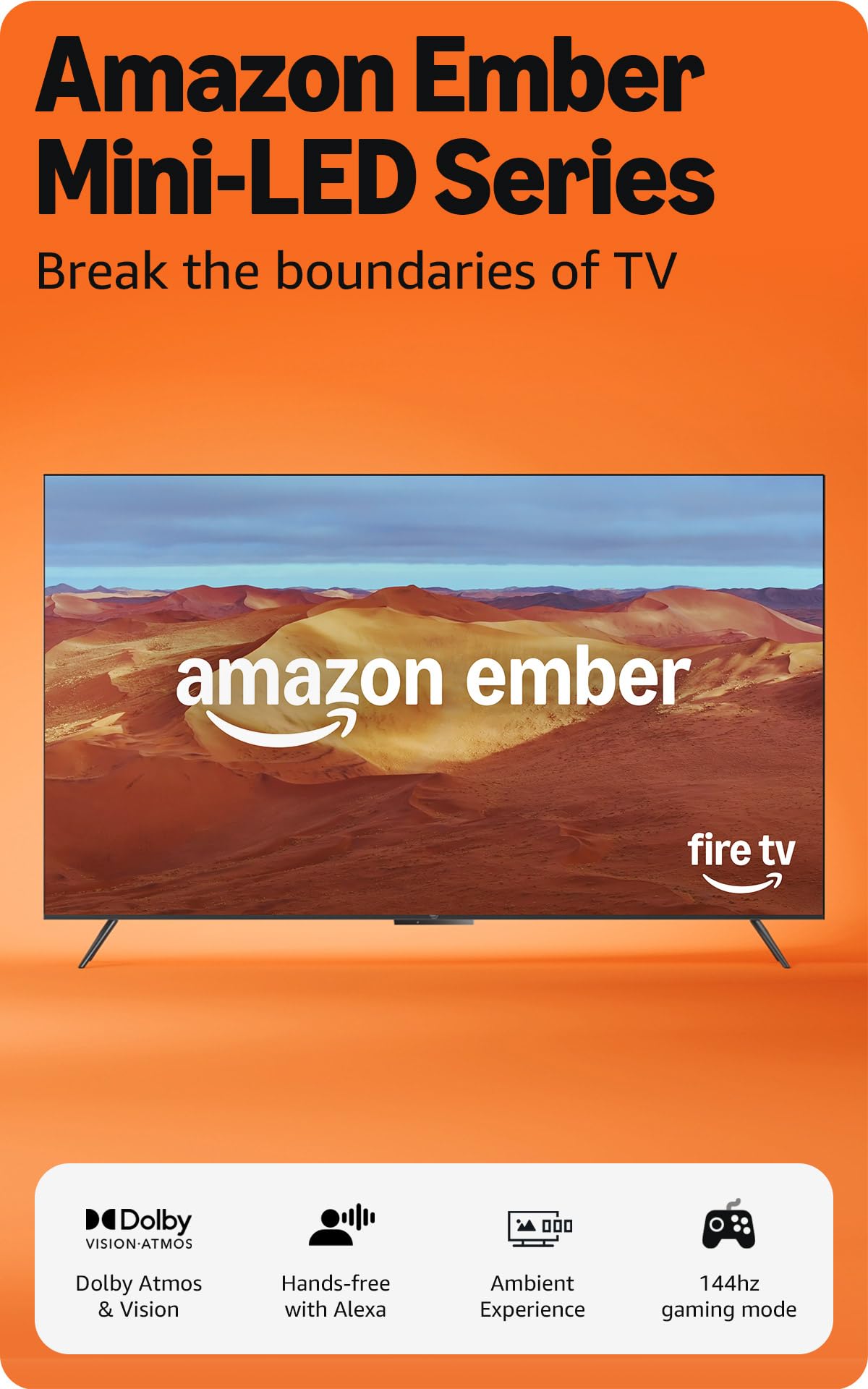
The brightest Mini LED in the budget class hits 1400 nits with a massive 512-zone dimming array.
That extra brightness makes HDR content look explosive, especially in well-lit rooms. The 512 dimming zones provide fine-grained control over contrast, so small bright details like stars in a night sky stay distinct without creating halos. AMD FreeSync Premium Pro certification ensures tear-free gaming, and the 144Hz panel keeps fast motion smooth.
Buyers (666 ratings, 4.0 out of 5) say “4K sports look amazing” and the 120Hz difference is “noticeable.” The picture quality is described as “close to OLED costing 5x more.” The Fire TV platform includes the newest Alexa+ interface, which lets you talk naturally to find shows and control smart home devices. One downside: some reviewers point out software updates causing slow menus, fixed by using an external FireStick 4K Max. The custom “Omnisense” technology wakes the display when you enter the room, showing artwork or letting you start watching instantly — a nice ambient touch.
Why It Leads
- Highest peak brightness at 1400 nits — makes HDR highlights really pop
- 512 dimming zones provide excellent contrast control with minimal blooming
- AMD FreeSync Premium Pro certified for tear-free gaming
- Omnisense sensors wake the display when you enter the room
Known Issues
- Software updates can cause slow menu performance; some use an external FireStick as a workaround
- Occasional random reboots reported by some users
Best for brightness fanatics: If you watch HDR movies in a bright room or want the most effective highlights possible, the Ember’s 1400 nits deliver.
Proceed with caution if: Software stability is your top priority — the occasional reboot issue may frustrate you.
10. Roku Smart TV 65″ Plus Series
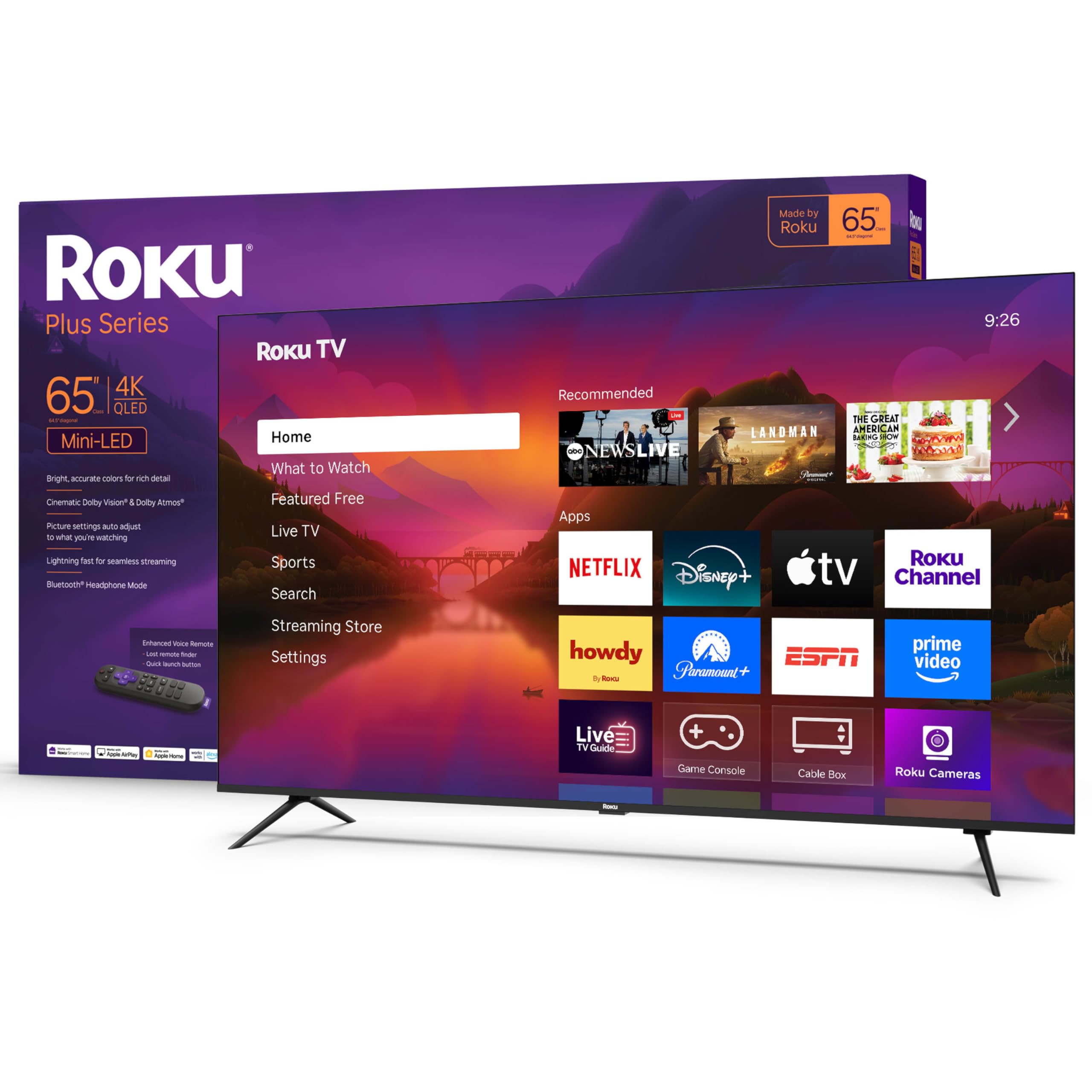
The simplest smart TV interface meets Mini LED backlighting and a built-in subwoofer for easy living room upgrades.
The Roku Plus Series is for buyers who want great picture quality without learning a new operating system. Roku OS is famously simple — you get a clean home screen with your apps, no cluttered menus, and no ads that push services you do not use. Behind the interface, a QLED screen with Dolby Vision technology delivers striking color and vivid highlights, while Mini-LED backlighting enhances the contrast. The built-in subwoofer adds bass for a cinematic experience without needing a soundbar.
Buyers (546 ratings, 4.6 out of 5) praise the “excellent value” and “great picture with deep blacks and vibrant colors.” One reviewer who switched from an 11-year-old TV was impressed by the “bright, clear image with wide viewing angles.” Another noted a USB port flaw: bias lights stay on for 10 minutes after the TV is off in both modes. The Roku Enhanced Voice Remote lets you search with your voice and includes a lost remote finder — useful if the remote slides between couch cushions. Compared to the Hisense U6 Series, the Roku has a simpler interface but a slower 60Hz refresh rate, so it is better for casual streaming than competitive gaming.
Simple Strengths
- Roku OS is the most intuitive smart platform with minimal learning curve
- Built-in subwoofer adds bass without external speakers
- Dolby Vision and QLED screen produce vibrant HDR images
- Enhanced Voice Remote with lost remote finder
Limitations
- 60Hz refresh rate caps gaming and sports motion
- Roku account required during initial setup — not great for privacy-conscious users
- USB port keeps bias lights on for 10 minutes after power-off
Perfect for non-gamers and family rooms: If the primary user is a parent or someone who just wants to press Netflix and watch, the Roku Plus Series is the easiest path to great picture quality.
it’s not for you if: You plan to play PS5 or Xbox Series X games — you will want a 144Hz panel from the iFFALCON or TCL.
Understanding the Specs
Local Dimming Zones
Local dimming zones are the groups of Mini LEDs that the TV can brighten or darken independently. More zones = finer control over contrast. A TV with 512 zones, like the Amazon Ember, can keep a single star bright while the space around it stays pitch black. A TV with fewer than 100 zones will show halos around bright objects on dark backgrounds — a distracting effect called blooming. For a cheap Mini LED TV, aim for at least 200 zones at 65 inches for a noticeable step up from standard LED.
Native Refresh Rate (Hz)
The native refresh rate is the number of times per second your TV redraws the entire image. A 60Hz panel updates 60 times per second — fine for movies and cable TV. A 144Hz panel updates 144 times per second, which makes fast motion look smooth and reduces blur during sports and gaming. Some TVs advertise “Motion Rate 480” or “DLG 120Hz,” but those are software tricks. Always check the native hertz number in the specifications. If it is 60Hz, your PS5 games will cap at 60 fps even if the console can output 120 fps.
FAQ
Is a Mini LED TV really better than a standard LED TV for the same price?
Will a cheap Mini LED TV work well with my PS5 or Xbox Series X?
How many local dimming zones do I really need on a 65-inch TV?
Is Google TV or Fire TV better on a budget Mini LED TV?
Can I use a cheap Mini LED TV as a computer monitor?
Does a built-in subwoofer replace a soundbar?
What is blooming and should I worry about it on a cheap Mini LED TV?
How long should a budget Mini LED TV last?
Final Thoughts: The Verdict
If you want one dependable pick, the cheap mini led tv winner is the iFFALCON 65U85 because it delivers a native 144Hz panel, four HDMI 2.1 ports, Dolby Vision Gaming, and Google TV all at a price that undercuts the TCL QM6K by over. If you want the best color volume and a trusted brand, grab the TCL QM6KAmazon Ember 55″ stands alone with its 1400 nits peak brightness and 512-zone dimming array.
How We Picked
We do not accept paid placement. Every pick is matched to a real buyer and a real use-case; we do not hands-on test units.
Sources & Methodology
Specifications: manufacturer listings and product documentation. Review insights: verified customer reviews, as of July 2026. Pricing: not shown on this page (it changes often); check the current price via the retailer link.
As an Amazon Associate, WellFizz earns from qualifying purchases. This does not affect which products we feature.
Related Guides

Mo Maruf
I created WellFizz to bridge the gap between vague wellness advice and actionable solutions. My mission is simple: to decode the research and give you practical tools you can actually use.
Beyond the data, I am a passionate traveler. I believe that stepping away from the screen to explore new environments is essential for mental clarity and physical vitality.