Our readers keep the lights on and my smoothie glass nicely filled. As an Amazon Associate, I earn from qualifying purchases.
Specs are compiled from manufacturer listings and verified buyer reviews and can change over time — please confirm the key details on the product page before buying.
If you have short legs, standard compression socks are the enemy — they bunch up behind your knee, dig into the bend, and turn a therapeutic aid into a painful nuisance. The real fix is a “short length” or “petite” size built for a shorter leg profile, and this guide walks straight to the five models that actually deliver on that promise without rolling down or leaving extra fabric at your heel.
I’m Mohammad Maruf — the founder and writer behind WellFizz. This guide is built by comparing the manufacturers’ published specifications and the patterns across verified customer reviews, so you get each pick’s real strengths and trade-offs instead of marketing spin.
if you need 20-30 mmHg (millimeters of mercury, the measure of pressure — strong medical grade for varicose veins) support for tired legs or a lighter 15-20 mmHg option for everyday wear, three features separate a life-changing fit from a frustrating one: a genuinely short leg length, a compression level that matches your condition, and a toe shape that does not swim past your foot. Read on for the five best compression socks for short legs that actually stay where they belong.
Our Picks at a Glance
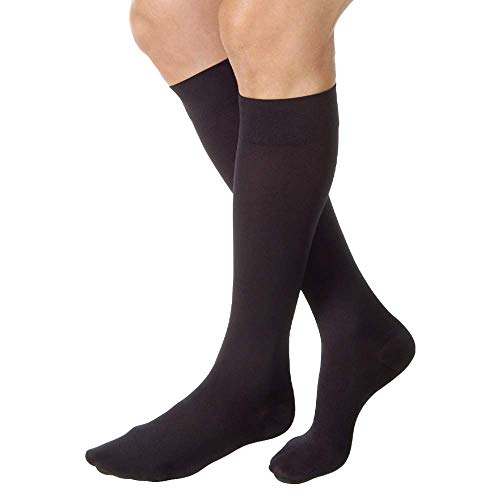

How To Choose The Best Compression Socks For Short Legs
Finding compression socks when you have short legs is not just about picking a small size. The leg length (the measurement from floor to the back of your knee) is a different number from your shoe size. Most off-the-shelf socks are built for people with a 16-18 inch calf height, and if your leg is shorter, that extra few inches folds over the top band and causes irritation. Below are the three decisions that matter most.
Compression level: 15-20 mmHg vs 20-30 mmHg
The number tells you how much pressure the sock applies to your leg. 15-20 mmHg (millimeters of mercury, the unit used to measure pressure in compression garments) feels like a firm hug — it fights mild swelling and tired legs without squeezing hard. 20-30 mmHg is stronger medical-grade pressure used for varicose veins, edema (fluid buildup in tissue), and DVT (deep vein thrombosis, a blood clot risk) prevention. If you are buying for travel or long days on your feet, 15-20 mmHg is enough. If a doctor recommended compression or you have visible bulging veins, go with 20-30 mmHg.
Short length: what the label actually means
A “short length” or “petite” sock has a shorter leg column than a regular or tall version of the same brand. But there is no universal standard — one brand’s “short” might still be too long for someone 5’0″. The only way to know is to check the size chart’s leg length measurement (the distance from the floor to the bend behind your knee). Some brands list this as “back of heel to knee bend.” A true short-length sock for short legs will have a leg length around 14-16 inches. If that number is not in the listing, the sock is a gamble.
Closed toe vs open toe
Closed-toe socks have fabric covering your toes, which can feel tighter and keep your feet warmer. The catch is that on short legs, the toe section can extend past your toes by an inch or two — a common complaint in buyer reviews. Open-toe styles leave your toes free, which helps with sizing and keeps the foot section from bunching. If you have long toes or sensitive feet, open toe gives you more room to forgive a slightly long sock. If you want warmth and full coverage, closed toe is fine as long as you double-check the foot length in reviews.
Quick Comparison
| Model | Best For | Compression Level | Weight | Toe Style | Amazon |
|---|---|---|---|---|---|
| JOBST Relief 15-20 mmHg★ Best Overall | Premium Comfort | 15-20 mmHg | 0.19 lbs | Closed Toe | Amazon |
| Truform Short Length 20-30 mmHgAlso Great | Premium Fit | 20-30 mmHg | 3.2 oz | Closed Toe | Amazon |
| MGANG 3XL Plus Size Short Length | Best Value | 20-30 mmHg | 2.4 oz | Open Toe | Amazon |
| Absolute Support Sheer Short (20-30 mmHg) | Versatile Support | 20-30 mmHg | — | Closed Toe | Amazon |
| Absolute Support Sheer Short (15-20 mmHg) | Light Support | 15-20 mmHg | — | Closed Toe | Amazon |
In‑Depth Reviews
1. JOBST Relief 15-20 mmHg Compression Stockings
Our pick — over 4★ from 600+ verified ratings; the strongest balance of quality and price.
Lightweight 15-20 mmHg stockings that feel cool and do not overheat your legs.
If the Truform is the workhorse pump, JOBST is the everyday cruiser. At 15-20 mmHg (mild to moderate graduated compression that fights tired legs and mild varicosis without squeezing hard), these are the kind you can wear from breakfast through a long shift and forget they are there. JOBST is the number-one physician-recommended compression brand in the US. One buyer shared a telling detail: “They don’t feel to heavy/warm and were great during my pregnancies.” The 0.19-pound weight makes them lighter than the Truform’s 3.2 ounces, so your legs breathe more, though the compression level is 33% gentler than the 20-30 mmHg options.
The unisex design works for men and women, and the nylon-spandex blend has long-lasting fibers that survive machine washing without losing the pressure profile across the calf. A few things to know, however: these are only 15-20 mmHg, so they will not deliver the stronger edema-fighting or DVT-prevention pressure of a 20-30 mmHg sock. And because they are a petite size from a premium brand, they run true to the brand’s own chart — measure your ankle and calf in the morning before any swelling happens.
Where these excel is warmth management and all-day wearability. The closed toe is comfortable, but unlike the Truform or MGANG options, you do not get an open-toe choice here. If your priority is a cool, subtle sock for daily travel or pregnancy swelling without feeling like you are strapped into a medical device, the JOBST Relief is the one to grab.
Why it works
- Breathable fabric that does not feel heavy or warm — ideal for summer and pregnancy.
- Number one physician-recommended brand (among physicians who recommend a brand).
- Machine washable and durable fibers hold compression well over time.
Consider
- 15-20 mmHg is too mild for varicose veins or significant edema if you need stronger therapy.
- Closed toe only — no open-toe version if you prefer toe room.
Best for lighter support: Reach for these when you want comfortable wear on long flights or during pregnancy — the weight and coolness are a real edge.
Not for heavy swelling: If you need 20-30 mmHg for DVT or post-surgery recovery, the Truform or MGANG above will serve you better.
2. Truform Short Length 20-30 mmHg Compression Stockings
The short-length stockings that actually stay below your knee and do not dig in.
Truform’s 8865 model earns the top pick because its true short-length design solves the bunching problem that short legs face — it has a 4.3-star average across 565 reviews. The compression is 20-30 mmHg (strong medical-grade pressure for varicose veins, edema, and post-surgery recovery), and the knit uses 80% nylon with 20% spandex so the fabric gives without sagging. One buyer put it simply: “The shorter length is perfect, they don’t bunch up around your knees and start hurting.” At 3.2 ounces, these are noticeably denser and more durable than the 2.4-ounce MGANG option below, which means they hold up wash after wash.
The defined heel (a shaped pocket that cups your heel so the sock does not twist) and the roomy closed toe are built for sensitive feet, but a few buyers report the toe box can extend past your toes if you have a shorter foot. Another downside — several reviewers mention a strong chemical smell, especially when wet, that lingers even after machine washing. If you are between sizes, the reviews suggest a snugger fit works better for compression, so measure your calf at its widest point and follow their chart closely.
Pair these with the JOBST below if you want 15-20 mmHg for everyday wear, because the Truform at 20-30 mmHg is better for conditions where stronger pressure is required — varicose veins, DVT prevention, or post-procedure swelling. The made-in-USA construction and latex-free material add to the confidence.
What fits right
- Short length eliminates knee bunching and band pain.
- 3.2 oz nylon/spandex blend survives many washes without losing shape.
- Defined heel keeps the sock aligned; roomy toe is gentle for sensitive skin.
Heads-up
- Chemical odor (especially when wet) reported by multiple buyers.
- Toe box may extend 2 inches past short toes if your foot is on the smaller side.
Solid daily wear: First choice if you need 20-30 mmHg and a true short length that does not roll — the feedback from short-legged users is overwhelmingly positive.
Watch the sizing: Buyers warn that the sizing is “personalized” and may need a return exchange if your calf is smaller than expected; measure meticulously.
3. MGANG 3XL Plus Size Compression Socks, Open Toe, 20-30 mmHg
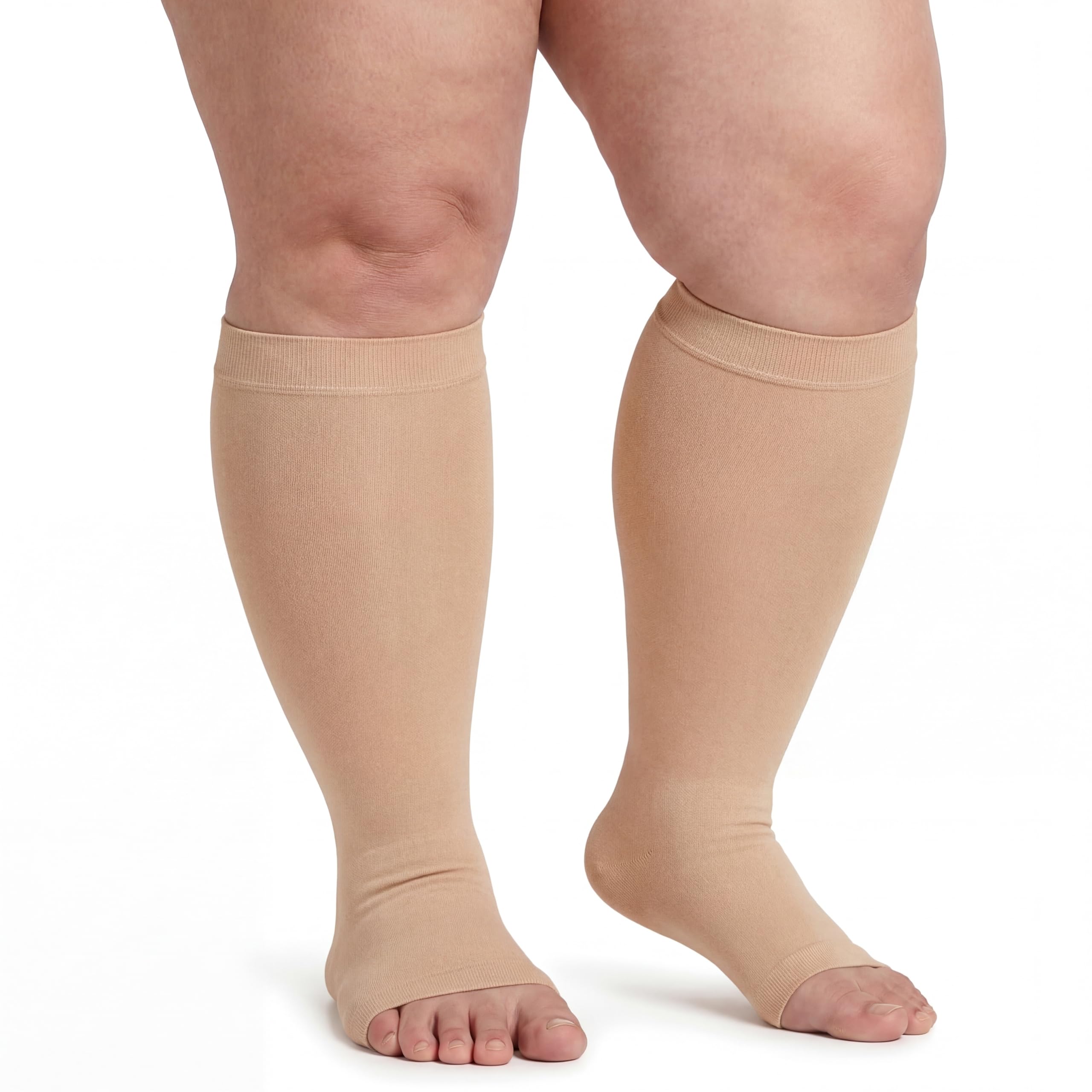
A budget-friendly open-toe option that fits wider calves without the squeeze.
MGANG takes a different approach — open toe design and 20-30 mmHg graduated compression (meaning the pressure is strongest at the ankle, moderate at mid-calf, and lightest below the knee) for people who need roomy calf coverage and do not want their toes trapped. The difference from the Truform above is immediate: at 2.4 ounces (the Truform is 3.2 ounces), so they feel airier. The fabric is 70% nylon and 30% lycra spandex, which stretches generously for wider legs — the size range extends from 3XL to 6XL. One buyer who had tried many brands before said: “I saw improvement the first time I wore them!”
The open toe solves the one pain that customers of the other picks mention most — the toe section being too long. Since your toes stick out, there is no fabric to bunch or extend past your foot. The trade-off, according to reviews, is that the foot section can feel “oversized” for narrower feet, and some buyers found the length “runs long” even in the short version. If you are between two sizes, the maker advises choosing the larger size for comfort. The non-slip silicone band (a thin strip that grips your skin so the sock stays up) works well, but a couple of reviewers noted the silicone band was not tight enough to prevent creeping on days their legs were less swollen.
For the price, this is a strong value pick that competes well with pricier options, though the quality of the knit feels thinner than Truform or JOBST. Use them for post-flight recovery, pregnancy swelling, or long shifts — the graduated compression (25-30 mmHg at the ankle, 15-20 at the mid-calf, 10-15 below the knee) follows a therapeutic gradient that genuinely moves blood upward.
Pros
- Open toe avoids the “too long in the foot” issue that plagues many short-leg socks.
- Wide calf sizes (3XL to 6XL) accommodate larger legs without the top band cutting in.
- 2.4 ounces is noticeably lighter than the Truform; good for warmer weather.
Cons
- Some owners mention the foot section runs oversized even when the calf fits fine.
- Silicone band may not grip strongly enough for legs that are less swollen.
Smart budget choice: Go with MGANG if you need 20-30 mmHg compression on a tight budget and you prefer an open toe — the improvement reviews are consistent.
Watch the fit: The oversized foot and variable leg length mean you might need to try two sizes; buy from a seller with free returns.
4. (3 Pairs) Sheer Short Length Compression Socks for Women 20-30mmHg
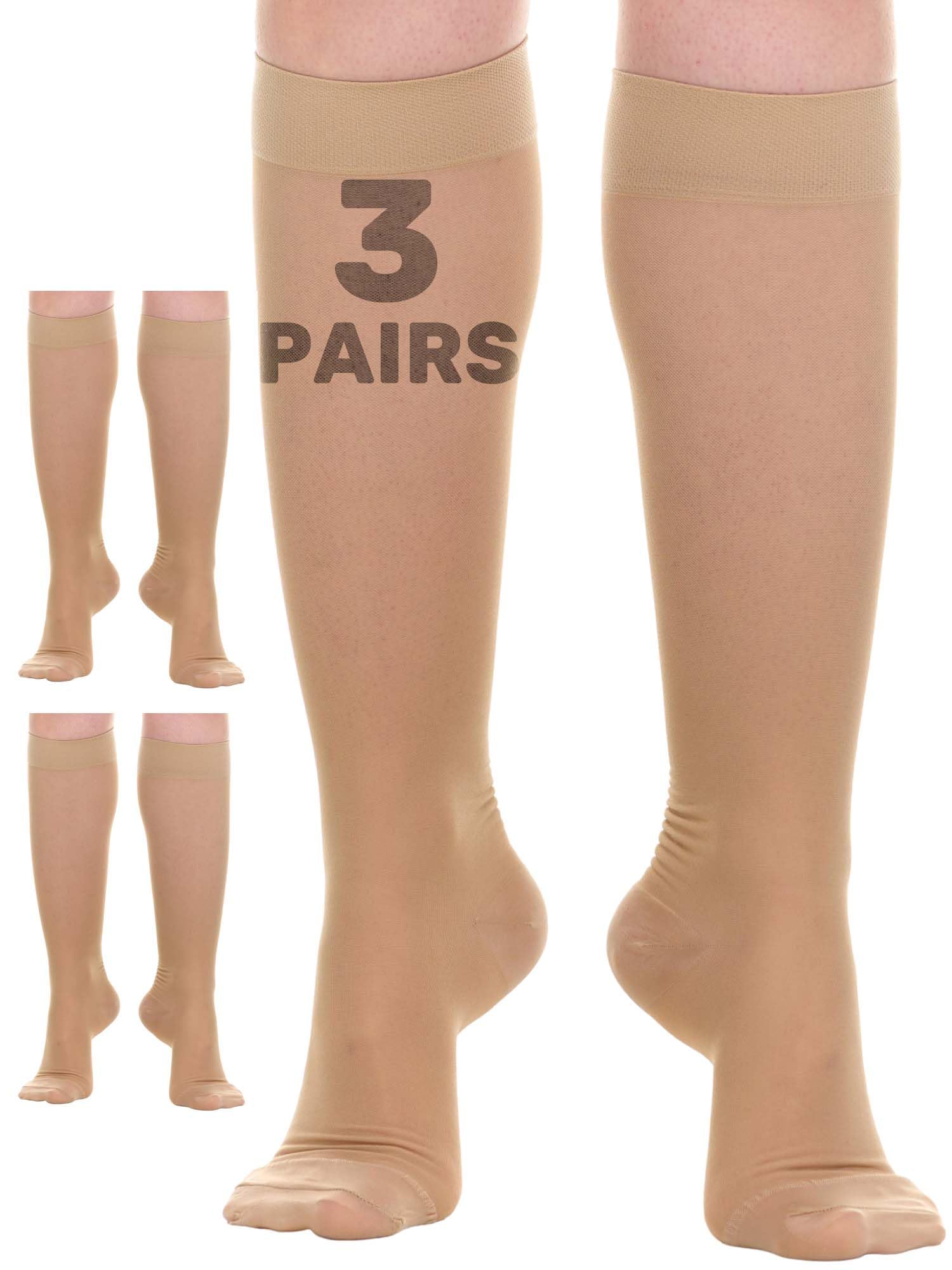
A 3-pack of sheer, short-leg socks with 20-30 mmHg strength for hospital shifts.
This 3-pack from Absolute Support is for women who need strong 20-30 mmHg compression in a short-leg cut and want multiple pairs ready to go. The material is pantyhose-like and sheer, which means it breathes well and looks natural under skirts or scrubs. One reviewer who works in a hospital said she “work[s] at a hospital and [is] on my feet all day” and found the compression “fine.” A 5’4″ buyer confirmed the short length came up to just 2 inches below her knee.
However, a pattern emerges in the reviews: the foot section is consistently reported as long. The same buyer noted “the foot has about 2 inches extended beyond my toes,” and two other reviewers independently echoed that the foot length is oversized. If you have a size 9 shoe or smaller, expect extra fabric past your toes. The fabric is soft and smooth, stays in place without rolling down, and the beige color blends with most skin tones. But the foot length issue is not a minor complaint — it affects how the sock feels in your shoe.
Unlike the Truform or JOBST, these do not have a defined heel pocket, so the sock can rotate slightly on your leg if the fit is not snug. The compression level at 20-30 mmHg is the same as the Truform, making them suitable for varicose veins and swelling. If you are a woman with short legs who needs the stronger pressure and does not mind a little extra toe fabric (or plans to wear them with closed shoes where the extra fabric bunches unseen), the 3-pack value is tough to top.
Strong suits
- 3-pack means you rotate pairs without worrying about washing daily.
- Sheer fabric is cool and skin-toned; works well under dresses and scrubs.
- 20-30 mmHg compression provides genuine medical-grade pressure for swelling and varicose veins.
Shortcomings
- Foot section runs 2 inches too long for many buyers — a consistent review complaint.
- No defined heel pocket; sock can twist on the leg.
Good for covered shoes: If you always wear closed-toe shoes or boots and need strong compression in a short leg, the 3-pack value is appealing — just accept the long foot.
Skip for barefoot or sandals: The extra toe fabric will be visible and uncomfortable in open shoes; choose the MGANG open-toe option instead.
5. (3 Pairs) Sheer Short-Length Compression Socks for Women 15-20mmHg
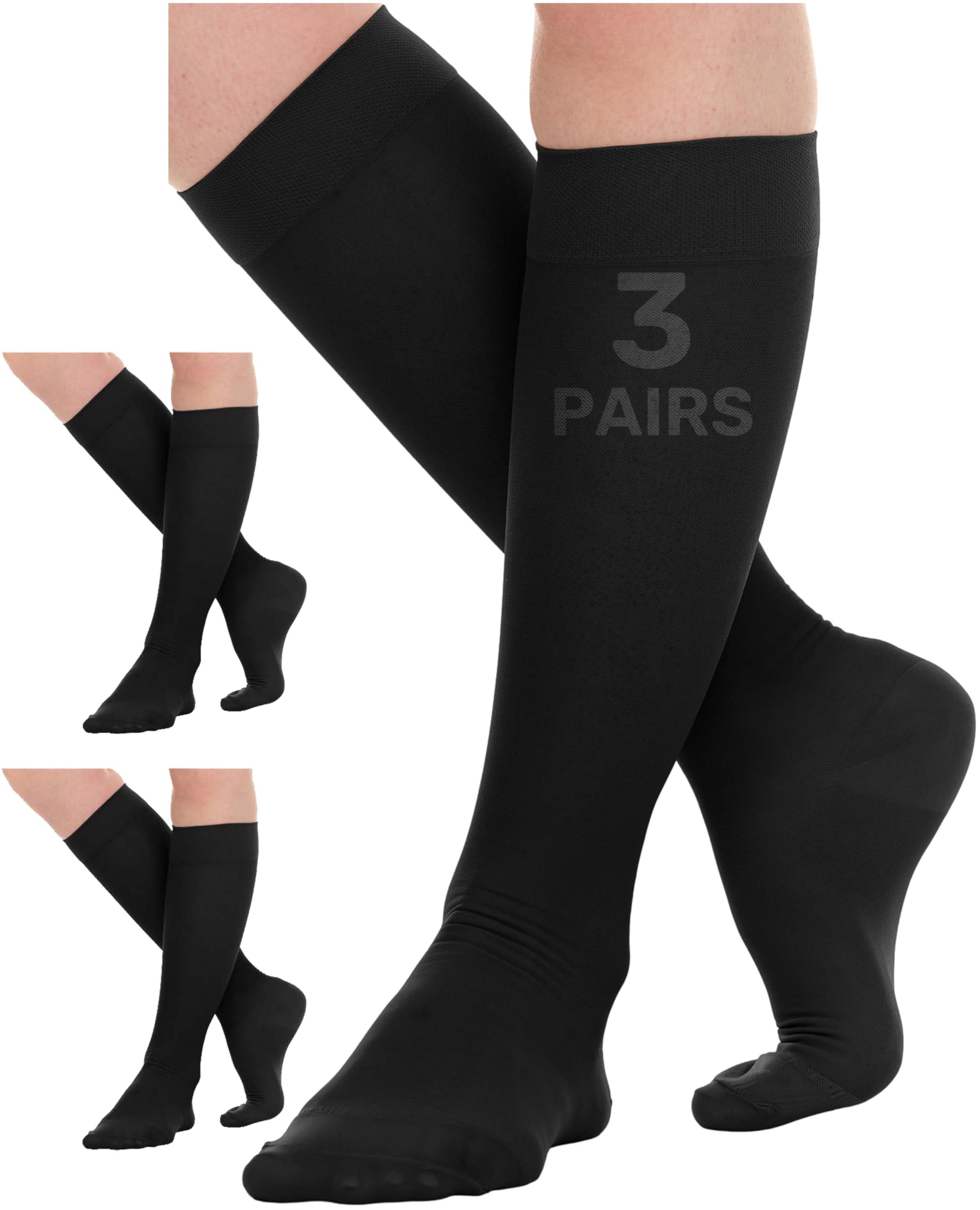
A lighter 15-20 mmHg 3-pack that stays cool in summer and fits short legs.
Consider this the gentler sibling of the 20-30 mmHg 3-pack above. The compression is 15-20 mmHg, compared to the 20-30 mmHg range — perfect for mild swelling, long flights, or everyday office wear when you want support without the squeeze. One buyer called them “nice and cool for the summer,” pointing to the thin nylon-spandex blend that breathes better than thicker cotton blends. A reviewer who wears short-length stockings said the “short length is just right.”
There is a caveat around sizing that matters. A customer who ordered the 2XL noted the packaging said nothing about being “petite” or height-specific, which contradicts the listing’s claim. This means the “short length” label on these may not be as consistent as the Truform or JOBST options, where the short length is a distinct product design. Another buyer reported the top band “cut in my leg,” suggesting that for some leg shapes, the band does not sit comfortably below the knee — a risk when the sock is not truly short enough for that person’s leg height.
For the price of a 3-pack, you get flexibility, but the fit is less predictable than the mid-range or premium options above. If you need a gentle compression sock for travel or light pregnancy swelling and you have short legs, start with a single pair to test the fit before committing to all three. The sheer fabric is comfortable and machine-washable
Appealing points
- 15-20 mmHg is light enough for all-day wear; good for travel and mild swelling.
- Thin, cool fabric works well in warm weather — “nice and cool for the summer” per buyers.
- 3-pack replenishes your sock drawer affordably.
Risks
- Petite/short length claim was disputed — packaging may not specify height, making the fit uncertain.
- Top band reported to cut in on some leg shapes if the sock is not short enough.
Test before committing: If you want light summer compression at a 3-pack price, buy one pack and test the fit — the “short length” label may be inconsistent.
Prefer a guaranteed fit: If you want certainty, the JOBST 15-20 mmHg above is a pricier but more reliable petite-length choice.
Understanding the Specs
Compression level (mmHg)
This is the pressure the sock applies, measured in millimeters of mercury. 15-20 mmHg is mild-to-moderate pressure for tired legs and travel. 20-30 mmHg is stronger medical-grade pressure for varicose veins, edema (fluid buildup), and DVT prevention. If a doctor did not specify a level, 15-20 mmHg is a safe starting point for everyday comfort. Going too high on a healthy leg can cause numbness; too low will not provide enough support for swelling.
Short length vs petite size
A short-length sock is designed with a shorter column from heel to knee bend — typically 14-16 inches instead of the standard 17-19 inches. The problem is that no industry standard exists; one brand’s “short” might still rise too high for a 5’0″ person. Always check the size chart for the actual “leg length” measurement. If a listing does not provide that number, the sock is a guessing game. The best short-length options (like the Truform and JOBST in this list) are engineered specifically for shorter legs, not just labeled “small.”
FAQ
How do I measure my leg for short compression socks?
Can I wear short compression socks if I am tall but have a short lower leg?
Should I wear 15-20 mmHg or 20-30 mmHg for everyday use?
Why do my compression socks bunch up behind my knee?
Do compression socks work for pregnancy swelling on short legs?
How long do compression socks last before losing their elasticity?
What is the difference between open toe and closed toe for short legs?
Can I wear compression socks to bed?
What if I am between two sizes on the size chart?
Are short compression socks hard to put on?
Final Thoughts: The Verdict
For most people with short legs, the compression socks for short legs winner is the Truform Short Length 20-30 mmHg because the true short-length design and dense nylon-spandex knit consistently resolve the bunching and knee-pain complaints that plague other options. If you prefer a lighter 15-20 mmHg for everyday travel or pregnancy wear, grab the JOBST Relief 15-20 mmHg. And if you are on a budget and want open-toe flexibility for wider calves, the standout is the MGANG 3XL Plus Size Short Length.
How We Picked
We do not accept paid placement. Every pick is matched to a real buyer and a real use-case; we do not hands-on test units.
Sources & Methodology
Specifications: manufacturer listings and product documentation. Review insights: verified customer reviews, as of July 2026. Pricing: not shown on this page (it changes often); check the current price via the retailer link.
As an Amazon Associate, WellFizz earns from qualifying purchases. This does not affect which products we feature.
Related Guides

Mo Maruf
I created WellFizz to bridge the gap between vague wellness advice and actionable solutions. My mission is simple: to decode the research and give you practical tools you can actually use.
Beyond the data, I am a passionate traveler. I believe that stepping away from the screen to explore new environments is essential for mental clarity and physical vitality.