Our readers keep the lights on and my smoothie glass nicely filled. As an Amazon Associate, I earn from qualifying purchases.
Specs are compiled from manufacturer listings and verified buyer reviews and can change over time — please confirm the key details on the product page before buying.
Finding a usable digital camera for under $100 used to mean settling for grainy photos, confusing menus, and a battery that dies after a handful of shots. That has changed. A new wave of entry-level point-and-shoots now packs features like 4K video, flip screens for selfies, and enough megapixels for sharp prints — all without requiring a second mortgage. This guide breaks down the real-world strengths of the seven best options, so you know exactly which one matches your needs before you click buy.
I’m Mohammad Maruf — the founder and writer behind WellFizz. This guide is built by comparing the manufacturers’ published specifications and the patterns across verified customer reviews, so you get each pick’s real strengths and trade-offs instead of marketing spin.
You want a camera that takes decent photos, is simple to use, and lasts through a day out — all for under $100. These cheap digital camera under $100 models deliver that, whether you are buying a first camera for a teen, a travel-friendly backup, or a creative tool for social media.
Our Picks at a Glance
How To Choose The Best Cheap Digital Camera Under $100
Shopping for a budget camera is less about finding the cheapest price and more about deciding which features actually matter to you. Here are the three things to focus on.
Resolution and sensor quality
A higher megapixel number sounds better, but it does not guarantee a sharper photo if the sensor is small. Look for a camera with at least 16MP for prints and decent 4K video recording for modern screens. Face-detection or contrast-detection autofocus helps you avoid soft images.
Battery and power management
Nothing ruins an outing faster than a dead camera. Check whether the model uses rechargeable lithium-ion batteries or standard AA batteries. Rechargeable options save money over time, but cameras that run on AAs let you grab fresh cells at any convenience store.
Display, zoom, and connectivity
A flip screen makes selfies and vlogging much easier. Digital zoom is common at this price, but understand that it crops the image — you get closer, but you lose some detail. Models with Wi-Fi let you transfer photos directly to your phone for quick sharing.
Quick Comparison
| Model | Best For | Megapixels | Video Res | Display | Amazon |
|---|---|---|---|---|---|
| EJXHKNF Retro★ Best Overall | Budget entry for kids | 64MP | 2.7K | 2″ waist-level | Amazon |
| SIXTARY 8K WiFiAlso Great | Overall value & vlogging | 96MP | 8K | 2.8″ + 1.54″ dual | Amazon |
| AUREAPIX 8K Flip Screen | Image quality & zoom | 96MP | 8K | 3.5″ 180° flip | Amazon |
| Frenitt 4K Travel | Travel & beginners | 56MP | 4K | 3″ 180° flip | Amazon |
| Kodak PIXPRO FZ45 | Optical zoom & reliability | 16MP | 1080p | 2.7″ LCD | Amazon |
| AUREAPIX 4K WiFi | WiFi sharing & filters | 64MP | 4K | 3″ 180° flip | Amazon |
| LENSY Screen Free | Retro film feel | 8MP | JPEG only | None | Amazon |
In‑Depth Reviews
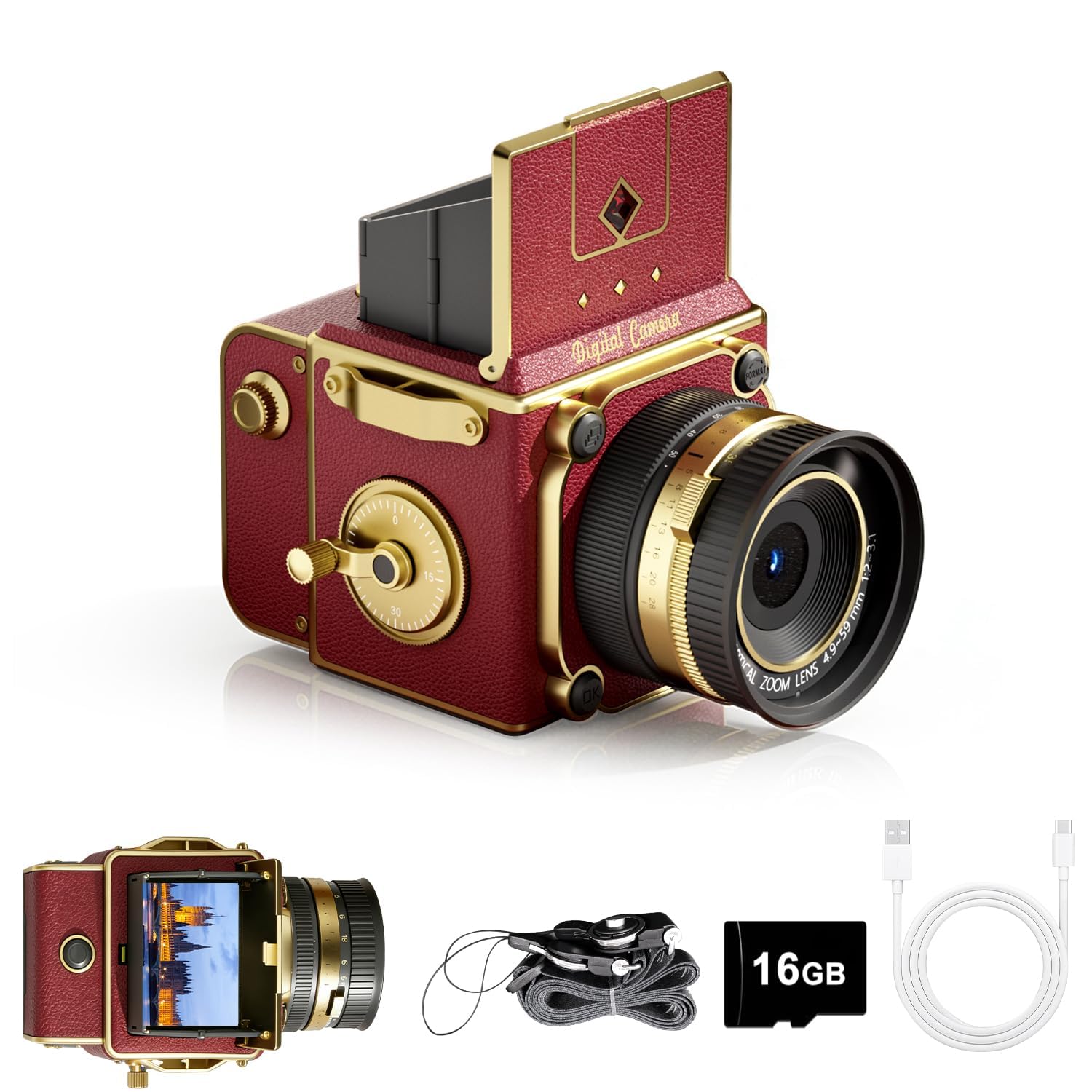
1. EJXHKNF Retro Point & Shoot Camera
The cheapest way to get 64MP photos and a retro aesthetic that sparks curiosity.
The EJXHKNF retro camera is the most affordable entry point on this list, yet it still delivers a 64MP photo resolution and 2.7K video recording. It uses a 2-inch waist-level IPS screen instead of a rear-facing display, meaning you look down into the camera to frame your shot — a design borrowed from old twin-lens reflex cameras. That makes it feel less like a phone and more like a real camera tool.
It includes a 16GB TF card, so it is ready from the start for about 2,000 photos. The 16X digital zoom and contrast-detection autofocus help you get closer and stay sharp. Buyers consistently call it “fun” and “cool looking,” and many say it is a hit with kids and teens who want a camera without the distraction of a smartphone. One buyer mentioned: “The SD card is small so you will need an adapter to download pictures onto a computer.”
At this price, there are compromises. The 2.7K video is a step down from 4K — at 2.7K versus the 8K model’s 8K. The screen is also smaller than the 3-inch panels on the Frenitt and AUREAPIX models. Reviewers point out that the autofocus can be finicky, and the video sometimes stutters. But for the lowest price, you get a surprisingly complete package that actually looks good on a shelf.
Highlights
- 64MP photos at the lowest price in this guide.
- Unique waist-level screen encourages a different shooting style.
- Includes 16GB card, case, and neck strap.
Limitations
- Video resolution stops at 2.7K — notably lower than 4K rivals.
- Small screen and no flash make low-light shooting difficult.
Best for young beginners on a tight budget: The retro look and simple controls make it a fun, affordable introduction to photography.
Reconsider if: You want flip-screen selfies or 4K video — both cost a bit more with the Frenitt or AUREAPIX models above.
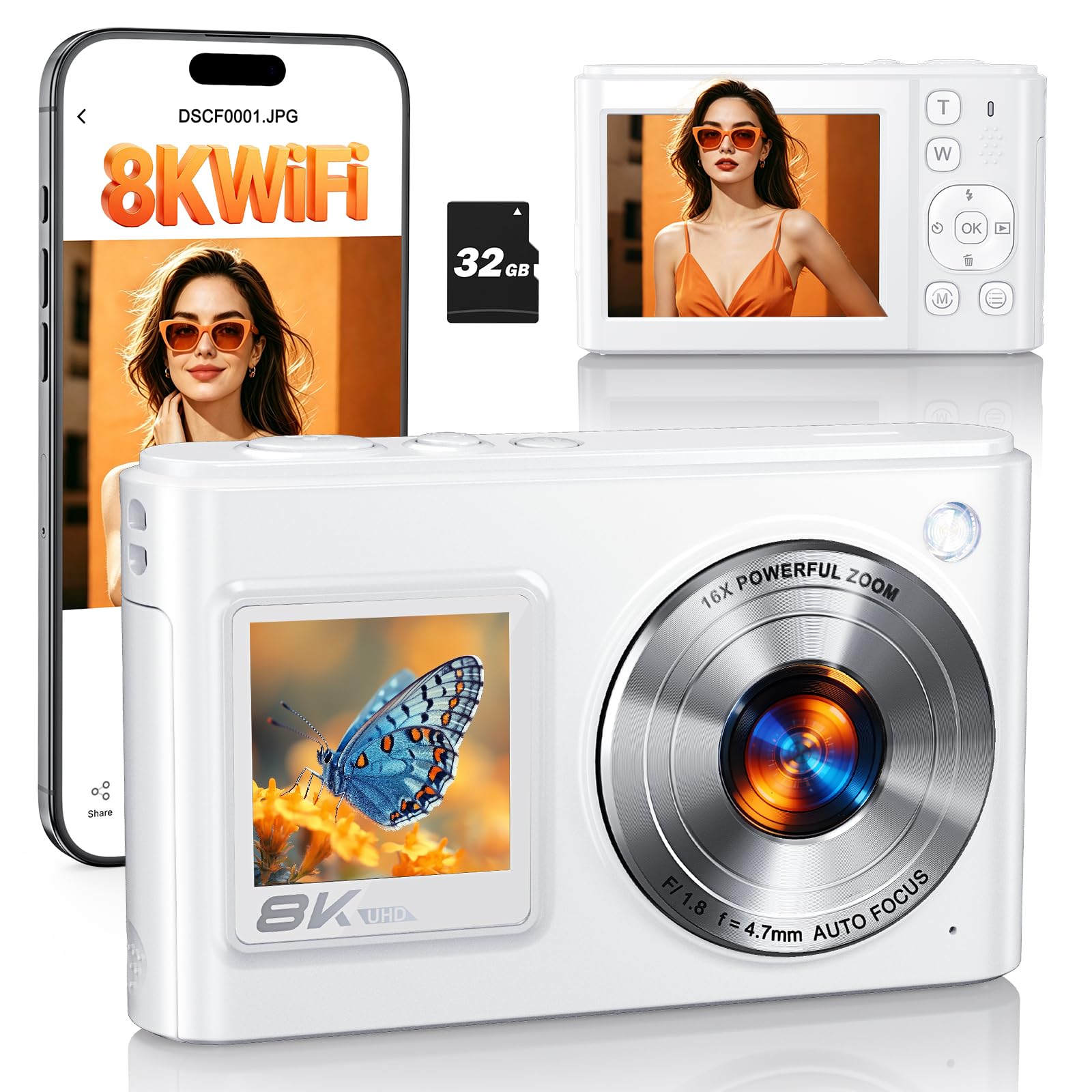
2. SIXTARY 8K Digital Camera with WiFi
The rare budget camera that shoots 8K video and still fits in your palm.
This is the pick that punches well above its price bracket. The SIXTARY delivers a 96MP still image and 8K Ultra HD video — at 8K versus the 2.7K cameras in this lineup — so your landscape shots and family videos have vivid color and fine detail. The dual-screen setup (a 2.8-inch rear display plus a 1.54-inch front selfie screen) makes it easy to frame vlogs or group selfies without guessing where the lens is pointing.
Wi-Fi transfer through the Viipulse app lets you send photos straight to your phone for posting on social media. You also get a built-in flash, a 32GB micro SD card, and two rechargeable batteries in the box. You get a complete kit that is ready to shoot right out of the package.
One trade-off: the 16X digital zoom crops into the sensor rather than using optical glass, so zooming in all the way introduces some grain. That is standard at this level, but it is worth knowing if you often shoot distant subjects.
Standout Features
- 96MP photo resolution and 8K video capture for sharp, colorful content.
- Dual screens make selfie framing and vlogging easy.
- Built-in Wi-Fi for instant phone transfer via the Viipulse app.
- Includes 32GB card and two batteries — fully ready to use.
Real Trade-Offs
- Digital zoom reduces image clarity at maximum magnification.
- No optical image stabilization; keep hands steady for smoothest video.
Best for most buyers: If you want the highest resolution and Wi-Fi sharing without spending more than $100, this is the clear top choice.
Consider alternatives if: You need true optical zoom — the Kodak FZ45 below gives you 4X glass zoom instead of digital cropping.
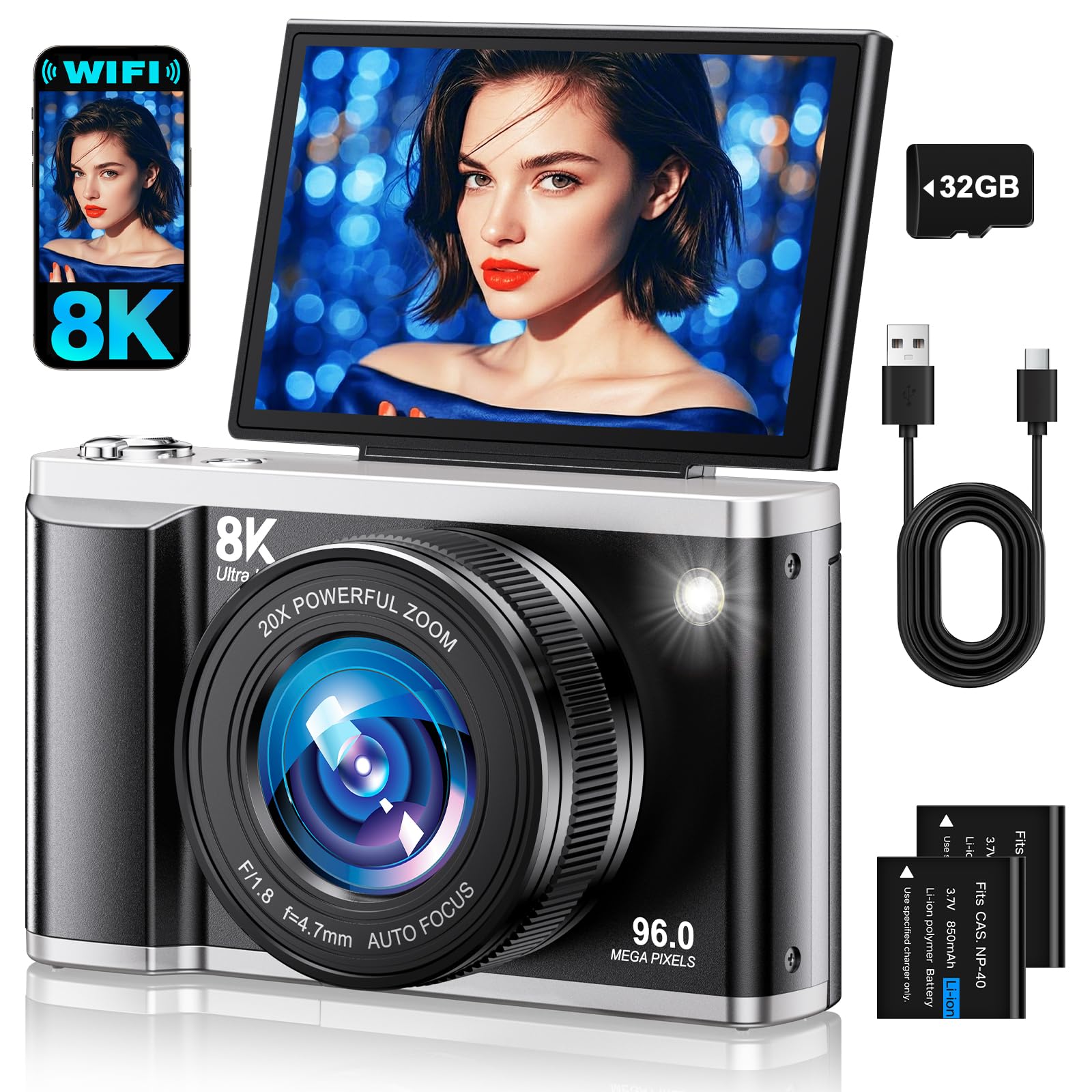
3. AUREAPIX 8K Digital Camera with Flip Screen
The bigger flip screen and 20X zoom make this the creator-friendly contender.
This AUREAPIX model shares the same 96MP sensor and 8K video ceiling as the SIXTARY above, but it adds two upgrades that matter if you shoot a lot of self-portraits or vlogs. The 3.5-inch 180° flip LCD screen is noticeably larger than the 2.8-inch rear display on the SIXTARY, and it rotates completely so you can see yourself while recording. That single change makes framing a vlog or a video call much more natural.
The 20X digital zoom is another step up from the 16X zoom found on most other picks here. It is still digital — meaning it does not preserve full optical detail at max range — but the extra reach helps when you are at a concert or capturing wildlife at a distance. This camera is a solid step ahead of the Frenitt below, which stops at 16X zoom and 56MP resolution.
Buyers on Amazon rate it 4.7 out of 5 stars across 119 reviews, with many mentioning the sharp picture quality and the convenience of the flip screen. The kit packs two high-capacity batteries and a 32GB SD card, so you can shoot for hours without hunting for a power outlet.
Worth the step up: If you vlog, take selfies, or join frequent video calls, the larger flip screen and longer zoom make this the more versatile buy.
Reach for this if… you value a big, adjustable screen for framing yourself on camera.
Look elsewhere if… you prefer the dual-screen selfie setup of the SIXTARY for quick front-facing previews — that is a personal workflow choice.
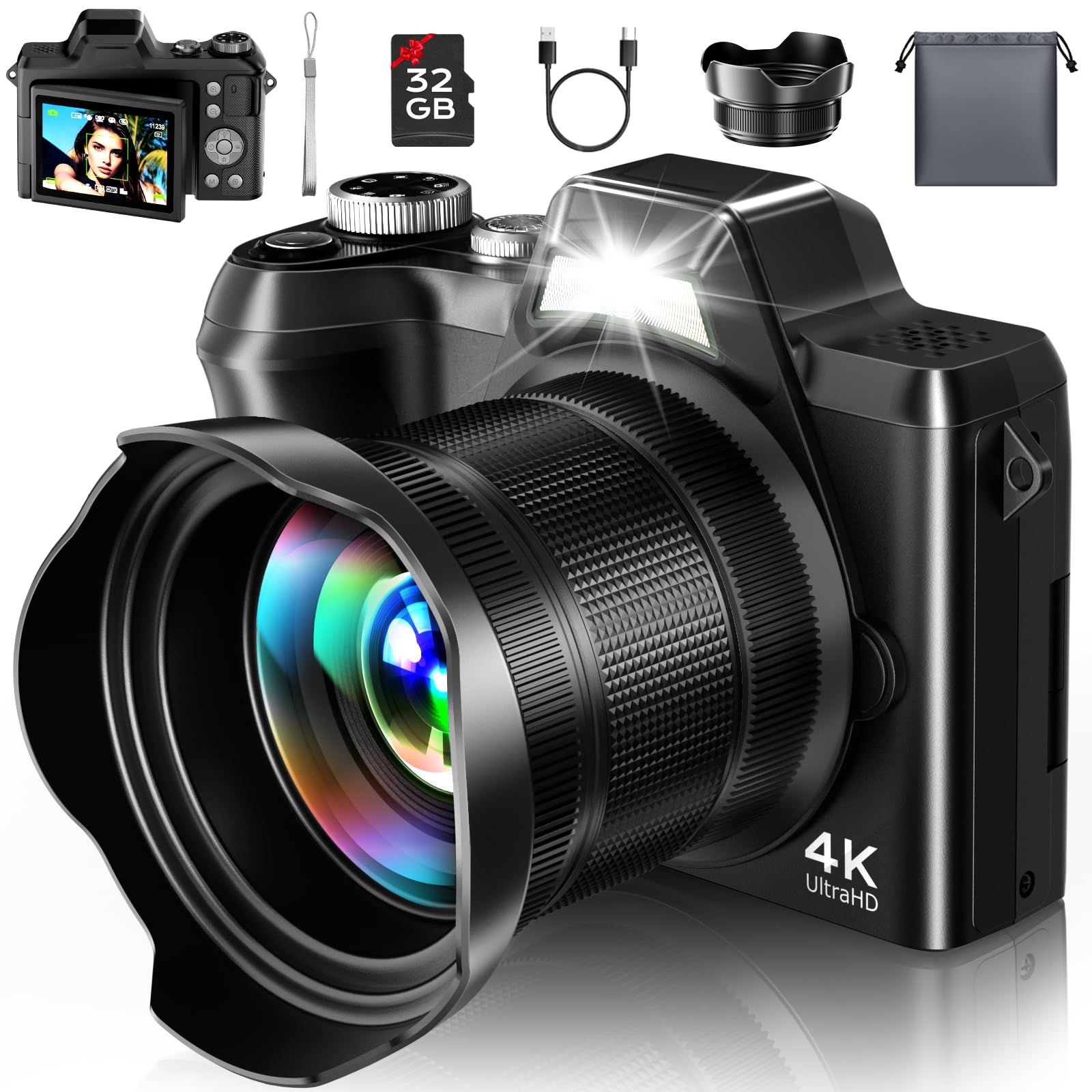
4. Frenitt 4K Digital Camera for Travel
A well-rounded travel companion that makes beginner photography straightforward.
The Frenitt earns its spot because it gives you a detachable lens hood that cuts glare in bright sunlight — a feature the AUREAPIX 4K below lacks. You get 56MP stills (enough resolution for crisp prints) and 4K video at 30 frames per second (frames per second, meaning smooth motion in clips). The 180° flip screen is the same 3-inch size as the AUREAPIX 4K, so you can frame selfies easily. That small lens hood makes a real difference when you shoot outdoors on a sunny day.
It also uses a 360° rotating mode dial, so you can switch between Photo, Video, Slow Motion, and Smile Capture without diving into menus. The autofocus on this model is fast for a beginner camera; buyers report it locks onto subjects quickly with a half-press of the shutter. Several owners mention that the webcam mode works well for Zoom calls and live streaming.
One caveat: at 47 grams the battery is on the heavier side compared to the 11-gram cells in the 8K models, but that translates to longer runtime for a full day of sightseeing. The included 32GB memory card and USB Type-C cable mean you can start shooting and transferring files immediately.
What Shines
- 56MP photos and 4K video produce share-worthy content.
- Detachable lens hood cuts glare for clearer outdoor shots.
- Intuitive 360° dial lets you swap modes instantly.
The Limits
- 56MP is significantly less than the 96MP captured by the top two picks.
- No Wi-Fi — file transfer requires a USB cable.
Best for travel and teens: The straightforward controls, flip screen, and included lens hood make it a reliable first camera.
Not the pick if: Wireless transfer is a must — go with the SIXTARY or AUREAPIX 8K models for built-in Wi-Fi.
5. Kodak PIXPRO FZ45 Digital Camera

The only camera here with true glass zoom — a real optical lens that keeps details sharp.
Every other camera on this list uses digital zoom, which essentially crops and enlarges the image inside the sensor. The Kodak FZ45 uses a 4X optical zoom lens, meaning it physically moves glass elements to bring distant subjects closer without losing quality. That is a significant advantage if you shoot sports, wildlife, or anything far away. The 27mm wide-angle lens also helps you fit more into the frame for group photos and landscapes.
At 16MP and 1080p Full HD video, the resolution is lower than the 4K and 8K models above, but the image quality under good lighting is reliable and natural. The contrast-detection autofocus with 9 points gives you solid focus for casual shooting. The 2.7-inch LCD screen is smaller than the flip screens on other picks, and it does not tilt — so selfie framing is trickier.
The biggest catch: it runs on two AA batteries. Buyers warn that the included alkaline AAs die quickly. Stock up on high-capacity rechargeable AA cells or a pack of lithium AAs for a full day of shooting. Across 6,132 reviews, the FZ45 holds a 4.3 rating, which speaks to its consistent performance for a straightforward point-and-shoot.
The optical-zoom advantage: If sharpness at a distance matters more than 4K video, the Kodak is the only sub-$100 camera here that gives you true glass zoom.
Reach for this if… you need clear, zoomed-in shots without the grain that digital zoom creates.
Hold back if… you want a flip screen for selfies or 4K video — those features are absent here.
6. AUREAPIX 4K Digital Camera with WiFi
A Wi-Fi-equipped 4K shooter with 20 creative filters built right in.
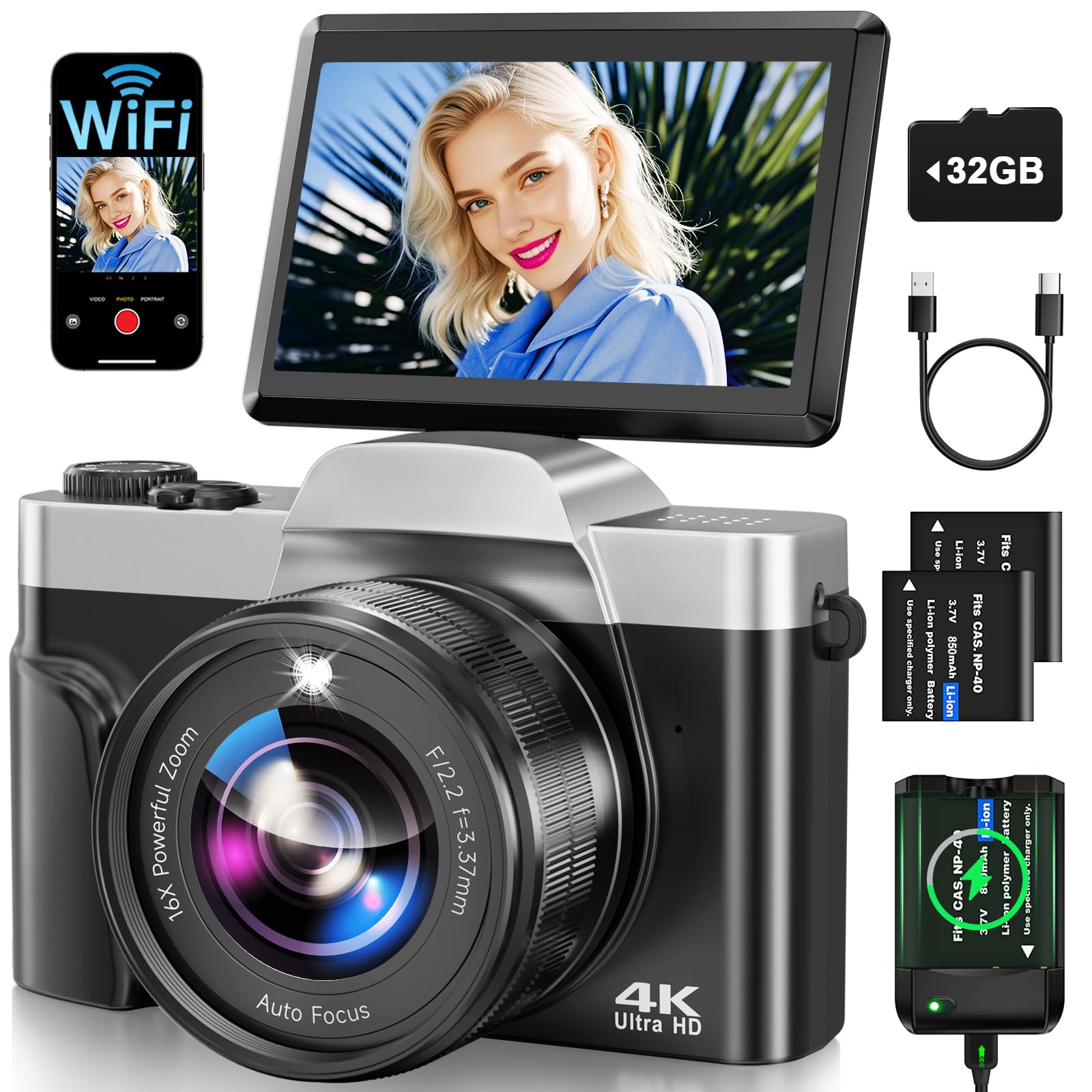
The AUREAPIX 4K brings Wi-Fi connectivity and 64MP stills to the budget tier, which puts it ahead of the Frenitt above on resolution (64MP vs 56MP) while matching its flip-screen design. The Viipulse app handles wireless transfer, so you can send photos to your phone and post them in seconds. You can also use the app as a remote shutter, which helps with group shots and long-exposure experiments.
The 180° flip screen is 3 inches and works well for selfie framing. The camera also includes 20 filters — useful for adding a retro or black-and-white look without editing later. The anti-shake feature reduces blur from hand movement, a nice touch for beginners who may not have the steadiest hands.
The battery weighs 21.2 grams (lighter than the Frenitt’s 47-gram cell), but it still holds enough charge for a typical day of casual shooting. The included charger stand lets you charge two batteries at once — handy if you buy a spare. Customers note this is among the most popular budget cameras, with 867 reviews and a 4.2 out of 5 rating.
Why It Stands Out
- Wi-Fi sharing and remote control simplify posting on social media.
- 20 built-in filters give creative looks without editing software.
- Anti-shake and flash help in low-light situations.
Where It Falls Short
- Digital zoom only; no optical zoom option.
- 64MP is well below the 96MP in the top-tier models.
Best for social media sharers: If wireless transfer and creative filters are priorities, this is the right balance of features and price.
Consider the SIXTARY instead if: You want the highest resolution possible — that camera’s 96MP and 8K video are a clear step up.
7. LENSY Screen Free Digital Camera
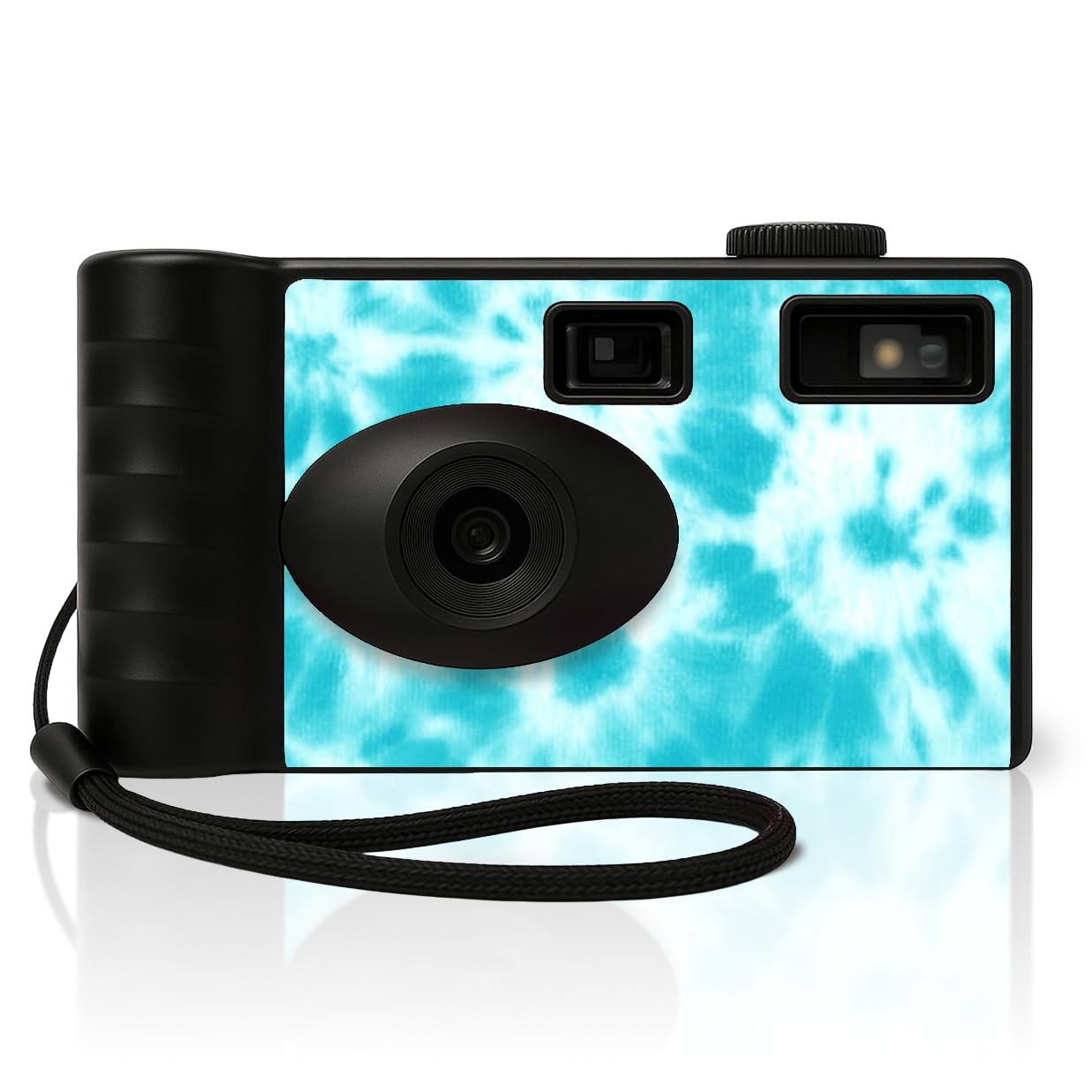
A screen-free design that recreates the surprise and charm of disposable film cameras.
The LENSY is built for a very different kind of photography. It has no rear screen, no video recording, and only an 8MP sensor — specs that look weak on paper but are entirely intentional. The idea is to force you to point, shoot, and move on, just like with a disposable camera. You only see your photos later when you connect via USB-C and download the JPEGs from the included 4GB TF card (which holds about 2,000 shots).
Four built-in filters (Classic, Retro, Analog, Black & White) let you change the look of your images before you press the shutter. The auto-flash and focus-free lens mean there is nothing to adjust — just toggle the power and shoot. Weighing less than half a pound, it disappears into a pocket or bag.
The trade-off is significant: you cannot review, delete, or retake a shot until you are at a computer. Photos also need bright sunlight to achieve that film-like quality. One reviewer noted that indoors or in low light, the images “just look like a super cheap digital camera.” This is not a primary camera — it is a fun, creative sidekick for people who miss the analog experience. skip it if you need instant feedback on your shots or shoot mostly indoors.
For the nostalgic creator: If you love the surprise of getting film developed and want a lightweight, battery-efficient alternative, the LENSY nails that feeling.
Reach for this if… you want a conversation-starting camera that forces you to be present in the moment.
pass on it if you need to see your photos or shoot video — pick the Frenitt or AUREAPIX 4K for a traditional flip-screen experience.
Understanding the Specs
Megapixels and sensor size
A camera’s megapixel count tells you the resolution of the image it captures. More megapixels mean you can print larger photos or crop in tighter without losing detail. However, a very high MP count on a tiny sensor can introduce noise in low light. For a sub-$100 camera, anything above 16MP is plenty for sharing online and making 8×10 prints.
Optical zoom vs digital zoom
Optical zoom uses moving glass elements to magnify the scene before it hits the sensor, preserving full image quality. Digital zoom simply crops and enlarges the center pixels, which reduces sharpness. Among these budget cameras, only the Kodak FZ45 offers true optical zoom. All others use digital zoom, so keep that in mind if you frequently shoot distant subjects.
Flip screens and selfie framing
A 180° flip LCD screen rotates to face forward, letting you see yourself while taking a selfie or recording a vlog. Cameras without a flip screen (or with a fixed screen) require you to guess your framing. If you plan to shoot yourself regularly, prioritize a model with a flip screen or a secondary front display.
Battery type and life
Rechargeable lithium-ion batteries are common in modern budget cameras and can be charged hundreds of times. The Kodak FZ45 uses AA batteries, which are easy to replace anywhere but can become expensive over time if you use disposables. Most models here include at least one rechargeable battery in the box; some include two for longer shooting sessions.
FAQ
Can a cheap digital camera under $100 take good quality photos?
Is 4K video better than 1080p video in a budget camera?
How many photos can a 32GB SD card hold?
Do I need an external memory card for these cameras?
Are these cameras good for vlogging and YouTube?
What is the difference between a regular digital camera and a retro screen-free camera?
How long does the battery last on these budget cameras?
Can I connect these cameras to my phone or computer?
Is a 56MP camera better than a 64MP camera?
Which camera is best for a child or teenager?
Final Thoughts: The Verdict
If you want one dependable pick, the cheap digital camera under $100 winner is the SIXTARY 8K WiFi Camera because it delivers the highest resolution (96MP stills and 8K video), dual screens for selfies, Wi-Fi sharing, and a complete kit with a memory card and two batteries. If you want a larger flip screen and 20X zoom for vlogging, grab the AUREAPIX 8K Flip Screen Camera. And for reliable optical zoom from a trusted brand, the Kodak PIXPRO FZ45 is the one to pick.
How We Picked
We do not accept paid placement. Every pick is matched to a real buyer and a real use-case; we do not hands-on test units.
Sources & Methodology
Specifications: manufacturer listings and product documentation. Review insights: verified customer reviews, as of July 2026. Pricing: not shown on this page (it changes often); check the current price via the retailer link.
As an Amazon Associate, WellFizz earns from qualifying purchases. This does not affect which products we feature.
Related Guides

Mo Maruf
I created WellFizz to bridge the gap between vague wellness advice and actionable solutions. My mission is simple: to decode the research and give you practical tools you can actually use.
Beyond the data, I am a passionate traveler. I believe that stepping away from the screen to explore new environments is essential for mental clarity and physical vitality.