Our readers keep the lights on and my smoothie glass nicely filled. As an Amazon Associate, I earn from qualifying purchases.
Specs are compiled from manufacturer listings and verified buyer reviews and can change over time — please confirm the key details on the product page before buying.
Aluminum siding collects grime, oxidation, and water stains that turn a crisp exterior into something that looks neglected. The right cleaner removes that buildup without damaging the finish or requiring hours of elbow grease. This guide breaks down the seven top-rated options so you can restore your home’s curb appeal in a single afternoon.
I’m Mohammad Maruf — the founder and writer behind WellFizz. This guide is built by comparing the manufacturers’ published specifications and the patterns across verified customer reviews, so you get each pick’s real strengths and trade-offs instead of marketing spin.
Whether you are dealing with light dirt or heavy oxidation, the right chemical approach makes all the difference. We compared concentrate yield, application method, user feedback, and safety profiles to find the absolute best cleaner for aluminum siding on Amazon, ranking from versatile all-in-one formulas to eco-friendly specialty solutions that match your specific cleaning needs.
Our Picks at a Glance

How To Choose The Best Cleaner For Aluminum Siding
Aluminum siding reacts differently than vinyl — it oxidizes over time, turning chalky or pitted. Standard household bleach won’t restore brightness and can even accelerate corrosion. You need a cleaner designed either for metals (mild acid based) or an oxygen-based surfactant that lifts organic stains without etching the surface.
Concentrate strength and yield
A concentrated formula lets you adjust the dilution for the job. Heavy oxidation calls for a stronger mix — some products work full-strength while others need as little as 8:1 parts water. Check the yield per container. A product that makes 20 gallons covers roughly 5,000 sq. ft., which is a big difference from a ready-to-use half-gallon sprayer that handles a single home.
Application method: spray-on vs. pressure washer
Some cleaners require a pump sprayer or soft-wash gun — you apply the liquid, let it dwell for several minutes, and rinse with a garden hose. Others are formulated for pressure washer downstream injectors, meaning the machine pulls the concentrate into its stream. Choose based on whether you own a pressure washer or want a low-pressure approach that protects the siding finish.
Safety around landscaping and pets
Oxygen-based options (hydrogen peroxide powder) biodegrade in around 4-6 hours and won’t harm nearby plants or grass. Acid-based formulas are potent but require you to wet your landscaping first and rinse thoroughly. If you have flower beds pressed against the foundation, an eco-safe powder like Wash Safe Supreme eliminates the worry of chemical runoff.
Quick Comparison
| Model | Best For | Concentrate Volume | Dilution Ratio | Item Weight | Amazon |
|---|---|---|---|---|---|
| Bosh Chemical Alumabright★ Best Overall | Heavy oxidation & restorations | 128 Fl Oz (Pack of 2) | Full strength | 12 Kilograms | Amazon |
| Southeast Softwash Southern DrawlPro Soft Wash | Pro soft-wash house jobs | 128 Fl Oz (Pack of 1) | 2 oz per gallon of bleach | — | Amazon |
| Quality Chemical Aluminum Cleaner | Multi-surface (RV, trailer, rims) | 128 Fl Oz (Pack of 1) + sprayers | 8:1 (water:product) | 10.52 Pounds | Amazon |
| Zep House and Siding Wash | Pressure washer jobs | 128 Fl Oz (Case of 2) | Makes up to 20 gallons | 8 Pounds | Amazon |
| W M BARR FG581 House Wash | Budget broad-coverage | 128 Fl Oz (Pack of 1) | 5:1 (water:product) | 5.7 Pounds | Amazon |
| Toon-Brite B1000 | Light cleaning & quick spray | 64 Fl Oz (Pack of 1) | Dilutable for lighter duty | 56 Ounces | Amazon |
| Wash Safe Supreme | Eco-safe & plant friendly | 160 Ounce (Powder) | 10 lb makes 20 cups | 10 Pounds | Amazon |
In‑Depth Reviews
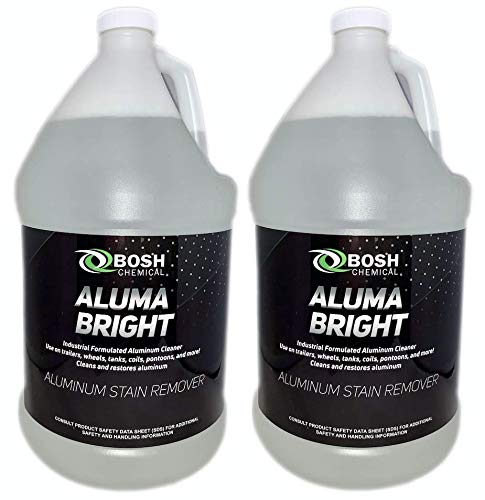
1. Bosh Chemical Alumabright Aluminum Cleaner (2 Gallon Case)
Our pick — over 4.5★ from 850+ verified ratings; the strongest balance of quality and price.
A two-gallon acid concentrate that restores oxidized aluminum without any hard scrubbing.
This cleaner, brightener, and restorer targets heavy oxidation, road salt, and even diesel exhaust smoke. You spray it on with a simple pump sprayer, let it foam up and sit, then rinse with cold pressurized water. That is the whole process. One buyer put it into a one-gallon sprayer, hit his pontoon boat, scrubbed lightly with a mop, and reported the boat had never been that shiny since purchase.
The 2-gallon case comes as two 128 Fl Oz bottles, so you get 128 Fl Oz per bottle (2 gallons total) versus Toon-Brite’s 64 Fl Oz. That size advantage makes it the pick if you have a whole house, a large RV, or multiple boats. A word of caution from another buyer: the formula is likely muriatic acid based, so wear gloves and eye protection, and do not let it sit too long or it can etch the aluminum. The product is highly concentrated and non-fuming (it smells like almond), but it is still an acid.
You get a 12-kilogram (about 26.5 lbs) jug — the heaviest option here — because the formula is chemically dense, so it tackles badly chalked (powdery, faded) siding without scrubbing. Buyers report that one purchase can last several seasons. The 4.6-star rating across 852 reviews shows people trust it for tough jobs.
Why it dominates tough jobs
- Removes oxidation, carbon buildup, grease, and oil stains on contact
- Two-gallon case saves compared to buying singles
- Works on boat pontoons, trucks, RVs, and aluminum house siding
- Highly concentrated; a little goes a long way
Two things to watch
- Acid base can etch aluminum if left on too long
- Bottles can leak in transit (a few buyers reported this)
Best for heavy restorations: Reach for this if your siding is chalky, stained, or hasn’t been cleaned in years. The 2-gallon volume means you’ll have enough to treat the whole house plus the patio furniture.
One real limit: The acid formula demands careful handling — wear protection and always wet down nearby plants before you spray.
2. Southeast Softwash Southern Drawl
A professional surfactant that makes bleach stick to your siding instead of dripping off.
Unlike the acid-based Alumabright, Southern Drawl is a wetting agent. You mix it with sodium hypochlorite (pool chlorine or liquid bleach) to improve “cling time” — the liquid stays on vertical surfaces rather than running straight down. The manufacturer recommends 2 ounces of Southern Drawl per gallon of bleach. One reviewer mixed it 1:1 with pool chlorine and water and said it made cleaning the house a breeze.
This is the choice if you already own a soft-wash system or a pressure washer with a downstream injector. It is also safe for roofs (asphalt shingles, metal, slate) and for vinyl siding — not just aluminum. The clean citrus scent is a bonus compared to the harsh chemical odor of straight bleach. It delivers a 4.4 average from 136 ratings, and buyers consistently praise the suds and the extended dwell time that lets the solution eat through mold, moss, and mildew before you rinse.
Stick-and-dwell advantage
- Creates thick foam that clings to vertical siding, gutters, and roofs
- Rinses clean without leaving residue on windows or vinyl
- Pleasant citrus smell compared to plain bleach
- Works as a surfactant for soft-wash professionals and DIY homeowners alike
One limitation
- It is an additive, not a standalone cleaner — you must supply your own bleach or sodium hypochlorite
Pick this for pro-level soft washing: If you have a pressure washer or soft-wash gun and want maximum contact time on tall siding, this surfactant changes how well bleach works.
skip it if: You want a ready-to-use spray that you can apply straight from a bottle without mixing.
3. Quality Chemical Aluminum Cleaner & Brightener & Restorer (1 Gallon Combo)

A two-part bundle that gives you concentrate, sprayers, and refill quarts in one box.
This gallon combo includes two empty chemically resistant sprayers and two refill quarts — so you can start working immediately without buying extra equipment. At 10.52 pounds, it is noticeably heavier than the W M BARR FG581 (5.7 pounds), which reflects the additional hardware and the higher volume of active chemical. It targets oxidation, stains, and road salt corrosion on boats, RVs, trailers, and aluminum rims.
The recommended mix for heavy cleaning is an 8:1 ratio (water to product) with a 10-minute dwell time. One buyer tried it on a trailer with tough mold: he mixed the 8:1 ratio, let it sit for ten minutes, then hit it with a pressure washer — the trailer looked new. A few owners noted that the acid eats the pump seals inside the included sprayers after a few uses, so they recommend having a backup sprayer or transferring the mixture to a stronger container. The 4.6 rating across 702 reviews confirms high satisfaction, especially for the ease of use: “Just spray, wait a minute, and rinse with a garden hose” was one buyer’s summary.
What the bundle gives you
- One gallon concentrate plus two refill quarts and two sprayers
- Removes road salt and corrosion from aluminum trailers and trucks
- Safe on most aluminum surfaces — pontoons, machinery, rims, siding
- Works with a garden hose — no pressure washer required for light jobs
Two weak points
- Included sprayers may corrode over time from the acid formula
- Can leave white spots on garage floors or concrete — rinse the area after use
Great for first-time users: Grab this if you want everything in one box — the two sprayers mean you can start cleaning right away, and the refill quarts are handy for small touch-ups.
Consider the trade-off: The sprayers might not last, so plan to transfer the mixed solution to a high-quality pump sprayer for repeat use.
4. Zep House and Siding Pressure Wash Cleaner Concentrate (Case of 2)

A construction-grade concentrate that makes up to 20 gallons — enough for a full 5,000 sq. ft. home.
This case of two one-gallon jugs is explicitly labeled for aluminum siding, vinyl siding, wood siding, hard coat stucco, brick, and cement Hardie Plank. You use it with a pressure washer: apply from bottom to top to avoid streaks and rinse from top to bottom. The construction-grade formula handles heavy buildup. One buyer mixed it per the instructions for heavy stains, applied it with a pump sprayer, brushed the tough spots, and rinsed with a hose. He used about three-quarters of a bottle for a quarter of his house and said there were no fumes.
At 8 pounds per case, it is lighter than the Quality Chemical bundle and significantly more compact than the Bosh Alumabright (which weighs 12 kilograms). The product dimensions measure 10 x 10 x 10 inches — compared to the W M BARR FG581 at 6.16 x 6.16 x 11.82 inches. That cube shape stacks neatly in a garage. Zep earns a 4.4 average from 585 ratings, with most praise centered on the price-to-yield ratio: it saves money over hiring a pressure washing service.
Four reasons to pick it
- Safe on aluminum, vinyl, wood, stucco, brick, and cement siding
- One case makes up to 20 gallons of ready-to-use cleaner
- Streak-free finish when applied bottom-to-top
- Industrial grade without harsh fumes or strong odors
One note from buyers
- Some stains require a second application and a bit of scrubbing — not a complete no-scrub solution for heavy mold
Best for large houses and power washers: If you own a pressure washer and want one product that works on every type of siding, this is your most cost-effective choice.
One trade-off: The cleaner is mild, so badly oxidized aluminum may need a second pass or a stronger dedicated acid wash.
5. W M BARR FG581 128OZ Siding/House Wash

A concentrated house wash that goes a long way at a 5:1 dilution ratio.
This formula is EPA-registered and designed to power away dirt, grime, and mold on vinyl and aluminum siding. The recommended mix is 5 parts water to 1 part product. One reviewer noted cutting it at 5:1 and using a pump sprayer before pressure washing — he noted that one gallon goes a long way. The product is bleach-based, which means it handles mold and mildew very effectively, but you should avoid using standard laundry bleach on windows since it can destroy the seals.
Weighing 5.7 pounds, this is the lightest jug in the lineup. It also has the smallest product dimensions at 6.16 x 6.16 x 11.82 inches — making it easy to store or carry. The 4.4 rating from 197 reviews is solid, though the review count is lower than the top picks. Buyers consistently say it works as well as brand-name mold washes but costs less. If you are on a budget and only need to clean siding a couple of times a year, this is a smart mid-range value that does not sacrifice effectiveness.
Value highlights
- Concentrated formula stretches one bottle into multiple cleaning sessions
- EPA-registered for exterior use
- Compatible with pressure washer detergent injectors
- Lightweight and compact for easy storage
Watch out for
- Bleach base — keep away from window seals and rubber gaskets
- Not formulated specifically for aluminum oxidation; better on organic stains
Best for mild staining and budget buyers: Choose this if your siding has dirt and mildew rather than deep oxidation, and you want an affordable concentrate that works with your pressure washer.
pass on it if: Your aluminum siding has chalky white oxidation or heavy road salt corrosion — those jobs need an acid-based aluminum restorer.
6. Toon-Brite B1000 Aluminum Cleaner (1/2 Gallon with Sprayer)

A half-gallon sprayer that you just spray on and hose off for fast cleaning.
This is the smallest option in terms of volume: 0.5 gallons of cleaner in a ready-to-use spray bottle. The manufacturer says one gallon at full strength will make up to 2 gallons if you dilute it for lighter duty. One buyer was “extremely pleased with the cleaning strength” — they sprayed it on the pontoons, let it sit briefly, and hosed it off to reveal silver aluminum. The formula is biodegradable and lemon-scented, so it is more pleasant to use than harsh acid-based alternatives.
The trade-off is that at 64 Fl Oz (Pack of 1), it has only 64 Fl Oz (0.5 gallons) compared to the Bosh Chemical two-gallon case (2 gallons total). You also need to be careful: one experienced buyer warned that the sprayer pump can die halfway through the bottle. They recommended having a backup pump or transferring the liquid to a different sprayer. For small jobs — a single section of siding or a set of aluminum rims — this is convenient. For a full house exterior, you would need multiple bottles.
Fast and friendly
- Ready to use — no mixing required
- Biodegradable formula with a fresh lemon scent
- Removes marine deposits, scum, stains, and light oxidation
- Compact half-gallon bottle with integrated sprayer
The downsides
- Sprayer nozzle tends to fail partway through the bottle
- Only 64 oz of product — not enough for a whole house
Best for small touch-ups and first-timers: Keep this in your garage for cleaning an aluminum door frame or a small section of siding. The spray-and-hose-off simplicity is ideal for beginners.
it’s not for you if: You have a large house or heavy oxidation — you will run out of product quickly and the sprayer may fail before the bottle is empty.
7. Wash Safe Supreme Eco-Safe Exterior Cleaner (10 lb Powder)

A bleach-free, hydrogen-peroxide powder that protects your landscaping while it cleans.
This 10-pound container of powder cleaner makes up to 20 cups of solution and covers up to 10,000 sq. ft. of siding, roof, deck, or concrete. The active ingredient is hydrogen peroxide — it has zero bleach and is safe to use around grass, flower beds, and pets. The product only has an active life of 4-6 hours before it biodegrades into water and oxygen. That makes it the conscientious choice if you have a well, a koi pond, or sensitive plants right against your foundation.
The average rating sits at 3.8 from 136 reviews — lower than the other products here, because results vary heavily depending on the surface and dwell time. One buyer successfully cleaned heavy stains from a Trex deck and house siding without harming nearby plants. Another tried it on a wood fence and white landscaping stone and saw zero effect. The cleaning power is gentler than acid, so deep oxidation or stubborn mold on north-facing siding may need a more aggressive product. The powder format stores indefinitely, and one buyer mentioned a 40-pound tub lasted over five years for regular use around their property.
Why go organic
- 0% bleach — safe for plants, pets, and grass
- Biodegrades in 4-6 hours, leaving no chemical residue
- Powder concentrate is lightweight to ship and stores forever
- Works on siding, roofs, decks, concrete, boats, and RV exteriors
Honest limitations
- Inconsistent results — some owners mention zero cleaning effect on heavy stains
- Not strong enough for severely oxidized aluminum; needs a dedicated acid cleaner
Best for eco-conscious homeowners: Choose this if you need to clean siding without risking your garden, groundwater, or pets. It is also ideal for routine maintenance rather than heavy restoration.
Avoid it for: Heavily chalked or pitted aluminum that needs chemical etching — the oxygen-based formula is too mild to remove deep oxidation.
Understanding the Specs
Dilution Ratio vs. Yield
A product that says “makes up to 20 gallons” means you add water to the concentrate — usually at a specified ratio like 5:1 or 8:1. A higher ratio (more water per part product) saves money but works best on light stains. Full-strength application is reserved for heavy oxidation. Always check the yield number to understand how much surface area one bottle covers before you buy.
Acid vs. Oxygen vs. Bleach
Three chemical families dominate this category. Acid-based cleaners (usually containing phosphoric or muriatic acid) dissolve oxidation and white chalk on raw aluminum — they are the strongest option but require gloves and eye protection. Bleach-based formulas kill mold and mildew effectively on painted or coated siding. Oxygen-based cleaners (hydrogen peroxide powder) are plant-safe and biodegradable but lack the chemical bite for heavy restoration. Match the chemistry to the actual stain: oxidation needs acid, organic grime needs bleach or oxygen.
FAQ
Can I use a standard vinyl siding cleaner on aluminum siding?
How long should I let the cleaner sit before rinsing?
Will aluminum siding cleaner damage my windows or gutters?
Can I apply the cleaner with a garden hose sprayer?
How often should I clean my aluminum siding?
Is it safe to use these cleaners on painted aluminum siding?
What is the difference between a “cleaner” and a “brightener” for aluminum?
Can I mix two different aluminum cleaners together?
Will these cleaners kill my grass and plants?
How do I remove white chalky residue from old aluminum siding?
Final Thoughts: The Verdict
For most homeowners, the best cleaner for aluminum siding is the Bosh Chemical Alumabright — its two-gallon (7.6-liter) volume, 4.6-star rating, and ability to remove heavy oxidation (the white, powdery layer) without scrubbing make it the most capable all-around solution. If you prefer a gentle, plant-safe approach with zero bleach, choose the Wash Safe Supreme. And for professional soft-wash users who need a surfactant (a chemical that makes bleach stick to vertical walls), the Southeast Softwash Southern Drawl is the go-to.
How We Picked
We do not accept paid placement. Every pick is matched to a real buyer and a real use-case; we do not hands-on test units.
Sources & Methodology
Specifications: manufacturer listings and product documentation. Review insights: verified customer reviews, as of July 2026. Pricing: not shown on this page (it changes often); check the current price via the retailer link.
As an Amazon Associate, WellFizz earns from qualifying purchases. This does not affect which products we feature.
Related Guides

Mo Maruf
I created WellFizz to bridge the gap between vague wellness advice and actionable solutions. My mission is simple: to decode the research and give you practical tools you can actually use.
Beyond the data, I am a passionate traveler. I believe that stepping away from the screen to explore new environments is essential for mental clarity and physical vitality.