Our readers keep the lights on and my smoothie glass nicely filled. As an Amazon Associate, I earn from qualifying purchases.
Specs are compiled from manufacturer listings and verified buyer reviews and can change over time — please confirm the key details on the product page before buying.
Buying a cheap condenser microphone often feels like a gamble — will your voice come through rich and clear, or will you sound like you’re calling from a tin can? The gap between a simple upgrade and a frustrating purchase depends on a few key specs most listings gloss over, and this guide walks you through exactly which ones matter so you don’t waste your money.
I’m Mohammad Maruf — the founder and writer behind WellFizz. This guide is built by comparing the manufacturers’ published specifications and the patterns across verified customer reviews, so you get each pick’s real strengths and trade-offs instead of marketing spin.
Whether you’re streaming, podcasting, or chatting on Discord, the right cheap condenser microphone can transform your audio from muddy to studio-clear without emptying your wallet, and these seven options prove it.
Our Picks at a Glance


How To Choose The Best Cheap Condenser Microphone
When you’re shopping on a tight budget, you don’t have room to waste money on flashy features that don’t improve your sound. Focus on the few specs that actually determine whether your voice will sound clean or muffled.
Pickup Pattern — The Room Noise Shield
Most cheap condenser mics use a cardioid capsule (a capsule that picks up sound in a heart-shaped pattern from the front only). This means your voice is captured clearly while keyboard clicks, mouse taps, and fan hum from behind or the sides are minimized. A supercardioid pattern goes even narrower, rejecting more side noise but also requiring you to speak directly into it. For noisy rooms, one of these is non-negotiable.
Sampling Rate and Bit Depth — Audio Resolution
You’ll see numbers like “24-bit / 96kHz.” Think of bit depth as the number of volume steps available (24-bit gives over 16 million steps), and sampling rate (measured in kHz) as how many times per second the mic ‘listens.’ Together they define how much detail your recording captures. For spoken word, 44.1kHz is fine, but 96kHz gives extra headroom and cuts down on distortion if you move around a lot.
Built-In Accessories — Pop Filter and Shock Mount
A cheap mic that lacks a pop filter (a small mesh screen that diffuses harsh air blasts from “P” and “B” sounds) will produce distracting thumps in your audio. A shock mount (a cradle that isolates the mic from table bumps) prevents vibrations from turning into low rumbles. Without these, you’ll likely need to buy them separately or live with poor sound, so check the box contents carefully.
Quick Comparison
| Model | Best For | Pickup Pattern | Sampling Rate | Weight | Amazon |
|---|---|---|---|---|---|
| ZealSound BKD-11 PRO★ Best Overall | All-in-One Starter Kit | Cardioid | 96 kHz | 1.7 Pounds | Amazon |
| Razer Seiren V3 MiniCompact Performer | Ultra-Compact Streaming | Supercardioid | — | 8.32 ounces | Amazon |
| AKG Ara | Dual-Pattern Versatility | Dual Pattern | 96 kHz | — | Amazon |
| HyperX SoloCast 2 | Simple Plug-and-Play | Cardioid | 96 kHz | 330 Grams | Amazon |
| Behringer Bigfoot | Multi-Pattern Recording | Stereo / Cardioid / Omni / Bidirectional | — | 16 ounces | Amazon |
| Logitech G Yeti Orb | Gaming with RGB | Cardioid | — | 230 Grams | Amazon |
| Elgato Wave Neo | Zero-Plastic Sustainability | Cardioid | — | — | Amazon |
In‑Depth Reviews
1. ZealSound BKD-11 PRO
A complete starter studio in a box that leaves almost nothing for you to buy later.
Right from the unboxing, this mic outpaces most other budget options by including both a scissor boom arm and a foldable tripod stand — no extra shopping trip needed to get the mic off your desk. The built-in noise reduction chip captures clear, detailed speech using a cardioid pickup pattern (a pattern that focuses on sound from in front of the mic while ignoring noise from the sides and back), and the real-time gain knob on the bottom lets you dial in your volume without accidentally bumping it.
Buyers report the sound quality is “amazing” and “crisp,” praising how well it integrates with Discord, Twitch, and Zoom calls. The 3.5 mm zero-latency monitoring jack is a standout for gamers and podcasters who need to hear themselves in real time without distracting delay. Unlike the simpler AKG Ara above, this bundle also includes adapters for Lightning and USB-C devices, so you can record directly into an iPhone or iPad without buying extra cables.
Loaded Kit
- Includes boom arm, tripod, pop filter, and shock mount right in the box
- Plug-and-play on PC, Mac, PS4/PS5, and most USB-C phones or tablets
- One-touch mute button with a large red indicator visible on camera
Minor Catch
- RGB lighting is static-effect only, not per-key customizable like premium options
- Bottom-mounted gain knob can be awkward to reach mid-stream
Your Starter Combo: If you want one box with every accessory for streaming, podcasting, or phone recording — boom arm, shock mount, pop filter, and all — this is the budget mic that truly delivers everything you need.
skip it if: You prefer a tiny desktop footprint with no stand arms cluttering your desk and don’t need the mobile adapters.
2. Razer Seiren V3 Mini
A tiny, tap-mute powerhouse that takes almost no desk space.
The Seiren V3 Mini uses a supercardioid pickup pattern (a tighter pattern that rejects even more room noise from the sides than standard cardioid) to focus intensely on your voice while suppressing keyboard clicks and mouse sounds. At just 8.32 ounces and measuring 3.59 x 3.59 x 6.38 inches, it is ideal for cramped setups where every inch counts.
Owners mention the tap-to-mute sensor with its LED indicator is “10/10” for quick muting during work calls and streams, but some note the background noise dampener is less effective from the start and is fixable through software settings in Razer Synapse. The built-in shock absorber (a mount inside the stand that soaks up vibrations from bumps or knocks) helps keep audio clean even if you accidentally tap the desk.
Space Saver
- Ultra-compact footprint fits in the tightest desk corners
- Supercardioid pattern aggressively blocks side noise
- Detachable stand works with third-party boom arms
Trade-Off
- No hardware gain or volume control — adjustments require software
- Tap sensor can be oversensitive at times, needing a few taps to register
For the Minimalist: Grab this if you want a nearly invisible on-desk mic with a super-tight pickup pattern that leaves your workspace clean.
Look Elsewhere If: You need a physical gain knob or want to record from farther than a foot away without voice drop-off.
3. AKG Pro Audio Ara
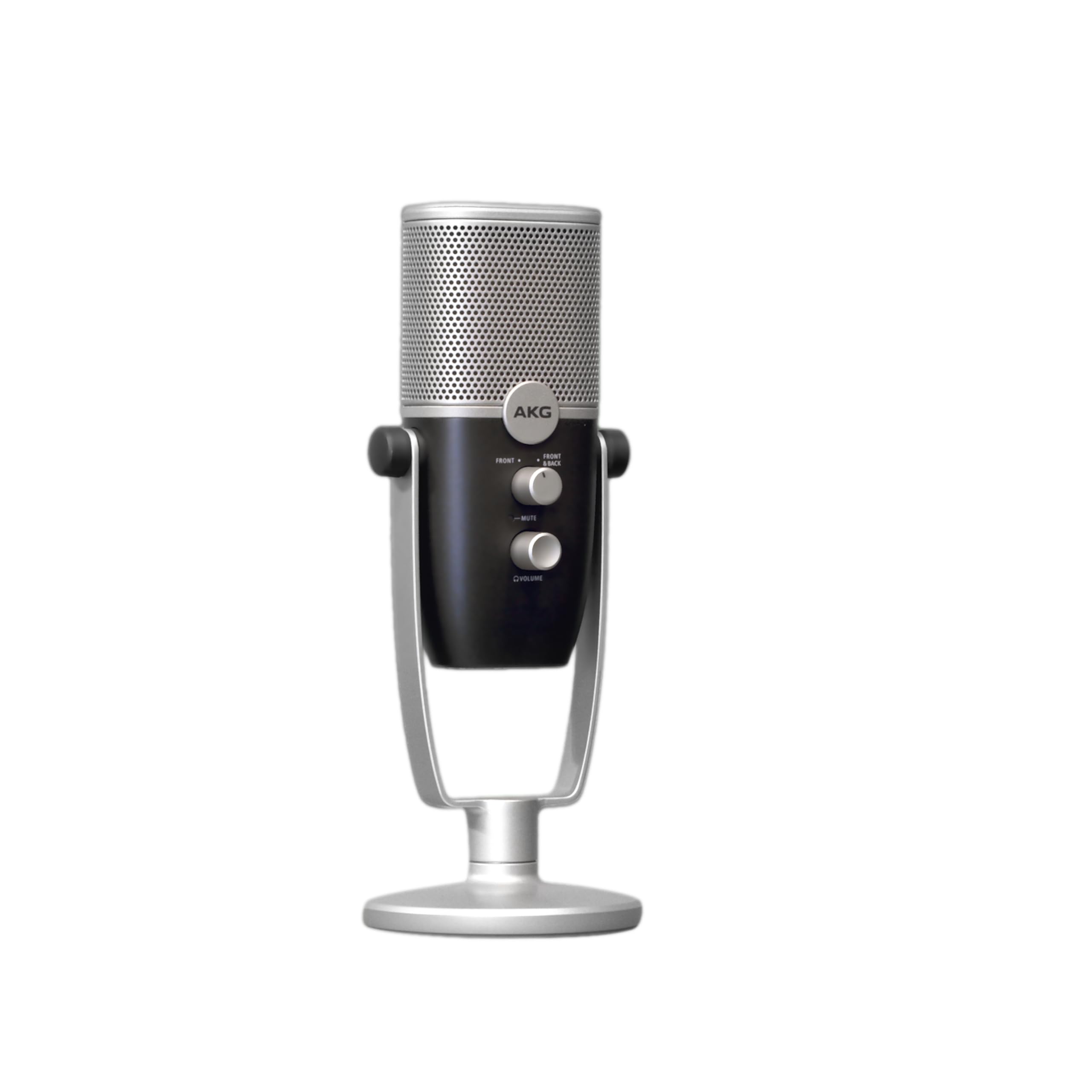
A dual-capsule mic from a pro audio brand that brings studio heritage to your desk.
AKG is a name you see in professional recording studios, and the Ara brings that pedigree to a budget-friendly USB-C package. Its dual-capsule array lets you switch between two capture modes — a feature none of the other budget mics on this list match at this price. It records at 24-bit / 96kHz (high-resolution audio that captures more detail and dynamic range than standard 44.1kHz recordings), which is the same spec the HyperX SoloCast 2 offers but with the bonus of switching patterns.
Customers note the sound quality is “super sensitive” and captures “a lot more range, particularly in the bass tones,” but note that its audible noise floor of 91 Decibels is significantly higher than the Razer Seiren V3 Mini’s 20 Decibels — a 4.5x gap in self-noise. The zero-latency headphone output with full volume control is handy for monitoring, though the mute button requires a firm press that can create a small thud in the recording.
Pro Pedigree
- Dual-capsule array gives you two selectable pickup patterns
- Plugs into USB-C devices including iPhones and iPads without adapters
- Includes Ableton Live 11 Lite registration card for music production
Downside
- Higher self-noise than most competitors at 91 Decibels
- Mute button is loud and requires a solid press
For the Recordist: If you’re a musician or content creator who values dual capture modes and pro audio lineage, this mic gives you flexibility the others can’t.
pass on it if: You’re in a very quiet environment where the higher self-noise floor would be audible in recordings.
4. HyperX SoloCast 2
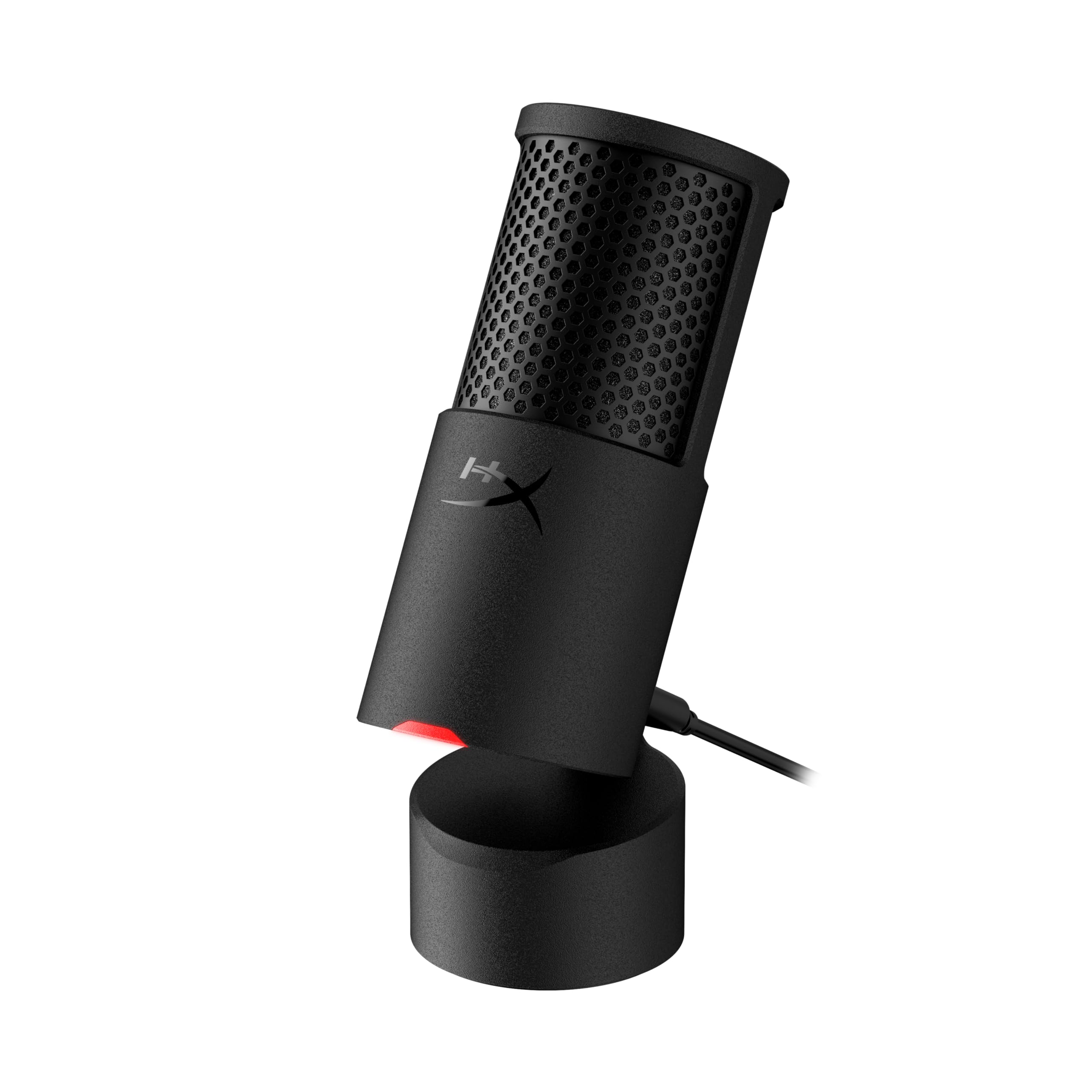
A no-nonsense cardioid mic that delivers clean audio without bells and whistles.
The SoloCast 2 strips away complexity — no RGB, no adapters, just a solid USB-C cardioid condenser mic that works the moment you plug it in. Its built-in suspension system (an internal shock mount that reduces noise from desk vibrations) and foam pop filter mean you get clean studio-quality recording right from the start. The tap-to-mute feature with red LED indicator is as responsive as the Razer Seiren V3 Mini, and the HyperX NGENUITY software adds high-pass, low-pass, and voice enhancement filters to shape your sound.
Reviewers point out the sound is “crisp, clear, and professional” and note that you can be up to 25 to 30 feet away and still be heard clearly. One reviewer pointed out the only design flaw is the USB-C connection on the lower back — it isn’t super secure, so if you move the mic a lot, it may come unplugged without a cable clip to secure it.
Clean & Simple
- Built-in pop filter and shock mount eliminate the need for add-ons
- Customizable audio filters via HyperX NGENUITY software
- Tiltable stand with weighted base keeps it stable on any desk
One Flaw
- USB-C port on the back can be loose — a boom arm with cable management is recommended
- Plastic enclosure feels less premium than metal-bodied alternatives
Grab It For: A no-fuss cardioid mic with built-in noise filtering and studio-quality 24-bit / 96kHz recording that just works.
Pass If: You want multiple pickup patterns or a metal build for rugged travel use.
5. Behringer Bigfoot

A multi-pattern condenser that gives you studio flexibility without the studio price tag.
Most budget mics offer just one pickup pattern, but the Bigfoot gives you four: stereo (captures a wide soundstage for ambient room tone), cardioid (focused front pickup for voice), omnidirectional (picks up sound evenly from all directions for group recording), and bidirectional (records from front and back for two-person interviews). Its 16-ounce metal build feels substantial — shoppers say it’s “sturdy” and “heavy” — and it uses a standard universal mounting screw that fits Yeti mic covers and most boom arms.
Buyers report the low noise floor and clean signal in an untreated room, with effective off-axis rejection when set to cardioid. One reviewer noted the omnidirectional mode is “poor” compared to the other patterns, so you’ll want to stick with cardioid for most spoken-word applications. At a premium price bracket, this is a rare find for beginners who want to experiment with different recording techniques without upgrading equipment.
Four-Tool Mic
- Four selectable pickup patterns cover almost any recording scenario
- Sturdy all-metal construction that buyers describe as “heavy build”
- Headphone jack for zero-latency monitoring during takes
Consideration
- Omnidirectional mode performs worse than other patterns for room tone
- Requires ASIO4ALL driver for full DAW compatibility on some systems
Ideal for Experimenters: If you want to record solo voice, two-person interviews, and group sessions without swapping mics, the Bigfoot’s four patterns cover it all.
Not For: Those who want a simple plug-and-play mic with no driver configuration and prefer a compact size.
6. Logitech G Yeti Orb

A cardioid gaming mic with customizable RGB that merges audio with your setup’s aesthetics.
The Yeti Orb’s condenser capsule uses a cardioid pickup pattern tune specifically for game streaming, so your voice comes through clearly while key clicks and mouse taps fade into the background. The Logitech G HUB software gives you full control over the LIGHTSYNC RGB lighting (custom illumination effects that can sync with your gameplay) and audio settings like mic gain and sample rate — all from one dashboard alongside your Logitech G mouse and keyboard settings. Its 230-gram weight makes it lightweight compared to the 16-ounce Behringer Bigfoot.
Buyers praise its “fantastic clarity” and “superior” quality to gaming headset mics, noting it sounds great for meetings and calls. A clear shortcoming, however, is the lack of a physical mute button on the microphone itself — you must mute via software or spare a key on your keyboard, which can be a problem during live streams when you need instant silence.
Gamer’s Choice
- LIGHTSYNC RGB lighting syncs with other Logitech G gear for a unified look
- Cardioid capsule tuned for streaming voice clarity
- Long USB-A to USB-C cable included for flexible placement
Missing Feature
- No physical mute button — you must mute via software or a keyboard shortcut
- Plastic enclosure feels less durable than metal-bodied mics
Reach for This If: You’re building a Logitech G gaming setup and want a mic that matches your mouse and keyboard RGB, with solid cardioid clarity for streaming.
Look Elsewhere If: A physical mute button is a must for your workflow, and you prefer a metal build.
7. Elgato Wave Neo

A sustainably packaged cardioid mic that rises above your desk to catch only your voice.
The Wave Neo’s high-rise stand design improve the mic above desk level, bringing it closer to your mouth and automatically reducing keyboard and mouse noise from below — a clever trick that most budget mics ignore. It connects via USB-C to laptops, iPads, PS5, and iPhones with true plug-and-play functionality, and the tap-to-mute sensor with LED indicator gives instant visual feedback. The WaveLink software (version 2.0 recommended by buyers) open up a De-Esser (a tool that tames harsh “s” sounds) for smoother vocal tone.
Owners mention the audio quality is “natural and warm” with excellent isolation and no room echo. One buyer mentioned that at 96,000 Hz the mic sounds “excellent,” but at 48,000 Hz it is “significantly worse,” so you’ll want to set your recording software to the higher sample rate. The capacitive touch mute (a sensitive touch pad rather than a physical button) can be oversensitive, but it produces no click noise in recordings.
Sustainable Design
- Zero-plastic packaging with climate-friendly construction
- High-rise stand naturally positions the mic closer to your mouth
- Cardioid capsule isolates your voice from keyboard and mouse noise
Software Dependency
- Audio quality drops noticeably if not set to 96 kHz recording
- Capacitive mute sensor can trigger accidentally with a light touch
Pick This If: You want a sustainably made cardioid mic with a tall stand that naturally reduces desk noise, and you don’t mind configuring your software to 96 kHz.
it’s not for you if: You prefer a simple physical mute switch and don’t want to rely on software settings for good audio.
Understanding the Specs
Pickup Pattern
This tells you which direction the microphone listens in. A cardioid pattern (shaped like a heart) captures sound from the front while rejecting noise from the sides and back. Supercardioid is even narrower, good for noisy rooms but requires you to stay centered. Omnidirectional picks up sound from everywhere, ideal for group recordings. The pattern you choose directly affects how much background noise makes it into your final recording.
Sampling Rate and Bit Depth
Bit depth determines how many volume steps the mic can distinguish (16-bit = 65,536 steps; 24-bit = 16,777,216 steps). The sampling rate (like 44.1 kHz or 96 kHz) is how many times per second the mic captures audio. Together they define the resolution of your recording. For spoken word, 44.1 kHz / 16-bit is fine, but 96 kHz / 24-bit gives you more headroom to clean up audio in post-production without distortion.
Self-Noise / Audible Noise
Measured in decibels (dB), this is the amount of electrical hiss the microphone produces on its own. A lower number means the mic is quieter and your recordings will be cleaner. A higher number means you may hear a faint background hiss in quiet recordings. For spoken word, aim for a mic with audible noise below 80 dB for the cleanest tracks.
Built-in Accessories
A pop filter is a mesh screen that diffuses the burst of air from “P” and “B” sounds, preventing thumps in your audio. A shock mount is a cradle that isolates the mic from desk vibrations, so bumps and typing don’t become low rumbles. Some mics include these in the box; others require separate purchases. They are not optional for clean audio — they are essential for professional-sounding results.
FAQ
Do cheap condenser microphones need an audio interface?
What is the difference between cardioid and supercardioid pickup patterns?
Can I use these mics with a gaming console like PS5 or Xbox?
Will a cheap condenser mic work with an iPhone or iPad?
Do I need to install software to use one of these mics?
How long do USB condenser microphones typically last?
Is a condenser microphone better than a dynamic microphone for home recording?
Will a cheap condenser microphone pick up my keyboard clicks?
What does zero-latency monitoring mean and do I need it?
Can I mount these mics on a boom arm?
Final Thoughts: The Verdict
Across the board, the best cheap condenser microphone overall is the ZealSound BKD-11 PRO because it packs every essential accessory — boom arm, tripod, pop filter, shock mount, and mobile adapters — into one complete kit at a price that beats buying parts separately. If you want a compact tap-mute mic that blends into any desk and aggressively blocks side noise, grab the Razer Seiren V3 Mini. And if you need flexible pickup patterns for recording different scenarios, the Behringer Bigfoot gives you four modes that no other budget mic matches, making it the one to pick for creators who want to experiment with studio recording techniques from day one.
How We Picked
We do not accept paid placement. Every pick is matched to a real buyer and a real use-case; we do not hands-on test units.
Sources & Methodology
Specifications: manufacturer listings and product documentation. Review insights: verified customer reviews, as of July 2026. Pricing: not shown on this page (it changes often); check the current price via the retailer link.
As an Amazon Associate, WellFizz earns from qualifying purchases. This does not affect which products we feature.
Related Guides

Mo Maruf
I created WellFizz to bridge the gap between vague wellness advice and actionable solutions. My mission is simple: to decode the research and give you practical tools you can actually use.
Beyond the data, I am a passionate traveler. I believe that stepping away from the screen to explore new environments is essential for mental clarity and physical vitality.