Our readers keep the lights on and my smoothie glass nicely filled. As an Amazon Associate, I earn from qualifying purchases.
Specs are compiled from manufacturer listings and verified buyer reviews and can change over time — please confirm the key details on the product page before buying.
Bare patches where grass refuses to grow—under a shady tree, on a hill, or in hard clay soil—are exactly where clover seeds save your yard. A bag of the right clover turns that trouble spot into a low, green, bee-friendly carpet that needs far less water and mowing than regular turf grass. Pick the wrong variety, though, and you get a one-season crop when you wanted a permanent lawn, or a tall plant that needs more mowing than you expected. This guide picks the best clover seed for each job so you match the seed to the spot.
I’m Mohammad Maruf — the founder and writer behind WellFizz. This guide is built by comparing the manufacturers’ published specifications and the patterns across verified customer reviews, so you get each pick’s real strengths and trade-offs instead of marketing spin.
The six types of clover seeds below cover every common use: a permanent low-mow lawn, a fast cover crop for raised beds, a pasture blend for wildlife, and a microclover for invisible mix-ins, so you can match the right seed to the right spot without guesswork.
Our Picks at a Glance
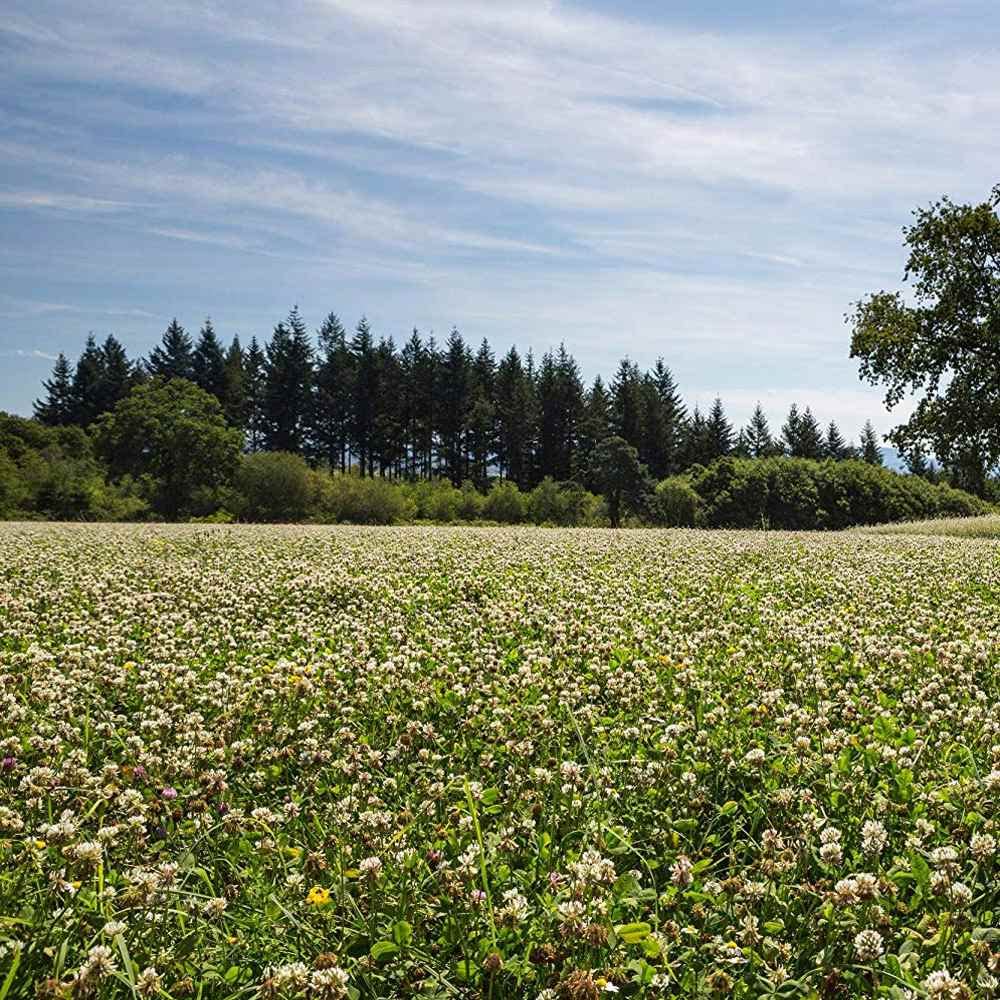
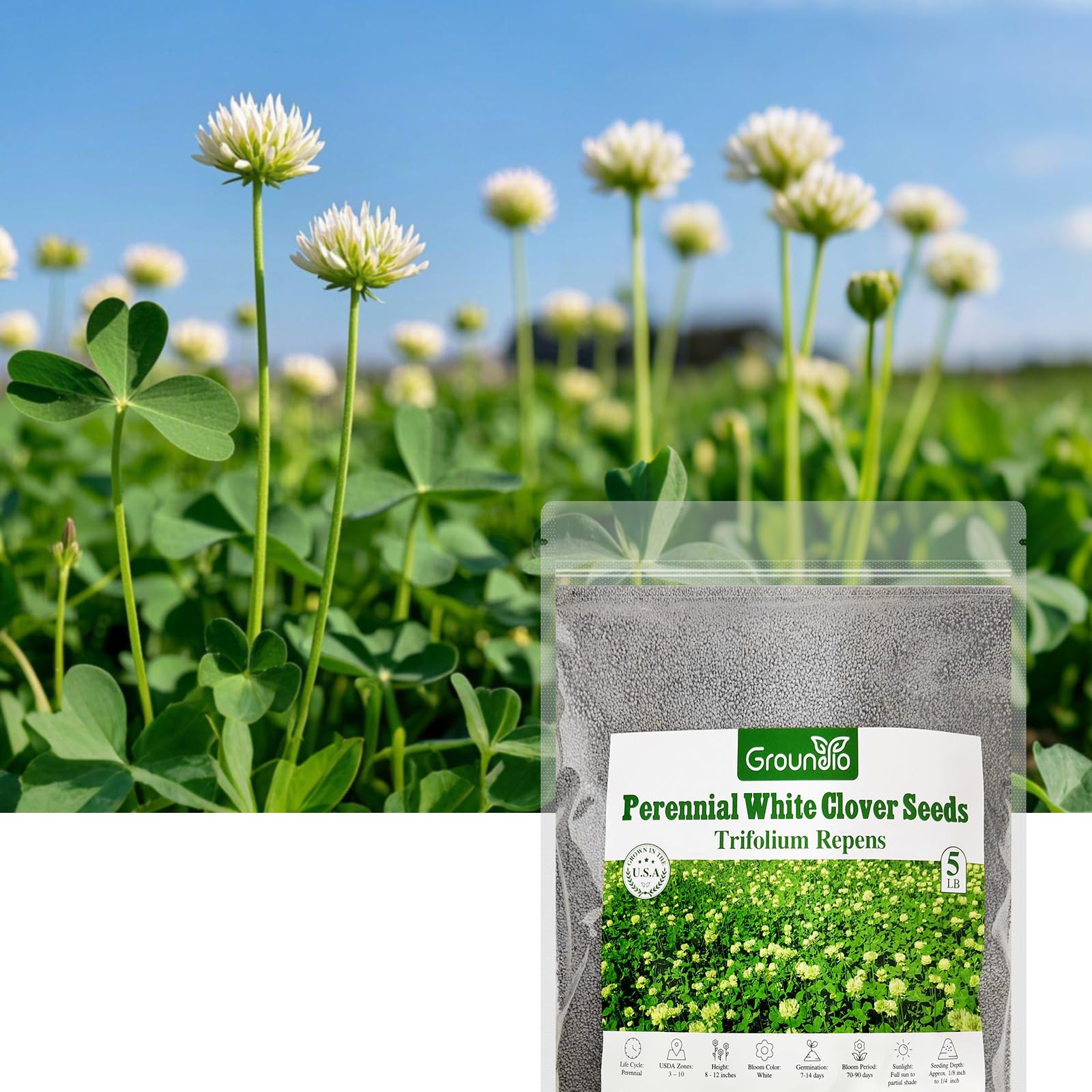
How To Choose The Best Clover Seeds
Clover isn’t one plant—it splits into annual vs. perennial types, large-leaf vs. micro-leaf sizes, and single-variety bags vs. blended mixes. Picking the wrong type means either mowing more often than you wanted or watching the patch die after one season. Here are the three decisions that matter most.
First, decide how long you want the clover to live
Perennial white clover (like Ladino or White Dutch) comes back year after year in USDA Zones 3-10, making it the go-to for a permanent lawn or ground cover. Annual crimson clover blooms in 70-90 days and then dies, which is excellent for a one-season cover crop that you till back into the soil for nitrogen. If you want a patch that lasts without replanting every spring, pick a perennial—if you want to build soil fertility for a vegetable bed next season, pick crimson.
Size matters: microclover vs. standard clover
Standard white clover leaves are roughly the size of a dime to a nickel, and the plant grows 6-8 inches tall. Microclover has leaves one-third to one-half that size and tops out at 4-6 inches, so it blends into a grass lawn without looking like a “weed patch.” Microclover also spreads less aggressively than standard white clover, which keeps it from overtaking flower beds. If your goal is an invisible mix with existing turf, microclover is the better fit—if you want a bold ground cover that handles foot traffic, standard white clover works fine.
Sow rate tells you how much seed you actually need
Clover seed labels list coverage in pounds per 1,000 square feet or per acre, and those numbers vary widely by type. White clover typically calls for 1/2 to 3/4 lb per 1,000 sq ft, crimson clover needs the same range but on an acre basis runs 20-30 lbs, and microclover requires 1-2 lbs per 1,000 sq ft for a full stand. A 1-pound bag of microclover covers about 500-1,000 sq ft, while a 5-pound bag of white clover covers roughly 6,500-10,000 sq ft. Check the project area before you order—mismatching bag size to lawn size is the most common beginner mistake.
Quick Comparison
| Model | Best For | Type & Lifespan | Sow Rate (per Acre) | Bag Size | Amazon |
|---|---|---|---|---|---|
| Outsidepride Perennial White Ladino Clover★ Best Overall | Large pastures & food plots | Perennial | 8-10 lbs | 5 lb | Amazon |
| Groundio White Dutch CloverPremium Pick | Large, full-sun lawns | Perennial | — | 5 lb | Amazon |
| Eretz White Clover Seed | Clean, weed-free cover | Perennial | — | 3 lb | Amazon |
| BuildASoil No-Till 60% Clover Mix | Raised beds & living mulch | Perennial mix | — | 1 lb | Amazon |
| Mountain Valley Micro Clover | No-mow lawn & inconspicuous mix | Perennial | — | 1 lb | Amazon |
| Organic Crimson Clover | Fast cover crop & pollinator patch | Annual | 20-30 lbs | 1 lb | Amazon |
In‑Depth Reviews
1. Outsidepride Perennial White Ladino Clover Seed
Our pick — 4.5★ from 550+ verified ratings; the strongest balance of quality and price.
The heavy lifter for pastures and big lawns that bounces back after grazing or trampling.
This 5-pound bag of Ladino—a giant white clover—gives you the largest coverage per dollar among perennial picks. The spec sheet says sow 8-10 lbs per acre, which is notably higher than the 20-30 lbs per acre the crimson clover below needs, meaning you cover more ground with less seed weight. Each seed arrives nitrocoated and inoculated (pre-treated with a nitrogen-fixing bacteria coating and a moisture-retaining layer), so the germination rate stays high even if you skip intensive soil prep.
Buyers report that it “fills bare spots where grass won’t grow” and note that one owner “Planted May 9, photo June 2” after 30-minute nightly watering, showing visible results in under a month. The clover handles drought and sandy soil well, and it thrives across Zones 3-10 as a perennial, so it returns year after year without replanting.
The trade-off is patience: germination takes about 14 days, which is noticeably slower than the 3-5 day sprout times you get with the microclover or crimson clover below. If your goal is a quick green cover in weeks rather than months, one of the faster-sprouting annuals might suit your timeline better.
What the reviews love
- Grows fast once established with minimal care, per multiple 5-star reviews
- Withstands heavy deer, turkey, and dog traffic without dying off
- Stays green year-round in Maryland climate with no supplemental watering after establishment
The main limitation
- 14-day germination window feels slow compared to faster-sprouting alternatives like microclover
- One reviewer noted disappointing first-year results that only thickened in year two
Best for big spaces: If you need to cover thousands of square feet—pasture, food plot, or full-sun lawn—this 5-pound bag at a 8-10 lbs per acre rate gives the best coverage-to-cost ratio of any perennial here.
Skip for instant results: If you need visible green cover inside a week, the slower 14-day germination of this Ladino will test your patience compared to the 3-5 day sprout of the crimson clover.
2. Groundio White Clover Seeds, 5 lbs
The 5-pounder that turns a full-sun lawn into a pollinator buffet with almost no effort.
This Groundio bag matches the Outsidepride above for size at 5 lbs, but the key difference is the 80-ounce unit count (5 lbs exactly) and the heirloom, GMO-free material tag. The seeds are nitrocoated and inoculated just like the Ladino, which means you get the same pre-treatment for high germination even in poor clay or rocky soil without buying extra inoculant separately.
One reviewer described it as “easy green magic,” noting the clover grows to a manageable 4-6 inches tall and stays compact. Buyers also report the nitrocoated seeds “sprouted within 3 days of planting” even when the gardener skipped soil prep and just sprinkled seed on top of garden soil. For bees and butterflies, the summer blooms provide a steady nectar source that supports nearby vegetable pollination.
The catch is a batch of lower-star reviews complaining that some seeds failed to sprout in dry conditions without consistent watering, and the manufacturer advises “regular watering” rather than the “little to no watering” claim on the Outsidepride bag. If you live in a dry climate or can’t water daily during establishment, the Ladino above might be a more drought-forgiving choice.
Fast track to green: Multiple verified buyers confirm 3-day germination without soil prep or tilling—just scatter, water, and walk away. The 5-pound bag covers roughly 6,500-10,000 sq ft, which matches the Outsidepride range for the same-size bag.
Reach for this if: You want the lowest-effort path to a lush, pollinator-friendly lawn and are willing to water regularly during the first 7-10 days.
Look elsewhere if: Your planting spot gets inconsistent rainfall or you need a clover that survives long dry spells, because Groundio’s moisture needs lean toward “regular watering” per the spec sheet.
3. Eretz White Clover Seed, 3lb
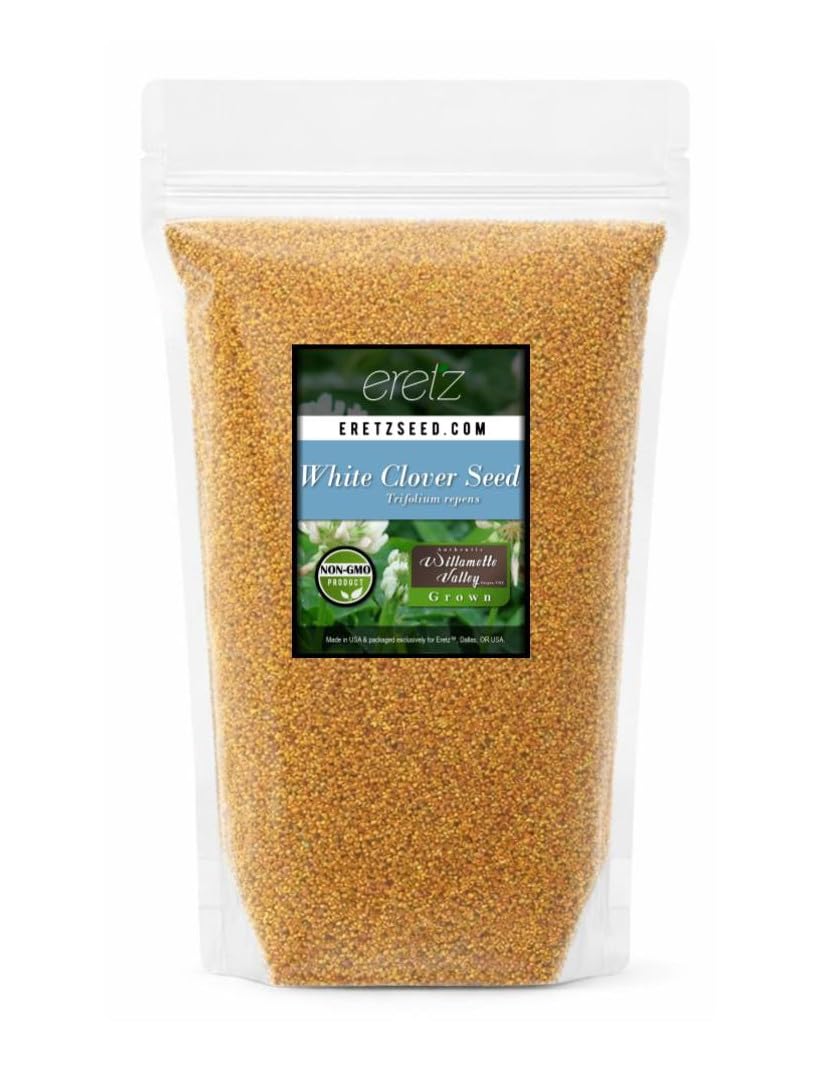
The purest white clover seed bag, grown in Oregon’s Willamette Valley with no weed fillers.
Eretz distinguishes itself from the other white clover options by emphasizing “no coatings” and “no weed seeds”—the bag contains pure Trifolium repens seed grown in a single region known for elite seed production, not a blend of clover varieties or a mix with grass fillers. At 3 lbs, it’s a middle-ground size between the 5-pound behemoths and the 1-pound bags, covering roughly 4,000-6,000 sq ft at standard sow rates without forcing you to store a big opened bag for years.
Owners mention that “the clover sprouts quickly and I don’t see any weeds coming up with the baby clover,” and multiple customers note it “outperformed TTT fescue” in poor clay soil. The specification lists full sun, partial shade, and partial sun as acceptable light conditions, which is more flexible than the “full sun” restriction on the Groundio and Outsidepride bags. One reviewer mentions it “germinated explosively after heavy rain in 82-91°F” but warns that failure is likely if you plant in dry conditions without proper timing.
The one recurring complaint is longevity—a verified buyer wrote that the clover “germinates but does not last” and requires reseeding more often than expected for a perennial. If you want a permanent lawn alternative that thickens on its own year after year, the Outsidepride Ladino has more reports of self-sustaining coverage over multiple seasons.
Clean seed advantage
- Multiple reviewers confirm zero weed seed contamination, unusual among budget clover bags
- Thrives in partial shade where full-sun-only varieties would struggle
- Oregon-grown region gives consistent genetics, per the manufacturer claims
Durability question mark
- One long-term buyer reports the clover doesn’t persist and requires annual reseeding
- Needs consistent moisture for germination—dry planting fails, per reviewers
Best for clean results: If you spent time eradicating weeds from your lawn and don’t want new weed seeds coming in with the clover, this is the bag that reviewers consistently call “clean” and free of fillers.
Skip for a permanent lawn: If you want a clover that thickens on its own year after year without reseeding, the Outsidepride Ladino has more evidence of multi-year persistence.
4. BuildASoil No-Till 60% Clover Seed Mix
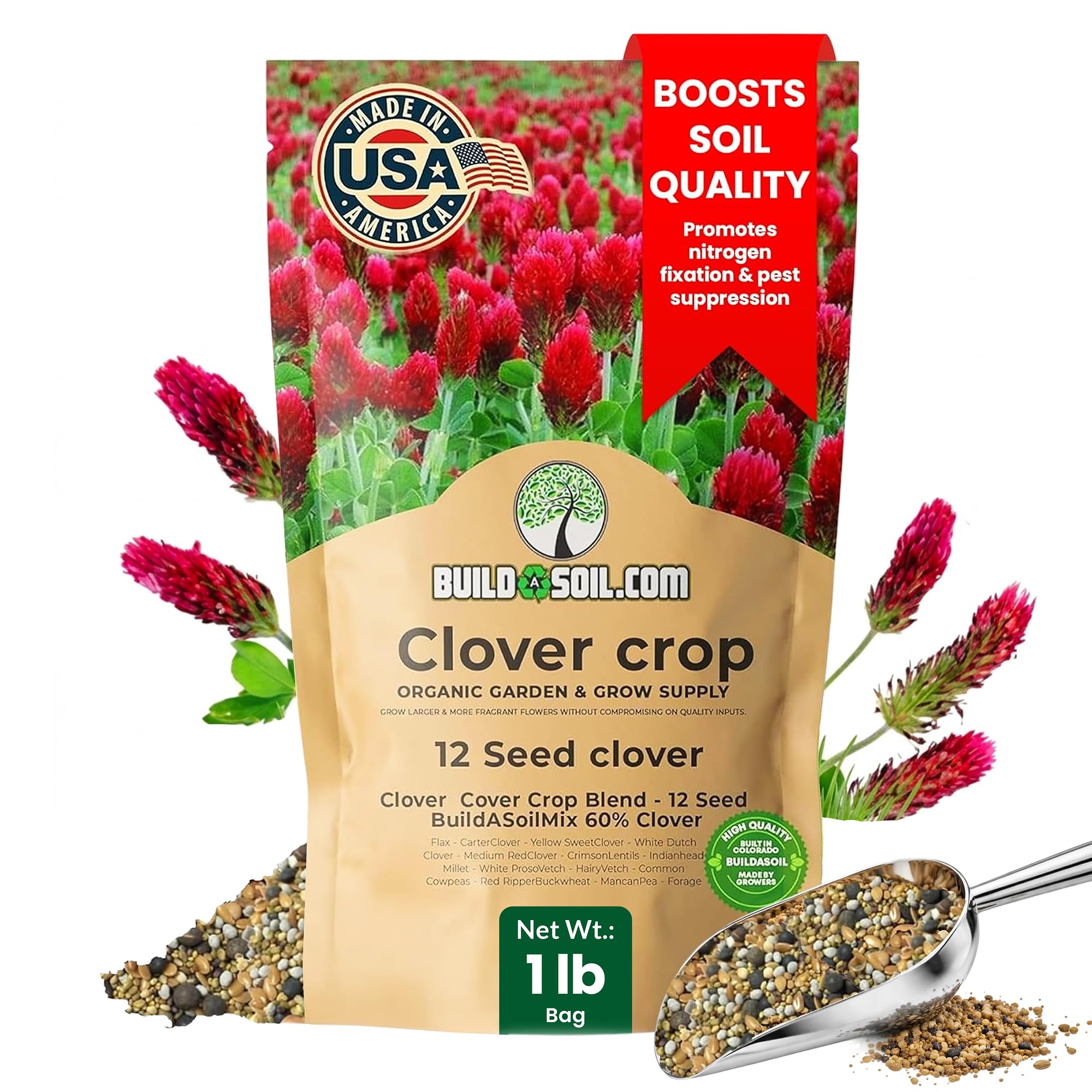
The living-mulch specialist that packs 12 species into one bag for raised beds and no-till gardens.
Unlike every other product in this list, this is not a single-variety bag—it’s a blend built around 60% clover (white, red, and crimson varieties) with 40% other cover-crop species designed to suppress weeds and feed soil microbes without tilling. The spec sheet says 1 lb covers 900 sq ft, which is a much denser sow rate than the standard 1/2-3/4 lb per 1,000 sq ft of white clover, because this mix is designed for garden-scale living mulch rather than an open lawn.
Buyers consistently mention that this mix “germinates fast and evenly, forming a protective green carpet” that locks in soil moisture. One reviewer reports “produces deep red and white clover flowers for two years in lawn patches where grass failed due to dog traffic,” which lines up with the perennial nature of the clover species in the blend. The 12-species diversity means that if one type struggles in your soil or shade level, another takes over the coverage.
The downside is that blend has more components than a pure clover lawn—some of the non-clover species grow taller than clover’s typical 4-6 inches, so this won’t give you the uniform “clover-only” look that a single-variety bag delivers. It’s purpose-built for no-till soil building, not for a manicured front yard.
No-till workhorse: For raised beds and garden paths, the multi-species blend builds organic matter faster than single-species clover because different root structures penetrate different soil depths.
Grab for garden beds: If your project is a raised bed, a large vegetable patch, or a no-till system where you want living mulch between rows, this 12-species blend outperforms any single-variety clover for soil health.
Skip for a uniform lawn: If you want an even, all-clover look for your front yard, the non-clover species in this blend create an inconsistent texture that won’t match a pure white clover lawn.
5. Mountain Valley Seed Co Micro Clover Seed for Lawn – 1 Lb

The tiny-leaf clover that blends into your grass lawn without looking like a weed patch.
At roughly 400,000 seeds per pound, this microclover has leaves one-third to one-half the size of standard white clover and grows to just 4-6 inches—half the height of traditional white clover. That compact size means you can overseed it into an existing fescue or bluegrass lawn without the clover towering over the grass and creating that uneven “clover patch” look. The spec sheet says it thrives in Zones 3-10 as a perennial, and it’s drought-tolerant enough to need less water than most turf grasses.
One reviewer wrote that “almost all the clover seed sprouted” in clay soil within 3 days, which is significantly faster than the 14-day germination of the Ladino clover. Another buyer describes it as “a good start to a beautiful and environment-friendly lawn” and notes it maintains its green color through drought while neighboring grass lawns go brown. The tiny seed size makes spreading tricky—multiple reviewers warn that the seeds are too small for a handheld spreader and recommend hand-sowing, which risks uneven coverage.
The biggest complaint among reviewers is cost: “it is prohibitively expensive” to cover a full lawn with microclover compared to standard white clover. A 1-lb bag covers only 500-1,000 sq ft, so covering a typical suburban quarter-acre lawn would require 10-20 bags at this same price point. Unlike the 5-pound bags of standard white clover, this microclover is purely a mix-in or a small-patch solution, not a budget way to cover an acre.
The blend-in benefit
- Stays 4-6 inches tall so it doesn’t tower over grass in a mixed lawn
- 3-day germination is the fastest among perennial options here
- Maintains green color through drought while grass fades, per reviewer reports
Cost-per-square-foot catch
- Prohibitively expensive for full-lawn coverage—multiple buyers cite the high cost per bag
- Tiny seeds are difficult to spread evenly without a specialized drop spreader
- One buyer mentioned weed seed contamination in their bag, though most call it clean
Ideal for bare-patch repair: If you have small bare spots in your lawn and want clover that disappears into the surrounding grass instead of standing out, microclover is your only option here that blends invisibly.
Not for covering large areas: If you need to cover more than a few hundred square feet on a budget, the 5-pound standard white clover bags cost less per square foot and cover more ground per dollar.
6. Organic Crimson Clover Seeds – 1 lb

The fastest-sprouting entry in this guide, reaching 1 inch in 4 days through tough clay soil.
This is the only organic, certified non-GMO annual in this lineup, and it plays a completely different role than the perennials above. Crimson clover grows 70-90 days to maturity, produces tall showy red flowers that attract bees and butterflies, then dies. That short life makes it ideal for a cover crop that you till back into the soil for nitrogen, or for a seasonal pollinator patch that won’t turn into a permanent lawn. The sow rate of 20-30 lbs per acre is roughly 2.5 times the density of the Outsidepride clover (8-10 lbs per acre), meaning you need more seed weight for the same area if you’re covering a large field.
One verified buyer reports that the “Seeds germinated in 4 days through clay soil; reached 1 inch tall,” outperforming competitor seeds that failed in the same tough conditions. Another says the brand “is exceptional and priced below most other sellers,” echoing the experience of budget-conscious gardeners who use crimson clover as a cheap soil-building tool. The manufacturer includes a free Cover Crop Growing Guide with every bag, which is a nice extra for beginners who aren’t sure about planting depth or timing.
The annual lifecycle is the key trade-off: after 70-90 days, the plant flowers, sets seed, and dies. If you want a permanent ground cover, this is the wrong pick—it will leave bare dirt after one season unless you let it reseed (unreliable) or replant. For a one-season soil amendment or a fast flowering patch, it does the job faster and cheaper than any perennial clover can.
class-leading speed: 4-day germination through dense clay is the fastest documented sprout time among all six products here, verified by multiple buyer reports.
Best for seasonal projects: If you’re building soil in a new garden bed, planting a deer food plot for fall, or need a quick flowering patch for pollinators this year only, crimson clover gives you the fastest results at the lowest price per pound.
Wrong for permanent lawns: Because it’s an annual that dies after blooming, this will leave bare ground within a season—choose a perennial white clover instead if you want coverage that lasts.
Understanding the Specs
Annual vs. Perennial
This is the single most important choice you’ll make. Perennial clover (white clover, Ladino, microclover) lives for multiple seasons, returning year after year from the same root system. It goes dormant in winter and regrows in spring. Annual clover (crimson clover, berseem clover) completes its entire life—germinate, grow, flower, set seed, die—in one season. Annuals are excellent for cover crops where you want to till the plant back into the soil, but they won’t persist as a permanent lawn. Check the USDA Hardiness Zone rating: perennial clover is typically labeled for Zones 3-10, and if your zone falls outside that range, treat it as an annual.
Sow Rate & Coverage
Sow rate is listed either per 1,000 square feet or per acre, and it varies dramatically by clover type. White clover usually calls for 1/2 to 3/4 lb per 1,000 sq ft (or 8-10 lbs per acre). Microclover needs 1-2 lbs per 1,000 sq ft because the seeds are smaller and you need more of them to achieve density. Crimson clover uses 20-30 lbs per acre because it’s a larger-seeded annual meant for thicker stands. To calculate how much seed you need, measure your planting area in square feet, divide by 1,000, and multiply by the per-1,000-sq-ft rate. A bag labeled “covers 900 sq ft” (like the BuildASoil mix) gives you the exact math—no conversion needed.
Nitrocoated & Inoculated Explained
These two treatments appear on several product labels and matter most when planting in poor or clay soil. Inoculated means the seeds are coated with a specific strain of Rhizobium bacteria that infects clover roots and creates nodules that fix nitrogen from the air into a form the plant can use. Without inoculation, clover still grows but doesn’t add nitrogen to your soil. Nitrocoated is a brand-specific coating that adds a moisture-retaining clay layer around each seed, which helps the seed stay hydrated during the critical first 5-7 days of germination. If your soil is sandy or you water infrequently, nitrocoated seeds improve your odds of a successful stand. The Eretz bag is the only product here that explicitly says “no coatings,” which means you need to prepare your soil more carefully and water more consistently.
Heirloom, Non-GMO & Organic Certifications
For gardeners who avoid synthetic inputs, these labels carry real meaning. Non-GMO means the seeds are not genetically modified—every clover seed in this guide carries this claim. Organic certification (like the OTCO seal on the crimson clover bag) means the seeds were grown without synthetic pesticides or fertilizers and the supply chain is audited by a third party. Heirloom is an unregulated term that generally means the variety is open-pollinated and has been grown for at least 50 years, preserving genetic diversity. If you’re planting a food plot for wildlife or a garden you eat from, organic certification gives the strongest guarantee of chemical-free growth. For a purely ornamental lawn patch, non-GMO without organic certification is usually fine.
FAQ
When is the best time to plant clover seeds?
How long does clover take to germinate?
Can I plant clover seeds in clay soil?
What is the difference between white clover and crimson clover?
Does clover really fix nitrogen in the soil?
How much clover seed do I need for my lawn?
Will clover take over my garden beds?
Can I mow clover?
Is clover resistant to dog urine?
Will clover grow in shade?
Final Thoughts: The Verdict
For the majority of shoppers, the clover seeds winner is the Outsidepride Perennial White Ladino Clover because the 5-pound bag at an 8-10 lbs per acre sow rate gives you the broadest coverage for the money, the nitrocoated coating improves germination in average soil without extra prep, and the perennial habit keeps it coming back season after season. If you want a no-toil blend for raised beds or a pollinator patch, grab the BuildASoil No-Till 60% Clover Mix. And for a fast-spreading, invisible mix-in that blends with existing grass, the Mountain Valley Micro Clover delivers the smallest leaf size and shortest height of any product here, though its per-square-foot cost is significantly higher than the standard white clover options.
How We Picked
We do not accept paid placement. Every pick is matched to a real buyer and a real use-case; we do not hands-on test units.
Sources & Methodology
Specifications: manufacturer listings and product documentation. Review insights: verified customer reviews, as of July 2026. Pricing: not shown on this page (it changes often); check the current price via the retailer link.
As an Amazon Associate, WellFizz earns from qualifying purchases. This does not affect which products we feature.
Related Guides

Mo Maruf
I created WellFizz to bridge the gap between vague wellness advice and actionable solutions. My mission is simple: to decode the research and give you practical tools you can actually use.
Beyond the data, I am a passionate traveler. I believe that stepping away from the screen to explore new environments is essential for mental clarity and physical vitality.