Our readers keep the lights on and my smoothie glass nicely filled. As an Amazon Associate, I earn from qualifying purchases.
Specs are compiled from manufacturer listings and verified buyer reviews and can change over time — please confirm the key details on the product page before buying.
That dull ache in your forearm that returns every time you grip a doorknob, swing a racket, or lift a grocery bag is deeply frustrating. The right compression sleeve for forearm tendonitis does not just wrap the area — it targets the exact tendons pulling at your elbow, giving you support so you can move without wincing. This guide compares four sleeves built for this specific problem, so you can pick the one that fits your daily needs.
I’m Mohammad Maruf — the founder and writer behind WellFizz. This guide is built by comparing the manufacturers’ published specifications and the patterns across verified customer reviews, so you get each pick’s real strengths and trade-offs instead of marketing spin.
The best compression sleeve for forearm tendonitis depends on if you need heavy-duty support for chronic pain, a light sleeve for sports, or a budget two-pack for everyday use.
Our Picks at a Glance
How To Choose The Best Compression Sleeve For Forearm Tendonitis
Not all sleeves are built for the same level of pain. A mild sleeve works for post-workout recovery, but a chronic case of tendonitis needs something with more structure — integrated pads, a denser knit, and a design that delivers compression exactly where the forearm tendons attach to the elbow. Watch for three details before you buy.
Compression Level and Targeted Pads
The most effective sleeves for tendonitis use graduated compression — tighter over the forearm muscles and lighter above the bicep — to encourage blood flow and reduce swelling. A few premium sleeves add small gel or foam pads that sit over the tendon insertion points; these pads create focused pressure that helps offload the irritated tendon during movement. Without those pads, you are basically wearing a generic arm warmer.
Material and Breathability
Neoprene traps heat and sweat, which gets uncomfortable within an hour. A breathable polyester or copper-infused knit wicks moisture away and keeps your skin cool — important if you plan to wear the sleeve during sports or a full workday. The weave also determines whether the sleeve holds its shape after washing. Looser knits tend to stretch out after a few weeks, losing the very compression you need.
Sizing and Fit Consistency
Measure your forearm circumference at the spot the manufacturer specifies — often 4 to 5 inches below the elbow or at the mid-bicep. A sleeve that is too tight can cut circulation (reviewers report fingers turning blue), while a loose sleeve slides and rubs, causing skin irritation. Some brands run small, so checking whether users consistently size up is worth the minute it takes.
Quick Comparison
| Model | Best For | Item Weight | Material | Special Features | Amazon |
|---|---|---|---|---|---|
| Bauerfeind EpiTrain★ Best Overall | Chronic / daily pain relief | 0.16 kg | Polyester Knit | Stabilizing Pads | Amazon |
| Zensah Compression Sleeve | Sports / active recovery | 2.08 oz | Moisture-Wicking | Flip Cuff | Amazon |
| Copper Compression PowerKnit | Budget-friendly daily wear | 0.05 kg | Copper-Infused | Lightweight | Amazon |
| Modvel 2 Pack | Two-pack value / gym use | 4.16 oz (pair) | Breathable Fabric | 2-Pack | Amazon |
In‑Depth Reviews
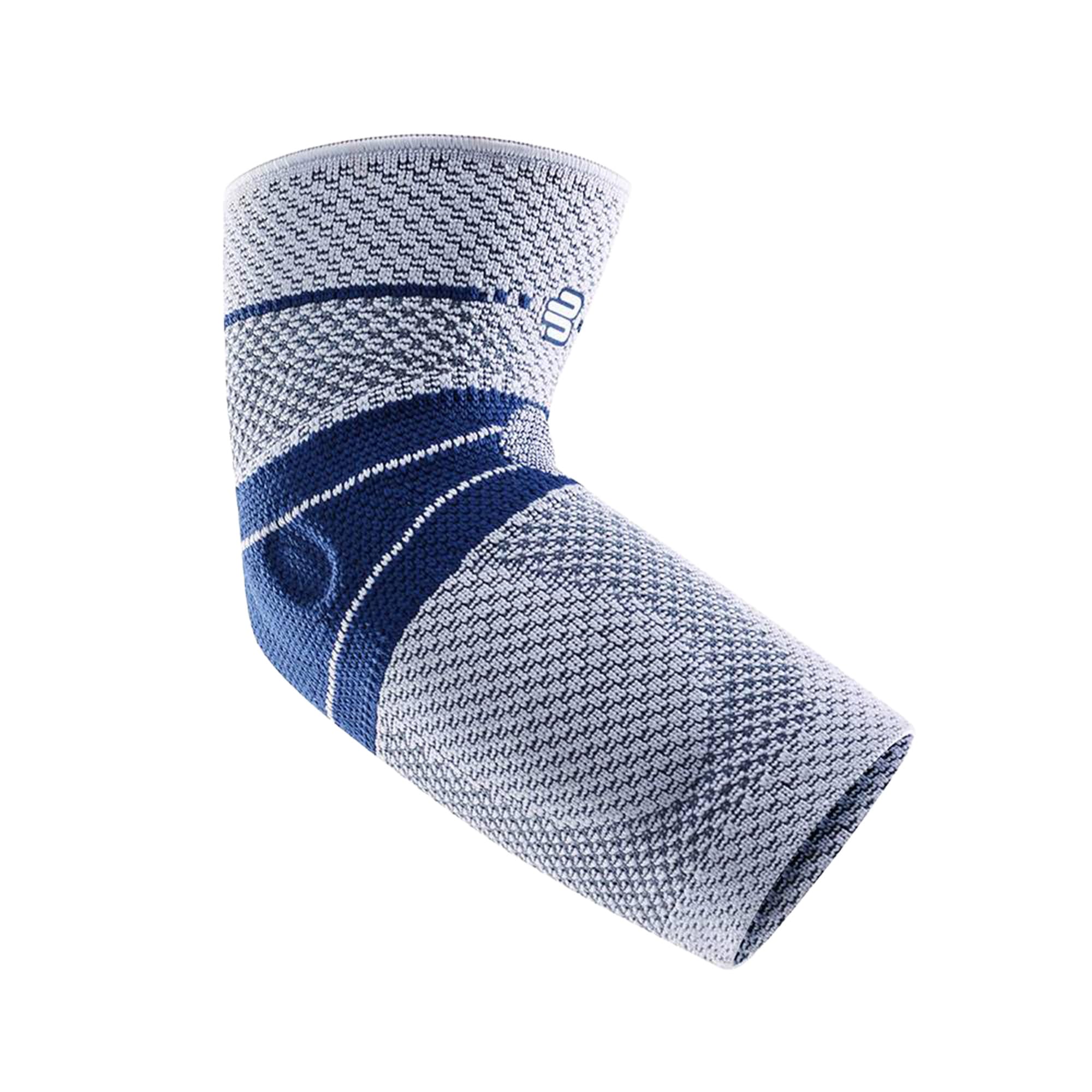
1. Bauerfeind EpiTrain Elbow Support
Our pick — over 4★ from 850+ verified ratings; the strongest balance of quality and price.
Built-in pads that press exactly where the tendon meets the elbow bone.
This is the only sleeve here that physically changes how your joint feels during movement. It weighs 0.16 kg because of sewn-in stabilizing pads that sit over the forearm tendons. As you move, those pads create a targeted massage effect on the soft tissue, which helps relieve pain, reduces swelling, and activates the surrounding muscles. Buyers report that wearing it once made a real difference — one reviewer noted “I wore these for the first time today and I am impressed with the results” after lifting heavy equipment on a construction job.
The trick is sizing. You measure 4 3/4 inches down from your bent elbow and check the circumference — and multiple reviewers warn that the chart runs small, with one buyer noting their fingers turned blue on a size 2 before they sized up. Made in Germany with a machine-washable design, this is a medical-grade tool for people who live with elbow pain daily, not a casual sports sleeve. If you only have minor soreness after a workout, this level of support is overkill. But for chronic tennis elbow, golfer’s elbow, or arthritis, the EpiTrain stands alone on this list — it provides far more structure than the lighter Zensah or Modvel below.
Why it leads the pack
- Built-in stabilizing pads deliver focused pressure exactly where the irritated tendon attaches — no other sleeve here offers this.
- Breathable polyester knit with a cooling effect; it moves moisture away from the skin unlike neoprene.
- Rated 4.3/5 from 885 reviews, with consistent praise for immediate pain relief during heavy activity.
Honest trade-offs
- Weighs significantly more (0.16 kg) than the Copper Compression at 0.05 kg — noticeable on the arm all day.
- Sizing is finicky; several buyers had to return for a different size despite careful measurement.
Reach for this if: your tendonitis pain is chronic, interferes with work or sport, and you need a sleeve with structure — not just compression — that targets the tendon insertion point.
One real caveat: it costs more than the other options here, and you may need to order two sizes to get the right fit, which adds a return step.
2. Zensah Compression Tennis Elbow Sleeve
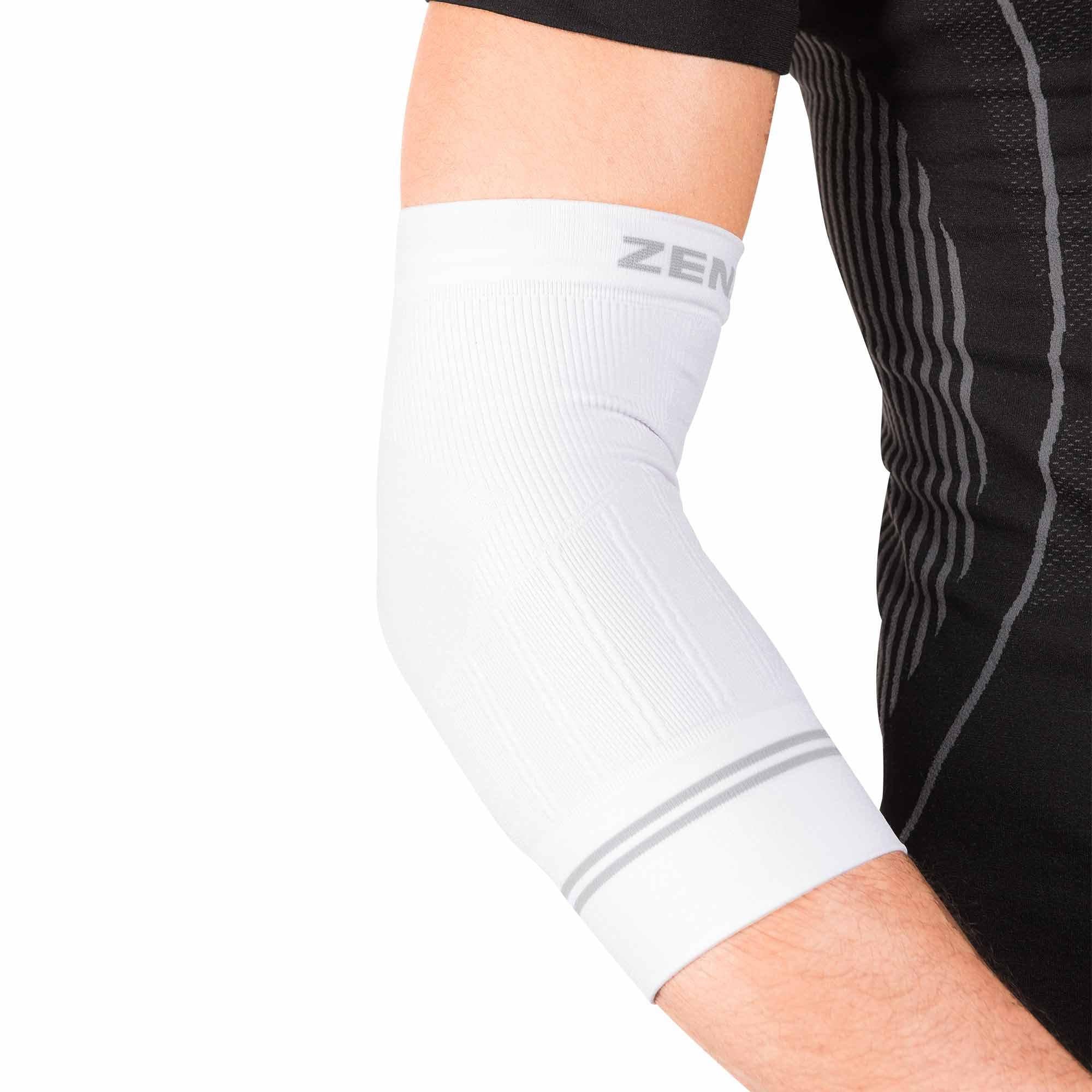
A flip cuff lets you dial up compression mid-activity.
Zensah takes a different approach than the Bauerfeind — instead of sewn-in pads, it relies on a lighter, moisture-wicking knit that stretches to provide support without bulk. The defining feature is the flip cuff at the top: a small folded band of fabric that you can roll down over the forearm to add an extra layer of targeted compression exactly where tendonitis hurts. At just 2.08 ounces, it is noticeably lighter than the EpiTrain and fits under a dress shirt or golf polo without a visible bump. Reviewers consistently say it offers the right amount of support for moderate tennis elbow — one user with tendonitis from shoveling snow called it “truly transformative” — but a single 3/5 review warned the fabric stretches out over time and is too flimsy for serious injuries.
It comes in three unisex sizes based on a simple upper forearm circumference measurement taken about 2 inches below the elbow: Small for a 7-9 inch circumference, Medium for 9-11 inches, and Large for 11 inches and up. The no-slip cuff design keeps the sleeve from sliding during a tennis match or a long day at the keyboard. For someone who needs daily relief that does not feel like a medical brace, this is the balance between the budget sleeves and the heavy-duty Bauerfeind.
Clever design detail: The flip cuff means you can increase compression intensity without buying a tighter size or a different product — just flip the cuff down and it doubles the fabric thickness over the tendons.
Watch for: The knit is described as “lite and flimsy” by a few buyers who wanted more rigid support; if you have severe chronic tendonitis, the Bauerfeind EpiTrain provides significantly more structure.
Best for: active people with moderate tennis or golfer’s elbow who want a lightweight sleeve that disappears under clothing and still delivers adjustable compression.
skip it if: you need heavy-duty support for intense weightlifting or daily construction work — the fabric may not hold up under that load.
3. Modvel 2 Pack Elbow Brace
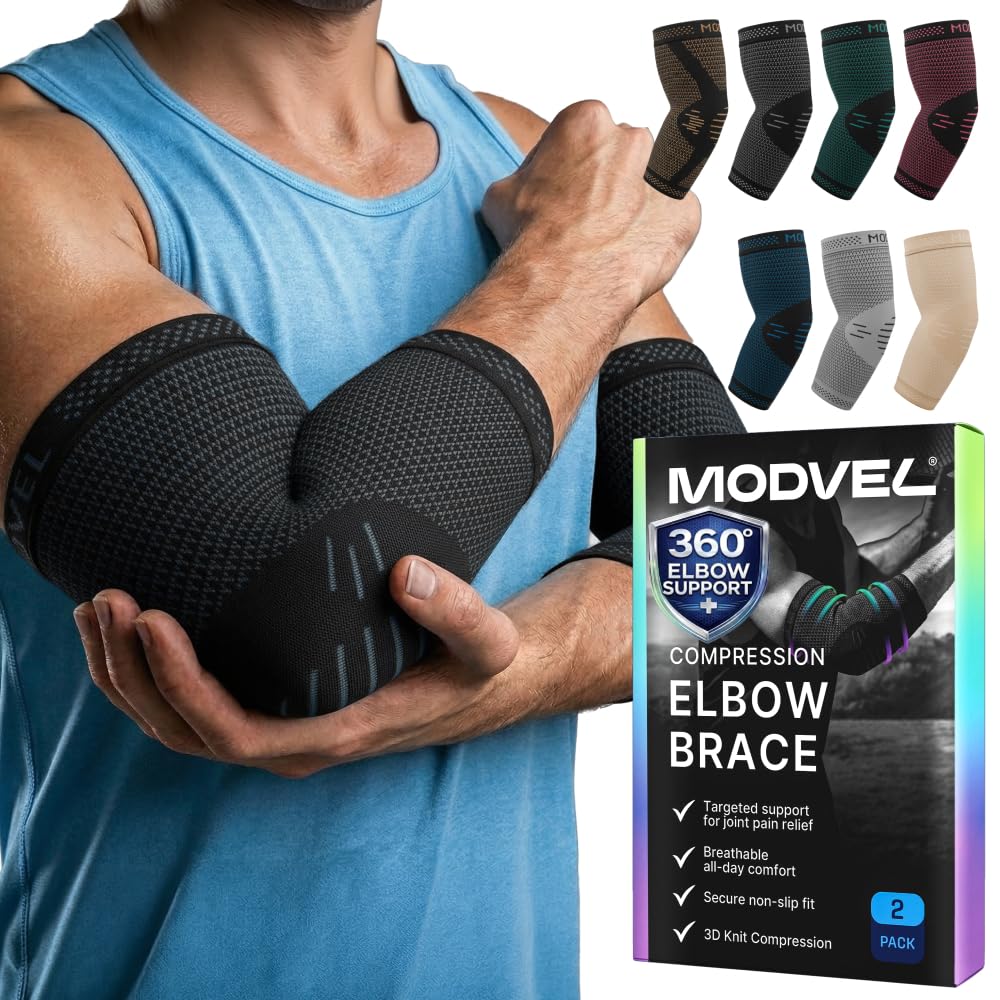
Two sleeves for the price of one, but sizing runs tight.
Modvel gives you two sleeves in the box so you can swap them between arms or keep one clean while the other is in the wash. The fabric is lightweight and breathable — designed to stay dry through a gym session or a round of golf — and delivers a consistent wrap of pressure. One buyer used it for knee swelling after a torn meniscus and reported immediate extra support. But the pattern across reviews is clear: this sleeve runs small. A verified buyer said the size Large, which fits a 5’10”, 175-pound person well, but warned that going by the chart alone may cut circulation if you do not size up. Another reviewer wore it for 15 minutes and found it too tight and hard to put on before exchanging for a larger size.
Priced similarly to the single Copper Compression sleeve but giving you two units, Modvel makes sense for the budget-conscious buyer who needs a sleeve for light daily use — typing, walking, mild gym work. It offers basic support without the stabilizing pads or flip-cuff adjustability of the higher-tier picks above. The rubberized interior strip helps keep the sleeve from sliding, which a few budget sleeves fail to do.
What works
- Two sleeves in one package — rotate or share between arms without waiting for a wash.
- Breathable, lightweight fabric that stays put during movement thanks to a rubberized inner grip.
What to watch
- Runs small; multiple reviewers recommend sizing up at least one step from your normal fit.
- No targeted pad or adjustable compression zone — just uniform pressure around the entire arm.
Grab it if: you want a backup sleeve or need to cover both elbows without spending on two separate units — and you are willing to size up for a comfortable fit.
Look elsewhere if: you need focused compression over the tendon insertion point; this sleeve provides even pressure, not targeted relief.
4. Copper Compression PowerKnit Elbow Sleeve

Feather-light at 0.05 kg — barely feels like you are wearing it.
This 0.05 Kilogram sleeve is the lightest on the list by a wide margin — at 0.16 kg versus the Copper Compression’s 0.05 kg. That featherweight feel is its main appeal: you can wear it under a long-sleeve shirt or while sleeping without it bunching. The copper-infused fabric is breathable and dries fast, and the smooth knit means no rough edges to irritate the skin. One reviewer wore it daily for 2-3 hours over three months before their golfer’s elbow pain resolved, noting it provided slight relief during flare-ups. Another used it for tennis and said the longer length kept it from sliding — a common failure point on shorter sleeves.
The catch discussed heavily in reviews is the sizing. The product comes in three tiers: S/M, L/XL, and XXL, but buyers consistently report the S/M is too tight on an average adult arm while the L/XL is too loose, leaving no true medium. A 3/5 review summed it up: “just a medium would be nice.” If you have a truly small arm the S/M works well, and if you need XXL the fit seems more consistent — but if you fall in between, the sizing gap is frustrating. Given the low price, it is a low-risk try, but it will deliver less targeted support than the Zensah or Bauerfeind for anyone with real tendonitis pain.
Best for: someone with very mild or occasional elbow soreness who wants a near-weightless sleeve for sleeping or light activity — and whose arm falls squarely within S/M or XXL sizing.
Know this: the copper infusion is permanent (it will not wash away), but the knit lacks stabilizing pads or graduated compression; this is a basic snug wrap, not a therapeutic brace.
Choose this over the Modvel if: you want a single sleeve that is lighter, dries faster, and has better reviews for staying in place — but only if the size jump between S/M and L/XL works for your arm.
Avoid if: you need medium-level compression or have chronic tendonitis; the lack of sizing granularity and absence of targeted pads make it the weakest option for real pain.
Understanding the Specs
Item Weight and Its Meaning
A heavier sleeve (like the Bauerfeind at 0.16 kg) almost always signals embedded pads or a thicker knit — features that deliver more structure and a stronger compression massage effect during movement. A very light sleeve (like the Copper Compression at 0.05 kg) is easier to wear all day and fits under clothes, but tends to provide only basic support. If you need targeted relief for chronic tendonitis, lean heavier. If you just want mild warmth and a gentle squeeze, go lighter.
Stabilizing Pads vs Uniform Compression
The biggest functional difference between these sleeves is whether they include built-in pads. The Bauerfeind EpiTrain has sewn-in stabilizing pads that sit directly over the forearm tendons; as your arm moves, the pads rub gently against the tendons, creating a massage effect that helps reduce swelling and pain. Sleeves without pads — like the Copper Compression and Modvel — apply even pressure around the whole arm, which helps with blood flow but does not offload the specific tendon insertion point where tendonitis hurts the most.
FAQ
How tight should a compression sleeve for forearm tendonitis be?
Can I wear a compression sleeve for forearm tendonitis while sleeping?
How long does it take for a compression sleeve to relieve tendonitis pain?
What is the difference between tennis elbow and golfer’s elbow in terms of sleeve positioning?
Will a forearm compression sleeve slide down during a workout?
How do I clean a compression sleeve without ruining the elasticity?
Is a copper-infused sleeve better for tendonitis than a regular polyester sleeve?
Can I wear a compression sleeve on both arms at the same time?
What do I measure to get the right sleeve size?
How do stabilizing pads feel compared to a plain sleeve?
Final Thoughts: The Verdict
Across the board, the best compression sleeve for forearm tendonitis is the Bauerfeind EpiTrain because its built-in stabilizing pads and breathable knit deliver targeted, measurable relief for chronic pain that lighter sleeves like the Zensah or Copper Compression simply cannot match. If you want a lightweight sleeve that adjusts compression on the fly and disappears under sleeves, grab the Zensah Compression Sleeve. And for a budget-friendly two-pack you can rotate through the week, the standout is the Modvel 2 Pack.
How We Picked
We do not accept paid placement. Every pick is matched to a real buyer and a real use-case; we do not hands-on test units.
Sources & Methodology
Specifications: manufacturer listings and product documentation. Review insights: verified customer reviews, as of July 2026. Pricing: not shown on this page (it changes often); check the current price via the retailer link.
As an Amazon Associate, WellFizz earns from qualifying purchases. This does not affect which products we feature.
Related Guides

Mo Maruf
I created WellFizz to bridge the gap between vague wellness advice and actionable solutions. My mission is simple: to decode the research and give you practical tools you can actually use.
Beyond the data, I am a passionate traveler. I believe that stepping away from the screen to explore new environments is essential for mental clarity and physical vitality.