Active Daily Care Eat Smart Health Hacks Recommended
About Contact The Library

7 Best Compression Socks For 12 Hour Shifts | Calves That Last

Our readers keep the lights on and my smoothie glass nicely filled. As an Amazon Associate, I earn from qualifying purchases.

Specs are compiled from manufacturer listings and verified buyer reviews and can change over time — please confirm the key details on the product page before buying.

A 12-hour shift leaves your legs feeling like lead, with swelling that makes the last two hours a real grind. The right pair of compression socks changes that — you finish your day with less fatigue and lighter legs, not dragging them to the car. This guide cuts through the medical-looking claims to find the compression socks that actually hold up for an entire shift.

I’m Mohammad Maruf — the founder and writer behind WellFizz. This guide is built by comparing the manufacturers’ published specifications and the patterns across verified customer reviews, so you get each pick’s real strengths and trade-offs instead of marketing spin.

The best compression socks for 12 hour shifts balance a firm enough compression level to fight swelling with a fabric that breathes and stretches so you can actually wear them all day without dreading the struggle of putting them on.

Our Picks at a Glance

Physix Gear Compression Socks 20-30 mmHg
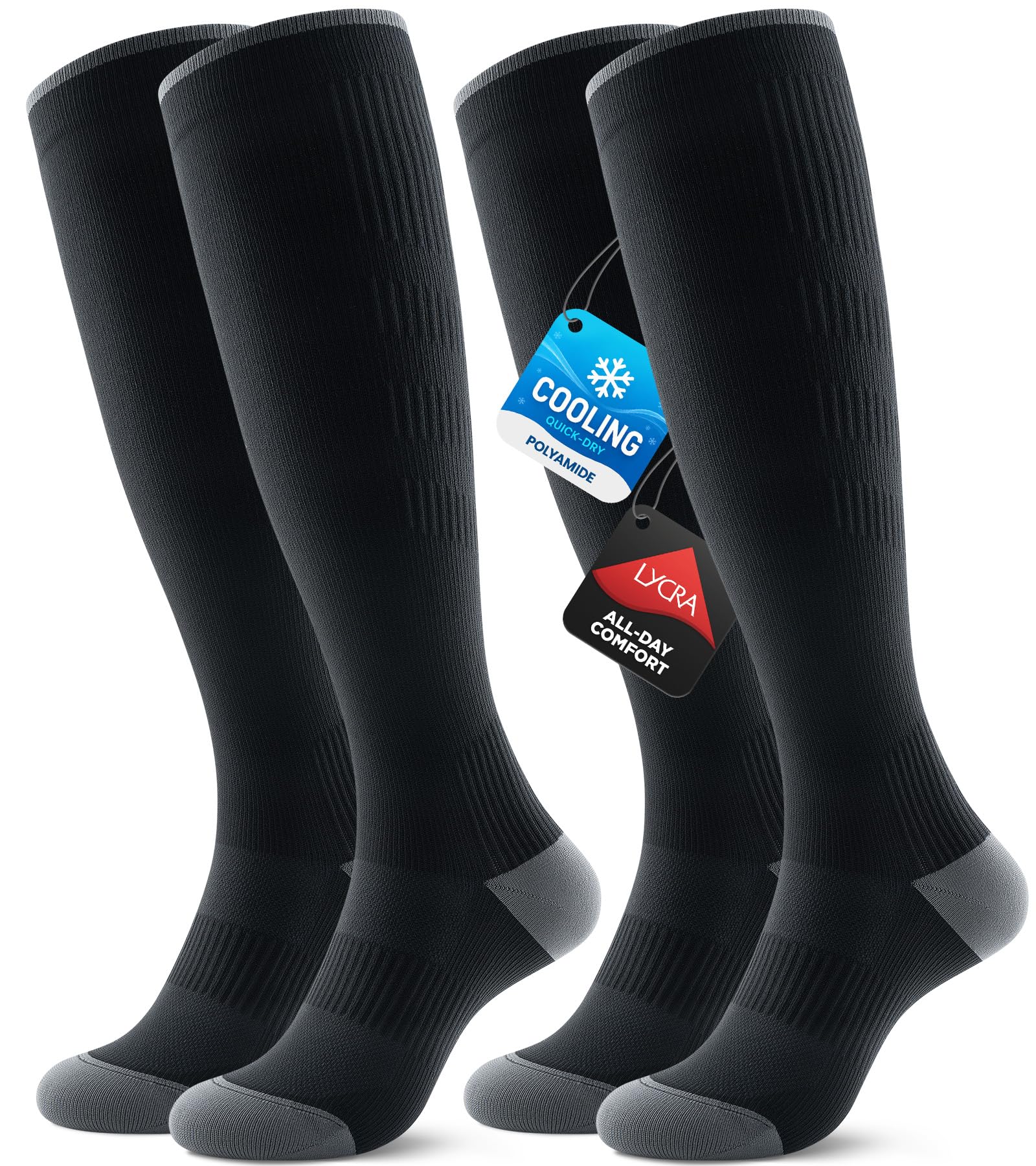
Best OverallPhysix Gear Compression Socks 20-30 mmHg4.5★94,793 ratingsFirm 20-30 mmHg compression that one reviewer noted gave their legs new life. Nearly 95,000 ratings and a 4.5 average tell you this is the crowd-tested pick for people who need serious pressure.Check Price on Amazon
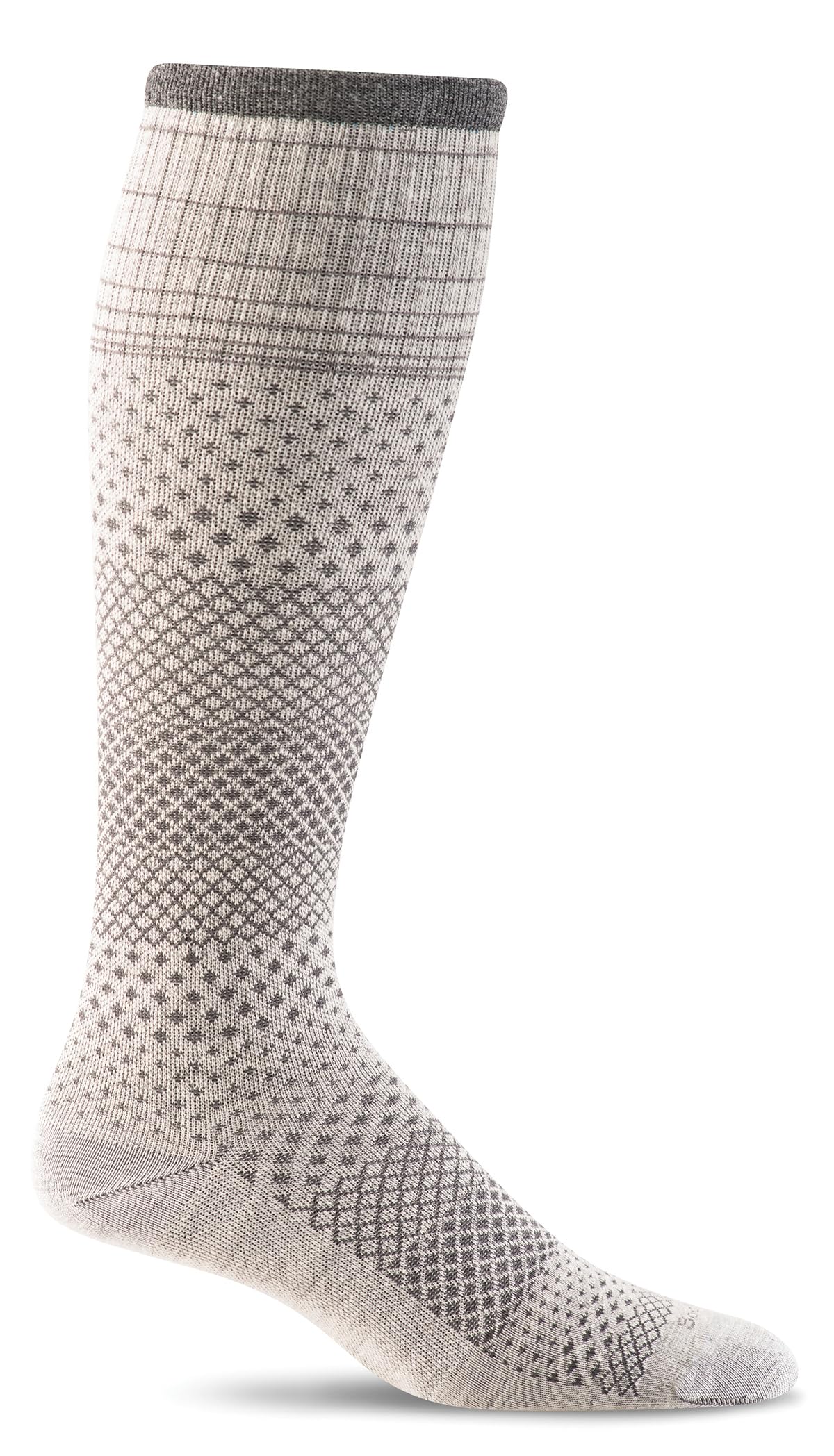
Sockwell Women's Micro Grade
Also GreatSockwell Women’s Micro Grade4.6★875 ratingsMerino wool blend that breathes through twelve hours without trapping heat.Check Price on Amazon

How To Choose The Best Compression Socks For 12 Hour Shifts

Picking the wrong pair means either your legs still ache at hour ten or the socks are so tight you give up before you leave the house. Here is what actually matters when you are buying for a full day of standing or walking.

Compression Level: The mmHg Number

The number you see — 15-20 mmHg or 20-30 mmHg — tells you how much pressure the sock applies at your ankle. For a 12-hour shift, a 15-20 mmHg (millimeters of mercury) is a moderate squeeze good for general fatigue and mild swelling. A 20-30 mmHg is firmer and better for serious swelling, varicose veins, or if you have had circulation issues before. The higher number gives more support but is harder to get on.

Graduated Compression: Why It Matters

Graduated means the sock is tightest at the ankle and gradually loosens as it goes up your calf. This pushes blood upward against gravity so fluid does not pool in your feet and ankles. A sock that is the same pressure all the way up will not do the same job — always look for “graduated” in the product description.

Material and Breathability

You are wearing these for twelve hours, so fabric that traps heat will make you miserable. Nylon and spandex blends offer durability and stretch, while merino wool or bamboo rayon blends help with temperature regulation. Check for moisture-wicking properties if your shift involves any movement or a warm environment.

Fit: Calf Circumference and Foot Size

Sizing is not just about shoe size — measure your calf at its widest point. Many brands use a combination of shoe size and calf measurement to determine fit. A sock that is too loose in the calf will slide down, and one that is too tight will leave deep marks and be uncomfortable to remove. Look for a size chart you can actually use before you buy.

Quick Comparison

Model Best For Compression Level Pack Size Key Material Amazon
Physix Gear 20-30 mmHg★ Best Overall Intense swelling 20-30 mmHg 1 pair Nylon/Spandex Amazon
Sockwell Women’s Micro GradeAlso Great All-day hospital shifts Graduated (firm) 1 pair 32% Merino Wool Amazon
Dr. Motion 3-Pair Value pack Graduated (moderate) 3 pairs Nylon/Spandex Amazon
Benirap 20-30 mmHg Easy on/off 20-30 mmHg 2 pairs Nylon/Spandex Amazon
Compression Socks (15-20 mmHg) Mild fatigue 15-20 mmHg 3 pairs Nylon/Spandex Amazon
CompressionZ 20-30 mmHg Budget-friendly firm 20-30 mmHg 1 pair Nylon/Spandex Amazon
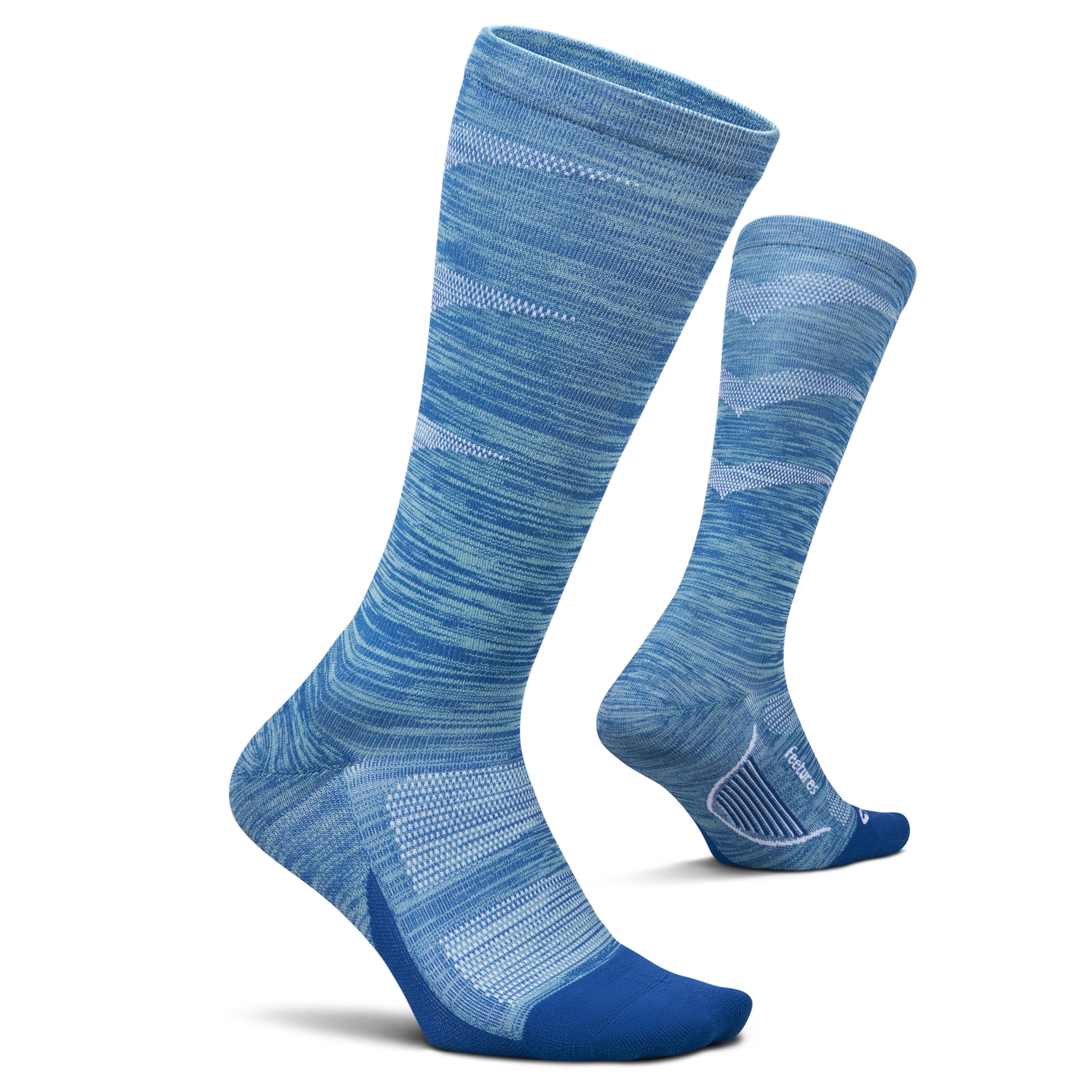
Feetures Knee High Light, active days Graduated (moderate) 1 pair Lightweight fabric Amazon

In‑Depth Reviews

★ Best Overall

1. Physix Gear Compression Socks 20-30 mmHg

Our pick — 4.5★ from 94,500+ verified ratings; the strongest balance of quality and price.

20-30 mmHg94793 ratings

Firm 20-30 mmHg compression that one reviewer noted gave their legs new life.

Nearly 95,000 ratings and a 4.5 average tell you this is the crowd-tested pick for people who need serious pressure. The 20-30 mmHg (millimeters of mercury) level is the highest in this list — 20-30 mmHg compression, compared to the 15-20 mmHg socks — making it the right call if your ankles usually disappear by the end of a shift. A reviewer with torn LCL and MCL said these socks eliminated the swelling that once hid their ankle bones during long walking shifts..

The trade-off is real: multiple buyers describe them as hard to get on, with one senior saying they needed help pulling them up. Once on, the top band stays comfortable and the sock provides targeted support at the arch and heel. If your shift involves constant movement, the firm hold means no slipping or bunching at the ankle.

The firmest option here: If the Sockwell feels too light for your swelling, this is the step up — just plan for a two-minute struggle putting them on each morning.

Best for: People with visible daily swelling who prioritize stopping fluid buildup over easy on-and-off.

Pass if: You have arthritis in your hands or limited grip strength — the 20-30 mmHg fabric is stubborn to pull past your heel.

2. Sockwell Women’s Micro Grade

32% Merino WoolGraduated Compression

Merino wool blend that breathes through twelve hours without trapping heat.

The fabric here is the difference-maker — 32% Merino Wool combined with rayon from bamboo and stretch nylon, a mix that actually pulls sweat away and regulates temperature. A critical care nurse reported no swelling and great-feeling legs after a twelve-hour hospital shift.. The graduated compression (tightest at the ankle, looser up the calf) is paired with a smooth toe closure, so there is no seam rubbing against your toes all day. At a 4.6 rating from 875 reviews, it is rare to see that many people agree on one brand.

Unlike the moderate squeeze of the Dr. Motion 3-pair pack (which uses a softer nylon-spandex knit), the Sockwell adds arch support and a turn welt top to keep the sock from sliding down. The non-cushion version is thin enough to fit under work pants without feeling bulky. Buyers consistently mention buying extra pairs after the first wear — one customer bought two more after a ten-and-a-half hour plane ride arrived with no ankle swelling.

Why it earns the top spot

  • Merino wool blend keeps feet cool and dry all shift long
  • smooth toe closure means zero irritation at the front of the foot
  • Stays up without a tight band cutting into the leg

The sizing hiccup

  • S/M vs M/L sizing leaves some buyers between sizes — measure your calf before ordering
  • Only one pair per purchase, so you need multiple orders for a workweek

Who should grab these: Nurses, restaurant staff, and anyone who needs a sock that breathes through a sweaty shift without losing its compression by hour ten.

One thing to know: The two-size system means if your calves are 12 inches and your shoe is an 8, you live in the middle of their chart — read the size guide carefully.

Best Value Pack

3. Dr. Motion 3 Pairs Therapeutic Graduated Compression Women’s Knee-hi Socks

3 pairsGraduated moderate

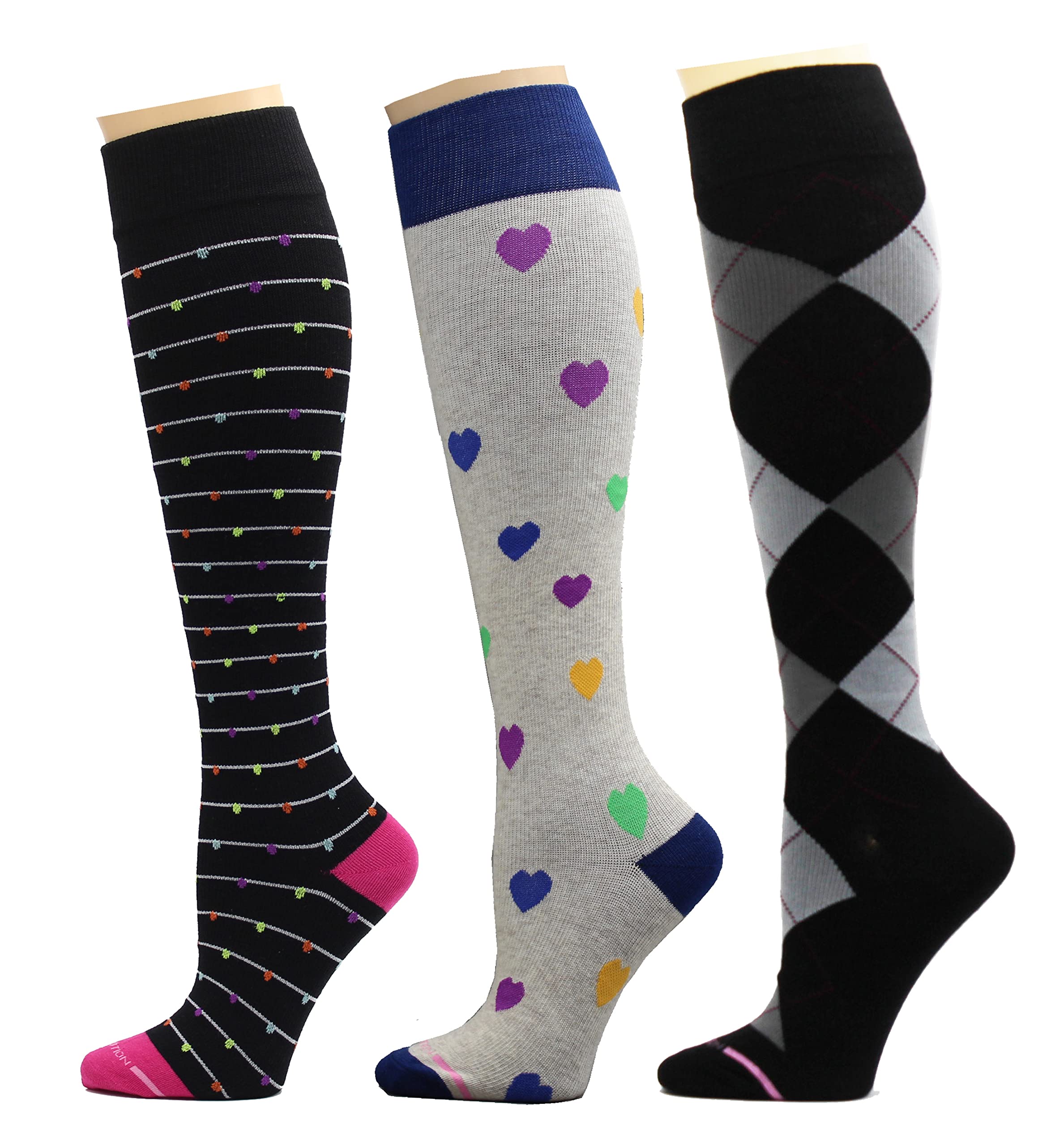
Three pairs in one box with a dress-sock texture that doesn’t scream medical.

Coming in at a price that gives you a full workweek rotation, the Dr. Motion pack is the choice for someone who wants a more moderate graduated compression that feels comfortable rather than clinical. A buyer with DVT and lymphedema said these are soft, comfortable, and effective after trying many other brands.. The toe seams are well-constructed — a detail that matters when you wear them day after day and any rubbing turns into a blister by mid-week.

Compared to the firm 20-30 mmHg Physix Gear, this is a gentler squeeze. Some users report the compression at the ankle feels lighter than expected, making it better for general fatigue than for serious edema (fluid swelling). The fabric is similar in thickness to a dress sock, which means it slips under work pants without a visible bulk line.

What three pairs get you

  • Cost-per-pair is lower than any other brand in this list
  • Soft, dress-sock feel that looks like a regular knee-high
  • Well-made toe seams that don’t create callouses

Where it falls short

  • Mild compression may not help if you have noticeable swelling every shift
  • Foot and heel need adjusting if you have a smaller shoe size (7.5 or under)

Reach for this if: You want a week’s worth of socks in one order and your swelling is moderate, not extreme.

Not for: Anyone who needs the highest firmness — the 20-30 mmHg options above provide significantly more squeeze.

Easiest Fit

4. Benirap Breathable Compression Socks 20-30 mmHg, 2 Pairs

20-30 mmHg2 pairs

The rare 20-30 mmHg sock that buyers report is easy to put on and off.

At a 4.8 rating from 488 reviews, this is the highest-rated pair in the list, and the pattern in those reviews is consistent — people keep saying these are easier to get on than other firm-compression socks like the Physix Gear. “These were easy to put on and off,” one buyer typed, while another mentioned the fabric feels silky and soft even with pressure. The breathability factor comes from the fabric construction, so your legs do not feel sticky at hour eight.

One person reported relief from Restless Leg Syndrome (RLS) wearing them at night, which suggests the 20-30 mmHg level here does not feel punishing. The company also offers a 180-day guarantee, which is longer than most competitors. At two pairs per pack, you are getting a good mid-point between the single-pair Sockwell and the three-pair Dr. Motion pack.

The easy-on advantage: If the idea of wrestling with firm socks every morning has kept you at lower compression, this pair removes that barrier without sacrificing the 20-30 mmHg level.

Best for: People who need firm compression but want a morning routine that doesn’t require a deep breath before putting socks on.

skip it if: You need a three-pair rotation — the two-pair pack means laundry day comes faster.

Gentle Support

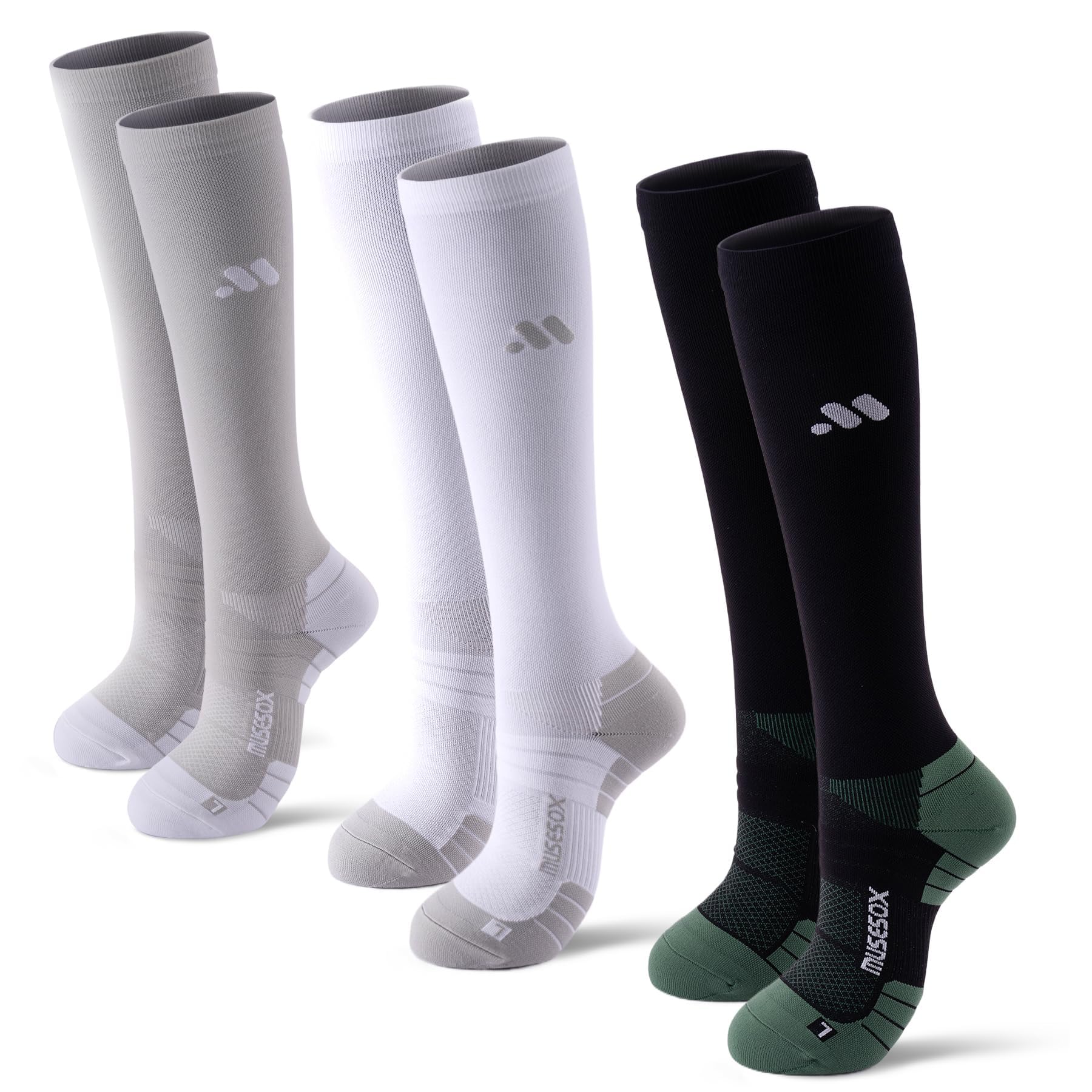
5. Compression Socks for Women and Men, Knee High 15-20 mmHg, 3 Pairs

15-20 mmHg3 pairs

Three pairs of moderate compression that drastically relieved calf pain for one food-service worker.

With a 4.6 rating and a price that puts three pairs in your drawer for under twenty dollars, this is the entry-level buy for anyone new to compression. The 15-20 mmHg (millimeters of mercury) level is a 33% gentler squeeze than the 20-30 mmHg options, which makes it easier to put on and more forgiving if you are not sure what compression feels like. A food-service worker reported drastic calf-pain relief after 8-hour shifts., and another long-time salon worker called them a standout for standing behind the chair.

The socks have a left/right foot label so you put each sock on the correct foot for a tailored fit. That detail matters because the graduated compression is designed for the natural shape of each foot. Buyers with arthritis in their hands appreciated the included instructions on how to roll them on without fighting the fabric.

Why start here

  • Three-pair pack at an entry-level price point
  • Left/right foot labels for a more precise fit
  • Butter-soft fabric that doesn’t feel like a medical device

The limitation

  • 15-20 mmHg is mild — if you already have daily ankle swelling, you will outgrow this level quickly
  • Fewer color and pattern choices than some competitors

Grab these if: This is your first pair of compression socks or your swelling is light enough that a firm squeeze feels unnecessary.

Upgrade when: You find yourself wishing for more pressure around hour six — that is the moment to move to a 20-30 mmHg pair like the Benirap or Physix Gear.

Budget Firm

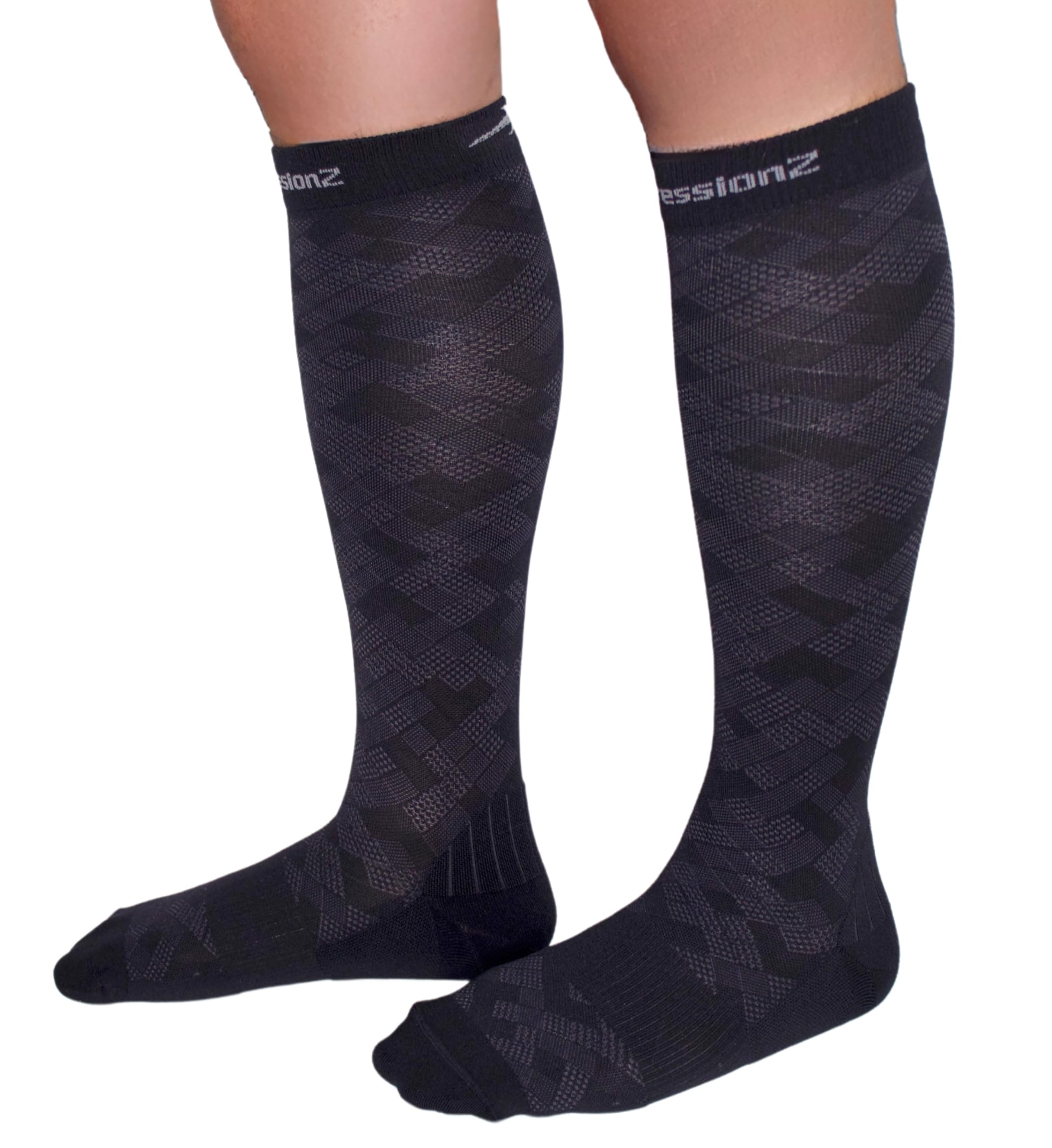
6. CompressionZ 20-30 mmHg Knee High Compression Socks

20-30 mmHg984 ratings

Firm compression at a price that undercuts premium brands by a noticeable margin.

If you need that 20-30 mmHg level but your budget does not stretch to the more expensive options like the Physix Gear, CompressionZ delivers the same firm squeeze for less. A buyer who switched from a pricier brand said these are half the price, easier to don and doff, and more comfortable for TRX training, long walks, and calf-muscle recovery.. The nylon/spandex blend is breathable and sweat-wicking, and the reinforced heel and toe add durability over repeated washes.

Where it stumbles is the toe box. Multiple reviewers mention the toe area is too narrow and tapered, squishing toes together from side to side. One 5’4″ buyer with a size 9 shoe found the large a bit too long, while others with size 13 feet described the large as nearly impossible to get on. The sizing is a gamble if your feet are wider than average.

The catch: You get the compression level of the Physix Gear at a lower price, but the toe box is tight enough that some buyers gave up after one try.

Reach for this if: You have narrow-to-average feet and need 20-30 mmHg without spending premium money.

Look elsewhere if: Your toes need room to spread — the tapered toe box will be uncomfortable by hour six.

Light & Active

7. Feetures Compression Knee High Socks

Targeted CompressionLightweight

A lighter-weight construction that keeps feet cool but still delivers graduated compression.

Feetures uses what the brand calls Targeted Compression — an anatomical design that puts graduated pressure (tightest at the ankle, looser up the calf) where it is needed without the heavy, thick fabric most compression socks use. A travel-and-hiking buyer said the lighter material prevents overheating., and because the compression is graduated, there is no big indentation around the calves when they take them off. The fabric here is thinner than the Sockwell’s merino wool blend. If your shift involves a lot of walking or you run warm, this thinner fabric makes a real difference.

Multiple buyers with average builds described them as too tight, with one user bluntly writing “not for fat legs.” The brand recommends them for active use like hiking and travel, and they perform best on legs that are on the leaner side.

What makes them different

  • Thin, moisture-wicking fabric that breathes better than standard compression socks
  • Graduated design means no deep ring marks when you take them off
  • Good for warm environments or high-movement shifts

The real constraint

  • Single pair at a premium price point
  • Snug fit that feels restrictive on anything above a slim calf or average foot width

Perfect if: You have slim legs, run hot, and want a sock that feels like a performance athletic layer rather than a medical stocking.

Not for: Anyone with wide calves, broader feet, or a budget that needs value per pair — this is a niche pick for a specific body type.

Understanding the Specs

mmHg — What the Number Means

Millimeters of mercury (mmHg) is the unit that measures the pressure the sock applies to your leg. A 15-20 mmHg sock is on the milder side — good for light fatigue, long flights, or if you are just starting with compression. A 20-30 mmHg sock provides firmer pressure, which is what you want for a full shift on your feet if you already deal with swelling or varicose veins. The number refers to the pressure at the ankle, and in a graduated sock, that pressure decreases as the sock moves up your calf. For a 12-hour shift, many buyers find 20-30 mmHg is the balance, but the gentler 15-20 mmHg is fine for lighter needs.

Graduated Compression

Graduated means the compression level is highest at the ankle and gradually reduces as it goes up your leg. This design helps push blood upward toward the heart, preventing it from pooling in your lower legs and feet. A sock with uniform compression (non-graduated) does not offer the same benefit — it squeezes everywhere equally, which does not help with circulation in the same way. When you shop, make sure the product explicitly says “graduated compression” in its description or packaging.

FAQ

What is the best mmHg level for a 12 hour shift on my feet?
Most people working long standing shifts find 20-30 mmHg (millimeters of mercury) provides the best balance of swelling prevention and all-day comfort. If your swelling is mild or you are new to compression, 15-20 mmHg is a gentler starting point. The right level depends on your personal circulation and how much fluid buildup you typically experience by the end of a shift.
How do I know what size compression sock to buy?
Measure your calf circumference at its widest point and your shoe size, then check the brand’s specific size chart. Do not rely on shoe size alone — two people with the same shoe size can have very different calf measurements. Most sock failures (slipping down or being too tight) come from ignoring the calf measurement.
Can I wear compression socks for 12 hours straight?
Yes, that is exactly what they are designed for. Graduated compression socks are made for extended wear, and many nurses, restaurant workers, and retail staff wear them for full shifts without issue. Take them off when you get home to let your legs rest.
Why do my compression socks leave deep red marks on my legs?
Some marking is normal, especially with 20-30 mmHg socks — the pressure has to be firm to work. If the marks are painful or stay for hours after removing the socks, you may need a larger size or a lower compression level. One CompressionZ buyer noted all their compression socks leave marks after a 12-hour shift but that is acceptable for the support they need.
Are there compression socks that are easy to put on with arthritis in my hands?
Yes. The Benirap 20-30 mmHg socks are frequently reviewed as easier to put on and off than other firm-compression brands, and the 15-20 mmHg options are naturally easier because the fabric is less tight. Look for a silky or smooth fabric texture — some buyers mentioned the Benirap fabric slides on more easily than rougher knits.
Should I buy 1 pair or a multi-pack of compression socks for work?
If you work 4-5 shifts per week, a multi-pack of 3 pairs gives you a rotation so you are not doing laundry every other day. Single-pair packs like the Sockwell or Feetures make more sense if you want to test the fit before committing to multiple pairs, or if you only need them a couple of days per week.
Can compression socks help with restless leg syndrome during shifts?
One Benirap buyer reported that wearing the 20-30 mmHg socks at night helped with RLS (Restless Leg Syndrome) symptoms. While not a cure, the gentle pressure can sometimes calm the sensation that triggers restless legs. If you deal with RLS while standing during a shift, the same principle may apply.
How often should I replace my compression socks?
Most brands recommend replacing them every 3 to 6 months with regular wear, as the elastic gradually loses its tension. One Dr. Motion buyer said a 6-pair set held their form and compression for over five years, but that is unusually long. If you notice the socks feel looser or do not reduce swelling like they used to, it is time for a new pair.
Can men wear compression socks designed for women?
Many of the socks in this list are listed as unisex — the Physix Gear, CompressionZ, and Benirap options are marketed to both men and women. The key is checking the sizing chart for your calf circumference and shoe size rather than relying on the gender label. The Sockwell and Dr. Motion options in this guide are specifically sized for women.
What is the difference between 15-20 mmHg and 20-30 mmHg compression?
The 20-30 mmHg level provides firmer pressure at the ankle, while the 15-20 mmHg level is lighter. The firmer level is more effective at preventing moderate to severe swelling and is the typical recommendation for people who have varicose veins or who have been advised by a doctor. The lighter 15-20 mmHg level is better for general fatigue, mild puffiness, or first-time users.

Final Thoughts: The Verdict

Across the board, the best compression socks for 12 hour shifts winner is the Sockwell Women’s Micro Grade because the merino wool blend keeps your legs cool and the graduated compression holds up through a full day without slipping or overheating. If you want firm 20-30 mmHg support that is still manageable to put on, grab the Benirap Breathable Compression Socks (2 pairs). And for a budget-friendly three-pair rotation that covers a workweek, the standout is the 15-20 mmHg 3-pair pack for the price.

How We Picked

We do not accept paid placement. Every pick is matched to a real buyer and a real use-case; we do not hands-on test units.

Sources & Methodology

Specifications: manufacturer listings and product documentation. Review insights: verified customer reviews, as of July 2026. Pricing: not shown on this page (it changes often); check the current price via the retailer link.

As an Amazon Associate, WellFizz earns from qualifying purchases. This does not affect which products we feature.

Related Guides

Mo Maruf
Founder & Lead Editor

Mo Maruf

I created WellFizz to bridge the gap between vague wellness advice and actionable solutions. My mission is simple: to decode the research and give you practical tools you can actually use.

Beyond the data, I am a passionate traveler. I believe that stepping away from the screen to explore new environments is essential for mental clarity and physical vitality.

Please use a real email you check. If it's fake or mistyped, your message won't reach us and we can't reply — wrong addresses are rejected automatically.