Our readers keep the lights on and my smoothie glass nicely filled. As an Amazon Associate, I earn from qualifying purchases.
Specs are compiled from manufacturer listings and verified buyer reviews and can change over time — please confirm the key details on the product page before buying.
You want to track your blood sugar without needing a doctor’s note or an insurance card, and the first question is which device actually works for cash buyers. The hard part is not finding a monitor — it is finding one that gives you steady data without a surprise subscription fee. This guide ranks the top over-the-counter continuous glucose monitors (CGMs) based on published specs and what other buyers who paid full price have said.
I’m Mohammad Maruf — the founder and writer behind WellFizz. This guide is built by comparing the manufacturers’ published specifications and the patterns across verified customer reviews, so you get each pick’s real strengths and trade-offs instead of marketing spin.
For someone paying out of pocket for a continuous glucose monitor without insurance, the key choices are sensor life (how many days it stays on your arm), upfront cost, and day-to-day accuracy.
Our Picks at a Glance
How To Choose The Best Continuous Glucose Monitor Without Insurance
When you pay entirely out of pocket, every spec directly affects your spending. Sensor lifespan is the biggest factor — a setup that gives you 30 days total (like two 15-day sensors) cuts your per-day cost a lot compared to using three 14-day sensors. Accuracy against a traditional finger-stick meter matters too, since you won’t have a lab A1c (a 3-month blood sugar average) to double-check the numbers. Finally, look at the company’s replacement policy: if a sensor fails on day 3 of a 15-day wear window, you need a clear, low-maintenance path to getting your money back or a new sensor.
Sensor Lifespan Is Your Real Price Tag
A sensor that lasts 14 days vs 15 days may not sound like much, but across a full month it is the difference between using two sensors or three. The Stelo 2-pack delivers up to 30 days total, while a single Lingo sensor gives you 14 days. If you prefer fewer packaging re-orders, go with the option that has a longer single-sensor life.
Accuracy vs. Finger-Stick
Continuous monitors measure the glucose in your interstitial fluid (the fluid between your cells), not your blood. This means readings can lag behind a finger-stick by about 10 to 15 minutes. Buyer reviews consistently point out this gap — sometimes 5 to 15 mg/dL difference. If you need pinpoint accuracy for critical decisions, a finger-stick is still the gold standard.
Replacement Guarantee
No insurance means no third-party buffer if a sensor fails early. Look for a product that offers a free replacement if the sensor stops working before its stated wear time ends. Lingo and Stelo both advertise this, but the actual customer experience varies — some buyers report smooth replacements, while others describe a lengthy investigation process.
Quick Comparison
| Model | Best For | Sensor Life | Battery Type | Unit Count | Amazon |
|---|---|---|---|---|---|
| Stelo 1 Pack★ Best Overall | Lowest upfront cost to test the system | Up to 15 days | Zinc-Air | 1.0 Count | Amazon |
| Stelo Glucose Biosensor & App by Dexcom (2-Pack) | It combines the highest claimed accuracy with the best waterproofing. | Up to 30 days (2 x 15) | Lithium Manganese Dioxide | 2.0 Count | Amazon |
| Lingo Continuous Glucose Monitor (CGM) by Abbott | Detailed app insights for nutrition & exercise | Up to 14 days | Silver Oxide | 1.0 Count | Amazon |
In‑Depth Reviews
1. Stelo 1 Pack
Our pick — over 4★ from 20+ verified ratings; the strongest balance of quality and price.
A low-risk way to try a CGM for two weeks without a big upfront investment.
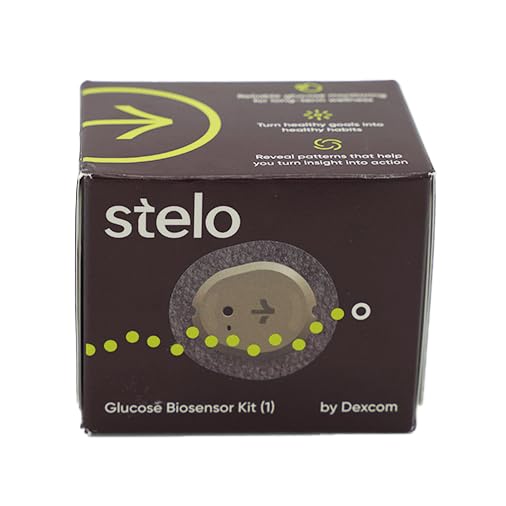
If you are not sure whether continuous monitoring is for you, this single-sensor pack gives you 15 days to experiment without committing to a 30-day box. The sensor reads your glucose and works with the Stelo app to highlight patterns around food, activity, and sleep. It is the exact same sensor technology that comes in the 2-pack — just one sensor, one box. The battery type is Zinc-Air, which differs from the Lithium Manganese Dioxide battery in the larger Dexcom-branded Stelo 2-pack.
Buyer opinions swing wide. One satisfied user calls it “the best CGM you can get on the market without a prescription,” praising the accuracy and app simplicity. On the opposite end, a frustrated buyer reported the sensor only lasted 3 days, and when they contacted support, the company refused a replacement after an investigation. This inconsistency is the risk you take with any direct-purchase CGM — the technology works great for some, but fails early for others, and support is not always forgiving.
Compared to the Lingo monitor, which gives you 14 days in a single application, the Stelo 1-pack offers one extra day per sensor (15 days). However, the price per day is generally higher than buying in bulk with the 2-pack version. Think of this as the try-before-you-commit option: if you love the data, you can step up to the 2-pack for better long-term value.
For The First-Timer
- Lowest upfront cost to test CGM technology
- 15-day sensor life — competitive with premium options
- Same sensor as the 2-pack, no compromise on core tech
The Risk
- 1-packs are less cost-efficient per day vs. the 2-pack
- Some owners mention sensor failing at 3 days and support denies replacement
- Only 26 reviews, so sample size is thin for reliability data
Test it with: a single 15-day trial to see if CGM data helps your daily choices — if it does, the 2-pack is the better budget move.
Not for you if: you want guaranteed full wear time and responsive support, as experiences with failed sensors vary widely.
2. Stelo Glucose Biosensor & App by Dexcom (2-Pack)

Dexcom’s clinical reputation backs this as the most accurate OTC glucose biosensor.
Dexcom is a giant in the continuous glucose monitoring world, and this over-the-counter version (Stelo) brings the same technology without requiring a prescription. Dexcom claims this is the most accurate OTC glucose biosensor., and it supports both iOS and Android — something not every CGM offers. It is also fully waterproof up to 8 feet, the highest rating among any biosensor in this category, so you can swim or shower without worry.
One reviewer noted that the first two sensors worked perfectly for the full 15 days and were accurate compared to a finger stick. However, a significant number of reviews — over 4,000 — paint a more complex picture: some sensors stopped reading early, while others showed readings up to 100 points off from a finger stick. The free replacement policy exists, but several users described a frustrating chatbot-driven process that sometimes refused to replace a failed sensor. This device is strictly for people not using insulin; if you are on insulin, the maker warns you not to use it.
Compared to the Lingo monitor, which has a 14-day lifespan and a 4.7-inch packaging footprint, the Stelo Dexcom unit is far more compact in its stored form (just 1.1 by 0.9 by 0.2 inches). That small size makes it easier to travel with. If you prioritize accuracy claims, waterproofing, and 15-day sensor life, this offers strong value. — but be prepared for a potential support headache if a sensor fails early.
Why It Leads
- Dexcom claims the highest accuracy among OTC CGMs.
- Waterproof up to 8 feet — best in class for this spec
- Two sensors per box = 30 days total coverage
Where It Stumbles
- Frequent reports of early sensor failures and erratic readings
- Customer service process can be slow and dismissive
- Not for anyone using insulin or on dialysis
Reach for this if: you want the strongest waterproofing and the most reputable brand (Dexcom) for 30 days of non-insulin tracking.
Look elsewhere if: you need guaranteed low-maintenance support — some buyers have been denied replacement for sensors that died on day 8.
3. Lingo Continuous Glucose Monitor (CGM) by Abbott
A deep nutrition coach on your arm, designed more for lifestyle learning than strict medical management.
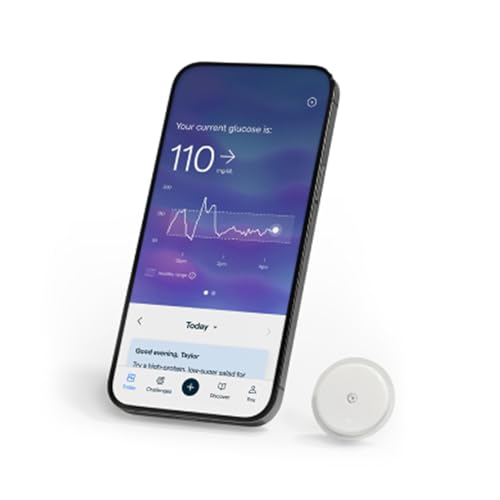
Lingo is built by Abbott (the same company behind the Freestyle Libre line) and its strength is its companion app. The app offers a “Lingo Count” score and shows how specific foods, exercise, and sleep affect your glucose in real time. One buyer — a thin, active 60-year-old — was shocked to discover high glucose swings after meals and used the app to adjust her diet. The sensor attaches to the back of your arm painlessly, lasts up to 14 days, and is water-resistant. It is also HSA/FSA eligible.
The accuracy against finger sticks is a recurring concern. One registered dietitian who used it tested the sensor against a Freestyle finger-stick monitor and found the Lingo sensor read 5 to 15 mg/dL lower. Another reviewer found the “Lingo Count” feature useless, claiming it penalizes normal meal-time variations. The device has a 14-day life — shorter than the Stelo’s 15-day sensors — so you will reorder more frequently. Lingo offers a free replacement if the sensor stops working before 14 days, and one RN reviewer reported a solid experience.
At 0.21 pounds and packaged in a larger box (4.7 by 2.25 by 3.5 inches), Lingo is physically bigger in storage than the Stelo Dexcom unit. If your goal is deep nutritional insight and you are less concerned about a few mg/dL of difference, Lingo’s app is the standout. But if you want the raw number accuracy that rivals a finger-prick, the Stelo Dexcom option is a better bet.
App Advantage
- Rich app insights with meal/exercise/sleep tracking
- HSA/FSA eligible — a money-saver for qualifying accounts
- Free replacement if sensor fails before 14 days
App Disadvantage
- Common reports of readings being 5-15 mg/dL lower than finger-stick
- Some users find the “Lingo Count” score misleading and annoying
- 14-day life means more frequent reordering vs. 15-day sensors
Pick it for: the best app-driven coaching experience — it turns glucose data into actionable diet and exercise insights.
skip it if: you need consistent accuracy close to a blood test and find gimmicky scoring features frustrating.
Understanding the Specs
Sensor Lifespan (Wear Time)
This is the number of days a single sensor stays on your arm and sends data before it expires. A 14-day sensor means you swap it out every two weeks; a 15-day sensor gives you one extra day. Over a month, a 15-day sensor means you use two sensors instead of three, which directly changes your out-of-pocket cost. Always check the stated wear time — and read reviews to see if real-world sensors actually hit that number.
Battery Cell Composition
This describes the type of battery inside the sensor. You will see “Zinc-Air,” “Silver Oxide,” or “Lithium Manganese Dioxide.” Each type has a different discharge curve and lifespan. For you, the buyer, the takeaway is simple: the battery is sealed inside the sensor and cannot be replaced — when the battery runs out, the sensor session ends. The spec matters because it determines the guaranteed operating time (14 or 15 days), so pick the one that matches the reorder cycle you prefer.
FAQ
Can I buy a continuous glucose monitor without a prescription or insurance?
How do I know which sensor lifespan is best for me?
Will a CGM replace my finger-stick blood test?
What happens if my sensor fails before its wear time is up?
Do I need to keep my phone nearby all the time?
Are these monitors waterproof for swimming or showering?
Can I use a CGM if I am on insulin?
How do I know if the readings are accurate?
Final Thoughts: The Verdict
For most buyers, the best continuous glucose monitor without insurance winner is the Stelo 2 Pack because it delivers a full 30 days of coverage in one box, uses the same trusted sensor tech as Dexcom, and gives you the lowest per-day cost among these picks. If you want a deeper nutritional coaching experience and an app that explains every glucose spike, grab the Lingo by Abbott. And for the highest claimed accuracy and waterproofing — along with 15-day sensors — the Stelo Glucose Biosensor & App by Dexcom is your best bet if you can tolerate potential support issues.
How We Picked
We do not accept paid placement. Every pick is matched to a real buyer and a real use-case; we do not hands-on test units.
Sources & Methodology
Specifications: manufacturer listings and product documentation. Review insights: verified customer reviews, as of July 2026. Pricing: not shown on this page (it changes often); check the current price via the retailer link.
As an Amazon Associate, WellFizz earns from qualifying purchases. This does not affect which products we feature.
Related Guides

Mo Maruf
I created WellFizz to bridge the gap between vague wellness advice and actionable solutions. My mission is simple: to decode the research and give you practical tools you can actually use.
Beyond the data, I am a passionate traveler. I believe that stepping away from the screen to explore new environments is essential for mental clarity and physical vitality.