Active Daily Care Eat Smart Health Hacks Recommended
About Contact The Library

7 Best Contact Microphone | Stop Chasing Air, Grab the Wood

Our readers keep the lights on and my smoothie glass nicely filled. As an Amazon Associate, I earn from qualifying purchases.

Specs are compiled from manufacturer listings and verified buyer reviews and can change over time — please confirm the key details on the product page before buying.

You want your instrument to be heard clearly, but open microphones pick up room echo and on-stage chatter instead of the actual notes vibrating through the wood and strings. A contact microphone solves this by sticking right onto your guitar, banjo, or ukulele to capture the pure physical vibration of the instrument itself.

I’m Mohammad Maruf — the founder and writer behind WellFizz. This guide is built by comparing the manufacturers’ published specifications and the patterns across verified customer reviews, so you get each pick’s real strengths and trade-offs instead of marketing spin.

Whether you are a student needing a quick setup for a school band, a busker wanting a portable rig, or a professional seeking studio-quality sound, finding the right contact microphone depends on matching the pickup type to your instrument and your amplifier or mixer.
Our Picks at a Glance

Korg CM-300 Clip-on Contact Microphone
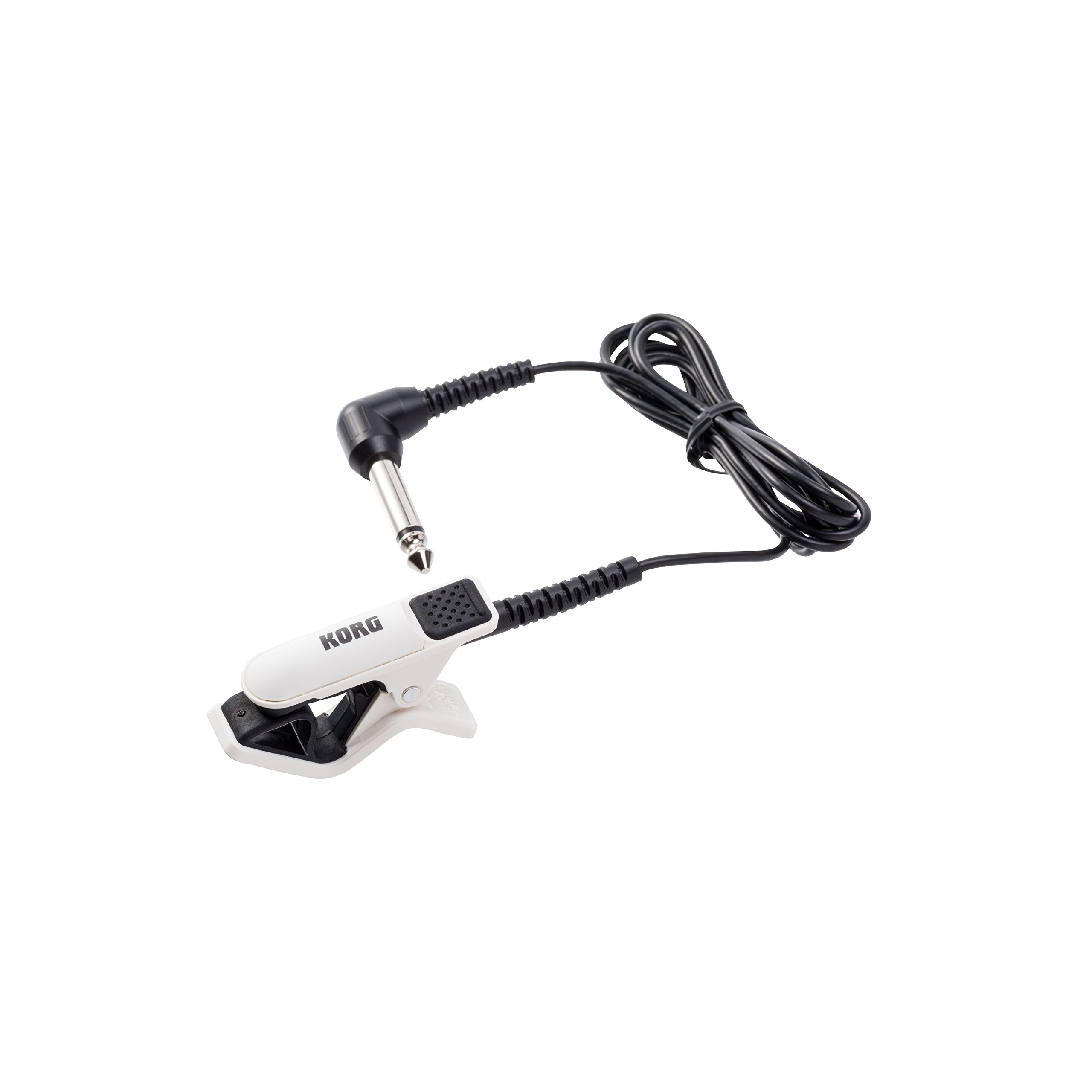
Best OverallKorg CM-300 Clip-on Contact Microphone4.6★618 ratingsA clip-on tuner mic that grips brass and strings without slipping. For tuning in noisy environments, the Korg CM-300 is the top pick.Check Price on Amazon
Randon 2pcs Acoustic Guitar Pickups
Best Value PackRandon 2pcs Acoustic Guitar Pickups4.2★537 ratingsA passive stick-on pickup that gives you two units for the price of one coffee. The Randon 2pcs pack is the entry-level champion for a reason — it gets the job done with zero complexity.Check Price on Amazon

How To Choose The Best Contact Microphone

Buying a contact microphone is different from choosing a standard vocal mic. These are the key factors to check before you stick one on your instrument.

Piezo vs. Condenser: The Core Tech

Almost all entry-level to mid-range contact mics use a piezo element — a small crystal that generates an electrical signal when it vibrates. They need no battery, so you can stick one on your guitar and plug straight into an amplifier. The AKG C411/PP is a condenser transducer, meaning it needs something called phantom power (48V sent through the XLR cable from a mixer or audio interface) but delivers a clearer, more neutral sound with very low noise.

Connection Type: Jack vs. XLR

Most budget contact mics use a standard 1/4-inch audio jack, which plugs directly into a guitar amplifier or powered speaker. The professional AKG option uses an XLR connector, which is the standard for microphones on stage and in recording studios. You will also see 1/8-inch (3.5mm) mini-jack adapters on some models, which are useful for plugging into a portable recorder or laptop, but be aware the signal level might be weaker than your device expects.

Attachment Method and Instrument Safety

Nearly all contact pickups use an adhesive pad or putty to stick to the instrument. Cheaper models often include permanent double-sided tape, so you want to be careful about placement on a finished surface — buyers of the Guitar Pickup with Volume Control warn against pulling the tape off straight. Some, like the KNA AP-1, include reusable putty that leaves no residue. If you plan to swap the pickup between multiple instruments or protect a vintage finish, look for a model with reusable attachment options.

Quick Comparison

Model Best For Pickup Type Connection Weight Amazon
Korg CM-300★ Best Overall Clip-on tuning and quiet instruments Piezo Clip 1/4″ Jack 0.04 kg Amazon
Randon 2pcsBest Value Pack Budget multi-instrument amplification Piezo Stick-on 1/4″ Jack 60 g Amazon
TIMESETL 5 Pcs Spare units for multiple instruments Piezo Self-adhesive 1/4″ Jack Amazon
Guitar Pickup w/ Volume Control Volume knob for feedback control Piezo Stick-on 2.5mm to 1/4″ Jack 3.2 oz Amazon
SUNYIN Acoustic Dual cable versatility Piezo Transducer 1/4″ & 3.5mm Jack 1.5 oz Amazon
KNA AP-1 No-damage European build Piezo (Wood-encased) 1/4″ to 1/8″ Detachable 3.2 oz Amazon
AKG C411/PP Studio and stage professional use Condenser (XLR) XLR 225 g Amazon

In‑Depth Reviews

★ Best Overall

1. Korg CM-300 Clip-on Contact Microphone

Our pick — over 4.5★ from 600+ verified ratings; the strongest balance of quality and price.

Clip-on Design1.2″ Max Opening

A clip-on tuner mic that grips brass and strings without slipping.

For tuning in noisy environments, the Korg CM-300 is the top pick. Its specially shaped rubber clip opens up to 1.2 inches (30mm), giving it a stable grip on everything from a delicate ukulele bridge to a thick brass instrument. Buyers report it “works well when clipped to the bridge of my harpsichord,” proof of its secure hold even on unconventional surfaces. Inside, a high-precision piezo sensor captures instrument vibrations directly, so you can tune accurately while your bandmate is tuning their own instrument right next to you.

The redesigned cable is a practical upgrade — it uses a stress-resistant junction and improved flexibility, addressing a common weakness on older clip-on pickups. At a rated weight of just 0.04 kilograms, it is incredibly lightweight and will not throw off the balance of your instrument. Some buyers noted a durability concern, with one saying “the first one broke,” so handle the clip with care when opening and closing it. Compared to the Randon stick-on pickups below, the CM-300 is less about providing a full output signal for an amplifier and more about delivering a clean, focused vibrational pickup for tuning or subtle effects.

Secure Grip

  • Clip opens to 1.2 inches, fits many instrument types.
  • Redesigned cable is more flexible and durable at the junction.
  • High rating of 4.6/5 from 618 ratings, the highest in this guide.

Physical Care Needed

  • Some users reported the clip mechanism can break over time.
  • Primarily a tuning tool, less ideal as a full-performance pickup.

Best for tuners: If your priority is a secure, accurate vibration sensor for tuning in loud settings, this is the most reliable choice in the guide.

The limitation: It is a clip designed for a single instrument at a time, not an adhesive stick-on for permanent amplification on a guitar body.

Best Value Pack

2. Randon 2pcs Acoustic Guitar Pickups

Two UnitsStick-on Velcro

A passive stick-on pickup that gives you two units for the price of one coffee.

The Randon 2pcs pack is the entry-level champion for a reason — it gets the job done with zero complexity. These are “passive stick-on pickup, no battery needed,” as one buyer put it, and they install in about a minute using the included double-sided tape and self-adhesive Velcro. The sound quality is described by buyers as “surprisingly good” when run through a mixer, though some note it can sound a little thin (that “tinny” quality) on a ukulele without some equalizer (EQ) adjustment. The body material is plastic, and the pickup configuration is simple piezo (a crystal that generates signal from vibration), making it an incredibly lightweight solution at 60 grams.

The two-pack value is the standout here — you can put one on your main guitar and one on your mandolin, or have a backup ready. One reviewer noted that “just sticking on the body of your acoustic guitar only gives you about half of its potential volume” and that it needed to be pressed down firmly for best results, so placement requires a little experimentation. The Randon comes with a 6-month warranty, which is unusual for a product at this tier. Compared to the TIMESETL 5-pack, you get fewer total units, but the sound quality feedback from buyers is slightly more consistent, especially for standard acoustic guitar use.

Easy & Cheap

  • Two passive pickups included, no battery hassle.
  • Very easy to install and reposition with a hair dryer.
  • High value with a 6-month warranty backing it.

Sound Basics

  • Can sound tinny without an EQ pedal.
  • Volume is halved if the pickup isn’t pressed firmly onto the body.

Grab this if: You want a no-risk, two-for-one deal to start amplifying your instruments and you don’t mind dialing in a little EQ.

Move on when: You need a single, high-fidelity output for stage performance — look at the KNA or AKG for that depth.

Best for Projects

3. TIMESETL 5 Pcs Piezo Contact Microphone Pickups

5-piece Set50 Hz – 16 kHz Range

Five identical piezos for the cost of one coffee, but fidelity matches the price.

For tinkerers, educators, or anyone who just needs a bunch of contact mics for a project, the TIMESETL five-pack is a unique proposition. One buyer captured the mood: “A piezo is a piezo. And this is a piezo—but like, ‘buy one, get four free.'” These are no-frills self-adhesive units with a standard 1/4-inch female jack and a 10-inch cable, making them incredibly easy to stick near the sound hole of a guitar or the bridge of a cello. The data lists a frequency range of 50 Hz to 16 kHz, which covers the fundamental range of most string instruments — so low bass notes and high violin harmonics both come through.

Owners mention very different experiences depending on the use case. One hearing-impaired player found them perfect for hearing their ukulele through headphones, while another upright bass player praised the sound quality and the fact he had four spares left over. However, a reviewer using them on acoustic drums said “the adhesive sucks,” so you might need stronger tape for heavy vibration applications. The high impedance (designed for an amplifier input) means they are not plug-and-play for a handheld recorder — they expect an amplifier input. For pure value-per-unit, this pack leads on raw numbers, but the Randon two-pack has a slight edge on overall sound consistency from buyer feedback.

The bulk benefit: Five pickups for a single low price, great for multi-instrument setups or experimental projects. The adhesion issue: Several customers note the included sticker is weak, needing a more permanent adhesive option for reliable use.

Buy this if: You need multiple units for experimentation, teaching, or a backup stash and are okay with potentially replacing the adhesive yourself.

skip it if: You want a single, reliable pickup for regular gigging — the Randon or the Korg are better built for daily use.

Best for Control

4. Guitar Pickup with Volume Control

Volume Knob10-Foot Cable

A stick-on piezo with a built-in volume knob to kill feedback instantly.

This model from HOHIYO-Branfity solves among the most irritating problems with contact pickups: sudden squealing feedback. The secret is a volume knob sitting right on the compact pickup body, letting you roll back the level instantly without reaching for the amplifier. The design uses a detachable 10-foot cable with a 2.5mm male mini-jack on one end (plugs into the pickup) and a standard 6.35mm male plug for the amplifier. It is a self-adhesive piezo (vibration-crystal) transducer that needs no battery, and the kit includes four extra sticky pads for when the first one loses its tack.

Buyers appreciate the build for the price, calling it “a nice little pickup” and noting the cable is long enough for practical use. One experienced buyer used it to amplify a handpan, finding that the volume control was key to managing the percussive feedback. The trade-off, echoed by a few reviewers, is that the sound can be “a little tinny” — it is a basic piezo, so you will want to use your amplifier’s EQ to warm it up. It is physically heavier than the SUNYIN option at 3.2 ounces, and the instructions recommend twisting the pickup while lifting it to remove it from an instrument’s finish safely. The volume control is a genuine differentiator against the Randon and TIMESETL picks, giving you immediate hands-on control.

Instant Feedback Fix

  • Integrated volume knob lets you stop squeal fast.
  • Long 10-foot detachable cable for flexible positioning.
  • Comes with 4 extra sticky pads for reapplication.

Tone Quality

  • Sound is described as tinny; needs EQ adjustment.
  • Heavier than many competitors at 3.2 ounces.

Perfect for performers: The volume knob makes this the best choice for live situations where you need to kill a sudden feedback loop without fumbling.

Consider the AKG if: Sound quality is your absolute priority and you have a mixer to provide phantom power and EQ.

Most Versatile

5. SUNYIN Acoustic Guitar Pickup

Dual Cable10-Foot Cable

A compact transducer with dual cables for guitar amps and portable recorders.

The SUNYIN stands out because it does not skimp on connectivity. It comes with two separate cables: a standard 1/4-inch guitar cable and a 3.5mm mini-jack cable, meaning you can plug directly into a guitar amplifier or into a portable recorder, laptop, or a PA system with an adapter. This flexibility makes it the most versatile entry-level contact microphone for people who play in different settings. The design is small and undetectable at 1.5 ounces and 1.58 x 1.58 x 0.7 inches, and it uses a self-adhesive backing near the sound hole for quick installation.

Reviewers point out good output levels for the price, with one saying it “works great for Irish tenor banjo” and noting that it has “high output, no pre-amp needed.” However, the same reviewer notes the sound quality and balance is “inferior to pricier pickups (3-6x cost).” A major complaint is that the cable connection quality is not great — one user described the 2.5mm to 1/4-inch adapter as having a “faulty connection (cuts in/out).” The pickup itself works well, but you may want to budget for a better cable. The volume control on the previous product gives you a live performance edge, while the SUNYIN gives you format flexibility.

Flexible Connections

  • Includes both 1/4″ and 3.5mm cables for different gear.
  • Very light at 1.5 ounces, won’t weigh down your instrument.
  • Good output level, no pre-amp needed for basic amplification.

Cable Quality

  • Included cables are prone to cutting in and out at the connections.
  • Sound quality is good for the price but not on par with premium options.

Reach for this if: You switch between playing through a guitar amplifier and recording into a computer or mobile device.

Look elsewhere if: You need rock-solid cable reliability for stage shows — the cable connections on this unit are a known weak point.

Premium Pick

6. KNA AP-1 Universal Piezo Pickup

Wood EnclosureDetachable Cable

A handcrafted, wood-enclosed European sensor that won’t damage your instrument’s finish.

The KNA AP-1 takes a different approach to the contact mic. Instead of a bare piezo disc in a plastic case, the sensor is enclosed in a lightweight maple wood housing, which the maker says dampens unwanted high frequencies and gives a more natural acoustic tone. It attaches using a non-marring, reusable putty or double-sided adhesive discs, so you can move it between your guitar and mandolin without causing damage. The detachable cable is a welcome feature — an 8-foot cable with a 1/4-inch to 1/8-inch input jack setup — meaning you can replace it if it wears out without replacing the whole pickup.

Buyers are generally impressed. One noted that on an archtop tenor guitar, it “represents acoustic sound very well” because it avoids the need for drilling or screwing into the instrument. However, placement is everything — another reviewer warned that “sound quality varies greatly, depending upon where you stick the pickup on,” and they found the included double-sided dots made the sound “too treble-y,” preferring the reusable putty. At 5 x 1.25 x 2.5 inches, it is larger than a raw piezo disc, but still unobtrusive. It is a passive unit, so no battery is required, but compared to the AKG below, it lacks the ultra-low noise floor of a condenser design.

The wood warmth: The maple enclosure gives this pickup a warmer, more organic sound compared to raw plastic piezos, making it a top choice for protecting vintage gear. The placement puzzle: You need to spend a few minutes moving it around to find the balance that works for your instrument.

Best for caretakers: If you own a valuable acoustic instrument and want a high-quality, non-damaging amplification solution, this is the pick.

Move up to the AKG for: Studio-grade signal clarity and low noise, especially if you run a mixer with phantom power.

Professional Grade

7. AKG Pro Audio C411/PP Vibration Pickup

CondenserXLR Connector

The studio-class condenser that plugs directly into your mixer for a noise-free signal.

The AKG C411/PP is a completely different beast from every other product here. It is a vibration condenser transducer in a sealed metal enclosure, featuring an MPAV standard XLR connector. That XLR means you need a mixer or audio interface with phantom power (48V) to make it work, but the payoff is enormous: an audio sensitivity of 53 decibels (how effectively it converts vibration into signal). It is incredibly small at just 1 x 0.6 x 0.4 inches, so it does not change the balance of your instrument.

Buyers rave about its clarity. One used it on a sitar, surbahar, and dobro, calling the sound “astounding” and praising the lack of the “trebly bite” common to standard transducers. Another reviewer used it on a kora (a West African harp-lute) and found that after a 5-hour placement experiment, tiny movements of just 1 inch and a 30-degree angle change dramatically affected the sound. Several users note that the output is surprisingly hot, so you may need to pad the input on your mixer. The AC411/PP is rated 4.4/5 from 235 ratings, making it the second-highest rated product. Its durability is noted, though one buyer did need to replace the cable after two years. This is the contact microphone for professionals who play demanding acoustic instruments like violin and cello, where a piezo’s quack is unacceptable.

Cleanest Signal

  • Extremely low noise floor with high clarity of 53 dB sensitivity.
  • XLR connection is standard for all professional audio gear.
  • Ultra-light at 1 x 0.6 x 0.4 inches, no instrument balance issues.

Gear Requirements

  • Requires phantom power (48V) to operate, not a battery-free plug-and-play.
  • Much higher price, a professional investment.
  • Output can be too hot for cheap preamps, needing an attenuator.

For the professional purist: If you are a classical instrumentalist or a recording engineer who needs the absolute quietest and most accurate contact pickup, this is the only choice.

pass on it if: You need a quick, battery-free plug-and-play solution for a guitar amplifier — a piezo like the KNA AP-1 is a better match for that scenario.

Understanding the Specs

Piezo vs. Condenser

The first major fork in the road is the type of pickup. A piezo element generates its own tiny electrical signal when it vibrates, so it requires no battery — you just stick it on and plug in. Think of it as a simple, rugged option. A condenser transducer, like the one in the AKG C411/PP, needs phantom power (48V sent through the XLR cable from a mixer) but delivers a much lower noise floor and a more neutral, uncolored sound. This makes the condenser the choice for recording and critical stage work, while the piezo is perfect for general amplification and tuning.

Connection & Impedance

All the pies in this guide use a 1/4-inch jack, which is the standard for guitar amplifiers and most powered speakers. The professional AKG uses an XLR connector, which is the standard for microphones on stage and in studios. A crucial detail is impedance: piezo contact mics are “high impedance,” meaning they are designed to plug into an amplifier input, not a handheld recorder’s mic input. If you plug a piezo into a standard microphone input, you will likely get a very weak, thin signal. Some models, like the SUNYIN, include an 1/8-inch adapter for portable recorders, but you might still need a pre-amplifier to get a healthy signal level.

FAQ

Can I use a contact microphone on any instrument?
Yes, a contact microphone works on any solid object that vibrates. It is most commonly used on acoustic string instruments like guitar, violin, cello, ukulele, mandolin, and banjo. It also works on percussion instruments, pianos, and even non-musical surfaces like a door or a metal sheet for sound effects. The key is a flat, clean surface for the adhesive to stick to.
Do I need a battery or phantom power for a contact microphone?
It depends on the type. Most budget to mid-range contact microphones, like the Randon or KNA AP-1, are passive piezoelectric pickups. They need no battery and no phantom power — you simply plug the 1/4-inch jack into your amplifier. The professional AKG C411/PP is a condenser type and absolutely requires phantom power (48V) from a mixer or audio interface to function.
Will a contact microphone damage the finish of my instrument?
The risk is low but real. Most contact microphones use a self-adhesive pad. On a well-maintained finish, the adhesive can be removed cleanly, especially if you use a little heat. However, some shoppers say that pulling the pickup straight off can lift finish. For vintage or delicate instruments, the KNA AP-1 is the safest bet because it includes reusable putty that leaves no residue.
What is the difference between a contact microphone and a normal microphone?
A normal microphone picks up sound waves traveling through the air — it hears everything in the room, including background noise, echo, and other instruments. A contact microphone picks up vibrations through a solid object. When you stick it on a guitar body, it “hears” only the vibrations of that guitar, ignoring room noise and other players beside you. This is why it is great for tuning in a noisy environment or getting a direct sound.
Can I plug a contact microphone into my computer or phone?
Yes, but you need the right adapter. Some models, like the SUNYIN, include a 3.5mm cable for this purpose. However, piezo pickups are high-impedance, so plugging them directly into a computer’s microphone jack often results in a very quiet, thin sound. You will get much better results using a small audio interface or a pre-amplifier that can handle a high-impedance instrument input.
Why is my contact microphone so quiet?
This is usually a placement or impedance mismatch issue. The pickup needs to be stuck firmly to a vibrating part of the instrument — near the bridge is usually the balance. If it is not pressed tightly onto the surface, it will lose volume. Also, if you are plugging it into the wrong type of input (like a microphone input on a computer), the signal will be too low. Try plugging it into a guitar amplifier or a mixer with a high-impedance input.
How do I stop feedback with a contact pickup?
Feedback happens when the pickup vibrates the instrument, and the amplifier picks up that sound again. To reduce it, keep the amplifier at a moderate volume and try to avoid pointing the instrument’s sound hole directly at the speaker. If you are using a model like the Guitar Pickup with Volume Control, you can quickly roll the volume knob down. Some users also find that using an EQ pedal to cut a narrow band of frequencies helps.
How long does a contact microphone last?
The piezo element itself can last for years without degradation. The two most common points of failure are the cable (which can wear out from bending) and the adhesive pad (which loses its stickiness over time). Models with a detachable cable, like the KNA AP-1, are easier to repair. Keep a few spare adhesive pads handy, and the pickup should last for many seasons of playing.
What is the best placement for a contact microphone on a guitar?
Buyers consistently report that the best sound comes from placing the pickup near or just behind the bridge of the guitar. This is where the string vibration is most transmitted into the body. For a warmer sound, try sticking it on the soundboard. For a brighter, more articulate sound, stick it directly on the bridge. You should experiment by holding the pickup in different positions while strumming until you find the tone you like before peeling off the adhesive backing.

Final Thoughts: The Verdict

If you want one dependable pick, the best contact microphone winner is the Korg CM-300 because of its secure clip, consistent performance, and highest user rating of 4.6/5 from 618 ratings. If you want a pack of two passive pickups for multiple instruments on a budget, grab the Randon 2pcs. And for professional studio and stage use where noise floor matters most, the standout is the AKG C411/PP.

How We Picked

We do not accept paid placement. Every pick is matched to a real buyer and a real use-case; we do not hands-on test units.

Sources & Methodology

Specifications: manufacturer listings and product documentation. Review insights: verified customer reviews, as of July 2026. Pricing: not shown on this page (it changes often); check the current price via the retailer link.

As an Amazon Associate, WellFizz earns from qualifying purchases. This does not affect which products we feature.

Related Guides

Mo Maruf
Founder & Lead Editor

Mo Maruf

I created WellFizz to bridge the gap between vague wellness advice and actionable solutions. My mission is simple: to decode the research and give you practical tools you can actually use.

Beyond the data, I am a passionate traveler. I believe that stepping away from the screen to explore new environments is essential for mental clarity and physical vitality.

Please use a real email you check. If it's fake or mistyped, your message won't reach us and we can't reply — wrong addresses are rejected automatically.