Our readers keep the lights on and my smoothie glass nicely filled. As an Amazon Associate, I earn from qualifying purchases.
Specs are compiled from manufacturer listings and verified buyer reviews and can change over time — please confirm the key details on the product page before buying.
You land after a long flight and your ankles have vanished — swollen, heavy, and aching. That is the feeling the right travel compression socks prevent before it starts, by applying steady graduated pressure from your ankle up to your calf to keep blood moving instead of pooling in your lower legs. The trick is picking a pair with a real compression level (measured in mmHg, or millimeters of mercury, the unit that tells you how much pressure the sock applies) that fits your legs correctly, because the wrong size or a loose “support” sock leaves you with all the discomfort and none of the benefit.
I’m Mohammad Maruf — the founder and writer behind WellFizz. This guide is built by comparing the manufacturers’ published specifications and the patterns across verified customer reviews, so you get each pick’s real strengths and trade-offs instead of marketing spin.
Here is what matters most: for most travelers, a firm 20-30 mmHg sock like the Physix Gear delivers the dependable swelling protection airlines and long-haul flyers need, while lighter 15-20 mmHg pairs work well for casual trips or sensitive legs — and this breakdown of the compression socks for travel shows you which pair fits your trip and your body best.
Our Picks at a Glance


How To Choose The Best Compression Socks For Travel
Not all compression socks are built the same. The three specs that actually separate a useful travel sock from a disappointing one are the compression level (mmHg), the sizing accuracy (calf circumference and shoe size), and whether the sock uses graduated compression (tighter at the ankle, looser higher up).
The mmHg Number Is Not Optional
mmHg (millimeters of mercury) measures how much pressure the sock applies to your leg. Travel socks commonly come in 15-20 mmHg (mild, good for general flying comfort) and 20-30 mmHg (moderate-firm, better for preventing noticeable swelling or for those at higher risk of deep vein thrombosis). A sock without a printed mmHg number is a fashion sock, not a medical-grade compression sock.
Sizing Is Tricky — Measure Your Calf
The most common complaint in reviews is buying the wrong size. You need two numbers: your shoe size and your calf circumference at the widest point. Brand sizing charts vary significantly — always check the specific chart for the pair you are buying. A sock that is too tight at the band will cut into your leg; one that is too loose will slide down and lose compression.
Graduated Compression Versus Uniform Squeeze
A proper travel compression sock is graduated, meaning it exerts the highest pressure at the ankle and gradually lessens as it goes up the calf. This design helps push blood back toward your heart. Socks without graduated compression create a uniform squeeze that can actually impede circulation instead of helping it.
Quick Comparison
| Model | Best For | Compression Level | Material Blend | Pairs Included | Amazon |
|---|---|---|---|---|---|
| Physix Gear Compression Socks★ Best Overall | Long flights / heavy swelling | 20-30 mmHg | Nylon/Spandex | 1 pair | Amazon |
| SB SOX Compression SocksTravel Pro’s Choice | Frequent flyers / durable daily wear | 20-30 mmHg | 80% nylon / 20% spandex | 1 pair | Amazon |
| FITRELL 3 Pairs Compression Socks | Value multi-pack / everyday use | 20-30 mmHg | Nylon/Spandex | 3 pairs | Amazon |
| Benirap Breathable Compression Socks | Hot climates / easy on-off | 20-30 mmHg | Nylon/Spandex | 2 pairs | Amazon |
| Compression Socks (3 Pairs) by XZD | All-day standing / salon or retail workers | 15-20 mmHg | Nylon/Spandex | 3 pairs | Amazon |
| Merino Wool Compression Socks | Cold-weather travel / odor control | 15-20 mmHg | Merino wool blend | 1 pair | Amazon |
| 2 Pairs Sheer Compression Socks for Women | Warm weather / discreet under dress pants | 15-20 mmHg | 85% nylon / 15% spandex | 2 pairs | Amazon |
In‑Depth Reviews
1. Physix Gear Compression Socks 20-30 mmHg
Our pick — 4.5★ from 94,500+ verified ratings; the strongest balance of quality and price.
The firmest squeeze in the group, backed by nearly 95,000 ratings.
Physix Gear delivers a 20-30 mmHg graduated compression that targets the ankle and loosens up the leg — exactly the pattern that prevents your ankles from swelling during a long-haul flight. The sock is made from a breathable nylon-spandex blend, and when you measure at the widest calf point as instructed, the fit is snug but not cutting. Unlike the lighter 15-20 mmHg pairs on this list, this is the one that actually stops edema (fluid buildup) from forming, based on how buyers describe their results after hours in a plane seat.
Buyers report these socks are “comfortable” after multiple wears, though some mention a learning curve getting them on at first — the firm compression requires a bit of patience. One owner noted they “provide excellent support without feeling overly tight” and that the top band stays put all day, which is the defining test of a well-made travel compression sock. Another reviewer measured the calf first and still found them hard to pull up alone, so if you have limited hand strength, you may want a partner’s help.
Real-World Standout
- Full 20-30 mmHg known to stop swelling on long flights
- Top band stays up without pinching, buyers confirm
- Pink floral design option adds a touch of style
The Real Catch
- Some buyers find them very hard to pull on without help
- Single pair per purchase — budget-friendly multi-packs are not available here
Reach for this if: you want the highest confidence that swelling will not happen on your next eight-hour flight and you are willing to spend an extra minute putting them on.
Look elsewhere if: you need a super-easy on-and-off slip-on or prefer a lighter 15-20 mmHg for short hops where swelling is less of a concern.
2. SB SOX Compression Socks for Men & Women (20-30mmHg)
A 20-30 mmHg workhorse that outlasts many medical-grade rivals.
SB SOX brings the same 20-30 mmHg compression level as the Physix Gear, but the construction is distinct: 80% nylon / 20% spandex with reinforced heel and toe cushioning that resists wear. The graduated design eases pressure from ankle to calf, and the sizing runs from Small (11–14 inch calf) through XX-Large (20–24 inch calf) — wider than many competitors, so it covers people with larger calves who often struggle to find a proper fit. One reviewer noted the pair “lasted 6 years with no loss of elasticity” (air drying only), which is extraordinary for a sock at this price point.
Travelers note that these socks “prevent edema during long flights where other socks failed,” a strong claim that matches the firm 20-30 mmHg spec. The same buyer mentioned “zero swelling after two flights.” Compared to the Physix Gear, the SB SOX gets a slight edge for long-term durability and a wider calf sizing range, but both deliver the same effective compression for travel. The top band is described as stable without digging in, and the toe area has noticeably less compression so your toes can spread naturally.
Why It Stands Out
- Exceptional reported lifespan — some buyers wear them for years
- Calf sizes from 11 to 24 inches accommodate wider legs
- Heel and toe reinforcement adds durability on rough floors
Worth Noting
- Purely cosmetic pilling noted by some long-term users
- Sold as a single pair — you will need to buy multiple packs for a trip
Best suited for: travelers who fly multiple times a month and want durable 20-30 mmHg protection that will not wear out quickly.
Consider skipping if: you need the compression lower — the 20-30 mmHg level may feel too strong for short daytime flights.
3. FITRELL 3 Pairs Compression Socks for Women and Men 20-30mmHg

Three firm pairs for the price of one — but the compression might feel softer than advertised.
FITRELL gives you three pairs with a claimed 20-30 mmHg compression, which is designed to match the firmness of the Physix Gear and SB SOX above, but in a value-oriented multi-pack. The socks cover a full cushioned sole and have a smooth toe, so they are comfortable for long wear in sneakers or slip-ons. One buyer who wore them on an 8-hour flight reported “no swollen ankles or feet” — which is exactly what a travel compression sock should deliver at this level.
However, the value proposition comes with an asterisk. A detailed reviewer who owns a women’s 8-8.5 shoe and 13.75 inch calf noted the S/M “slip right on with no difficulty” and questioned whether the 20-30 mmHg rating is accurate, because other brands at the same rating are noticeably harder to pull on. So while the socks are comfortable and effective for daily wear and moderate travel, they may not deliver the same firm squeeze as the Physix Gear or SB SOX for those who absolutely need maximum edema prevention.
Value Highlights
- Three pairs in one box for the same cost as a single competitor pair
- Full cushioned sole adds comfort for long walks through airports
- Buyers confirm they prevent swelling on long-haul flights
The Trade-Off
- Some experienced users find the compression softer than a true 20-30 mmHg
- Not the best choice if you need the firmest possible squeeze for very long flights
Grab this for: building a travel sock rotation on a budget, or if you want backup pairs for a week-long trip where you will not launder socks nightly.
skip it if: you have edema-prone legs that demand the absolute firmest 20-30 mmHg — the Physix Gear or SB SOX are more reliable in that scenario.
4. Benirap Breathable Compression Socks 20-30mmHg, 2 Pairs
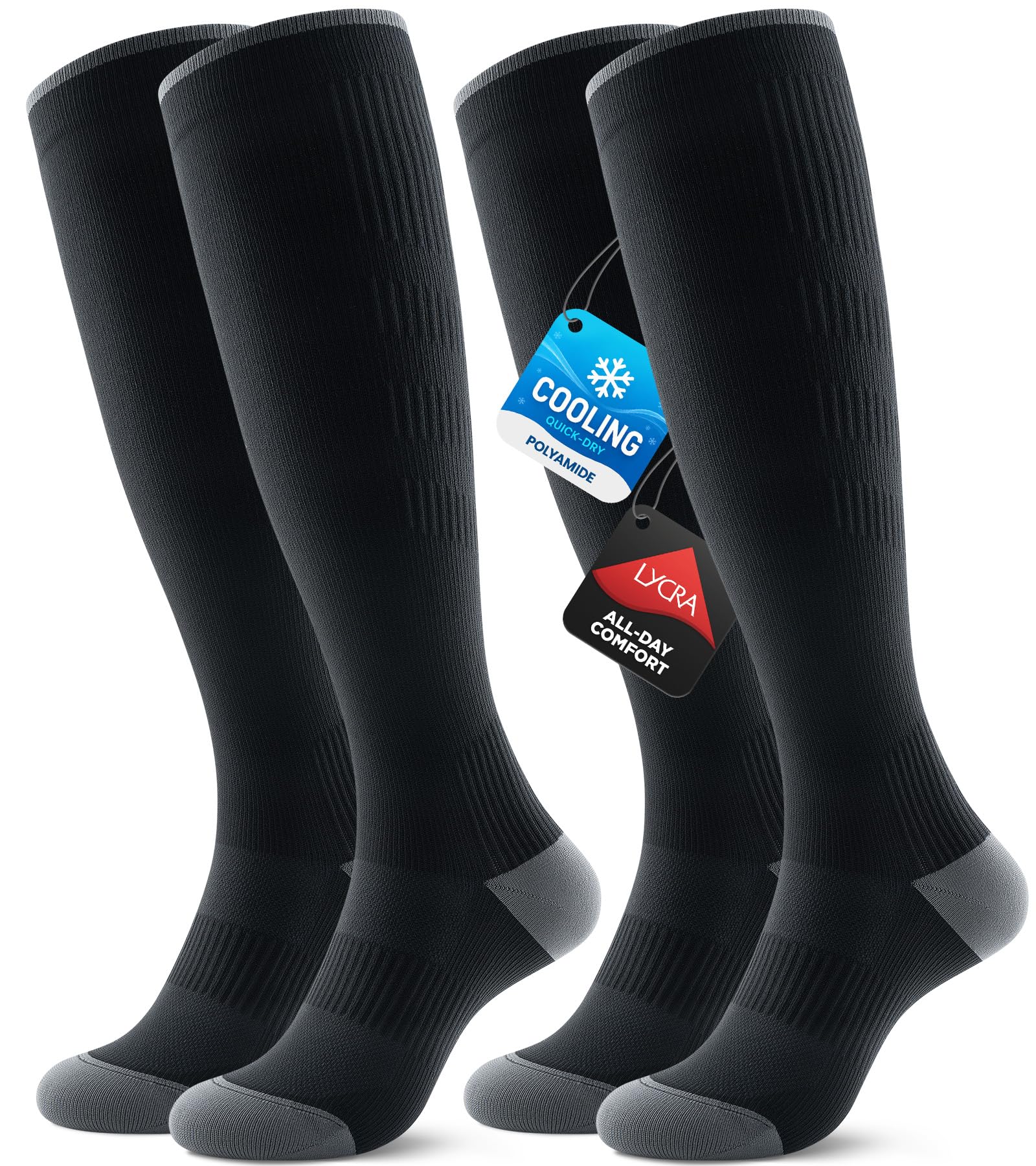
Silky material that slides on easily — a rarity for 20-30 mmHg socks.
The Benirap socks deliver a true 20-30 mmHg compression level but use a silky nylon-spandex fabric that buyers consistently say is easier to pull on than other firms. “These were great no hassle putting them on,” one reviewer wrote, contrasting with the struggle many people have with the Physix Gear pair. The material is also described as breathable, which matters if you travel to warm destinations or run hot on planes. The socks come in a 2-pair pack, giving you a travel-ready rotation.
One interesting use case that showed up in the reviews:, noting the compression is “not too tight but it does the job.” That suggests the fit is comfortable enough for sleep — though for most travelers, the real test is the 180-day guarantee the brand offers, which gives you room to test them on your next trip. If you hate the process of wrestling 20-30 mmHg socks onto your legs, this is the pair that changes the experience.
Where It Shines
- Easier on-and-off than most 20-30 mmHg compression socks
- Silky, breathable fabric good for warm climates
- 180-day guarantee covers your travel test run
One Thing To Check
- Only 2 pairs included — less value-per-pair than FITRELL’s 3-pack
- Relatively few ratings (under 500) compared to the 50K+ pairs above
Choose this if: you want firm 20-30 mmHg compression without a fight at 5:00 AM before your flight.
Look elsewhere if: you prioritize having the most pairs for the lowest average cost — the FITRELL 3-pack delivers better volume.
5. Compression Socks for Women and Men, 15-20mmHg 3 Pairs
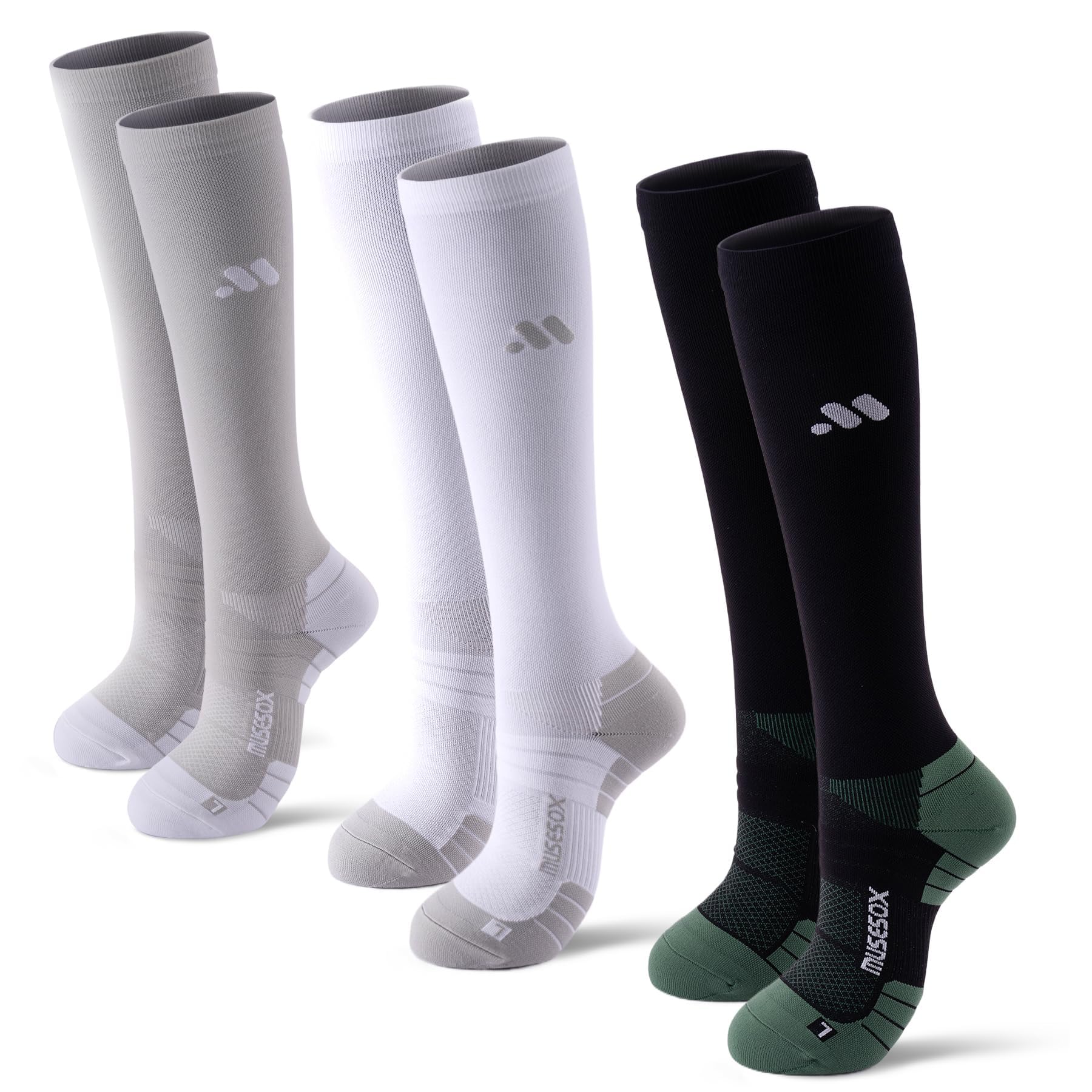
Three pairs of milder compression that salon workers and nurses wear all shift.
These socks from XZD use a 15-20 mmHg graduated compression — the lighter end of the spectrum, ideal for travelers who do not typically swell much but want the energy boost and leg comfort that even mild compression provides. The three-pair pack covers a full trip, and each sock is marked with “L” or “R” so you wear the correct anatomical fit on each foot, a small detail that reduces bunching. Buyers describe them as “butter soft” and note they relieve pain after 8-hour shifts standing in food service or behind a salon chair.
Compared to the 20-30 mmHg pairs higher on this list, these are noticeably easier to put on and wear all day — one reviewer with arthritis in her hands appreciated the helpful on-instructions. The trade-off is real: they provide a 33% lighter compression versus the 20-30 mmHg options (15-20 vs 20-30), so if your ankles typically balloon on flights, you will want the firmer level. But for short-haul flights, long layovers, or daily wear during a walking-heavy vacation, this is a forgiving sock that still does meaningful work.
Strengths
- Three pairs per pack for the price of one premium single pair
- Left/right foot labeling ensures a tailored fit
- Soft enough for arthritis-prone hands; buyers confirm easy donning
Limitation
- 15-20 mmHg is too light for heavy swelling —, but that is not a guarantee for every user
Reach for these if: you fly short to medium distances and need a comfortable, easy-to-wear sock that prevents leg fatigue without being a battle to put on.
Pass if: your legs swell significantly on every flight — you need the 20-30 mmHg tier.
6. Merino Wool Compression Socks for Women Men, 15-20 mmHg
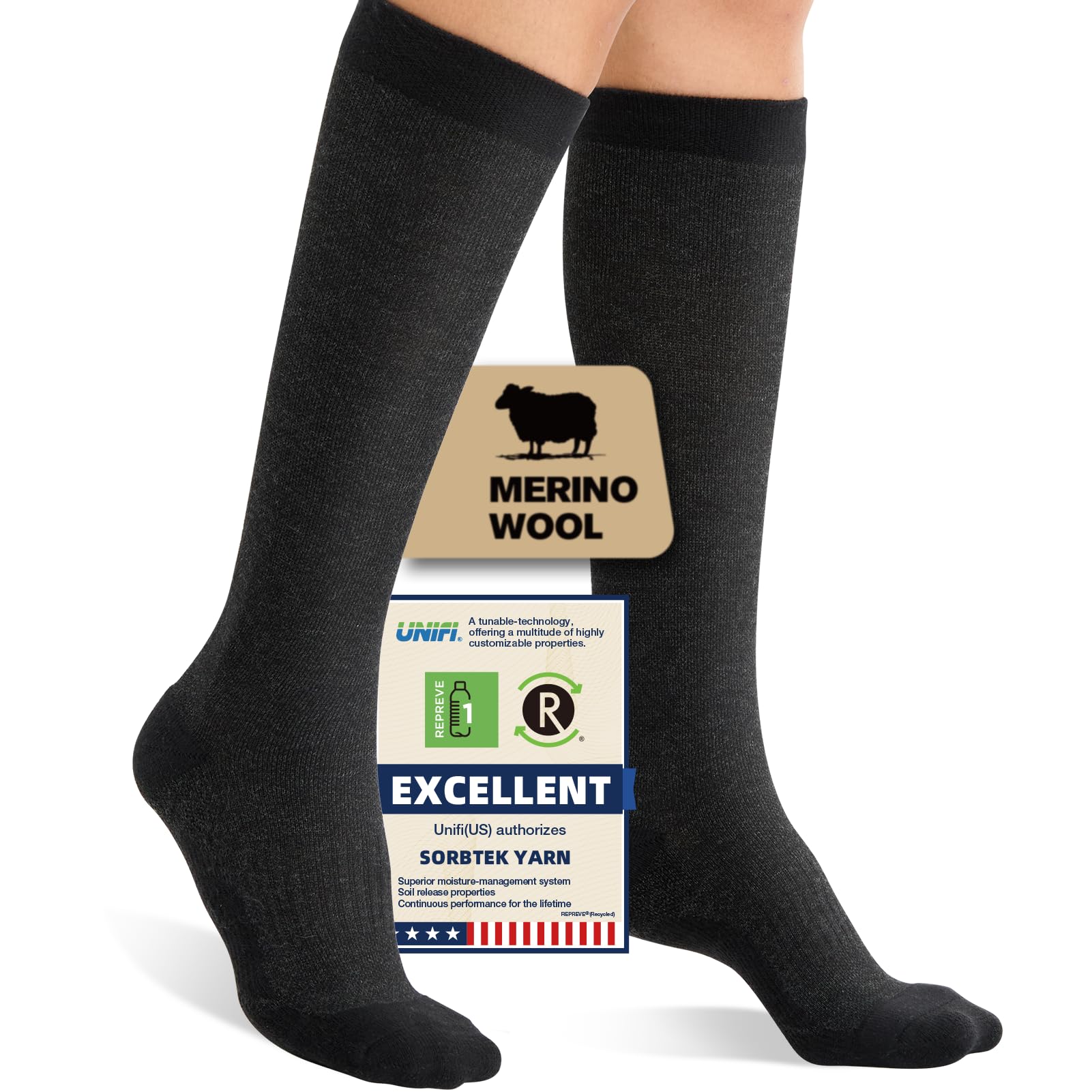
Natural merino wool keeps feet warm and dry without the sweaty nylon feel.
Almost every compression sock on the market is mostly nylon and spandex — good for compression, bad for breathability and odor. This pair uses a merino wool blend that naturally wicks moisture and resists smells, which is a relief on long travel days. The 15-20 mmHg compression is mild, but the real standout feature is the “thickened area around the bottom of the foot, heel area and toes” that cushions each step. One reviewer who wears them with sandals indoors in winter said they are “the most comfortable shoes I’ve ever worn.”
A long-time nurse reviewer noticed a difference in foot odor versus the nylon-and-spandex socks worn previously, saying these are “moisture wicking” and kept feet fresher through a shift. The wool construction also runs cooler in warm weather than you might expect — a buyer reported they are “much cooler than the polyester products” they have tried. The sizing is true-to-size with no shrinkage after washing according to the instructions. If you travel to cold-weather destinations or simply dislike the synthetic feel of most compression socks, this is a genuinely different option that does not sacrifice comfort for functionality.
Unique Advantages
- Merino wool naturally resists odors better than synthetic blends
- Cushioned footbed adds a plush step — rare in compression socks
- Breathable and cooler than polyester options, per buyer feedback
Consider Before Buying
- 15-20 mmHg is milder than the firm 20-30 mmHg recommended for heavy swelling
- Single pair — you will need to buy multiples for a week-long trip
Best for: cold-weather travelers and anyone who prioritizes natural fibers, odor control, and underfoot cushioning over maximum compression force.
Not for: those who need the strongest possible edema prevention on very long flights — the 15-20 mmHg level may not stop swelling.
7. 2 Pairs Sheer Compression Socks for Women, 15-20 mmHg

Invisible under dress pants — sheer, thin, and stay-put for warm-weather travel.
If you need compression that disappears under your work slacks or travel trousers, these sheer knee-highs from BSERA are the pick. Made from 85% nylon and 15% spandex, they are lightweight and breathable, with a non-binding top band that prevents the dreaded sock-line dig. The 15-20 mmHg graduated compression is mild but effective for general travel comfort — one buyer mentioned that a “doctor noted no ankle fluid retention” after using them. They come in beige and black, two pairs total, and are machine washable.
Several buyers mention they are “not as heavy as others” but still work for achy legs, and the thin material is praised for Florida-summer wear. A sizing note: one reviewer ordered two sizes up for extra comfort and still found them too tight, so pay close attention to the calf and shoe sizing guide. Unlike the Merino Wool socks above, these are fully synthetic and may not breathe as well in extreme heat, but they win on discreetness under business attire. If your trip involves meetings or dinners where you cannot wear thick crew-style socks, this is the one.
What Makes It Unique
- Sheer, thin fabric fits smoothly under dress pants and skirts
- Non-binding top band prevents the pinched feeling many compression socks cause
Heads Up
- Not as durable as thicker blends — the sheer fabric is more delicate
- Some buyers find the sizing runs tighter than expected
Reach for this pair when: you want compression on a business trip and cannot wear visible sporty socks with your outfit.
pass on it if: your travel style calls for hiking or heavy walking — the sheer material is less durable than cushioned crew socks for that kind of use.
Understanding the Specs
mmHg — The Only Number That Matters
mmHg (millimeters of mercury) is the unit that measures how much pressure the sock applies to your leg. Think of it as the “SPF” of compression — a 15-20 mmHg sock provides light, everyday support suitable for a short flight or a long day at a standing desk. A 20-30 mmHg sock applies firmer pressure, enough to prevent visible ankle and calf swelling (edema) on a transatlantic flight. Any sock that does not print a mmHg number on the package is a fashion piece, not a therapeutic compression garment.
Graduated Compression vs. Flat Compression
Graduated compression means the sock is tightest at the ankle and gradually loosens as it goes up the calf. This design pushes blood upward toward the heart, preventing pooling in your feet and lower legs. Flat (uniform) compression squeezes the same everywhere, which can actually trap blood. Every real travel compression sock sold for medical or travel use is graduated — if the description does not say “graduated,” it probably is not.
Calf Circumference and Sizing Charts
The most common mistake travelers make is buying by shoe size alone. Compression socks also need your calf circumference (measure at the widest point). Each brand has its own chart — SB SOX, for example, lists calf ranges from 11–14 inches (Small) up to 20–24 inches (XX-Large). If your calf falls between sizes, round up; a too-tight band will cut off circulation, defeating the purpose.
FAQ
How do I know which mmHg level I need for a flight?
Can I wear compression socks on a plane if I have never used them before?
Will 20-30 mmHg compression socks be too tight for my legs?
What is the difference between 15-20 mmHg and 20-30 mmHg for travel?
Do compression socks help with deep vein thrombosis (DVT) on flights?
How tight should the top band of a compression sock feel?
Can I wear compression socks overnight on a red-eye flight?
How long do compression socks last?
Do I need to wear compression socks on a short 2-hour flight?
Why do some 20-30 mmHg socks feel softer than others?
Final Thoughts: The Verdict
Across the board, the compression socks for travel winner is the Physix Gear Compression Socks because it delivers proven 20-30 mmHg compression that travelers consistently say prevents swelling on long flights. If you want a durable pair that will outlast many trips, grab the SB SOX. And for a budget-friendly multi-pack that still offers firm compression, the FITRELL 3 Pairs is a smart rotation choice.
How We Picked
We do not accept paid placement. Every pick is matched to a real buyer and a real use-case; we do not hands-on test units.
Sources & Methodology
Specifications: manufacturer listings and product documentation. Review insights: verified customer reviews, as of July 2026. Pricing: not shown on this page (it changes often); check the current price via the retailer link.
As an Amazon Associate, WellFizz earns from qualifying purchases. This does not affect which products we feature.
Related Guides

Mo Maruf
I created WellFizz to bridge the gap between vague wellness advice and actionable solutions. My mission is simple: to decode the research and give you practical tools you can actually use.
Beyond the data, I am a passionate traveler. I believe that stepping away from the screen to explore new environments is essential for mental clarity and physical vitality.