Our readers keep the lights on and my smoothie glass nicely filled. As an Amazon Associate, I earn from qualifying purchases.
Specs are compiled from manufacturer listings and verified buyer reviews and can change over time — please confirm the key details on the product page before buying.
If your legs feel heavy, tired, or achy by mid-afternoon—whether you stand all day, sit at a desk, or travel—the right pair of compression socks can make a real difference in how you feel. This guide cuts through the hype to show you exactly which graduated-pressure socks actually deliver on circulation and comfort, based on real specs and what actual buyers report.
I’m Mohammad Maruf — the founder and writer behind WellFizz. This guide is built by comparing the manufacturers’ published specifications and the patterns across verified customer reviews, so you get each pick’s real strengths and trade-offs instead of marketing spin.
The honest breakdown below covers six of the most talked-about models, from firm medical-grade support to soft merino wool blends, so you can find the best compression socks for circulation that actually fits your daily routine and body.
Our Picks at a Glance

How To Choose The Best Compression Socks For Circulation
The key number on any compression sock is the mmHg rating (millimeters of mercury — the unit that measures how tight the sock is). Light socks at 8-15 mmHg are fine for travel comfort, but for real circulation support you need at least 15-20 mmHg. Many buyers who want noticeable relief from swelling or leg fatigue find 20-30 mmHg the balance, because these socks deliver firmer, more consistent pressure that is tightest at the ankle and gradually loosens upward.
Graduated compression is the real deal
A true graduated compression sock is tightest at the ankle and gradually loosens as it moves up your calf. This design helps push blood back toward your heart, preventing it from pooling in your lower legs. The key is that the pressure must be highest at the ankle — if a sock feels equally tight everywhere, it is not graduated and is unlikely to help circulation.
Fabric and breathability matter for all-day wear
Compression socks trap heat, so the fiber blend makes a big difference in comfort. Nylon and spandex are standard for stretch and durability, but they can make your feet feel sweaty after a long shift. Merino wool blends or moisture-wicking synthetics help pull sweat away, keeping your skin drier. Buyers who wear socks for 8+ hour nursing or standing shifts often prefer breathable, moisture-wicking fabrics over thick, purely synthetic materials.
Fit your calf, not just your shoe
Most people pick compression socks by shoe size alone and end up with a poor fit. The top band should sit just below your knee without digging in or rolling down. Measure the widest part of your calf and the narrowest part of your ankle, then compare those numbers to the brand’s size chart. A sock that is too tight at the calf will cut off circulation; one that is too loose at the ankle will not provide enough gradient pressure to help.
Quick Comparison
| Model | Best For | Compression Level | Material | Number of Pairs | Amazon |
|---|---|---|---|---|---|
| Physix Gear 20-30 mmHg★ Best Overall | Long shifts & high-mileage days | 20-30 mmHg | High-quality materials (not specified) | 1 pair | Amazon |
| Sockwell Women’s Pulse 20-30 mmHgTop Performer | Marathon runners & wide-toe comfort | 20-30 mmHg | Merino wool & Rayon blend | 1 pair | Amazon |
| Benirap 20-30 mmHg | Nighttime RLS relief & easy-on fit | 20-30 mmHg | Silky, breathable fabric | 2 pairs | Amazon |
| Merino Wool 15-20 mmHg | All-day warmth without sweat | 15-20 mmHg | Merino wool blend | 1 pair | Amazon |
| Graduated Support 3-Pair 15-20 mmHg | Budget-friendly daily compression | 15-20 mmHg | Butter-soft fabric (not specified) | 3 pairs | Amazon |
| BBFREY Medical 20-30 mmHg (3-Pair) | Medical-grade firm support | 20-30 mmHg | 70% Microfiber Nylon blend | 3 pairs | Amazon |
In‑Depth Reviews
1. Physix Gear Compression Socks 20-30 mmHg
Our pick — 4.5★ from 94,500+ verified ratings; the strongest balance of quality and price.
Over 94,000 buyers rely on this sock for serious leg fatigue and swelling.
If you are a nurse, runner, or anyone who spends long hours on your feet, the Physix Gear delivers a consistent firm squeeze at 20-30 mmHg. This is the level most people need when they talk about “real” compression for circulation. Owners mention that these socks “have given my legs new life,” with one reviewer noting that after an accident tearing their LCL and MDL, these socks helped manage swelling that had become so severe they “could not see my ankle bones at the end of a shift.”
The downside, as some seniors and first-timers mention, is that these are genuinely hard to put on — one reviewer had to enlist their husband’s help to get them over their heels. Once on, however, they stay put, and the top band is described as “nice and comfortable” rather than digging in. This is the pick if you prioritize all-day leg support over easy donning.
Standout Strengths
- Firm 20-30 mmHg compression felt by thousands of buyers to reduce swelling and leg pain.
- Stay in place all day without rolling down, even during long shifts.
- Breathable material that holds up after multiple washes without losing stretch.
Honest Trade-offs
- Difficult to pull on, especially for seniors or people with hand arthritis.
- Only one pair per purchase, so you will need multiple packs for a rotation.
Perfect for: anyone who stands or walks for 8+ hours a day and needs the maximum legal over-the-counter compression to fight swelling and fatigue.
Think twice if: you have limited hand strength or need a sock you can slip on without help each morning.
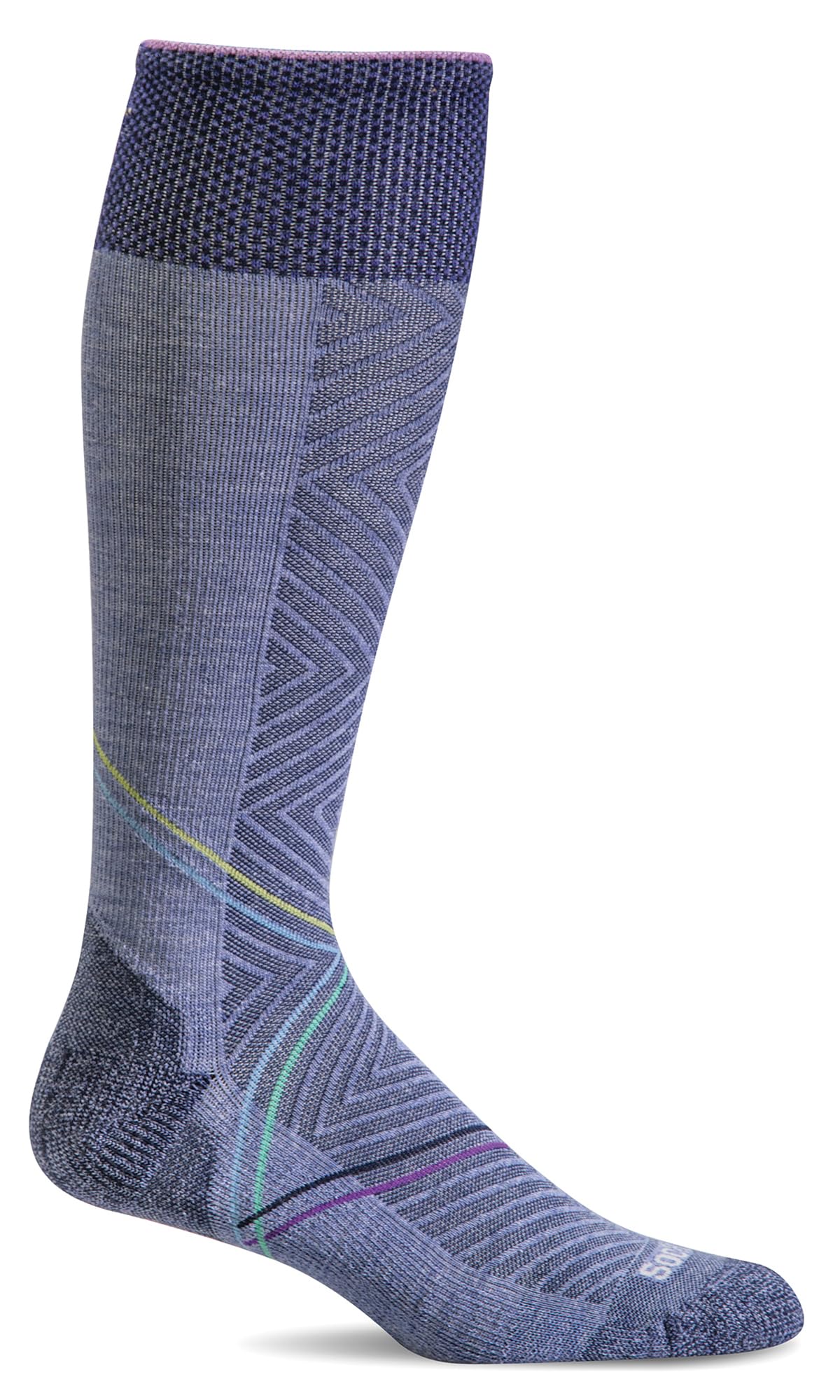
2. Sockwell Women’s Pulse Knee High Firm Graduated Compression Socks
The marathon-tested merino blend that stays comfortable for a decade.
Sockwell builds their Pulse knee-high on a signature fiber blend of merino wool grown in the USA and rayon, which gives you natural moisture management and temperature regulation — meaning your legs stay warm without feeling sweaty. At 20-30 mmHg, these provide the same firm graduated compression as the Physix Gear above, but the wool fabric makes the pressure feel less harsh against the skin. One buyer still owns their first pair from ten years ago, reporting they have worn them through half-marathons, a full marathon, and years of air travel, and they are “hardly worse for wear.”
Unlike the Benirap or Merino Wool socks further down the list, Sockwell delivers genuine compression at the arch and ankle, not just at the calf. Buyers with wide feet note that this model has notably more room in the toe box than other Sockwell styles, while keeping a firm squeeze at the ankle and calf. If you run, hike, or take long flights and want a sock that feels like natural fabric rather than medical gear, this is the clear pick.
Built to last: Merino wool & rayon blend that one owner confirms is still going strong after ten years of regular wear including distance running.
The catch: at a single pair per package and the highest cost in this line-up, the upfront investment is real, but the durability often makes it the better long-term value.
Reach for this if: you want a premium sock that breathes like a natural fiber, survives hundreds of washes, and delivers genuine 20-30 mmHg gradient support.
Look elsewhere if: you need a multi-pack for daily rotation on a budget.
3. Benirap Breathable Compression Socks 20-30 mmHg, 2 Pairs
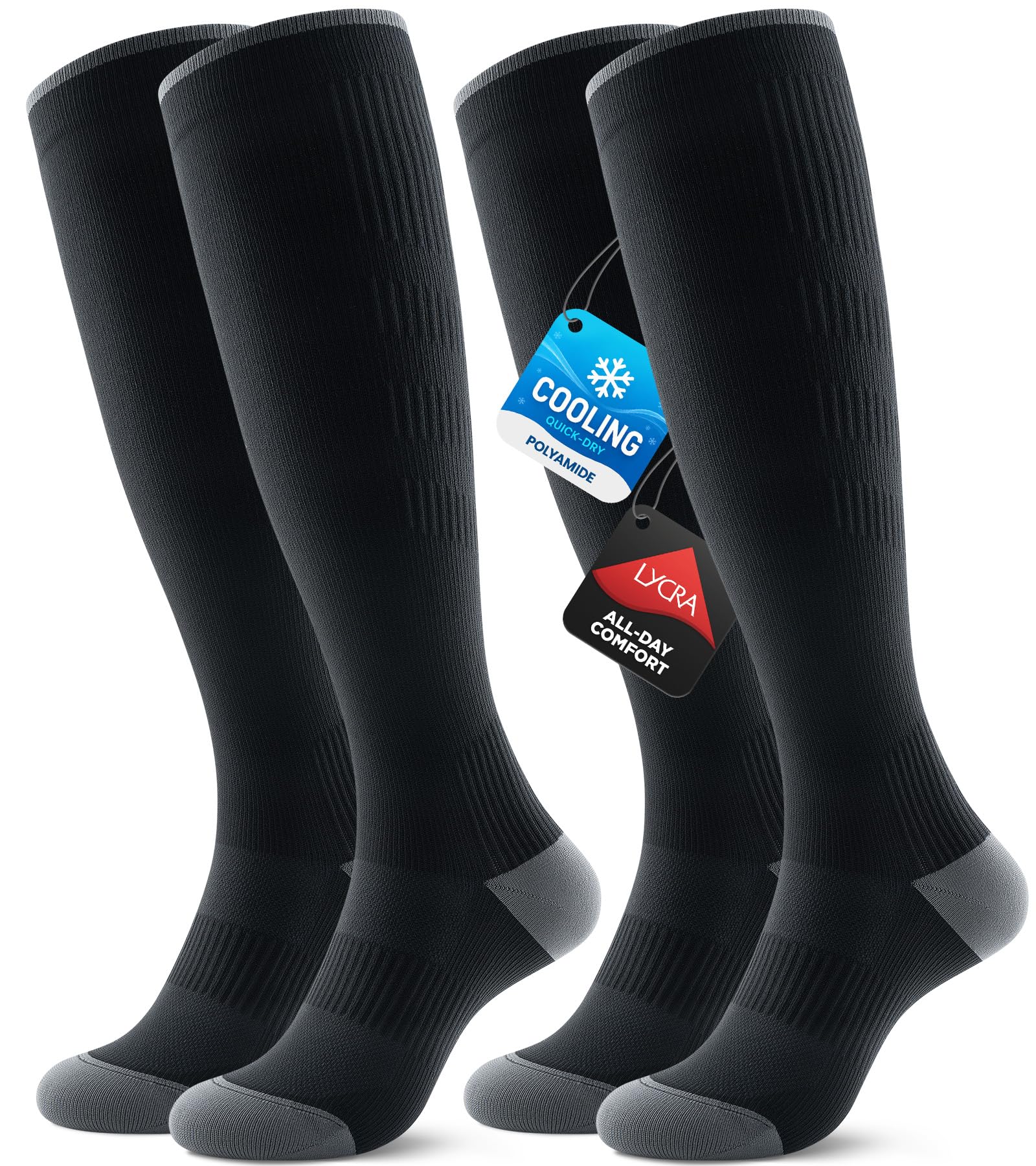
Silky fabric that customers note is easy to pull on and soothing enough to sleep in.
At 20-30 mmHg, the Benirap offers the same firm compression rating as the Physix Gear and Sockwell, but the material difference is striking. Reviewers describe the fabric as “silky” and “soft” — it does not create marks on the skin from the pressure and feels breathable against the legs. One reviewer noted that these socks “saved me from RLS (Restless Leg Syndrome) when I was trying to sleep,” only wearing them at night and still getting the relief they needed. That is a strong signal for anyone whose leg discomfort keeps them awake.
The two-pair pack gives you a rotation right from the start, and the 180-day guarantee is a nice safety net. While the firm 20-30 mmHg is the same level as the Physix Gear, the Benirap is noticeably easier to put on — multiple reviewers point out “no hassle putting them on” compared to the struggle some describe with the top pick. If you want the highest over-the-counter compression but value a smooth, quick donning process, this is your best bet.
Notably easy on/easy off: the “silky” fabric and smooth texture make these one of the few firm-compression socks that shoppers say are comfortable to wear all day without griping about the process of getting them on.
Grab these for: restless legs at night, or any day when you want firm 20-30 mmHg compression without the wrestling match.
Not the best if: you prefer a natural wool feel over a synthetic silky texture against your skin.
4. Merino Wool Compression Socks 15-20 mmHg
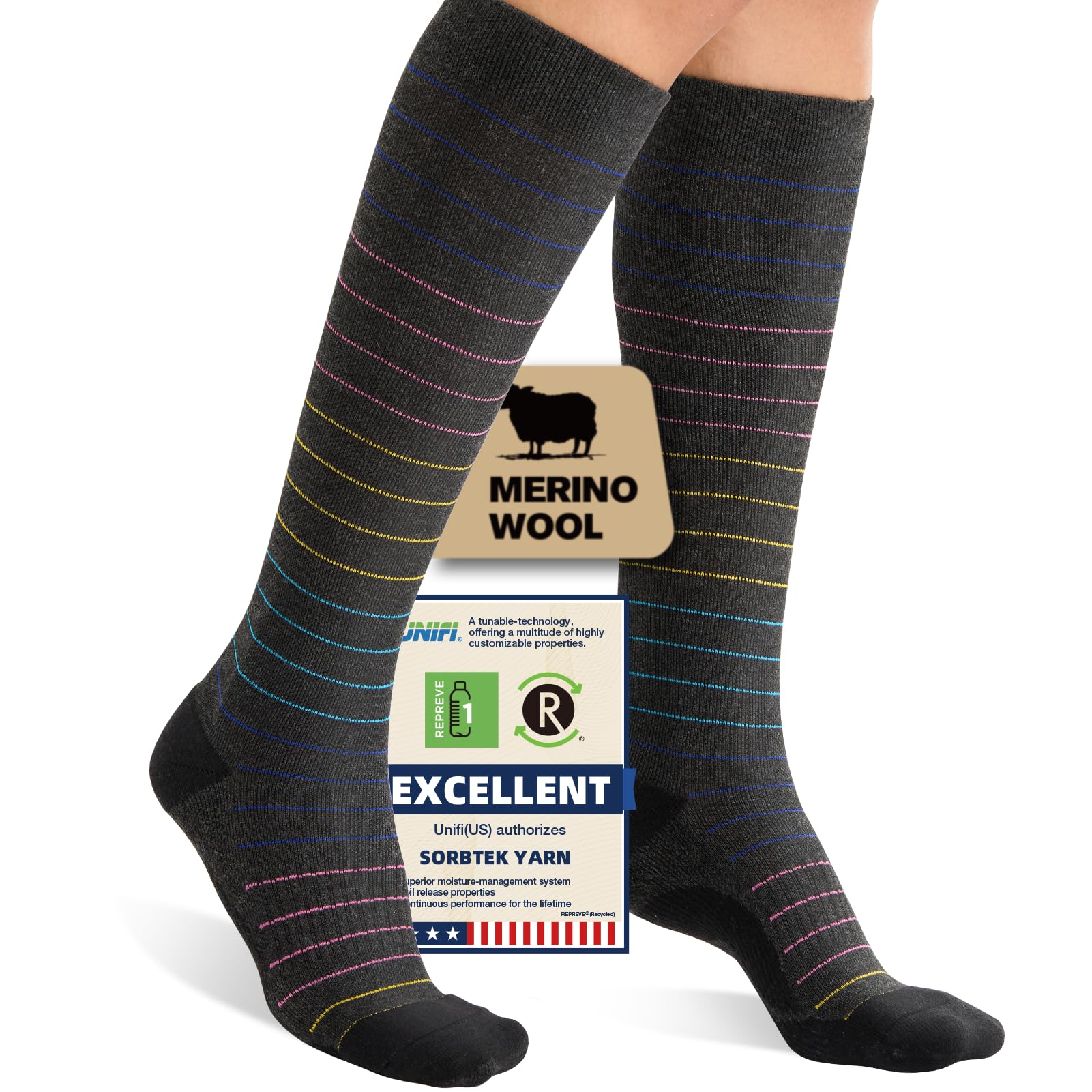
Moderate compression that keeps your feet dry and odor-free through long shifts.
Stepping down to 15-20 mmHg from the 20-30 mmHg of the picks above, the Merino Wool sock is a noticeably gentler squeeze — good for people who want circulation help without the intensity of medical-grade firmness. The real standout here is the merino wool fabric. A nurse who has been on the job for years reports they “always suffered from smelly feet at the end of my shifts” and found these socks moisture-wicking and comfortable, “cooler than the polyester products.” The thickened sole around the heel and toe adds a cushioning effect that buyers report makes them feel like the “most comfortable shoes” they have ever worn.
But for everyday leg fatigue, long flights, or standing at a desk, this moderate compression paired with premium merino wool is a comfortable, breathable choice that owners mention stays in place and does not itch.
Why Buyers Love It
- Merino wool is naturally moisture-wicking — one long-time nurse reports noticeably drier feet at the end of 8-hour shifts.
- Cushioned footbed at heel and toe adds comfort for stepping down and keeps toes warm.
- Top band is “secure without digging in,” staying up all day.
Where It Falls Short
- At 15-20 mmHg, it offers lighter compression — may not provide enough support for serious edema or medical needs.
- Only one pair per pack; you will want to buy multiples for a weekly rotation.
Best suited for: nurses, hikers, or travelers who prioritize breathability and odor control over maximum squeezing pressure.
Skip it for: doctor-recommended medical compression if you need the higher 20-30 mmHg range.
5. Compression Socks 15-20 mmHg Graduated Support, 3 Pairs
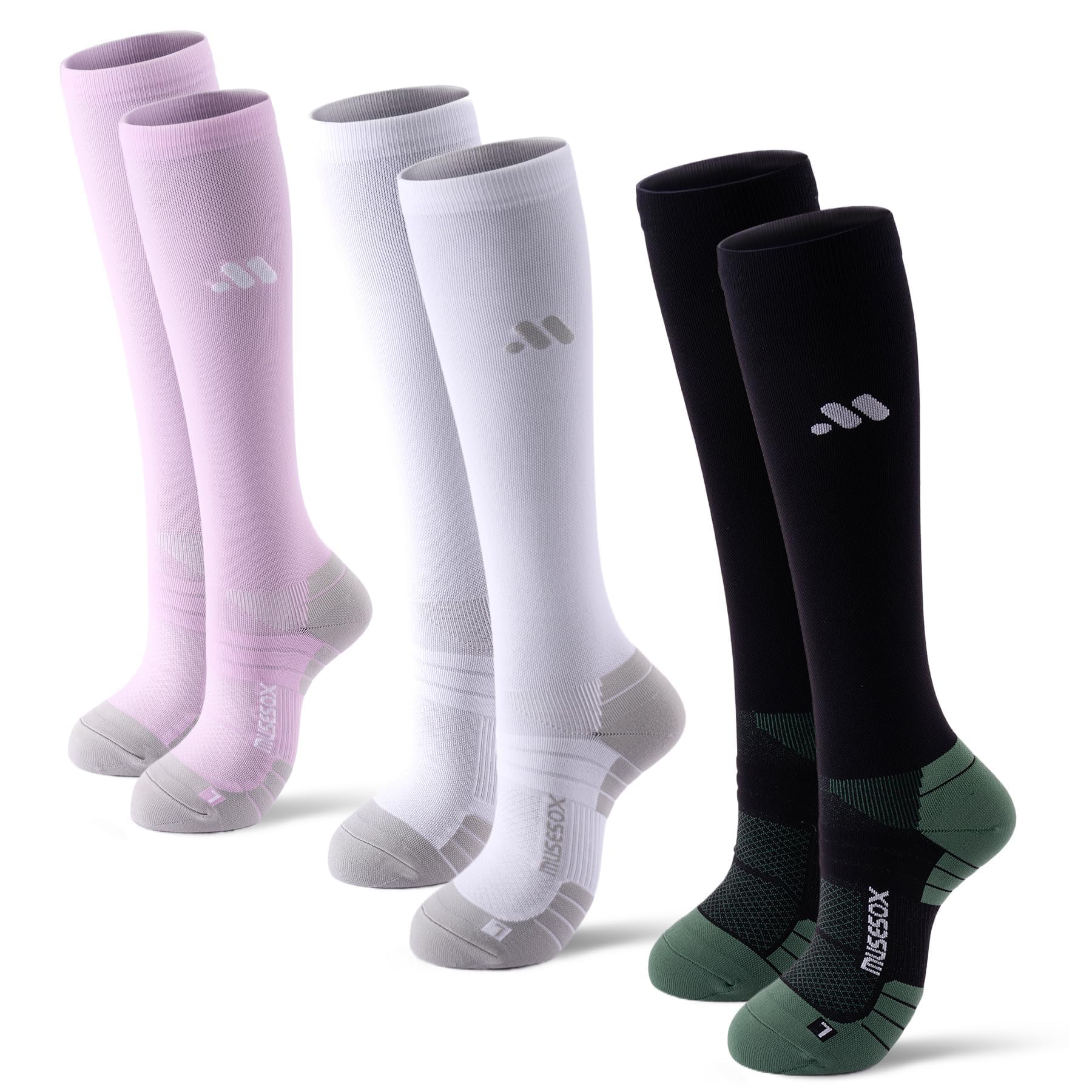
Three pairs of butter-soft moderate compression that customers note relieves calf pain after long shifts.
If you are on your feet all day — salon chairs, food service, nursing — and want a rotation of socks that does not cost a fortune, this three-pair pack at 15-20 mmHg delivers. One buyer working in food service reported these socks “drastically relieved pain in my calves after 8hr shifts.” The compression is gentle enough that reviewers with arthritis in their hands can still put them on, and each sock is marked with “L” and “R” so you get the correct left-right anatomical fit, which helps prevent bunching and blisters.
Compared to the Merino Wool socks above (also 15-20 mmHg), these have a more universal fit but lack the merino wool breathability. Reviewers call them “butter soft” and praise the perfect length — they stay at knee height without sliding down. The main complaint is limited color variety; the pack comes in neutral options only. But for the price of a three-pack that reliably eases leg heaviness, this is a rock-solid entry-level buy.
Smart rotation: three pairs in one box mean you can wear a fresh pair every day and do laundry once a week — a convenience the single-pair options do not offer.
Choose this for: a no-fuss daily compression routine on a tight budget — three pairs of effective, easy-on socks that actually reduce calf fatigue.
Look elsewhere if: you need strong 20-30 mmHg compression or prefer natural wool fibers over synthetic blends.
6. BBFREY Medical Compression Socks 20-30 mmHg, 3 Pairs
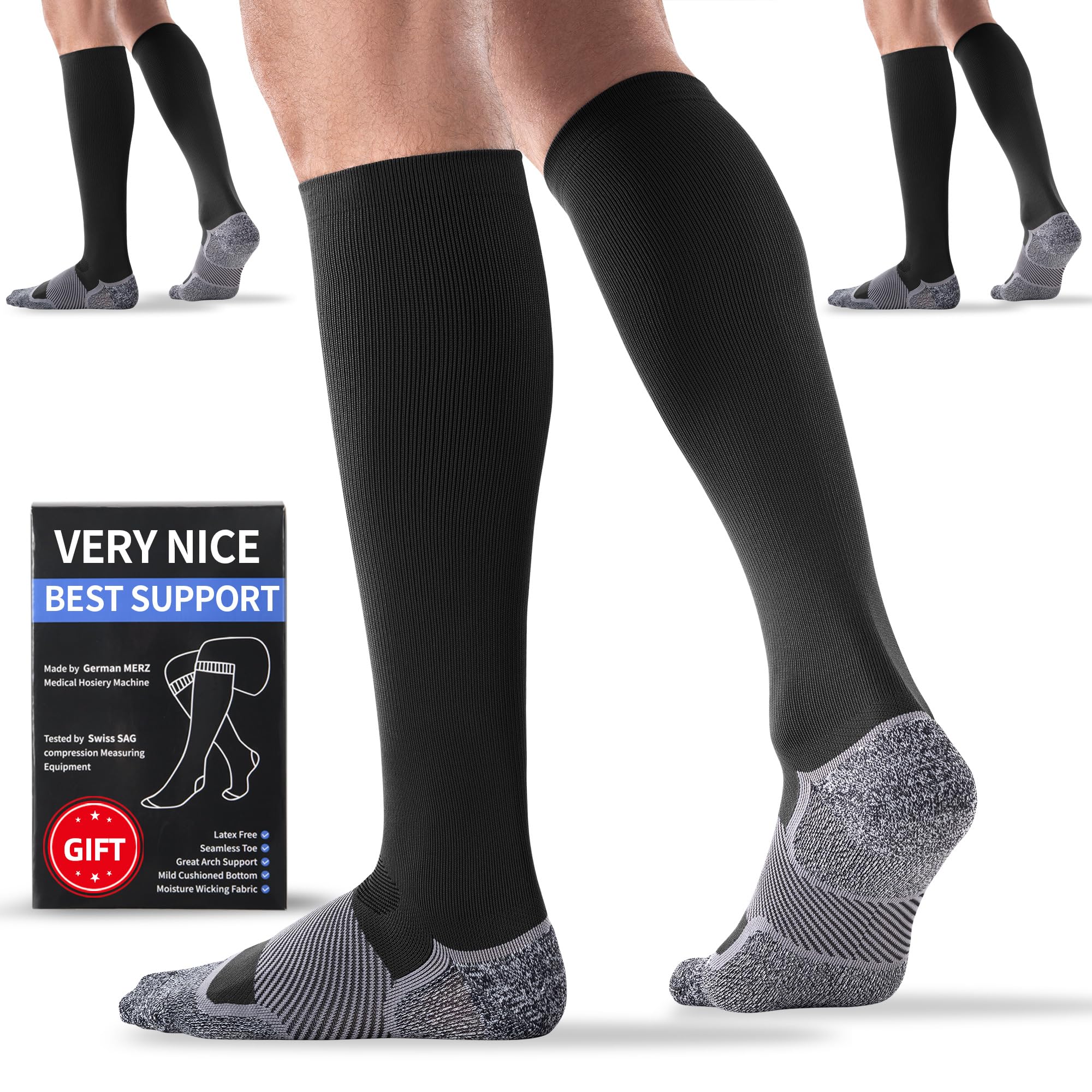
German-engineered gradient pressure in a three-pack that reviewers point out outperforms pricier socks.
BBFREY builds these socks on German medical sock machines, with a unique inlay knitting method designed to maintain long-lasting pressure without sagging after repeated wear. At 20-30 mmHg, they are in the same firm category as the Physix Gear and Benirap, but the three-pair pack and the 70% microfiber nylon blend give them a distinct profile. One buyer with size 10.5 women’s shoes and 14.5-inch calves reports the S/M size fit perfectly, with flat-toe stitching that “doesn’t poke into my skin at all.” Another reviewer says they “outperform compression socks that are much more expensive.”
The trade-off here is fabric feel — the microfiber nylon is durable and elastic but does not breathe as well as the merino wool blends in the Sockwell or Merino Wool picks. Shoppers say the gray color is “very dark,” closer to charcoal than light gray. If your priority is medical-grade pressure, a three-pack rotation, and a sock that holds its shape through months of wear, this is a strong contender. But if you run hot or need moisture-wicking for all-day wear, the Sockwell or Merino Wool options will feel more comfortable on your skin.
What Stands Out
- Three pairs of firm 20-30 mmHg compression at a value price that buyers report competes with much pricier brands.
- Reinforced arch and foot support, with cushioned toe and heel for added comfort underfoot.
- Left-right foot labels for a tailored fit that prevents bunching.
What to Consider
- Microfiber nylon fabric can feel warmer and less breathable than merino wool blends.
- Gray color runs very dark, which may matter if you want true light gray for uniform rules.
Ideal for: anyone who needs firm 20-30 mmHg compression on a budget and wants a ready rotation of three pairs without paying premium prices for each sock.
Not the best for: hot environments or sweaty feet — the nylon fabric does not wick moisture as effectively as merino wool.
Understanding the Specs
Compression Level (mmHg)
This is the number that matters most. mmHg stands for millimeters of mercury — the unit measuring how much pressure the sock applies to your leg. 15-20 mmHg is considered moderate compression: a firm, comfortable squeeze that helps with mild swelling and leg fatigue from standing or sitting. 20-30 mmHg is medical-grade firmness, often recommended for recurring edema, varicose veins, or serious leg heaviness. The higher the number, the harder the sock is to pull on, but the more circulation support it delivers.
Graduated Compression
This means the sock is tightest at your ankle and gradually loosens as it moves up toward your knee. The gradient squeezes blood upward, helping your valves push deoxygenated blood back toward your heart and preventing fluid from pooling in your lower legs. If a sock feels equally tight at the top band as at the ankle, it is not graduated — look for a true gradient that decreases pressure as it rises.
Merino Wool vs Synthetic Blends
Merino wool is naturally moisture-wicking, temperature-regulating, and odor-resistant — good for long shifts or warm weather. Synthetic blends (nylon, microfiber, spandex) are cheaper, stretchier, and more durable but can trap heat and sweat. If you are wearing socks for 8+ hours, the fabric choice directly affects comfort; a wool blend often feels cooler and drier than an all-synthetic sock at the same mmHg rating.
Anatomic Left-Right Fit
Some premium socks mark each sock for your left and right foot. This is not a gimmick — the compression contour is shaped differently for each foot’s arch, heel, and toe curve. An L/R label means the sock will fit more naturally, reduce bunching at the toes, and provide better arch support than a generic “one sock fits either foot” design. Check the product description for “L/R foot label” if you have sensitive feet.
FAQ
What does 20-30 mmHg compression feel like?
Can I sleep in compression socks?
How tight should compression socks be on my calves?
How do I put on compression socks if I have arthritis in my hands?
Are 15-20 mmHg socks enough for flying?
How long do compression socks last?
Should socks be marked left and right?
What is the difference between 15-20 mmHg and 20-30 mmHg for circulation?
Will compression socks help with varicose veins?
Can I wear compression socks all day?
Final Thoughts: The Verdict
For most buyers, the best compression socks for circulation winner is the Physix Gear Compression Socks 20-30 mmHg because it delivers the firm gradient pressure that thousands of buyers confirm fights real swelling and leg fatigue, backed by over 94,000 ratings. If you want a sock that breathes like natural fabric and survives years of abuse, grab the Sockwell Women’s Pulse 20-30 mmHg. And for a value-packed three-pair rotation that still offers moderate relief, the standout is the Compression Socks 3-Pair 15-20 mmHg.
How We Picked
We do not accept paid placement. Every pick is matched to a real buyer and a real use-case; we do not hands-on test units.
Sources & Methodology
Specifications: manufacturer listings and product documentation. Review insights: verified customer reviews, as of July 2026. Pricing: not shown on this page (it changes often); check the current price via the retailer link.
As an Amazon Associate, WellFizz earns from qualifying purchases. This does not affect which products we feature.
Related Guides

Mo Maruf
I created WellFizz to bridge the gap between vague wellness advice and actionable solutions. My mission is simple: to decode the research and give you practical tools you can actually use.
Beyond the data, I am a passionate traveler. I believe that stepping away from the screen to explore new environments is essential for mental clarity and physical vitality.