Our readers keep the lights on and my smoothie glass nicely filled. As an Amazon Associate, I earn from qualifying purchases.
Specs are compiled from manufacturer listings and verified buyer reviews and can change over time — please confirm the key details on the product page before buying.
A chore coat that fits right and keeps you warm without feeling like a straightjacket is harder to find than it should be. Many are too stiff, too short, or lose shape after a few washes. This guide cuts through the noise by comparing the published specs and real buyer feedback for four top contenders, so you can pick the one that actually works for your build and your winter.
I’m Mohammad Maruf — the founder and writer behind WellFizz. This guide is built by comparing the manufacturers’ published specifications and the patterns across verified customer reviews, so you get each pick’s real strengths and trade-offs instead of marketing spin.
The right choice depends on if you need arctic-level warmth for outdoor work, a lighter layer for the studio, or a classic denim coat that breaks in over time.
Our Picks at a Glance

How To Choose The Best Chore Coats
A chore coat is a cross between a work jacket and a daily layer — it needs to handle cold weather, hold tools or gloves, and move with you. The wrong pick is either too warm to wear indoors or too thin to stop a winter breeze. Here is what actually matters.
Liner Type: Warmth vs. Versatility
The lining is the single biggest factor determining how cold a day this coat can handle. A thick thermal liner (like the quilted layer in the Berne) traps serious heat for sub-freezing outdoor work but makes the coat heavy and too warm for active indoor use. A blanket lining (like the Dickies denim coat) offers a middle ground — warm but breathable. An unlined or stretch-duck shell (like the Carhartt) is the most versatile for mild weather and layering, but you will need a hoodie underneath in a real freeze.
Fit Philosophy: Loose vs. True-to-Size
Workwear brands define “fit” differently. “Loose fit” means the coat is intentionally cut oversized so you can layer a thick hoodie or sweater underneath — this is useful for cold-weather work but can look baggy if worn alone. “Relaxed fit” or “true to size” means the coat is meant to fit closer to your body, with little room for extra layers. A loose-fit coat that does not fit right also affects pocket placement, making it awkward to reach your phone or gloves. Always check whether buyers report the coat runs large.
Outer Fabric: Duck Cotton vs. Denim
Duck cotton (used by Berne and Carhartt) is a tightly woven, stiff canvas that resists wind and abrasion — perfect for farm, barn, or construction use. It stays rigid until broken in over many wears. Denim (used by the Dickies chore coat) is softer from the start, has a more classic look, and shrinks noticeably after washing. Duck cotton keeps its shape better when wet or dirty, while denim conforms to your body over time. Neither is “better” — it depends on if you want a tough work shell or a styled jacket that ages gracefully.
Quick Comparison
| Model | Best For | Lining Type | Outer Fabric | Fit | Amazon |
|---|---|---|---|---|---|
| Berne Heartland Washed Chore Coat★ Best Overall | Sub-freezing work | Thick thermal quilted | Duck cotton | True to size | Amazon |
| Chef Works Utility Chore Coat | Studio / light duty | Unlined | 100% Cotton | True to size | Amazon |
| Carhartt Rugged Flex Duck Chore Coat | Mild-weather layering | Unlined | Stretch duck cotton | Loose fit | Amazon |
| Dickies Blanket Lined Denim Chore Coat | Classic style + warmth | Blanket / quilted sleeves | Denim | Roomy / shrinks after wash | Amazon |
In‑Depth Reviews
1. Berne Men’s Heartland Washed Chore Coat
Our pick — over 4.5★ from 464 ratings; the strongest balance of quality and price.
The barn coat that out-warms coats costing twice as much without stiffening up.
The Berne Heartland is the coat you grab when the temperature drops into single digits and you have real work to do outside. Its defining feature is a thick thermal quilted liner that owners mention is so effective one owner in +7°F conditions had to unzip after ten minutes of working. The shell is a soft, flexible duck cotton that reviewers describe as feeling “not stiff” — a rare trait for insulated workwear that normally feels like cardboard until broken in for a season.
The warmth-to-weight trade-off is real: multiple customers note the coat is heavy, with one saying it feels “like putting on armor” at an estimated 10 lbs. This is not a coat for the car or a quick dog walk — it is for standing in freezing wind for hours. The detachable hood (sold separately) and roomy pockets add to the work-ready build. Unlike the Carhartt below, the Berne runs true to size, though a tall buyer (6’5″) confirms the XLT fits perfectly, while another (6’3″, 240lb) says the XLT is spot on. Shoppers comparing it to Carhartt point out the Berne costs roughly half what equivalent Carhartt coats cost, making this the strongest value play in the category.
Who it works for: Anyone who spends hours outside in sub-freezing temps — farm work, ranch work, outdoor construction, or snow removal. The thermal liner and duck cotton handle wind and cold that an unlined coat cannot touch.
The honest limit: It is genuinely heavy and too warm for indoor wear or mild days. If you need a coat for running errands or moderate fall weather, this will sit in the closet.
Best for: Buyers who need a single heavy-duty coat for below-freezing work and want to beat the Carhartt premium.
Skip if: You need a lightweight layer for mild weather or a coat that is comfortable for driving a car all day.
2. Dickies Men’s Blanket Lined Denim Chore Coat
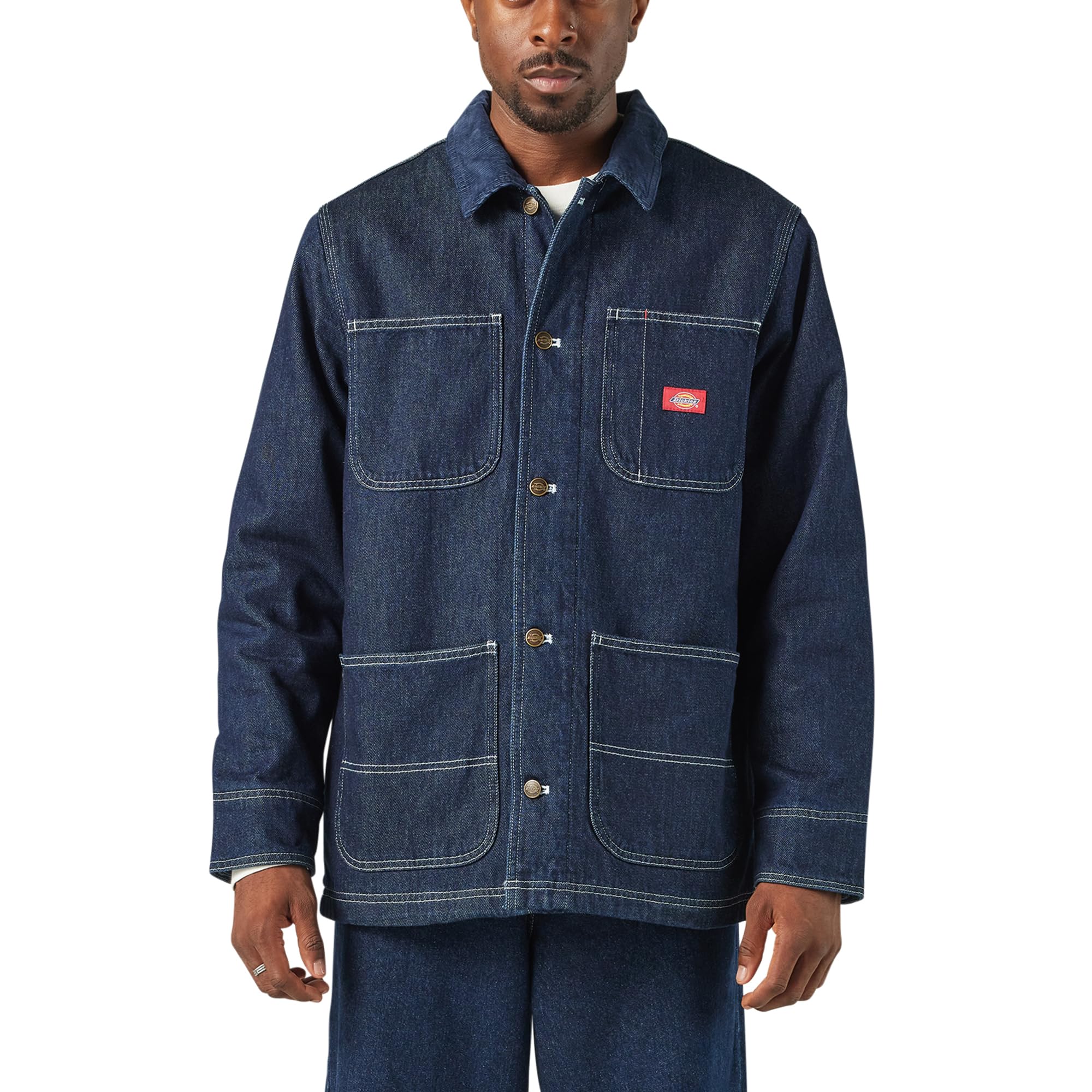
The denim barn coat that softens with time and fits like an heirloom after a hot wash.
The Dickies blanket-lined version does what a classic chore coat should — keep you warm without the bulk of a full thermal liner. The “horse blanket” lining and quilted sleeve liners offer real insulation for Northeast winter winds, while the heavy unwashed indigo denim shell starts stiff but softens beautifully after washing. One reviewer noted the coat has “bomb proof stitching” and hidden cuffs to block wind, giving it a build quality that feels like it could outlast the owner.
The catch is sizing: this coat is intentionally roomy, and buyers consistently report it is large even for its labeled size. A 5’11”, 195 lb reviewer ordered a Large and found it still too big, while a 2XL buyer needed to wash and dry the coat twice before the denim shrank to fit. Unlike the Berne and Carhartt, which use duck cotton that holds its shape, denim shrinks noticeably — so a buyer who wants a trim fit should size down. The patch pockets are deep but lack closures, meaning gloves or a phone could slide out if you bend over. For a buyer who wants the look of a traditional denim chore coat with genuine warmth, this is the best pick of the four.
Why it stands out: The blanket lining plus quilted sleeves make it warmer than an unlined denim jacket, but lighter than the Berne thermal coat — perfect for active outdoor use in the 20s and 30s.
What you give up: No snap closures on pockets, and the sizing gamble (roomy from the start) requires a wash-and-shrink plan or a return.
Reach for this if: You want a warm work coat that looks good enough for everyday wear and breaks in like your favorite jeans.
Look elsewhere if: You need immediate perfect fit from the start without any washing or shrinking effort.
3. Chef Works Men’s Utility Chore Coat

The lightweight unlined coat that sneaks in a premium fit for a fraction of the usual price.
At first glance, the Chef Works coat looks like a kitchen apron — the brand’s culinary roots are clear in the product description. But owners quickly realize this is a hidden gem in the chore coat space. It is unlined and lightweight, made from 100% cotton with a decent heft and texture. A reviewer who owns “dozens” of chore coats called it a pleasant surprise given the price point and location of production. Another buyer (5’9″, 220 lb, broad/athletic build) said the Large fits “like it was made for me” and called it as nice or nicer than high-dollar fashion-brand offerings from Polo or similar labels.
The trade-off is warmth — or rather, the lack of it. With no thermal layer or blanket lining, this is not a coat for a freezing work site. It is a studio coat, a light-duty shop jacket, or a fashion-forward layer for mild fall days. The collar opening runs slightly big, and the cuffs are a hair long, per buyer feedback. Compared to the Carhartt Rugged Flex below, which also has no lining but costs more, the Chef Works offers a slimmer, more tailored look that suits creative professionals (illustrators, baristas, designers) rather than construction workers.
Who it fits: Anyone who needs a stylish, unlined layer for indoor work or mild weather — artists, studio workers, baristas, or anyone who wants the chore coat look without the bulk.
The catch: Not warm enough for outdoor winter work. The shoulders are slightly tight for some builds, and the cuffs are on the long side for shorter arms.
Best for: Creators and studio workers who want a trim, good-looking chore coat that moves with them — not a heavy winter shell.
Not for: Anyone planning to work outside in below-freezing temps or needing deep insulated pockets.
4. Carhartt Men’s Iconic C01 Rugged Flex® Duck Chore Coat

The loose-fit flex coat that layers like a shell and breathes better than any lined option.
Carhartt’s Rugged Flex version of its classic chore coat swaps the thick liner for stretch duck cotton and a loose, unlined cut — a deliberate choice for buyers who want a wind-resistant top layer that does not trap heat. The fabric has a slight give (Rugged Flex refers to the stretch technology), which reviewers point out makes it more breathable than the standard duck. One owner uses it over a heavy-weight hoodie and notes the wind does not blow through, calling it a “great piece of kit.”
The loose fit is the main event here — and the main source of confusion. A buyer whose son is 6’4″ reports the Large does not fit at all and the Medium is almost too big. Another regular XXL buyer had to re-order down to XL because the XXL was too oversized even for layering. Unlike the Berne, which runs true to size, this coat is designed to be baggy so you can pile layers underneath. The unlined shell means it is the most versatile across seasons (spring, fall, mild winter) but offers zero insulation on its own — you are trading warmth for mobility and breathability. Compared to the Chef Works above, the Carhartt is much roomier and more suited to outdoor movement than a trim studio fit.
Why choose this: The stretch duck cotton with Rugged Flex gives you wind resistance plus freedom of movement no lined coat can match.
Downside: Sizing is hard to get right without trying on — the loose cut means most buyers should size down, and even then it may be too big for a trim fit.
Ideal for: Active outdoor work in moderate cold — chopping wood, barn chores, or layering over a hoodie for a walk in the 30s.
Not for: Standing still in sub-zero temps or anyone who wants a fitted, stylish coat; this is pure utility.
Understanding the Specs
Lining Weight vs. Warmth
The lining is what determines if a chore coat handles a 10-degree morning or a 50-degree afternoon. Thermal quilted liners (like the Berne) trap body heat effectively but add significant weight and make the coat too warm for active indoor work. Blanket liners (like the Dickies) offer a balance — warm but breathable, with some ability to regulate temperature through movement. Unlined coats (Carhartt, Chef Works) rely entirely on layering underneath and are best for mild weather or transitional seasons. A general rule: if you plan to stand still in freezing weather, pick a lined coat; if you will be moving or working in a heated space, pick an unlined one.
Outer Fabric: Duck vs. Denim
Duck cotton (used by Berne and Carhartt) is a heavy, tightly woven canvas that resists wind, water, and abrasion. It starts stiff and requires a break-in period, but it holds its shape even when wet or dirty — a real advantage for farm or barn work. Denim (used by the Dickies chore coat) is softer from the start and shrinks noticeably after the first wash, which affects sizing. Denim also breathes slightly better but offers less wind resistance. Duck cotton is the workhorse fabric; denim is the style-conscious choice that ages gracefully. Neither is more durable — both are 100% cotton — but duck will keep its structural integrity longer in harsh conditions.
FAQ
Should I size up or down in a chore coat?
Can a chore coat handle rain or snow?
How do I wash a chore coat without ruining it?
What is the difference between a chore coat and a barn coat?
Which chore coat is warmest for sub-zero temps?
Are the pockets big enough for a modern smartphone?
Can I wear a chore coat over a suit or blazer?
How long should a quality chore coat last?
Is a chore coat good for hunting or shooting?
Final Thoughts: The Verdict
For most buyers, the best chore coats winner is the Berne Heartland Washed Chore Coat because it combines genuine sub-zero warmth with a flexible duck cotton shell that breaks in quickly — all at a price that beats the Carhartt alternative by a wide margin. If you want a lighter, unlined coat that breathes and moves for mild weather or studio work, grab the Chef Works Utility Chore Coat. And for a classic denim barn coat with warm blanket lining that ages into a perfect second skin after a few washes, the standout is the Dickies Blanket Lined Denim Chore Coat.
How We Picked
We do not accept paid placement. Every pick is matched to a real buyer and a real use-case; we do not hands-on test units.
Sources & Methodology
Specifications: manufacturer listings and product documentation. Review insights: verified customer reviews, as of July 2026. Pricing: not shown on this page (it changes often); check the current price via the retailer link.
As an Amazon Associate, WellFizz earns from qualifying purchases. This does not affect which products we feature.
Related Guides

Mo Maruf
I created WellFizz to bridge the gap between vague wellness advice and actionable solutions. My mission is simple: to decode the research and give you practical tools you can actually use.
Beyond the data, I am a passionate traveler. I believe that stepping away from the screen to explore new environments is essential for mental clarity and physical vitality.