Our readers keep the lights on and my smoothie glass nicely filled. As an Amazon Associate, I earn from qualifying purchases.
Specs are compiled from manufacturer listings and verified buyer reviews and can change over time — please confirm the key details on the product page before buying.
Finding a travel camera that is small enough for your pocket but powerful enough to capture a sunset, a fast-moving street performer, or a far-off mountain peak without blur or noise is the real challenge. The best compact camera for travel needs the right mix of zoom, low-light ability, and stabilization — and this guide lines up the top contenders so you can stop guessing and start shooting.
I’m Mohammad Maruf — the founder and writer behind WellFizz. This guide is built by comparing the manufacturers’ published specifications and the patterns across verified customer reviews, so you get each pick’s real strengths and trade-offs instead of marketing spin.
Whether you are chasing vlog-quality video or crisp stills without a heavy bag, these ten models represent the best compact camera for travel you can pack today.
Our Picks at a Glance


How To Choose The Best Compact Camera For Travel
A travel camera is a trade-off between reach and pocketability. The right one depends on what you shoot most — daily vlogs, landscape stills, underwater adventures, or wildlife far away.
Zoom Reach vs. Portability
Optical zoom is measured in millimeters (mm) or a multiplier like 30x or 52x. A longer zoom, like the 52x on the Kodak AZ528, lets you capture distant subjects without moving closer. But more zoom often means a bigger lens barrel. Decide if you need super-telephoto reach or if a 30x lens (like the Panasonic ZS99) gives you enough range while staying truly pocket-sized.
Sensor Size and Low-Light Performance
Sensor size is the biggest factor in image quality, especially in dim light — think indoor museums or evening cityscapes. A larger sensor, like the 1-inch type found in the Sony RX100 VII and DJI Osmo Pocket 3, captures more light and produces sharper, cleaner photos than the smaller sensors (1/2.3-inch) used in budget superzoom cameras.
Stabilization for Handheld Shooting
Optical Image Stabilization (OIS) physically moves lens elements to counteract shaky hands, making it far more effective than digital-only stabilization. For video, a 3-axis mechanical gimbal (like the one in the DJI Osmo Pocket 3) delivers cinema-smooth footage even while walking. A camera without good stabilization will force you to carry a tripod.
Video Capabilities and Frame Rates
If you shoot video, look for 4K resolution and a high frame rate (60fps or 120fps) for slow-motion. Many travel compacts now record 4K at 30fps, but higher-end models push to 120fps for silky-smooth slow-mo. Also check for a microphone input if you vlog — built-in mics on tiny cameras often pick up wind noise.
Quick Comparison
| Model | Best For | Sensor / Resolution | Optical Zoom | Video Specs | Amazon |
|---|---|---|---|---|---|
| DJI Osmo Pocket 3 Creator Combo★ Best Overall | Action vlogging with gimbal stabilization | 9.4 MP 1-inch CMOS | 2x Digital | 4K up to 120fps | Amazon |
| Sony RX100 VIIAlso Great | Premium all-in-one pocket camera | 20.1 MP 1-inch Stacked CMOS | 8x (24-200mm) | 4K, up to 30fps | Amazon |
| Sony ZV-1FVlogger’s Choice | Vloggers and content creators | 1-inch 15.2MP Sensor | Fixed 20mm wide | 4K, up to 30fps | Amazon |
| Panasonic LUMIX ZS99 | Travel with long zoom in a slim body | 20.3 MP 1/2.3-inch | 30x (24-720mm) | 4K, up to 30fps | Amazon |
| Panasonic LUMIX FZ80D | Extended reach for wildlife and sports | 18.1 MP 1/2.3-inch | 60x (20-1200mm) | 4K, up to 30fps | Amazon |
| OM SYSTEM Tough TG-7 | Underwater and rugged outdoor use | 12 MP 1/2.3-inch | 4x (28-112mm) | 4K, up to 30fps | Amazon |
| Canon PowerShot V10 | Pocket vlogging with a built-in stand | 15.2 MP 1-inch BSI CMOS | Fixed 19mm wide | 4K, up to 30fps | Amazon |
| Kodak PIXPRO AZ528 | Budget superzoom for beginners | 16 MP BSI CMOS | 52x (24-1248mm) | 1080p Full HD | Amazon |
| Minolta MN40Z | Budget zoom with Wi-Fi sharing | 20 MP 1/2.3-inch | 40x | 1080p Full HD | Amazon |
| Sony Cyber-Shot RX100 VII Bundle | All-inclusive premium kit with extras | 20.1 MP 1-inch Stacked CMOS | 8x (24-200mm) | 4K, up to 30fps | Amazon |
In‑Depth Reviews
1. DJI Osmo Pocket 3 Creator Combo
Our pick — over 4.5★ from 6,500+ verified ratings; the strongest balance of quality and price.
A pocket-sized gimbal camera that turns shaky walk-and-talk into cinematic footage.
The DJI Osmo Pocket 3 redefines handheld travel video. Its built-in 3-axis mechanical stabilization keeps your footage silky-smooth even when you are jogging to catch a train or navigating a cobblestone alley. The 1-inch CMOS sensor shoots 4K video at up to 120fps for smooth slow-motion playback, and the 2-inch rotatable touchscreen switches between horizontal and vertical shooting instantly — perfect for both YouTube and TikTok. The Creator Combo bundles a wireless DJI Mic 2, a wide-angle lens, a battery handle, and a mini tripod, so you have everything for a full production day.
Owners mention it is a “compact, portable camera with impressive stabilization and sharp 4K quality,” and the included mic “improves audio clarity” dramatically. One owner loved how it “fits nicely in a purse” after learning a few setup tips. The effective still resolution of 9.4 MP is lower than the 20.1 MP Sony RX100 VII, so if high-megapixel stills for large prints are your priority, the Sony is the better pick. But for video-centric travelers, the Pocket 3 is in a class of its own.
Why video shooters love it
- 3-axis mechanical gimbal delivers impossibly smooth walking footage without a separate rig.
- 4K at 120fps enables cinematic slow-motion from a pocket-sized device.
- Creator Combo includes a DJI Mic 2, battery handle, tripod, and carrying bag.
Trade-offs
- 9.4 MP stills are fine for social media but not for large prints — the Sony RX100 VII offers 20 MP.
- Only 2x digital zoom; optical reach is extremely limited compared to superzoom cameras.
The video adventurer’s companion: Ideal for anyone who prioritizes smooth, professional-looking travel vlogs over high-res still photography.
Consider the Sony if: You want to shoot detailed landscapes and wildlife stills — the Pocket 3 is primarily a video device.
2. Sony RX100 VII Premium Compact Camera
The pocket champ that packs a pro-grade sensor and lightning-fast autofocus.
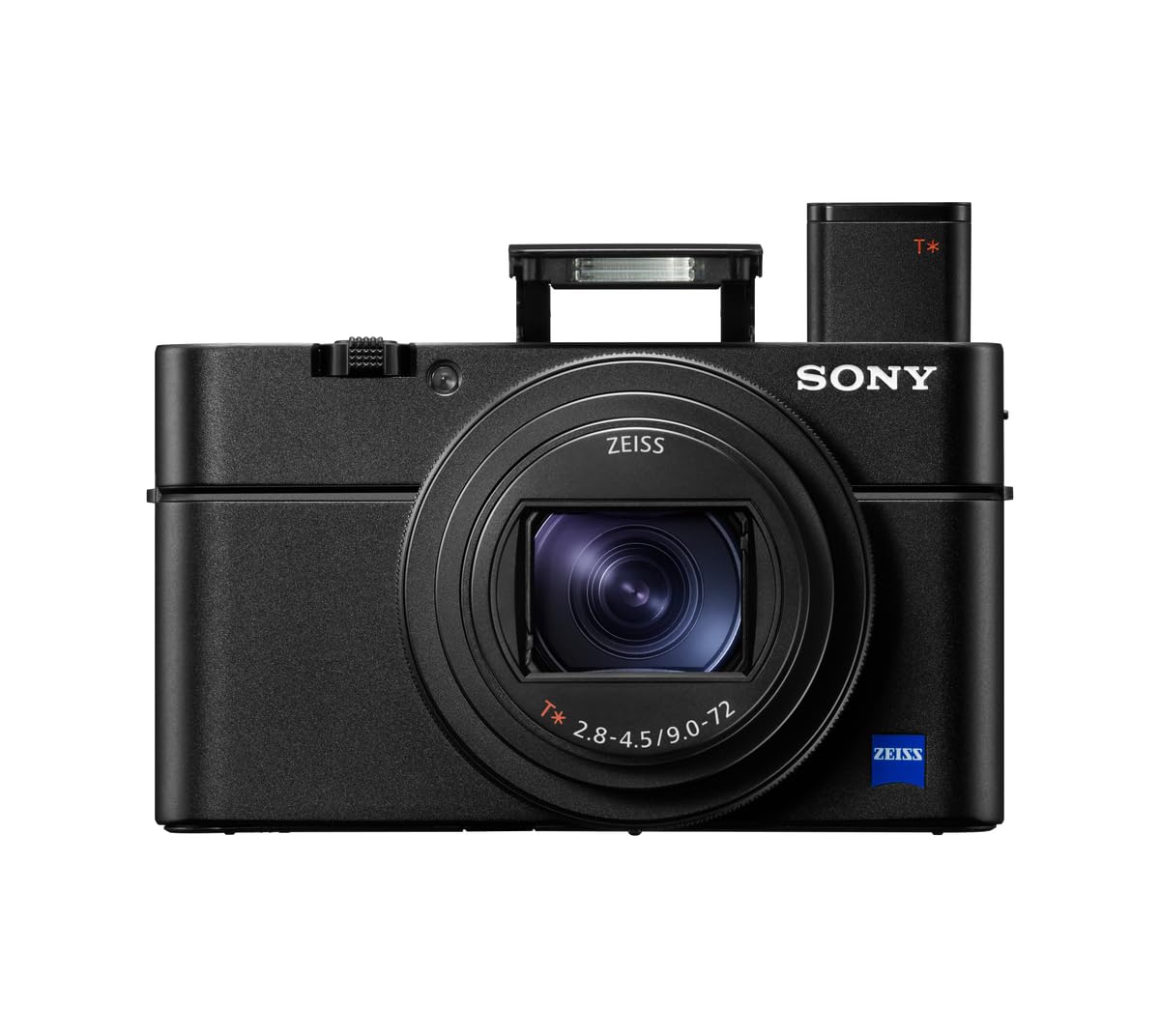
The Sony RX100 VII lives in a league of its own for travel. Its 20.1MP 1-inch stacked CMOS sensor delivers images that rival many interchangeable-lens cameras, and the Zeiss Vario-Sonnar T 24-200mm F2.8-F4.5 lens — an 8x optical zoom — covers everything from group shots in tight interiors to distant architectural details. You can shoot at up to 20 fps with zero blackout, and the 357-point phase-detection AF combined with 425-point contrast-detection AF locks onto a subject in about 0.02 seconds, so you never miss a fleeting street scene.
Buyers report that the image quality is “amazing” in low light and that the camera “fits right in my bag” for on-the-go travel vlogging. However, a few owners note the body is almost too small to grip securely, with one reviewer mentioning an aftermarket grip is almost a necessity. This is the closest you can get to a full-frame camera experience in a jacket pocket, though the premium price puts it out of reach for casual budgets.
Compared to the 9.4 MP DJI Osmo Pocket 3, the Sony RX100 VII offers a 2.1x higher effective still resolution of 20.1 MP, giving you far more cropping flexibility for travel prints and landscapes. The trade-off is that it lacks the Pocket 3’s built-in 3-axis mechanical gimbal for video — you will need steady hands or a mini tripod for smooth panning shots.
Why it wins
- Industry-leading 20.1 MP 1-inch sensor delivers crisp, low-noise images even at dusk.
- 8x optical zoom (24-200mm) covers wide landscapes to tight telephoto in one lens.
- Real-time Eye AF for humans (stills and movies) and animals (stills) keeps subjects sharp easily.
The caveats
- Slick metal body needs a grip pad for secure handling — many buyers buy one separately.
- Price is the highest in this roundup, best for serious enthusiasts, not casual snappers.
Serious traveler’s pick: Ideal for the photographer who demands pro-grade image quality and versatile zoom without carrying a bulky bag.
Reconsider if: You shoot mostly handheld video — you will want a gimbal accessory (or the DJI Osmo Pocket 3) for truly smooth walking footage.
3. Sony ZV-1F Vlog Camera
Built from the ground up for creators who frame themselves at arm’s length.
The Sony ZV-1F is purpose-built for the vlogger on the move. Its ultra-wide 20mm lens ensures you, and the background behind you, fit into the frame without needing a selfie stick. The large 1-inch sensor and F2.0 aperture let in plenty of light, so your indoor hotel-room videos stay bright, and the background defocus button instantly blurs away a messy scene. The directional 3-capsule mic with its included windscreen captures your voice clearly, even on a breezy shoreline.
Buyers consistently praise the “excellent video quality” and “reliable autofocus” for solo shooting, though several note the battery life hovers around 45 minutes — meaning you will definitely want a spare battery for a full day out. The camera is light and compact, and the side-articulating touchscreen makes framing yourself easy.
What stands out
- 20mm ultra-wide lens gets you and the scenery in frame without an extra accessory.
- Clear Voice 3-capsule mic with included windscreen delivers studio-like audio.
- Product Showcase mode instantly racks focus to an item held up to the lens.
Keep in mind
- No optical zoom limits its use for landscape or wildlife shots.
- Short battery life demands extras for a full day of shooting.
Best for daily vloggers: If your content is you talking to camera in various travel backdrops, this is the most streamlined tool for the job.
skip it if: You want to photograph distant subjects — you need a zoom lens, and this one is fixed.
4. Panasonic LUMIX TZ/ZS99

A true pocket camera with a Leica lens that reaches 720mm.
The Panasonic ZS99 solves the oldest travel dilemma — how to get a long zoom without a bag full of lenses. Its 24-720mm LEICA DC lens with 30x optical zoom fits into a body slim enough to slide into a jeans pocket, making it the perfect companion for concert-goers, nature lovers, and city explorers who refuse to carry a camera bag. The 1,840k-dot tiltable touchscreen helps you frame shots from awkward angles, and USB-C charging means one cable powers your phone and camera on the road.
Buyers call the photo quality “stunning” and note the camera is “easy to use” for both beginners and pros, with manual settings available when you want control. A few owners mention the autofocus can be slow in low light, and the image quality does not match the 1-inch sensor cameras like the Sony RX100 VII for indoor shots. But for a pocketable zoom that costs less than half the Sony’s price, the ZS99 is a stellar value. The Bluetooth 5.0 connectivity and dedicated Send Image button make sharing to your phone frictionless.
Why it travels well
- 30x optical zoom (24-720mm) fits in your pocket — no other camera this small reaches 720mm.
- LEICA DC lens delivers sharp, color-accurate images with minimal distortion.
- USB-C charging and Bluetooth 5.0 make it easy to stay powered and connected.
Note the limits
- Small 1/2.3-inch sensor struggles in low light compared to 1-inch sensor cameras.
- Autofocus can hunt in dim conditions; not ideal for fast indoor action.
Perfect for zoom-hungry travelers: If you want to capture a stage performer from the nosebleed seats or a deer across a field, the ZS99 is your pocketable answer.
Look at the Sony ZV-1F if: You shoot mostly indoors in low light and need better image quality over extreme reach.
5. Panasonic LUMIX FZ80D

A superzoom bridge camera that brings a 1200mm moon shot into reach.
The Panasonic FZ80D is for the traveler whose bucket list includes safari, birding, or sports stadiums. Its 60x optical zoom covers a 20mm wide angle all the way to 1200mm super-telephoto, letting you fill the frame with a subject that is hundreds of yards away. The Power Optical Image Stabilizer works hard to keep those long shots sharp, and the bright 0.39-inch OLED viewfinder is a lifesaver in bright sunlight when the 3-inch LCD is hard to see.
Buyers describe it as a “good point-and-shoot for wildlife/bird photography” with a steep learning curve due to its many function buttons. One owner noted the in-camera charging is “problematic” and recommended an external charger, while another cited average battery life of about 1.5 hours. The FZ80D is heavier than pocket zoom cameras and lacks Wi-Fi (a downgrade from previous models), so you will need a card reader to transfer files. If extreme reach is your priority, this is the most affordable way to get it.
Key strengths
- 60x optical zoom (20-1200mm) is the longest reach in this guide for the price.
- Power OIS minimizes blur at full telephoto, making handheld long shots possible.
- 4K Photo mode captures decisive moments at 30 fps.
Where it falters
- No Wi-Fi — you must use a card reader or USB cable to transfer images.
- Battery life is limited to about 1.5 hours; pack a spare for a full day.
Best for dedicated wildlife and sports shooters: If your travel goal is to photograph distant birds, animals, or athletes, the FZ80D delivers reach no pocket camera can match.
Not ideal for: Travelers who want to share photos instantly — the lack of Wi-Fi slows down social posting.
6. OM SYSTEM Olympus Tough TG-7

The go-anywhere camera that dives, freezes, and drops without skipping a beat.
The OM SYSTEM Tough TG-7 is not a typical travel camera — it is an adventure tool. It is waterproof down to 15 meters (50 feet), shockproof from a 2.1-meter drop, crushproof to 100 kgf, and freezeproof to -10°C (14°F). That means you can snorkel the Great Barrier Reef, hike a frozen mountain trail, or accidentally drop it off a rock, and it keeps shooting. The F2.0 lens is notably bright for a rugged camera, and the variable macro system lets you capture subjects as close as 1 centimeter from the lens — perfect for photographing tiny coral creatures.
Buyers rave about its durability and portability, with one reviewer calling it “like a classic point-and-shoot digital camera” but ruggedly waterproof. Another traveler used it on a Mediterranean cruise for both land and underwater shots and found the photos “great.” A common note is that low-light performance does not beat a good phone camera due to the small sensor size, but no phone can survive a saltwater dunk. For the diver, kayaker, or ski enthusiast, the TG-7 is the only smart choice.
Built for extremes
- Waterproof to 15m (50ft) without a housing — snorkel-ready from the start.
- 5 underwater modes including Underwater Microscope and Underwater HDR.
- Variable macro system captures details from 1 cm away.
Know before you buy
- Low-light image quality is similar to a modern phone; not a low-light star.
- Small sensor and 4x optical zoom limit creative flexibility compared to larger cameras.
The adventure essential: If your travels involve water, extreme cold, or rough handling, the TG-7 is the only camera on this list that can take the punishment.
Stay with the Panasonic ZS99 if: You need long zoom for distant subjects — the TG-7’s 4x zoom is very short by comparison.
7. Canon PowerShot V10

A tiny rectangle that stands on its own for hands-free vlogging.
The Canon PowerShot V10 is designed around one brilliant feature: an integrated stand that folds to the front or back, letting you set the camera on a table for hands-free recording in seconds. It packs a 15.2 MP 1-inch back-illuminated CMOS sensor and a fixed 19mm wide-angle lens (35mm equivalent), so your face and the scene behind you are always in frame. The retractable front-facing screen is ideal for solo vloggers who need to see themselves while recording, and the stereo mics with a third central mic filter out background noise.
Buyers love the compact size — one owner called it “so easy to whip out since it is so compact and can fit in my fanny pack” during a trip to Italy. Another reviewer highlighted that at this price point, it is “affordable compared to other vlogging cameras.” The major complaint is overheating: one reviewer noted it gets “hot really quickly” and shuts off within minutes during continuous recording, which is a deal-breaker for long vlog sessions. It also lacks zoom entirely, so it is strictly a selfie-and-wideshot camera.
Unique strengths
- Integrated folding stand allows instant hands-free tabletop recording.
- 1-inch BSI CMOS sensor delivers excellent 4K video quality in a pocket body.
- Retractable front-facing screen makes solo framing a breeze.
Heed these warnings
- Overheating and shutdown after a few minutes of recording is a reported issue.
- No zoom at all — fixed 19mm lens limits you to wide-angle scenes only.
Quick social clip creator: Perfect for short-form content creators who want a dedicated vlogging camera that stands up on its own.
Not for: Anyone filming longer than a few minutes at a time or hoping to capture distant subjects.
8. Kodak PIXPRO Astro Zoom AZ528
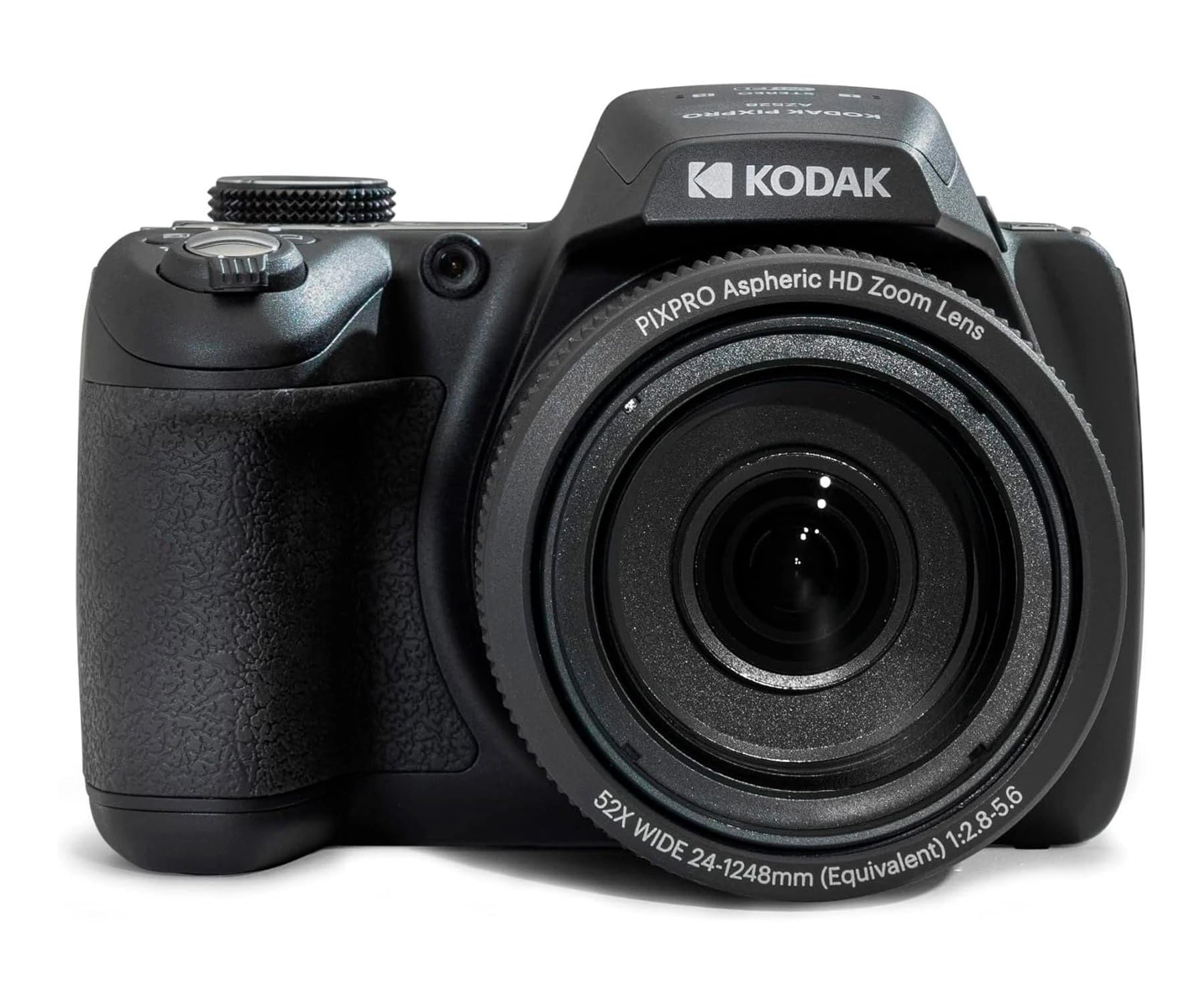
A bridge camera with 52x zoom that makes distant wildlife feel close.
The Kodak AZ528 delivers massive reach at a budget-friendly price. Its 52x optical zoom covers a 24mm wide angle and extends to 1248mm, so you can photograph birds at the feeder or athletes across the field without moving. The 16 MP BSI CMOS sensor with optical image stabilization helps keep telephoto shots sharp, and the 3-inch LCD screen makes reviewing images easy. A rechargeable Li-ion battery powers full-day shoots, and the camera accepts SD cards up to 512 GB.
Buyers call it “very easy to use” and appreciate the “excellent picture quality” in good light. One buyer mentioned it is “great for a non-state-of-the-art camera” and affordable for beginners. However, at full zoom, you need steady hands or a tripod to avoid blur, and the 1080p Full HD video is a step behind the 4K cameras in this guide. If your budget is tight and you need extreme zoom for daytime use, the AZ528 is a solid entry point.
What it offers
- 52x optical zoom provides incredible reach for the price point.
- Built-in OIS helps reduce blur at long focal lengths.
- Wi-Fi connectivity enables remote control and instant sharing to your phone.
Limitations
- Records only 1080p Full HD video, not 4K.
- Image quality at maximum zoom requires very steady hands or a tripod.
Budget zoom champion: A fine start for beginners who want to experiment with super-telephoto photography without a big investment.
Upgrade to the Panasonic ZS99 if: You need 4K video and a more pocketable design for daily carry.
9. Minolta MN40Z 20MP Digital Camera
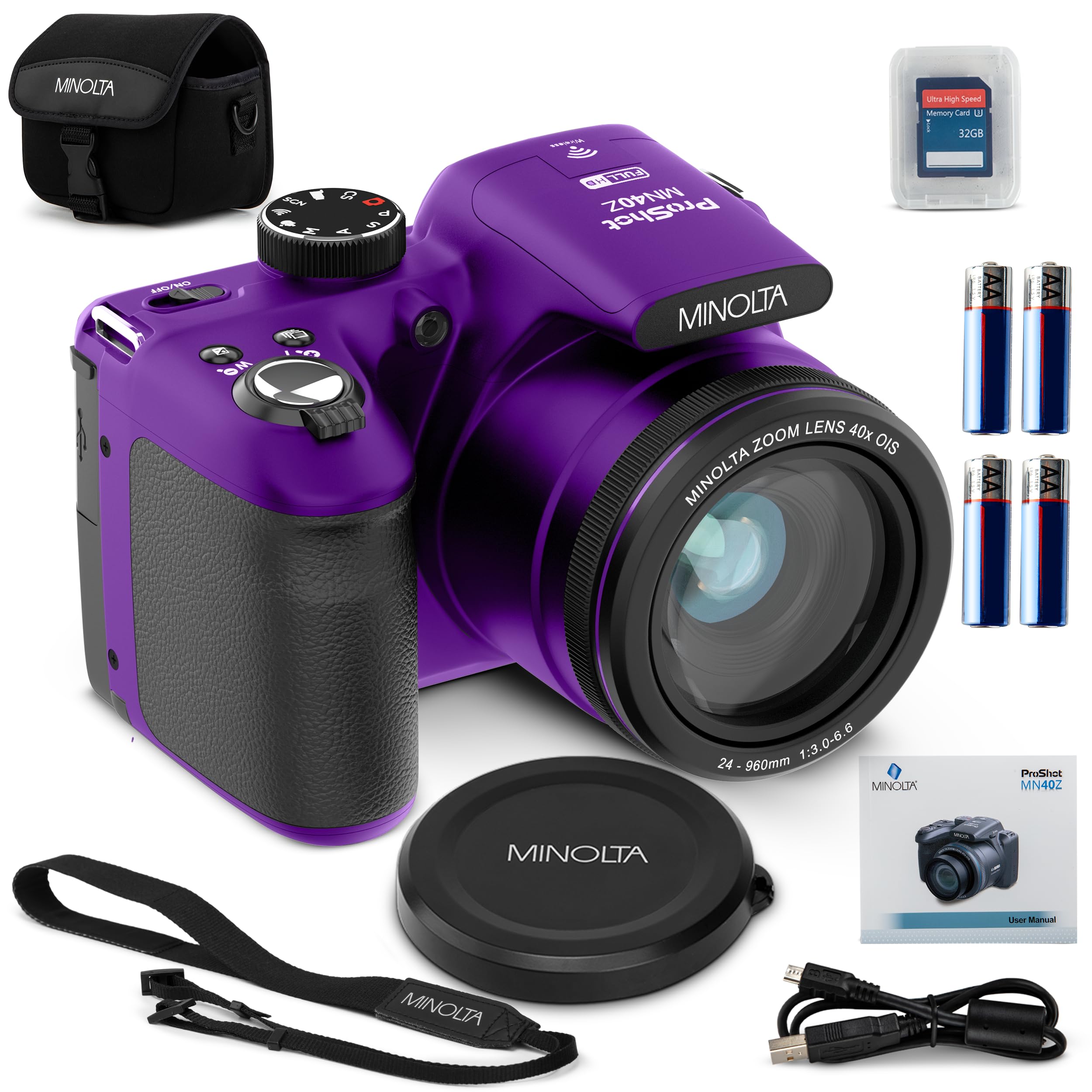
A colorful entry-level bridge camera with zoom that punches above its price.
The Minolta MN40Z is a pure value play: you get a 20 MP sensor, a 40x optical zoom lens, 1080p Full HD video, and Wi-Fi connectivity — all at a price that undercuts most competitors by a wide margin. The 3-inch LCD display makes framing easy, and the built-in face, smile, and blink detection reduces missed shots. It runs on standard AA batteries, which is a genuine advantage for travelers who do not want to hunt for a wall outlet in a foreign country.
If you are on a tight budget and want reach, this purple pocket rocket delivers.
Standout features
- 40x optical zoom is impressive for the price, great for outdoor and distant subjects.
- Runs on standard AA batteries — easy to replace anywhere on the road.
- Wi-Fi sharing and remote control via smartphone app.
Consider these
- Autofocus is slower than more expensive models, especially in low light.
- Records 1080p Full HD video only, not 4K.
Best for tight budgets: If you want a dedicated camera with real optical zoom and do not mind trading autofocus speed for a low price, the MN40Z is a capable choice.
Reconsider if: You plan to shoot video in 4K or need fast autofocus for moving subjects — the Kodak AZ528 offers a similar package with slightly better stabilization.
10. Sony Cyber-Shot RX100 VII Bundle (with Accessories)
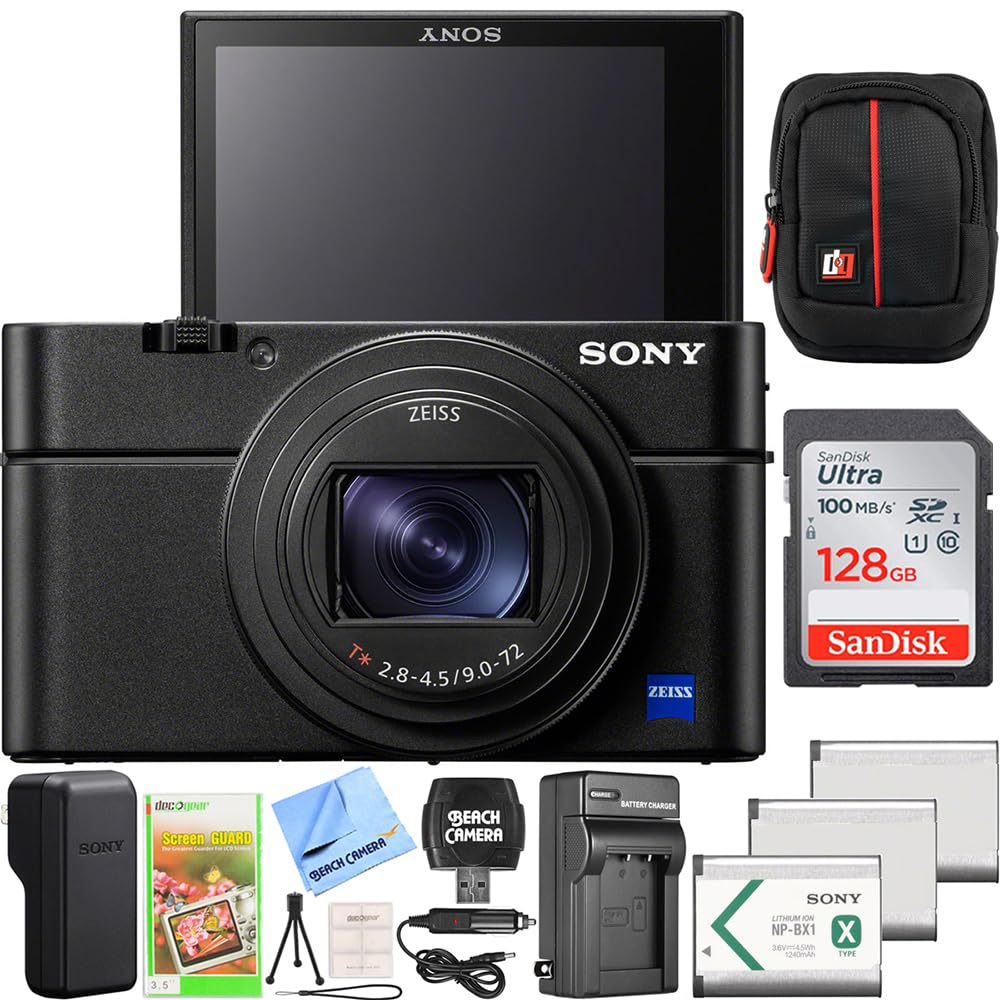
The same powerhouse as Pick #1, now bundled with all the travel extras you will need.
This bundle takes the award-winning Sony RX100 VII and pairs it with a 128GB SD card, three NP-BX1 batteries, an external battery charger, a mini flex tripod, a Deco Gear travel case, and several cleaning accessories. The camera itself is identical to the standalone version — a 20.1 MP 1-inch stacked CMOS sensor, Zeiss 24-200mm F2.8-F4.5 lens, 0.02-second autofocus, and real-time Eye AF for humans and animals. What the bundle solves is the RX100 VII’s biggest weakness: the single included battery only lasts for about 45 minutes of heavy use.
Buyers who purchased this bundle report it is a “GREAT HIGH QUALITY CAMERA” and that the accessories make it a “GREAT DEAL” compared to buying the camera and extras separately. One seasoned photographer noted that his Sony RX100 VII photos “outshone all other photos taken at the same events by miles.” The trade-off is the same as the standalone camera: the body is small and dense, making it a bit slippery, and the premium price is not for casual users. If you want the best travel compact with everything you need from day one, this bundle saves you the hassle of buying extras separately.
Bundle benefits
- Same pro-grade camera as Pick #1, with 20.1 MP and worldwide 24-200mm lens.
- Three batteries and an external charger let you shoot all day without hunting for outlets.
- Includes 128GB card, mini tripod, case, and cleaning kit — ready to travel immediately.
Still a few trade-offs
- The camera body is small and dense; some buyers add a grip for security.
- No built-in gimbal for video — smooth handheld pans require an accessory or tripod.
The all-in-one premium solution: Best for photographers who want the top-performing compact camera and prefer a single purchase with all accessories included.
Save money with the standalone RX100 VII if: You already own spare NP-BX1 batteries, SD cards, and a small tripod.
Understanding the Specs
Sensor Size and Megapixels
The sensor is the light-capturing chip inside the camera. A larger sensor, like a 1-inch type, collects more light and produces cleaner images in dim scenes than a smaller 1/2.3-inch sensor. Megapixels (MP) determine how much detail the camera can resolve — 20 MP gives you more cropping room for large prints, while 9-12 MP is fine for social media and standard prints.
Optical Zoom and Focal Length
Optical zoom uses the lens to magnify the scene without losing quality (unlike digital zoom, which crops in). Focal length is measured in millimeters; a lower number like 20mm is a wide-angle (captures more of the scene), while a higher number like 1200mm is a super-telephoto (magnifies distant subjects). A zoom ratio like 30x tells you how many times the lens magnifies from its widest setting.
Image Stabilization
Stabilization reduces blur from shaky hands. Optical Image Stabilization (OIS) uses moving lens elements; it is more effective than digital stabilization and does not degrade image quality. For video, a 3-axis mechanical gimbal physically moves the camera sensor to counteract motion, producing the smoothest handheld footage.
Video Resolution and Frame Rate
4K video (3840 x 2160 pixels) offers four times the detail of 1080p Full HD, giving you crisp, future-proof footage. Frame rate (fps) determines how smooth motion looks — 30fps is standard for normal video, 60fps is smoother for action, and 120fps lets you create slow-motion playback.
FAQ
Is a 1-inch sensor camera much better for travel than a 1/2.3-inch sensor?
How much optical zoom do I really need for travel?
Can I use a compact travel camera for underwater photos?
What is the difference between optical zoom and digital zoom?
Which compact travel camera has the best video stabilization for walking?
How long do compact camera batteries last on a trip?
Is 4K video essential for a travel camera?
Can I connect a compact camera to my phone for sharing?
What is the difference between a bridge camera and a compact camera for travel?
Which compact travel camera is best for capturing fast-moving subjects?
Final Thoughts: The Verdict
For most people, the compact camera for travel winner is the Sony RX100 VII because it combines the best image quality from a 1-inch 20.1 MP sensor with a versatile 24-200mm zoom lens and the fastest autofocus in its class. If you want buttery-smooth video without carrying a gimbal, grab the DJI Osmo Pocket 3 Creator Combo. And for underwater adventures or extreme conditions where regular cameras break, the rugged OM SYSTEM Tough TG-7 is the only choice.
How We Picked
We do not accept paid placement. Every pick is matched to a real buyer and a real use-case; we do not hands-on test units.
Sources & Methodology
Specifications: manufacturer listings and product documentation. Review insights: verified customer reviews, as of July 2026. Pricing: not shown on this page (it changes often); check the current price via the retailer link.
As an Amazon Associate, WellFizz earns from qualifying purchases. This does not affect which products we feature.
Related Guides

Mo Maruf
I created WellFizz to bridge the gap between vague wellness advice and actionable solutions. My mission is simple: to decode the research and give you practical tools you can actually use.
Beyond the data, I am a passionate traveler. I believe that stepping away from the screen to explore new environments is essential for mental clarity and physical vitality.