Our readers keep the lights on and my smoothie glass nicely filled. As an Amazon Associate, I earn from qualifying purchases.
Specs are compiled from manufacturer listings and verified buyer reviews and can change over time — please confirm the key details on the product page before buying.
A dolphin fin breaks the surface 300 yards out, and you have about three seconds to find it before it’s gone. That split second is the whole reason you pack binoculars on a cruise — and the wrong pair will leave you fumbling with focus while the moment passes. This guide cuts straight to the pick that puts the wildlife, the coastline, and the stage in your pocket without the bulk, the shake, or the buyer’s remorse.
I’m Mohammad Maruf — the founder and writer behind WellFizz. This guide is built by comparing the manufacturers’ published specifications and the patterns across verified customer reviews, so you get each pick’s real strengths and trade-offs instead of marketing spin.
if you need a pair that fits a clutch purse or one that handles sea spray without fogging, the right set of compact binoculars for cruise ships depends on magnification power, objective lens size, and how easily they focus with one hand while you brace against the railing.
Our Picks at a Glance
How To Choose The Best Compact Binoculars For Cruise Ships
A cruise deck is a tough place for binoculars. You deal with a moving platform, salt spray, changing light from bright noon to sunset, and limited space in your day bag. Three specs separate the keepers from the regrets.
Magnification vs. Steadiness
Higher magnification sounds better, but on a ship every bump from the waves gets multiplied in the viewfinder. 8x to 12x is the balance — strong enough to bring a whale breach or a distant port into clear view, mild enough that you can hold the image steady without a tripod. The 20x options exist for land use, but on a moving deck, buyers report that they often just amplify the motion into a blur.
Objective Lens Size and Light
The second number in a binocular name — the objective lens diameter in millimeters — determines how much light enters the optic. A 25 mm lens is fine for bright daytime scanning and keeps the binoculars pocket-sized. A 32 mm lens pulls in noticeably more light, which helps during evening departures, shaded shore excursions, or overcast days when you want a crisp image without straining.
Water and Fog Protection
Saltwater mist, rain, and humid tropical air are constant threats on a cruise. Binocular bodies that are O-ring sealed and nitrogen-purged stay fog-free inside when you move from an air-conditioned cabin to a humid deck. Look for models labeled waterproof or fogproof — that protection keeps the optics usable for years, not just one vacation.
Quick Comparison
| Model | Best For | Magnification | Objective Lens | Eye Relief | Amazon |
|---|---|---|---|---|---|
| Hontry 12×25★ Best Overall | Family-Friendly | 12x | 25 mm | 10 mm | Amazon |
| Occer 12×32Also Great | Also Great | 12x | 32 mm | 20 mm | Amazon |
| Nocs Provisions 10×25 | Premium Compact | 10x | 25 mm | 10 mm | Amazon |
| Nikon TRAVELITE EX 8×25 | Optical Clarity | 8x | 25 mm | 11.1 mm | Amazon |
| Occer 12×25 | Glasses Wearers | 12x | 25 mm | 20 mm | Amazon |
| OPAITA 20×32 | Maximum Zoom | 20x | 32 mm | 13.0 mm | Amazon |
| URBANCOAST 12×32 | Low-Light Viewing | 12x | 32 mm | 14 mm | Amazon |
In‑Depth Reviews
1. Hontry 12×25 Compact Binoculars for Adults and Kids
Our pick — over 4.5★ from 24,000+ verified ratings; the strongest balance of quality and price.
The lightweight, 10.6-oz binocular that fits a child’s face as well as an adult’s — and comes at a price that lets you buy two.
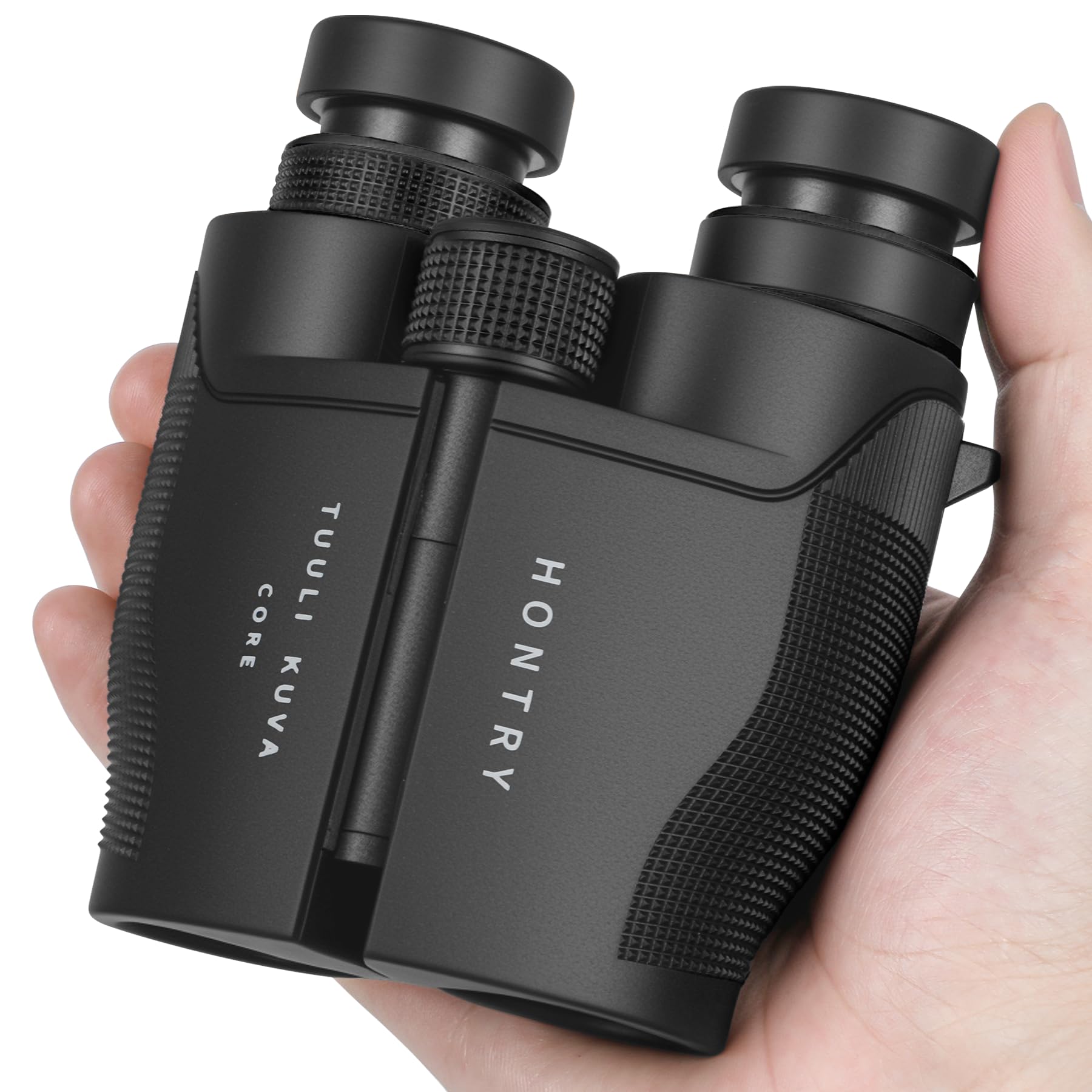
The Hontry 12×25 is the entry-level workhorse of this lineup. At 12x magnification and a 25 mm objective lens, it delivers a 288-foot field of view at 1000 yards — the same field width as the Occer 12×32, at 2.08 mm exit pupil diameter versus the Occer 12×32’s 2.67 mm. Weighting just 10.6 oz (0.33 kg), it is the lightest binocular in this guide. The adjustable interpupillary distance of 60–75 mm means it comfortably fits kids and adults, and one buyer described them as “perfect size for child’s eye distance; clearer image than adult binoculars.” The smooth twist-up eyecups and soft edges reduce eye strain during long looks. The BAK-4 prisms and fully coated lenses produce reasonably bright, contrasty images for the price tier, though the 10 mm eye relief is the shortest in the roundup and will be tight for glasses wearers.
The build quality is adequate for the price but not inspiring: glass, PET, PVC, and rubber enclosure materials mean these are durable enough for a family trip but not built for decades. A tiny minority of buyers noted they “could probably find a better pair.” The 10 mm eye relief is 10 mm compared to the 20 mm found on the Occer 12×25, which makes the Hontry less comfortable for eyeglass users during long sessions. The included fabric shoulder bag and lens cleaning cloth are basic. If you are buying a single pair for a cruise and you know everyone in the family — from a 9-year-old to grandma — will take turns, the adjustable fit and low weight make the Hontry the most inclusive option. The price sits in the budget-friendly mid-range, making it easy to grab two and keep peace in the family.
Why the Family Loves It
- 60–75 mm adjustable interpupillary range fits kids and adults equally well
- 10.6 oz weight is the lightest here — easy for small hands to hold steady
- 12x power gives decent reach for the price, with a 288 ft field of view
The Caveats
- 10 mm eye relief is tight for glasses wearers — expect to remove specs each time
- 2.08 mm exit pupil is dimmer in low light than the 2.67 mm of 32 mm lens models
- Enclosure materials (plastic, PET, PVC) feel less premium than rubber-armored builds
Best for Multi-Generational Groups: If you are equipping a family cabin where kids and adults will be swapping binoculars all week, the adjustable fit, light weight, and accessible price make the Hontry the smartest batch buy.
The Honest Trade-Off: You trade low-light brightness and glasses-friendly eye relief for that universal fit and featherlight carry — it is a family tool, not a specialist’s optic.
2. Occer 12×32 Compact Binoculars for Adults High Powered
Larger eyepieces that make a 12x view feel roomy and bright, even as the sun drops over the horizon.
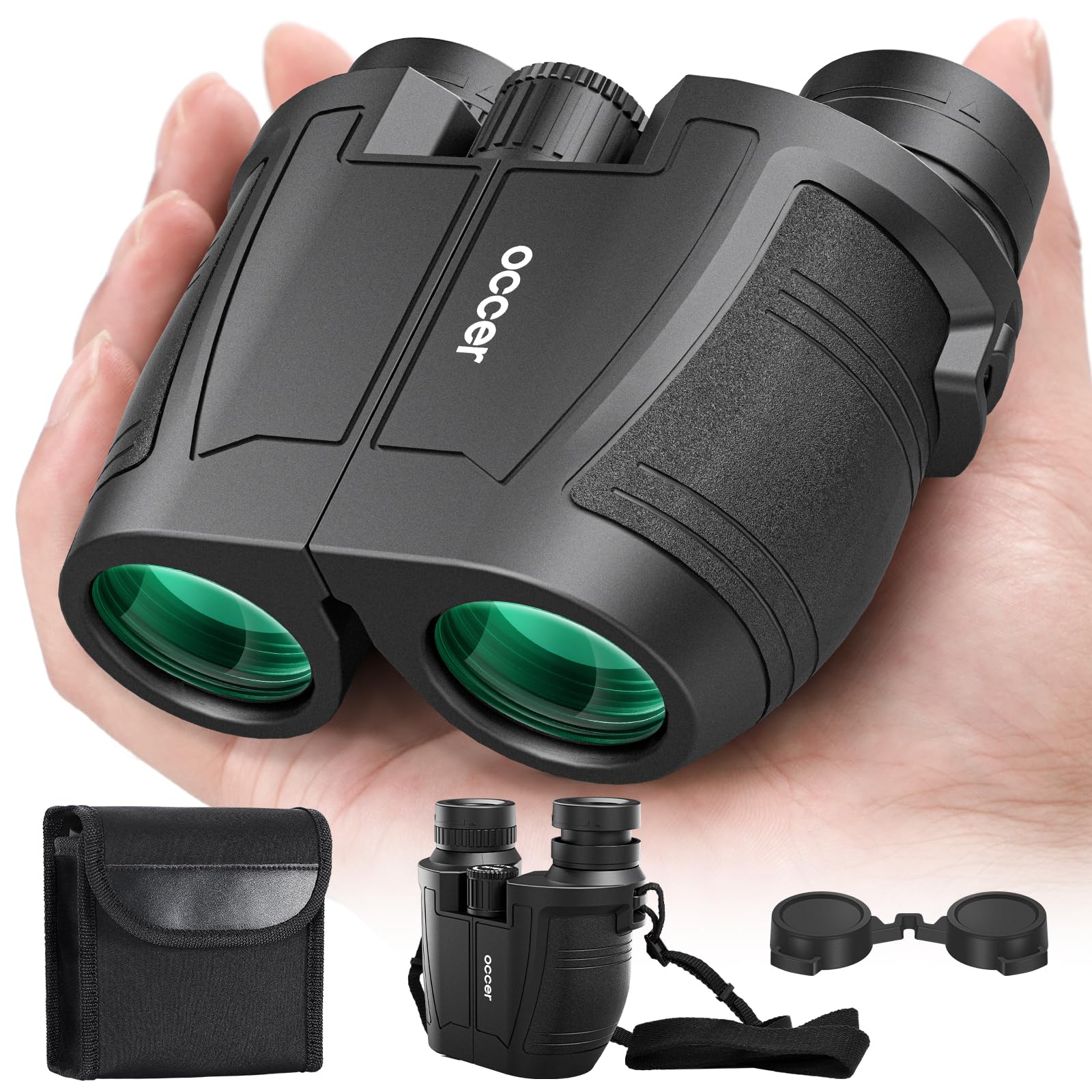
The Occer 12×32 strikes the rarest balance on this list: a 32 mm objective lens that feeds enough light for low-light deck scanning, with a 12x magnification that brings detail close without turning every wave bounce into a jitter. You get a field of view spanning 288 feet at 1000 yards — wide enough to track a bird in flight across the open water. The 20 mm large eyepieces, 20 mm eye relief versus 10 mm on the Hontry 12×25, mean you see the full image without dark rings pressing in around the edges. One reviewer noted they “haven’t taken them on our cruise yet… but compared these binoculars to another, similar pair, that really felt that these worked best… easy to focus, clear, sharp images.” That clarity comes from the fully multi-coated lenses and center-focus system that adjusts quickly with one hand while your other holds the railing.
The trade-off is enclosure material: ABS plastic keeps the weight down but feels less rugged than a metal-and-rubber build. Buyers also note the built-in media is sparse — just the binoculars, a strap, a cloth, a bag, and a manual. If you want a lifetime warranty and a premium unboxing experience, you step up to the Nocs or Nikon. But for the price, the Occer 12×32 combines the larger objective lens advantage (32 mm vs the 25 mm on the Hontry) with the longest eye relief in this roundup, making it the most versatile pick for a week at sea.
The Advantages
- 20 mm eye relief is category-best for glasses wearers and comfort in long viewing sessions
- 32 mm objective lens delivers a 2.67 mm exit pupil diameter, brighter than the 2.08 mm on most 12×25 models
- Center-focus knob works smoothly with one hand while you brace against a rail
The Trade-Offs
- ABS plastic body lacks the premium feel of metal-and-rubber builds
- No waterproof or fog-proof rating listed, unlike the URBANCOAST 12×32
- Limited accessories included compared to more expensive sets
The Deck Companion: If you want one pair that balances reach (12x), brightness (32 mm objective), and eyeglass-friendly eye relief (20 mm) — and fits a small day bag — this is the one to grab as you head for the gangway.
The One Caveat: Without a waterproof rating, you will want to tuck it inside your jacket pocket during rain showers or deck spray, not leave it hanging around your neck.
3. Occer 12×25 Compact Binoculars for Adults and Kids, Large Eyepiece Waterproof

Waterproof build and 20 mm eye relief that lets you keep your glasses on and still see the full frame.
This is the budget pick that refuses to feel cheap. The Occer 12×25 gives you 12x magnification, a 25 mm objective lens, and a 20 mm eye relief — the same generous eye relief as the larger Occer 12×32, in a smaller, more pocketable body. The rubber eyepieces pull down so your glasses sit flush against the lens, letting you see the full 273-foot field of view at 1000 yards without pulling your frames off every time a dolphin surfaces. The FMC broadband coating and BAK4 prism push through enough light that owners mention these are “compact, waterproof, and clear like Nikon Monarchs but much cheaper.” One reviewer specifically called out the eye relief eyecups as the reason these work for prolonged deck use.
At 20 mm eye relief, this Occer beats the Hontry 12×25 (which has only 10 mm eye relief) by a wide margin for anyone who wears prescription lenses. The build includes ABS plastic with rubber armor for grip, and the body is life waterproof — meaning it handles rain and salt spray without issue, a real plus on an open deck. The exit pupil diameter is 2.08 mm, smaller than the 2.67 mm of the 12×32 models. The main trade-off, as some customers note, is the strap: a few owners mentioned it comes loose and had to swap it for a more secure third-party strap. Also, at 12x on a moving ship, the smaller 25 mm lens gathers less light than a 32 mm glass, so image brightness fades earlier in the evening.
Glasses-Friendly Build
- 20 mm eye relief is the longest you will find at this size and price point
- Waterproof construction handles deck spray and rain without fogging
- BAK4 prism and FMC coating deliver bright, accurate color for the category
What You Give Up
- Objective lens at 25 mm means less brightness in twilight compared to a 32 mm model
- Stock strap tends to loosen; several buyers recommend replacing it
- Magnification of 12x may feel a little shaky on a rough sea day
Eyeglass Owner’s Pick: If you wear prescription glasses and don’t want to take them on and off every thirty seconds, the 20 mm eye relief on this waterproof 12×25 makes it the most comfortable option under.
The Real Catch: Swap the included neck strap before you board — a loose strap over the railing is the one thing you cannot afford in open water.
4. Nocs Provisions Standard Issue 10×25 Waterproof Binoculars

The cool-looking compact that backs its style with IPX7 waterproofing and a no-matter-what lifetime warranty.
The Nocs 10×25 trades raw magnification for build quality and a guarantee that outlasts your cruise. At 10x magnification with a 25 mm objective lens, the field of view is 315 feet at 1000 yards — wider than the 288 feet of the Occer 12×32, which makes tracking fast-moving wildlife or a soccer match feel less cramped. The body weighs 11.85 oz, which is heavier than the Hontry (10.6 oz) but still slips into a coat pocket. The rubber armor grip, called the Rugged Wave Grip, gives you a secure hold even when your hands are damp from sea spray. Fully multi-coated optics and a Swiss-designed BAK4 prism deliver crisp, bright images to the edge of the field. One buyer mentioned that the clarity “is tough to top” and that they planned to buy a larger 10×40 version next.
Where the Nocs really separates itself is durability. It carries an IPX7 rating — the binoculars can be submerged in up to three feet of water for 30 minutes without failure. Medical-grade O-rings and nitrogen gas purging prevent fogging when you step from a cool cabin onto a humid, sun-baked deck. The multi-stop twist-up eyecups offer three positions for eyeglass wearers. The biggest argument against the Nocs is the 10 mm eye relief — short compared to the 20 mm on the Occer models — so glasses wearers may feel the need to press into the cups to see the full view. The price is significantly higher than every other 10×25 here, and a few buyers expressed concern that the soft-touch rubber coating on the exterior can become tacky after a few years.
Tough as Nails
- IPX7 waterproof (submersible to 3 ft for 30 min) — handles any deck weather
- Nitrogen-purged and fogproof — no internal condensation between cabin and deck
- “No-Matter-What” lifetime warranty buys you confidence for years
The Hard Truth
- 10 mm eye relief is tight for glasses wearers compared to the 20 mm on Occer models
- Price is roughly 3x the cost of entry-level 10×25 binoculars
- Soft rubber coating may degrade over many years, per some owners
The Adventure Investment: If a lifetime warranty and IPX7 waterproofing matter more to you than the highest magnification, the Nocs is the compact binocular you buy once and stop worrying about.
A Note for Glasses Wearers: Try before you buy if you can — 10 mm eye relief means you will likely need to mash your eyeglass lenses against the cups to see the full field.
5. Nikon TRAVELITE EX 8×25 Binoculars

Nikon’s multilayer-coated optics and a 3.13 mm exit pupil that give you the brightest image in low light among all the compacts here.
The Nikon TRAVELITE EX 8×25 takes a different approach to the cruise binocular problem: lower magnification for a steadier, brighter view. At 8x, the image stays stable even when the ship rocks, and the 3.13 mm exit pupil diameter is the largest of any compact in this roundup — bigger than the 2.67 mm on the Occer 12×32 and the 2.08 mm on the Hontry 12×25. More exit pupil means more light hits your eye, so during sunset deck departures or shaded rainforest excursions, the Nikon simply looks brighter and less strained than the 12x competitors. The apparent angle of view is 42.7 degrees, delivering a broad, roomy image. The body is die-cast aluminum with protective rubber armoring, nitrogen-purged, and O-ring sealed — waterproof to 2 meters for 5 minutes and completely fogproof. Buyers describe it as “the balance for travel” and note the 8×25 version offers a “steady image” that the higher-magnification variants cannot match.
The trade-off is reach. At 8x magnification, distant features like a whale spout at half a mile will appear smaller than through a 12x or 20x lens. The TRAVELITE EX uses a 25 mm objective lens, which gathers less total light than a 32 mm glass — though the larger exit pupil mostly compensates for that. Some buyers also note the field of view does not appear in the provided specs in feet, though the apparent angle is listed. The eye relief is 11.1 mm, comfortable for most glasses wearers but not as generous as the 20 mm on the Occer models. Still, if you value edge-to-edge Nikon clarity and a proven, rugged travel companion over a few extra power notches, this is the one that feels like a real optical instrument.
The Bright Side
- 3.13 mm exit pupil is the brightest in the compact category — ideal for low-light sea views
- Waterproof (2 m for 5 min) and nitrogen-purged fogproof design works in mist and rain
- Multilayer-coated optics and aspherical lenses deliver vivid, edge-to-edge clarity
The Compromise
- 8x magnification pulls distant subjects in less tightly than 12x or 20x competitors
- 11.1 mm eye relief is adequate but shorter than the 20 mm on some budget picks
- Price sits in the premium tier, near the Nocs, for a lower-magnification optic
Clarity Connoisseur’s Choice: If you know good optics and you want a binocular that will look bright and sharp from dawn to dusk — and you do not mind sacrificing a couple of power notches for a steady, brilliant image — the Nikon TRAVELITE EX is the one to buy.
skip it if: You are determined to get as close as possible to distant shorelines or wildlife. At 8x, you will see them clearly but not intimately — a 12x model serves that craving better.
6. URBANCOAST 12×32 Compact Binoculars
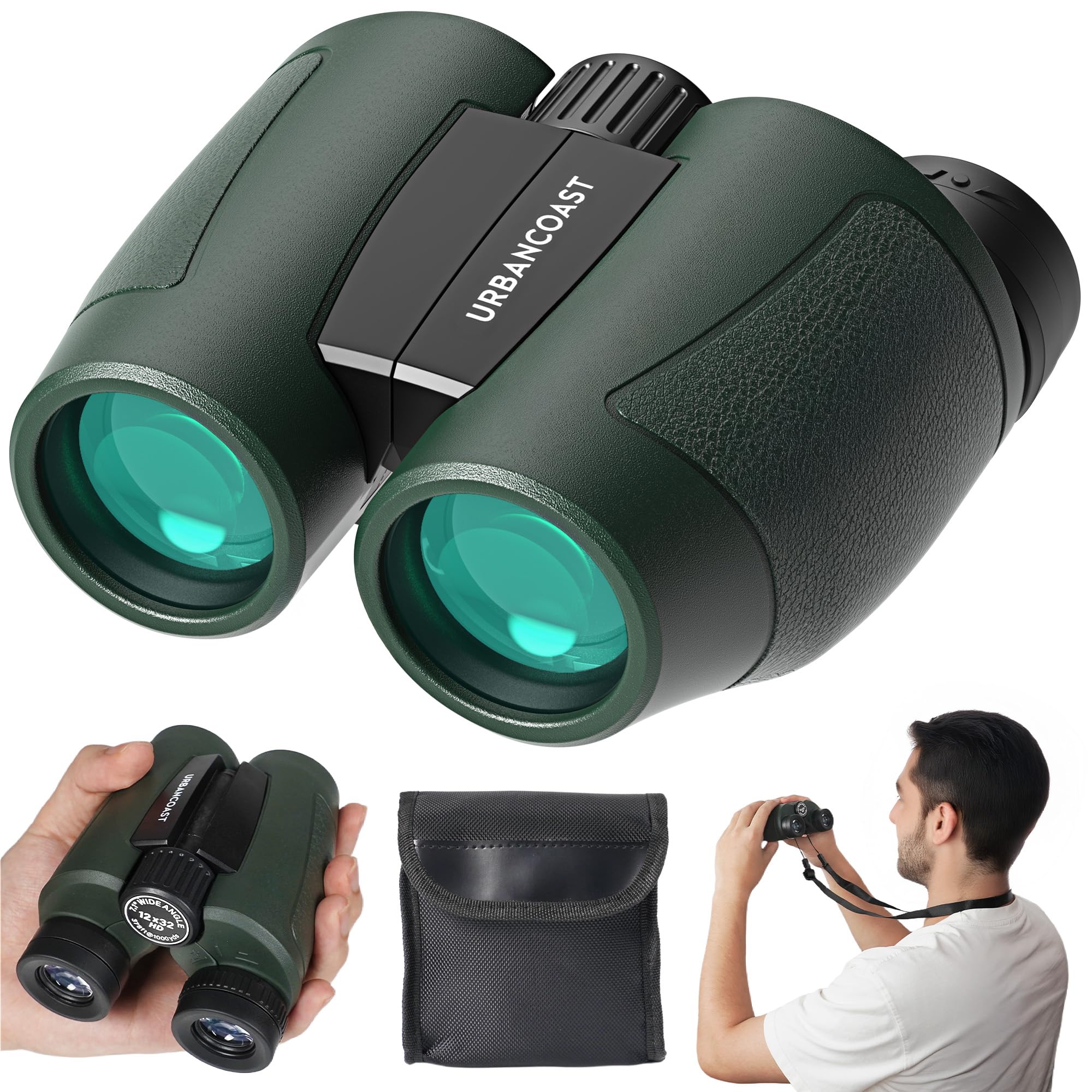
The widest field of view at 378 feet plus waterproofing that lets you stay on deck when the drizzle starts.
The URBANCOAST 12×32 brings two specs that matter on a cruise ship more than almost any other: a 378-foot field of view at 1000 yards (the widest on this list) and a waterproof, fog-resistant body. A wide field of view means you can pick up a breaching whale or a pod of dolphins in the periphery without panning the whole deck — critical when the action happens fast and disappears. At 12x magnification with a 32 mm objective lens, the exit pupil lands at 2.67 mm, matching the Occer 12×32 for brightness. The low-light performance gets a boost from BAK4 prisms and fully multi-coated lenses, tune for dawn and dusk viewing, when many cruise shore excursions or sunset sailings happen. The 14 mm eye relief is comfortable for most users, though glasses wearers will notice it is shorter than the 20 mm on the Occer models. A buyer heading on a cruise noted, “Cant wait to look out on cruise at night” and praised the compact, lightweight feel.
The build includes a rugged rubber armor coating and shock-resistant housing — more sturdy than ABS plastic. The weight is 343 grams (12 oz), which is slightly heavier than the Hontry (10.6 oz) but still pocketable. The 378-foot field of view beats the 315 feet of the Nocs 10×25 and the 288 feet of the Occer 12×32, making this the most panoramic option for scanning open ocean. The trade-off is brand reputation: URBANCOAST is a newer player compared to Nikon or Nocs, and the 10-year spare part availability suggests the maker plans to support it long-term, but the track record is leaner. The eyepiece twist-up design works well, but a few buyers mention the plastic build feels less premium than metal-framed competitors.
Wide Horizon Hunter
- 378 ft field of view at 1000 yds — the widest in this review, great for scanning sea and sky
- Waterproof and fog-resistant, with rubber armor for wet-hand grip
- BAK4 fully multi-coated lenses give bright, true-color low-light performance
What Holds It Back
- Newer brand with less long-term owner history than Nikon or Nocs
- 14 mm eye relief comfortable but not glasses-optimal like the 20 mm Occer models
- Plastic housing lacks the premium tactile feel of metal builds
Best for Wide-Angle Spotters: If your cruise itinerary includes open-ocean days where you need to catch action at the edge of your vision, the 378-foot field of view makes this the most forgiving optic for fast-moving wildlife.
One Practical Note: The wide field comes with a slightly shorter eye relief than the top-tier — try the twist-up cups before you spend a full day on deck if you wear glasses.
7. OPAITA 20×32 Compact Binoculars for Adults High Powered

20x magnification in a compact body — you trade stability for the closest possible look at distant land.
The OPAITA 20×32 is the outlier here: 20x power in a small binocular. At this magnification, a 32 mm objective lens delivers a 235-foot field of view at 1000 yards, which is the narrowest on the list — you see less area, but you see it much closer. This is the binocular for the deck when the ship is anchored off a coastline and you want to read the name of a lighthouse or watch a seabird colony from half a mile away. The 20x vs. 12x comparison to the Hontry 12×25 shows a higher magnification power. The fully multi-coated BAK4 prisms try to keep the image bright despite the high power, but the exit pupil diameter is only 1.6 mm — small, which means any wobble from the ship or your hands gets amplified into a shaky image. Buyers who took it on an Alaska cruise reported success: “Saw lots of whales that I would have missed if I didn’t have these.”
The 13.0 mm eye relief is average for the category. The body is plastic, and one owner reported that a lens came loose in a backpack and needed repair with Loctite, which suggests the build quality is not as sturdy as the Nikon or Nocs. The carrying bag and neck strap are included, and the foldable design keeps it compact in a day bag. For stationary use — leaning against a ship rail or sitting on a balcony — the 20x can be thrilling. For handheld use while standing on a moving deck, the image will likely feel unsteady. The manufacturer claims “wider field of view” and “enhanced clarity” compared to 15x binoculars, but those are marketing claims, not independently verified specs. What is verifiable: the 20x magnification gives you the tightest close-up of any binocular in this guide, and the 32 mm lens lets in enough light to make it usable in decent daylight.
The Close-Up King
- 20x magnification delivers the most distant detail of any compact in this review
- 32 mm objective lens is standard for the category, not undersized for the high power
- Good option for stationary spotting from a balcony or deck rail
The Real Limit
- 1.6 mm exit pupil makes the image dimmer and shakier than lower-magnification compacts
- One report of a lens detaching in transit suggests variable build consistency
- 235-foot field of view is narrow — you will see a lot less area at once
For the Dedicated Spotter: If you are the person who stands at the railing with a plan to study a far-off coastline or count the sea lions on a distant rock, the 20x power is exactly what you want — just brace your elbows.
pass on it if: You plan to hand-hold these while walking or on a rough sea day. The 20x shake will frustrate you; a 10x or 12x model gives a steadier image that you will actually use more often.
Understanding the Specs
Magnification and Objective Lens Diameter
The first number — 8x, 10x, 12x, or 20x — tells you how many times closer the image appears compared to your naked eye. The second number — 25 mm or 32 mm — is the diameter of the front lens, which determines how much light enters the binocular. A 32 mm lens gathers more light than a 25 mm lens, making the image brighter at dawn and dusk. On a cruise ship, 8x to 12x is the range that works without turning every wave rock into a shaky blur. Any higher, and you will want to brace your elbows on the rail.
Eye Relief and Exit Pupil
Eye relief is the distance your eye can be from the eyepiece while still seeing the full field of view. If you wear glasses, look for 14 mm or higher — the 20 mm on the Occer models is the best in this guide. The exit pupil diameter (objective lens diameter divided by magnification) tells you the size of the light beam leaving the eyepiece. A bigger exit pupil, like 3.13 mm on the Nikon, gives a brighter, more comfortable image, especially in low-light conditions like sunset deck views or shaded jungle excursions.
FAQ
What is the best magnification for binoculars on a cruise ship?
Are waterproof binoculars necessary for a cruise?
How do I know if binoculars fit a glasses wearer?
What does the number on the side of binoculars mean?
Can I use 20x binoculars on a moving ship?
Are compact binoculars powerful enough for whale watching on a cruise?
Which is better for a cruise: 25 mm or 32 mm objective lens?
Will cheap cruise binoculars fog up in humidity?
What is BAK-4 prism and why does it matter for cruise binoculars?
How do I clean binocular lenses after exposure to salt spray?
Final Thoughts: The Verdict
For most people, the compact binoculars for cruise ships winner is the Occer 12×32 because it delivers the best balance of magnification, low-light performance from its 32 mm lens, and category-leading 20 mm eye relief — all at a budget-friendly price that does not compromise optical quality. If you want a premium build and IPX7 waterproofing you can trust for years, grab the Nocs Provisions 10×25. And for the clearest glass in a compact body at the expense of higher magnification, the Nikon TRAVELITE EX 8×25 is the optical purist’s choice.
How We Picked
We do not accept paid placement. Every pick is matched to a real buyer and a real use-case; we do not hands-on test units.
Sources & Methodology
Specifications: manufacturer listings and product documentation. Review insights: verified customer reviews, as of July 2026. Pricing: not shown on this page (it changes often); check the current price via the retailer link.
As an Amazon Associate, WellFizz earns from qualifying purchases. This does not affect which products we feature.
Related Guides

Mo Maruf
I created WellFizz to bridge the gap between vague wellness advice and actionable solutions. My mission is simple: to decode the research and give you practical tools you can actually use.
Beyond the data, I am a passionate traveler. I believe that stepping away from the screen to explore new environments is essential for mental clarity and physical vitality.