Our readers keep the lights on and my smoothie glass nicely filled. As an Amazon Associate, I earn from qualifying purchases.
Specs are compiled from manufacturer listings and verified buyer reviews and can change over time — please confirm the key details on the product page before buying.
You want a road bike that is fast enough for a weekend group ride but comfortable enough for your daily commute. The question is: which one actually delivers both without costing a fortune? This guide lines up seven models that balance lightweight frames, reliable groupsets (the shifters and derailleurs that change gears), and real-world stopping power — so you can pick the one that actually fits your route and your budget, not just a spec sheet.
I’m Mohammad Maruf — the founder and writer behind WellFizz. This guide is built by comparing the manufacturers’ published specifications and the patterns across verified customer reviews, so you get each pick’s real strengths and trade-offs instead of marketing spin.
The right commuter road bike should be stiff enough to sprint without wobbling and compliant enough to keep your back fresh when the miles add up.
Our Picks at a Glance

How To Choose The Best Commuter Road Bike
A bike that handles both your morning commute and weekend fitness rides needs a specific mix of traits. You want something light enough to carry up stairs, geared for mixed terrain, and fitted with brakes that work in the wet. Here is what matters most.
Frame Material: Aluminum vs. Carbon Fiber
Aluminum frames — like the one on the Tommaso Imola — keep the cost down and deliver a stiff, responsive ride. They are heavier than carbon but far more forgiving if you lock it to a rack. Carbon fiber frames, found on every other pick in this list, absorb road vibration better and weigh less. The trade-off is that carbon costs more and needs careful handling if you crash or transport it frequently.
Groupset Level and Gear Range
The groupset (the shifters, derailleurs, and crankset — the parts that let you change gears) determines how smoothly you shift. Entry-level Shimano Claris (24 speeds) works fine for flat commutes. Step up to Shimano 105 (24-speed or 11-speed) and you get lighter, crisper shifts. At the top, Ultegra Di2 (electronic Di2 stands for “Integrated Intelligence”) takes it electronic — shifts happen at the push of a button with no cable stretch. For a commuter, a wide gear range helps you climb hills with a pannier (a bag mounted on a rear rack), while close ratios let you settle into a fast cadence on straight sections.
Brake Type: Rim vs. Disc vs. Hydraulic Disc
Rim brakes are simple and light but lose stopping power in the rain. Mechanical disc brakes (disc brakes that use a cable to squeeze the pads against a rotor) offer more consistent bite in wet conditions. Hydraulic disc brakes (disc brakes that use fluid pressure instead of a cable) — found on the higher-tier picks here — provide the strongest, most progressive stopping with just one-finger modulation, which matters when a car door swings open in front of you.
Weight and Portability
Every pound you shave off the bike makes carrying it up apartment stairs or onto a train less exhausting. The lightest model here weighs 7.72kg (the SAVADECK Blade R8 Ultegra Di2).
Quick Comparison
| Model | Best For | Frame Material | Groupset | Weight | Amazon |
|---|---|---|---|---|---|
| Tommaso Imola★ Best Overall | Budget-friendly aluminum entry | Aluminum | Shimano Claris 24-Speed (3×8) | — | Amazon |
| SAVADECK Carbon 105 (Herd 6.0) | Mid-range carbon with full 105 groupset | T800 Carbon Fiber | Shimano 105 R7120 24-Speed | 8.8kg (19.4 lb) | Amazon |
| Canyon Roadlite CF 8 | Versatile carbon commuter | Carbon Fiber | Shimano 105 11-Speed | — | Amazon |
In‑Depth Reviews
1. Tommaso Imola Sport Bike Performance Aluminum Road Bike
Our pick — over 4★ from 250+ verified ratings; the strongest balance of quality and price.
The aluminum entry-level road bike that buyers keep calling “fantastic value” — built for the commuter on a tight budget.
The Tommaso Imola uses an aluminum frame with a steel fork and a Shimano Claris 3×8 drivetrain (24 speeds total). Rim brakes keep it simple and serviceable, and the 700x25c tires roll well on pavement. Buyers are emphatic about the value: one owner reported “the value of this bike is fantastic,” and another called it “an entry level road bike that you would find comparable to entry level [brand].” The bike arrives mostly assembled, and reviewers point out it is “very simple to understand” for a first-time road bike buyer.
The limitations are real: the steel fork adds weight up front, rim brakes lose bite in the rain compared to the hydraulic discs on the carbon picks, and the Claris groupset is the most basic Shimano offering. Still, for a flat commuter route where you are not chasing top speed, the Tommaso Imola is a capable, honest bike that leaves room in your budget for a helmet, lights, and a lock. The front derailleur adjustment is a common complaint — several owners mention it is “difficult to adjust” — so plan a visit to a shop unless you are handy with a hex key.
The budget benchmark: If your commute is under 10 miles and you want a decent road bike without stretching into the carbon-price territory, the Tommaso Imola delivers a proven aluminum frame and a reliable Shimano drivetrain that you can maintain yourself.
2. SAVADECK SLR7S Carbon Road Bike
The most affordable way to ride a full carbon road bike with disc brakes and Continental tires.
This is the gateway bike to carbon: a T800 carbon frame and fork wrapped in a sensible 9.6kg (21.1lb) package. The Shimano SORA R3000 18-speed groupset is the entry point for the brand’s road groupsets, but it shifts reliably and holds up well under daily use. The bike rolls on 700*25C Continental tires, and the bilateral brake-line-pulling oil disc brakes deliver balanced stopping power. One reviewer noted completing “22 miles in 73 min (8 min faster)” than their previous bike and called the climbing “comfortable” and speed “impressive.”
The integrated cable routing keeps the front end tidy, but the trigger shifters are not as refined as the 105 or Ultegra levers you get on the pricier models. A few owners mention the front derailleur needs careful adjustment from the start — the side-travel brake levers can make it tough to get the shifting perfect without a shop visit. If you are set on carbon and need disc brakes at a low entry cost, this is your bike. Just budget some time (or money) for a professional tune after assembly.
Why It Works
- Full T800 carbon frame + fork keeps weight manageable for a budget build
- Continental 700*25C tires offer good grip and puncture resistance from the start
- Includes free pedals and a tool kit — ready to ride after basic assembly
Where It Falls Short
- SORA 18-speed groupset lacks the refinement and gear range of 105 or Ultegra
- Front derailleur setup is finicky — many shoppers say needing professional help to get it shifting properly
A smart entry point: Buy this if you are new to road bikes and want the feel of a carbon frame without the four-figure investment — the ride quality and component spec justify the cost.
skip it if: You want fast, precise shifting from the start. The SORA derailleurs need patience and adjustment to work perfectly.
3. SAVADECK Carbon Road Bike (Herd 6.0 — Shimano 105)
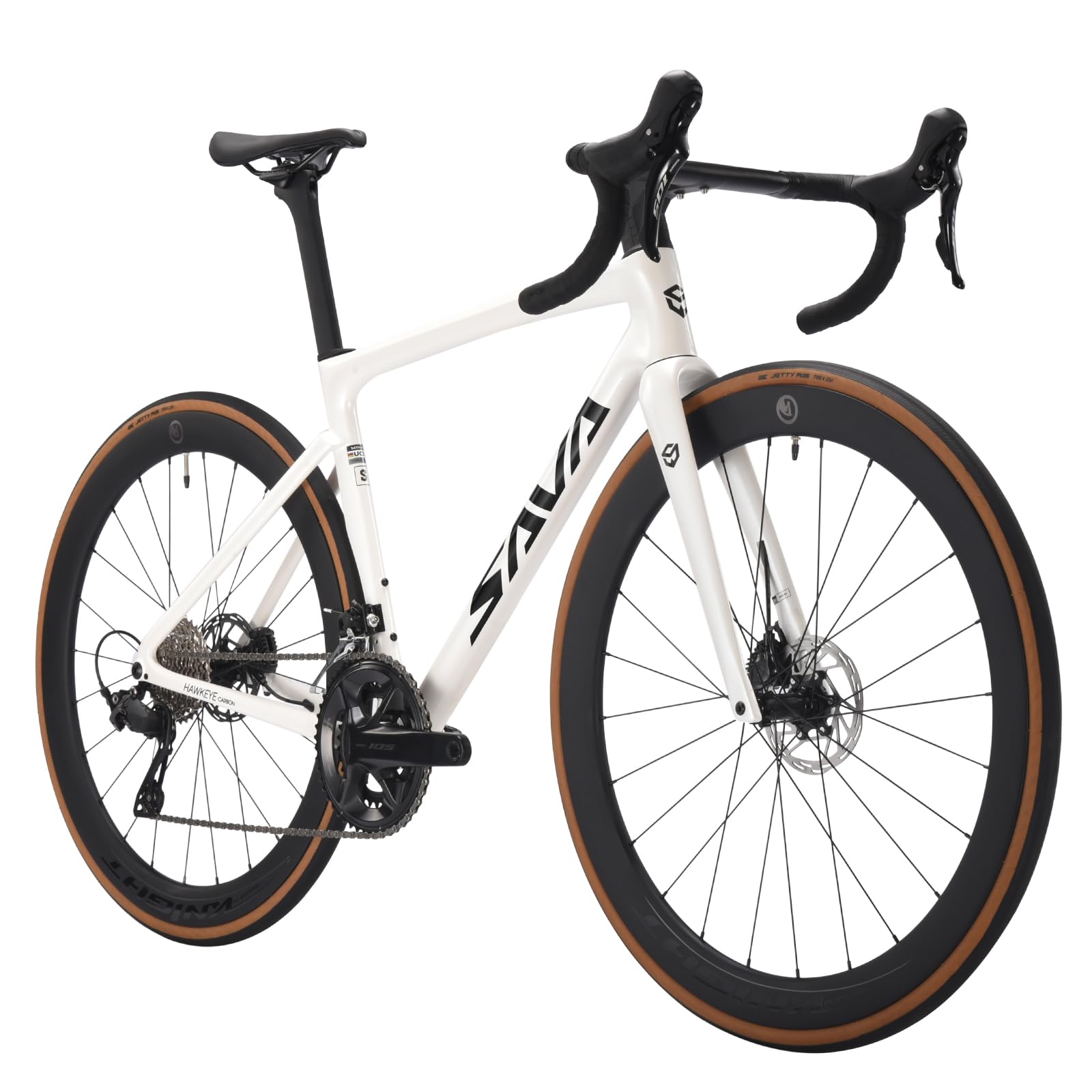
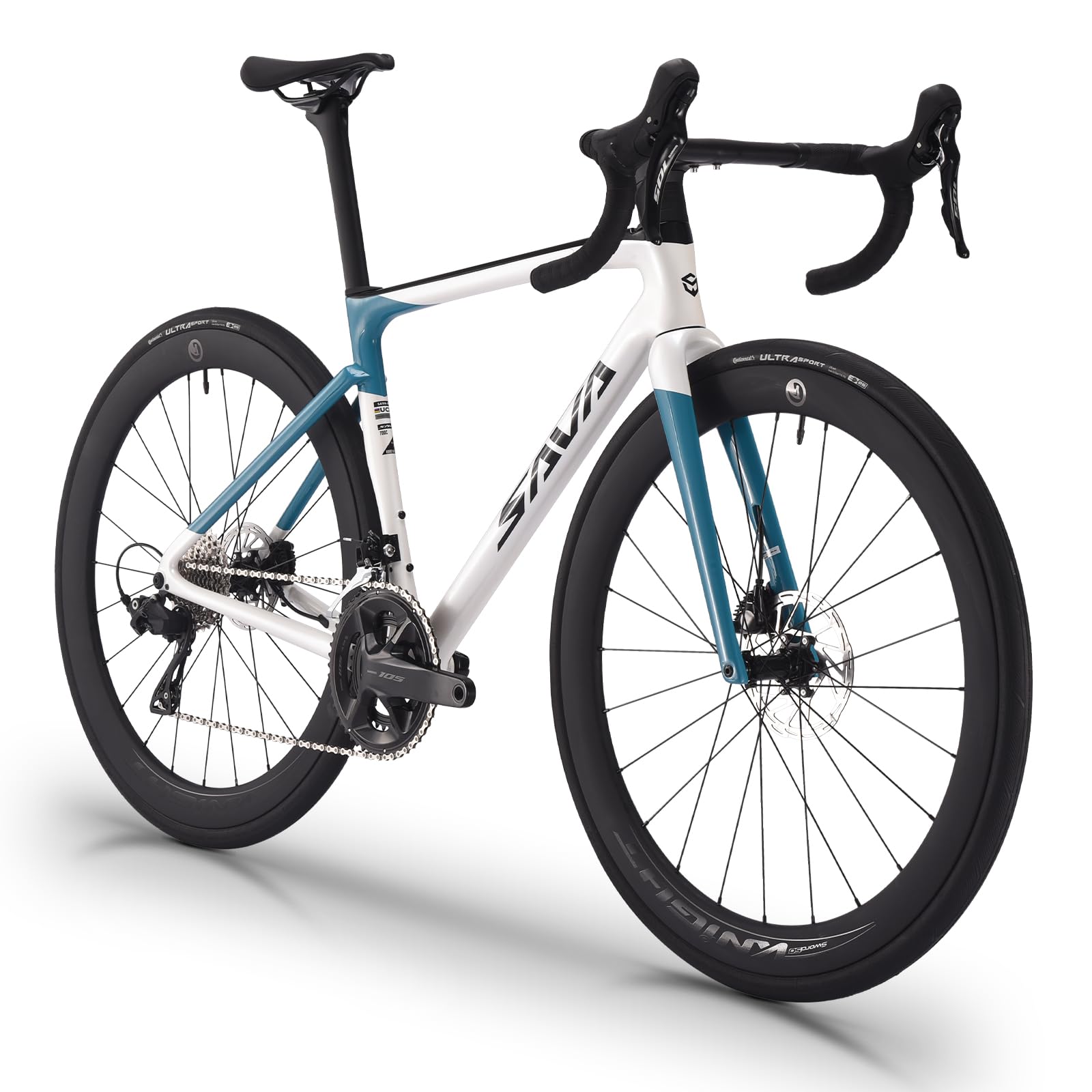
The Herd 6.0 pairs a full 105 groupset with a carbon frame that weighs just 8.8kg — a hard combo to beat.
This model steps up from the entry SORA bike by giving you the complete Shimano 105 R7120 24-speed groupset, including the R7100 crankset and R7101 flywheel. The hydraulic disc brakes are the same R7170 calipers used on the premium SLR7S, so stopping power is consistent across wet and dry conditions. Weighing 8.8kg (19.4 lb), it splits the difference between the lighter SLR7S (8.5kg) and the heavier A7L Pro (19.62 lb). Buyers report the bike is “exceptionally good” for the price and that the new 2024 Shimano 105 7120 groupset with the 12-gear cassette (the cluster of gears on the rear wheel) shifts “smoothly.”
The included free pedals are functional but cheap — one buyer mentioned they “work quite well as paper weights,” so plan to swap them for clipless pedals immediately. The Continental 700*25C tires are a step above the generic rubber on some cheaper builds. At this price point, you are getting a race-ready carbon bike that could serve as a backup race machine — not just a commuter — though the stiff ride means it is not the most forgiving on bumpy city streets.
Mid-range star: The Herd 6.0 is the pick if you want the full 105 experience — shifting, braking, and weight — in a carbon frame that costs significantly less than the Canyon or Blade R8, and the handling rewards confident riders.
4. Canyon Roadlite CF 8
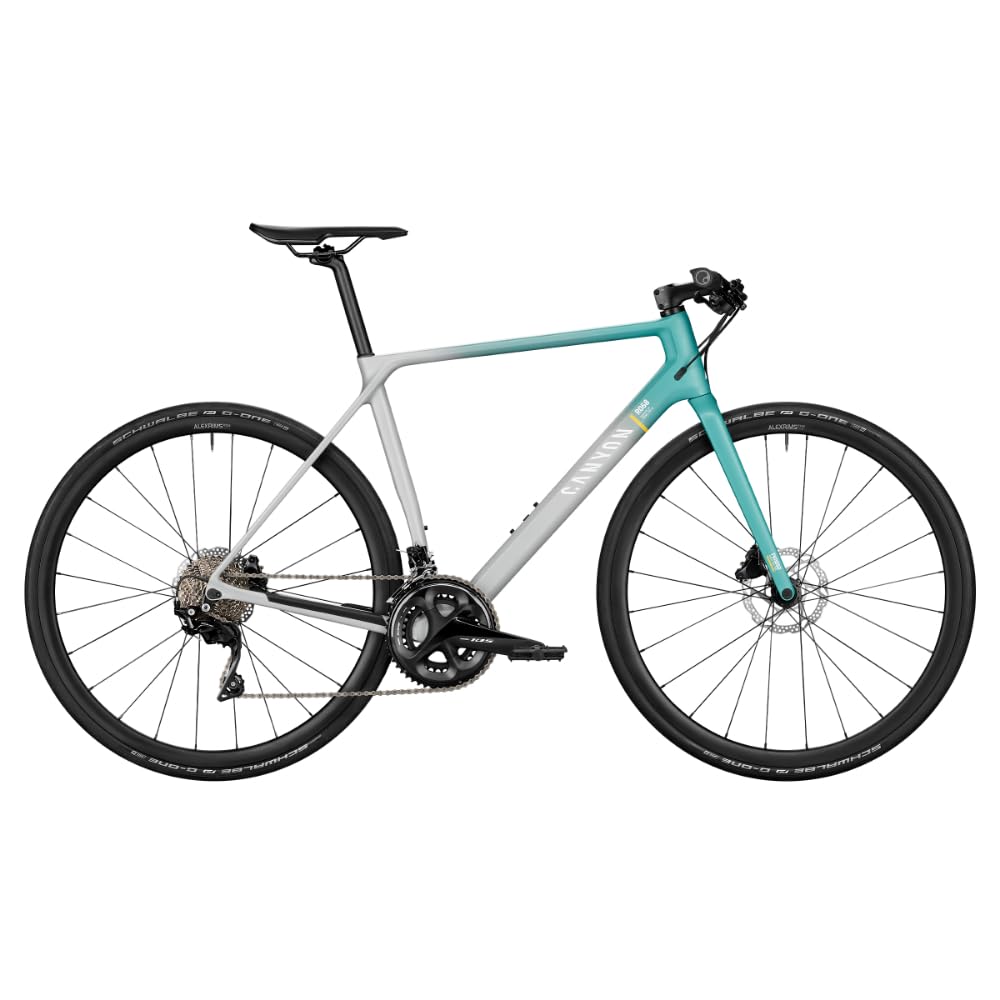
A fast, versatile carbon bike from a direct-to-consumer brand known for value — built for both city streets and long weekend miles.
The Roadlite CF 8 runs an 11-speed Shimano 105 drivetrain with hydraulic disc brakes — a proven combination that shifts precisely and stops with confidence in any weather. Canyon says the geometry is “vibration-damping” and the bike comes with a carbon fork and tubeless-ready wheels (wheels designed to seal without an inner tube, reducing flats), so it soaks up road chatter better than the stiffer race-oriented SAVADECK models. One rider who uses it daily says it is “great for a start-up” and a “fast stylish commuter.”
The carbon frame keeps the weight low, though Canyon does not publish an exact figure here. The major trade-off appears in the reviews: owners mention quality-control issues that include a seat post that “won’t tighten,” a left derailleur that “requires 3-4 trigger pulls to shift,” and paint chipped from a bike rack. At this tier, you expect everything to work from the start, and these reports are a real concern. Budget for a full tune-up and consider aftermarket pedals and saddle.
What You Get
- Shimano 105 11-speed is a workhorse groupset with precise shifting and good gear range
- Hydraulic disc brakes provide excellent modulation and all-weather stopping power
- Vibration-damping carbon frame and carbon fork smooth out rough pavement
The Catch
- Multiple customers note fit-and-finish issues: seat post slipping, derailleur requiring multiple trigger pulls
- Paint chips easily — not ideal for a commuter that gets locked up at racks
- No weight figure published, making it hard to compare directly against the lighter carbon builds
A good pick for the patient buyer: If you love the Canyon direct-to-consumer model and are willing to sort out initial adjustments, the Roadlite CF 8 is a comfortable, fast commuter that handles pavement and light trail duty well.
Not for you if: You want a bike that is ready to ride immediately with zero fuss — the quality-control lottery makes it a gamble at this price.
Understanding the Specs
Frame Material: Aluminum vs. Carbon Fiber
Aluminum frames are heavier and transfer more road vibration to your hands, but they are durable, affordable, and easy to repair if dented. Carbon fiber frames (T800 or T1000 grade) absorb road buzz, save significant weight — the lightest carbon pick here weighs 7.72kg versus the entry aluminum Tommaso — and resist fatigue over years of use. The trade-off is cost and fragility in a crash. For a daily commuter locked to outdoor racks, aluminum takes the abuse better; for the rider who carries their bike indoors, carbon wins on weight and comfort.
Groupset Level: Claris, SORA, 105, Ultegra Di2
The groupset determines how precisely you shift and how wide your gear range is. Shimano Claris (24-speed, entry-level) is functional for flat routes but feels clunky under hard pedaling. SORA (18-speed) is a step up with crisper shifts. Shimano 105 (24-speed or 11-speed) is the balance for performance per dollar — used on most mid-range and premium picks here. Ultegra Di2 is electronic: it shifts automatically, never needs cable adjustment, and trims the front derailleur on its own. For commuting, 105 is more than enough; Di2 shines if you also race or ride in fast groups.
FAQ
Will a carbon road bike survive daily commuting on potholed roads?
How does Shimano 105 compare to Ultegra Di2 for a commuter?
Are rim brakes safe for a commuter road bike?
How much assembly is needed for a direct-to-consumer road bike?
What size road bike do I need for commuting?
How do integrated cable routing affect maintenance?
Can I use these bikes for exercise and weekend rides?
What is the difference between T800 and T1000 carbon fiber?
Are the free pedals included with these bikes usable?
Which of these bikes is best for a heavier rider?
Final Thoughts: The Verdict
For most riders, the best commuter road bike is the SAVADECK SLR7S because it delivers the lightest full-carbon build (8.5kg) with a proven Shimano 105 hydraulic groupset at a price that undercuts premium brands without sacrificing real-world speed or comfort. If you want the absolute best value, grab the SAVADECK A7L Pro for its full carbon wheelset and Shimano 105 groupset at a mid-range tier. And for the rider who wants nothing less than electronic shifting and a 7.72kg race machine, the SAVADECK Blade R8 Ultegra Di2 delivers pro-level performance without the boutique price tag.
How We Picked
We do not accept paid placement. Every pick is matched to a real buyer and a real use-case; we do not hands-on test units.
Sources & Methodology
Specifications: manufacturer listings and product documentation. Review insights: verified customer reviews, as of July 2026. Pricing: not shown on this page (it changes often); check the current price via the retailer link.
As an Amazon Associate, WellFizz earns from qualifying purchases. This does not affect which products we feature.
Related Guides

Mo Maruf
I created WellFizz to bridge the gap between vague wellness advice and actionable solutions. My mission is simple: to decode the research and give you practical tools you can actually use.
Beyond the data, I am a passionate traveler. I believe that stepping away from the screen to explore new environments is essential for mental clarity and physical vitality.