Our readers keep the lights on and my smoothie glass nicely filled. As an Amazon Associate, I earn from qualifying purchases.
Specs are compiled from manufacturer listings and verified buyer reviews and can change over time — please confirm the key details on the product page before buying.
Growing tomatoes in pots is a different game than planting them in the ground. The soil you choose decides whether you get a summer of sweet, heavy fruit or a sad, leggy plant that never quite delivers. The right mix needs to drain fast enough to prevent root rot but hold moisture for those hot days, while still packing enough organic nutrients to fuel a hungry tomato plant. This guide breaks down the top options so you can pick the bag that fits your pots and your patience.
I’m Mohammad Maruf — the founder and writer behind WellFizz. This guide is built by comparing the manufacturers’ published specifications and the patterns across verified customer reviews, so you get each pick’s real strengths and trade-offs instead of marketing spin.
The goal is straightforward: find the best container soil for tomatoes that delivers real results in your pots without guesswork or hype.
Quick Picks
- Coast of Maine Organic & Natural Planting — Best Overall
- FoxFarm Ocean Forest Potting Soil — Top Performer
- Espoma Organic Potting Soil Mix — Clean & Consistent
- Miracle-Gro Moisture Control Potting Mix — Moisture Manager
- Miracle-Gro Potting Mix (8 qt. 3-Pack) — Compact Trio
- Michigan Peat General All Purpose Premium — Budget Bulk
- Premium Potting Soil Mix with Peat Moss — Seed Starter
How To Choose The Best Container Soil For Tomatoes
Tomatoes have a reputation for being heavy feeders, but in a container, their survival depends just as much on what happens below the surface. The wrong soil turns your pot into a swamp or a brick. Here is what to look for when you are reading the bag.
Drainage and Aeration Come First
In a pot, water has nowhere to go but down. A soil that clumps or holds too much water suffocates the roots and invites fungal disease. You want a mix that feels light and fluffy — ingredients like perlite (those little white rocks) and vermiculite (the golden, flaky mineral) create air pockets that let oxygen reach the roots and excess water drain away.
Organic Matter and Nutrient Content
Potted tomatoes cannot stretch their roots into the surrounding earth to find food. That means the soil itself needs to carry enough organic material — compost, peat moss, worm castings, or fish meal — to feed the plant for weeks. A bag that lists “sphagnum peat moss” and “composted manure” or “earthworm castings” in the first few ingredients is a good sign.
Bag Size and How It Matches Your Containers
A single tomato needs a container at least 5 gallons. A 20-quart bag fills one 5-gallon pot with a little left over; an 8-quart bag barely covers the bottom. Know your pot volume before you order, and remember that bigger bags (2 cubic feet and up) save you from making multiple trips.
Quick Comparison
| Model | Best For | Volume | Primary Ingredients | Feeds Up To | Amazon |
|---|---|---|---|---|---|
| Coast of Maine Organic & Natural Planting Soil | Heavy feeders in large pots | 20 Quarts | Composted manure, sphagnum peat moss | — | Amazon |
| FoxFarm Ocean Forest Potting Soil | Premium, nutrient-dense starts | 4 x 12 Quart | Fish meal, crab meal, earthworm castings | — | Amazon |
| Espoma Organic Potting Soil Mix | Clean, chunk-free organic mix | 2 Cubic Feet | Sphagnum peat moss, humus, perlite, worm castings | — | Amazon |
| Miracle-Gro Moisture Control Potting Mix | Managing uneven watering | 2 Cubic Feet | AquaCoir formula, sphagnum peat moss, coir | 6 months | Amazon |
| Miracle-Gro Potting Mix (3-Pack) | Convenient smaller bags | 8 qt. (3-Pack) | — | 6 months | Amazon |
| Michigan Peat General All Purpose Premium Potting Soil | Budget-friendly bulk | 50 Pounds | Reed sedge peat, perlite, sand | — | Amazon |
| Premium Potting Soil Mix with Peat Moss, Vermiculite, Perlite | Small-space or seed-starting | 8 Quarts | Peat moss, vermiculite, perlite | — | Amazon |
In‑Depth Reviews
1. Coast of Maine Organic & Natural Planting Soil for Vegetables & Tomatoes

The 20-quart heavyweight that feeds hungry tomato roots from day one.
This bag is built specifically for tomatoes and vegetables, with a blend of composted manure and sphagnum peat moss that gives you moisture retention and drainage in balance. The 20-quart volume is just right for a single 5-gallon pot — buyers report that “1 bag per 5-gallon pot” works perfectly, with plants thriving and showing no signs of stress. The organic compost base delivers enough nutrients to get a tomato plant established without needing to add fertilizer immediately.
The mix is lightweight and airy, which is a big advantage when you are hauling a bag to a raised bed or balcony planter. One quirk: owners mention it may contain small twigs or uncomposted matter that you might want to sift out if you are growing fine-rooted plants, but for sturdy tomato roots it is rarely a problem. It is OMRI-listed for organic use, which matters if you are trying to keep your garden chemical-free. Unlike the 8-quart Premium Potting Soil Mix below, you get a full 20 quarts here — a 2.5x gap in volume — making it a much better fit for a serious container garden.
The heavyweight choice: If you are filling one or two large pots with a single, reliable bag that has the organic compost to fuel a full season, this is your soil.
Reach for this if: You want a ready-to-go, OMRI-listed organic mix in a generous 20-quart size that matches one 5-gallon pot perfectly.
Look elsewhere if: The presence of occasional small twigs bothers you, or you need a finer soil for seed starting.
2. FoxFarm Ocean Forest Potting Soil for Container Gardens
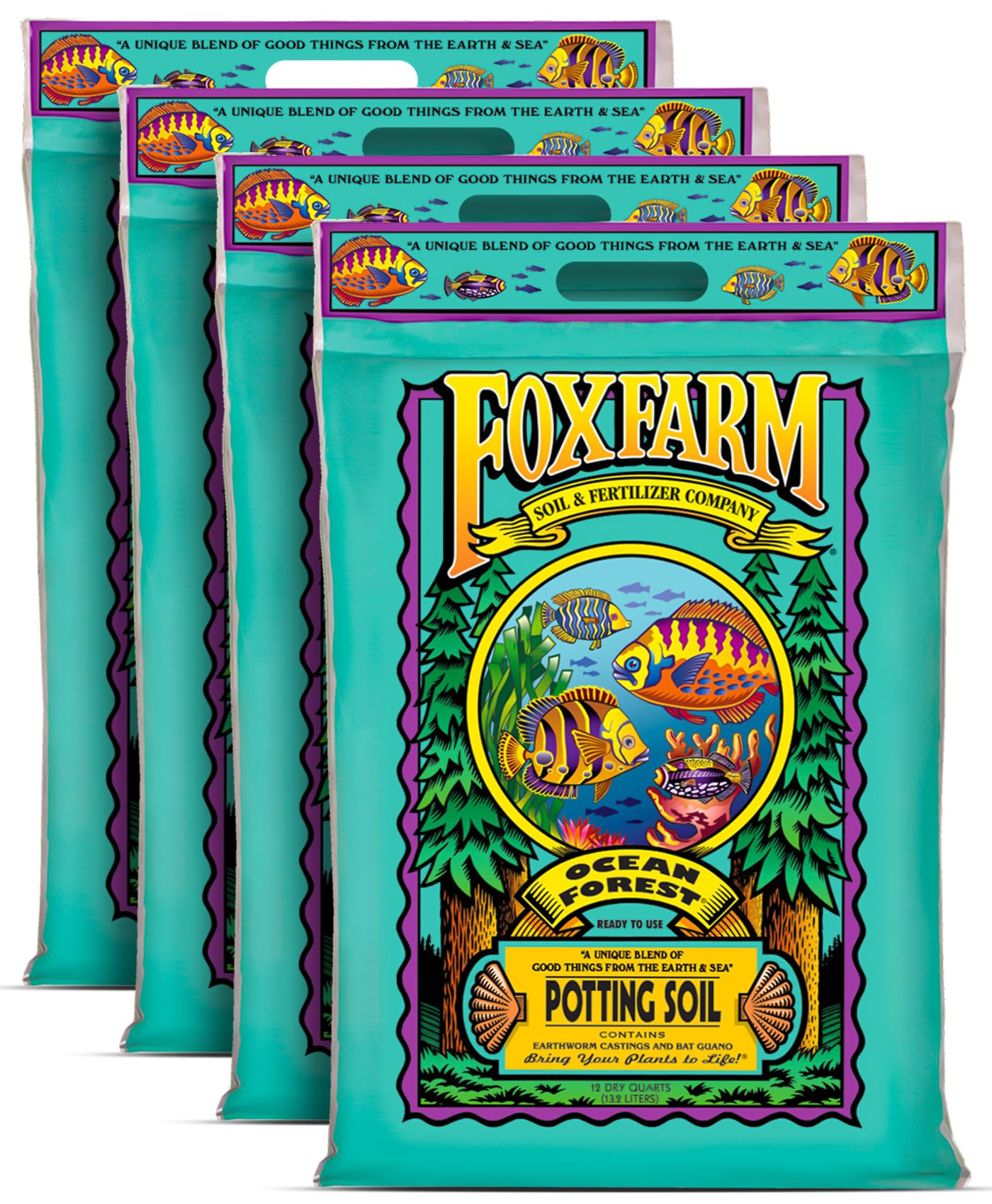
A premium, nutrient-packed blend that serious container gardeners swear by.
FoxFarm Ocean Forest is the soil you reach for when you are ready to give your tomatoes the best possible start. It combines aged forest products, sandy loam, and sphagnum peat moss for drainage and aeration, then adds fish meal, crab meal, and earthworm castings for a deep nutrient profile. Customers note that the pH balance sits around 6.8 — right in the balance for tomatoes — and that plants grow bigger and healthier compared to standard mixes. The texture is light and aerated straight out of the bag, so there is no need to amend it before planting.
The catch is the price, and the bag configuration. This listing is a 4-pack of 12-quart bags, giving you 48 quarts total — a lot of soil for a significant investment. Several reviewers point out they mix it with a more budget-friendly base to extend the value while still getting the nutrient boost. It is ready to use immediately, with the manufacturer suggesting you skip nitrogen fertilizers at first and instead try their Big Bloom Liquid Plant Food later in the season.
A step above the rest: If you are growing prize-worthy heirloom tomatoes and want a soil that does not cut corners on ingredients or texture, this mix is tough to top.
Who it suits: Dedicated container growers who prioritize premium organic ingredients and are willing to pay for a proven nutrient-rich blend.
Who might pass: Anyone on a strict budget or needing a single smaller bag for a quick pot — this is a multi-bag commitment.
3. Espoma Organic Potting Soil Mix

The go-to organic mix if you hate picking big sticks out of your containers.
Espoma built this mix around sphagnum peat moss, humus, and perlite, then enriched it with earthworm castings, alfalfa meal, kelp meal, and feather meal. what separates it from other organic blends is the texture. One buyer summed it up perfectly: “Espoma has a cleaner, no big chunks mix that I am looking for in my containers.” That matters when you are repotting a sensitive houseplant or a tomato that needs consistent root contact. The Myco-Tone — a proprietary blend of endo and ecto mycorrhizae — helps roots absorb water and nutrients more efficiently.
The 2 cubic foot bag gives you plenty of soil for multiple large containers. Shoppers say the soil does not get dense or crusty over time, and water retention hits a good middle ground. The biggest downside is the price — it sits at a premium level, and some buyers find they need to add extra perlite for plants that need very sharp drainage, though most find it works well as is for general container use.
The clean alternative: If the thought of fishing wood chunks out of your potting soil annoys you, Espoma gives you a smooth, consistent mix that is gentle on roots and packed with organics.
Best for: Gardeners who value a fine, uniform texture and want organic ingredients without large debris — especially for repotting established plants.
Consider another if: You need the absolute lowest price per cubic foot, or you prefer a heavier, denser soil for top-heavy plants.
4. Miracle-Gro Moisture Control Potting Mix

The bag that forgives you when you forget to water — or water too much.
This is the soil for anyone who has ever killed a tomato by overwatering or underwatering. Miracle-Gro’s exclusive AquaCoir Formula absorbs water, then releases it slowly as the plant needs it. For a container tomato sitting on a hot balcony, that buffer is a lifesaver. The mix also feeds plants for up to 6 months . Buyers report that it drains well and “doesn’t tend to pack down enough to be hard” — which means the roots stay loose and oxygenated.
One experienced reviewer has used this mix for over 10 years to start 500-700 seeds annually, reporting nearly 100% germination. The 2 cubic foot bag is heavy (40.5 pounds) but fills two 14-inch containers, making it a solid value for volume. The main trade-off is the high peat content, which holds moisture well but requires careful watering if you are using it for seed starting, as it can stay too wet for delicate sprouts.
The forgiving mix: If your watering schedule is inconsistent or you live in a hot climate where pots dry out fast, this is your best defense against wilted, stressed plants.
Reach for this if: You want a large, affordable bag that actively manages moisture and feeds your tomatoes for months without extra fertilizer.
Look elsewhere if: You prefer a purely organic mix or you are starting seeds in this soil and need a finer, less moisture-retentive texture.
5. Miracle-Gro Potting Mix (8 qt. 3-Pack)

Three lightweight bags that are easy to carry and perfect for smaller pots.
This is the same reliable Miracle-Gro formula — which feeds plants for up to 6 months and grows plants twice as big (vs. unfed plants) — but split into three 8-quart bags. The big advantage here is portability. A single 8-quart bag is much easier to lug up stairs or into a car than a 2 cubic foot monster. Each bag fills two 8-inch containers, so this three-pack covers a handful of medium pots or a couple of larger ones. Buyers appreciate that the soil “is well draining and doesn’t tend to pack down enough to be hard,” which keeps water moving to the roots.
The trade-off is obvious: you get less total soil for your money compared to a single large bag. This pack makes sense if you are working with several medium containers and do not want to wrestle a 40-pound sack. The 8-quart size is also convenient if you have limited storage space. Just know that if you are filling a standard 5-gallon pot, each bag will fall short — you will use a bag and a half or more per pot.
The easy-haul option: Perfect for gardeners who want the reliable Miracle-Gro feeding formula without the physical struggle of a giant, heavy bag.
Best for: Container gardeners with a few medium pots who want a manageable, storable bag that still delivers the full grow-power.
Not ideal for: Anyone filling multiple large 5-gallon pots, where a single larger bag would be far more economical.
6. Michigan Peat General All Purpose Premium Potting Soil

The 50-pound workhorse for filling big containers while staying affordable.
If you are growing tomatoes in a half-dozen large pots, this bag brings serious volume at a price that is hard to match. Michigan Peat combines reed sedge peat, perlite, and sand with starter and slow-release fertilizers, giving your tomatoes a steady nutrient supply without you needing to mix in extra amendments. It is ready to use straight from the bag, and owners mention it has “perfect consistency for potting” and works well for both pots and container gardens.
The downsides are honest ones. Several customers note that this soil can come with fungus gnats — the tiny flying bugs that thrive in moist organic matter. That is a risk with many peat-based soils, but it appears more frequently in reviews here. You can let the soil dry out a bit before planting to discourage gnats, or treat it with a biological control. The soil also arrives moist, which is normal for peat mixes but can be surprising if you expect dry, powdery dirt.
The volume leader: When you need to fill a lot of containers on a budget, this is the most economical pick — just be prepared to manage the potential gnat issue proactively.
Reach for this if: You have many large pots to fill, you want slow-release fertilizer built in, and you are okay taking steps to prevent fungus gnats.
Look elsewhere if: You want a premium organic mix, a gnat-free guarantee, or a smaller, lighter bag for a single container.
7. Premium Potting Soil Mix with Peat Moss, Vermiculite, Perlite

A fine, fluffy mix that gives seedlings a gentle, well-aerated start.
This bag is all about texture. The blend of peat moss, vermiculite, and perlite creates a light, fluffy soil that buyers describe as “excellent” for holding moisture without sogginess and providing “great drainage.” It is pH-controlled for a broad spectrum of plants, which takes the guesswork out of balancing acidity for tomatoes. Reviewers have used it successfully for germinating petunias and report that it “does not appear to harden around the roots” — exactly what you want when transplanting seedlings into their final pot.
At 8 quarts, this is a small bag. It is ideal for a single medium container, for starting a few seedlings, or for mixing with a larger base soil to improve aeration. Compared to the 20-quart Coast of Maine, this bag is a fraction of the volume (a 2.5x gap). The price per quart is higher than the bulk options, so it makes sense as a targeted purchase rather than a cheap fill. If you are doing a single tomato plant on a patio and value a clean, residue-free texture, this is a solid choice.
The precision blend: If you want a perfectly balanced, fine-textured soil for seed starting or a single small container, this mix delivers excellent root growth and moisture control.
Best for: Gardeners starting seeds or filling one medium pot who want a reliable, pH-balanced mix with a light, fluffy structure.
skip it if: You need to fill multiple large containers — the small bag runs out fast and the per-quart cost adds up.
Understanding the Specs
Volume — Quarts vs Cubic Feet
This is the most practical spec for a container gardener. 1 cubic foot equals about 25.7 dry quarts. A standard 5-gallon pot needs roughly 14 to 16 quarts of soil to fill. A 20-quart bag covers one 5-gallon pot with a little left over; a 2 cubic foot bag fills about four 5-gallon pots. When you are reading the bag, think first about how many pots you have and how big they are — that tells you which size to buy.
Primary Ingredients — What They Do
Sphagnum peat moss holds water and lightens the soil. Perlite (those white popcorn-like rocks) creates air pockets for drainage. Vermiculite (the golden flakes) absorbs water and nutrients and releases them slowly. Composted manure and worm castings add organic nutrients. Blended together, these ingredients create a soil that drains fast enough to prevent root rot but stays damp between waterings.
FAQ
Can I use garden soil from my yard for container tomatoes?
How much soil does a single tomato plant need in a pot?
What does “feeds up to 6 months” mean on a bag?
Is organic potting soil better for tomatoes?
What causes fungus gnats in potting soil?
Should I mix perlite into my potting soil?
Can I reuse potting soil from last year for new tomatoes?
What is the difference between potting mix and potting soil?
Final Thoughts: The Verdict
For most container tomato growers, the container soil for tomatoes winner is the Coast of Maine Organic & Natural Planting Soil because it delivers a full 20-quart bag of OMRI-listed organic compost blend that fits one 5-gallon pot perfectly and gets excellent reviews for plant health. If you want the most forgiving moisture control for hot balconies or inconsistent watering, grab the Miracle-Gro Moisture Control Potting Mix. And for a premium, nutrient-dense start with a proven reputation, the standout is the FoxFarm Ocean Forest Potting Soil.
How We Picked
We do not accept paid placement. Every pick is matched to a real buyer and a real use-case; we do not hands-on test units.
Sources & Methodology
Specifications: manufacturer listings and product documentation. Review insights: verified customer reviews, as of July 2026. Pricing: not shown on this page (it changes often); check the current price via the retailer link.
As an Amazon Associate, WellFizz earns from qualifying purchases. This does not affect which products we feature.
Related Guides

Mo Maruf
I created WellFizz to bridge the gap between vague wellness advice and actionable solutions. My mission is simple: to decode the research and give you practical tools you can actually use.
Beyond the data, I am a passionate traveler. I believe that stepping away from the screen to explore new environments is essential for mental clarity and physical vitality.