Our readers keep the lights on and my smoothie glass nicely filled. As an Amazon Associate, I earn from qualifying purchases.
Specs are compiled from manufacturer listings and verified buyer reviews and can change over time — please confirm the key details on the product page before buying.
Lying awake at 3 AM or dragging through your morning is often your body’s internal clock being out of sync. The right light—at the right time—can gently reset that rhythm without pills or willpower. This guide cuts through the noise to find the lamps that actually help you fall asleep faster and wake up feeling human again.
I’m Mohammad Maruf, founder and writer at WellFizz. This guide compares manufacturer specs and verified customer reviews to highlight each lamp’s real strengths and trade-offs.
Whether you struggle with seasonal blues or chronic restlessness, the right circadian rhythm lighting for insomnia can retrain your brain to sleep when you want and wake with real energy instead of a fog.
Quick Picks
- Philips SmartSleep Wake-up Light — Best Overall
- LASTAR Light Therapy Lamp — Top Performer
- Circadian Optics Langham Clinical Light Therapy — Clinical Grade
- 12,000 Lux Light Therapy Lamp — Most Versatile
- Verilux HappyLight Duo – 2-in-1 Light Therapy — Best Value
- Beurer TL95 Light Therapy Lamp with 10,000 Lux — Premium XL
- Circadian Optics Lumos 10 — Budget Champion
How To Choose The Best Circadian Rhythm Lighting For Insomnia
Not all light therapy lamps are designed to regulate your sleep-wake cycle. For insomnia, you need a lamp that delivers enough intensity at the right color temperature, with a timer or simulation feature that mimics a natural dawn and dusk. These three specs separate a gimmick from an effective tool.
Lux Output and Distance
Lux measures how much light hits your eyes. The clinical standard is 10,000 lux at a specific distance—usually 12 to 15 inches from your face. A lamp that claims 10,000 lux but only at 6 inches is far less effective than one that delivers that intensity at a comfortable arm’s length. Look for the stated distance in the specs, not just the lux number.
Color Temperature and Spectrum
Daylight-mimicking lamps sit around 5500K to 6500K (Kelvin) for morning use, which signals your brain to suppress melatonin and boost cortisol. For evening winding down, warmer amber tones around 1800K to 3000K help prepare your body for sleep. Some lamps offer multiple color temperatures; others are fixed at cool daylight only—choose based on if you need a single wake-up tool or an all-day circadian companion.
Timer and Simulation Modes
A simple on/off switch won’t cut it for insomnia. Look for a sunrise simulation that gradually brightens over 20-30 minutes before your alarm, so you wake naturally instead of being jolted. Sunset simulation does the reverse—fading to a warm glow that tells your brain it is time to produce melatonin. A programmable timer (15 to 120 minutes) also helps you maintain a consistent light-therapy routine, which is the key to resetting a disrupted sleep cycle.
Quick Comparison
| Model | Best For | Lux Output | Color Temperature | Timer / Simulation | Amazon |
|---|---|---|---|---|---|
| Philips SmartSleep HF3520/60 | Sunrise/sunset simulation | — (simulation) | Colored sunrise/sunset | Sunrise + sunset + 5 sounds | Amazon |
| LASTAR 12000LUX Floor Lamp | High-intensity floor lamp | 12,000 lux | 3000K / 4000K / 5000K / 6000K | 15/30/45/60 min timer | Amazon |
| Circadian Optics Langham | Large panel, clinical grade | 10,000 lux at 12″ | 5500K | Rotary dimmer (no timer) | Amazon |
| 12K Lux Floor Lamp (EVATEALE) | Multi-color + remote control | 12,000 lux | 1800K / 3000K / 4500K / 6000K | Timer + remote + memory | Amazon |
| Verilux HappyLight Duo | 2-in-1 therapy + task lamp | 10,000 lux | 3 color temperatures | 7 brightness levels | Amazon |
| Beurer TL95 | XL surface, premium build | 10,000 lux | Daylight LEDs | 30-120 min timer + memory | Amazon |
| Circadian Optics Lumos 2.0 | Compact, travel-friendly | 10,000 lux | 5500K | 3 brightness levels | Amazon |
In‑Depth Reviews
1. Philips SmartSleep Wake-up Light, Colored Sunrise and Sunset Simulation, HF3520/60

This alarm clock wakes you with a colored sunrise instead of a jarring jolt.
This is not a traditional bright-light therapy lamp—it’s a bedside alarm clock that simulates a 30-minute sunrise and a sunset that fades to a warm glow. Unlike the other picks here that blast you with 10,000 lux from a distance, the Philips HF3520/60 uses colored light simulation to gradually shift your sleep-wake cycle. Five natural sounds (birds chirping, ocean waves) replace a harsh buzzer. buyers report that the sunrise simulator really works, with one reviewer saying, “For the first time in years I am able to get up on time and have energy in the mornings!”
It also functions as a bedside reading lamp with 20 brightness settings and includes an FM radio and tap-snooze feature. The sunset simulation is the hidden gem here—one long-time user noted it was the true bonus for winding down at night. If your main struggle is waking up in the dark or falling asleep with a racing mind, this lamp targets both ends of the cycle in a way that a standard 10,000-lux panel cannot. It does not deliver the clinical 10,000 lux for seasonal affective disorder, so if you need intense bright-light therapy, look at the floor lamps below.
Gentle circadian reset: Best for people who need a gradual dawn and dusk simulation rather than high-intensity light therapy. The sunset feature is a rare find in this category.
Your go-to if: You dread your alarm and want a natural wake-up without a blaring sound. The sunset simulation also helps if you have trouble winding down at night.
Not for you if: You need 10,000 lux clinical bright light for seasonal depression or severe insomnia—this lamp is a simulation tool, not a therapy panel.
2. LASTAR Light Therapy Lamp, 12000LUX Floor Sunlight Lamp

This floor-standing therapy lamp delivers 20% more lux than the 10,000-lux standard.
This is the brightest dedicated therapy floor lamp in the lineup—12,000 lux versus the typical 10,000 lux that most competitors offer, It offers four color temperatures (3000K, 4000K, 5000K, and 6000K) and five brightness levels, plus a timer with 15/30/45/60-minute options. The head rotates 180° front-to-back and 180° left-to-right, and three height adjustments (21.5, 33.7, and 52.75 inches) mean you can use it as a desk lamp or a standing floor lamp in the living room.
Owners mention that the heavy base keeps it planted firmly and that the multiple settings are perfect for different lighting needs throughout the day. One reviewer noted that after a year of use it is still working, which points to decent build quality. The remote control works up to 65.6 feet away, though some users find the remote finicky—you may need to aim it carefully. The lamp also includes a memory function that recalls your last settings, so you do not have to reprogram it every morning.
What stands out
- 12,000 lux is the highest output here—at 12,000 lux versus the 10,000 lux of most competitors
- Four color temps from warm (3000K) to cool daylight (6000K)
- Three height adjustments for desk or floor use
What to watch
- Remote control can be inconsistent according to some buyers
- Heavy base limits portability if you want to move it between rooms
Best for intensity seekers: If you want the brightest therapy lamp available and need a floor-standing option that doubles as a room light, this is your pick.
The catch: The remote is a weak point, and the heavy base makes it less portable than smaller desktop units.
3. Circadian Optics Langham Clinical Light Therapy Lamp
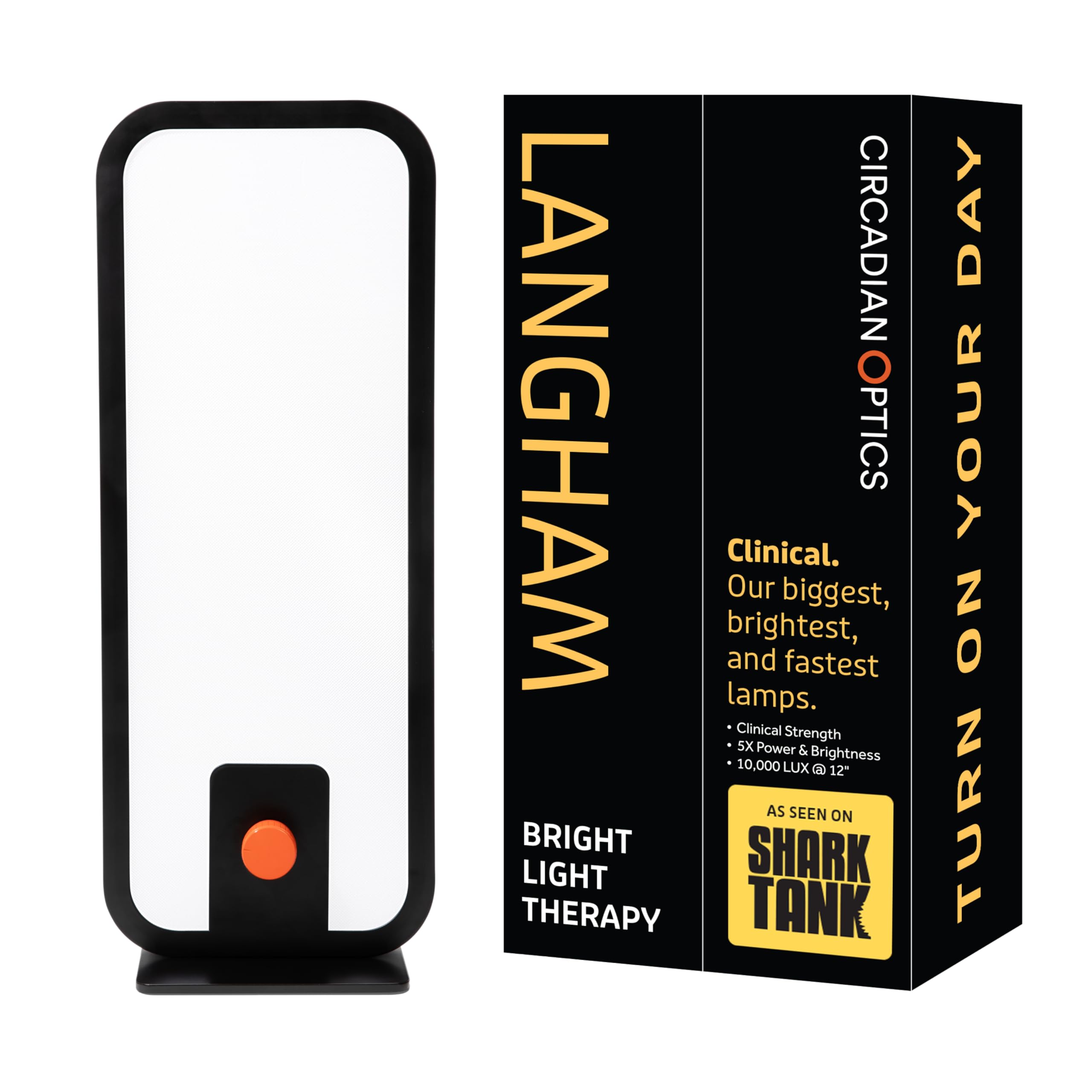
A massive 6 x 17 inch panel that delivers 10,000 lux at a comfortable 12-inch distance.
The Langham is Circadian Optics’ biggest and most powerful model. The giant light panel (6 x 17 inches) spreads light evenly across your field of view, making it among the most comfortable therapy lamps to sit in front of for 20-30 minutes. It delivers 10,000 lux at 12 inches with a 5500K color temperature that mimics the midday sun, and it has a 98 CRI (Color Rendering Index), which means colors look truer under this light than under most therapy lamps.
Customers note they noticed improved energy, mood, and mental clarity within just a few days, and one buyer mentioned needing less caffeine after using it. The single rotary knob adjusts brightness smoothly, but there is no built-in timer—you have to monitor the time yourself. Some users found it larger than expected for a desk lamp, so measure your space: the panel is 17 inches wide, and the lamp sits 18 inches tall with a 7-inch base depth. It comes with a 4-year EasyReplace warranty and US-based customer service, which adds confidence. Unlike the LASTAR floor lamp, the Langham is a desktop unit—consider if you want a floor-standing or desk-based form factor.
Maximum comfort per session: The oversized panel reduces the need to sit perfectly still in front of a small hotspot. Great for people who want a true clinical-grade session without the clinical look.
Reach for this if: You want the most comfortable, evenly diffused 10,000 lux experience from a desk lamp. The large panel means you can move your head without losing the intensity.
Look elsewhere if: You need a built-in timer or a sunrise/sunset simulation—this is a straight therapy lamp with no simulation modes.
4. 12,000 Lux Light Therapy Lamp (EVATEALE) Floor Lamp with Remote
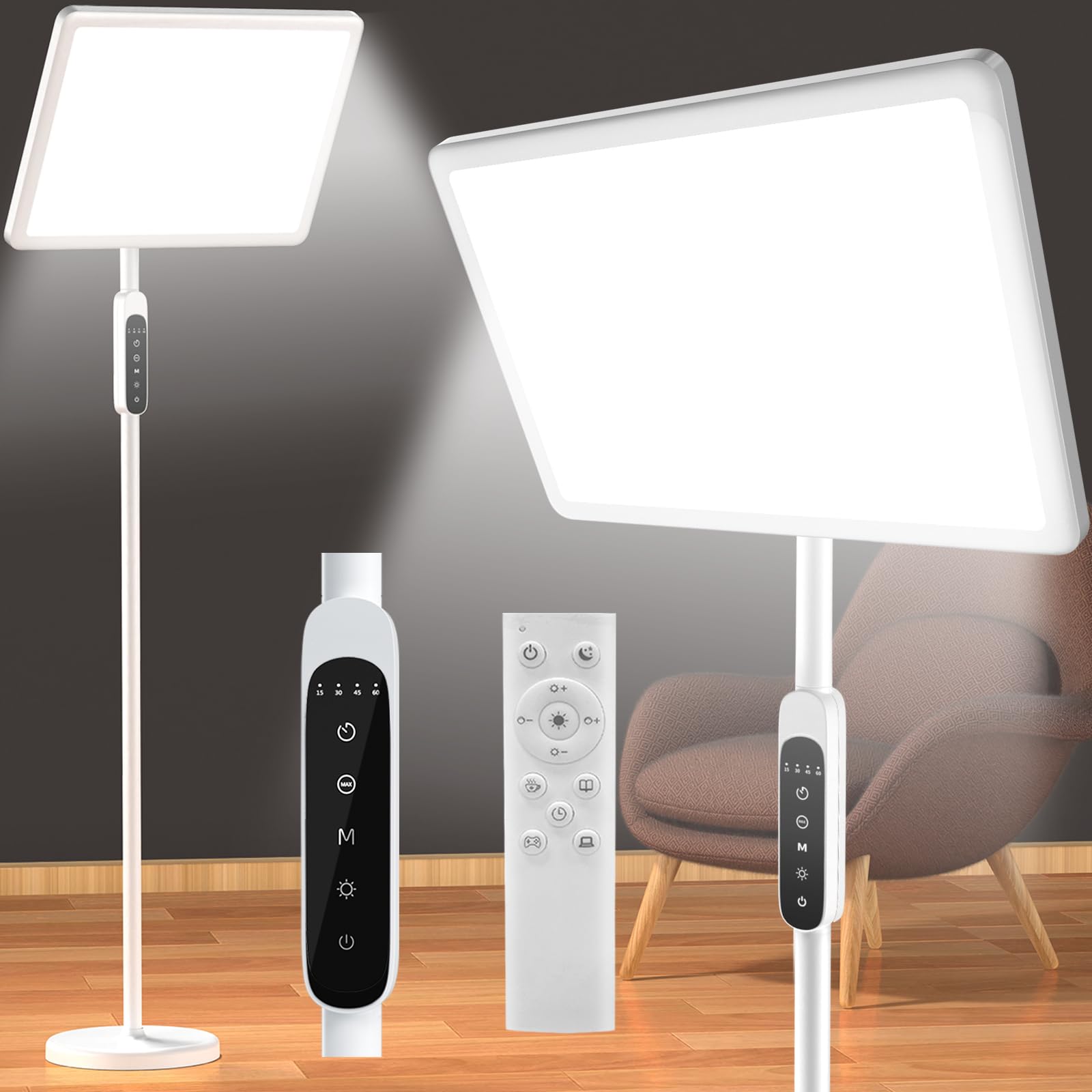
A floor lamp with an amber 1800K setting for winding down at night.
This is the only lamp in the lineup that includes an 1800K amber color temperature, which is a soft warm glow designed to signal your body to produce melatonin in the evening. Alongside that, you get 3000K, 4500K, and 6000K daylight options, plus five brightness levels ranging from 5% to 100%. Like the LASTAR, it delivers 12,000 lux at 12 inches, so it matches the highest intensity in this roundup. The timer, remote control, and memory function add convenience—set it once and the lamp remembers your preferences.
Buyers highlight the adjustable head (180° rotation) and three height adjustments (20.5, 36.22, and 51.97 inches) as key strengths. One owner reported it “enhances sleep and digestion” and called the amber/orange settings great for winding down. Another noted that some pieces on the main rod feel a bit cheap considering how beautiful and bright the light is, so the build quality may not match the premium price tag. Assembly is tool-free and takes about 5 minutes. The lamp weighs 8 pounds and has a stable base, so it stays put on carpet or hardwood.
Why it stands apart
- 1800K amber setting is unique—great for evening wind-down
- 12,000 lux output matches the brightest lamps here
- Dual control: touch panel and remote with memory function
Where it slips
- Some rod pieces feel less premium than the light quality
- Remote uses 2 AAA batteries (included) but can be finicky
Pick this for dual-purpose lighting: Use the 12,000 lux daylight setting in the morning for therapy, then switch to amber in the evening to prepare for sleep. No other lamp here offers that evening-specific mode.
skip it if: Build quality is your top priority—a few buyers noted the rod feels cheaper than expected for the price tier.
5. Verilux HappyLight Duo – 2-in-1 Light Therapy & Task Desk Lamp

A gooseneck desk lamp that doubles as a 10,000-lux therapy light for work and sleep.
The HappyLight Duo is a 2-in-1 device—a flexible gooseneck desk lamp for reading and detail work, plus a full-spectrum 10,000 lux therapy lamp. It offers 3 color temperatures (full spectrum, cool, and warm) and 7 brightness levels, so you can dial in the right light for morning therapy or evening ambient reading. The Optix lens controls glare and reduces eye strain, and the touch controls let you switch modes easily. It also includes a USB charging port on the base, which is a practical bonus if your desk outlets are crowded.
Buyers consistently praise the build quality and versatility. One customer observed, “I did all the research, this is the one,” and another noted it improves sleep and circadian rhythm, using it for morning light and evening reading. The 3-year manufacturer warranty is a solid confidence signal, and Verilux has been making healthy lighting for over 60 years. The main trade-off versus the LASTAR or EVATEALE floor lamps is that the HappyLight Duo is a desk lamp—you cannot use it as a floor-standing unit. Unlike the Circadian Optics Lumos, it offers multiple color temperatures instead of a single 5500K setting.
Smart 2-in-1 design: Gets you a therapy lamp and a reading lamp in one unit, saving desk space. The gooseneck lets you point light exactly where you need it.
Best for desk workers: If you spend all day at a desk and want a lamp that serves both therapy and task lighting, this is the most efficient choice.
Not for you if: You want a floor-standing lamp or a sunrise/sunset simulation—this is a static therapy panel plus task light, not a wake-up simulator.
6. Beurer TL95 Light Therapy Lamp with 10,000 Lux

A German-engineered XL panel lamp with a 30-120 minute timer and memory function.
The Beurer TL95 stands out for its extra-large illumination area—14.56 x 11.81 inches—which distributes 10,000 lux evenly across a wide surface so you do not have to sit perfectly still. It offers 6 brightness levels, a timer that runs from 30 up to 120 minutes, and a memory function that recalls your last settings. The lamp uses UV-free, flicker-free LEDs designed to mimic sunshine, and the adjustable aluminum stand lets you tilt the panel to the right angle. The build quality reflects German engineering, with a polished plastic finish that feels sturdy.
One reviewer who suffered from Seasonal Affective Disorder said that as soon as they received this lamp they saw a huge difference in mood and anxiety levels immediately, and they look forward to using it every morning. Another buyer compared the TL95 to the pricier Beurer TL100 and said the TL95 is better in their opinion. The main limitation is that the color temperature is fixed at daylight—there is no warm amber or evening mode, so this is a pure therapy lamp for morning or afternoon use, not a circadian rhythm tool for the full day. Compared to the EVATEALE lamp, the Beurer lacks the amber setting but offers a larger single panel and a more refined build.
What makes it premium
- XL panel (14.56 x 11.81 in) provides even, wide light distribution
- Timer goes up to 120 minutes—longer than most competitors
- Memory function means no re-programming each session
What it lacks
- Fixed daylight color temperature—no warm or amber modes
- Plastic base feels slightly less premium than the aluminum stands on other models
Choose this for consistent sessions: The long timer and memory function make it easy to build a daily routine without fiddling with settings. Ideal for morning-only light therapy.
Pass on it if: You want a lamp that can also produce warm evening light—this lamp is daylight-only and designed for bright therapy, not wind-down.
7. Circadian Optics Lumos 10,000 Lux Light Therapy Lamp
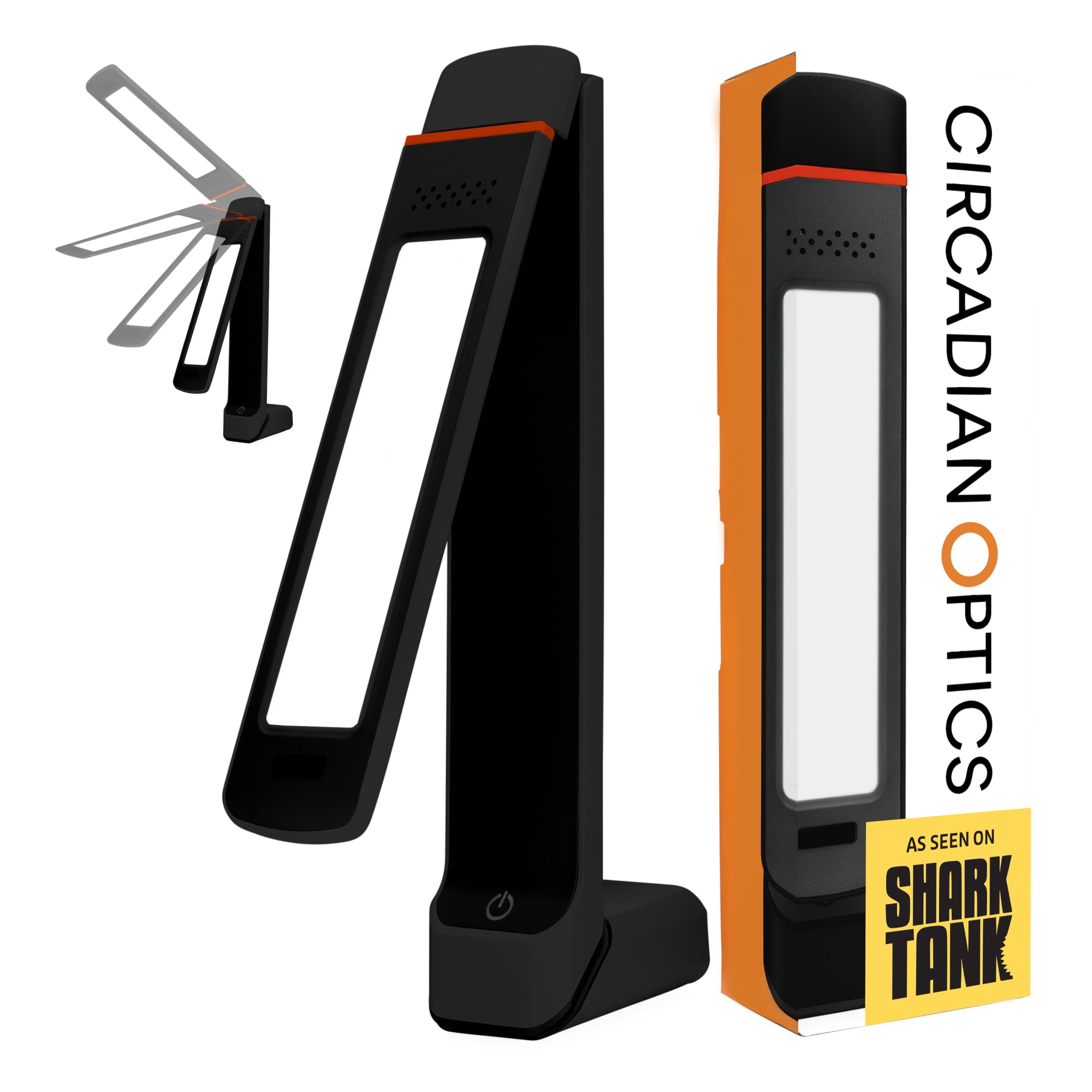
A compact, Shark Tank-backed lamp that folds flat for travel.
The Lumos is Circadian Optics’ best-selling lamp, and it is easy to see why: it delivers the clinical 10,000 lux at 5500K in a package that folds down like a flat iron for travel. The 270-degree rotating light panel means you can angle it toward your face from almost any position, and the weighted base keeps it stable even at full tilt. It has three brightness levels controlled by a single button, and the LEDs are rated for 50,000 hours of use. A 4-year EasyReplace warranty backs the build, which is generous for the price tier.
Reviewers point out that it helps with insomnia and SAD, with one reviewer noting it normalized their blood pressure. Another said it is bright and compact, fitting easily on a bathroom counter. The catch? There is no built-in timer, the power uses a barrel connector (not USB-C), and the folding design can feel a bit like a “giant flip phone” according to one user. Unlike the larger Langham, this one has a smaller footprint (6 x 3 x 10 inches), so it is better for travel or small desks. It lacks the multi-color temperatures of the EVATEALE or Beurer models, so it is a straightforward 10,000 lux therapy lamp with no circadian simulation features.
Compact and effective: Gets the job done at the standard 10,000 lux and folds to a travel-friendly size. The 4-year warranty is a standout for this price point.
Grab it for a starter lamp: If you are new to light therapy or need a lamp you can take on trips, this is the most portable pick at the standard clinical intensity.
pass on it if: You need a timer, multiple color temperatures, or a larger panel—this lamp is basic but effective, with no frills.
Understanding the Specs
Lux — The Brightness That Matters
Lux tells you how much light actually reaches your eyes at a given distance. The clinical standard for light therapy is 10,000 lux, which is roughly the brightness of a sunrise on a clear day. A lamp rated at 10,000 lux at 12 inches is more effective than one that reaches 10,000 lux at only 6 inches, because you can sit farther back and still get the full dose. The LASTAR and EVATEALE lamps push beyond the standard to 12,000 lux..
Color Temperature (Kelvin) — Cool for Morning, Warm for Night
Measured in Kelvin (K), color temperature sets the visual tone of the light. A cool 5500K to 6500K range mimics midday sun and suppresses melatonin, which is ideal for morning therapy to wake you up. Warm tones like 1800K to 3000K create a cozy amber glow that signals your body to produce melatonin for sleep. Some lamps offer multiple color temperatures (like the EVATEALE with its 1800K amber setting), while others are fixed at one temperature. For insomnia, a lamp that can do both cool morning light and warm evening light gives you more flexibility throughout the day.
FAQ
How close do I need to sit to a 10,000 lux therapy lamp?
Can I use a light therapy lamp at night for insomnia?
What is the difference between sunrise simulation and bright light therapy?
Do I need to look directly at the light therapy lamp?
How long should I use a circadian rhythm lamp each day?
Can children use circadian rhythm lighting?
What does UV-free mean and why does it matter for sleep lamps?
Is a floor lamp better than a desk lamp for light therapy?
Do these lamps help with jet lag?
Can I use a light therapy lamp if I have bipolar disorder or a seizure condition?
Final Thoughts: The Verdict
For most buyers, the best circadian rhythm lighting for insomnia winner is the Philips SmartSleep HF3520/60 because it targets both falling asleep and waking up with its colored sunrise and sunset simulation, backed by real buyer results. If you want the highest intensity for morning therapy, grab the LASTAR 12000LUX Floor Lamp. And for a compact travel-friendly option that still delivers the full 10,000 lux, the standout is the Circadian Optics Lumos.
How We Picked
We do not accept paid placement. Every pick is matched to a real buyer and a real use-case; we do not hands-on test units.
Sources & Methodology
Specifications: manufacturer listings and product documentation. Review insights: verified customer reviews, as of July 2026. Pricing: not shown on this page (it changes often); check the current price via the retailer link.
As an Amazon Associate, WellFizz earns from qualifying purchases. This does not affect which products we feature.
Related Guides

Mo Maruf
I created WellFizz to bridge the gap between vague wellness advice and actionable solutions. My mission is simple: to decode the research and give you practical tools you can actually use.
Beyond the data, I am a passionate traveler. I believe that stepping away from the screen to explore new environments is essential for mental clarity and physical vitality.