Our readers keep the lights on and my smoothie glass nicely filled. As an Amazon Associate, I earn from qualifying purchases.
Specs are compiled from manufacturer listings and verified buyer reviews and can change over time — please confirm the key details on the product page before buying.
You mix a bag of cement, pour it into a mold, and wait — only to have your stepping stone crumble, take days to harden, or come out rough and ugly. That is frustrating. This guide covers four concrete mixes built for craft projects like yours, so you know exactly which bag to grab before you buy.
I’m Mohammad Maruf — the founder and writer behind WellFizz. This guide is built by comparing the manufacturers’ published specifications and the patterns across verified customer reviews, so you get each pick’s real strengths and trade-offs instead of marketing spin.
The four mixes below cover quick-setting formulas for impatient DIYers, premium blends that polish like a pro, and budget bags that handle small jobs without waste. If you are tired of guessing which bag will actually hold a footprint and which one just looks like a rock, this breakdown of the best concrete mix for stepping stones keeps your project on solid ground without the trial and error.
Quick Picks
- Akona Instant Anchoring Cement, 10 Pound Bag — Best Overall
- Jennifer’s Mosaics Outdoor Cement, 10-Pound — Best Value
- Midwest Products Milestones Premium Stepping — Premium Pick
- Quikrete Concrete Mix Bag 10 Lbs. — Budget Champion
How To Choose The Best Concrete Mix For Stepping Stones
Picking the wrong mix is the fastest way to turn a weekend craft into a brittle, cracked disappointment. Stepping stones need a blend that pours smooth, holds detail (like a handprint or footprint), and survives the weather — plain patio concrete is often too coarse or slow for this. Here is what to look at before ordering.
Bag Size and How Many Stones You Get
The bag weight tells you the coverage, but the math differs by mix. An 8-pound box can make roughly two small stepping stones with a little leftover, while a 10.5-pound bag can produce three 8-inch stones according to buyers. Check the unit count — a “10-pound” bag might be 10.5 actual pounds, so reading the fine print avoids a mid-project shortage.
Setting Time Matters More Than You Think
Some mixes harden in as little as 20 minutes (quick-setting), which is handy for setting posts but stress-inducing if you are still pressing leaves into wet concrete. Standard curing takes 24 to 48 hours, giving you time to decorate, imprint, and smooth edges. Decide if speed or flexibility matters more for your project.
Finish and Texture
Craft-grade stepping stone mixes often include latex or fine cement for a smooth, professional surface that holds imprints cleanly. Cheaper concrete blends contain sand and gravel, which makes them stronger for structural jobs but leaves a rough, pebbly finish on a garden stone. Look for keywords like “super-fine” or “latex” if you want a polished result.
Quick Comparison
| Model | Best For | Bag Weight | Setting Time | Finish | Amazon |
|---|---|---|---|---|---|
| Akona Instant Anchoring Cement | Fast outdoor fixes | 10 lb | 20 minutes | Gritty (sand in mix) | Amazon |
| Jennifer’s Mosaics Outdoor Cement | Multiple craft stones | 10.5 lb | ~24 hours | Porcelain white | Amazon |
| Midwest Milestones Premium Mix | Professional smooth stones | 8 lb | ~48 hours | Smooth, with latex/curing agents | Amazon |
| Quikrete Concrete Mix 10 Lbs | Small budget projects | 10 lb | Standard (24‑48 hrs) | Gray with gravel | Amazon |
In‑Depth Reviews
1. Akona Instant Anchoring Cement, 10 Pound Bag
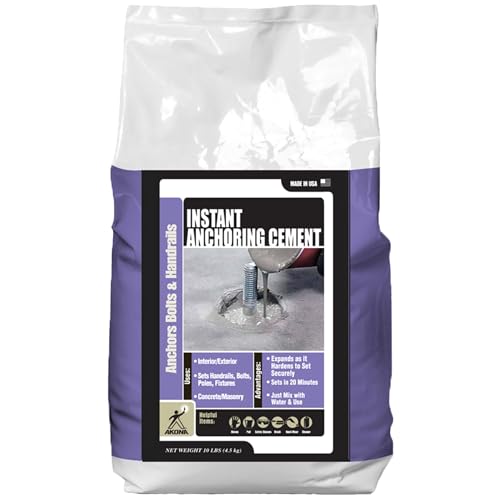
Sets in 20 minutes so you are not waiting all weekend for one stepping stone.
This is the mix you reach for when you need a result fast and you are okay with a little grit in the finish. The quick-setting formula (the powder hardens in 20 minutes) means you can mix, pour, imprint, and walk away with a usable stone in under half an hour — no babysitting wet cement for two days. One reviewer noted it “sets up quickly and is very solid,” which lines up with what the brand promises for indoor and outdoor use.
The trade-off is the texture: this is an anchoring mix designed for setting handrails, poles, and stepping stones — it is not a super-fine craft cement. The sand content gives the finished stone a rough, utilitarian look rather than a polished, porcelain-like surface. Unlike the Midwest Milestones below, which includes latex for a smooth finish, the Akona prioritizes speed and strength over aesthetics. For a garden path where function trumps beauty, that trade-off works fine.
At 10 pounds, this bag gives you a decent amount of mix for multiple small projects, though buyers report the quick-setting window takes a little practice if you are engraving details into the surface.
Sets fast, stays solid: Ready to use in 20 minutes — just add water, mix, and pour. One buyer called it “very easy to use” and liked it enough to buy a second bag for backup.
The texture catch: The finish is gritty (standard sand aggregate), so skip this if you want a glass-smooth stepping stone for handprints or memorial details.
Best for quick jobs: If you need a stepping stone today and are fine with a rough, natural look, this is the most efficient pick on the list. The 20-minute set time means no waiting.
Skip for polished projects: The rough finish and fast set make it hard to carve fine details — if you want a smooth surface or plan to add decorations, choose a craft-specific mix.
2. Jennifer’s Mosaics Outdoor Cement, 10-Pound

One box makes three 8-inch stones — that is more stepping stones per pound than any other pick here.
This is the craft cement that actually delivers on its promise for multiple stones. One buyer mentioned plainly: “I was able to make three stones from one box.” That is a huge advantage if you are making a whole garden path or a set of memorial stones for family members. The 10.5-pound bag (slightly heavier than the stated 10-pound name) comes to roughly 13 cups of dry mix, and the instructions are straightforward enough for a first-time cement user.
The finish dries to a “nice off-white” according to the same buyer, though experienced DIYers warn that the outdoor version is not smooth like its indoor counterpart — it contains sand, so it has a textured, less polished surface. Unlike the grainy Quikrete below, this is still craft-grade cement (no large gravel), but the texture means your stones will look more natural and rustic than perfectly smooth. At a 7.5 x 4.25 x 7.5 inch box size, this bag is compact but potent, easily beating the 8-pound Midwest for yield.
Buyers also note it dries within 24 hours, so you are not waiting two days to move your stone into the garden.
Three stones from one bag: Best yield in the list — 13 cups of mix makes three 8-inch stepping stones per the same verified buyer. Easy to measure and pour.
Not baby-smooth: The sand content gives the outdoor version a slightly rough texture, so it will not match the glassy polish of a premium latex blend like the Midwest Milestones.
Best for batch projects: If you are making multiple stepping stones at once (memorials, garden paths, kids’ handprint sets), the yield per box makes this the most cost-effective choice. The 24-hour drying time is reasonable.
Skip for smooth finishes: The outdoor formula has sand that leaves a textured surface — if you want a flawless white stone with no grit, you will be disappointed.
3. Midwest Products Milestones Premium Stepping Stone Cement Mix, 8 Pound

Super-fine cement with latex added — the smoothest stone surface you can mix at home.
This is the specialist in the group, formulated specifically for stepping stone kits with a blend of ultra-fine cement, latex, and curing agents that other mixes skip. The result is a “beautiful smooth stone” that owners mention holds fine details, beads, and colored gravel beautifully — one reviewer even used it for pet memorials that lasted “many years outdoors in weather extremes.” The mix claims it can withstand up to 250 pounds of pressure, so your stepping stone is garden-durable, not just decorative.
The obvious drawback is cost-per-stone: three reviewers flagged the price as steep. One noted it “makes only 2 small stones with leftover for small tin cup stone,” which is a far cry from the three stones you get from the Jennifer’s Mosaics bag. At 8 pounds (110 ounces) and a compact 6 x 4.5 x 6.5 inch box, you pay a premium for that silky finish. This is not a mixer for a full garden path — it is a weekend craft mix for a few centerpiece stones.
Unlike the rough, quick-setting Akona above, the Milestones blend dries in about 48 hours, giving you generous time to embed decorations, carve initials, or press children’s footprints into the surface.
Professional-grade smooth finish: The latex and super-fine cement formula produces a surface the Quikrete and Akona cannot match — buyers call it “beautiful” and note it handles fine decoration well.
Low yield, high cost: At 8 pounds you get only two small stones plus a tiny offcut, which makes this the most expensive per-stone pick — one buyer flatly called it “too expensive” for volume.
Best for projects where looks matter: If you are making a single commemorative stone with imprints, beads, or decorative gravel, the smooth, detailed result justifies the premium.
Skip for making multiple stones: The high price and low yield mean this is not a good choice for a full garden path — you will run out of mix fast and pay much more per stone.
4. Quikrete Concrete Mix Bag 10 Lbs.

The classic gray bag for small stepping stones when you need cheap and easy.
This is the most straightforward and affordable option here — a standard Portland cement, sand, and gravel blend in a 10-pound bag (27 x 8 x 9 inch dimensions). It works fine for basic stepping stones, and a 68-year-old buyer confirmed it was “easy to use” with no special mixing tricks. Another buyer specifically bought it for stepping stones and said “it absolutely did the job I wanted it to do.” For a low-stakes weekend project, it is tough to top the simplicity.
The catch is the gravel. Quikrete is a structural concrete mix, so it contains small stones that create a rough, pitted surface — nothing like the smooth finish of the Midwest Milestones. One buyer warned: “if you are doing anything but a small job, 10 pounds doesn’t go very far.” And the bag itself can be messy: one review noted the wrapping “escaped” during shipping, leaving everything dusty. Unlike the Jennifer’s Mosaics bag that comes with clear stepping stone instructions, Quikrete’s bag is generic — you will need to figure out water ratios yourself.
At this price point, the value is in the simplicity and availability, not the finish quality or yield.
Cheap and easy to use: The most familiar concrete mix on the list — buyers of all skill levels reported success without fuss. A single bag is good for one or two small stepping stones.
Gravel in the mix = rough finish: Not a craft cement — the sand and gravel create a bumpy, functional surface that will not hold fine imprints well. The bag dusty from shipping is a common complaint.
Best for simple, cheap stones: If you need a low-cost mix for a single stepping stone and do not care about a smooth, polished finish, this works fine and is easy to find.
Skip for decorative projects: The gravel content creates a rough surface that ruins handprints and imprints — choose the Midwest or Jennifer’s mix for any stone you want to look nice.
Understanding the Specs
Bag Weight and Yield
The bag weight (8 lb, 10 lb, or 10.5 lb) tells you roughly how many stepping stones you can expect. An 8-pound premium mix typically makes two small stones with a little leftover, while a 10.5-pound craft bag can produce three 8-inch stones. Weigh the bag yourself if possible — the “10-pound” label can actually mean 10.5 pounds, which changes the math for multi-stone projects. Customers note that lighter bags run out fast, so check the intended yield in reviews before committing.
Setting Time and Workability
This is the time between mixing and hardening. Quick-setting formulas (20 minutes) are great for impatient DIYers but leave zero margin for decorating. Standard blends take 24 to 48 hours to fully cure, giving you time to press in leaves, beads, footprints, or initials. The longer set also means the wet mix stays workable for adjustments. Premium stepping stone mixes often add latex or curing agents that extend working time while preserving a smooth final surface.
Finish Rating (Smooth or Gritty)
Not all concrete finishes look the same. Craft-grade stepping stone cement uses super-fine particles and sometimes latex to produce a smooth, professional surface that holds fine details. General-purpose structural concrete contains sand and gravel, which creates a rough, pebbly finish. If you want a stone that looks polished enough to display, look for “super-fine cement” or “latex” in the product description. If you are just adding color or placing it in a flower bed, a rough finish may be fine.
Additives (Latex and Curing Agents)
Premium stepping stone mixes include latex and special curing agents that do two things: the latex makes the wet cement smoother and stickier (so it holds intricate mold details), and the curing agents help the stone resist outdoor cracking and weather damage over years. These additives are the difference between a stone that cracks in the first freeze and one that survives extreme weather. Standard concrete mix from a hardware store usually lacks these extras.
FAQ
How many stepping stones can I make with one bag of concrete mix?
Can I use regular concrete mix from the hardware store for stepping stones?
What is the difference between quick-setting cement and regular concrete for stepping stones?
Does stepping stone cement need reinforcement like rebar or mesh?
How long does stepping stone cement take to dry before I can walk on it?
Is stepping stone cement weatherproof for outdoor use?
Can I color or paint stepping stone concrete after it dries?
What is the best concrete mix for making stepping stones with handprints or footprints?
Does a heavier bag (10.5 lb vs 8 lb) always mean more stones?
Can I use stepping stone mix for setting fence posts or garden stakes?
Final Thoughts: The Verdict
If you want one dependable pick, the best concrete mix for stepping stones is the Jennifer’s Mosaics Outdoor Cement because it balances a good yield (three stones per box), straightforward mixing, and a 24-hour drying time that leaves room to decorate. If you want a smooth, professional surface for imprinting fine details, grab the Midwest Milestones Premium Mix. And for the fastest turnaround — a garden stone ready in 20 minutes — the standout is the Akona Instant Anchoring Cement.
How We Picked
We do not accept paid placement. Every pick is matched to a real buyer and a real use-case; we do not hands-on test units.
Sources & Methodology
Specifications: manufacturer listings and product documentation. Review insights: verified customer reviews, as of July 2026. Pricing: not shown on this page (it changes often); check the current price via the retailer link.
As an Amazon Associate, WellFizz earns from qualifying purchases. This does not affect which products we feature.
Related Guides

Mo Maruf
I created WellFizz to bridge the gap between vague wellness advice and actionable solutions. My mission is simple: to decode the research and give you practical tools you can actually use.
Beyond the data, I am a passionate traveler. I believe that stepping away from the screen to explore new environments is essential for mental clarity and physical vitality.