Our readers keep the lights on and my smoothie glass nicely filled. As an Amazon Associate, I earn from qualifying purchases.
Specs are compiled from manufacturer listings and verified buyer reviews and can change over time — please confirm the key details on the product page before buying.
Buying a cheap PC monitor feels like a coin toss. You can get a screen that looks sharp and handles work and casual gaming well. Or you can end up with washed-out colors, a wobbly stand, and old ports. The difference between a great deal and a bad one usually depends on three numbers: the refresh rate (how many times per second the screen updates the image), the panel type (IPS versus older TN or VA), and the color accuracy. This guide picks the monitors that deliver where it really counts for your daily use.
I’m Mohammad Maruf — the founder and writer behind WellFizz. This guide is built by comparing the manufacturers’ published specifications and the patterns across verified customer reviews, so you get each pick’s real strengths and trade-offs instead of marketing spin.
Setting up a home office, building a dual-monitor workstation, or just needing a solid secondary screen — knowing what to look for in a cheap pc monitor can save you a headache and get you a daily workhorse that lasts.
Quick Picks
- ViewSonic VA2456A-MHD 24 Inch 1080p Monitor — Best Overall
- ASUS 24″ 1080P Computer Monitor (VA249QG) — Color Pro
- LG 24U411A-B 24-inch Full HD IPS Monitor — Sleek Performer
- Amazon Basics 24 Inch (23.8 inch viewable) — Budget Champ
- Dell 27 Monitor SE2725HM — Big Screen
How To Choose The Best Cheap PC Monitor
The budget monitor market has many options that look similar on paper but feel very different to use. The main problems are low refresh rates that make mouse movements feel sluggish, TN (Twisted Nematic) panels that look washed out from any side angle, and missing ports that force you to buy adapters. Here is what matters most.
Refresh Rate: The New Standard
Any monitor under 100Hz will feel dated for everyday use. A 60Hz monitor shows a new frame every 16.6 milliseconds, while a 120Hz monitor cuts that wait to 8.3 milliseconds. That means smoother scrolling through long documents, less eye strain when you move the cursor, and a much better experience in casual games. All five picks here run at 100Hz or faster.
Panel Type: IPS Is King
IPS (In-Plane Switching) panels keep consistent brightness and accurate colors no matter where you sit, with viewing angles up to 178 degrees. Older TN (Twisted Nematic) and VA (Vertical Alignment) panels shift colors when you move your head. Every product in this list uses IPS technology.
Connectivity and Stand Adjustability
Make sure the monitor has at least one HDMI port and a VESA mount pattern (typically 100x100mm) so you can attach it to an arm or wall stand later. A tilt-adjustable stand is standard now, but height adjustment is rare at this price — if you need that, budget for a separate monitor arm.
Quick Comparison
| Model | Best For | Refresh Rate | Color Gamut | Contrast Ratio | Amazon |
|---|---|---|---|---|---|
| ViewSonic VA2456A-MHD | Best Overall Value | 120Hz | — | 1500:1 | Amazon |
| ASUS VA249QG | Color-Accurate Work | 120Hz | 99% sRGB | 1000:1 to 3000:1 | Amazon |
| LG 24U411A-B | Smooth Motion | 120Hz | 99% sRGB | 1500:1 | Amazon |
| Amazon Basics 24 Inch | Office Durability | 100Hz | — | 2000:1 | Amazon |
| Dell SE2725HM | Extra Screen Space | 100Hz | 72% sRGB | 1000:1 | Amazon |
In‑Depth Reviews
1. ViewSonic VA2456A-MHD 24 Inch 1080p Monitor
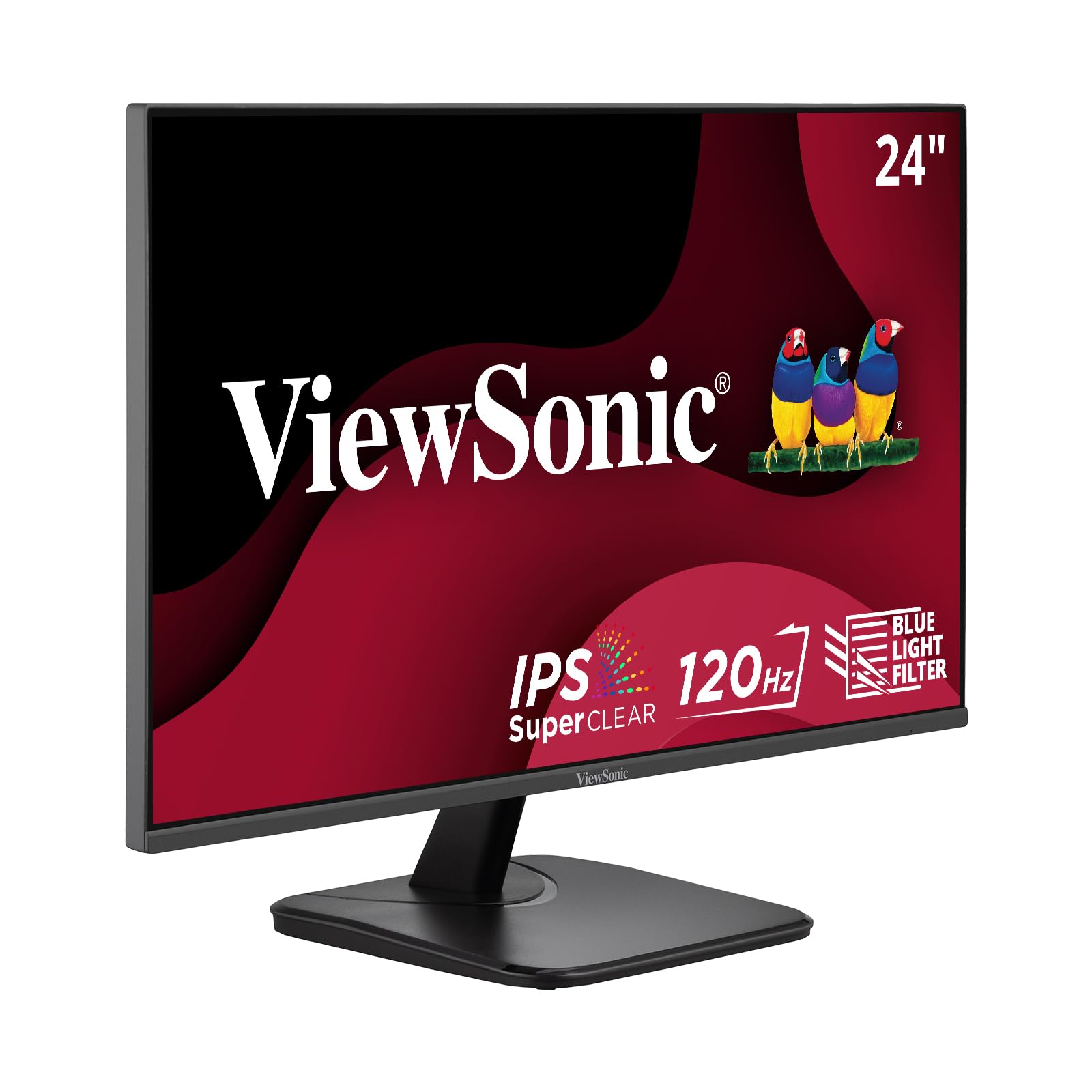
This ViewSonic balances smooth 120Hz motion with solid IPS color accuracy at a price that undercuts every 120Hz competitor here, including the ASUS.
You get a 120Hz refresh rate (the same speed as the more expensive ASUS) on an IPS (In-Plane Switching) panel with SuperClear technology, so colors stay accurate and bright from any angle. The 250-nit brightness is standard for this price, but the real plus is the preset modes — you get dedicated “Game,” “Movie,” “Web,” “Text,” and “Mono” settings that actually change the look without digging through menus. The thin bezels make it a natural fit for a multi-monitor setup, and one reviewer who is a 25-year computer tech noted the sharp text and vibrant colors were exactly what they expected from a trusted ViewSonic brand.
On the trade-off side, the stand offers tilt only — no height adjustment — and the 1500:1 contrast ratio is identical to the LG but falls short of the Amazon Basics’ 2000:1 figure. The VGA (Video Graphics Array) input feels dated for 2024, but the HDMI and DisplayPort cover modern connections. For the price, this monitor asks the least of you while delivering smooth scrolling and fluid gaming with Adaptive Sync (a feature that matches the screen’s refresh rate to your graphics card to prevent tearing), and buyers report it keeps working for years.
What Stands Out
- 120Hz refresh rate with Adaptive Sync for smooth motion in everyday use and gaming.
- SuperClear IPS technology delivers accurate colors and consistent brightness from all viewing angles.
- Five preset modes (Game, Movie, Web, Text, Mono) tailored for different tasks from the start.
Where It Cuts Corners
- Basic stand offers tilt only — no height or swivel adjustment.
- 250 nits brightness is adequate but not suitable for very bright rooms.
- VGA port feels outdated; most users will prefer HDMI or DisplayPort.
Reach for this if: you want a reliable daily monitor with smooth 120Hz motion, accurate colors from an IPS panel, and a brand that buyers trust to last through years of use.
Look elsewhere if: you absolutely need height adjustment on the stand or a higher brightness for a sunlit room — you will want to budget for a separate monitor arm.
2. ASUS 24″ 1080P Computer Monitor (VA249QG)

Its 99% sRGB color coverage rivals monitors, making this the pick for photo editing where the ViewSonic’s colors just won’t cut it.
The frameless design makes multi-monitor setups feel continuous. ASUS includes TÜV-certified Flicker-Free and Low Blue Light technology, which the brand says keeps your eyes comfortable during long sessions. One reviewer described it as a “lightweight basic monitor” but noted that disabling the default eco mode reveals a bright, sharp picture that closely matches their color-calibrated 27-inch display.
The main compromise here is the 1000:1 to 3000:1 contrast ratio range — the Amazon Basics hits a fixed 2000:1, while the ViewSonic and LG both sit at 1500:1. The built-in speakers are present, but buyers consistently report they sound “tinny” and underdeliver, typical for this price tier. The stand is limited to tilt, and one reviewer who ordered two identical units found a tiny height difference between them that “still bothers me.” If color-critical work is your priority, this is the pick, but do not expect premium build consistency across multiple units.
The Color Edge: At 99% sRGB, this ASUS delivers color accuracy that equals monitors costing twice as much — ideal for photo editing, design work, or anyone who notices when reds look orange.
The Speaker Caveat: Owners mention the built-in speakers are weak and tinny; plan on using separate speakers or headphones for any audio.
Pick this for: color-conscious work where 99% sRGB coverage and the 1ms MPRT (Moving Picture Response Time, a measure of how fast pixels change to reduce blur) make a real difference in visual accuracy and smoothness.
skip it if: you need consistent build quality across multiple units or rely on built-in speakers — both are weak points flagged by real owners.
3. LG 24U411A-B 24-inch Full HD IPS Monitor
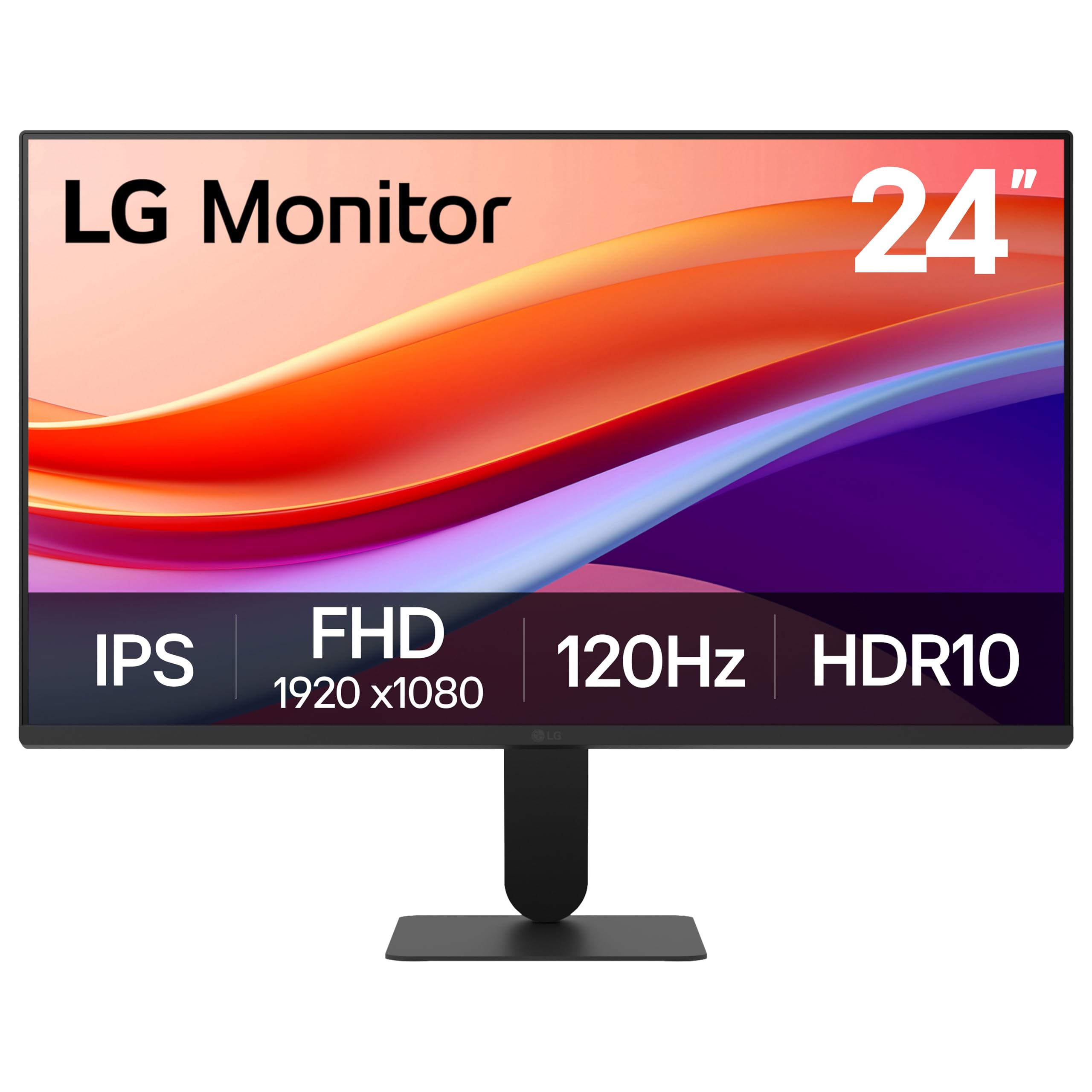
A virtually borderless LG that floats on your desk and keeps motion blur to a minimum with its 1ms Motion Blur Reduction mode — sharper in fast scenes than the ViewSonic or ASUS.
The LG 24U411A-B matches the ViewSonic and ASUS with a 120Hz refresh rate but adds a 1ms MBR (Motion Blur Reduction) mode that keeps fast-paced gameplay crisp by minimizing blur and ghosting. The 3-side virtually borderless design creates a clean, modern look that one reviewer noted “floats” on the desk. HDR10 (High Dynamic Range, a format for wider brightness and colors) support and 99% sRGB color gamut come standard. The Switch app lets you split the screen into up to six sections with a hotkey — a genuine productivity boost that none of the other monitors here offer.
Customers note that colors are surprisingly good from the start for the price, suitable even for Photoshop work, though they note the out-of-box tuning runs green-tinted and over-saturated — a quick calibration fixes it. The stand is a mixed bag: one reviewer called it solid with metal construction and no wobble, while another described it as flimsy and missing screws. Unlike the ASUS and ViewSonic, this LG has no built-in speakers, and the single HDMI port limits connection options. For a modern, clean-looking monitor with excellent motion handling, it is a strong contender, but you need to supply your own audio.
Standout Features
- 120Hz with 1ms Motion Blur Reduction for crisp, blur-free fast motion.
- 3-side virtually borderless design great for dual-monitor setups.
- Switch app splits the screen into up to 6 sections for multitasking.
Real Limitations
- No built-in speakers — you must use external audio.
- Only one HDMI port; colors need calibration from the start.
- Stand quality reported inconsistently between units by buyers.
Get this for: motion-sensitive tasks and dual-monitor setups where the slim bezels and Switch app help you manage a clutter-free workspace.
Consider another if: you need built-in speakers or prefer a monitor that looks accurate straight from the start without calibration.
4. Amazon Basics 24 Inch (23.8 inch viewable) Monitor

The office staple that delivers the deepest blacks in this lineup (2000:1 contrast ratio) and a durable build at the lowest entry price — better for dark scenes than the ViewSonic or LG.
This Amazon Basics monitor is a no-surprises work screen that buyers describe as “excellent for office work; durable over years.” The 2000:1 contrast ratio is a standout figure here — the highest in this lineup, meaning deeper black levels and more defined shadows than the ViewSonic or LG’s 1500:1. The 100Hz refresh rate is a step down from the 120Hz competitors, but for spreadsheets, emails, and web browsing, you are unlikely to notice the difference. Built-in speakers deliver clean, clear audio per the manufacturer, and buyers confirm the matte screen reduces glare effectively in bright offices.
The stand is tilt-only, and a buyer noted webcam placement is difficult due to the thin top bezel. Missing from the data: the color gamut spec is not listed, so you cannot compare it directly against the 99% sRGB figures of the ASUS and LG. If your day is built on documents and spreadsheets and you want the lowest price with the highest contrast ratio, this is your monitor — just know you are trading away smooth motion for deeper blacks.
The Contrast Advantage: At 2000:1, this monitor beats the ViewSonic and LG (both 1500:1) for richer blacks in darker scenes.
The Refresh Gap: At 100Hz versus the 120Hz competitors — fine for office work, less ideal for gaming.
Best for: pure office productivity where deep blacks and a durable build matter more than high frame rates.
Pass if: you want smooth motion for gaming or need a color gamut spec to compare against other monitors.
5. Dell 27 Monitor SE2725HM
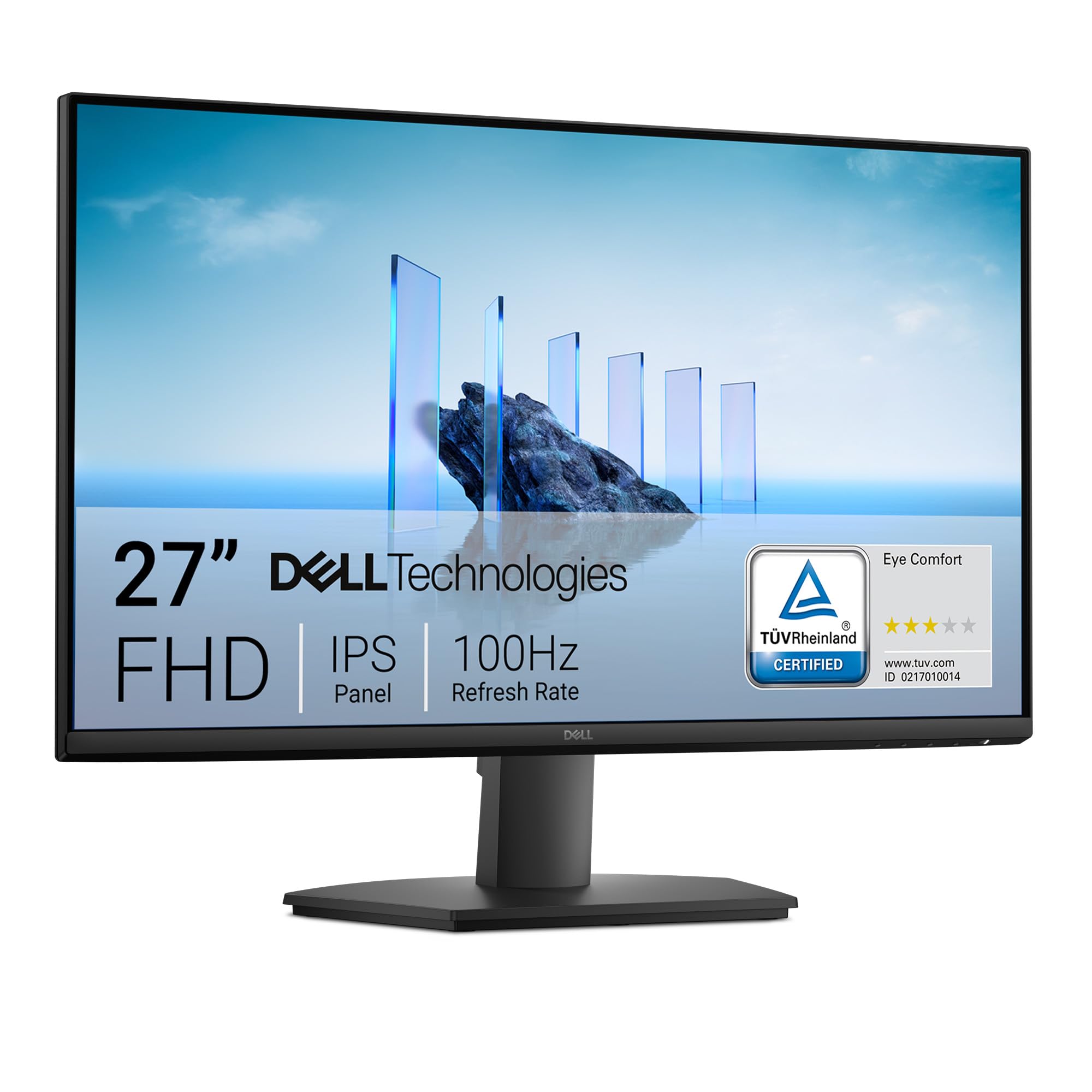
A full 27 inches of screen real estate with enterprise-grade eye care — three inches bigger than any other pick here, ideal for reading tiny text in spreadsheets or plans.
The Dell SE2725HM jumps to a 27-inch Full HD display — three inches bigger than the other four picks — which makes it the choice for anyone who needs more room for spreadsheets, plans with tiny text, or digital scrapbooking. Dell’s ComfortView Plus minimizes harmful blue light exposure without sacrificing color accuracy, and it carries a TÜV Rheinland 3-star certification. The 100Hz refresh rate ties with the Amazon Basics and delivers a noticeable improvement over older 60Hz screens, though it falls behind the 120Hz competitors. The built-in power supply unit and cable holder keep your desk tidy, and the matte anti-glare coating works well in brightly lit rooms.
At 72% sRGB color gamut, this monitor is noticeably less vibrant than the ASUS or LG (both 99% sRGB), so it is not suited for color-critical creative work. The 1000:1 contrast ratio is lower than the Amazon Basics’ 2000:1. One reviewer who works with plans and tiny text noted the display quality “has really helped with quality, affordability and simple install.” No built-in speakers and only one HDMI port plus a VGA port keep the connectivity basic. The trade-off is clear: you get the largest screen for the money, but you give up color saturation and contrast depth to get it.
Biggest Strengths
- Largest display in the group at 27 inches — great for multitasking and reading fine text.
- ComfortView Plus always-on blue light reduction with TÜV Rheinland 3-star certification.
- Compact desk footprint with built-in power supply and cable management.
Notable Trade-offs
- 72% sRGB is significantly less vibrant than the 99% competitors.
- 1000:1 contrast ratio is the lowest in this lineup.
- No built-in speakers and minimal connectivity (one HDMI, one VGA).
Choose this Dell for: the biggest workspace possible at this price point, with eye-care tech that matters for all-day use.
pass on it if: color accuracy or contrast depth matter more than screen size — the ASUS or ViewSonic will look visibly richer.
Understanding the Specs
Refresh Rate (Hz)
This is how many times per second your monitor redraws the image. A 60Hz screen updates every 16.6ms, while a 120Hz screen cuts that to 8.3ms. For everyday scrolling, cursor movement, and casual gaming, anything under 100Hz feels noticeably sluggish once you have seen the difference. Every monitor in this guide runs at 100Hz or higher.
Color Gamut (sRGB %)
sRGB is a color space standard; a higher percentage means your monitor can display more of the colors in that standard. 99% sRGB monitors (the ASUS and LG here) show rich, accurate colors suitable for photo editing. A 72% sRGB monitor (the Dell) will look noticeably less vibrant side-by-side. If you do not work with photos or video, this matters less — for creative work, it is a dealbreaker.
Contrast Ratio
This measures the difference between the brightest white and the darkest black your monitor can display. A 2000:1 ratio (Amazon Basics) means blacks look deeper and richer than a 1000:1 ratio (Dell). Higher contrast ratios help in dark scenes in movies and games, but IPS panels generally have lower native contrast than VA panels — the 2000:1 figure here is a strong showing for an IPS display.
Adaptive Sync (FreeSync)
This technology matches your monitor’s refresh rate to your graphics card’s frame output, reducing screen tearing and stuttering without extra input lag. The ViewSonic, ASUS, LG, and Dell all support FreeSync. If you play any PC games — even casually — this feature alone makes a 120Hz monitor worth the small premium over a basic 60Hz screen.
FAQ
Is a 100Hz monitor good enough for everyday use?
Can I mount any of these monitors on an arm or wall?
Do these monitors work with MacBooks or Mac Minis?
Which monitor has the best built-in speakers?
What is the difference between IPS and LED displays?
Does the Dell SE2725HM support DisplayPort?
How long should a cheap PC monitor last?
Which monitor is best for dual-monitor setup?
Final Thoughts: The Verdict
For the majority of shoppers, the cheap pc monitor winner is the ViewSonic VA2456A-MHD because it delivers 120Hz smooth motion, accurate IPS colors, and reliable build quality at a price that undercuts every 120Hz competitor. If you need color accuracy for photo work, grab the ASUS VA249QG with its 99% sRGB. And for the biggest workspace on a budget, the standout is the Dell SE2725HM with its 27-inch screen and long-session eye comfort.
How We Picked
We do not accept paid placement. Every pick is matched to a real buyer and a real use-case; we do not hands-on test units.
Sources & Methodology
Specifications: manufacturer listings and product documentation. Review insights: verified customer reviews, as of July 2026. Pricing: not shown on this page (it changes often); check the current price via the retailer link.
As an Amazon Associate, WellFizz earns from qualifying purchases. This does not affect which products we feature.
Related Guides

Mo Maruf
I created WellFizz to bridge the gap between vague wellness advice and actionable solutions. My mission is simple: to decode the research and give you practical tools you can actually use.
Beyond the data, I am a passionate traveler. I believe that stepping away from the screen to explore new environments is essential for mental clarity and physical vitality.