Our readers keep the lights on and my smoothie glass nicely filled. As an Amazon Associate, I earn from qualifying purchases.
Specs are compiled from manufacturer listings and verified buyer reviews and can change over time — please confirm the key details on the product page before buying.
Picking the wrong clear finish can turn your living room table into a sticky mess or make your white oak look like it aged fifty years overnight. You need a coating that protects against scratches and spills without ruining the wood’s natural color or texture, and the devil is in the drying time, the sheen level, and whether it stays clear over time.
I’m Mohammad Maruf — the founder and writer behind WellFizz. This guide is built by comparing the manufacturers’ published specifications and the patterns across verified customer reviews, so you get each pick’s real strengths and trade-offs instead of marketing spin.
Whether you are sealing a butcher block countertop or a stripped antique dresser, the right clear finish for wood determines how your project looks for years, not just the weekend you apply it.
Quick Picks
- Minwax Fast Drying Polyurethane Protective Wood — Best Overall
- Minwax 611114444 Polycrylic Protective Wood — Ultra Flat Specialist
- Tried & True Superior Varnish Oil Wood — Naturalist’s Choice
- 32 OZ Tung Oil for Wood Food Safe — Food-Safe Pure Oil
- Varathane 250241H Water-Based Ultimate Spar — Outdoor Defender
- Wood Finishing Wax for Furniture — Quick & Natural
How To Choose The Best Clear Finish For Wood
Every clear finish protects wood, but drying time, appearance, and safety vary by formula. Here are the key specs to match to your specific project.
Sheen: How Shiny Do You Want It?
Sheen determines how much light the finish reflects. Gloss gives you a mirror-like, shiny look that modern furniture often demands, but it also shows every fingerprint and scratch. Satin sits in the middle with a soft glow that hides daily wear. Matte and ultra flat finishes appear barely there, perfect for farmhouse or natural wood styles where you want the grain to do the talking.
Water-Based vs Oil-Based: The Chemistry Matters
Water-based finishes dry fast and stay clear, making them ideal for light woods like maple and birch. Oil-based finishes add a warm amber tone and resist scratches and heat, but have strong fumes and longer drying times. If you are working with dark wood or a warm traditional look, oil works beautifully.
Food-Safe and Application Method
For food-contact projects like cutting boards, choose a finish labeled food-safe after curing. Pure tung oil and the Tried & True varnish oil are naturally safe options. Also think about how you will apply it: some finishes brush on easily, some need to be wiped on and buffed, and others spray through an HVLP (a high-volume, low-pressure spray gun). The ease of cleanup (soap and water vs mineral spirits) matters if you are working indoors.
Quick Comparison
| Model | Best For | Liquid Volume | Sheen | Dry/Cure Time | Amazon |
|---|---|---|---|---|---|
| Minwax Fast Drying Polyurethane | High-durability gloss finish | 32 fl oz | Gloss | Recoat 4-6 hours | Amazon |
| Minwax Polycrylic Ultra Flat | No-sheen, non-yellowing protection | 1 Quart | Ultra Flat | Recoat 2 hours | Amazon |
| Tried & True Varnish Oil | Natural, food-safe heirloom finish | 8 fl oz | Sheer (natural) | 24 hours per coat | Amazon |
| Garifon Pure Tung Oil | Food-safe penetrating sealer | 32 fl oz | Gloss (natural) | 24-48 hours per coat | Amazon |
| Varathane Water-Based Spar Urethane | Outdoor UV and weather resistance | 946 ml | Satin | Dry in 30 minutes, recoat 2 hours | Amazon |
| Wood Finishing Wax (DWIL PAINT) | Light sealing and polishing | 3.5 oz | Matte/Gloss (user choice) | 24 hours to cure | Amazon |
In‑Depth Reviews
1. Minwax Fast Drying Polyurethane Protective Wood Finish, Clear Gloss, 1 Quart

The oil-based workhorse that delivers a mirror-like shine and serious scratch protection.
If your project demands durability — think floors, cabinets, and furniture that get daily use — this gloss polyurethane accepts wear so the wood underneath does not. The oil-based formula (a liquid that dries into a hard coating) creates a warm, amber-tinted finish that deepens the look of walnut or cherry. Unlike its water-based sibling further down this list, this one needs four to six hours between coats, so plan to apply it over two days. Buyers report that “applied 3 coats with 400-grit sanding between” produces a level, polished surface that resists water and scratches.
The catch is the strong solvent smell. You need open windows, a fan, and ideally a respirator if you are working inside. Also, because it is oil-based, cleanup requires mineral spirits rather than soap and water. But for a hard-wearing gloss finish, this is the most proven formula on the shelf.
Why It Earns the Top Spot
- Extremely durable against scratches, spills, and daily abuse — owners mention they have used it for years
- Gloss sheen gives a bright, polished, modern look to woodwork and floors
- Recoat time of 4-6 hours is fast for an oil-based finish, letting you move through coats in a day
What to Know Before You Buy
- Strong odor demands good ventilation or a respirator during application
- Oil-based formula requires mineral spirits for cleanup, not just soap and water
- Some cans arrive dented due to packing, though the product inside is fine
Reach for this if: You need a tough, glossy finish for high-traffic wood furniture or floors and you can work in a ventilated space.
Look elsewhere if: Your project uses light wood (maple, birch) where you want zero ambering, or you cannot tolerate solvent fumes indoors.
2. Minwax 611114444 Polycrylic Protective Wood Finish, Clear Ultra Flat, 1 Quart

The water-based finish that stays crisp on white oak and dries fast enough for same-day projects.
This is the finish you pair with light-colored wood when you want the grain to show without any yellow tint. The formula is water-based (it cleans up with soap and water and has a low odor), and it is non-yellowing, non-ambering, which means maple, ash, and birch stay exactly their natural color. The ultra flat sheen is barely there — it looks like raw wood but feels sealed. Customers note that one person “applied 4 coats via HVLP; leveled smoothly,” and another used it on butcher block in a wet ceramics studio where water wipes up cleanly with no staining.
At 2.36 pounds per quart, it is heavier than the oil-based Minwax above, which weighs 1.95 pounds, which matters only if you are counting freight. The recoat time is two hours, meaning you can apply three or four coats in a single day and be done by evening. The only trick is that some users feel the sheen is closer to matte than true ultra flat, so if you need zero reflection, you might need to scuff it lightly between coats.
What Makes It Stand Out
- Non-yellowing formula keeps light woods (maple, birch, ash) looking natural over years
- Fast two-hour recoat time lets you apply multiple coats in one day
- Low odor and soap-and-water cleanup make indoor application easy
One Honest Drawback
- Some reviewers point out the “Ultra Flat” sheen reads more like a soft matte, not perfectly dull
- Water-based poly is less scratch-resistant than oil-based alternatives for high-traffic furniture
Ideal for: Light wood furniture, white oak, and butcher block where clarity and a natural look are the priority.
Not the best choice if: You need maximum abrasion resistance for a floor or a dining table that sees heavy daily wear.
3. Tried & True Superior Varnish Oil Wood Finish & Sealer, 8 oz.
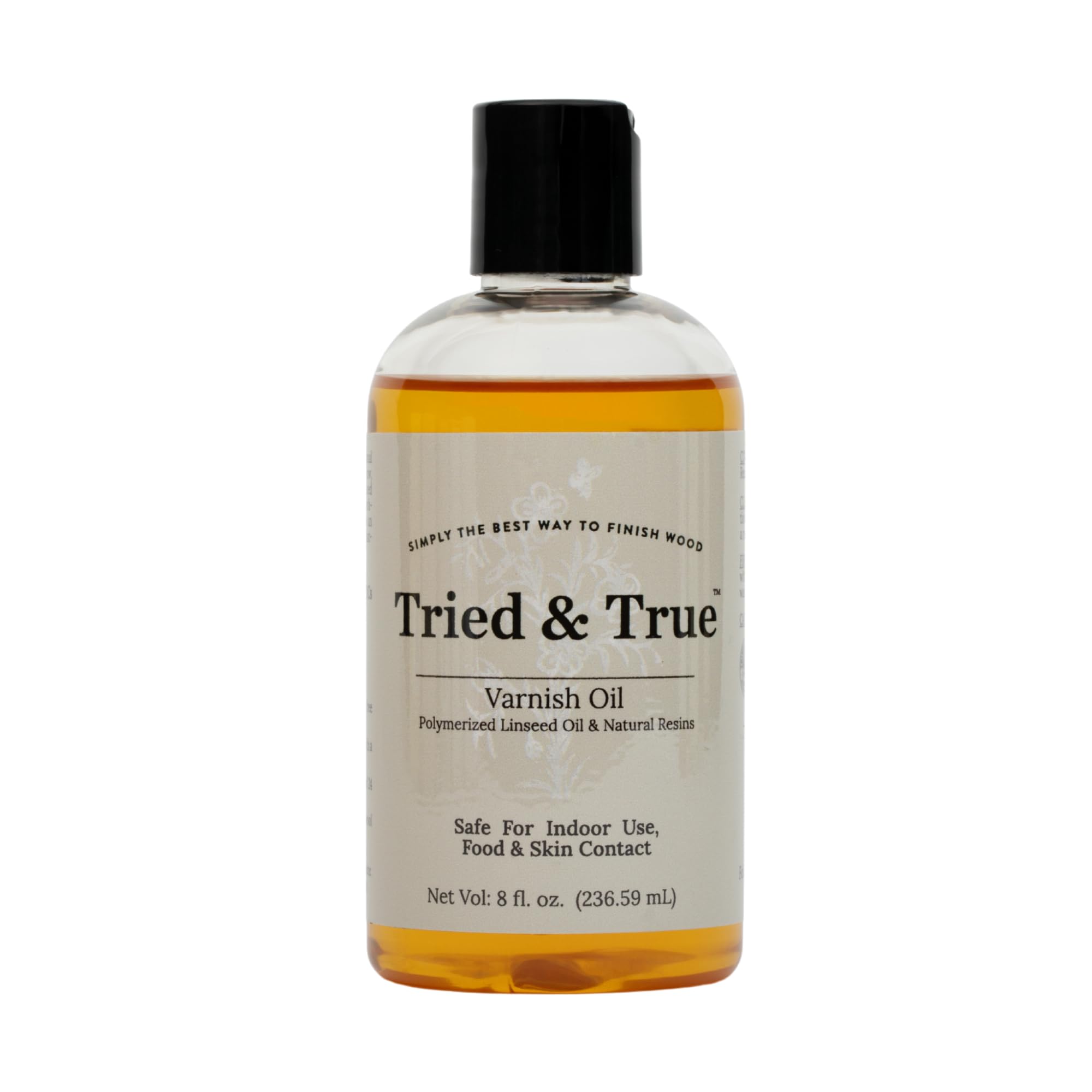
A food-safe oil-varnish hybrid that professional woodturners trust for heirloom pieces.
This finish blends linseed oil with natural pine resin to create a penetrating seal that is tough yet natural-looking. Because it is safe for food and skin contact, it works on fruit bowls, countertops, wooden toys, and pet items without chemical worries. The 8-ounce bottle covers only about 2.5 to 3 square feet (it is thin and meant to be applied in layers), so buy multiple bottles for larger projects. One reviewer described it as a “boiled linseed oil with varnish solids” that brings out the grain and adds a protective layer when applied in thin coats with 24 hours of curing between each.
Compared to the Minwax oil-based polyurethane above, this finish has no solvent smell — shoppers say it “doesn’t smell bad” and is pleasant to work with. But the cure is slower: you need five thin coats, each curing a full day, so a table top takes nearly a week. The payoff is a soft, semi-gloss sheen that feels like wood, not plastic.
The Upside
- Food and skin contact safe after curing, suitable for cutting boards and children’s toys
- Natural ingredients (linseed oil and pine resin) with no harsh solvent odor
- Brings out wood grain beautifully with a soft, natural-looking sheen
The Time Trade-Off
- Each coat needs 24 hours to cure, so a full 5-coat job takes nearly a week
- 8-ounce bottle covers only about 3 square feet, requiring multiple units for larger projects
Perfect for: Food-contact surfaces, heirloom furniture, toys, and crafts where chemical safety is non-negotiable and you have patience for slow curing.
skip it if: You are finishing a large dining table or floor and need to finish the project in a weekend.
4. 32 OZ Tung Oil for Wood Food Safe, 100% Pure Tung Oil for Wood Outdoor, Garifon

Pure tung oil that penetrates deep into wood fibers for a waterproof, food-safe seal that still breathes.
Tung oil is different from polyurethane because it seeps into the wood rather than sitting on top as a plastic film. This 32-ounce bottle from Garifon is 100% pure tung oil, pressed from nut crops, and after curing it is non-toxic and food-safe. The manufacturer says it works on cutting boards, butcher blocks, wooden utensils, and even outdoor furniture. One buyer described their process: “applied 3-5 coats on butcher block; brush first coat, wipe excess after 30 min, 2-day dry; subsequent coats wiped on, 24-hour dry.”
You get a lot more finish for your money here: the 32-ounce bottle holds 32 ounces, compared to 3.5 ounces for the wood wax lower in this list. It also works outdoors without cracking or peeling, unlike that wax. The downside is that the first coat takes up to 48 hours to dry. Also, some buyers report the bottle label does not explicitly say “food safe” even though the listing does, so you may want to keep it for projects that do not touch food if that matters to you.
Why Choose Tung Oil
- Penetrates deep into wood fibers rather than forming a brittle surface film
- 100% pure tung oil is food-safe after curing, ideal for cutting boards and utensils
- Works both indoors and outdoors without cracking or peeling over time
The Key Considerations
- Long drying time — first coat can take 48 hours, and multiple coats add up to a week
- Bottle lacks explicit “food safe” claim despite the listing, which may matter for frequent food-contact items
Grab this for: Large projects like butcher block countertops, outdoor furniture, or raw wood furniture where a deep penetrating oil finish is preferred.
Not for you if: You want a quick weekend finish — the 24-48 hour dry time between coats demands patience.
5. Varathane 250241H Water-Based Ultimate Spar Urethane, Quart, Satin

The water-based spar urethane that fights UV rays and weather without yellowing white paint.
If your project lives outside — a birdhouse, a teak table, garden furniture — this is the finish that handles the elements. Spar urethane is specifically formulated to flex with wood as it expands and contracts from moisture and temperature changes, so it does not crack. The water-based formula (low odor, soap-and-water cleanup) dries to the touch in 30 minutes, and owners mention they applied three coats in a single day. One reviewer used it on outdoor birdhouses painted white and reported “truly doesn’t yellow white paint,” which is rare for outdoor finishes.
The satin sheen gives a classic, natural look that is less shiny than the Minwax gloss polyurethane above but more protective than a pure oil. The quart covers up to 87 square feet, which is generous for outdoor projects. The only downside is that some bottles arrive without metal retainer clips on the lid, which can be a mess if the container tips during shipping.
What Makes It Great for Outdoors
- Non-yellowing formula keeps white painted furniture and trim from turning amber in the sun
- Dries in 30 minutes and allows recoat after 2 hours, so you can finish in one day
- Water-based cleanup with low odor makes it easy to apply without a respirator
Before You Buy
- Some buyers find brush strokes visible on non-absorbent surfaces (fine on raw wood)
- Packaging may lack metal clips securing the lid, risking leaks during shipping
Choose this if: You need a weather-resistant, non-yellowing clear coat for outdoor furniture, birdhouses, or boat interiors.
Pass on this if: Your project is strictly indoor and you want a gloss sheen — the satin finish here is intentionally low-shine.
6. Wood Finishing Wax for Furniture – 100% Natural Chalk Paint Wax for Sealing & Protecting, 3.5 Oz

A tiny tin of natural wax that seals chalk paint and hides light scratches in ten minutes flat.
This is a completely different category of finish — a blend of plant-based oils, carnauba wax, and beeswax that you rub into the wood rather than pouring on. It is ideal for sealing chalk-painted furniture or reviving a dry, aged piece without the commitment of a polyurethane coating. The 3.5-ounce can is tiny, but customers note that a “small can sufficient for 36″x60″ table 10+ times,” so a little goes a long way. One reviewer noted it removed light scratches from old wood and made the table look new after a simple ten-minute application with the included sponge.
Do not confuse this with a hard finish like the Minwax polyurethane above. Wax is softer and needs reapplication over time, and it can feel greasy if you apply too much. The manufacturer recommends a 24-hour cure before normal use, and some buyers found it needed longer than a day to stop feeling tacky. Use this for decorative pieces, low-traffic furniture, and chalk paint sealing, not for dining tables that see daily scrubbing.
The Appeal
- 100% natural ingredients (beeswax, carnauba wax, plant oils) with no harsh chemicals
- Extremely easy application — just rub on, let sit, and buff; no brushes or cleanup solvents needed
- A 3.5-ounce can goes a long way, covering a 36-by-60-inch table over ten times
The Limits
- Wax is softer than polyurethane and needs reapplication, especially on high-use surfaces
- Can feel greasy if over-applied, and some reviewers point out the 24-hour cure is not enough
Best for: Sealing chalk-painted furniture, polishing raw wood, and quick touch-ups on old pieces that just need a refresh.
Not for: Kitchen tables, floors, or any surface that takes heavy daily wear — you need a film-forming finish for that.
Understanding the Specs
Sheen Levels
Gloss gives a shiny, polished look that shows scratches more easily. Satin sits in the middle with a soft glow that hides daily wear. Flat and ultra flat sheens create a barely-there, natural look with almost no reflection. For light wood furniture, flat or satin sheens look most natural; for modern cabinets or floors, gloss is popular.
Drying and Recoat Time
Recoat time is the wait between coats for the finish to harden enough to sand or apply the next layer. Water-based finishes typically allow recoat in 1-2 hours, letting you finish in a day. Oil-based finishes take 4-6 hours or more. If you are short on time or working in a dusty space, faster-drying water-based options are easier to manage.
Liquid Volume and Coverage
Container volume determines how large a project you can finish. A quart (32 ounces) typically covers about 125 square feet per coat for a film finish, but penetrating oils like tung oil cover less because much of it absorbs into the wood. For a single dining table, one quart is usually enough for multiple coats. For small craft projects, an 8-ounce bottle or a 3.5-ounce tin of wax is more practical.
Water-Based vs Oil-Based
Water-based finishes dry clear, have low odor, and clean up with soap and water. They do not yellow over time, making them ideal for light or white-painted wood. Oil-based finishes create a warm amber tone, are tougher against scratches and heat, but have strong fumes and require mineral spirits for cleanup. For light wood furniture, choose water-based; for dark or warm-toned wood, oil-based can look richer.
Food-Safe Finishes
If your project touches food — a cutting board, a fruit bowl, a dining table — you need a finish that lists itself as food-safe after full curing. Pure tung oil, the Tried & True varnish oil using linseed oil and pine resin, and some food-grade waxes meet this standard. Most polyurethanes (including the Minwax products) are not meant for direct food contact and should only be used on decorative or low-contact furniture.
UV and Weather Resistance
Outdoor finishes like spar urethane contain UV absorbers that prevent the wood from graying and the finish from yellowing in sunlight. They also remain flexible so they do not crack when wood expands and contracts with humidity and temperature changes. Standard indoor polyurethane will crack and peel if used outdoors, so always check the label for “outdoor” or “spar urethane” for exterior projects.
FAQ
Can I apply a water-based finish over an oil-based stain?
How many coats of clear finish do I need for a dining table?
What is the difference between spar urethane and regular polyurethane?
Is pure tung oil food safe after drying?
How do I avoid brush strokes in a clear finish?
Will a clear finish darken my light-colored wood?
What is the best finish for a butcher block countertop?
Can I spray a clear finish instead of brushing it?
How do I fix a finish that feels sticky or tacky after drying?
Is wax as durable as polyurethane for sealing furniture?
Final Thoughts: The Verdict
For the majority of shoppers, the clear finish for wood winner is the Minwax Fast Drying Polyurethane because it gives you a durable, glossy, oil-based finish that dries fast enough for floors, cabinets, and furniture. If you want a finish that stays clear on light-colored wood without any ambering (yellowing), choose the Minwax Polycrylic Ultra Flat — it dries fast and does not yellow. And for a food-safe, natural sealer that is safe for cutting boards and children’s toys, pick the Tried & True Varnish Oil.
How We Picked
We do not accept paid placement. Every pick is matched to a real buyer and a real use-case; we do not hands-on test units.
Sources & Methodology
Specifications: manufacturer listings and product documentation. Review insights: verified customer reviews, as of July 2026. Pricing: not shown on this page (it changes often); check the current price via the retailer link.
As an Amazon Associate, WellFizz earns from qualifying purchases. This does not affect which products we feature.
Related Guides

Mo Maruf
I created WellFizz to bridge the gap between vague wellness advice and actionable solutions. My mission is simple: to decode the research and give you practical tools you can actually use.
Beyond the data, I am a passionate traveler. I believe that stepping away from the screen to explore new environments is essential for mental clarity and physical vitality.