Our readers keep the lights on and my smoothie glass nicely filled. As an Amazon Associate, I earn from qualifying purchases.
Specs are compiled from manufacturer listings and verified buyer reviews and can change over time — please confirm the key details on the product page before buying.
Many baking chips contain stabilizers that keep their shape in the oven — so when you melt them for a bar, they turn thick and grainy instead of flowing smooth. The five chocolates below each solve a different problem: one gives you a deep, bitter-snap dark, and another melts into a sweet milk bar without any tempering fuss.
I’m Mohammad Maruf — the founder and writer behind WellFizz. This guide is built by comparing the manufacturers’ published specifications and the patterns across verified customer reviews, so you get each pick’s real strengths and trade-offs instead of marketing spin.
Your choice depends on which chocolate to use for chocolate bars will actually set with a clean snap and a glossy finish in your kitchen.
Quick Picks
- Callebaut Dark Callets 70.4% (2 lb) — Best Overall
- Callebaut Recipe No. 811 Finest Belgian Dark — Best Value
- Jacques Torres Chocolate 60% Dark Chocolate — Best Discs
- Guittard Organic 66% Chocolate Baking Wafers — Small Batch Pick
- ASZOI Milk Chocolate Melting Wafers (5 lb) — Budget Champion
How To Choose The Best Chocolate To Use For Chocolate Bars
The most important factor is whether the chocolate is a couverture — a high-cocoa-butter chocolate (containing at least 31% cocoa butter by rule) designed to flow freely when tempered. Without enough cocoa butter, your bar will be thick to mold and will lack the clean snap that defines a professional bar.
Cocoa Percentage Matters for Your Final Bar
The cocoa percentage you pick directly controls both flavor intensity and how much sugar you need to add. A number around 70% gives you a bold, slightly bitter bar that pairs well with sea salt or dried fruit, while a 54.5% bar leans sweeter and is more forgiving for first-time tempering.
Package Size and Freshness
Chocolate absorbs odors and can bloom (develop white streaks from fat or sugar separation) if stored too long. The data shows a wide range — from a 12-ounce bag for testing a single batch up to a 5.51-pound bag for regular production. Think about how quickly you will use it; a resealable bag, like the 5-pound milk chocolate option, helps keep moisture out between uses.
Quick Comparison
| Model | Best For | Cocoa Percentage | Weight | Form Factor | Amazon |
|---|---|---|---|---|---|
| Callebaut Dark Callets 70.4% | Deep, Bitter-Snap Dark | 70.4% | 2 lb | Callets (discs) | Amazon |
| Callebaut Recipe No. 811 54.5% | Balanced Sweet-Bitter | 54.5% | 5.51 lb | Callets | Amazon |
| Jacques Torres 60% Dark Discs | Quarter-Sized Discs | 60% | 2 lb | Discs | Amazon |
| Guittard Organic 66% Wafers | Small-Batch Organic | 66% | 12 oz | Wafers | Amazon |
| ASOZI Milk Chocolate Wafers | Easy-Melt No Tempering | — | 5 lb | Wafers | Amazon |
In‑Depth Reviews
1. Callebaut Dark Callets 70.4% (2 lb)
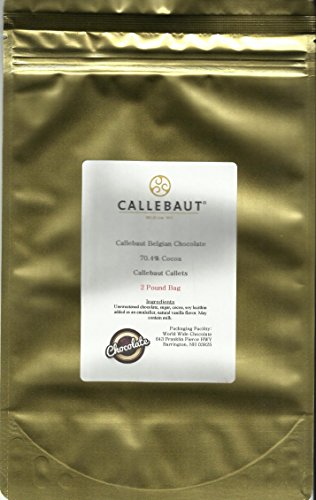
The industry-standard dark that snaps clean, melts fluid, and delivers a true bittersweet profile.
This is couverture, meaning it has a high cocoa butter content that flows like silk when you temper it — your bars will set with that professional glossy finish and a sharp snap when you break a piece off. The 70.4% cocoa is noticeably bolder than the 54.5% Callebaut below, so it works best if you like a deep, less-sweet bar that can stand up to salty toppings or dried cherries.
It comes as callets (small disc-shaped drops) that melt evenly without needing to be chopped up first, saving you prep time. Reviewers often mention that the 2-pound bag disappears fast once you start experimenting with molds and inclusions. The main trade-off is that at this cocoa level, you need to be precise with your tempering — a rushed melt-and-pour can leave streaks. Still, for a dark bar that tastes complex without added vanilla, this is the one serious home makers turn to.
It holds a significantly higher cocoa percentage than the Callebaut Recipe No. 811, with its 70.4% vs 54.5%
What Makes It Shine
- Real couverture — pours fluidly and snaps hard when set.
- 70.4% cocoa gives an authentic bittersweet depth without relying on artificial flavors.
- Callets melt quickly with no chopping or grating needed.
One Thing to Watch
- At 2 pounds, the bag is smaller than production-minded buyers might want — you may reorder quickly if making bars weekly.
Reach for this if: you want a no-compromise dark bar with a genuine bittersweet snap straight out of the mold.
Consider the 811 instead if: you need a larger quantity or a sweeter, more forgiving chocolate for your first few batches.
2. Callebaut Recipe No. 811 Finest Belgian Dark Chocolate 54.5% (5.51 lb)
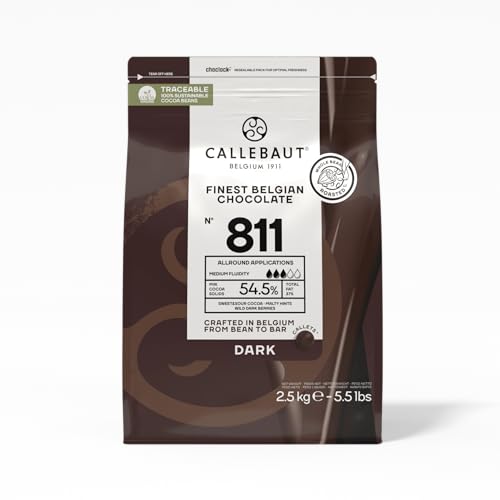
The workhorse dark with medium fluidity — perfect for filling molds and coating inclusions.
This is Callebaut’s 54.5% cacao couverture, and the lower cocoa percentage compared to the 70.4% Callebaut above means it is noticeably sweeter and slightly more fluid when melted. The manufacturer calls it “medium fluidity,” which in plain terms means it flows nicely over crunchy inclusions like nuts or crisped rice without pooling too thin. It is also Kosher Dairy certified, and the bag uses a ChocLock seal to keep the chocolate fresh between uses.
The bag is heavy at 5.51 pounds — the biggest by weight in this lineup — which makes it a smarter buy if you plan to make several batches. But buyers should note that at 5.51 lb vs the Jacques Torres 2 lb, so be sure you have the storage space and the appetite for that much chocolate before opening. Reviewers appreciate that the callets are consistent in size and melt without scorching if you use a double boiler. The only catch is that because it is a professional-grade product, the bag says “intended for professional use only,” so you are getting a no-nonsense industrial package without colorful labeling.
Why It Earns Its Spot
- 5.51-pound bulk bag lowers the per-bar cost significantly if you make chocolate regularly.
- 54.5% cacao gives a balanced sweet-bitter flavor that most tasters enjoy.
- Medium fluidity means it settles cleanly around nuts, cookie bits, and dried fruit.
A Practical Limitation
- At 5.51 lb, the bag is large — if you only make a few bars a month, some may go stale before you finish it.
Best for: anyone ready to commit to bulk production and wants a reliable sweet dark that works for both bars and enrobing.
Not ideal if: you are testing chocolate for the first time and prefer a smaller, less expensive bag to start with.
3. Jacques Torres Chocolate 60% Dark Chocolate Baking Discs (2 lb)
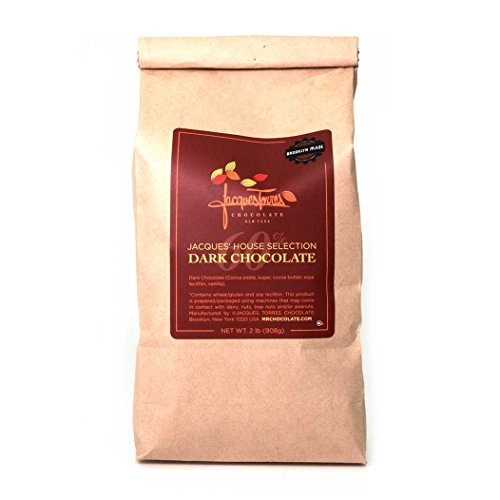
Quarter-sized discs from a legendary NYC chocolatier — a house blend known for cookies and bars alike.
Jacques Torres makes these 60% dark chocolate discs specifically for his famous chocolate chip cookie recipe, and they work just as well for molding into bars. The 60% cocoa sits neatly between the 54.5% and 70.4% Callebaut options — sweet enough to please a crowd but dark enough to feel like real chocolate, not candy. The disc shape is roughly the size of a quarter, so they melt fast and evenly without needing to be chopped.
The ingredient list is short: cocoa paste, sugar, cocoa butter, soya lecithin, and vanilla. The vanilla gives it a rounder flavor profile than the straight Callebaut callets. One real-world note: at 2 pounds, the bag is the same weight as the 70.4% Callebaut but costs noticeably less, so it is a more accessible entry point if you are still learning to temper. Buyers should know that these discs are prepared in a facility that processes dairy, nuts, and peanuts, so they are not suitable for strict allergen avoidance. The main trade-off is that the discs are slightly thicker than callets, so if you are doing precise enrobing (coating truffles), the 70.4% Callebaut’s smaller callets might flow more smoothly.
What Makes It Stand Out
- 60% cocoa hits a crowd-pleasing middle — dark enough for adults, sweet enough for kids.
- Discs melt fast with no chopping or grating required.
- Vanilla adds a rounded flavor that complements the cocoa paste.
One Caution
- Processed on shared equipment with dairy and nuts — not safe for strict allergen-free kitchens.
Stick with this pick if: you want a reliable, crowd-friendly dark chocolate that melts easily and tastes great in both bars and cookies.
Look at the 70.4% Callebaut if: you need a purer, vanilla-free dark with a higher cocoa count for a more intense bar.
4. Guittard Organic 66% Chocolate Baking Wafers (12 oz)

An organic, single-source-feel dark in a small bag — perfect for test batches or a single bar run.
Guittard’s 66% organic wafers use just four ingredients: cacao beans, evaporated cane sugar, cocoa butter, and non-GMO soy lecithin. No vanilla, no artificial emulsifiers — just the bean and the sugar. That clean ingredient list makes it a great option if you want your bar to taste purely of the cacao origin without any flavor additives. The wafers are small and flat, so they melt quickly and evenly in a double boiler or microwave.
The bag is only 12 ounces, which is the smallest in this lineup — about a quarter of the weight of the 2-pound Callebaut options. That makes it ideal if you are experimenting with a new recipe or only making a few bars for gifts. The trade-off is that 12 ounces disappears fast, and the per-ounce cost is higher than the bulk Callebaut bags. Buyers who have worked with Guittard before note that the chocolate tempers reliably and produces a smooth, glossy finish even for beginners. If you fall in love with the flavor for your bars, you may find yourself wishing the bag were larger.
Two Reasons to Try It
- USDA organic with only four recognizable ingredients — no artificial additives.
- 66% cocoa gives a nice midpoint between medium and dark sweetness.
The Main Drawback
- At 12 ounces, the bag is tiny compared to the 5.51-pound or even 2-pound options — you will finish it quickly.
Grab this one when: you want to test an organic, pure-flavor dark chocolate before committing to a large bag.
skip it if: you are producing more than a few bars per month — the small size means constant reordering at a higher per-ounce equivalent.
5. ASOZI Milk Chocolate Melting Wafers (5 lb)
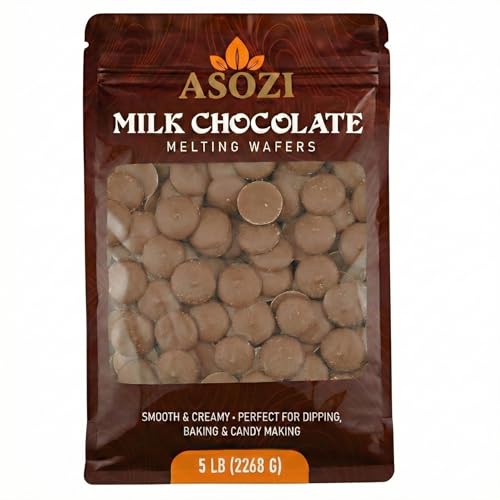
A huge 5-pound bag of milk wafers that melt glossy without requiring any tempering technique.
If you are making chocolate bars with a sweet, creamy milk-chocolate base — or trying the viral Dubai Chocolate Bar trend — these ASOZI wafers are the most user-friendly option here. The manufacturer says they melt evenly and quickly with no tempering required, which means you can pour them straight into a mold and get a glossy finish without any of the precise temperature work that dark couverture demands. The bag is resealable, which is a practical touch since 5 pounds is a significant amount of chocolate to work through.
The flip side is that the ingredient list and exact cocoa percentage are not disclosed in the product data, so you cannot compare it directly to the couverture-grade chocolates above on quality metrics. These are essentially candy melts — great for coating, dipping, and molded bars where you want a smooth, sweet result, but they will not have the deep, complex flavor of a true high-cocoa couverture like the Callebaut 70.4% or the Jacques Torres 60%. Buyers who have used them for molds note that they set with a good shine and do not bloom easily, but the taste is noticeably sweeter and less rich than a dark couverture bar.
Why Beginners Love It
- No tempering required — just melt and pour for a glossy, smooth bar.
- 5-pound resealable bag gives you plenty of chocolate for multiple projects at a budget-friendly per-ounce rate.
- Milk chocolate flavor is sweet and approachable for most palates.
The Honest Trade-Off
- No cocoa percentage listed — it is a compound-style melt, not a true couverture, so the flavor is less complex and less intense than the dark options.
Great starting point if: you are new to bar making and want a large, forgiving bag of milk chocolate that sets easily without special technique.
Go with a couverture if: you care about the depth of flavor and want a bar with a real cocoa character that rivals store-bought craft chocolate.
Understanding the Specs
Cocoa Percentage (Cacao Content)
This is the single number that decides how your bar will taste — it tells you the total weight of cocoa solids and cocoa butter in the chocolate, with the rest being sugar and sometimes milk powder. A 70.4% bar like the Callebaut Dark is bitter and intense, while a 54.5% bar like the Callebaut Recipe No. 811 is noticeably sweeter and more approachable. If you are adding sugar or a sweet filling, you generally want at least 60% cocoa so the base flavor does not get lost.
Couverture vs. Compound
Couverture chocolate contains a higher percentage of cocoa butter, which makes it flow freely when melted and gives your bar a glossy shine and a clean snap when cooled. The Callebaut and Jacques Torres picks are couvertures. Compound chocolate (like the ASOZI milk wafers) replaces some cocoa butter with vegetable oils, which means it melts without tempering but will not produce the same crisp snap or rich mouthfeel. For a bar you want to feel premium, always choose couverture.
FAQ
Can I use regular chocolate chips for making chocolate bars?
What is the ideal cocoa percentage for my first chocolate bar?
How do I store leftover couverture chocolate?
Can I mix different chocolates together for a custom bar?
Why does my chocolate bar have white spots after I set it?
Is a 5.51-pound bag too much chocolate for a home user?
What is the difference between callets and discs?
Do I need to temper the ASOZI milk chocolate wafers?
Final Thoughts: The Verdict
For the majority of shoppers, the chocolate to use for chocolate bars winner is the Callebaut Dark Callets 70.4% because it offers a true couverture experience with a high cocoa percentage, fluid melt, and that coveted professional snap — all in a manageable 2-pound bag. If you want a sweeter, larger bulk option for consistent production, grab the Callebaut Recipe No. 811 54.5%. And for a completely simple to use, no-tempering milk bar at a budget-friendly per-ounce rate, the standout is the ASOZI Milk Chocolate Melting Wafers.
How We Picked
We do not accept paid placement. Every pick is matched to a real buyer and a real use-case; we do not hands-on test units.
Sources & Methodology
Specifications: manufacturer listings and product documentation. Review insights: verified customer reviews, as of July 2026. Pricing: not shown on this page (it changes often); check the current price via the retailer link.
As an Amazon Associate, WellFizz earns from qualifying purchases. This does not affect which products we feature.
Related Guides

Mo Maruf
I created WellFizz to bridge the gap between vague wellness advice and actionable solutions. My mission is simple: to decode the research and give you practical tools you can actually use.
Beyond the data, I am a passionate traveler. I believe that stepping away from the screen to explore new environments is essential for mental clarity and physical vitality.