Our readers keep the lights on and my smoothie glass nicely filled. As an Amazon Associate, I earn from qualifying purchases.
Specs are compiled from manufacturer listings and verified buyer reviews and can change over time — please confirm the key details on the product page before buying.
If you live in an apartment, a condo, or an RV, finding a washer and dryer that fits the space and does not need a vent pipe to the outdoors is the real challenge. A ventless combination washer dryer packs both washing and drying into one machine that plugs into a regular 120V wall outlet — no special wiring, no dryer vent, and no moving wet laundry from one appliance to another.
I’m Mohammad Maruf — the founder and writer behind WellFizz. This guide is built by comparing the manufacturers’ published specifications and the patterns across verified customer reviews, so you get each pick’s real strengths and trade-offs instead of marketing spin.
You want one machine that washes and dries your clothes without needing a vent hose to the outside. We sorted through the specs on capacity, cycle times, and energy use to find the best ventless combination washer dryer for your home, budget, and lifestyle.
Quick Picks
- Samsung 5.3 cu. ft. Bespoke AI Laundry Ventless — Ultra Capacity
- KoolMore 2-in-1 Front Load Washer — RV Ready
- Midea 24 Inch All-in-One Front Load Washer — Best Overall
- COMFEE’ 24″ Washer and Dryer Combo — Steam Saver
- SMETA All In One Ventless Compact 2.7 Cu.ft — Compact Fit
- BLACK+DECKER Washer and Dryer Combo, 2.7 Cu. Ft. — Budget Champion
- HAMILTON BEACH Washer and Dryer Combo 2.7 cu ft — Energy Miser
How To Choose The Best Ventless Combination Washer Dryer
Picking the right ventless combo means matching your household size and laundry habits to a machine that fits the space you have and cleans well without eating your whole day. A 2.7-cubic-foot drum is the standard for compact units and suits one or two people, while a 5.3-cubic-foot ultra-capacity model from a brand like Samsung can handle a family’s entire load at once.
Cycle Time and Your Daily Routine
Every ventless combo takes longer to dry than a separate vented dryer because it uses condensation or heat-pump technology rather than blasting hot air outside. A typical wash-and-dry cycle on a standard unit runs 5 to 7 hours, while premium heat-pump models can finish a full load in under two hours. If you plan to start a load before work and come back to dry clothes, the longer standard time is fine. If you need multiple loads in one day, a faster-drying model matters.
Capacity: Wash vs. Dry Limits
Most ventless combos wash a full 2.7-cubic-foot load but can only dry about half that amount at a time — roughly 13 pounds of dry weight versus 26 pounds of wet laundry. That difference means you often split a washed load into two drying cycles. Higher-end units with heat pumps, like the Samsung, wash and dry the same full load without splitting, which is the main reason they command a higher price.
Energy Use and Operating Costs
A unit that uses 90 kilowatt-hours per year costs more to run than one that uses only 22 kilowatt-hours per year — a 4.1x gap you will see on your electric bill. The upfront price tag is not the only number to watch; the long-term energy cost shapes whether a mid-range or premium model saves you money over time.
Quick Comparison
| Model | Best For | Capacity | Annual Energy | Weight | Amazon |
|---|---|---|---|---|---|
| Samsung Bespoke AI | Full-size family loads | 5.3 cu. ft. | 103 kWh/yr | 317 lbs. | Amazon |
| KoolMore | Quiet RV install | 2.7 cu. ft. | — | 171 lbs. | Amazon |
| Midea | Steam care + overnight dry | 2.7 cu. ft. | 90 kWh/yr | 161 lbs. | Amazon |
| COMFEE’ | Wrinkle reduction + steam | 26 lbs. | 90 kWh/yr | 161 lbs. | Amazon |
| SMETA | Compact depth fit | 2.7 cu. ft. | — | 160 lbs. | Amazon |
| BLACK+DECKER | Budget-friendly ventless | 2.7 cu. ft. | 90 kWh | 160 lbs. | Amazon |
| HAMILTON BEACH | Lowest energy consumption | 2.7 cu. ft. | 22 kWh | 161 lbs. | Amazon |
In‑Depth Reviews
7. Samsung 5.3 cu. ft. Bespoke AI Laundry Ventless Heat Pump Dryer Combo
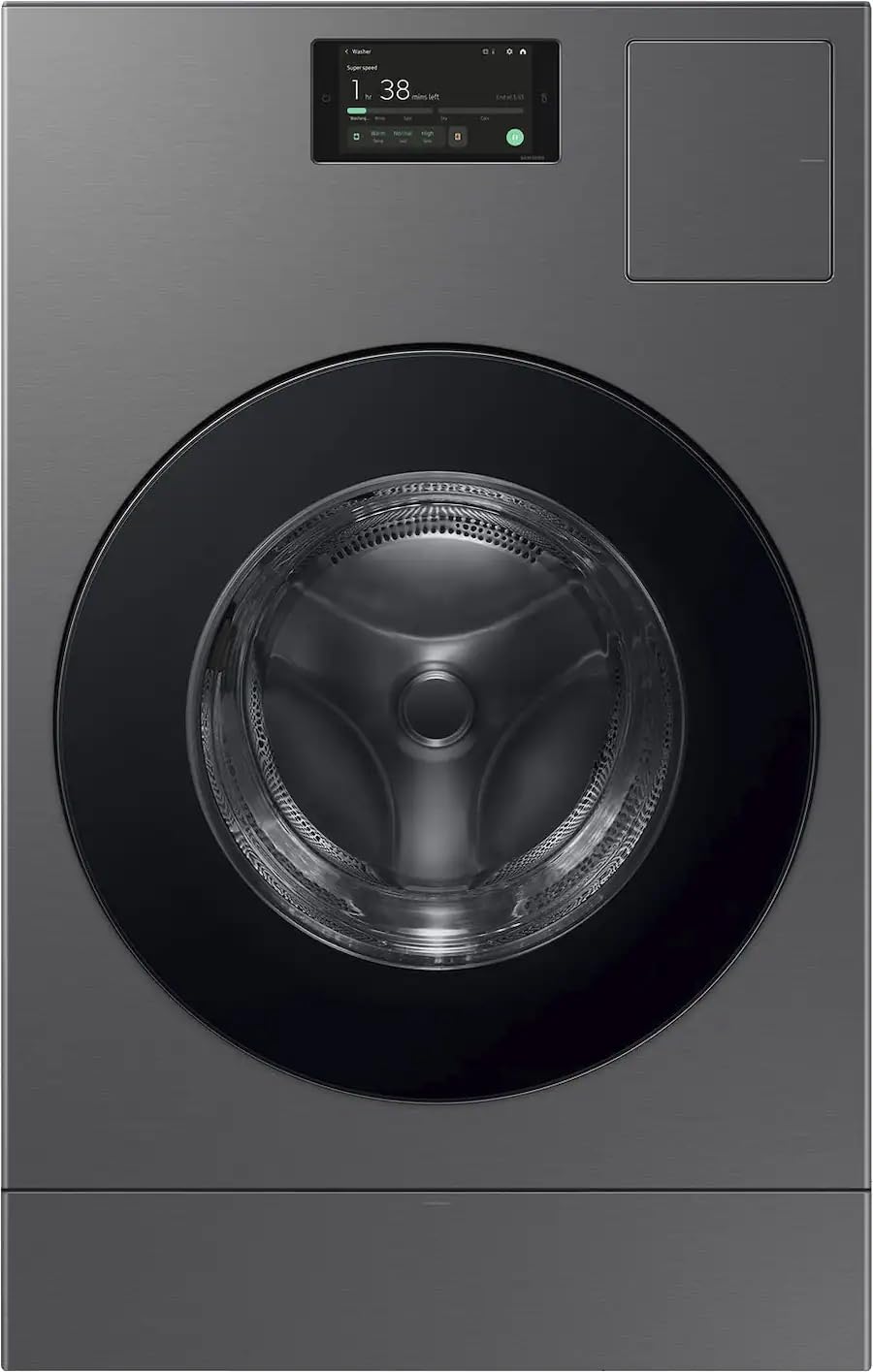
The only unit here that washes and dries a family-size load in one go without splitting.
With a 5.3-cubic-foot drum — nearly double the standard 2.7 cubic feet — this Samsung Bespoke model handles what other ventless combos cannot: a full load of laundry all at once. The heat pump dryer technology finishes a complete wash-and-dry cycle in as little as 98 minutes, a massive time saving compared to the 6-hour cycles typical of smaller units. It plugs into any standard 120V outlet, so you avoid the cost and hassle of electrical work.
The AI Opti Wash & Dry system detects soil level and fabric type during the cycle, automatically adjusting wash time, water temperature, and drying intensity. The Flex Auto Dispense system holds enough detergent for up to 47 loads, softener for 34 loads, or a combination of both. At 34.4 inches deep and 317 pounds, it requires a full-size laundry space — this is not a kitchen-counter unit. The touch controls and smartphone app give you remote cycle management, a step up from the push-button panels on every other model here.
Load without the wait: The 5.3-cubic-foot capacity and 98-minute cycle are categories ahead of every 2.7-cubic-foot combo here — you wash more in a fraction of the time.
Size reality check: At 34.4 inches deep and 317 pounds, you need a dedicated laundry alcove, not a tight kitchen corner.
Best for homes: Families or anyone doing multiple loads per week who wants one machine that finishes each load in under two hours.
skip it if: Your space barely fits a compact 24-inch unit — this Samsung needs a full-size laundry spot.
5. KoolMore 2-in-1 Front Load Washer and Dryer Combo

A quiet, stable performer that one owner found solid enough for a converted bus.
At 171 pounds and with a 1300 RPM max spin speed, the KoolMore is the heaviest of the 2.7-cubic-foot units here — that extra mass helps keep vibration down. One reviewer noted running it in a converted bus with anti-vibration pads, finding it stayed stable even on rough roads. The ventless design uses condensation drying, and the 16 wash cycles plus 4 dedicated drying cycles give you flexibility for cottons, delicates, towels, and heavy-duty fabrics.
Reviewers consistently note the machine is very quiet and does not shake during operation, a point that comes up in several reviews. The stainless steel drum is standard at this price level. The dry function works best when you do not overload the drum — one buyer found it takes roughly 4 hours to dry a single pair of pants. A 20-minute quick-wash cycle is a useful option for lightly soiled loads. KoolMore backs it with a 1-year parts and labor warranty, and reviewers who needed service reported the company honored the warranty with good communication.
Strengths
- Quiet operation with minimal vibration even on uneven floors
- 20-minute quick-wash cycle for small, lightly soiled loads
- Heavier build (171 lbs.) dampens movement during high-speed spin
Caveats
- Dry cycle takes several hours — ventless condensation drying is inherently slow
- Ventless design leaves lint on the door seal that you must wipe after each load
Reach for this if… you need a ventless combo for an RV, tiny home, or apartment and prioritize quiet, steady operation over fast drying.
Look elsewhere if… you want to dry towels and jeans without splitting the load into separate drying runs.
1. Midea 24 Inch All-in-One Front Load Washer Dryer Combo

The best-rounded ventless combo for apartments, thanks to steam cleaning and that 10-year motor warranty.
This Midea combo brings a Steam Care function that injects steam over a 30-minute period to help eliminate stains and bacteria while keeping clothes soft. The overnight wash-and-dry setting lets you load clothes, hit start before bed, and wake up to dry, fresh laundry — the default Wash & Dry program is 6 hours, matching what buyers report. The BLDC inverter quattro motor carries a 10-year warranty, a stronger durability promise than most compact combos offer.
Owners mention the wash-only cycle runs about 1.5 hours, and the full wash-and-dry takes about 6.5 hours, which is typical for this category. One reviewer with a year of use noted the Air Fluff feature keeps clothes fresh for up to 8 hours after the cycle ends, preventing musty smells if you forget to unload right away. The 2.7-cubic-foot drum and 1400 RPM spin speed give good water extraction before drying begins. At 161 pounds and 23.4 inches deep, it fits under a standard counter.
Why It Wins
- Steam Care function penetrates fabrics to reduce wrinkles and fight odors
- 10-year warranty on the inverter motor is the best coverage in this class
- Reload function lets you add a forgotten item mid-cycle
Trade-offs
- Full wash-and-dry takes about 6.5 hours — plan around it
- Drying efficiency trails a separate vented dryer
Smart pick for apartments: The steam cleaning lifts stains without pre-treating, and the 10-year motor warranty (the brand covers the inverter motor for a decade) gives confidence. The overnight cycle runs quietly while you sleep, so you wake to dry clothes.
Who should pass: Anyone who needs a completed cycle in under four hours — that is not how ventless combos operate, and this one is no exception.
3. COMFEE’ 24″ Washer and Dryer Combo

A steam-capable compact that one reviewer called the cleanest clothes they have ever gotten from any machine.
COMFEE’ matches the 90 kilowatt-hours per year energy usage of the Midea but separates its wash and dry capacities clearly: 26 pounds for washing and 13 pounds for drying. That split is important — you fill the drum for washing but need to remove half the wet load before drying, or run two drying cycles. The steam care cycle runs for over 30 minutes of steam permeation to remove dust and reduce wrinkles and odor without extra detergent.
One seasoned reviewer reported, “it takes about 6 hours to wash and dry but it worth it not to forget your clothes in the washer and have to rewash it.” The wool setting handles sweaters and delicate knits — a feature other compact combos lack. Buyers mention the unit does not leak and the controls are easy to use. Some reviewers noted the lint strainers require periodic cleaning — if they clog, water can pool on the floor. The inverter motor runs quieter than a universal motor, according to the brand.
Cleanest clothes claim: Multiple reviewers mention the laundry emerges noticeably cleaner and softer than from previous machines, which matches the steam-permeation design.
Capacity caveat: At 26 pounds wash / 13 pounds dry, you cannot dry a full wash load in one go — plan for two dry cycles on larger loads.
Best for: Buyers who prioritize wash quality and steam wrinkle removal over raw speed, especially in an RV without access to hot water hookups.
Not ideal if: You want a “low-maintenance” single-cycle wash-and-dry — the load-splitting requirement adds a manual step.
4. SMETA All In One Ventless Compact 2.7 Cu.ft Washer Dryer

The shallowest footprint of any 2.7-cubic-foot combo here — critical when every inch counts.
At 23.1 inches deep, the SMETA is shallower than the Midea and COMFEE’ models by a full 26 inches of depth difference (13% more shallow). That smaller footprint matters when you are squeezing a washer into a kitchen cabinet or a narrow closet. The temperature-sensing technology keeps drying temperatures below 120 degrees Fahrenheit, a gentler approach than standard condensation dryers that can heat higher.
Customers note the wash cycle runs 58 to 110 minutes and the heavy dry setting takes 3 to 3.5 hours. One reviewer calculated the operating cost at roughly to per wash-and-dry cycle at per kilowatt-hour. The UL Energy Verified badge confirms efficiency claims. A few buyers received a unit branded “Smod” instead of “Smeta” and noted the machine looks different from the listing photos. Another review warned of violent shaking even after removing the shipping bolts, especially on multi-story apartments. The SMETA sits at the mid-range price, so it competes directly with the Midea and COMFEE’ on features.
What Stands Out
- 23.1-inch depth is the shallowest among comparable 2.7-cubic-foot ventless combos
- Temperature sensing keeps heat below 120°F, reducing wear on delicate fabrics
- UL Energy Verified — independent confirmation of efficiency claims
Watch Out For
- Several reports of violent shaking on upper floors despite correct installation
- Unit branding inconsistency — some buyers received a different model name than ordered
Reach for this if… your installation space is exactly 24 inches wide and every fraction of depth you save makes the difference between fitting and not fitting.
Look elsewhere if… you live on a second floor or in a lightweight structure where vibration could be an issue.
6. BLACK+DECKER Washer and Dryer Combo, 2.7 Cu. Ft.

A familiar brand name at a gentler price, with a “My Cycle” button that saves your preferred settings.
The BLACK+DECKER combo uses 90 kilowatt-hours annually and offers 16 wash cycles plus a “My Cycle” button that stores your favorite temperature, spin speed, and dry setting for quick recall — useful if you always wash towels or always wash delicates. The ventless condenser drying works with timed dry or auto-dry options. You can program a wash-and-dry cycle in the morning and return to finished laundry after work.
Reviewers point out the unit washes well and clothes feel softer than from a vented dryer because condensation drying is gentler on fabric fibers. The stainless steel drum is standard. Buyers warn that towels take multiple hours to dry and you may want to hang them instead. One reviewer who owned the unit 18 months reported the water draining pump failed with no replacement parts available, forcing a full replacement. The dryer rating is 13.2 pounds versus a 26.5-pound wash capacity, so expect to split loads. At 160 pounds, it is the same weight as the SMETA and 10 pounds lighter than the KoolMore.
Budget builder: If you are looking for the lowest entry point to a brand-name ventless combo rather than a generic, this is it — the “My Cycle” button is a genuinely helpful shortcut.
Long-term worries: A reviewer who hit the 18-month mark found the unit unrepairable due to unavailable replacement parts, which is the biggest risk with any budget appliance.
Best for: First-time ventless buyers on a tighter budget who want a recognizable brand and do a load a day so the machine gets consistent use.
pass on it if: You plan to keep the machine beyond two years and want a reliable parts supply — go with the Midea or Samsung instead.
2. HAMILTON BEACH Washer and Dryer Combo 2.7 cu ft

The crazy-low 22 kilowatt-hours per year energy use is four times less than most other ventless combos.
This Hamilton Beach model uses just 22 kilowatt-hours annually — compared to 90 kilowatt-hours for the Midea and COMFEE’ units and 103 for the Samsung. That is a 4.1x energy consumption gap that makes this by far the cheapest machine to run over time. One buyer calculated their yearly electricity cost. The stainless steel drum resists chipping better than enamel drums, and the noise level sits at less than 60 dB during the wash cycle and less than 72 dB during the spin — noticeably quieter than the COMFEE’ unit.
Shoppers say cycles range from 3 to 7.5 hours for small loads, with the quick wash at about 2 hours 20 minutes. The steam drying leaves items slightly damp, but reviewers found clothes dry completely when pulled out and hung briefly. A critical detail: the machine uses water to carry lint away instead of a lint filter — one buyer experienced a flood when the unit drained randomly while off, and the warranty claim was denied. The 5 temperature options and 16 wash cycles give good flexibility for different fabric types, but the semi-automatic controller means you manually select the drying phase rather than setting a full automated sequence.
What We Love
- Lowest energy consumption of any ventless combo here at 22 kWh/year
- 60 dB wash noise is genuinely quiet — good for open-plan apartments
- Stainless steel drum resists rust and chipping over decades of use
What Gives Us Pause
- Water-based lint removal system risked a flood in at least one verified review
- Semi-automatic controller requires manual drying selection — less convenient than full-auto models
Reach for this if… your electric bill is your biggest monthly concern and you value long-term energy savings over cycle convenience.
Look elsewhere if… you want a fully automatic one-button wash-and-dry experience — the Hamilton Beach needs your input between phases.
Understanding the Specs
Annual Energy Consumption (kWh)
This number — measured in kilowatt-hours per year — tells you how much electricity the machine uses over 12 months of typical use. A unit that draws 22 kWh per year costs about one-fourth what a 90 kWh model costs to run. In everyday terms, the 22 kWh Hamilton Beach will add roughly to to your monthly bill, while a 103 kWh model might add to. This spec is your best guide to long-term operating cost.
Wash Capacity vs. Dry Capacity
Most compact ventless combos give you one number for capacity (like 2.7 cubic feet or 26 pounds), but the real story is the split between wash capacity and dry capacity. A machine might wash 26 pounds of wet laundry but only dry 13 pounds at a time — about half. That means for a full wash load, you must remove half the wet clothes after the wash cycle, dry those, then dry the rest. Higher-end heat-pump models like the Samsung are designed to dry the full wash load in one pass without splitting.
FAQ
How does a ventless washer dryer combo dry clothes without a vent?
Why do ventless combos take so long to wash and dry?
Can I wash a full load and dry it without splitting the load?
Do ventless combos use more water than a regular washer?
What is the difference between a ventless condenser dryer and a heat pump dryer?
How much space do I need for a 2.7-cubic-foot ventless combo?
Will a ventless combo work in a freezing garage or RV?
What are the transport bolts and why must I remove them?
Is a ventless combo more expensive to repair than separate units?
Do I need special detergent for a ventless combo?
Final Thoughts: The Verdict
Across the board, the ventless combination washer dryer winner is the Midea 24-Inch All-in-One because the steam care function, 10-year inverter motor warranty, and overnight cycle give the best combination of cleaning power, durability, and daily convenience at a mid-range price. If you want a full-size family capacity that washes and dries a whole load in under two hours, grab the Samsung Bespoke AI. And for the lowest energy bill in the long run, the Hamilton Beach uses just 22 kilowatt-hours per year — a fraction of the others.
How We Picked
We do not accept paid placement. Every pick is matched to a real buyer and a real use-case; we do not hands-on test units.
Sources & Methodology
Specifications: manufacturer listings and product documentation. Review insights: verified customer reviews, as of July 2026. Pricing: not shown on this page (it changes often); check the current price via the retailer link.
As an Amazon Associate, WellFizz earns from qualifying purchases. This does not affect which products we feature.
Related Guides

Mo Maruf
I created WellFizz to bridge the gap between vague wellness advice and actionable solutions. My mission is simple: to decode the research and give you practical tools you can actually use.
Beyond the data, I am a passionate traveler. I believe that stepping away from the screen to explore new environments is essential for mental clarity and physical vitality.