Our readers keep the lights on and my smoothie glass nicely filled. As an Amazon Associate, I earn from qualifying purchases.
Specs are compiled from manufacturer listings and verified buyer reviews and can change over time — please confirm the key details on the product page before buying.
After a few hours behind the wheel, your legs can feel heavy, tired, and achy. That dull throb in your calves and ankles is a signal that blood is pooling in your lower legs because you have been sitting still for too long. The right pair of compression socks can keep that from happening, helping your circulation work even when your legs are not moving.
I’m Mohammad Maruf — the founder and writer behind WellFizz. This guide is built by comparing the manufacturers’ published specifications and the patterns across verified customer reviews, so you get each pick’s real strengths and trade-offs instead of marketing spin.
Here is what you need to know: the best way to pick a pair is to match the compression level to how long you drive and how much support your legs already need. This guide covers the top-rated compression socks for driving on the market, explaining what each pair does well and where it falls short so you can choose the one that fits your daily routine.
Quick Picks
- Physix Gear Compression Socks 20-30 mmHg — Top Performer
- Feetures Compression Knee High Socks — Premium Feel
- Travelsox Flight OTC Patented Graduated — Travel Specialist
- NEENCA Copper Compression Socks 20-30 mmHg — Best Value
- Votprof Compression Socks 20-30 mmHg — Travel Pick
- Compression Socks for Women and Men 15-20 mmHg — Budget Champion
- Dr. Motion 4 Pairs Graduated Compression — Light Support
How To Choose The Best Compression Socks For Driving
A long drive keeps your legs bent and still for hours, which slows blood flow back up to your heart. Compression socks help by squeezing your legs in a way that pushes blood upward, but not all socks do this the same way. The three things that matter most are the compression level (measured in mmHg), the fit around your calf, and the quality of the material that touches your skin hour after hour.
Compression Level: 15-20 mmHg vs 20-30 mmHg
The number you see on the package — measured in millimetres of mercury, written as mmHg — tells you how much pressure the sock applies at your ankle. For a typical drive of two to four hours, 15-20 mmHg is usually enough to keep legs feeling fresh. If you drive for longer stretches, spend all day in a work truck, or already deal with swelling in your ankles, 20-30 mmHg delivers noticeably more squeeze and better protection against fluid pooling. A 20-30 mmHg sock delivers 20-30 mmHg of pressure, compared to the 15-20 mmHg of milder models, which is a meaningful difference for long-haul drivers.
Fit and Calf Measurement
Compression socks work only if they are the right size. If they are too loose, they slide down and lose pressure around your ankle, so they stop helping. If they are too tight, they can dig in behind your knee and cut off circulation instead of aiding it. Measure the widest part of your calf and the narrowest part of your ankle, then compare those numbers to the size chart for each brand. A good fit means the sock stays in place behind your knee without rolling down during a full day of driving.
Material and Breathability
Driving for hours in a warm car means your feet can get sweaty and uncomfortable. Socks made from a blend of nylon, spandex, and moisture-wicking fibres (yarn that pulls sweat away from your skin) keep your feet drier than all-cotton versions, which tend to hold moisture. Look for fabric that feels smooth against your skin and does not bunch up inside your shoe, because any wrinkle or fold can become a painful pressure point.
Quick Comparison
| Model | Best For | Compression Level (mmHg) | Pairs Included | Calf Fit Range | Amazon |
|---|---|---|---|---|---|
| Physix Gear Compression Socks | Drivers with swelling or leg pain | 20-30 mmHg | 1 Pair | Fits 15-16 inch calves (XL) | Amazon |
| Feetures Compression Knee High Socks | Drivers who prefer lighter compression | — | 1 Pair | Slim legs | Amazon |
| Travelsox Flight OTC TS1000 | Long-haul road trips | — | 1 Pair | Size L fits 13 wide men’s | Amazon |
| NEENCA Copper Compression Socks | All-day wear with breathability | 20-30 mmHg | 1 Pair | True to size chart | Amazon |
| Votprof Compression Socks | Mid-length drives and flights | 20-30 mmHg | 1 Pair | Standard sizes | Amazon |
| Compression Socks (XZD) 3-Pack | Budget-friendly daily driving | 15-20 mmHg | 3 Pairs | S/M/L sizes | Amazon |
| Dr. Motion 4-Pack Women’s Socks | Mild support for casual trips | 8-15 mmHg | 4 Pairs | Shoe size 4-10 | Amazon |
In‑Depth Reviews
1. Physix Gear Compression Socks 20-30 mmHg

The heavy-lifter for drivers whose legs swell and ache after hours behind the wheel.
The 20-30 mmHg of graduated pressure on this sock — the squeeze is strongest at your ankle and gradually lightens as it moves up your calf — is firmer than the 15-20 mmHg options on this list (20-30 mmHg vs. 15-20 mmHg), so it handles noticeable swelling that milder socks cannot touch. Buyers report that after a 12-hour shift, their ankle bones became visible again after being hidden by swelling. The socks go up to the knee and stop just under it, even for a 6’2″ driver, without rolling down. Buyers with 15-16 inch calves found that the XL size fits well. The fabric includes arch support and cushioned padding around the heel, which helps with pedal feel because the sock does not slide around inside your shoe. One caveat: getting them on takes practice — some buyers needed a partner to help the first few times because the compression is strong. Once on, however, owners mention you forget you are wearing them.
Drivers Who Swear by Them
- Firm 20-30 mmHg level is effective against swelling — one buyer saw ankle bones return after 12 hours
- Arch support and heel cushioning stay put inside shoes
- Available in XL for calves up to 15-16 inches
The Real Effort
- Difficult to pull on — one buyer needed a partner to help
- Only one pair per purchase
Your best bet if: you drive long hours or already have leg swelling that lighter socks do not fix. The compression is strong enough to make a real change.
Think twice if: you have arthritis in your hands or limited grip strength — the snug fit makes them a challenge to put on solo.
2. Feetures Compression Knee High Socks

The light, tailored option for drivers who want performance feel without a vice-like grip.
Feetures uses a lighter-weight material than most compression socks, so your feet stay cooler during warm drives. Customers note that their feet do not overheat, a common complaint with thicker medical-grade socks. The sock uses what the brand calls “targeted compression” — graduated pressure that is strongest at the ankle and lighter higher up — so you do not end up with a big indentation ring around your calves after you take them off. The catch is the fit. Multiple buyers warn that these socks are very tight if you have larger calves or carry more weight. One reviewer who is 5’6 and 140 pounds found them “WAY too tight”. Another buyer said they are “not for fat legs”. So this pair works best for drivers with slim legs who want a snug but breathable sock. The fabric is well-made and comfortable if the sizing matches your leg shape, but it is not a forgiving fit across different body types.
The Lightweight Advantage
- Breathable thinner fabric keeps feet from overheating on long drives
- Anatomical design with graduated compression — no deep calf marks after removal
Fit Can Be a Dealbreaker
- Way too tight for average or larger calves — one 5’6″, 140 lb reviewer found them unwearable
- Only one pair per purchase at a premium price
Grab these if: you have slim legs and hate the hot, thick feel of standard compression socks. The lightweight fabric makes hours in the car much more comfortable.
Leave them if: your calves are on the larger side — the cut is narrow and the fit is unforgiving.
3. Travelsox Flight OTC Patented Graduated Compression Socks TS1000

The road-trip sock built specifically for seats you cannot get out of — airplane or driver seat.
These socks were originally designed for what the brand calls “Economy Class Syndrome” — the deep vein thrombosis risk from long flights in cramped seats. The same problem happens on a 10-hour drive. Travelsox uses a patented graduated compression technology manufactured in Italy, with a toe-to-heel terry looped padding system (a shock-absorbing fabric layer). That extra padding on the bottom of the foot helps when you are pressing pedals for hours because it reduces vibration and pressure points under the foot. Buyers rave about the results. One reviewer wore them for a 12-hour flight plus another 10 hours on their feet and said their legs felt rested with no aching. Another tall reviewer over six feet found that the sock came up over their knee, which they folded down without issue. The ultra-thin toe seam construction prevents rubbing inside your shoe. One thing to note: the women’s version only comes in brown, which some buyers found disappointing. But for pure driving comfort over marathon trips, this is a dedicated solution.
Built for the Long Haul
- Terry looped padding on the sole absorbs shock from pedals
- Patented graduated compression tested for extreme travel conditions
- Fits size 13 wide men’s shoes comfortably
Minor Quirks
- Can run long — taller buyers found the sock went above the knee
- Women’s colour options limited to brown
Drive for it if: you regularly take road trips over 6 hours or combine driving with flying. The shock-absorbing sole is a real advantage for pedal comfort.
Skip if: you need a discreet look under dress pants — the grey colour and longer cut may not suit all wardrobes.
4. NEENCA Copper Compression Socks 20-30 mmHg
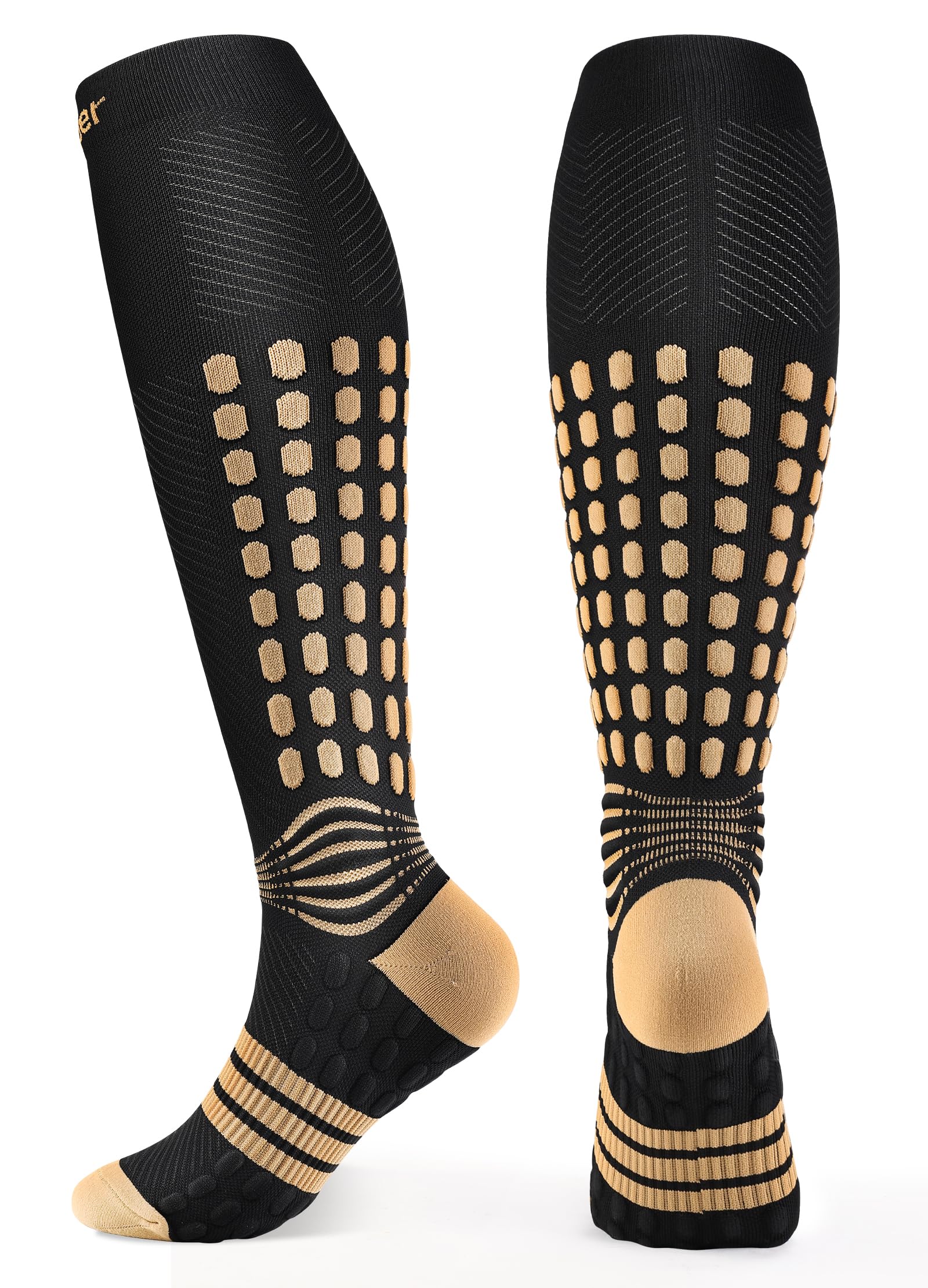
Medical-grade pressure at a mid-range price, with breathable fabric that lasts all day.
NEENCA delivers 20-30 mmHg compression — the same firm level as the Physix Gear pair — but adds a few design touches that drivers will appreciate. The socks integrate six compression rings around the ankle, which the brand calls “Ankle Tuck Compression Tech,” plus a reinforced arch support. That extra structure around the ankle helps keep the sock locked in place while you work the pedals. Reviewers point out that within eight hours of wearing them, they noticed an improvement in leg pain. The copper-infused fabric feels smooth and breathable, making it a good choice for longer drives where your feet tend to get warm. One reviewer who walks all day for work called it the “best compression sock purchase of many different brands,” noting they were true to size — most other brands run small. The package dimensions are 10.04 x 6.85 x 1.61 inches and the socks weigh 5.29 ounces. Just keep in mind you get a single pair, and one reviewer noted the socks are “kinda ugly” despite being very comfortable.
Value Meets Performance
- Firm 20-30 mmHg level at a more accessible price point
- Breathable copper-infused fabric keeps feet cool on long drives
- True-to-size fit — unusual for compression socks
Trade-offs
- Only one pair per purchase
- Some buyers found the look unappealing despite the comfort
Great middle ground: you get full 20-30 mmHg support without paying top dollar. Ideal for daily commuters and weekend road-trippers.
Watch out: if you care about sock aesthetics for wearing with shorts, these may not be your style.
5. Votprof Compression Socks 20-30 mmHg

The reliable 20-30 mmHg workhorse that keeps cankles away after a long drive or flight.
This pair from Votprof offers the same 20-30 mmHg compression as the Physix and NEENCA options, making it a solid choice for anyone who wants firm support at a lower price. One buyer wore these for a 5 1/2-hour trip and reported that they normally get “cankles” (swelling where the calf meets the ankle) after sitting for that long, but with these socks, it did not happen. That is exactly the result a driver wants: the socks keep fluid from pooling in your lower legs even when you are stuck in one position. The socks are made from a lightweight fabric that the brand says helps prevent leg swelling, blood clots, and tired aching legs. Reviewers confirm they are well-made and fit well. However, one buyer had the opposite experience — the socks were too tight and did not work for them, and their partner had the same issue. This split in feedback is common for compression socks, which is why accurate calf measurement is so important. For drivers who do measure correctly, this is a dependable budget-friendly option with a track record since 2019.
What Works
- Proven track record — a buyer prevented cankles on a 5.5-hour trip
- Firm 20-30 mmHg compression at a low cost
- Lightweight fabric suitable for warm car interiors
The Risk
- Some buyers and their partners found them too tight despite correct sizing
- Only one pair per purchase
Solid for: drivers who know their correct size and want 20-30 mmHg compression without spending much. Good for shorter trips where swelling is still a concern.
Pass if: your calf measurements are close to the boundary between sizes — a poor fit could make these unwearable.
6. Compression Socks for Women and Men 15-20 mmHg (3-Pack)
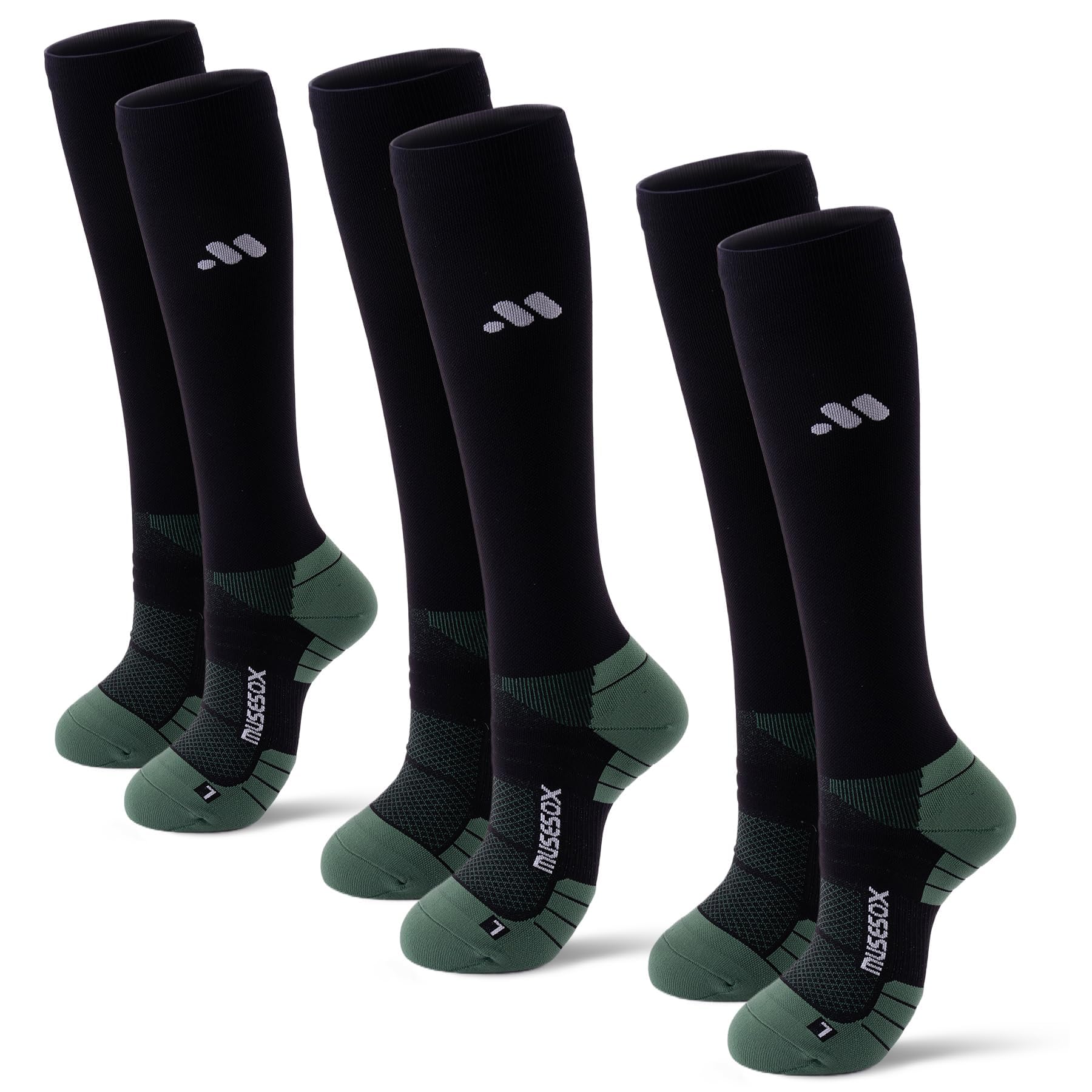
The 3-pack solution that keeps your legs covered every day of the work week for less than one premium pair.
At 15-20 mmHg, this is the milder compression level on the list — it provides 15-20 mmHg, while the firmer socks provide 20-30 mmHg. One buyer who works in food service reported that these socks “drastically relieved pain in my calves after 8hr shifts.” That is the kind of feedback that matters because an 8-hour shift standing or sitting is similar to a long day of driving. The product comes in S/M/L shoe sizes and includes a helpful guide on how to put them on, which is especially useful if you have arthritis in your hands. You get three pairs in one box, which is a strong value for daily drivers who want to rotate socks without washing every single night. Reviewers consistently mention the comfortable fit and the effective compression. One noted that the toe seam is “hardly noticeable,” which prevents irritation during all-day wear. The trade-off is the 15-20 mmHg level — if you already deal with significant leg swelling, you may need the stronger version.
The Rotation Advantage
- Three pairs included — covers a full work week
- Comfortable fit with a barely noticeable toe seam
- Helpful instructions for people with arthritis or limited hand strength
Milder Squeeze
- 15-20 mmHg is lower compression than 20-30 mmHg options (15-20 mmHg vs. 20-30 mmHg)
- May not be enough for drivers with existing swelling
Ideal for: daily commuters who want a fresh pair every day and do not need maximum pressure. The value of getting three pairs is tough to top.
Not enough if: your legs already swell noticeably after driving — you need the stronger 20-30 mmHg level.
7. Dr. Motion 4 Pairs Graduated Compression Knee-hi Women’s Socks

The lightest squeeze on the list, meant for preventing fatigue rather than treating existing swelling.
With an 8-15 mmHg compression level, Dr. Motion socks are in a different class from the others here. This is what the brand calls “mild compression for everyday wear.” The socks are knitted with three zones of graduated compression from the ankle to the calf, using a blend of 36% cotton, 36% polyester, 20% acrylic, 6% spandex, and 2% nylon. For a driver who wants a gentle boost in circulation without the effort of wrestling into a tight sock, this is the easiest option. Shoppers say the socks help with swelling in the ankles and make legs feel less tired after a full day on their feet. You get four pairs in one package, which is the best value for quantity on this list. The fit is designed for women with shoe sizes 4 to 10, and the sock is 9-11 inches in length. One caveat: a buyer with a women’s size 9.5 wide foot found the socks too tight, so if you have wider feet or larger calves, the 8-15 mmHg level may not be the issue — the cut itself may be too narrow. For casual drivers making short trips, these are comfortable and affordable, but they lack the therapeutic pressure of the 20-30 mmHg options.
Gentle and Generous
- Four pairs included — great for daily rotation
- Very easy to put on compared to tighter socks
- Moisture-wicking Tru Dry yarn keeps feet dry
Light Pressure Only
- 8-15 mmHg is the weakest compression level here
- Narrow fit — may be too tight for wide feet or larger calves
Work for: short drives and casual trips where you just want a little extra circulation help. The 4-pack price is excellent value.
Skip for: long road trips or if you already have swelling — you need the higher compression of a 20-30 mmHg sock.
Understanding the Specs
mmHg — Millimeter of Mercury
This is the unit used to measure how much pressure the sock applies to your leg. A higher number means a tighter squeeze. For driving, 15-20 mmHg is enough to help with general leg fatigue and mild swelling. The 20-30 mmHg range is considered medical-grade and is better if you already have noticeable puffiness in your ankles or calves after a long day behind the wheel. The 20-30 mmHg range provides greater pressure than the 15-20 mmHg range.
Graduated Compression
This means the sock is tightest at your ankle and gradually loosens as it goes up your leg. The purpose is to help push blood upward toward your heart, fighting the natural pull of gravity when you are sitting still. A sock that is uniformly tight (not graduated) can actually restrict circulation around your calf rather than helping it. Every product on this list uses graduated compression, which is the correct design for driving.
FAQ
Can I wear compression socks for driving every day?
What compression level is best for a 2-hour commute?
Will compression socks help with leg pain during long road trips?
How do I know which size to buy for driving?
Are 20-30 mmHg socks too tight for driving?
Can compression socks prevent deep vein thrombosis when driving?
How often should I replace my compression socks for driving?
Can I wear compression socks with boots or driving shoes?
Do I need prescription compression socks for driving?
What is the difference between copper-infused and regular compression socks?
Final Thoughts: The Verdict
For most drivers, the winner among compression socks for driving is the Physix Gear Compression Socks 20-30 mmHg because it delivers medical-grade pressure that actually reduces swelling after a full day in the driver’s seat, with a fit that stays put on larger calves. If you want a breathable lightweight option with less squeeze, grab the Feetures Compression Knee High Socks. And for the best value that covers your whole work week, the Compression Socks 15-20 mmHg 3-Pack is a strong choice.
How We Picked
We do not accept paid placement. Every pick is matched to a real buyer and a real use-case; we do not hands-on test units.
Sources & Methodology
Specifications: manufacturer listings and product documentation. Review insights: verified customer reviews, as of July 2026. Pricing: not shown on this page (it changes often); check the current price via the retailer link.
As an Amazon Associate, WellFizz earns from qualifying purchases. This does not affect which products we feature.
Related Guides

Mo Maruf
I created WellFizz to bridge the gap between vague wellness advice and actionable solutions. My mission is simple: to decode the research and give you practical tools you can actually use.
Beyond the data, I am a passionate traveler. I believe that stepping away from the screen to explore new environments is essential for mental clarity and physical vitality.