Our readers keep the lights on and my smoothie glass nicely filled. As an Amazon Associate, I earn from qualifying purchases.
Specs are compiled from manufacturer listings and verified buyer reviews and can change over time — please confirm the key details on the product page before buying.
Aluminum wheels collect baked-on brake dust that regular car soap barely touches, and the wrong cleaner can etch or dull the finish for good. This guide walks through seven aluminum-safe formulas that break down that iron grit without aggressive acids, so your rims look clean without the risk of damage.
I’m Mohammad Maruf — the founder and writer behind WellFizz. This guide is built by comparing the manufacturers’ published specifications and the patterns across verified customer reviews, so you get each pick’s real strengths and trade-offs instead of marketing spin.
Whether you drive a daily commuter or a set of polished show wheels, here is the cleaner for aluminum wheels that actually cuts through the grime without eating into your weekend.
Quick Picks
- SONAX Beast Wheel Cleaner — Best Overall
- KOCHCHEMIE Prosumer Line Reactive Wheel Cleaner — Premium Finish
- Mothers Polished Aluminum Wheel Cleaner — Aluminum Specialist
- Nanoskin Non Acid Professional Wheel & Tire — Best Value Concentrate
- Griot’s Garage Wheel Cleaner for All Finishes — Gentle Maintenance
- 303 Products Heavy Duty Wheel Cleaner — Smart Indicator
- KOCHCHEMIE Magic Wheel Cleaner — Heavy-Duty Reactive
How To Choose The Best Cleaner For Aluminum Wheels
Not all wheel cleaners play nice with aluminum. Uncoated polished aluminum and anodized surfaces are more sensitive than painted or clear-coated rims. A formula marked “non-acid” or “pH-balanced” is your first filter — any product with harsh acids can stain or etch the metal, leaving a white residue you cannot buff out.
Iron-removing or pH-neutral — which one do you need
An iron-removing (reactive) cleaner changes color — typically turning red or purple — when it contacts brake dust particles. This type is great for heavy buildup but often has a strong chemical smell. A pH-neutral formula is milder, requires more scrubbing, and works better for weekly maintenance washes on already clean wheels. If your wheels are caked with brown dust, go reactive. If you wash your car every weekend, a neutral cleaner is kinder to the finish.
Quick Comparison
| Model | Best For | Size | Type | Key Feature | Amazon |
|---|---|---|---|---|---|
| SONAX Beast | Color-change power | 33.8 oz | Acid-free reactive | Turns deep red | Amazon |
| KOCHCHEMIE Prosumer | Lot finish & shine | 750 ml | Acid-free reactive | Gloss additives | Amazon |
| Mothers Polished | Uncoated aluminum | 1 Gallon | Aluminum-safe spray | Delicate formula | Amazon |
| Nanoskin Concentrate | Professional dilution | 1 Gallon | Non-acid concentrate | 4:1 dilution ratio | Amazon |
| Griot’s Garage | Weekly maintenance | 35 oz | pH-balanced spray | Safe on all finishes | Amazon |
| 303 Heavy Duty | Iron indication | 15.5 oz | Non-corrosive reactive | Purple indicator | Amazon |
| KOCHCHEMIE Magic | Heavy brake dust | 500 ml | Acid-free viscous | High viscosity | Amazon |
In‑Depth Reviews
1. SONAX Beast Wheel Cleaner

Sprays on clear, turns deep red, and hoses off heavy brake dust without scrubbing.
This is the cleaner that saves you time. The acid-free pH-balanced formula turns deep red or purple when it hits iron particles from brake dust — so you see exactly where it is working. It comes ready to use at 33.8 fluid ounces and weighs 2.54 pounds, which gives you a good sense of the liquid volume compared to smaller bottles like the 303 at 1.19 pounds. “Just spray it on and hose off,” buyers report, with one noting it melted all the grime off their winter-caked wheels.
You will still need a light scrub for heavy buildup, and the smell is strong — reviewers recommend gloves and a well-ventilated area. But if you want the fastest path from dirty rim to shiny finish, this is the one.
Why it stands out
- Color-change reaction shows cleaning progress
- Safe on chrome, aluminum, steel, and clear-coated finishes
- Minimal scrubbing needed for most jobs
The trade-offs
- Strong chemical odor requires ventilation
- Heavy buildup may need a second pass
Best for speed: This is the pick for anyone who hates scrubbing rims and wants a simple spray-and-rinse routine.
skip it if: You are sensitive to strong smells or need a product gentle enough for weekly use on coated wheels.
2. KOCHCHEMIE Prosumer Line Reactive Wheel Cleaner

Acid-free cleaning that turns red on contact and leaves a gloss finish behind.
This German-formulated cleaner goes beyond just removing brake dust — it adds gloss additives that leave a shine and a lotus effect (water beads off) after you rinse. It is safe for all wheel types including aluminum, powder-coated, and painted finishes, and the color-change indicator turns red as it dissolves iron fallout. “Works well on aluminum wheels,” buyers confirm, and one reviewer calls it their “wheel cleaner for life” despite the strong perm-like smell.
Unlike the Mothers formula, which is designed specifically for uncoated polished aluminum, this one works on a broader range of finishes. The real catch is the odor — several owners mention it seriously stinks, so you want to use it outdoors. But if you want your wheels to look freshly detailed with minimal effort, the visual feedback and gloss boost make it a solid upgrade from basic spray-on formulas.
What you get
- Color-change indicator shows cleaning action
- Gloss additives enhance wheel shine after wash
- Safe on multiple finishes, including aluminum
The downside
- Very strong smell; use only in open air
- Smaller 750 ml bottle goes fast on large wheels
Reach for this if: You want a cleaner that doubles as a finishing product and provides visual feedback as it works.
Look elsewhere if: You need a gallon-sized jug for multiple cars or are sensitive to chemical odors.
3. Mothers Polished Aluminum Wheel Cleaner
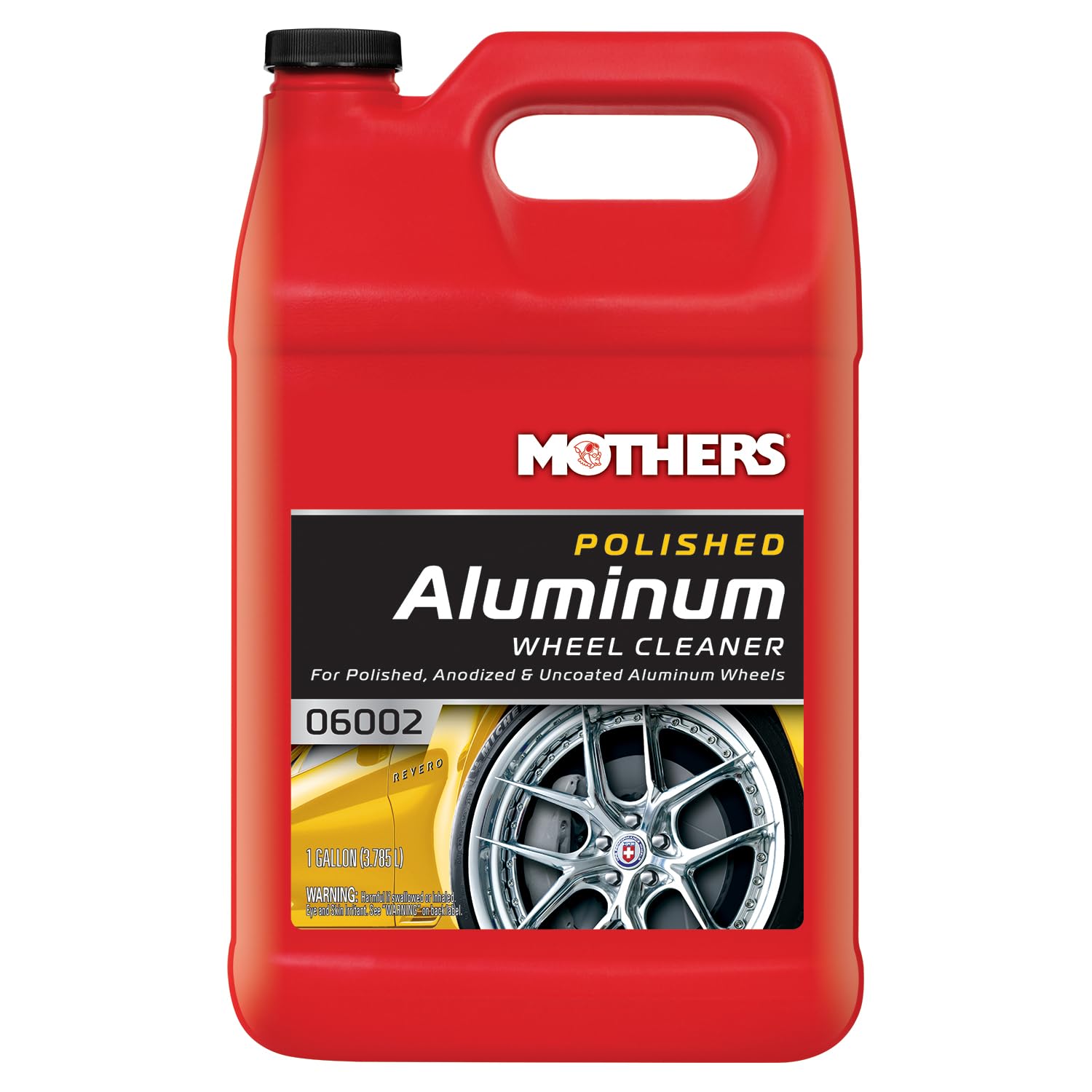
The dedicated formula for uncoated polished and anodized aluminum that other cleaners can stain.
Uncoated aluminum wheels are tricky — many cleaners contain agents that leave white residue or etch the bare metal. Mothers formulated this specifically for those delicate surfaces, and it works on painted, clear-coated, and chrome finishes too. The gallon size (128 ounces) gives you plenty of product for multiple deep cleans. “Cleans Work Meister S1 efficiently without oxidation,” one reviewer notes, while another says brake dust “just falls right off.”
Customers note using about half a bottle per car, so this is best for occasional heavy cleans rather than weekly use. One reviewer noted a crack in the spray bottle, so check the packaging on arrival. Compared to the SONAX Beast, this is less reactive — it does not change color — but it is gentler on bare aluminum and anodized rims that are prone to staining.
Strengths
- Specifically safe for uncoated polished aluminum and anodized wheels
- Large 1-gallon bottle for multiple uses
- Spray-on, hose-off formula with light scrubbing
Weaknesses
- No color-change indicator for iron removal
- Some spray bottles arrived damaged
Your move if: You own polished or anodized aluminum wheels and need a cleaner that will not damage the bare finish.
Pass if: Your wheels are clear-coated and you prefer a reactive cleaner with visual confirmation of dirt removal.
4. Nanoskin Non Acid Professional Wheel & Tire Cleaner

A concentrated gallon that dilutes 4:1 to make multiple bottles without losing cleaning power.
If you clean multiple cars or run a small detailing side gig, this is the gallon that stretches. The concentrate mixes at a 4:1 ratio (add 6 oz to a 32 oz spray bottle), and the Xtreme Cling technology creates thick foam that sticks to vertical wheel faces. It is acid-free and safe for clear-coated, powder-coated, and aluminum finishes. A reviewing detailer who uses it daily says it is “better than all the other name brands.”
At 9 pounds for the gallon, this is heavy — expect to decant it into smaller bottles for everyday use. Reviewers point out the strong smell, but the cleaning performance on heavy brake dust is praised consistently. Unlike the SONAX Beast, this does not change color on contact, so you rely on the foam turning brown as it lifts grime instead of a visual indicator.
Why it saves money
- 4:1 dilution ratio makes one gallon last much longer
- Thick foaming action clings to vertical surfaces
- Non-acid formula safe for clear-coated rims
Compromises
- No color-change indicator for iron
- Heavy bottle; need a separate spray bottle for use
Ideal for volume: Perfect for households with multiple vehicles or anyone who wants the lowest cost per wash.
Not for you if: You want a ready-to-use spray and prefer the confidence of a color-changing reaction.
5. Griot’s Garage Wheel Cleaner for All Finishes
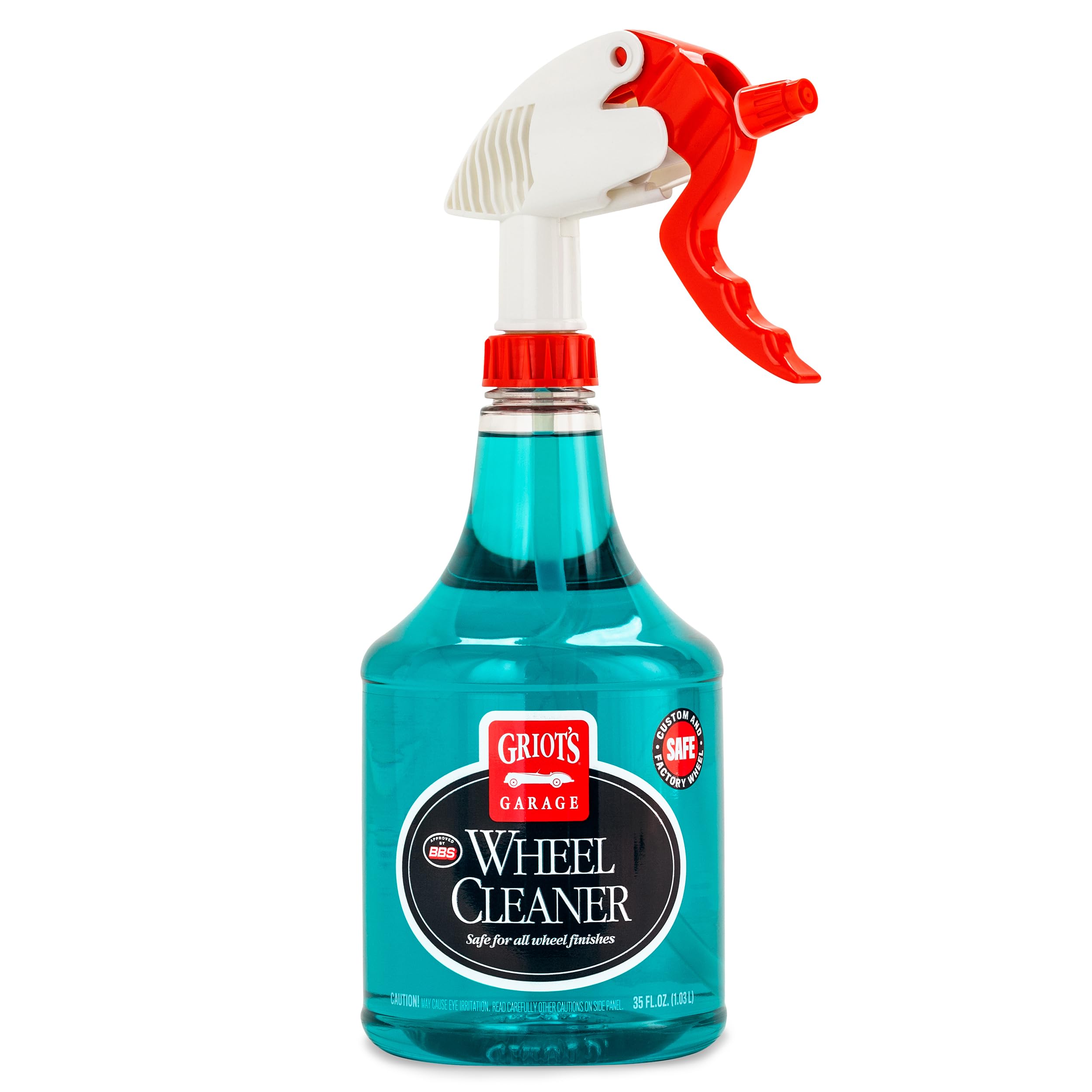
The pH-balanced weekly wash that will not strip ceramic coatings or sealed finishes.
Some wheel cleaners are too aggressive for ceramic-coated wheels or regularly maintained rims — they strip the protective layer along with the dirt. Griot’s Garage uses a pH-balanced formula that lifts road grime without disturbing coatings. The 35-ounce bottle gives you more volume than the 303 at 15.5 fluid ounces — a 2.3x gap — so you get more washes per bottle. “Great weekly maintenance product,” a reviewer notes, though they add it is on the weaker side and needs agitation.
Because this cleaner does not contain iron removers, it will not change color or dissolve heavy caked-on brake dust by itself. You will need to spray, let it dwell for at least thirty seconds, and then agitate with a sponge or brush. Buyers confirm the sponge rinses clean unlike some brands, making it a safe option for coated wheels where you do not want residue.
Best feature
- Safe for all finishes including ceramic-coated wheels
- Large 35 oz bottle outlasts smaller competitors
- pH-neutral formula will not strip wax or sealant
Limitations
- Requires manual scrubbing for best results
- Not strong enough for heavy, baked-on brake dust
Best for regular care: Grab this if you maintain your wheels weekly and want a formula that preserves your ceramic coating.
Look past it if: Your rims are caked with months of brake dust and you want a one-spray solution.
6. 303 Products Heavy Duty Wheel Cleaner

A non-corrosive formula that turns purple to show exactly where iron is dissolving.
This is the entry point to color-changing cleaners without the premium price. The iron-indicating formula turns purple as it reacts with brake dust, and the non-corrosive chemistry is safe on aluminum, chrome, and alloy wheels. Shoppers say it “works well on 2021 Audi RS5 wheels with heavy brake dust” — they sprayed, let it sit 3-4 minutes, and watched the purple streaks appear. At 1.19 pounds, this is the lightest bottle in the lineup, about half the weight of the SONAX Beast at 2.54 pounds.
The 15.5-ounce bottle is smaller, so one reviewer notes it lasted only two cars. The smell is distinctive — described as “grape candy mixed with dog poop” — so outdoor use is recommended. It is a solid option for occasional deep cleans (2-3 times per year) with a separate gentle cleaner for weekly washes in between.
Perks
- Purple color-change gives real-time cleaning feedback
- Non-corrosive formula safe on sensitive finishes
- Works well on heavy brake dust with short dwell time
Caveats
- Small bottle size limits how many cars you can clean
- Strong, unusual smell needs ventilation
Consider this if: You want to try a color-change cleaner at a lower investment and pair it with a gentler weekly spray.
Pass if: You clean large truck wheels or multiple vehicles and need a bigger bottle.
7. KOCHCHEMIE Magic Wheel Cleaner

Thick gel-like consistency that sticks to the wheel and slowly works through iron deposits.
Most wheel cleaners run off vertical surfaces before they have time to work. This one uses high viscosity (a thick, gel-like texture) to cling to the wheel face and give a longer working time. It turns red on contact with iron particles, and the acid-free formula is safe on painted alloy, chromed, and steel rims. “Works better than most wheel cleaners even with heavy brake dust,” a reviewer reports, and another says it restored black rims to like-new condition with a deep gloss shine.
The grip is that the smell is harsh — “rotten eggs meets industrial cleaner” — and the 500 ml bottle is small for its price point. One reviewer found you can dilute it 2:1 with water to extend usage, but that reduces the reactive strength. If you have heavily soiled German car wheels or wheels that need multiple passes, the cling action here outperforms thinner sprays.
Unique advantage
- High viscosity formula stays on vertical wheel surfaces
- Turns red on iron contact for visual confirmation
- Restores gloss on black rims effectively
Drawbacks
- Very strong odor; mask recommended
- Small 500 ml bottle for the price
Grab this for: Rims with heavy brake dust where you need the cleaner to stay put and work slowly through the grime.
pass on it if: You prefer a larger volume for the cost or cannot tolerate strong chemical smells during application.
Understanding the Specs
Acid-Free vs pH-Balanced
Acid-free means the cleaner does not contain harsh acids like hydrofluoric acid that can etch aluminum or damage clear coats — a safety requirement for bare polished rims. pH-balanced formulas are even gentler, typically landing near neutral (pH around 7), making them suitable for ceramic-coated wheels and weekly maintenance without stripping protection. Reactive cleaners often use pH-neutral bases with iron-removing agents added.
Color-Change Indicator
A color-change formula turns red, purple, or deep pink when it reacts with iron particles from brake dust. This lets you see exactly where the cleaner is working and when it has fully neutralized. Non-reactive formulas stay the same color and rely on foam darkening or manual scrubbing to gauge progress. Color-change cleaners tend to have a stronger sulfur-like smell because of the iron-reactive chemistry.
FAQ
Can I use a regular car soap to clean aluminum wheels?
Will a color-changing cleaner damage my clear-coated rims?
How often should I clean aluminum wheels?
What is the difference between a concentrate and a ready-to-use cleaner?
Why does my wheel cleaner smell like rotten eggs?
Can I use a brush with a pH-balanced cleaner?
Is it safe to let a wheel cleaner dry on the rim?
Will a non-acid cleaner remove old tire dressing from the rims?
Final Thoughts: The Verdict
For most buyers, the cleaner for aluminum wheels winner is the SONAX Beast because it combines the fastest cleaning action with visible color-change feedback and safe chemistry for factory and aftermarket finishes. If you want a dedicated formula for uncoated aluminum that will not stain the bare metal, grab the Mothers Polished Aluminum. And for budget-minded detailers who clean multiple vehicles, the concentrated Nanoskin Non Acid delivers the lowest cost per clean with professional-grade foam.
How We Picked
We do not accept paid placement. Every pick is matched to a real buyer and a real use-case; we do not hands-on test units.
Sources & Methodology
Specifications: manufacturer listings and product documentation. Review insights: verified customer reviews, as of July 2026. Pricing: not shown on this page (it changes often); check the current price via the retailer link.
As an Amazon Associate, WellFizz earns from qualifying purchases. This does not affect which products we feature.
Related Guides

Mo Maruf
I created WellFizz to bridge the gap between vague wellness advice and actionable solutions. My mission is simple: to decode the research and give you practical tools you can actually use.
Beyond the data, I am a passionate traveler. I believe that stepping away from the screen to explore new environments is essential for mental clarity and physical vitality.