Our readers keep the lights on and my smoothie glass nicely filled. As an Amazon Associate, I earn from qualifying purchases.
Specs are compiled from manufacturer listings and verified buyer reviews and can change over time — please confirm the key details on the product page before buying.
You want a cheap instant camera that spits out clear prints without wrecking your snack budget. That is a surprisingly tricky hunt — many budget models wash out skin tones, jam on the first roll, or lock you into a film subscription you never planned for. This guide walks you through four popular options right now, calling out exactly where each one cuts corners and where it genuinely delivers.
I’m Mohammad Maruf — the founder and writer behind WellFizz. This guide is built by comparing the manufacturers’ published specifications and the patterns across verified customer reviews, so you get each pick’s real strengths and trade-offs instead of marketing spin.
After sorting through the specs and real owner experiences, the smart buy for most people is a cheap instant camera that balances a reliable print engine with widely available film, starting right here.
Quick Picks
- Fujifilm Instax Mini 12 Green Bundle 2026 — Best Overall
- Fujifilm Instax Mini 41 Instant Film Camera — Retro Classic
- Fujifilm Instax Mini 12 Instant Camera — Value Re-entry
- KODAK Printomatic Full-Color Instant Print — Compact ZINK
How To Choose The Best Cheap Instant Camera
Before you hit add to cart, three decisions separate a fun impulse buy from a frustrating paperweight. The film format is the first fork in the road — Instax Mini film is sold everywhere and comes in a classic 2×3 inch credit-card size, while ZINK (zero-ink) paper prints the same size but uses a different technology baked into the camera itself. The second fork is flash behavior: some cameras fire the flash every time, even in broad daylight, while others use a light sensor to decide. Third, decide if you want a bundle that includes a starter pack of film and batteries, or a bare camera body that leaves you hunting for supplies before you can even take one shot.
Film format: Instax Mini vs ZINK 2×3
Instax Mini film is a chemical-development pack that ejects a blank white frame and develops in roughly 90 seconds. It is widely available, costs about – per shot according to buyers of the Mini 41, and gives a classic retro look. ZINK paper uses embedded dye crystals that the camera activates with heat — no ink cartridges and no film packs to load, but you are locked into Kodak’s proprietary paper. ZINK prints from the KODAK Printomatic often look washed out, with one reviewer rating photo quality 1/10 and noting dull colors.
Flash control and exposure
Cheap instant cameras often handle lighting automatically, but not all do it well. The Fujifilm Instax Mini 12 features automatic exposure and flash control to keep photos from looking washed out, while the Fujifilm Instax Mini 41 has an automatic flash that always fires — even indoors, not just in dim settings, as one buyer pointed out. The KODAK Printomatic uses a light sensor to turn the flash on automatically in low light, but multiple reviews say it still overexposes regardless of lighting. A camera that can control its flash behavior makes the difference between a clear face and a blown-out blob.
Bundle vs body-only
A bundle like the Fujifilm Instax Mini 12 Green Bundle 2026 includes a 10-pack of film, hand strap, AA batteries, and the camera itself. A renewed or body-only deal means you buy the camera alone and source the film and batteries separately. If you are new to instant photography, a bundle gets you shooting immediately. If you already have a stash of Instax Mini film at home, the renewed body saves you money upfront.
Quick Comparison
| Model | Best For | Film Format | Flash Type | Dimensions | Amazon |
|---|---|---|---|---|---|
| Fujifilm Instax Mini 12 Green Bundle 2026 | First-time buyers who want everything in one box | Instax Mini | Automatic exposure & flash control | — | Amazon |
| Fujifilm Instax Mini 41 Instant Film Camera | Users who want a black retro-style body | Instax Mini | Automatic (always fires) | 2.66 x 4.11 x 4.82 inches | Amazon |
| Fujifilm Instax Mini 12 (Mint Green) (Renewed) | Budget buyers who already own Instax Mini film | Instax Mini | Automatic exposure & flash control | 4.4 x 3.2 x 5.1 inches | Amazon |
| KODAK Printomatic Full-Color Instant Print Digital Camera | Users who prefer ZINK paper prints with sticky backs | ZINK 2×3 | Light sensor (auto) | — | Amazon |
In‑Depth Reviews
1. Fujifilm Instax Mini 12 Green Bundle 2026

The bundle that puts film in your hand before the box is open.
This is the closest you get to a ready-to-go experience without spending double. The bundle packs the Instax Mini 12 Mint Green camera, a 10-pack of Instax Mini instant print film, a hand strap, two AA batteries, and the user manual — everything except a subject to shoot. The camera itself uses a twist-lens to turn on and off, has a built-in selfie mirror, and a close-up mode with parallax correction so your framed selfies actually match where you aimed. Automatic exposure and flash control mean you do not have to fiddle with settings; the camera reads the light and fires accordingly.
Buyers describe it as “simple push-and-snap, no tripod mount or special functions.” That simplicity is the charm. The film develops in roughly 90 seconds after the print ejects in about five seconds. It is a true point-and-shoot that produces nostalgic Polaroid-style photos, and owners call it a great gift for a 6 year old as well as grown-up gatherings. Unlike the KODAK Printomatic, which uses ZINK paper with sticky backs, this one uses standard Instax Mini film that is sold everywhere — so you are never stranded without refills.
One reviewer summed it up: “Budget-friendly camera for camping trips. Film widely available.” Requires good lighting for development. Satisfactory results.”
What you get
- Includes a 10-pack of film, batteries, and hand strap in the box
- Automatic exposure and flash keep photos from washing out
- Built-in selfie mirror and close-up mode with parallax correction
Trade-offs
- No tripod mount or manual controls for advanced users
- Needs decent natural lighting for the best color development
Open-and-shoot choice: If you want a camera, film, and batteries all in one box with zero setup fuss, this bundle is the sensible bet for anyone new to instant photography.
Heads up: There is no way to mount it on a tripod, and the camera relies on the environment for good light — indoor shots without enough daylight may look dark.
2. Fujifilm Instax Mini 41 Instant Film Camera
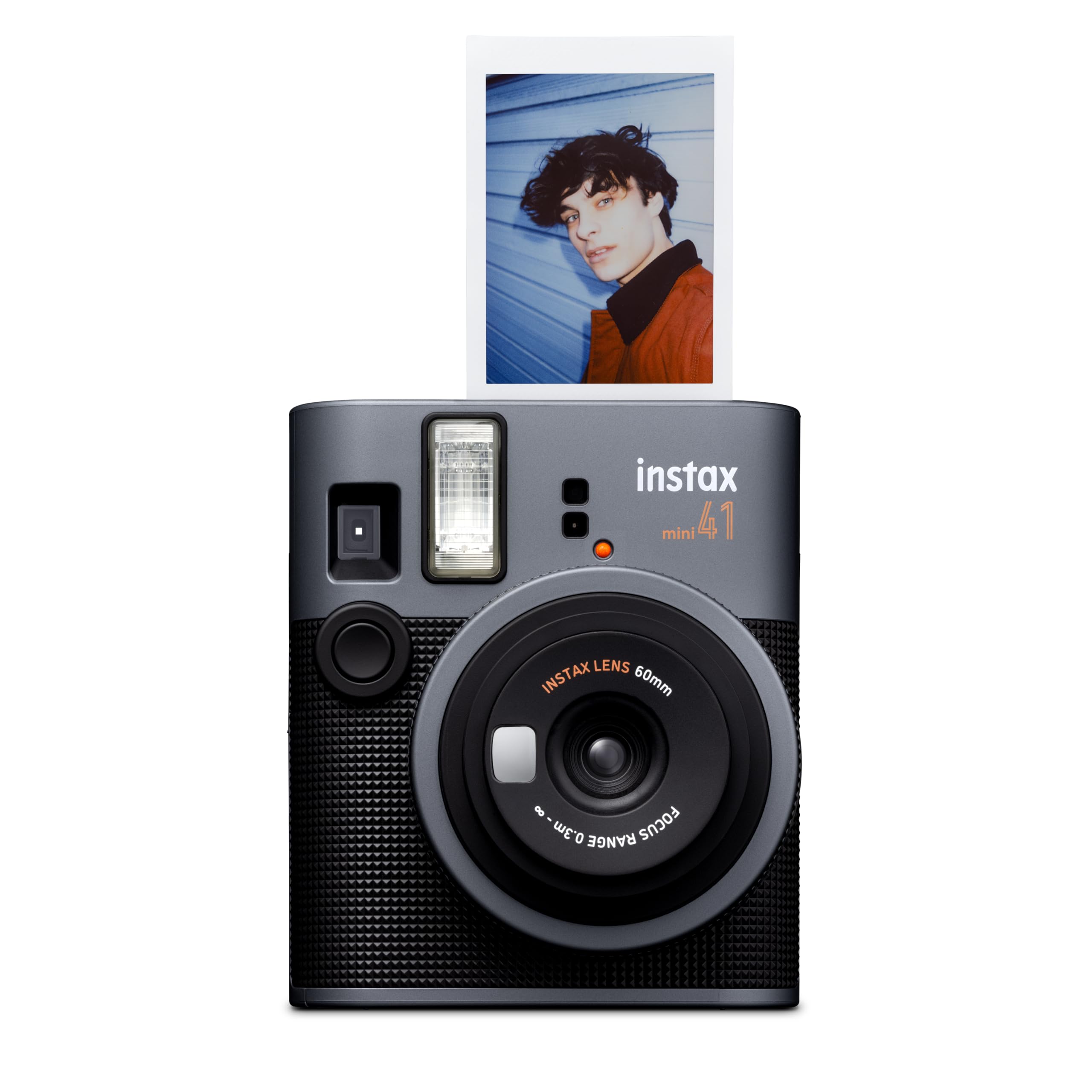
A black retro body with auto exposure but a flash that never quits.
The Mini 41 has a design that feels a bit more premium and substantial than the Mini 12 — one buyer even found it a little bulky and returned it for a different version of the same brand. It prints high-quality 2×3 inch Instax Mini photos and includes a built-in selfie mirror, close-up mode with parallax correction, and an optical viewfinder with a target spot. The camera comes with a hand strap, two AA batteries, and a quick start guide. At 12.16 ounces and 2.66 x 4.11 x 4.82 inches, it is noticeably more compact than the renewed Mini 12’s dimensions (4.4 x 3.2 x 5.1 inches), meaning it slips into a bag more easily.
The catch, and it is a meaningful one, is the flash behavior. The camera has automatic exposure and flash control, but buyers report the “flash always fires, even indoors (not just dim settings).” One owner described a workaround: cover the flash with a finger. Another reviewer noted slightly bright exposure but called the photos fun and good value. If you mostly shoot outdoors in good light, the constant flash is not a dealbreaker, but for indoor use you may find yourself wishing for a manual override.
Reviewers praise the retro design and premium feel, and the auto exposure generally delivers bright, clear shots. The film itself runs about – per shot, which is the standard cost for Instax Mini packs.
Style points
- Compact dimensions (2.66 x 4.11 x 4.82 inches) make it more portable than the Mini 12
- Built-in selfie mirror and close-up mode with parallax correction
- Retro black finish feels sturdy and looks good
What to watch for
- Flash always fires — no way to turn it off without covering the lamp
- Slightly bulky according to some buyers, who switched to another model
For the retro fan: This is the model to grab if you love the black classic camera look and prefer a more compact body than the standard Mini 12, and you are fine with a flash that fires every time.
Think twice if: You need a camera that can shoot in dim settings without a flash — the Mini 41 cannot be switched to flash-off mode.
3. Fujifilm Instax Mini 12 Instant Camera (Mint Green) (Renewed)

A mint-green renewed body for buyers who already have a film stash.
This is the exact same camera as the one inside the Green Bundle 2026 — the Instax Mini 12 with its twist-lens power, built-in selfie mirror, and close-up mode with parallax correction — but sold as a renewed unit without the film, batteries, or hand strap. The item dimensions are 4.4 x 3.2 x 5.1 inches, and it weighs 0.67 pounds. It uses an ISO 800 light sensitivity and automatic exposure control to produce 2×3 inch Instax Mini photos that develop in about 90 seconds. The best part: one buyer ordered it last-minute for a daughter’s birthday and received a unit that “looked untouched, flawless finish, no marks, no signs of prior use” in a branded Fujifilm box with manual and warranty.
The honest trade-off shows up in the film mechanism. One owner reported the film jammed once and they had to yank it through, worried it could damage something. That is a risk with any renewed mechanical device — the previous user may have handled it roughly. The camera itself works perfectly when the film loads smoothly, and owners mention it produces great quality photos with that dreamy instant look. Unlike the KODAK Printomatic, which stores digital copies on a MicroSD card, this camera is pure analog — what you print is what you get, no save function.
If you already have Instax Mini film at home or can pick some up separately, this renewed body saves you the cost of the bundle’s included film while giving you the same shooting experience. Just be aware of the jamming risk mentioned by real buyers.
Savings angle
- Same reliable Instax Mini 12 design at a lower upfront cost
- Automatic exposure and flash control help avoid washed-out photos
- Lightweight at 0.67 pounds — easy to carry around
Watch out for
- One reviewer noted a film jam that required yanking the cartridge through
- No film included — you must buy a separate pack before you can shoot
Budget-savvy option: Pick this renewed unit if you already own a box of Instax Mini film and want to save a few bucks versus buying the full bundle.
Proceed with caution: Renewed electronics carry a small risk of mechanical quirks like film jams, though many customers note receiving a like-new camera.
4. KODAK Printomatic Full-Color Instant Print Digital Camera, Zink 2×3″
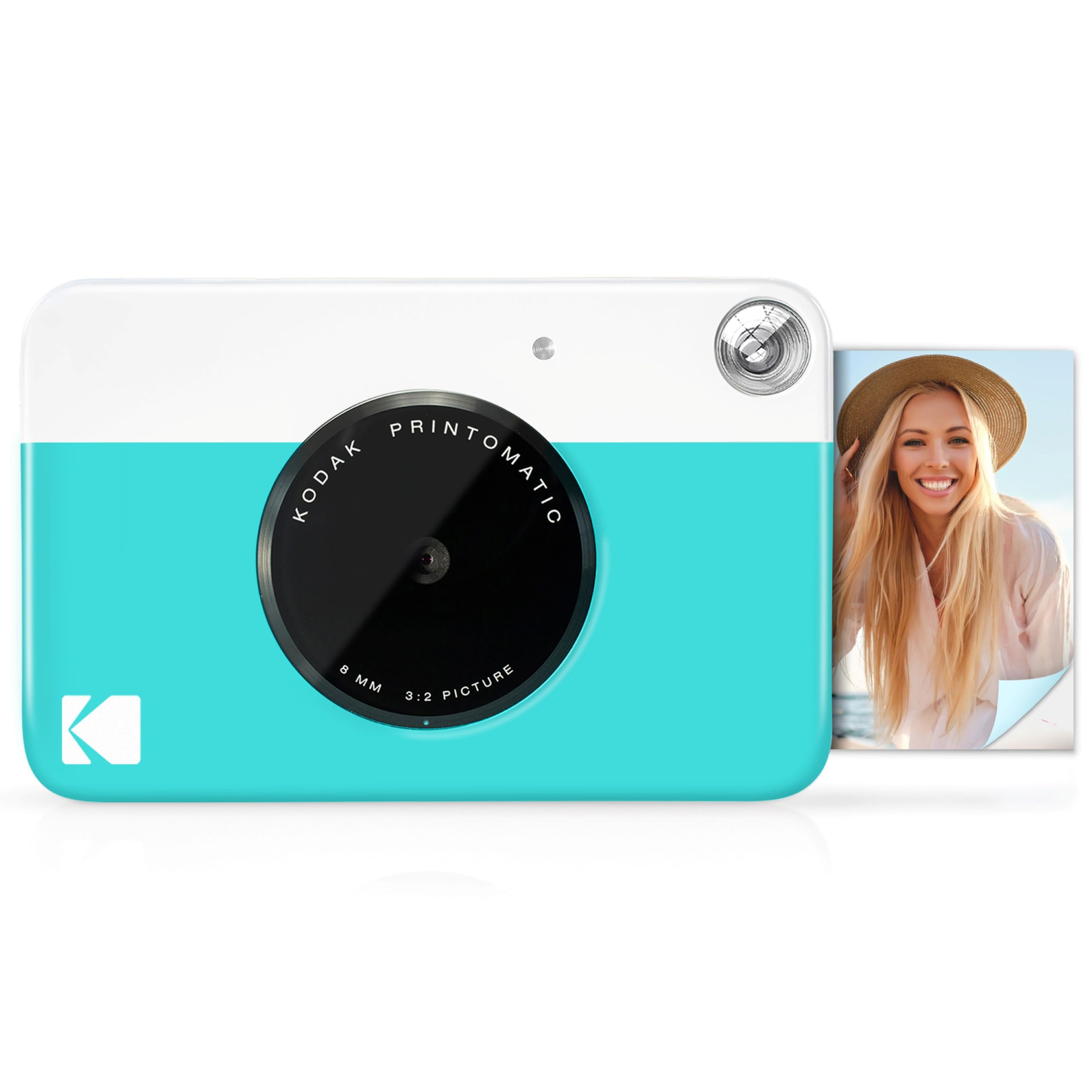
No film packs, no ink — just ZINK paper and a MicroSD slot.
The KODAK Printomatic takes a completely different approach: instead of chemical-development film packs, it uses ZINK 2×3 paper that has dye crystals embedded in it. The camera heats the paper to activate the color, so there are no ink cartridges, toners, or film packs to load. The prints are durable, water-resistant, tear resistant, and smudge free — plus the paper has a sticky back so you can peel and stick them into a journal. A powerful 5MP sensor and a wide-angle f/2 lens handle the capture, and the camera saves a digital copy of every shot to a MicroSD card (not included), which is a useful backup the Instax models lack entirely.
The photo quality, however, is where the Printomatic struggles. Multiple reviewers point out dull colors and washed-out lighter skin tones. One reviewer gave photo quality 1/10, calling it “overexposed regardless of lighting.” Another owner called colors “too warm” but appreciated the SD card save for later editing. The camera shoots at 3 FPS continuous shooting and has a built-in flash that automatically turns on in low light via a light sensor, but the consensus is the auto-exposure algorithm is not as refined as Fujifilm’s.
Just be prepared for prints that look more like early-2000s camera phone photos than crisp Instax snaps.
Unique features
- Sticky-back ZINK paper prints are waterproof, tear-resistant, and smudge-free
- Saves a digital copy to MicroSD card for later editing or reprinting
- No film packs to load — just insert the paper and shoot
Downsides
- Colors look dull and lighter skin tones wash out, per multiple buyers
- Auto overexposure regardless of lighting conditions
- No built-in self-timer for group shots
Stick-and-print fan: This camera is for you if the main use is sticking prints into a journal or scrapbook and you want digital backups on a MicroSD card.
Not your pick if: Photo quality matters — buyers consistently rate the print quality as poor compared to Fujifilm’s Instax Mini output.
Understanding the Specs
Film Format: Instax Mini vs ZINK
Instax Mini film ejects a white frame that develops chemically in roughly 90 seconds. It gives a classic retro look with consistent color, and refill packs are sold at most stores and online. ZINK paper uses heat-activated dye crystals — no liquid chemicals, no film packs — and the prints come out of the camera fully developed. ZINK paper is proprietary to Kodak, so you must buy that specific paper, and buyer reviews suggest the colors are less vibrant than Instax Mini film.
Flash & Exposure Control
Automatic exposure means the camera measures the light in the scene and adjusts shutter speed and flash output to avoid a photo that is too dark or too bright. Some budget cameras, like the Mini 41, fire the flash every time regardless of ambient light — a quirk that can wash out outdoor shots. The Mini 12 has a more selective system that only flashes when the light sensor says it is needed. A camera with good auto exposure saves you from wasted prints on bad exposures.
Selfie Mirror & Parallax Correction
A built-in selfie mirror lets you frame your face before shooting, and parallax correction adjusts the viewfinder aim so the close-up photo matches what you saw, not what the lens sees from a different angle. Without parallax correction, selfies taken at close range can look off-center. Both the Mini 12 and Mini 41 have this feature; the KODAK Printomatic does not.
FAQ
Can I turn off the flash on the Fujifilm Instax Mini 41?
Does the KODAK Printomatic save digital copies of my photos?
What kind of batteries do these instant cameras use?
Which camera has the best photo quality for the price?
Is the renewed Fujifilm Instax Mini 12 worth buying?
How long does Instax Mini film take to develop?
Can I take selfies with the KODAK Printomatic?
Which camera is better for a child or teenager?
Is ZINK paper more expensive than Instax Mini film in the long run?
Does the Fujifilm Instax Mini 12 have a tripod mount?
Final Thoughts: The Verdict
If you want one dependable pick, the best cheap instant camera is the Fujifilm Instax Mini 12 Green Bundle 2026 because it gives you the proven Instax photo quality, automatic exposure that does not wash out faces, and a bundle that includes film, batteries, and a strap so you can start shooting immediately. If you want a retro black body that takes up less bag space, grab the Fujifilm Instax Mini 41 — just be ready for a flash that never turns off. And if your budget is tight and you already stock Instax film at home, the renewed Instax Mini 12 gets you the same camera for less money.
How We Picked
We do not accept paid placement. Every pick is matched to a real buyer and a real use-case; we do not hands-on test units.
Sources & Methodology
Specifications: manufacturer listings and product documentation. Review insights: verified customer reviews, as of July 2026. Pricing: not shown on this page (it changes often); check the current price via the retailer link.
As an Amazon Associate, WellFizz earns from qualifying purchases. This does not affect which products we feature.
Related Guides

Mo Maruf
I created WellFizz to bridge the gap between vague wellness advice and actionable solutions. My mission is simple: to decode the research and give you practical tools you can actually use.
Beyond the data, I am a passionate traveler. I believe that stepping away from the screen to explore new environments is essential for mental clarity and physical vitality.