Our readers keep the lights on and my smoothie glass nicely filled. As an Amazon Associate, I earn from qualifying purchases.
Specs are compiled from manufacturer listings and verified buyer reviews and can change over time — please confirm the key details on the product page before buying.
A 12-hour shift on a hospital floor isn’t just exhausting — it sends blood pooling in your ankles and calves by lunch. Compression stockings fix that by squeezing gently from the foot upward, helping blood flow back to your heart so you finish your shift feeling like you actually have legs. The key is picking the right pressure level and fit so you get real support without fighting your socks all day.
I’m Mohammad Maruf — the founder and writer behind WellFizz. This guide is built by comparing the manufacturers’ published specifications and the patterns across verified customer reviews, so you get each pick’s real strengths and trade-offs instead of marketing spin.
Your legs ache and swell by hour six of a 12-hour shift. The right compression stockings for nurses stop that — and this roundup picks the ones that actually work, based on real buyer feedback and exact specs.
Quick Picks
- LEVSOX Cotton Compression Socks — Best Overall
- Cute Compression Socks for Women — Best Value 3-Pack
- Physix Gear Compression Socks 20-30 mmHg — Wide Calf Fit
- Actifi Women’s Sheer Knee High 20-30 mmHg — Sheer Under Scrubs
- 2 Pairs Sheer Compression Socks for Women — Budget Sheer Pack
- Compression Socks for Women and Men — Budget 3-Pack
- Compression Pantyhose Stockings 20-30 mmHg — Full Leg Support
How To Choose The Best Compression Stockings For Nurses
Three specs decide if a pair works for you: the pressure level (measured in mmHg — the unit that tells you how tight the squeeze is), the fit around your calf and foot, and the fabric that survives a full shift without sliding or overheating. Here is what to look for.
Pressure Level: 15-20 vs 20-30 mmHg
20-30 mmHg is the standard range for nurses because it provides firm enough support to prevent swelling and fatigue during long standing hours. The lighter 15-20 mmHg range works for travel or light office work, but on a busy hospital floor it may not give enough push to keep blood from pooling. If your legs feel heavy by midday, go for the higher level.
Calf and Foot Fit is Everything
Compression only works when the sock stays in the right place. Measure the widest part of your calf and your shoe size, then match to the manufacturer’s size chart. A sock that is too loose at the ankle will wrinkle and lose pressure. One that is too tight at the top band will cut off circulation and cause discomfort. Look for reviews mentioning calf circumference success stories.
Fabric: Sheer, Cotton, or Blend
Sheer nylon stockings (like Actifi or BSERA) are thinner and more breathable under scrubs, but they are also more fragile. Cotton blends (like LEVSOX) feel more like normal socks and hold up better to washing, though they can be warmer. If you run hot or need a discreet look for under dress pants, sheer is your pick. If you prioritize durability and comfort, go cotton.
Quick Comparison
| Model | Best For | Compression | Material | Pairs | Amazon |
|---|---|---|---|---|---|
| LEVSOX Cotton Compression Socks | Best Overall | 20-30 mmHg | Cotton Blend | 1 Pair | Amazon |
| Cute Compression Socks 3 Pairs | Best Value 3-Pack | 20-30 mmHg | Polyester Blend | 3 Pairs | Amazon |
| Physix Gear Compression Socks | Wide Calf Fit | 20-30 mmHg | Nylon/Spandex Blend | 1 Pair | Amazon |
| Actifi Women’s Sheer Knee High | Sheer Under Scrubs | 20-30 mmHg | Sheer Nylon | 1 Pair | Amazon |
| 2 Pairs Sheer Compression Socks | Budget Sheer Pack | 15-20 mmHg | Nylon/Spandex Blend | 2 Pairs | Amazon |
| Compression Socks 3 Pairs Value Set | Budget 3-Pack | 15-20 mmHg | Blend | 3 Pairs | Amazon |
| Compression Pantyhose | Full Leg Support | 20-30 mmHg | Opaque Nylon | 1 Pair | Amazon |
In‑Depth Reviews
1. LEVSOX Cotton Compression Socks for Women&Men 20-30mmHg

The cotton-knit pair that feels like a normal sock while delivering 20-30 mmHg of real support.
You get a cotton-rich fabric that breathes better than the slick nylon most compression socks use, so your legs stay cooler during a full shift. At 20-30 mmHg (a firm medical-grade pressure that prevents blood from pooling in your lower legs), the squeeze is strong enough to handle a full shift without the top band digging in — buyers report the band “does NOT cut off your circulation.” The foot area has thicker cushioned soles, so you get extra padding against hard hospital floors.
One reviewer who tried several brands said the LEVSOX were their “favorites out of the batch” because they stay cool, durable, and maintain compression wash after wash — though they note that none of their compression socks go in the clothes dryer. Unlike the lighter 15-20 mmHg picks lower on this list (like the Sockwell pair), this pair gives you the stronger pressure range that most nurses need to prevent swelling.
Why Nurses Like It
- Cotton material is soft and breathable — less sweaty than nylon
- No seam on the toe area, so no rubbing or cutting into toes all day
- Firm 20-30 mmHg compression that stays effective wash after wash
The One Trade-Off
- Some buyers found the ankle-to-knee length too long, causing it to pull past the knee and require rolling the top down
Best for nurses who want a cotton sock that breathes, has no toe seam irritation, and delivers reliable firm support.
Not ideal if your legs are on the shorter side — the length may ride up past your knee and require a fold.
2. Cute Compression Socks for Women – 3 Pairs 20-30 mmHg
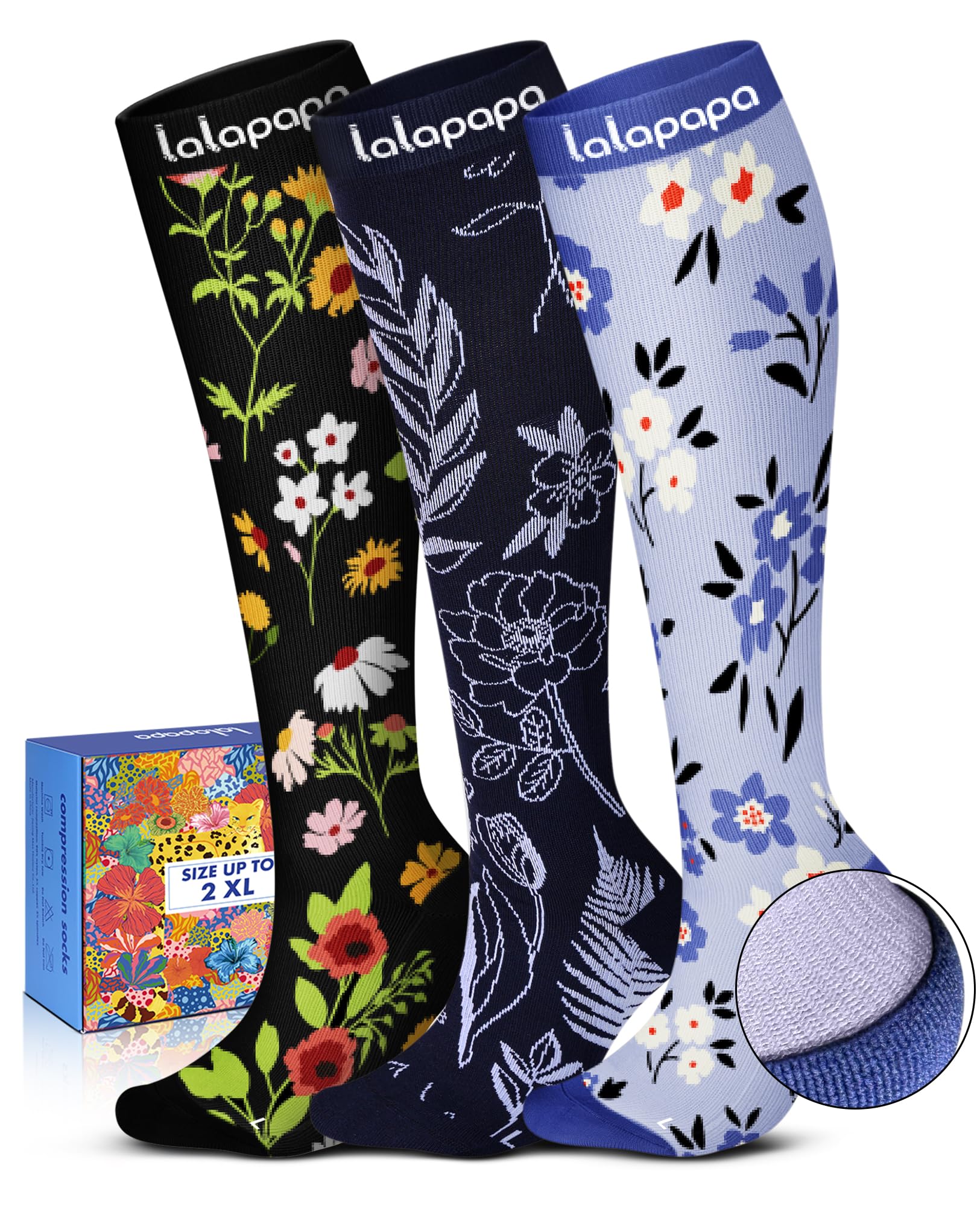
Three pairs of 20-30 mmHg support that look cute enough to wear outside the hospital.
This set gives you three pairs at a price that beats buying singles, and each sock delivers the stronger 20-30 mmHg pressure that makes a real difference on long shifts. Owners mention that the compression is “surprisingly great” — one reviewer noted it helped with “deep soreness and blood pooling” and felt the difference in comfort immediately. The design is woven, not printed, so the pattern stays clean even when stretched over your calf.
Unlike the sheer stockings from Actifi or BSERA, these have a soft, cushioned feel inside — buyers describe it as “almost like walking barefoot on something fluffy.” They are also marked left and right for a tailored fit. One buyer with small feet said they fit perfectly, while another with “fairly big calves” found the ankle area a bit loose, so sizing is worth checking carefully.
Strong Points
- Three pairs for one price — rotate through the work week
- Woven patterns stay vibrant and don’t fade or peel after stretching
- Cushioned foot bed adds comfort on hard floors
Know Before You Buy
- One reviewer received an “extra wide” version that was loose at the ankle despite having large calves — check if the box matches the description
Grab these if you want a bulk pack of firm 20-30 mmHg socks with fun patterns and a plush foot feel.
Look elsewhere if you need a very specific calf width fit — the “extra wide” sizing can be inconsistent.
3. Physix Gear Compression Socks 20-30 mmHg

The unisex pair built for nurses with larger calves and a need for serious swelling control.
Unlike many compression socks that top out at average calf sizes, Physix Gear offers an XL that fits 15-16 inch calves comfortably — one buyer with a size 10ish shoe-foot confirmed the fit. At 20-30 mmHg, this sock delivers the firm pressure that prevents ankle swelling, and the graduated design means more compression at the foot and lighter pressure near the knee. The top band is noted as “not crazy tight” and stays in place without sliding down.
One reviewer who works a job requiring “tons of walking and standing” reported that after a 12-hour, 12k-step shift, their ankle bones were visible again — a stark contrast to the swelling they had before. The sock also gives arch support and leaves wiggle room for toes, which matters if you wear wide shoes. Compared to the LEVSOX cotton pair, these are a nylon/spandex blend that feels more like a sport sock.
What Stands Out
- XL size fits up to 15-16 inch calf circumference
- Graduated compression with cushioned sport-sock feel
- Stays in place all day — no rolling or sliding
The Hard Part
- Difficult to pull on by yourself — one senior buyer needed help from their spouse
Reach for these if you have larger calves and need 20-30 mmHg pressure that actually fits without cutting off circulation at the top band.
Skip them if you struggle with putting on tight socks — these require a bit of strength or technique (rolling them up first helps).
4. Actifi Women’s Sheer Knee High 20-30 mmHg Graduated Compression Stockings

A discreet sheer stocking that delivers 20-30 mmHg support without showing under dress pants or scrubs.
For nurses who need compression but want it invisible under their uniform, Actifi’s sheer knee-high is the pick. The fabric is lightweight and breathable, with a reinforced toe and heel for durability — a real plus when you consider sheer stockings tend to snag faster than cotton blends. The nonbinding top band keeps the sock up without digging in, and the graduated compression (20-30 mmHg) is the same strength as the Physix Gear pair above.
Unlike the thicker cotton LEVSOX or the cushioned Cute Compression socks, this pair is designed to look like regular hosiery. It fits under skirts, dress pants, or scrubs without adding bulk. The trade-off is that sheer stockings are more delicate and may not last as many washes as a cotton or polyester blend sock.
Why Pick Sheer
- Invisible under work clothes — looks like normal hosiery
- Lightweight and breathable for hot environments
- Reinforced toe and heel for longer wear
Keep in Mind
- Sheer material is more prone to runs and snags than thicker fabrics
Best for the nurse who wears dress pants, skirts, or thin scrubs and needs 20-30 mmHg support that stays hidden.
Not the choice if you want a sock that can survive heavy wear and frequent machine washing — sheer stockings require gentler care.
5. 2 Pairs Sheer Compression Socks for Women – 15-20 mmHg

Two pairs of sheer stockings at a budget-friendly price, but with a lighter 15-20 mmHg compression.
This is a cost-effective entry point for nurses new to compression or for those who only need light support during shorter shifts. The 15-20 mmHg pressure is 33% gentler than the 20-30 mmHg in the Actifi or LEVSOX picks — a difference you feel if you are used to firm stockings. Customers note the material is “very breathable for Florida summers” and stays in place without sagging. One buyer mentioned that size small fit them at 5’3″, shoe 6.5.
The sock is made of 85% nylon and 15% spandex, which gives it a thin, discreet look similar to the Actifi pair. However, some buyers found that even ordering two sizes up, the sock was still too tight for comfort. If you are between sizes or have sensitive feet, consider sizing up one step. At this price for two pairs, it is a solid backup or starter option.
Why It Earns a Spot
- Two pairs at a very accessible price point
- Breathable and thin — works well in hot weather
- Stays in place and does not sag through the day
Where It Falls Short
- 15-20 mmHg may be too light for nurses who stand all day and need firmer pressure
- One buyer found the fit too tight even after sizing up two sizes
Great for newbies or nurses with short shifts who want an inexpensive, breathable sheer pair to try compression without a big commitment.
Not enough support for nurses who already experience significant ankle swelling — you will want the 20-30 mmHg level found on the LEVSOX or Actifi pairs.
6. Compression Socks for Women and Men, Knee High 15-20mmHg (3 Pairs)
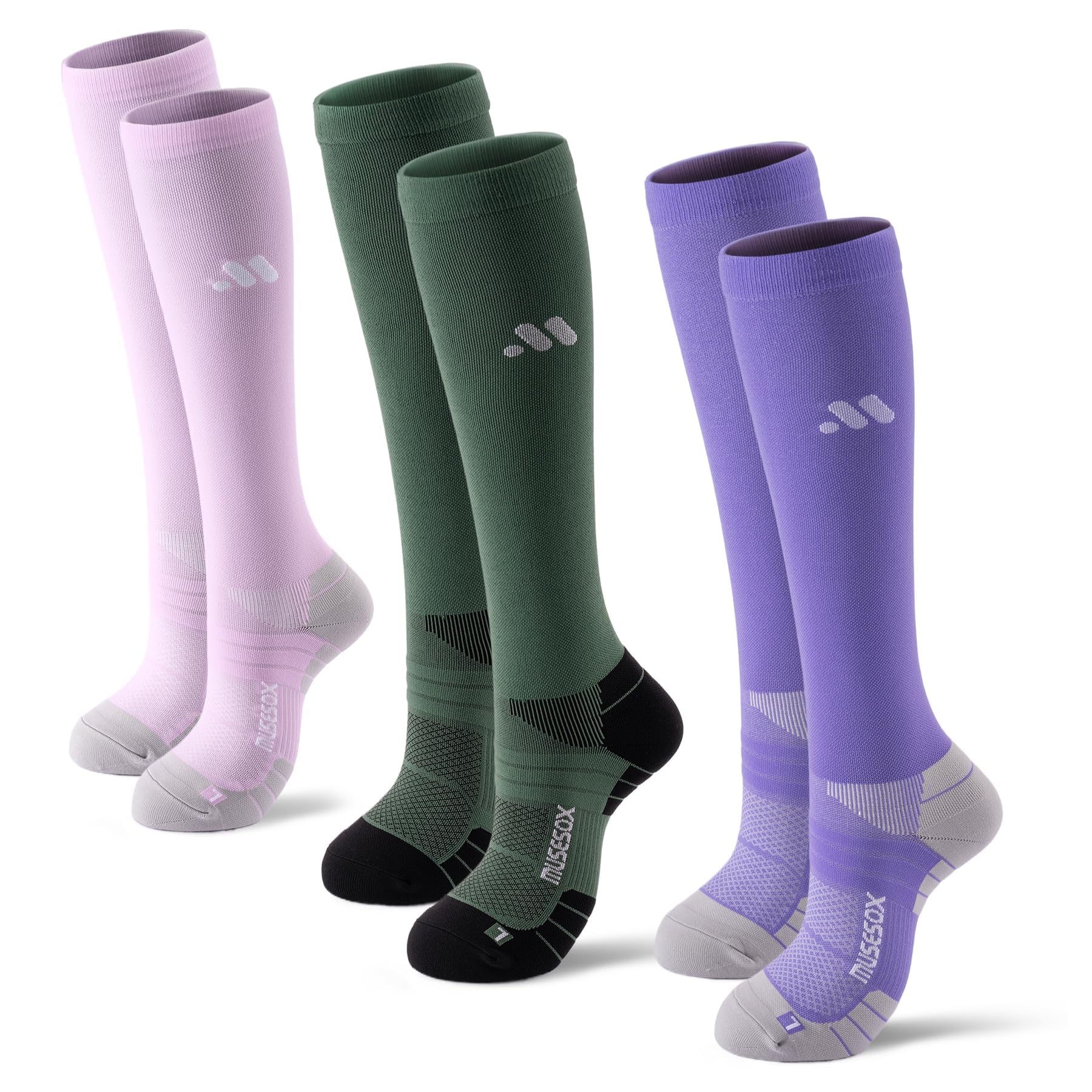
Three pairs of mild compression for the price of one mid-range sock — a pure volume play.
If you just want to stock up on socks that provide light leg support without a big investment, this 3-pair set is the most economical option here. At 15-20 mmHg, it sits in the same gentle pressure zone as the BSERA pair above. The manufacturer offers sizing from S to XL and includes both knee-high and calf-height options, so there is some flexibility for different leg shapes.
Because this product has no customer reviews in the data, we rely on the specs alone. It is best suited for nurses who need a rotation of socks for recovery days, lighter shifts, or travel. For intense 12-hour standing shifts, the 20-30 mmHg options from LEVSOX or Physix Gear will serve you better. Think of this as a budget filler pack rather than a primary work sock.
Value Highlights
- Three pairs at a very low entry price
- Multiple sizing options (S to XL) included
- Knee-high and calf-height variations
Consider This
- 15-20 mmHg is light support — not strong enough for heavy swelling
- No verified customer reviews available to confirm fit or durability
Pick this if you need a cheap multi-pack of light compression socks for casual wear, travel, or recovery days.
skip it if you rely on compression to prevent ankle swelling during long nursing shifts — you need 20-30 mmHg instead.
7. Compression Pantyhose Stockings 20-30 mmHg Medical Graduated Support

Full pantyhose coverage for nurses who hate the knee-band pinch of regular compression socks.
After a 14-hour day, one buyer in the medical field said these pantyhose were “FANTASTIC” — they solved the problem of knee-high socks cutting off circulation at the knee band by mid-shift. At 20-30 mmHg, this provides the same firm pressure as the LEVSOX and Physix Gear picks, but from thigh to toe. The closed-toe design and opaque fabric make it suitable under pants or scrubs.
Another buyer, a nurse of 37 years who previously spent over per pair on Jobst hose, said these are her “new go-to” — the compression is slightly less tight but very supportive, and her legs felt like they were “still 20 years old” after a 12-hour shift. There is one catch: several buyers noted the crotch area sits low, requiring some tugging to get it into position. If you are short-torsoed, this may be an issue. Skip this pair if you are under 5’2″ — reviewers point out the fit is off for shorter frames.
Why Choose Full Hose
- No knee-band pinch — compression is distributed from thigh to foot
- Provides some tummy control, per buyer reports
- 20-30 mmHg full-leg support at a fraction of the cost of medical-grade brands
Watch Out For
- Crotch area sits low for some buyers — expect to pull and adjust
Ideal for nurses who need full-leg 20-30 mmHg support and want to avoid the painful knee-band pinch of knee-high socks.
Not for you if you have a short torso or dislike the feel of full pantyhose — the low crotch may require constant adjustment.
Understanding the Specs
mmHg — The Pressure Rating
This is the unit used to measure the squeezing force of the sock. 15-20 mmHg is a mild, everyday support level — good for travel or light office work. 20-30 mmHg is a firmer medical-grade range that actually pushes blood back up your legs, which is what most nurses need to prevent swelling and fatigue during a 12-hour shift.
Graduated Compression
This means the sock squeezes tightest at your ankle and gradually loosens as it moves up your calf. It mirrors the natural way your body pumps blood upward. A truly graduated sock should feel noticeably tighter at the foot than at the top band. If the squeeze feels uniform from toe to knee, it is not graduated compression — keep looking.
FAQ
What mmHg level should a nurse wear for 12-hour shifts?
Can I wear compression stockings in the summer without overheating?
How do I measure my calf for the right compression sock size?
Do compression stockings help with varicose veins?
How many pairs of compression socks do I need for a work week?
Should I buy knee-high socks or full pantyhose?
How long do compression stockings last?
Do I need a prescription for 20-30 mmHg compression stockings?
Final Thoughts: The Verdict
For most nurses, the winner of the compression stockings for nurses list is the LEVSOX Cotton Compression Socks because it combines the firm 20-30 mmHg pressure you need with a breathable cotton build and no toe seam irritation. If you want three pairs at a great value, grab the Cute Compression Socks 3-Pack. And for nurses with larger calves who need a reliable wide fit, the Physix Gear Compression Socks are your best bet.
How We Picked
We do not accept paid placement. Every pick is matched to a real buyer and a real use-case; we do not hands-on test units.
Sources & Methodology
Specifications: manufacturer listings and product documentation. Review insights: verified customer reviews, as of July 2026. Pricing: not shown on this page (it changes often); check the current price via the retailer link.
As an Amazon Associate, WellFizz earns from qualifying purchases. This does not affect which products we feature.
Related Guides

Mo Maruf
I created WellFizz to bridge the gap between vague wellness advice and actionable solutions. My mission is simple: to decode the research and give you practical tools you can actually use.
Beyond the data, I am a passionate traveler. I believe that stepping away from the screen to explore new environments is essential for mental clarity and physical vitality.