Our readers keep the lights on and my smoothie glass nicely filled. As an Amazon Associate, I earn from qualifying purchases.
Specs are compiled from manufacturer listings and verified buyer reviews and can change over time — please confirm the key details on the product page before buying.
Anyone who has watched a video where the speaker sounds muffled, distant, or buried under background noise knows the one thing that separates amateur content from professional-sounding work — a decent clip-on microphone. The problem is that most first-time buyers grab whatever looks cheap, only to discover muddy audio, fragile cables, or incompatible connectors. This guide cuts through those mistakes by comparing the real specs and honest buyer experiences across seven different clip-on microphones, from simple plug-and-play USB models to premium XLR (a three-pin professional connector) setups built for serious recording.
I’m Mohammad Maruf — the founder and writer behind WellFizz. This guide is built by comparing the manufacturers’ published specifications and the patterns across verified customer reviews, so you get each pick’s real strengths and trade-offs instead of marketing spin.
These reviews focus on which models actually deliver clean audio, reliable connections, and lasting build quality, so you can confidently choose a clip on microphone that fits your specific device and recording environment without wasting money on the wrong connector type or a model that sounds great for only one day.
Quick Picks
- EZColoris Wireless Lavalier Microphone — Best Overall
- FIFINE Wireless Lavalier Microphone M9 — Top Performer
- Shure MVL Lavalier Microphone — Premium Pick
- Movo LV4-O2 XLR Lavalier Microphone Set — Studio Choice
- ttstar USB-C Lavalier Microphone — Budget Champion
- Movo M1 USB Lavalier Microphone — Desktop Favorite
- Sony ECMLV1 Compact Stereo Lavalier Microphone — Stereo Specialist
How To Choose The Best Clip On Microphone
A clip-on microphone, also called a lavalier or lapel mic, attaches to your shirt collar and picks up your voice clearly from a few inches away. The right one depends on what device you are plugging into — a smartphone, a computer, or a professional recorder — and how much background noise you need to block.
Connector Type Matters Most
The connector determines where the microphone works. USB-C plugs directly into modern Android phones, iPads, and laptops. A 3.5mm jack fits older iPhones, many cameras, and some computers. XLR connectors go into mixing boards and audio interfaces that provide 48V phantom power (electricity sent through the cable to power the mic). Picking the wrong connector means you will need an adapter — or the mic will not work at all.
Wired vs Wireless
Wired mics are cheaper, never need charging, and deliver the most reliable signal. Their cable can be restrictive during movement. Wireless clip-on mics give you freedom to move up to 75 or 164 feet away from your recorder, but they need battery charging and can occasionally drop signal in crowded radio environments.
Polar Pattern and Noise Handling
Most clip-on microphones are omnidirectional — they pick up sound evenly from all directions. That means your voice is clear, but room echo and traffic noise get picked up too. Some models include a noise-cancellation chip that filters out steady background hum. The audible noise spec, measured in decibels (dB, a unit for sound level), tells you how much hiss the mic itself produces — lower numbers mean a cleaner recording, so quiet pauses stay quiet.
Quick Comparison
| Model | Best For | Connector | Audio Sensitivity | Cable Length / Range | Amazon |
|---|---|---|---|---|---|
| EZColoris Wireless Lavalier | Wireless freedom on USB-C devices | USB-C (wireless receiver) | 28 dB | 75 ft range | Amazon |
| FIFINE M9 Wireless | Multi-device vlogging kit | 3.5mm / USB-C | -38 dB | 164 ft range | Amazon |
| Shure MVL | Professional durability with 3.5mm | 3.5mm TRRS | — | 1.3 m cable | Amazon |
| Movo LV4-O2 XLR | Studio recording with XLR gear | XLR | — | 6 ft cable | Amazon |
| ttstar USB-C Lavalier | Budget USB-C plug-and-play | USB-C | 30 dB | 6.6 ft cable | Amazon |
| Movo M1 USB | Computer recording and dictation | USB | — | 20 ft cable | Amazon |
| Sony ECMLV1 | Stereo ambient capture on cameras | 3.5mm | — | Short, ~1 ft cable | Amazon |
In‑Depth Reviews
1. EZColoris Wireless Lavalier Microphone
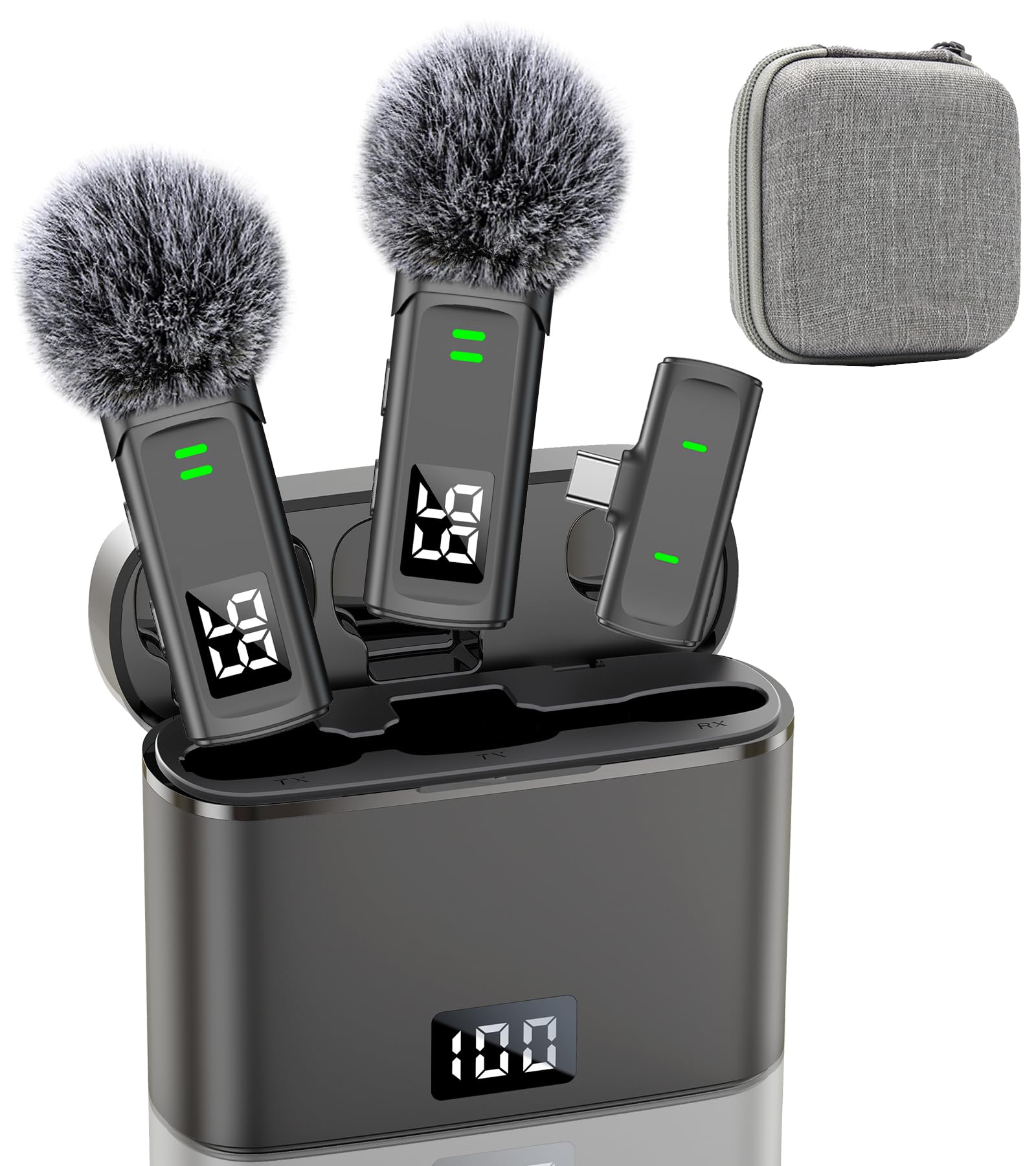
The wireless set that frees you from cables without sacrificing voice clarity.
This system gives you two clip-on transmitters plus a receiver that plugs into a USB-C port. You get freedom of movement without Bluetooth pairing — the advanced 2.4G wireless technology (a short-range radio signal) keeps the connection stable at up to 75 feet away, and no app or pairing is needed. The whole kit fits in a compact charging case, and the case itself provides up to 35 hours of total battery life — each individual mic runs for about 7 hours on a full charge. A small display on the case shows remaining battery from 1% to 100%, so you never guess whether the mic is about to die mid-recording. The built-in noise-canceling chip and CVC (a type of digital noise reduction) condenser microphone work together to cut out background rumble, so speech stays clear even in a busy room. Buyers report excellent noise cancellation and crisp audio, plus smooth USB-C compatibility with modern phones. The two-mic setup is especially useful for interviews where you want both speakers on clean separate channels.
One trade-off to consider: the microphone is specifically designed for USB-C devices only. It will not work with older iPhones that use a Lightning port. The carrying case keeps the two mics and accessories organized, but the receiver is a separate piece you must remember to bring. At 28 dB sensitivity, it picks up less detail than the ttstar’s 30 dB, so quiet speakers may need a gain boost in software.
What stands out
- 35-hour total battery with charging case
- 75 ft wireless range with low latency
- Built-in noise cancellation and mute mode
- Two transmitters included for dual-person recording
Where it falls short
- Incompatible with Lightning port iPhones
- Requires keeping receiver plugged into device
- Audio sensitivity lower than some wired competitors at 28 dB
Your best wireless companion: Ideal for vloggers, interviewers, and content creators who record with USB-C phones or tablets and want freedom of movement without sacrificing clean audio.
The honest caveat: Not suitable for Lightning-port iPhones without an adapter, and the 28 dB sensitivity means it picks up slightly less detail than the most sensitive wired mics in this list.
2. FIFINE Wireless Lavalier Microphone M9

A versatile wireless kit that works with cameras, phones, and laptops from the start.
The FIFINE M9 solves the compatibility problem that trips up many wireless mics — it includes both a 3.5mm TRS-to-TRRS cable (a standard stereo plug) and a USB-C connection, so it works with DSLR cameras, iPhones with a Lightning adapter, Android phones, tablets, and laptops. Its sensitivity is rated at -38dB with a 90dB max SPL (sound pressure level, the loudest sound it can handle before distortion), and the frequency response covers 20Hz to 20kHz, which keeps natural voice detail without cutting off low or high tones. The charging case gives up to 30 hours of total use, and the 164-foot working range is more than double the EZColoris’s 75 feet, making this a strong choice for outdoor shoots where the recorder stays far from the speaker. Buyers consistently praise the audio quality for the price, mentioning that the carrying case is convenient and the noise cancellation is slightly better than other mics in this price range. The two transmitters can charge while recording, so you will not lose audio during long sessions. The receiver has a small display screen that shows volume level and connection status, plus physical buttons for mute and noise cancellation.
The main downside is the included 3.5mm-to-USB-C cable; one reviewer noted that it performs poorly compared to using a standard USB-C-to-USB-C cable with the receiver. Also, the 2.3-inch item height means the charging case is not as pocket-friendly as the EZColoris case. The 164-foot range works best in open spaces — walls and interference can shorten it significantly.
Reasons to pick it
- 164 ft wireless range — longest of any set here
- Works with USB-C, 3.5mm, and cameras via included cables
- 30-hour battery life with charging case
- Receiver display for volume monitoring
Reasons to reconsider
- 3.5mm-to-USB-C adapter cable quality is weak
- Charging case is bulkier than some competitors
- Wall penetration reduces effective range
Grab it if: You switch between recording on a camera, a phone, and a laptop and want one wireless mic kit that covers all three without separate adapters.
Look elsewhere if: You need the most compact carrying case or you plan to rely solely on the 3.5mm-to-USB-C cable for phone connection — consider a direct USB-C cable instead.
3. Shure MVL Lavalier Microphone

The wired mic built to Shure’s pro standards, packed into a discreet housing.
Shure is a name that audio professionals trust, and the MVL brings that same engineering into a clip-on microphone sized for mobile recording. The miniature metal housing keeps the mic nearly invisible on camera, while the built-in RF (radio frequency) and GSM (mobile phone signal) interference protection blocks the buzzing and clicking that cheaper mics pick up from smartphones. The 3.5mm TRRS connector (a four-conductor plug for stereo audio plus mic) plugs directly into devices that have a combo headphone jack — many smartphones, tablets, DJI Pocket 2, GoPro, and laptops with a single audio port. The attached 1.3-meter cable gives enough length for typical collar-to-device routing. Its output is lower than the FIFINE M9’s, so owners mention it works flawlessly with action cameras and computers, and that it picks up quiet voices extremely well for dictation — but one buyer mentioned it was quieter than expected and required gain adjustment via third-party software. The flimsy cord design also drew a caution from one long-term user.
One thing to keep in mind: the Shure MVL has a lower output level than some mics, meaning you may need to boost gain in your recording software. And unlike the Movo LV4-O2 that comes with two mics, the Shure MVL is a single-microphone package.
What makes it special
- top-tier RF/GSM interference rejection
- Compact metal build with carrying pouch
- Works with DJI Pocket 2, GoPro, and mobile devices
- Excellent voice pickup for quiet speakers
What holds it back
- Lower output level requires gain adjustment
- Single microphone — not a two-pack
- Flimsy cable reported by some users
If pro-grade build matters most: Reach for the Shure MVL when you need a reliable, interference-free single mic for mobile journalism, dictation, or action camera recording with a 3.5mm jack.
If you need two mics or higher output: The Movo LV4-O2 gives you a two-mic XLR system, and the FIFINE M9 offers wireless convenience at a lower price — both may suit your workflow better.
4. Movo LV4-O2 XLR Lavalier Microphone Set

The XLR two-pack designed for recorders and mixers that supply 48V phantom power.
If your recording setup runs through a mixing board, audio interface, or Zoom recorder, the Movo LV4-O2 is built for exactly that workflow. Each microphone connects via a 6-foot XLR cable and requires 48V phantom power — no batteries needed. The omnidirectional pickup pattern captures audio from all directions, so two people sitting on opposite sides of a table both get picked up clearly without a second mic pointed at each person. The set includes two lav mics, two clips, and detachable windscreens. Buyers who have used these consistently for five months report crisp voice clarity and no buzzing, with excellent performance through a proper mixer. One reviewer called them a great value versus Shure or Audio-Technica. The enclosure material is metal, which gives the mic body itself a durable feel. However, buyers also note that the plastic clip breaks easily — you may want to buy metal clips separately if you plan to clip and unclip frequently. The thin cable also requires careful storage. Unlike the Shure MVL’s direct 3.5mm plug, the XLR connection means this mic will not plug into a phone or laptop without an XLR-to-3.5mm adapter and a phantom power supply, so it is less portable than the USB-C or wireless options.
Studio-ready strengths
- Two professional XLR mics in one set
- Requires 48V phantom power — clean, no battery noise
- Omnidirectional pickup works well for multiple speakers
- Excellent clean sound with no buzzing via mixer
Studio setup limitations
- Plastic clips break easily — consider metal replacements
- Requires XLR-compatible recorder or interface
- Thin cable needs gentle handling
Perfect for fixed studio setups: This is your pick if you already own an XLR audio interface or recorder and need two reliable lav mics for interviews, board game reviews, or streamed conversations without wireless interference.
Not for mobile or direct-to-phone use: The XLR connection locks you out of plugging this directly into a phone or laptop without extra gear — the ttstar or EZColoris are better for on-the-go recording.
5. ttstar USB-C Lavalier Microphone

The budget wired USB-C option that works instantly — no batteries or drivers.
If you just need a simple microphone that plugs into a USB-C laptop, tablet, or Android phone, the ttstar delivers exactly that without any setup fuss. It records at an audio sensitivity of 30 Decibels, which means it captures quiet speech well, and produces 25 Decibels of audible noise (self-noise, or the hiss the mic adds to your recording). The ttstar produces 25 Decibels of audible noise, versus the Sony ECMLV1’s 30 Decibels — meaning your recordings start with a cleaner floor, especially during quiet pauses. The 6.6-foot cable gives you ample reach from your collar to a nearby laptop or phone, and the mini mic head with a strong metal clip stays attached to your shirt without slipping. It works automatically on OnePlus 8 and required minor configuration on Pixel 6, according to one reviewer.
Customers note that it provides crisp sound initially and works great for dictation and general voice recording. However, the long-term reliability is questionable — one owner reported that after months of use, the mic developed intermittent weird noise during live broadcasts and recordings. Another reviewer warned against using it for ASMR videos, calling the quality poor. It also does not work for online chatting or Zoom meetings, per the manufacturer. So while this is a fantastic value for beginners and casual use, it may not hold up for daily professional recording over many months.
Why it wins at this price
- 30 dB sensitivity — captures voice detail well
- 6.6 ft cable for flexible placement
- No batteries or drivers needed
- Strong metal clip stays put on shirts
Where you will feel the limit
- Intermittent noise reported after months of use
- Not designed for ASMR or online chatting/Zoom
- Sound quality degrades over time for some users
Best for beginners and casual recorders: Grab this if you are starting a YouTube channel, need a mic for dictation, or want a reliable backup for USB-C devices without investing in a premium model.
Not a long-term workhorse: The intermittent noise reports suggest this is better as an entry-level or backup mic rather than a daily driver for professional recordings — the Movo M1 offers a longer cable and more consistent reviews for similar money.
6. Movo M1 USB Lavalier Microphone

The long-corded USB mic built for desktop recording, dictation, and bird listening.
The Movo M1 is designed specifically for computers — it plugs into any standard USB-A port on a laptop, PC, or Mac, with no software or drivers required. The standout feature here is the 20-foot cable, which is by far the longest of any wired mic in this list, giving you freedom to move around a room while recording. One reviewer actually uses it with a BirdNET-Pi (a Raspberry Pi running bird species recognition software) because the long cable lets them place the mic outside while the computer stays indoors. The omnidirectional pickup pattern captures sound from all directions, which works well for dictation, Skype calls, and podcasting, but also picks up every ambient noise in the room — including fans, traffic, and keyboard clicks. The kit includes an aluminum lapel clip and two foam windscreens. At 1,000 Ohms impedance (a measure of electrical resistance), it is a standard match for computer audio inputs. Reviewers point out that it works great for dictation with Dragon Naturally Speaking, and one reviewer called it an excellent backup interview microphone. The major caution, however, is that one reviewer found sound quality degraded significantly after a few days, becoming extremely muddled from all angles. Another noted that the clip may break, though a compatible replacement is available. Because the cable is so long, you risk damaging the mic or your computer if you walk away without unplugging first.
The advantages
- 20-foot cable — longest reach of any mic here
- Plug-and-play USB-A for any computer
- Two foam windscreens included
- Works great for dictation software
The disadvantages
- Sound quality may become muddled after a few days per one review
- Picks up all ambient room noise
- Clip is prone to breaking
This one is for desktop dictators: Choose the Movo M1 if you need a very long cable for room coverage and primarily use a computer for dictation, Skype calls, or as a backup interview mic.
Skip it for consistent recording quality: The risk of muddled audio after a few days makes it unreliable for regular podcasting — the ttstar USB-C model or the Shure MVL offer better long-term consistency for similar or slightly more money.
7. Sony ECMLV1 Compact Stereo Lavalier Microphone

The tiny stereo lav that captures ambient depth along with your voice.
Most clip-on microphones are mono — they record a single audio channel. The Sony ECMLV1 records in stereo, which means it captures a sense of space, depth, and direction. If you are recording a walking tour, a forest ambient piece, or a vlog where the background environment matters, the stereo pickup adds realism that mono mics cannot match. Its dimensions are remarkably small — 0.43 x 1.26 x 0.43 inches (a size of 0.43 x 1.26 x 0.43 inches compared to the larger EZColoris transmitter at 1.7 x 0.75 x 0.5 inches). The 360-degree rotation clip lets you angle the mic however you need. It uses plug-in power from your device — no battery required — and works with any 3.5mm jack on cameras, smartphones, and voice recorders. The audible noise is rated at 30 Decibels, which is higher (more hiss) than the ttstar’s 25 Decibels — so the Sony adds slightly more self-noise to quiet recordings. Buyers love the stereo quality for ambient sounds, reporting that it picks up waves and birds without overpowering the voice. One reviewer called the sound quality amazing but noted it was a bit too quiet and required gain adjustment via third-party software. The short cable (roughly 1 foot) is another limitation — you will likely need an extension cable unless your recorder sits right next to the speaker. A reviewer also mentioned that a pop filter fell off easily, though the mic does not fully need it.
What makes it unique
- Stereo recording adds depth and spatial realism
- Extremely compact at 0.43 x 1.26 x 0.43 inches
- 360-degree rotation clip for flexible mounting
- No battery needed — uses plug-in power
Where it struggles
- 30 dB audible noise is higher than some competitors
- Very short cable — extension needed for most setups
- Low output volume requires gain adjustment
- Pop filter falls off easily
Choose this for rich ambience: If you record outdoor videos or audio where the environment is part of the story — like travel vlogs or nature soundscapes — the stereo pickup gives you something no other lav mic in this list can replicate.
Pass if you need loud, clean mono vocals: The quiet output and short cable make this less practical for traditional interviews or podcasting — the Shure MVL or EZColoris wireless will deliver louder, cleaner conversation-level audio with less hassle.
Understanding the Specs
Audio Sensitivity
Measured in decibels (dB), sensitivity tells you how well the microphone picks up quiet sounds. A higher number (like 30 dB) means the mic captures more detail from a quiet speaker, so whispers come through clearly. A lower number (like 28 dB) needs a bit more volume from the speaker or some gain boosting in software. This matters most if you often record people with soft voices or in quiet environments.
Audible Noise / Self-Noise
Every microphone produces a tiny amount of hiss, known as self-noise, measured in decibels (dB). A lower number (like 25 dB) means the mic adds less background hiss to your recording, keeping silent pauses clean. A higher number (like 30 dB) means more hiss, which can become noticeable during quiet pauses. For spoken word, anything below 30 dB is generally fine — you will only hear the difference in very quiet recordings with long gaps.
Connector Types
USB-C plugs directly into modern Android phones, tablets, and laptops. 3.5mm jacks are the standard headphone-style plug for older phones, cameras, and some computers. XLR is a three-pin professional connector used with audio interfaces and mixers that supply 48V phantom power. Picking the wrong connector means your mic simply will not plug in, so match the connector to your device’s port before buying.
Omnidirectional vs Noise Cancellation
An omnidirectional microphone picks up sound equally from all directions — your voice is clear, but so is room echo and traffic. Noise cancellation circuitry filters out constant background hum but does not eliminate sudden sounds like a door slam. Some mics combine both: a basic omnidirectional capsule plus a chip that cuts low-frequency rumble. For quiet indoor recording, a good omnidirectional mic works fine. For noisy streets or cafes, noise cancellation matters more.
FAQ
Will a USB-C clip-on microphone work with an iPhone that has a Lightning port?
Can I use a 3.5mm clip-on microphone with a modern smartphone that lacks a headphone jack?
How long do wireless clip-on microphones last on a single charge?
What does phantom power mean, and do I need it?
Why does my clip-on microphone sound quiet even when I speak normally?
What is the difference between a TRS and TRRS 3.5mm connector?
Can I use a clip-on microphone for Zoom meetings or online chatting?
How far away can I stand from my recorder with a wireless clip-on microphone?
What does omnidirectional mean for a clip-on microphone?
Final Thoughts: The Verdict
For most people, the clip on microphone winner is the EZColoris Wireless Lavalier because it combines wireless freedom, a charging case with 35 hours of battery, and true noise cancellation in a package that works instantly with USB-C phones and tablets. If you want professional Shure build quality and a discreet 3.5mm plug for cameras and action cams, grab the Shure MVL. And for a complete wireless kit that works across cameras, phones, and laptops with a 164-foot range, the standout is the FIFINE M9.
How We Picked
We do not accept paid placement. Every pick is matched to a real buyer and a real use-case; we do not hands-on test units.
Sources & Methodology
Specifications: manufacturer listings and product documentation. Review insights: verified customer reviews, as of July 2026. Pricing: not shown on this page (it changes often); check the current price via the retailer link.
As an Amazon Associate, WellFizz earns from qualifying purchases. This does not affect which products we feature.
Related Guides

Mo Maruf
I created WellFizz to bridge the gap between vague wellness advice and actionable solutions. My mission is simple: to decode the research and give you practical tools you can actually use.
Beyond the data, I am a passionate traveler. I believe that stepping away from the screen to explore new environments is essential for mental clarity and physical vitality.